Mallard
About
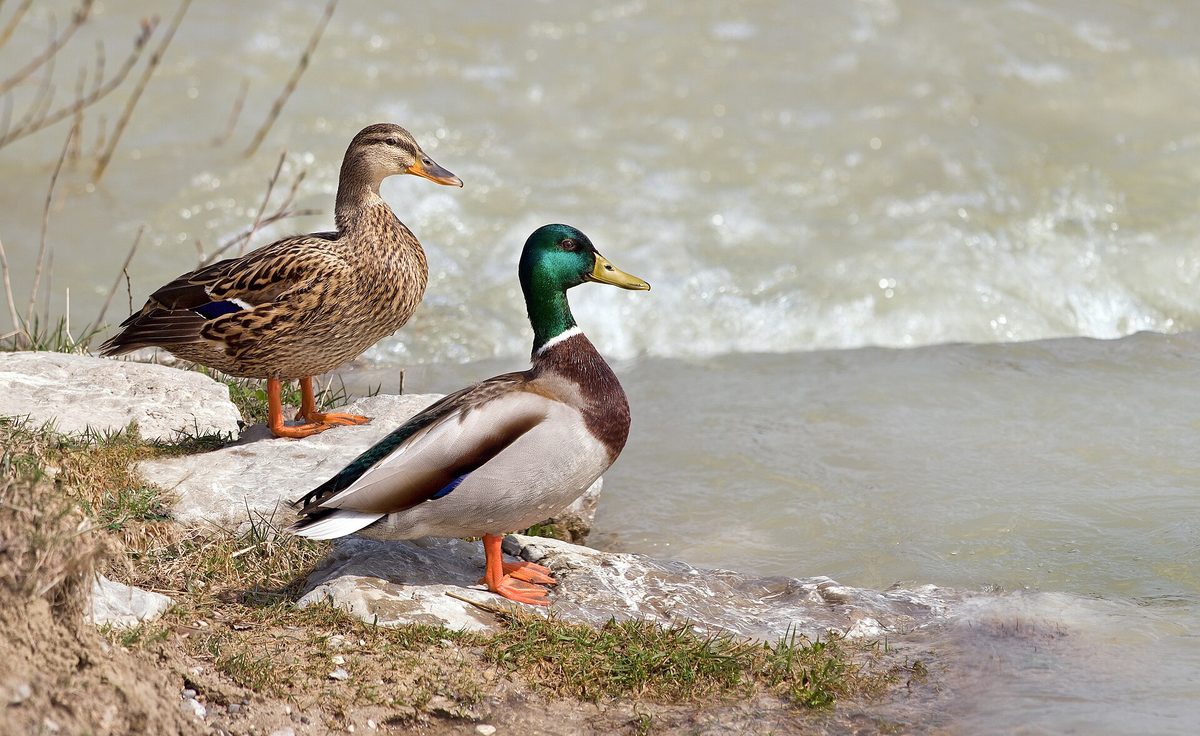
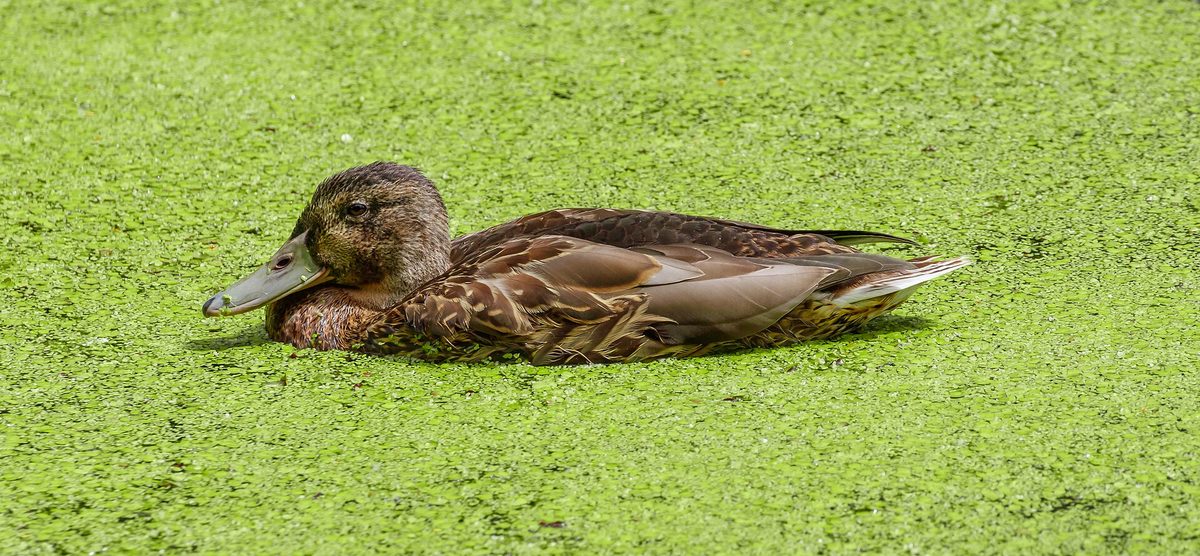
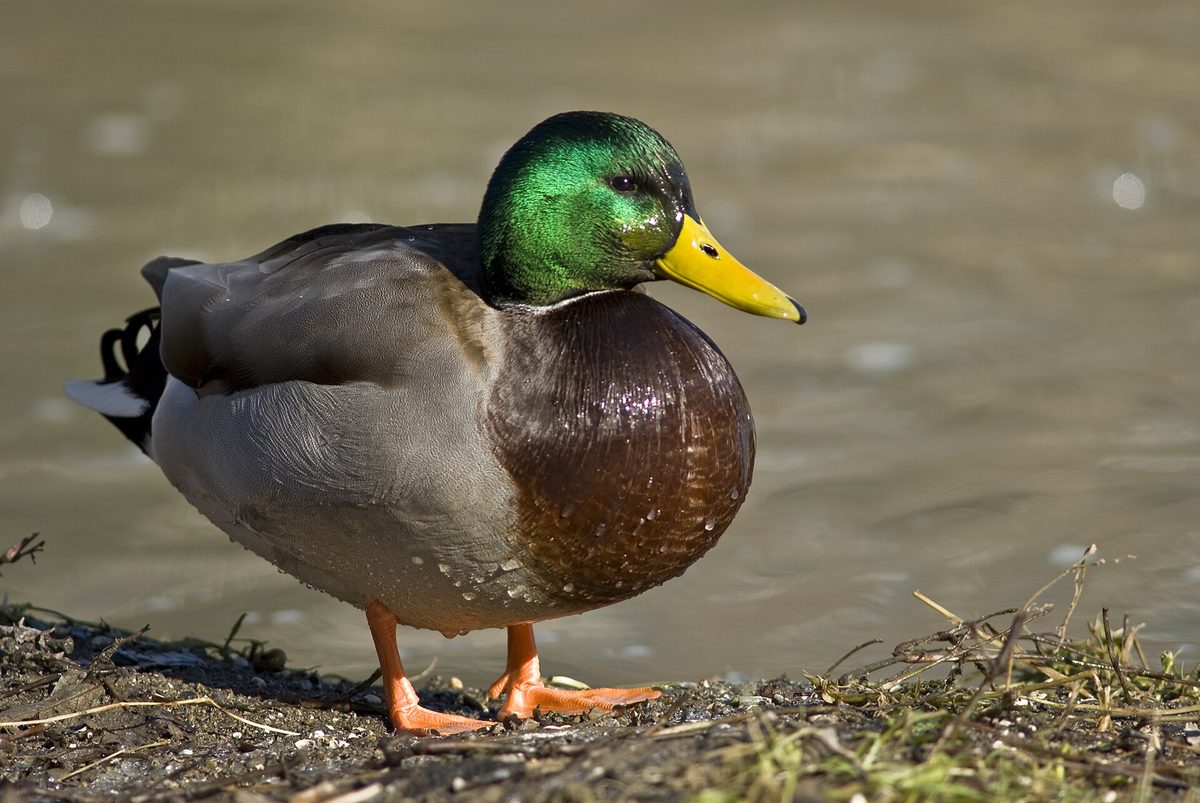
The Mallard is the most widespread wild duck in Europe and the ancestor of most domestic ducks. Its body length is 50–65 cm, and its wingspan is 81–98 cm. The male in breeding plumage is unmistakable: a green head with a metallic sheen, a narrow white 'collar', chestnut breast, and gray body. The female is brown and mottled. Both sexes have a blue-purple 'mirror' on their wings with a white border.
In the Carpathians, the Mallard is found where there is calm water: in rivers in the valleys, backwaters, reservoirs, ponds, and urban water bodies. It is less common in fast mountain streams and high-altitude lakes. In winter, ducks gather in unfrozen areas of rivers, particularly in cities.
The Mallard feeds from shallow waters: it tips upside down so that only its tail sticks out of the water. It eats aquatic plants, seeds, insects, and mollusks. The female builds her nest on the ground in dense grass or under a bush, sometimes far from water. The clutch usually contains 8–13 eggs, and the female leads the ducklings.
In summer, males molt and for several weeks resemble females, so don't be surprised if all the green-headed birds 'disappear' from the pond in July.
In Ukraine, the Mallard is a game species: hunting it is allowed only during the designated season and with the necessary permits.
Where in the Carpathians

The map shows where naturalists recorded the species (GBIF, CC0 and CC BY records), not every place it lives. The Ukrainian Carpathians are less studied, so a blank area does not mean the species is absent.
- Countries
- Czechia · Slovakia · Poland · Romania · Hungary · Austria · Serbia · Ukraine · BG
- Mountain ranges
- Pieniny, High Tatras, Western Tatras, Đerdap and Miroč, Lesser Fatra, Silesian Beskids, Slovak Ore Mountains, Sądecki Beskids, Little Beskids, Spiš Magura
- Altitude belts
- Foothills (below 600 m)
When to see it
| Jan | Feb | Mar | Apr | May | Jun | Jul | Aug | Sep | Oct | Nov | Dec | |
|---|---|---|---|---|---|---|---|---|---|---|---|---|
| Sightings |
From naturalists’ observations in the Carpathians (iNaturalist, research grade): the darker the cell, the more often the species is seen that month.
Protection and rules
Not listed in the Red Book of Ukraine. Game species: hunting only in the permitted season.
FAQ
Are there wild ducks in the Carpathians?
Yes. The Mallard is common in rivers in the valleys, ponds, and reservoirs, and it also occurs in cities. It is almost absent in fast mountain streams.
How to distinguish a male Mallard from a female?
The male has a green head, a white 'collar', and a chestnut breast. The female is brown and mottled. In summer, during molting, males temporarily resemble females.
Similar species
Where to meet it
Waters and waterfalls
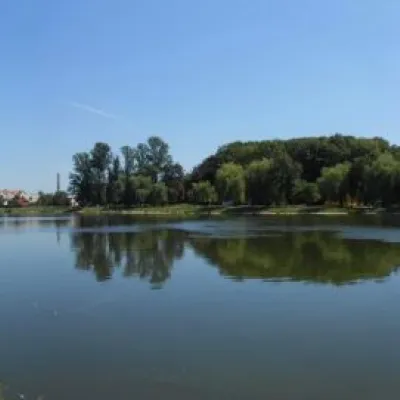 LakeCity lake in KolomyiaKolomyiaAfter touring the city, it's a good idea to relax and unwind by the water.
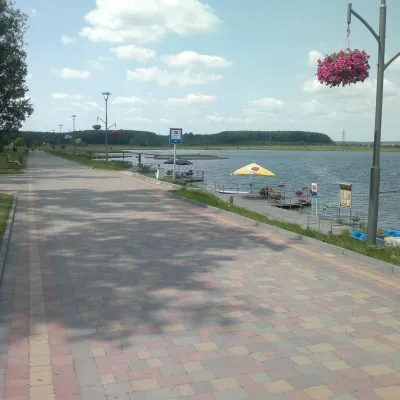 LakeUniatychi ReservoirUniatychiUniatychi Reservoir lies by the village of Uniatychi in Drohobych district, not far from Drohobych.
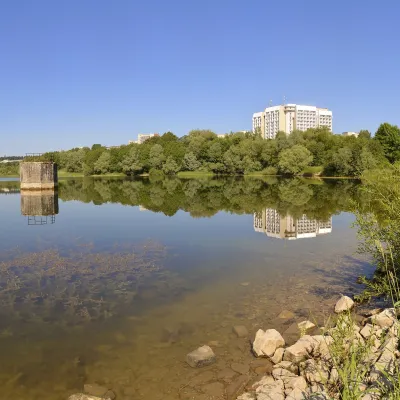 LakeTruskavets ReservoirTruskavetsTruskavets Reservoir, known locally as Lake Solonytsia, lies on the south-eastern edge of Truskavets, next to the...
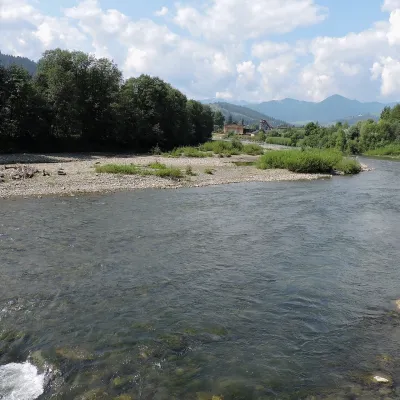 RiverChornyi Cheremosh RiverVerkhovynaThe Chornyi Cheremosh rises south-east of Burkut on the slopes of the Chyvchyn Mountains, the most remote corner of...
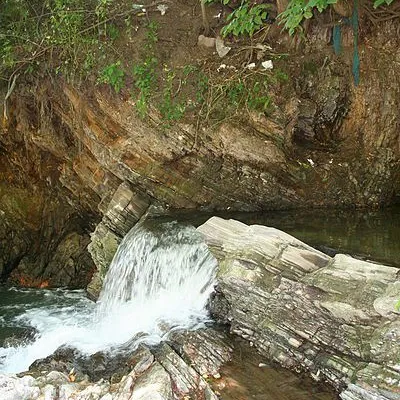 WaterfallBoryslav waterfallBoryslavThe Young Boryslav Waterfall is a small waterfall (falling height is about two meters).
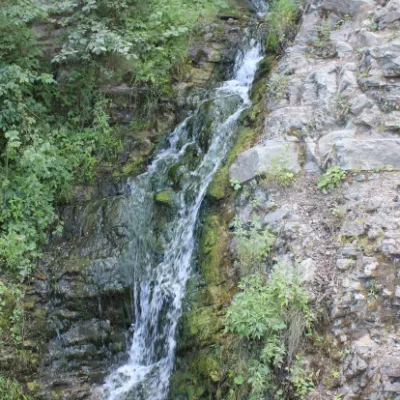 WaterfallSykavka waterfallVelykyi RozhynSykavka Waterfall is a waterfall located near the Sokilsky Rocks, also between the villages of Tyudiv and Velykyi...
Mountain ranges: In other countries: 🇵🇱 Pieniny, 🇸🇰 High Tatras, 🇸🇰 Western Tatras, 🇷🇸 Đerdap and Miroč, 🇸🇰 Lesser Fatra, 🇵🇱 Silesian Beskids, 🇸🇰 Slovak Ore Mountains, 🇵🇱 Sądecki Beskids, 🇵🇱 Little Beskids, 🇸🇰 Spiš Magura, 🇸🇰 Greater Fatra, 🇸🇰 Strážov Mountains, 🇵🇱 Żywiec Beskids, 🇭🇺 Bükk
Trails and peaks near which naturalists recorded the species (GBIF, iNaturalist), matched by altitude and habitat. Sightings are not guaranteed.
Sources
GBIF · iNaturalist · Wikidata · Distribution data: GBIF.org (CC0 and CC BY records), iNaturalist; names and identifiers: Wikidata (CC0). Text: Karpaty.rocks, checked 11.11.2026.
