Fragrant orchid
About
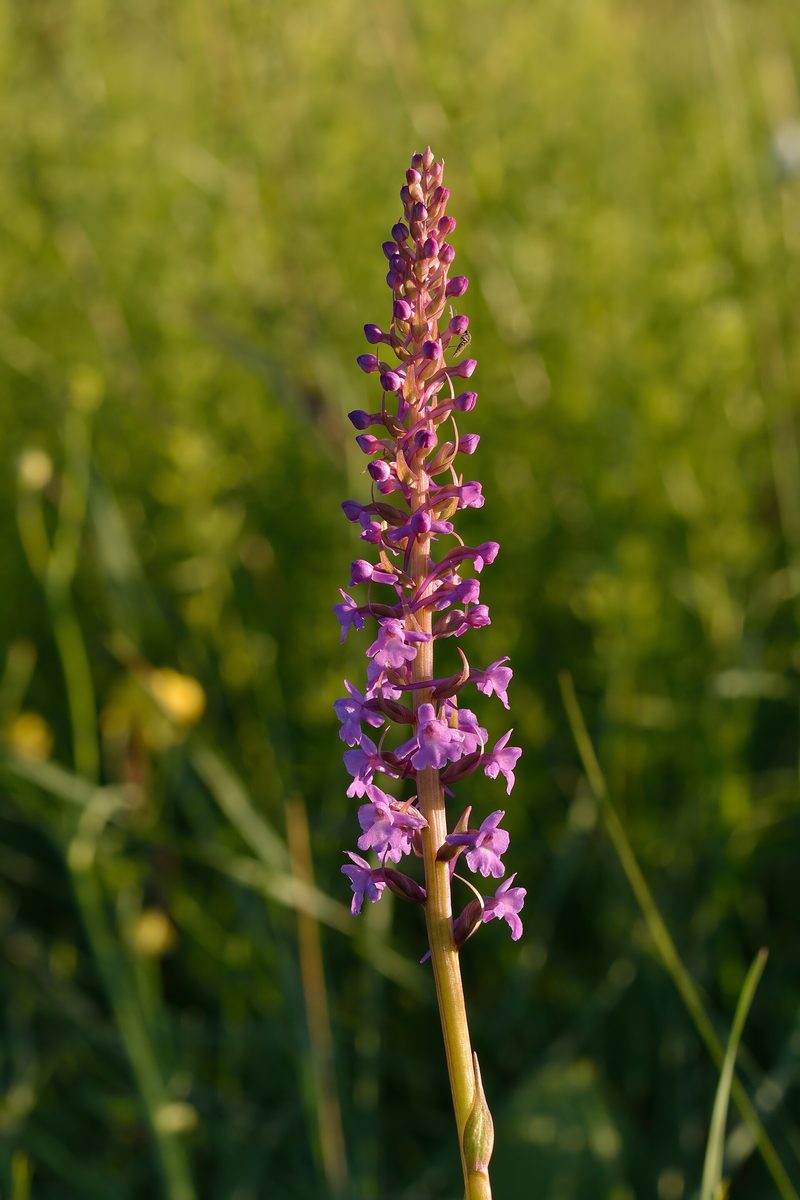
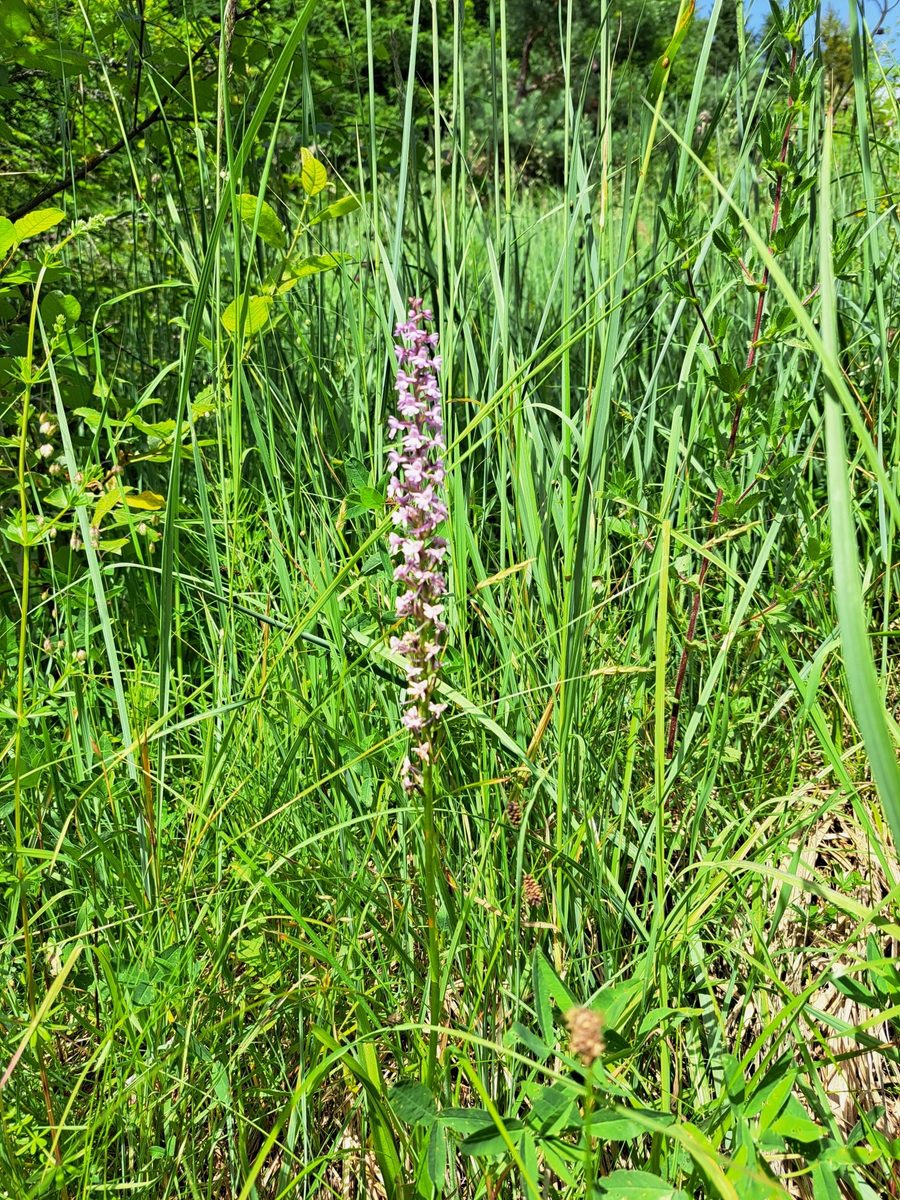
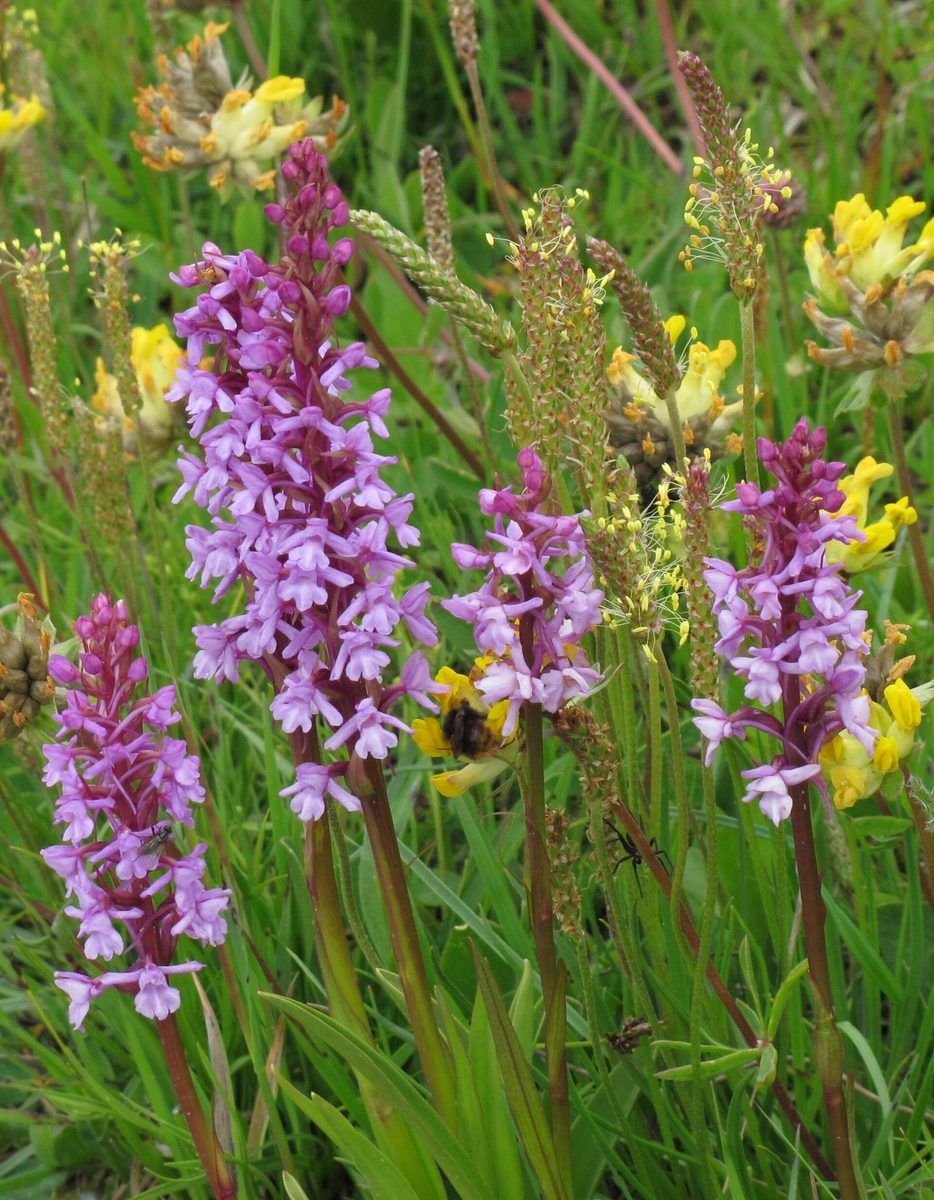
Gymnadenia conopsea, or fragrant orchid, is a wild orchid that is often the first to be noticed in the Carpathian meadows due to its scent: its flowers are fragrant. In Ukraine, the species is quite common in the Carpathians, as well as in the Crimean Mountains, Roztocze, Opillia, in the Forest-Steppe, and in Polissia. In the mountains, it grows in the forest, subalpine, and lower part of the alpine zone: in mountain meadows, in light forests and thickets, at the edges of sedge-sphagnum bogs, on limestone outcrops, and along the banks of cold streams.
The plant is 25–65 cm tall. The lower leaves are narrow, linear-lanceolate, channelled, without spots, while the upper ones are small. The flowers are pink or pink-lilac, gathered in a dense cylindrical spike 5–25 cm long, containing up to 50 flowers. Each has a thin long spur with nectar — hence the name 'long-spurred'. The flowers are pollinated by day and night butterflies, flies, and bees. It blooms in June — July, and the seeds ripen in August — October.
The seeds of Gymnadenia conopsea are light as dust and are carried by the wind, but they only germinate together with soil fungi. In the first years, the young plant lives underground, so flowering takes a long time to wait for.
Gymnadenia conopsea is listed in the Red Data Book of Ukraine with a status of 'vulnerable', and all orchids are included in Appendix II of the CITES convention. Therefore, it is prohibited to pick or dig it up. We do not publish exact locations where it grows — only the massifs. On the route, admire and photograph it, and do not step off the path in the meadows.
Where in the Carpathians

The map shows where naturalists recorded the species (GBIF, CC0 and CC BY records), not every place it lives. The Ukrainian Carpathians are less studied, so a blank area does not mean the species is absent. For rare and vulnerable species the map is deliberately coarse (hexagons of ~250 km² or more) so that it never points to dens, nests or growing sites.
- Countries
- Slovakia · Ukraine · Romania · Czechia · Poland · Hungary
- Mountain ranges
- Strážov Mountains, Greater Fatra, Lesser Fatra, Low Tatras, Slovak Ore Mountains, Slovak Paradise, Kysuce Beskids, White Carpathians, Bieszczady, Western Tatras
- Altitude belts
- Foothills (below 600 m) · Beech forests (600–1200 m)
When to see it
| Jan | Feb | Mar | Apr | May | Jun | Jul | Aug | Sep | Oct | Nov | Dec | |
|---|---|---|---|---|---|---|---|---|---|---|---|---|
| Flowering | ||||||||||||
| Fruit |
From naturalists’ observations in the Carpathians (iNaturalist, research grade): the darker the cell, the more often the species is seen that month.
Look-alikes — how to tell them apart
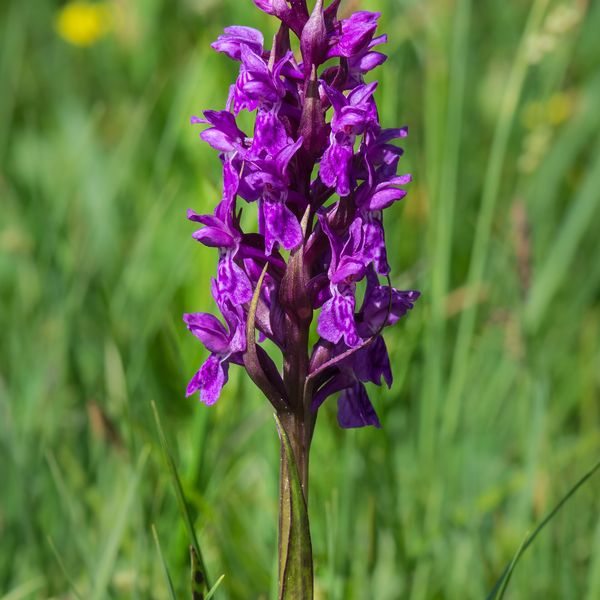
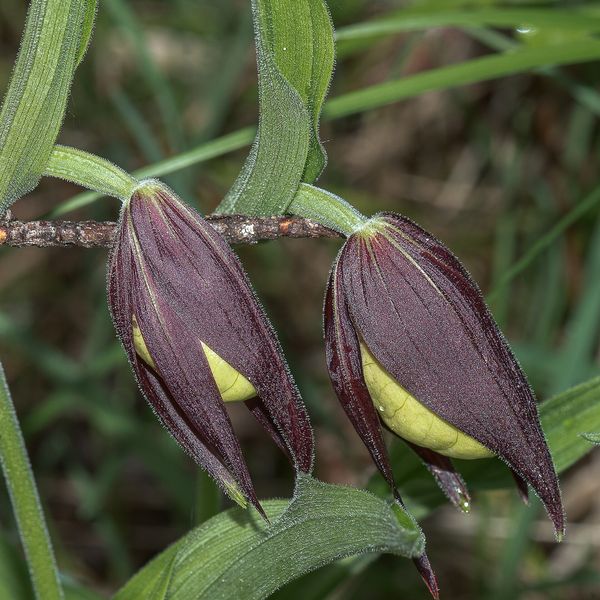
Leaves are broader, usually with purple spots; the spike is shorter and denser, spurs are short, and there is no strong scent. Also a species listed in the Red Data Book of Ukraine.
Protection and rules
Listed in the Red Data Book of Ukraine (vulnerable); all orchids are in Appendix II of CITES. Admire it, picking and digging it up is prohibited. We do not publish exact locations.
Admire, don’t pick: plants listed in the Red Data Book of Ukraine — and any plants in nature reserves and strictly protected zones of national parks — must not be collected.
FAQ
Which orchid has a scent in the Carpathian meadows?
Most often, it is Gymnadenia conopsea: a pink spike of small flowers with long spurs and a noticeable scent. The species is listed in the Red Data Book of Ukraine.
When do wild orchids bloom in the Carpathians?
Most bloom from May to July. Gymnadenia conopsea blooms in June — July.
Similar species
Where to meet it
Ranges where it occurs: Bieszczady. In other countries: 🇸🇰 Strážov Mountains, 🇸🇰 Greater Fatra, 🇸🇰 Lesser Fatra, 🇸🇰 Low Tatras, 🇸🇰 Slovak Ore Mountains, 🇸🇰 Slovak Paradise, 🇸🇰 Kysuce Beskids, 🇨🇿 White Carpathians, 🇸🇰 Western Tatras, 🇸🇰 Volovec Mountains, 🇸🇰 Belianske Tatras, 🇵🇱 Pieniny, 🇸🇰 Choč Mountains
Trails and peaks near which naturalists recorded the species (GBIF, iNaturalist), matched by altitude and habitat. Sightings are not guaranteed.
Sources
- Вікіпедія: Билинець комарниковий
- Wikipedia (en): Gymnadenia conopsea
- Наказ Міндовкілля від 15.02.2021 № 111: Перелік видів рослин та грибів, що заносяться до Червоної книги України
- GBIF: список рослин і грибів Червоної книги України за наказом № 111 (з категоріями)
- CITES: додатки I, II і III (усі орхідні — у додатку II)
- Rozporządzenie Ministra Środowiska z 9.10.2014 w sprawie ochrony gatunkowej roślin, Dz.U. 2014 poz. 1409 (Польща)
- iNaturalist: Gymnadenia conopsea (спостереження в Карпатах)
GBIF · iNaturalist · Wikidata · Distribution data: GBIF.org (CC0 and CC BY records), iNaturalist; names and identifiers: Wikidata (CC0). Text: Karpaty.rocks, checked 09.11.2026.
