Lady's-slipper orchid
About
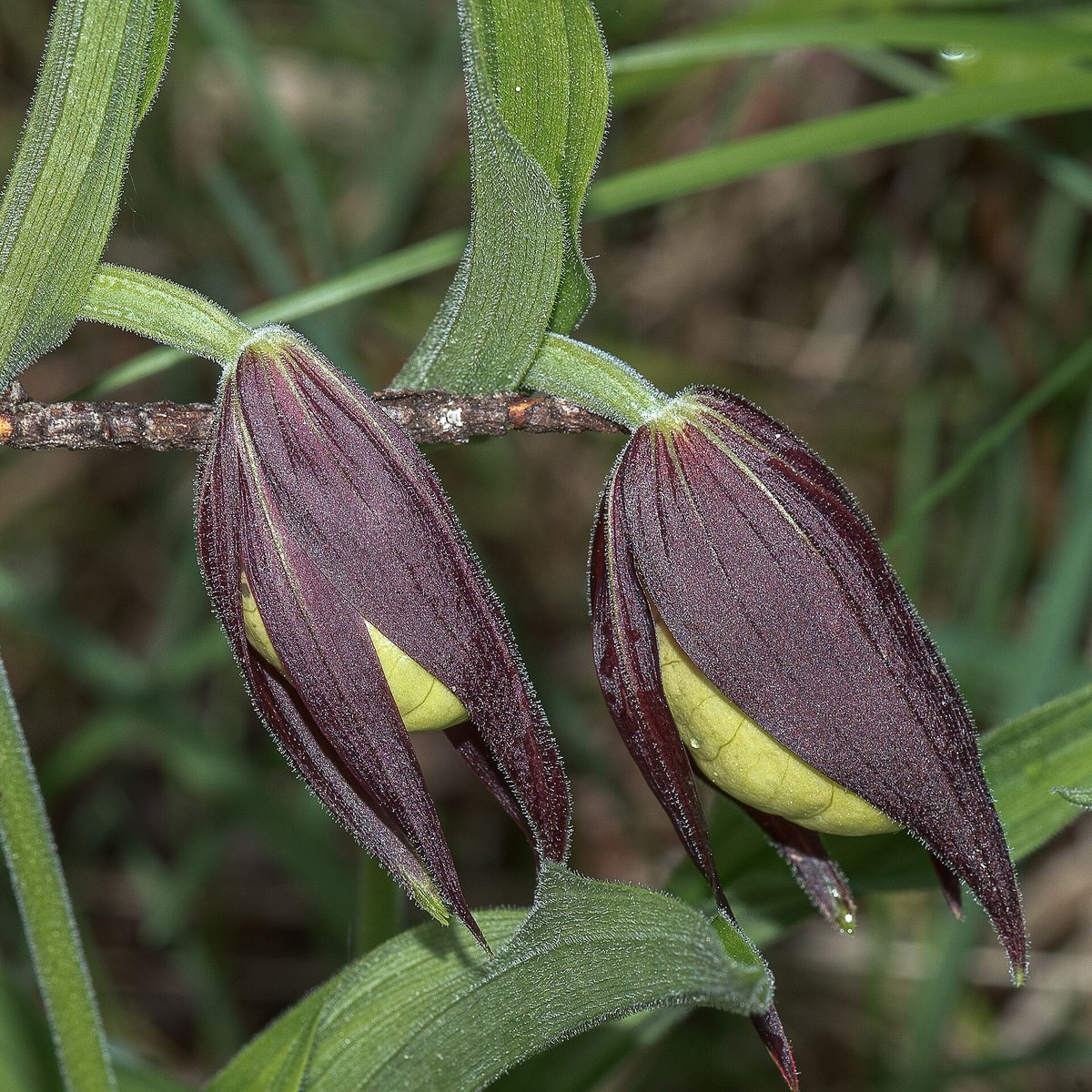
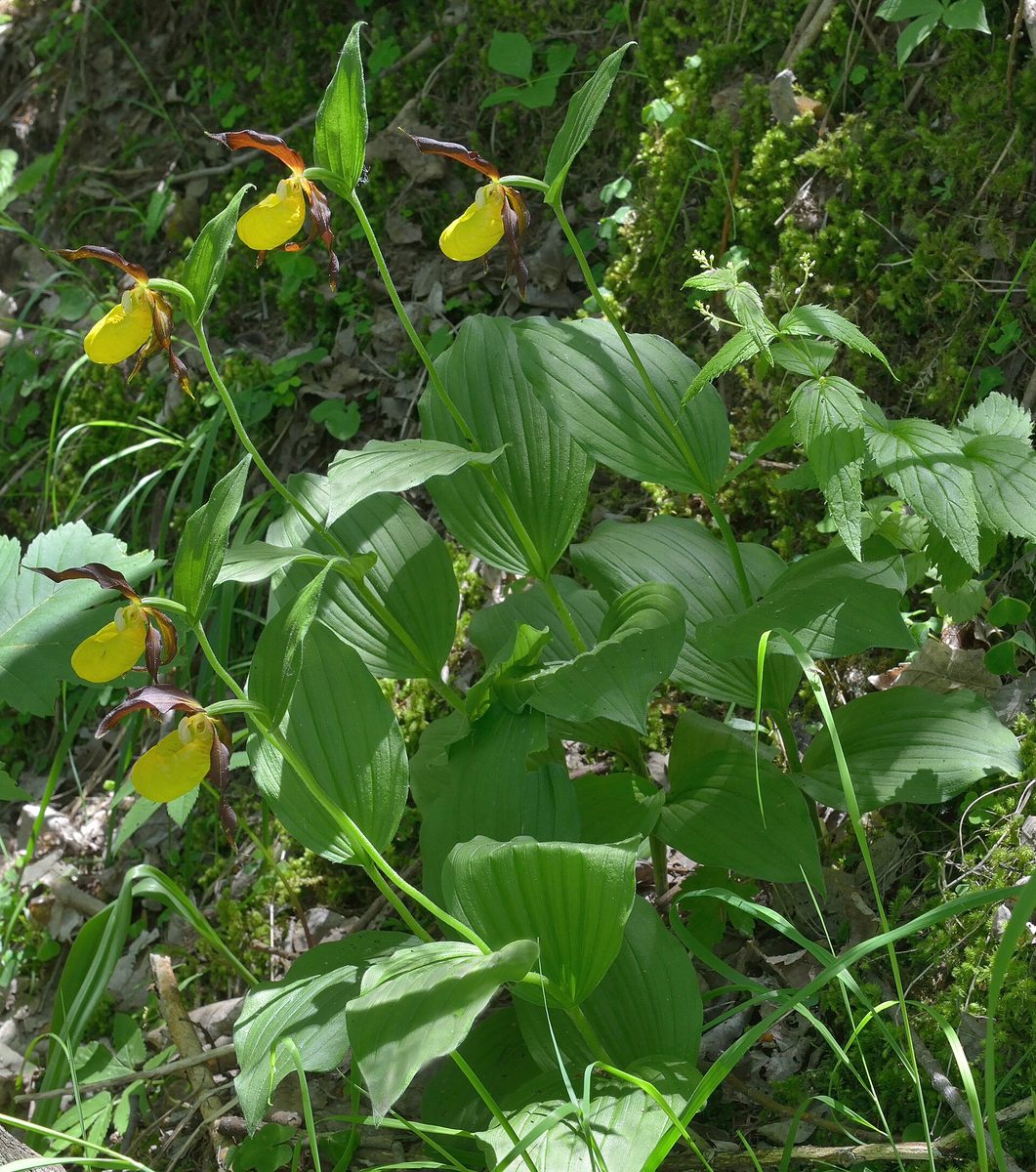
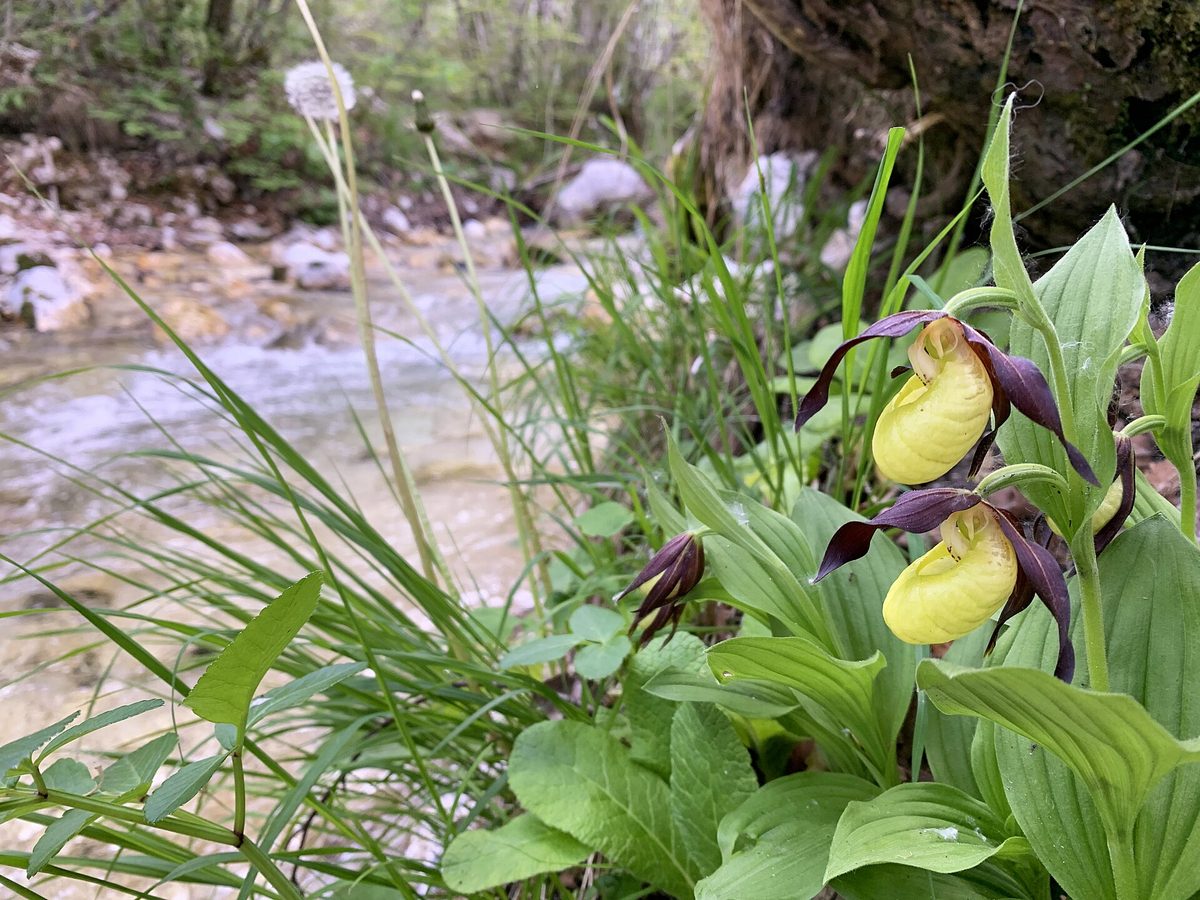
Lady's-slipper orchid is one of the most beautiful and well-known wild orchids in Europe. The flower is large: its lip is inflated, light yellow, resembling an antique slipper, and around it are long narrow reddish-brown or purple tepals, slightly twisted. The stem is 20–60 cm tall and usually has one or two flowers and several broad elliptical leaves with longitudinal veins. It blooms in May – June.
The slipper-like lip is a true trap for insects. A bee that gets inside cannot escape the same way and exits through a narrow opening at the base, carrying pollen along the way. The orchid reproduces slowly: seeds germinate only in association with soil fungi, and clumps expand through rhizomes that branch out every few years.
In Ukraine, Lady's-slipper orchids grow in the Carpathians and Precarpathians, Roztocze, Opillia, Polissia, in the Forest-Steppe, and the mountainous Crimea. In the mountains, they are found in light beech, mixed, and coniferous forests, at forest edges and clearings, more often on limestone soils.
The species is listed in the Red Book of Ukraine with the status of 'vulnerable', as well as in Annexes II and IV of the EU Habitats Directive. It is prohibited to pick, dig up, and transplant the plant, and transplanted individuals almost always die. As with other orchids, we do not specify exact locations: only massifs and parks.
Where in the Carpathians

The map shows where naturalists recorded the species (GBIF, CC0 and CC BY records), not every place it lives. The Ukrainian Carpathians are less studied, so a blank area does not mean the species is absent. For rare and vulnerable species the map is deliberately coarse (hexagons of ~250 km² or more) so that it never points to dens, nests or growing sites.
- Countries
- Slovakia · Ukraine · Hungary · Poland · Czechia · Romania
- Mountain ranges
- Slovak Ore Mountains, Greater Fatra, Lesser Fatra, Low Tatras, Choč Mountains, Western Tatras, Slovak Paradise, Vihorlat Mountains, Kysuce Beskids, Belianske Tatras
- Altitude belts
- Foothills (below 600 m) · Beech forests (600–1200 m)
When to see it
| Jan | Feb | Mar | Apr | May | Jun | Jul | Aug | Sep | Oct | Nov | Dec | |
|---|---|---|---|---|---|---|---|---|---|---|---|---|
| Flowering |
From naturalists’ observations in the Carpathians (iNaturalist, research grade): the darker the cell, the more often the species is seen that month.
Protection and rules
Listed in the Red Book of Ukraine (vulnerable) and in Annexes II and IV of the Habitats Directive. Enjoy, picking and digging up is prohibited. We do not publish exact locations.
Admire, don’t pick: plants listed in the Red Data Book of Ukraine — and any plants in nature reserves and strictly protected zones of national parks — must not be collected.
FAQ
Do orchids grow in the Carpathians?
Yes, there are dozens of species of wild orchids in the Carpathians. The most famous among them is the Lady's-slipper orchid with its large yellow slipper-like lip.
When do Lady's-slipper orchids bloom?
In May – June, in light forests and at forest edges.
Can Lady's-slipper orchids be transplanted to a garden?
No. The species is listed in the Red Book of Ukraine, so it is prohibited to dig it up. Moreover, without partner soil fungi, transplanted plants almost always die.
Similar species
Where to meet it
Ranges where it occurs: In other countries: 🇸🇰 Slovak Ore Mountains, 🇸🇰 Greater Fatra, 🇸🇰 Lesser Fatra, 🇸🇰 Low Tatras, 🇸🇰 Choč Mountains, 🇸🇰 Western Tatras, 🇸🇰 Slovak Paradise, 🇸🇰 Vihorlat Mountains, 🇸🇰 Kysuce Beskids, 🇸🇰 Belianske Tatras, 🇸🇰 Strážov Mountains, 🇵🇱 Pieniny, 🇸🇰 Spiš Magura, 🇸🇰 Volovec Mountains
Trails and peaks near which naturalists recorded the species (GBIF, iNaturalist), matched by altitude and habitat. Sightings are not guaranteed.
Sources
- Вікіпедія: Зозулині черевички справжні
- Wikipedia (en): Cypripedium calceolus
- Наказ Міндовкілля від 15.02.2021 № 111: Перелік видів рослин та грибів, що заносяться до Червоної книги України
- GBIF: список рослин і грибів Червоної книги України за наказом № 111 (з категоріями)
- Директива Ради 92/43/ЄЕС про збереження природних оселищ (консолідований текст, додатки II, IV, V)
- Категорія IUCN (через GBIF Species API)
GBIF · iNaturalist · Wikidata · Distribution data: GBIF.org (CC0 and CC BY records), iNaturalist; names and identifiers: Wikidata (CC0). Text: Karpaty.rocks, checked 09.11.2026.
