Broad-leaved marsh orchid
About
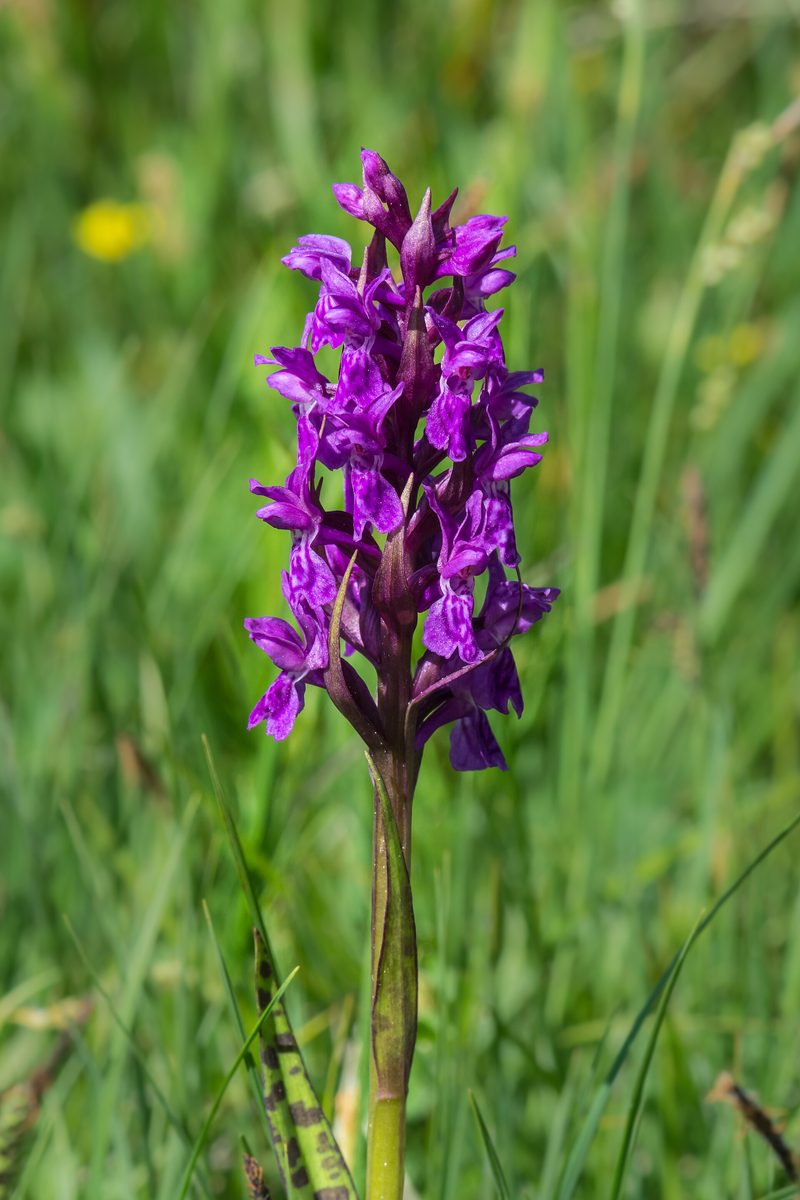
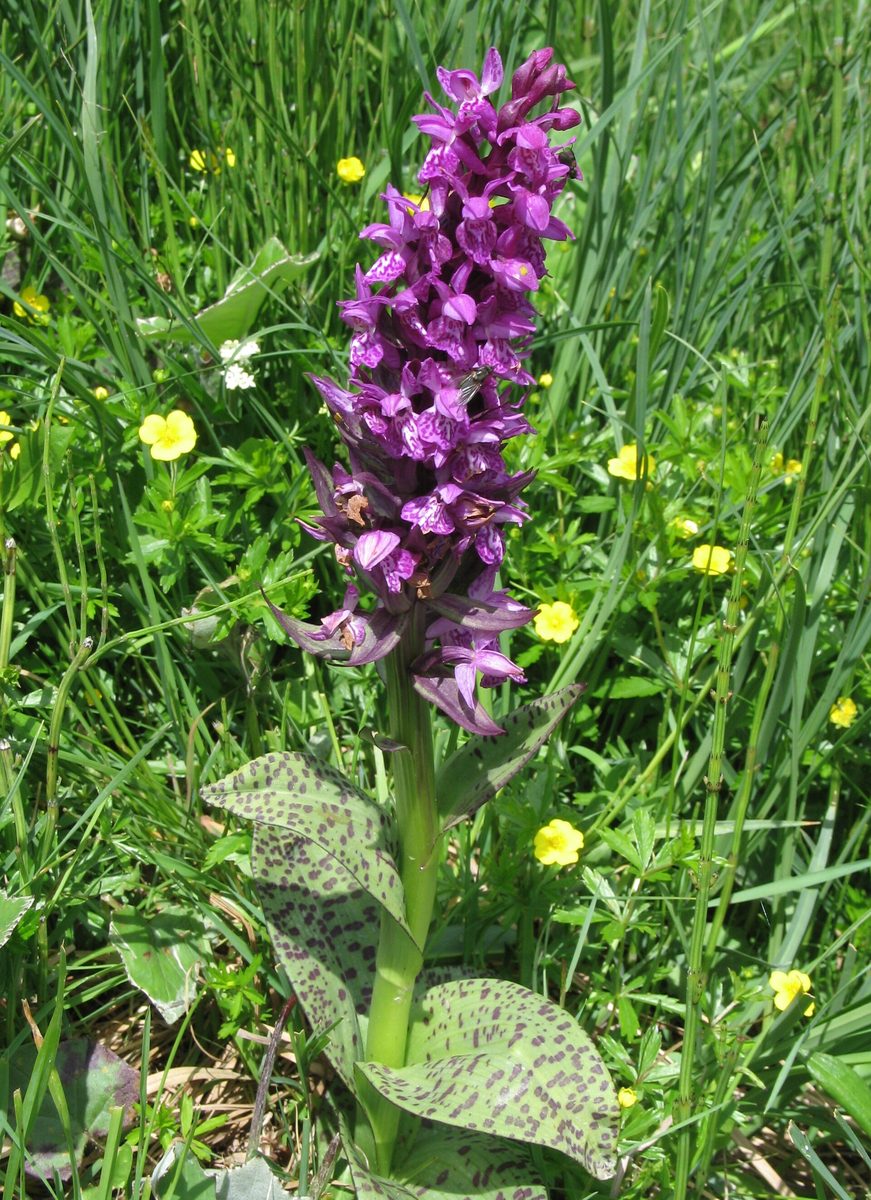
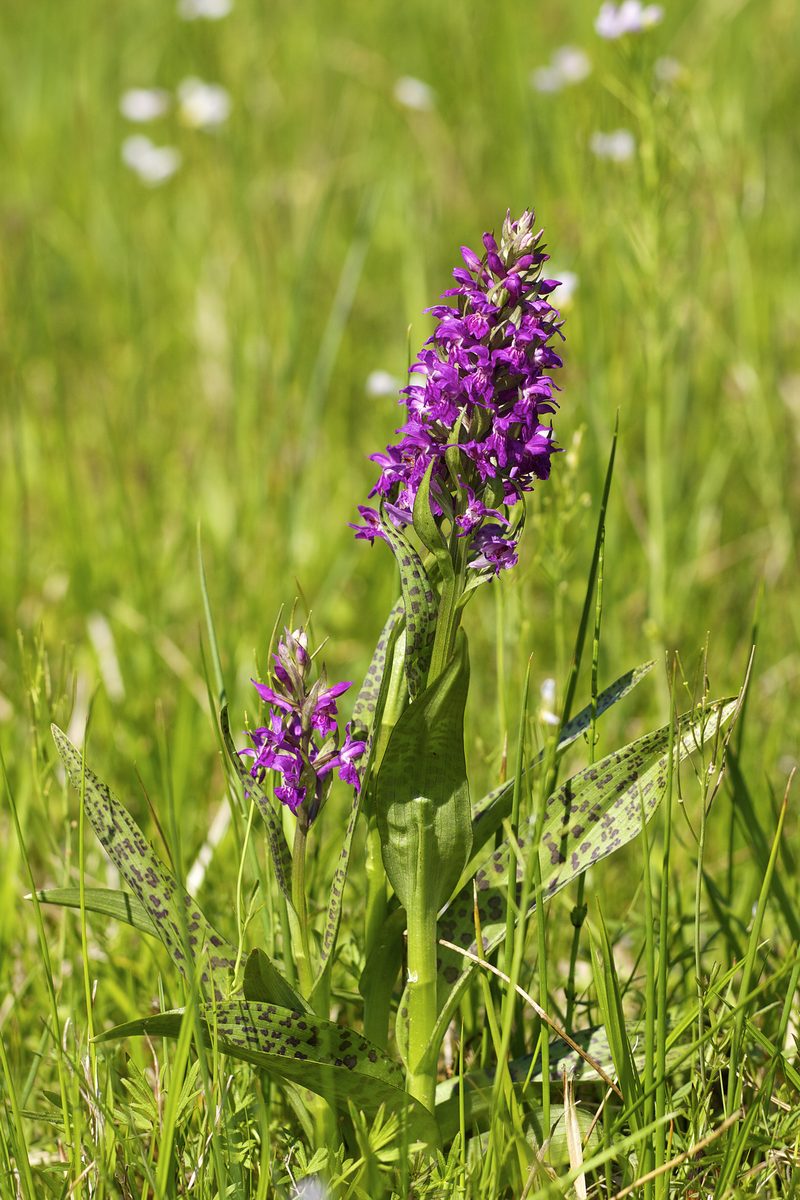
Dactylorhiza majalis is one of the most noticeable wild orchids of the Carpathians. In Ukraine, they grow in the Carpathians and Precarpathians, as well as in forest and forest-steppe zones, very rarely in the steppe and in the Mountain Crimea. In the mountains, they can be found in moist and marshy meadows, on acidic poor soils with low nitrogen.
The plant is 15–40 cm tall, sometimes up to 60 cm, with a hollow stem. There are four to ten leaves, which are oval or lanceolate, 6–18 cm long, most often covered with purple or burgundy spots. At the top is a dense spike of pink-purple flowers with a darker pattern on the lip. Flowering begins in May in the valleys and lasts until the end of July in the high mountains. Underground, there are finger-like tubers, which is where the genus name 'Dactylorhiza' comes from.
Like other orchids, Dactylorhiza majalis is vulnerable: they require nitrogen-poor moist meadows, so drainage and fertilization of meadows are detrimental to them, and a picked flower will not produce seeds.
Dactylorhiza majalis is listed in the Red Data Book of Ukraine with the status 'rare', so picking and digging them up is prohibited. All orchids are also included in Appendix II of the CITES convention, which restricts trade in them. We do not publish exact locations where they grow — only regions. Admire, photograph, but do not step off the path in moist meadows to avoid trampling young plants.
Where in the Carpathians

The map shows where naturalists recorded the species (GBIF, CC0 and CC BY records), not every place it lives. The Ukrainian Carpathians are less studied, so a blank area does not mean the species is absent. For rare and vulnerable species the map is deliberately coarse (hexagons of ~250 km² or more) so that it never points to dens, nests or growing sites.
- Countries
- Slovakia · Czechia · Ukraine · Poland · Romania · Hungary
- Mountain ranges
- Low Tatras, Slovak Ore Mountains, Greater Fatra, Lesser Fatra, Moravian-Silesian Beskids, Kysuce Beskids, Strážov Mountains, Slovak Paradise, White Carpathians, Żywiec Beskids
- Altitude belts
- Foothills (below 600 m) · Beech forests (600–1200 m)
When to see it
| Jan | Feb | Mar | Apr | May | Jun | Jul | Aug | Sep | Oct | Nov | Dec | |
|---|---|---|---|---|---|---|---|---|---|---|---|---|
| Flowering | ||||||||||||
| Fruit |
From naturalists’ observations in the Carpathians (iNaturalist, research grade): the darker the cell, the more often the species is seen that month.
Look-alikes — how to tell them apart
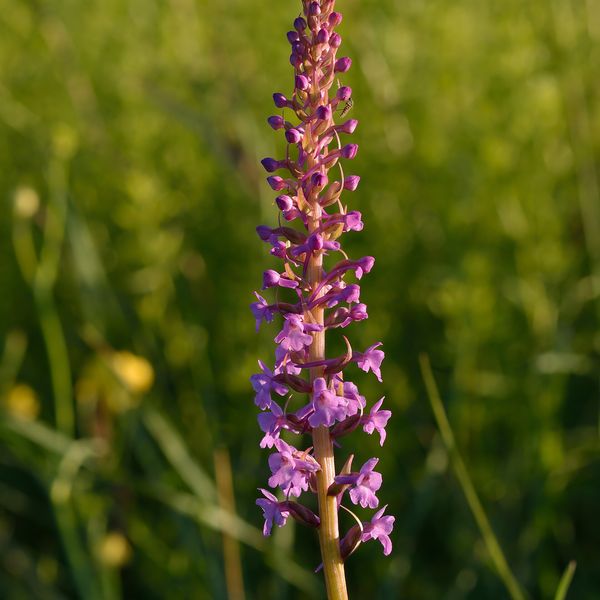
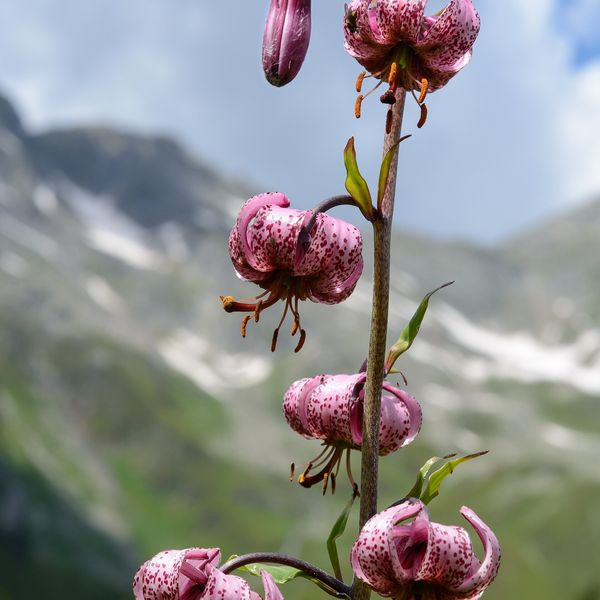
The flowers are paler, light pink or lilac, with a distinct pattern of dots and lines, and the lip is deeply three-lobed. Also a species in the Red Data Book of Ukraine (not evaluated).
Protection and rules
Listed in the Red Data Book of Ukraine (rare); all orchids are in Appendix II of CITES. Admire, picking and digging up is prohibited. Exact locations are not published.
Admire, don’t pick: plants listed in the Red Data Book of Ukraine — and any plants in nature reserves and strictly protected zones of national parks — must not be collected.
FAQ
Do orchids grow in the Carpathians?
Yes, various species of wild orchids grow in the Carpathians. One of the most noticeable is Dactylorhiza majalis with a purple spike in moist meadows. All of them are protected.
Is it allowed to pick wild orchids?
No. Dactylorhiza majalis is listed in the Red Data Book of Ukraine, so picking and digging them up is prohibited.
Similar species
Where to meet it
Ranges where it occurs: In other countries: 🇸🇰 Low Tatras, 🇸🇰 Slovak Ore Mountains, 🇸🇰 Greater Fatra, 🇸🇰 Lesser Fatra, 🇨🇿 Moravian-Silesian Beskids, 🇸🇰 Kysuce Beskids, 🇸🇰 Strážov Mountains, 🇸🇰 Slovak Paradise, 🇨🇿 White Carpathians, 🇵🇱 Żywiec Beskids, 🇸🇰 Slovak Central Mountains, 🇸🇰 Spiš Magura, 🇸🇰 Volovec Mountains, 🇸🇰 Western Tatras
Trails and peaks near which naturalists recorded the species (GBIF, iNaturalist), matched by altitude and habitat. Sightings are not guaranteed.
Sources
- Вікіпедія: Зозульки травневі
- Wikipedia (en): Dactylorhiza majalis
- Наказ Міндовкілля від 15.02.2021 № 111: Перелік видів рослин та грибів, що заносяться до Червоної книги України
- GBIF: список рослин і грибів Червоної книги України за наказом № 111 (з категоріями)
- CITES: додатки I, II і III (усі орхідні — у додатку II)
- Rozporządzenie Ministra Środowiska z 9.10.2014 w sprawie ochrony gatunkowej roślin, Dz.U. 2014 poz. 1409 (Польща)
- iNaturalist: Dactylorhiza majalis (спостереження в Карпатах)
GBIF · iNaturalist · Wikidata · Distribution data: GBIF.org (CC0 and CC BY records), iNaturalist; names and identifiers: Wikidata (CC0). Text: Karpaty.rocks, checked 09.11.2026.
