False morel
Never identify a mushroom from a photo alone. If in doubt, leave it. In case of poisoning call 112 (103 in Ukraine) at once.
About
The False morel is one of the first mushrooms of the year and one of the most insidious. It appears in spring, from April to early summer, often right after the snow melts. It prefers sandy soils in pine and mixed forests, on clearings, burnt areas, forest road edges, and ditches. It is rare in the Carpathians; across Ukraine, it is mainly found on sandy soils.
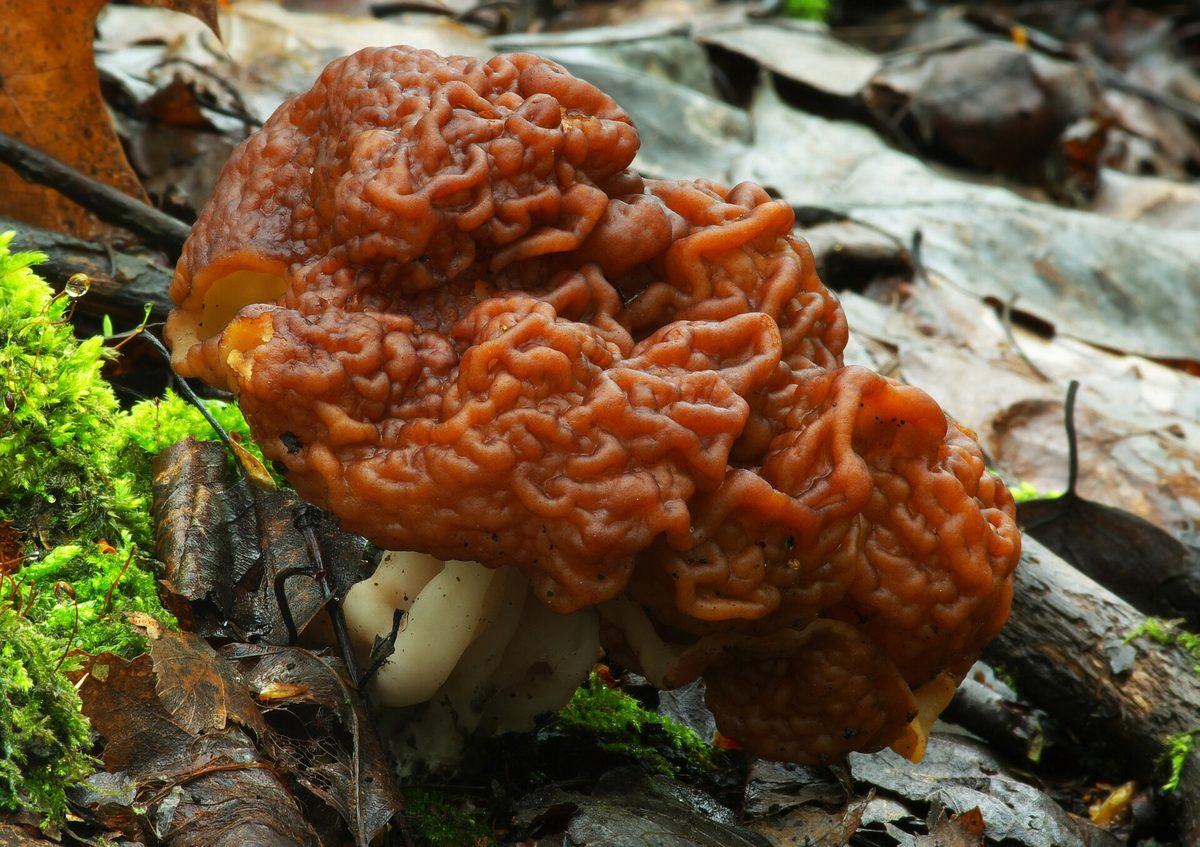
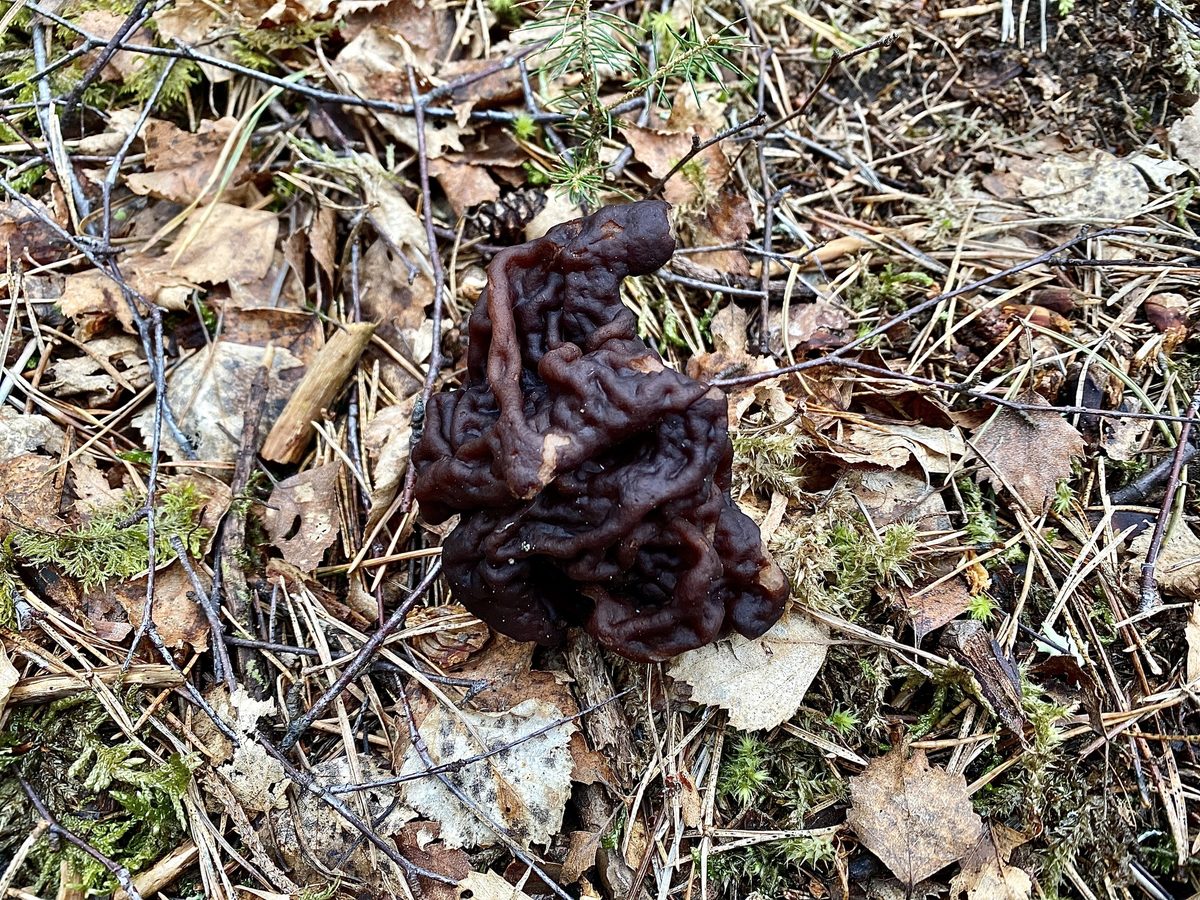
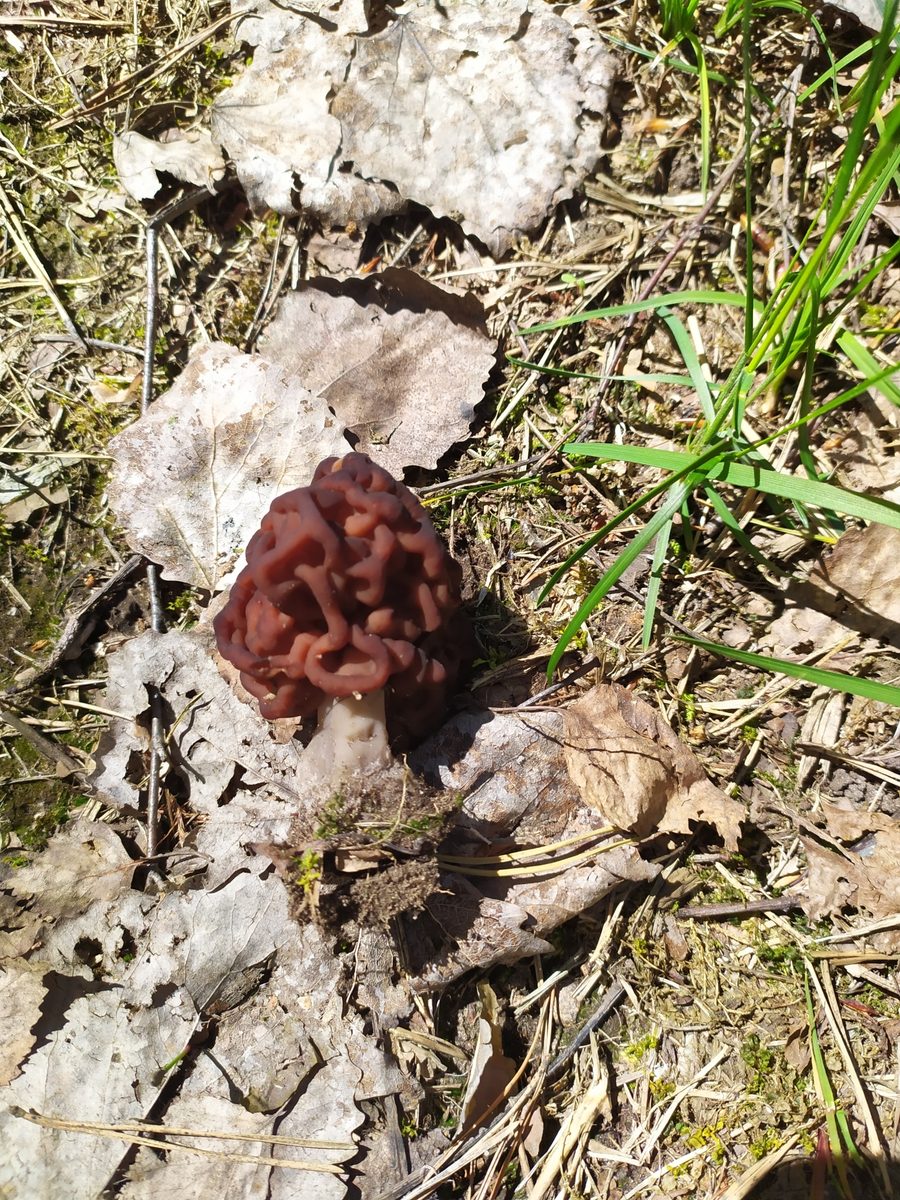
The cap is irregularly shaped, convoluted and wrinkled, resembling a brain or a walnut without a shell, 2–10 cm in diameter, reddish-brown, chestnut, or dark brown. It is attached in several places to a short light stem. Inside, the fruiting body does not have a single even cavity: a longitudinal cut reveals several chambers and convoluted partitions.
The main toxin of the False morel is gyromitrin. In the body, it converts to monomethylhydrazine, which affects the liver, nervous system, and sometimes the kidneys. The first symptoms — nausea, vomiting, diarrhea — usually appear within 6–12 hours, followed by dizziness, seizures, and jaundice. The amount of toxin varies among populations, so previous 'successful experiences' guarantee nothing.
In old guides, the False morel was sometimes referred to as conditionally edible and advised to be boiled. Modern data indicate that even thorough cooking does not eliminate all toxins, and the compounds are suspected of being carcinogenic. In Germany and Switzerland, the sale of False morels is prohibited, and in Poland, they are not on the list of mushrooms allowed for sale.
The False morel is most often mistakenly collected, being confused with morels that grow at the same time. Cut the mushroom lengthwise: in a morel, there is one continuous cavity from the top of the cap to the base of the stem, and the cap is covered with regular pits, like honeycombs. If you have any doubts — do not collect any spring mushrooms.
This species does not live in the Ukrainian Carpathians today — you can see it in other Carpathian countries.
Where in the Carpathians

Orange — where naturalists recorded the species (GBIF, CC0/CC BY). It occurs only locally, so we draw no approximate range; a blank area does not mean it is absent.
- Countries
- Czechia · Poland · Romania
- Altitude belts
- Foothills (below 600 m)
When to see it
| Jan | Feb | Mar | Apr | May | Jun | Jul | Aug | Sep | Oct | Nov | Dec | |
|---|---|---|---|---|---|---|---|---|---|---|---|---|
| Sightings |
From naturalists’ observations in the Carpathians (iNaturalist, research grade): the darker the cell, the more often the species is seen that month.
Safety
Deadly poisonous. Do not collect, taste, or cook False morels: boiling and drying do not make them safe. Symptoms of poisoning appear within a few hours. If poisoning is suspected, call 103 (or 112) and keep any mushroom remnants or dishes for analysis.
Look-alikes — how to tell them apart
The cap is regular, egg-shaped or conical, covered with deep pits and ridges, like honeycombs. In a longitudinal cut, there is one continuous cavity from the top to the base of the stem. The False morel has a convoluted, 'brain-like' cap, and inside there are several chambers.
An elongated conical cap with longitudinal ridges and dark pits, hollow inside. The False morel has a flattened convoluted cap without pits and a chambered structure inside.
Protection and rules
Not protected. Do not collect: the mushroom is deadly poisonous.
FAQ
Can False morels be eaten after boiling?
No. False morels were once considered conditionally edible, but modern data shows that even thorough cooking does not eliminate all toxins. Do not collect them.
How to distinguish False morels from morels?
Cut the mushroom lengthwise. In a morel, there is one continuous cavity, and the cap is covered with regular pits, like honeycombs. In a False morel, the cap is convoluted, like a brain, and inside there are several chambers and partitions.
When do False morels grow?
In spring: from April to early summer, often still near patches of snow, most commonly on sandy soils under pines.
Comments
Travellers’ experience: reports, tips, questions.
No one has written here yet. Be the first — your experience helps others.
Similar species
Sources
- Вікіпедія: Строчок звичайний
- Wikipedia (en): Gyromitra esculenta
- Wikipedia (en): Morchella
- Rozporządzenie Ministra Zdrowia z 17.05.2011, t.j. Dz.U. 2023 poz. 2237: wykaz grzybów dopuszczonych do obrotu (Польща)
- МОЗ України: отруєння грибами — профілактика та перша допомога
- iNaturalist: Gyromitra esculenta (спостереження в Карпатах)
GBIF · iNaturalist · Wikidata · Distribution data: GBIF.org (CC0 and CC BY records), iNaturalist; names and identifiers: Wikidata (CC0). Text: Karpaty.rocks, checked 09.11.2026.
