False death cap
Never identify a mushroom from a photo alone. If in doubt, leave it. In case of poisoning call 112 (103 in Ukraine) at once.
About
Amanita citrina occurs throughout Ukraine in deciduous, coniferous, and mixed forests from July to November, most often on acidic sandy soils. In the Carpathians, it is rare, but it can be found in beech forests and under spruces.
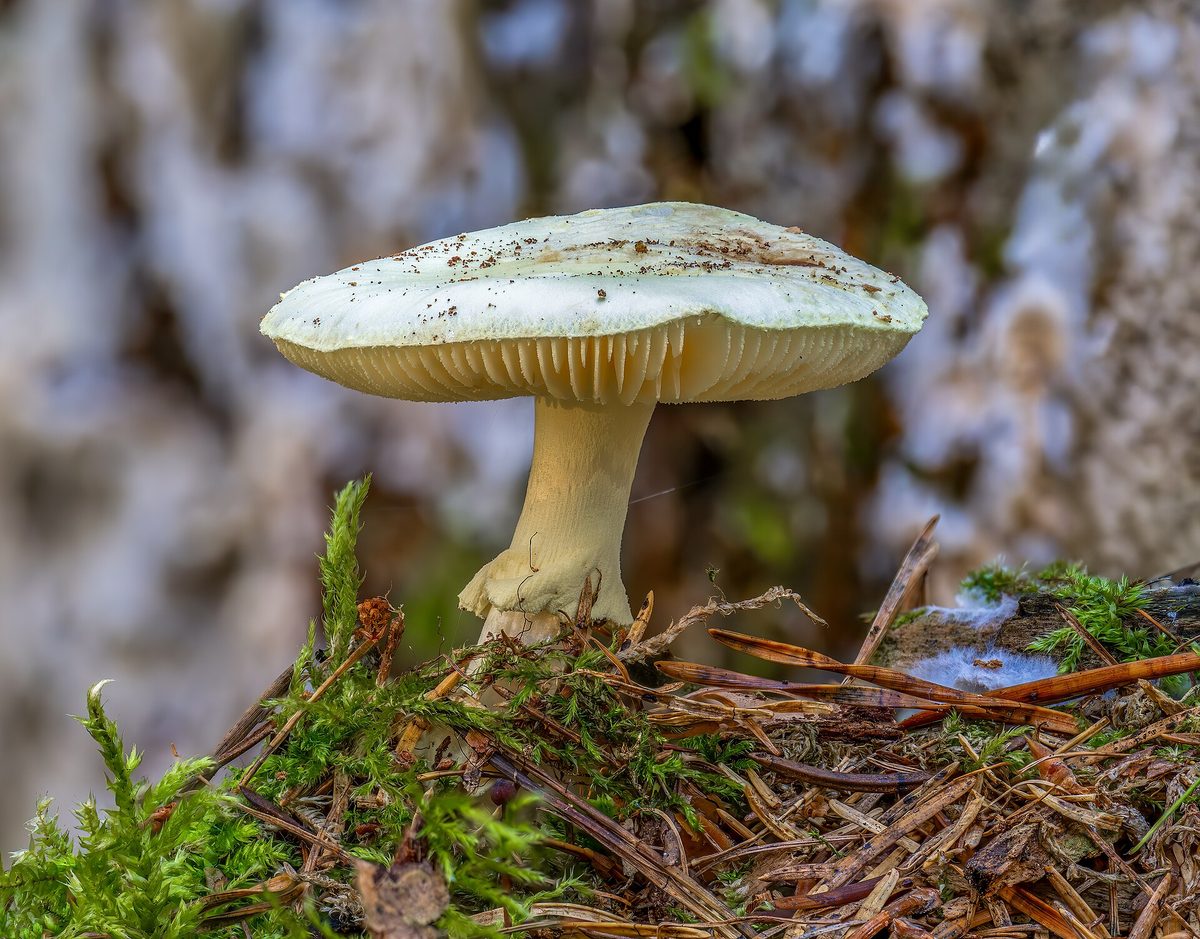
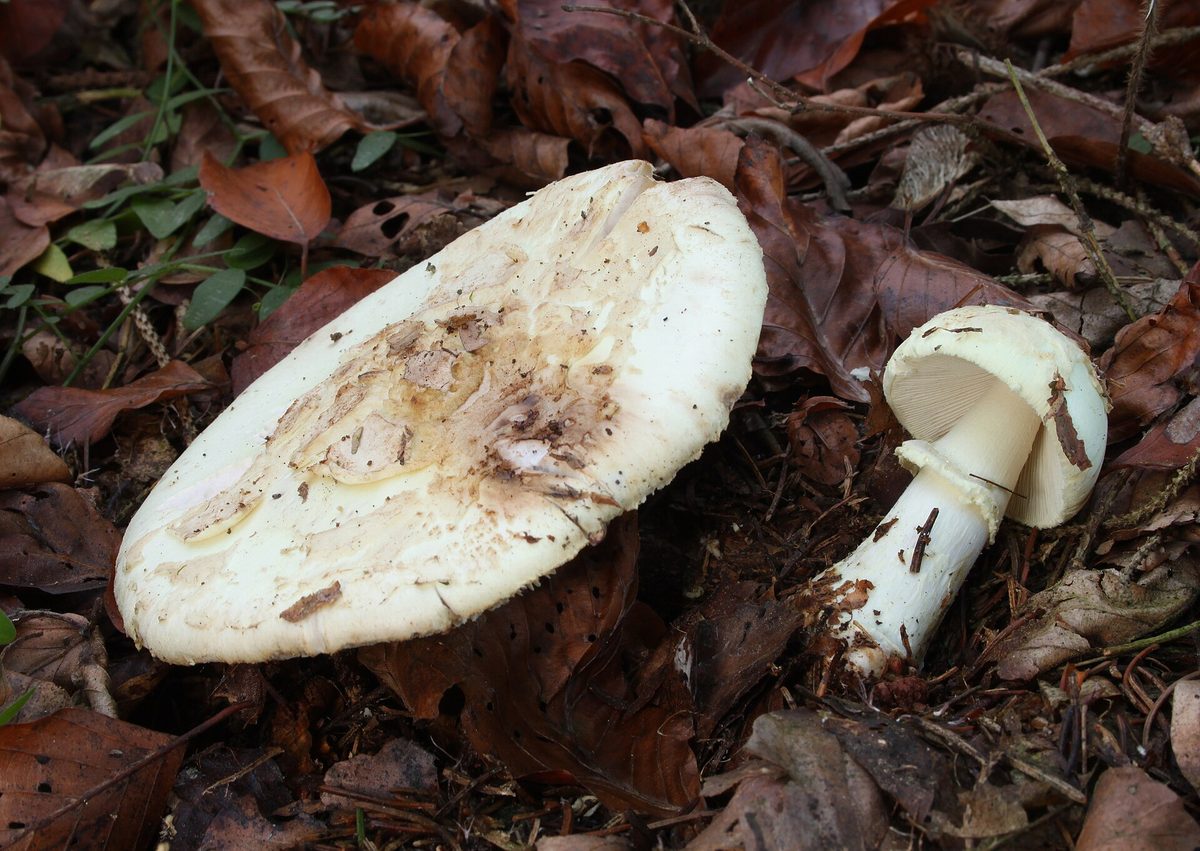
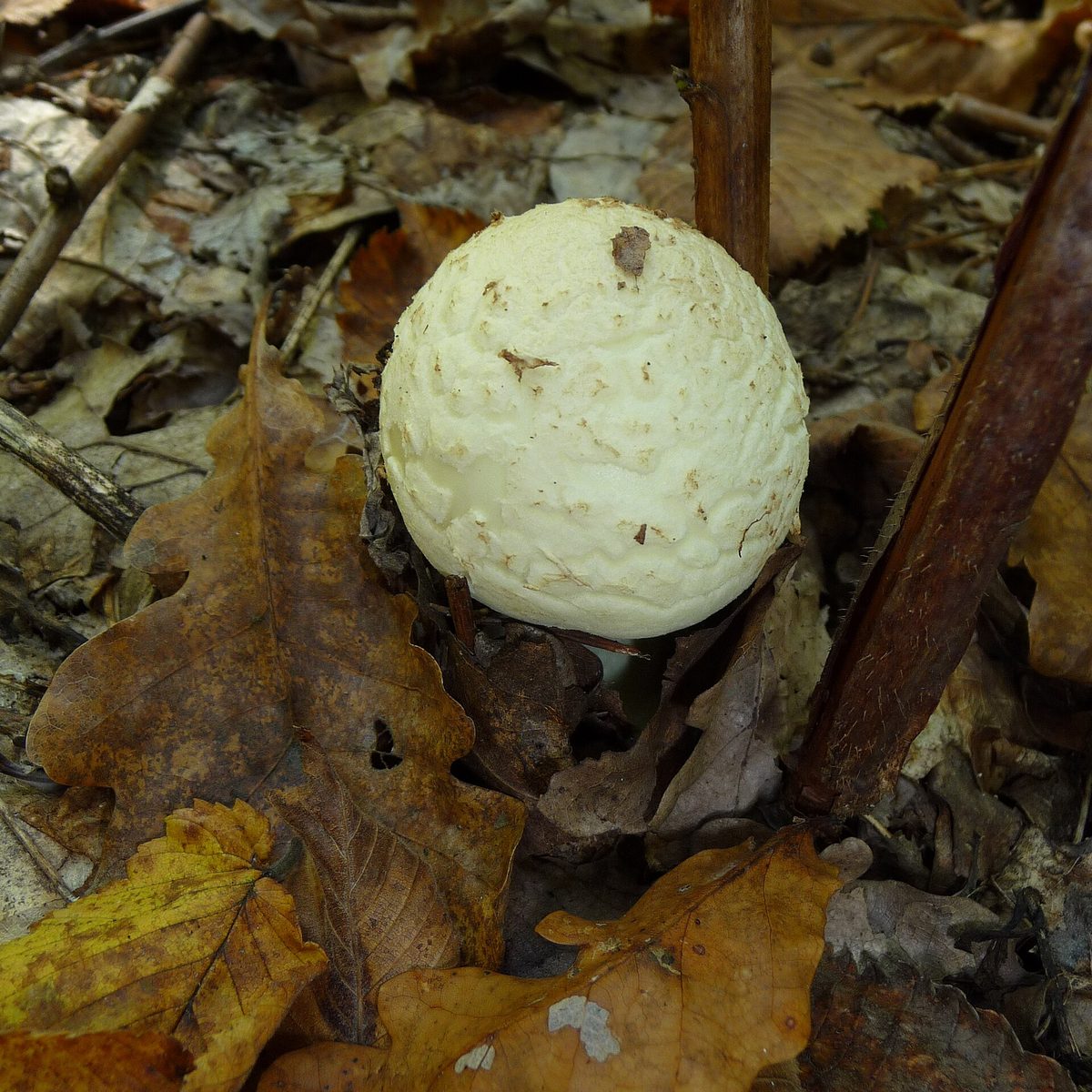
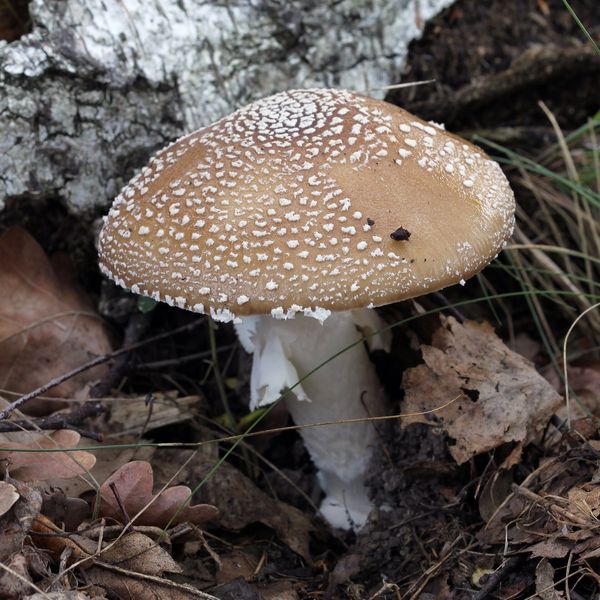
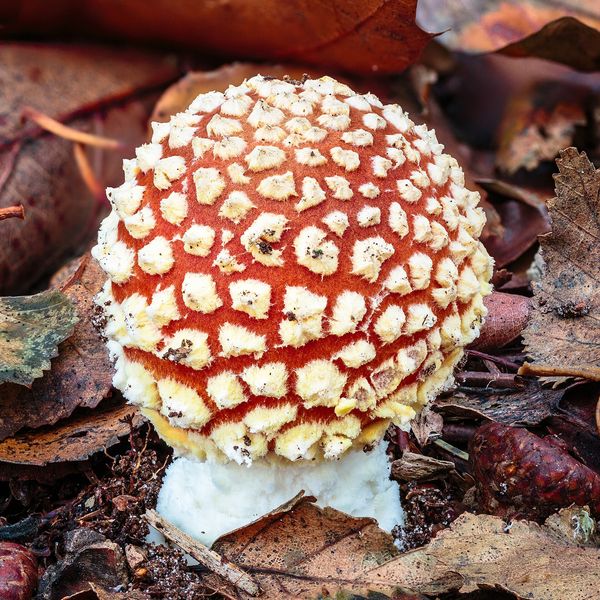
The cap is 4–10 cm, initially convex, later flat, lemon-yellow, greenish, or almost white, with large whitish or brownish flakes — remnants of the universal veil. The gills are white, turning yellowish with age. The stem is white, with a ring, and at the base, there is a large rounded bulb with a distinct edged margin. The flesh is white and has a pronounced smell of raw potatoes or radishes.
The mushroom is considered inedible. Studies have found traces of toxic compounds in it, particularly bufotenin, and according to some data, small amounts of amatoxins. However, the main danger lies not in the mushroom itself, but in its similarity to the death cap: young mushrooms of both species are almost identical, and a mistake can cost a life.
Amanita citrina is a good opportunity to remember the general rule: any gilled mushroom with white gills, a ring on the stem, and a bulb or volva at the base should not be collected. These are the exact features of the death cap. Do not cut such mushrooms with a knife above the ground, as this will destroy the bulb — the main clue. If the mushroom resembles a field mushroom, check the gills: in field mushrooms, they are pink or brown, not white.
Where in the Carpathians

The map shows where naturalists recorded the species (GBIF, CC0 and CC BY records), not every place it lives. The Ukrainian Carpathians are less studied, so a blank area does not mean the species is absent.
- Countries
- Slovakia · Romania · Ukraine · Austria · Hungary · Poland · Czechia
- Mountain ranges
- Low Tatras, Buzău Mountains, Gorgany, Poiana Ruscă Mountains
- Altitude belts
- Foothills (below 600 m) · Beech forests (600–1200 m)
When to see it
| Jan | Feb | Mar | Apr | May | Jun | Jul | Aug | Sep | Oct | Nov | Dec | |
|---|---|---|---|---|---|---|---|---|---|---|---|---|
| Sightings |
From naturalists’ observations in the Carpathians (iNaturalist, research grade): the darker the cell, the more often the species is seen that month.
Safety
Do not collect: inedible, and most importantly — easily confused with the death cap. Never take mushrooms with white gills, a ring, and a bulb at the base. In case of suspected poisoning, call 103 (or 112).
Look-alikes — how to tell them apart
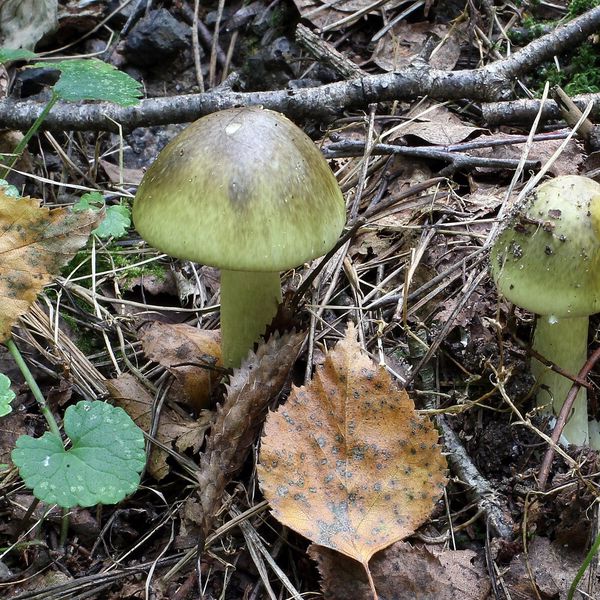
Cap greenish-olive, usually smooth, without flakes; at the base of the stem, there is a free bag-like volva, not an edged bulb; no smell of raw potatoes. It is very difficult to distinguish confidently — do not collect either.
Gills pink, turning chocolate-brown with age, not white; no bulb or volva at the base of the stem; grows in meadows and pastures, not in the forest.
Protection and rules
Not protected.
FAQ
Is Amanita citrina poisonous?
It is considered inedible: it contains toxic compounds, although not as dangerous as the death cap. The main threat is confusing it with the death cap.
How to distinguish Amanita citrina from the death cap?
In Amanita citrina, the cap is pale yellow with flakes, there is an edged bulb at the base of the stem, and the flesh smells of raw potatoes. In the death cap, the cap is greenish-olive, and the stem sits in a free bag-like volva. However, it is safer simply not to collect any mushrooms with white gills and a bulb.
Similar species
Where to meet it
Mountain ranges: Gorgany. In other countries: 🇸🇰 Low Tatras, 🇷🇴 Buzău Mountains, 🇷🇴 Poiana Ruscă Mountains
Trails and peaks near which naturalists recorded the species (GBIF, iNaturalist), matched by altitude and habitat. Sightings are not guaranteed.
Sources
- Вікіпедія: Мухомор цитриновий
- Wikipedia (en): Amanita citrina
- Wikipedia (en): Amanita phalloides
- МОЗ України: отруєння грибами — профілактика та перша допомога
- iNaturalist: Amanita citrina (спостереження в Карпатах)
GBIF · iNaturalist · Wikidata · Distribution data: GBIF.org (CC0 and CC BY records), iNaturalist; names and identifiers: Wikidata (CC0). Text: Karpaty.rocks, checked 09.11.2026.
