Eurasian three-toed woodpecker
About
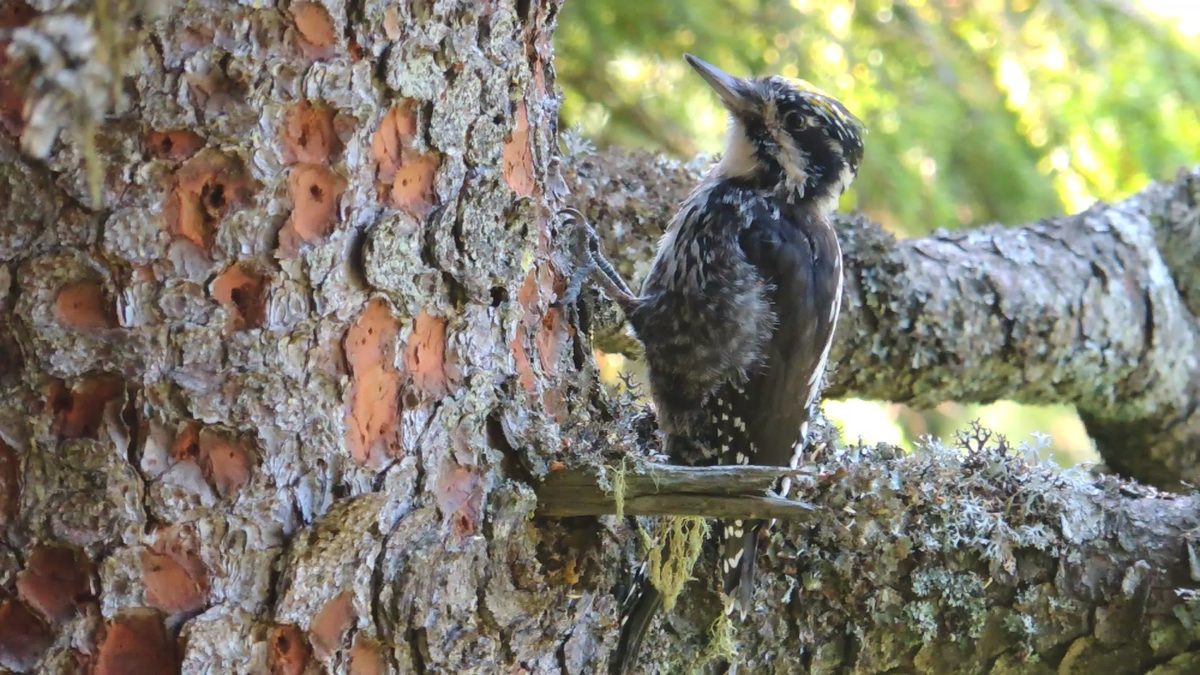
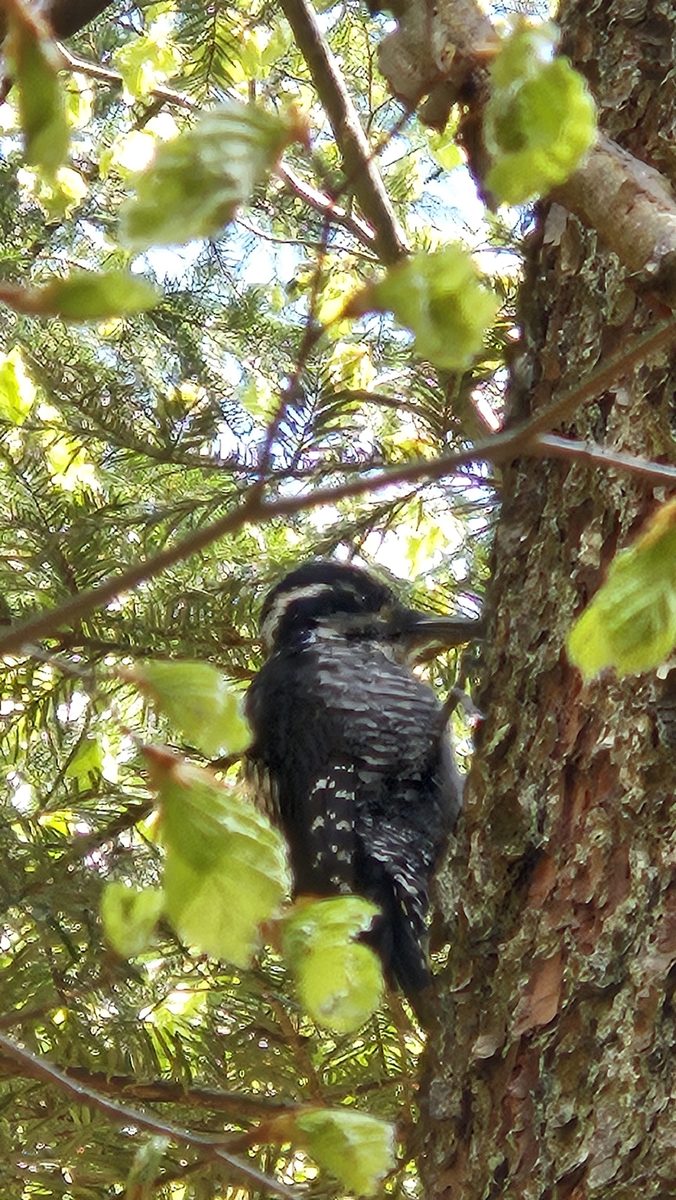
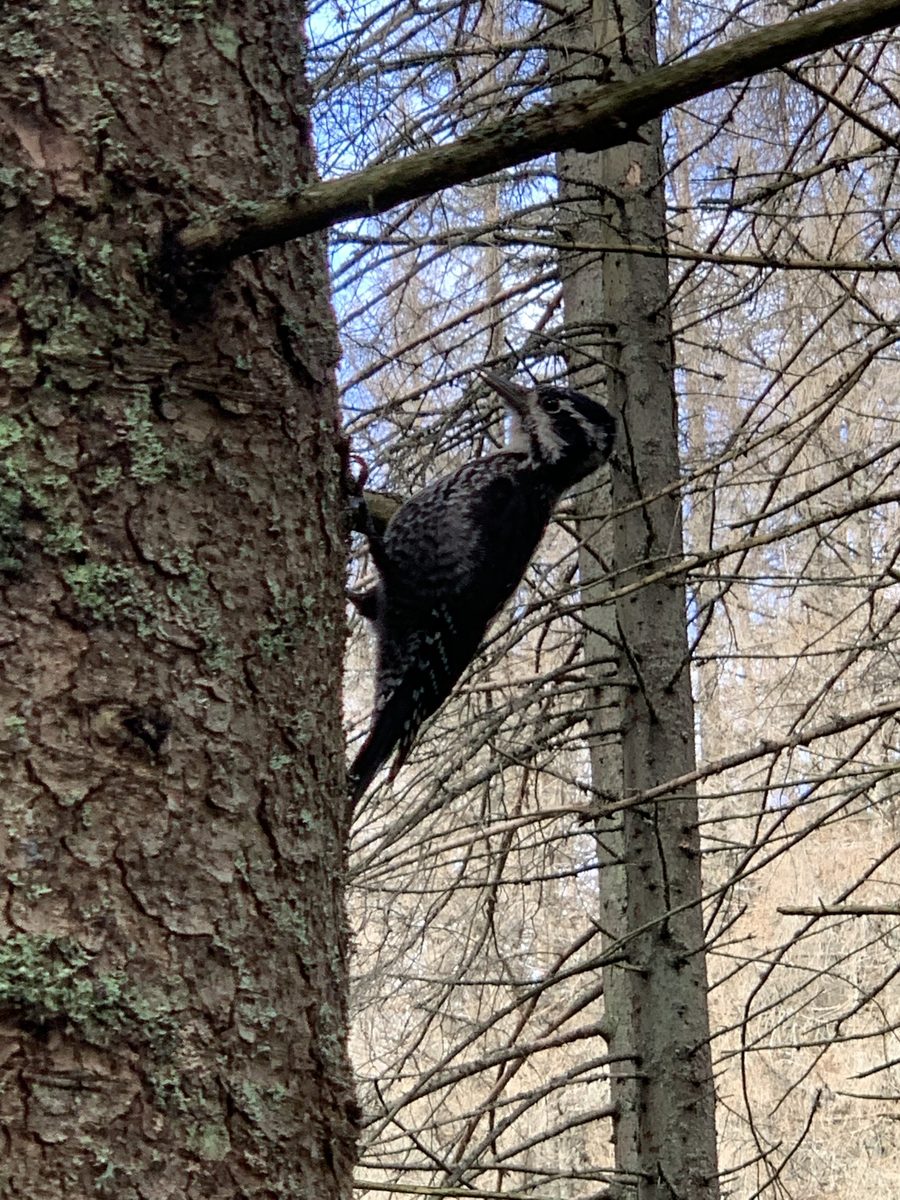
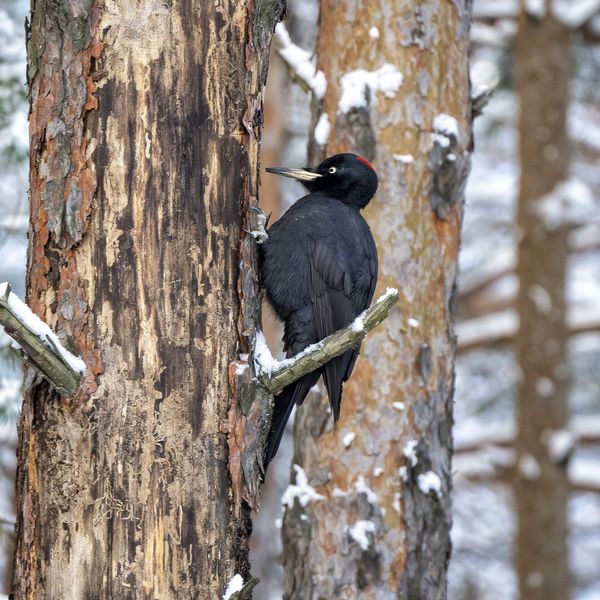
The Eurasian three-toed woodpecker is the only woodpecker in our forests that does not have red coloration in its plumage. It is slightly smaller than the great spotted woodpecker, measuring 21–24 cm in length. Its coloration is black and white: a white stripe runs along the back, and the sides are dotted with dark streaks. The male has a yellow cap, while the female's cap is grayish with white streaks. It has only three toes on each foot, unlike other woodpeckers which have four.
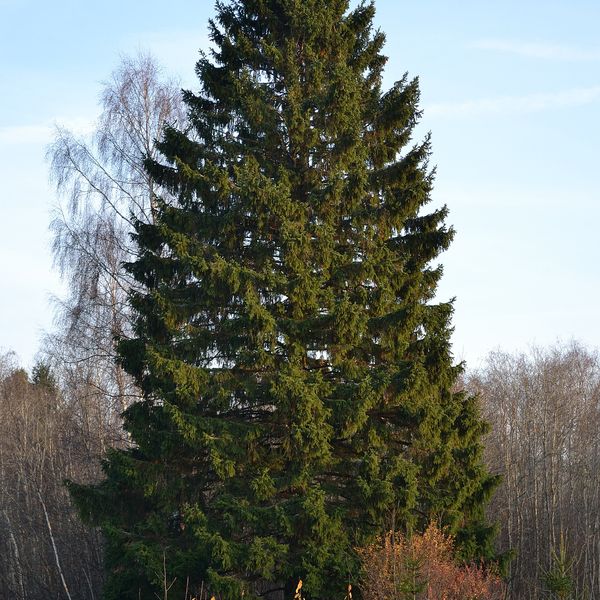
In Ukraine, the Eurasian three-toed woodpecker nests almost exclusively in the Carpathians. It lives in old spruce and mixed forests where there are many dead and windfall trees. It is in these trunks that bark beetles and longhorn beetles develop, the larvae of which the bird feeds on. The woodpecker methodically strips the bark from affected spruces — foresters recognize its work by these stripped trunks.
In spring, the Eurasian three-toed woodpecker 'rings' live trees: it drills rows of small holes in the bark around the trunk and drinks the sap.
The bird is sedentary and silent, allowing people to approach closely. It excavates a new nest hole each year, mostly in dry or decayed spruces.
The species is listed in the Red Data Book of Ukraine with a status of 'vulnerable'. The main threat is the logging of old forests and the removal of dead wood. Therefore, we show its distribution only at the level of mountain ranges on the website.
Where in the Carpathians

Orange — where naturalists recorded the species (GBIF, CC0/CC BY). It occurs only locally, so we draw no approximate range; a blank area does not mean it is absent. For rare and vulnerable species the map is deliberately coarse (hexagons of ~250 km² or more) so that it never points to dens, nests or growing sites.
- Countries
- Ukraine · Poland · Slovakia · Romania · Czechia · Hungary
- Mountain ranges
- Skole Beskids, Gorgany, Chornohora. In other countries: 🇸🇰 High Tatras, 🇸🇰 Western Tatras, 🇵🇱 Babia Góra, 🇨🇿 Moravian-Silesian Beskids, 🇵🇱 Gorce, 🇵🇱 Żywiec Beskids, 🇸🇰 Volovec Mountains, 🇸🇰 Low Tatras, 🇷🇴 Bucegi Mountains, 🇸🇰 Slovak Central Mountains, 🇷🇴 Harghita and Gurghiu Mountains
- Altitude belts
- Beech forests (600–1200 m) · Conifer forests (1200–1600 m)
When to see it
| Jan | Feb | Mar | Apr | May | Jun | Jul | Aug | Sep | Oct | Nov | Dec | |
|---|---|---|---|---|---|---|---|---|---|---|---|---|
| Sightings |
From naturalists’ observations in the Carpathians (iNaturalist, research grade): the darker the cell, the more often the species is seen that month.
Protection and rules
Listed in the Red Data Book of Ukraine (vulnerable). Annex I of the EU Birds Directive. Disturbing birds near nests is prohibited.
FAQ
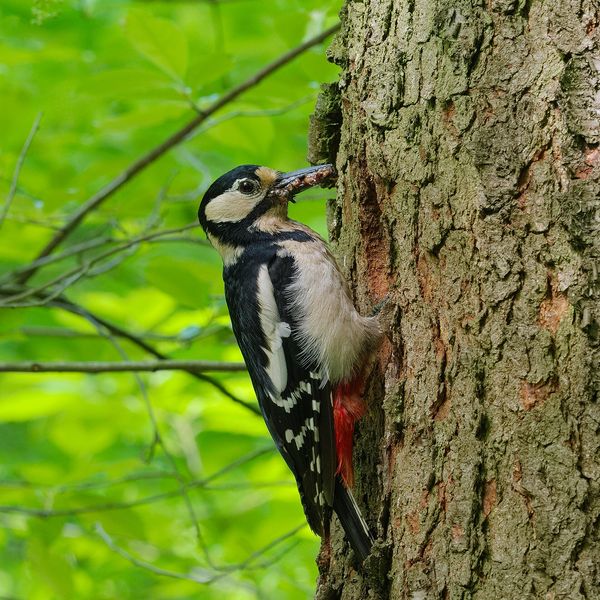
How does the Eurasian three-toed woodpecker differ from the great spotted woodpecker?
It has no red in its plumage: the male has a yellow cap. A white stripe runs along the back, and it has three toes on each foot.
Where in Ukraine does the Eurasian three-toed woodpecker live?
Almost exclusively in the Carpathians, in old spruce and mixed forests with dead wood.
Comments
Travellers’ experience: reports, tips, questions.
No one has written here yet. Be the first — your experience helps others.
Similar species
Where to meet it
Ranges where it occurs: Skole Beskids, Gorgany, Chornohora. In other countries: 🇸🇰 High Tatras, 🇸🇰 Western Tatras, 🇵🇱 Babia Góra, 🇨🇿 Moravian-Silesian Beskids, 🇵🇱 Gorce, 🇵🇱 Żywiec Beskids, 🇸🇰 Volovec Mountains, 🇸🇰 Low Tatras, 🇷🇴 Bucegi Mountains, 🇸🇰 Slovak Central Mountains, 🇷🇴 Harghita and Gurghiu Mountains
Trails and peaks near which naturalists recorded the species (GBIF, iNaturalist), matched by altitude and habitat. Sightings are not guaranteed.
Sources
- Вікіпедія: Дятел трипалий
- Wikipedia (en): Eurasian three-toed woodpecker
- Наказ Міндовкілля від 19.01.2021 № 29: Перелік видів тварин, що заносяться до Червоної книги України
- Директива 2009/147/ЄС про охорону диких птахів (додаток I)
- iNaturalist: Picoides tridactylus (спостереження в Карпатах)
GBIF · iNaturalist · Wikidata · Distribution data: GBIF.org (CC0 and CC BY records), iNaturalist; names and identifiers: Wikidata (CC0). Text: Karpaty.rocks, checked 11.11.2026.
