Castor bean tick
About
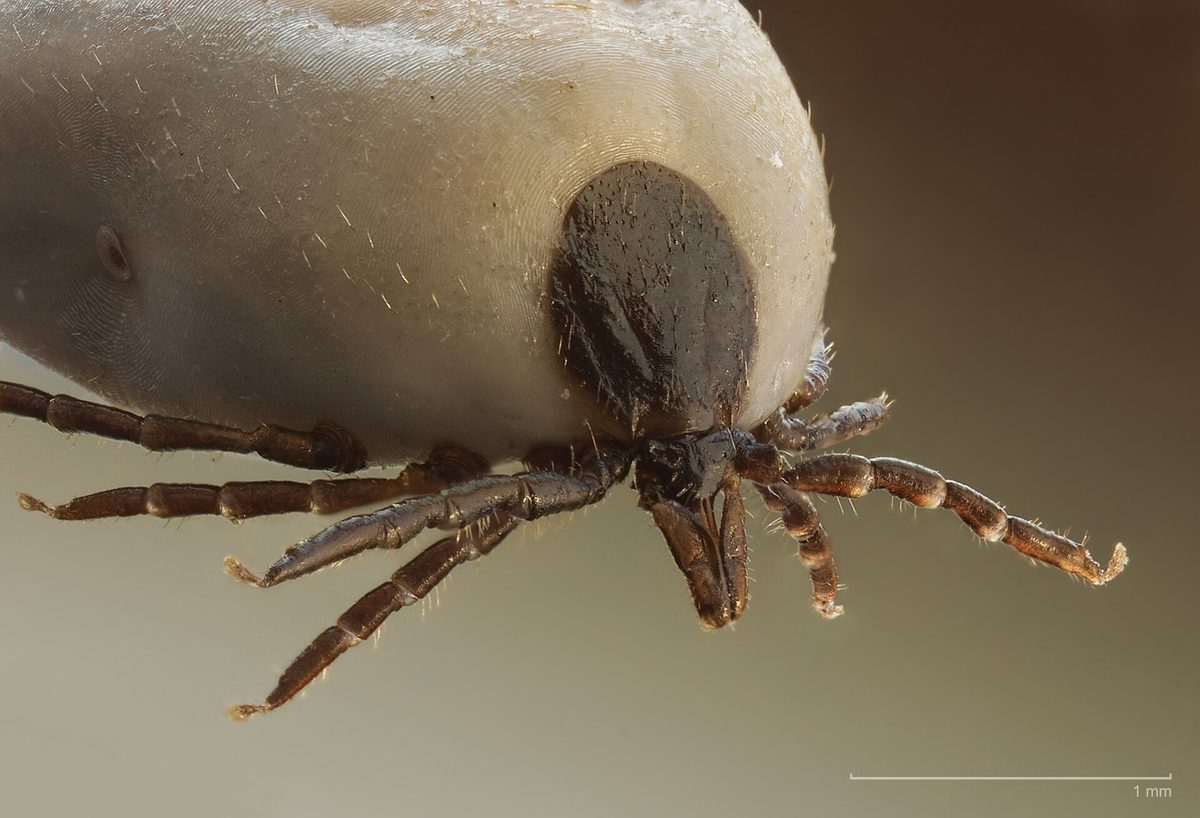
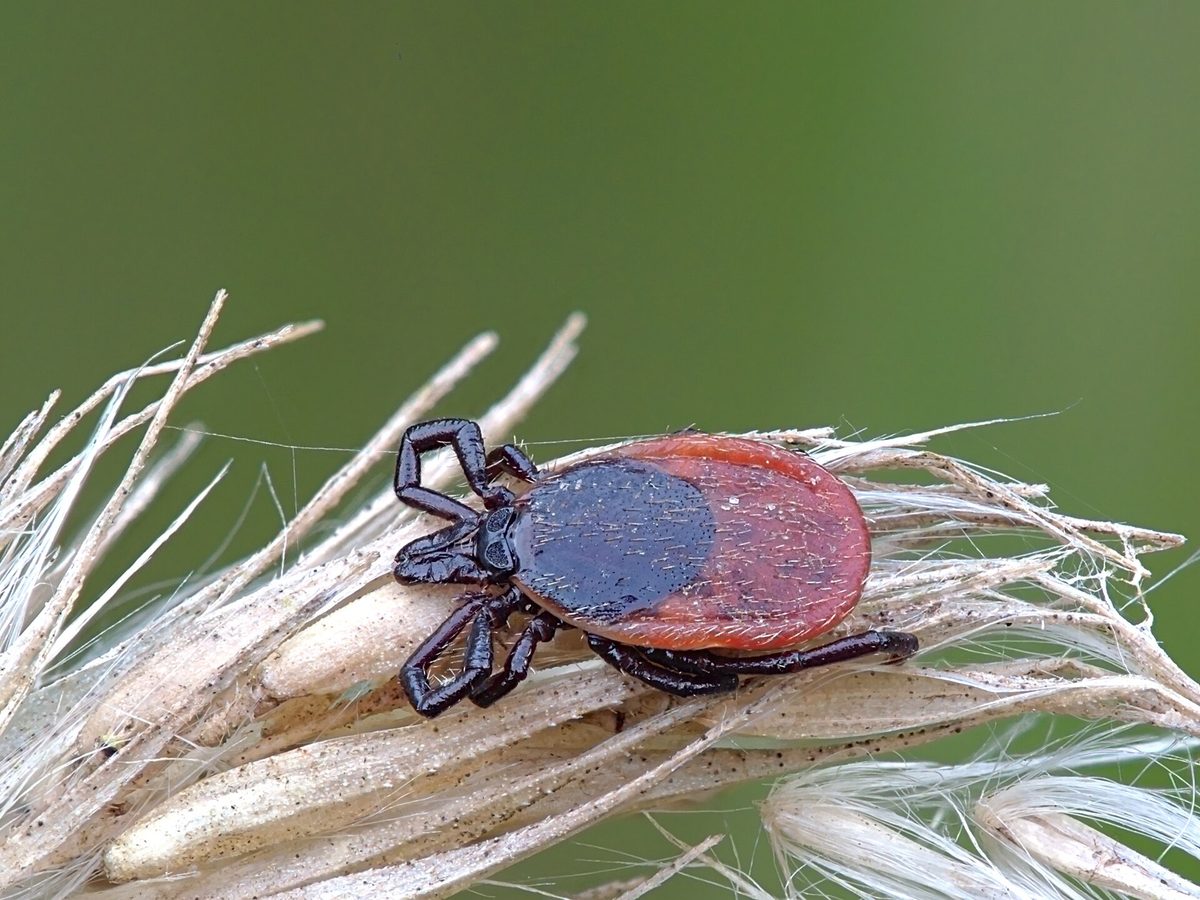
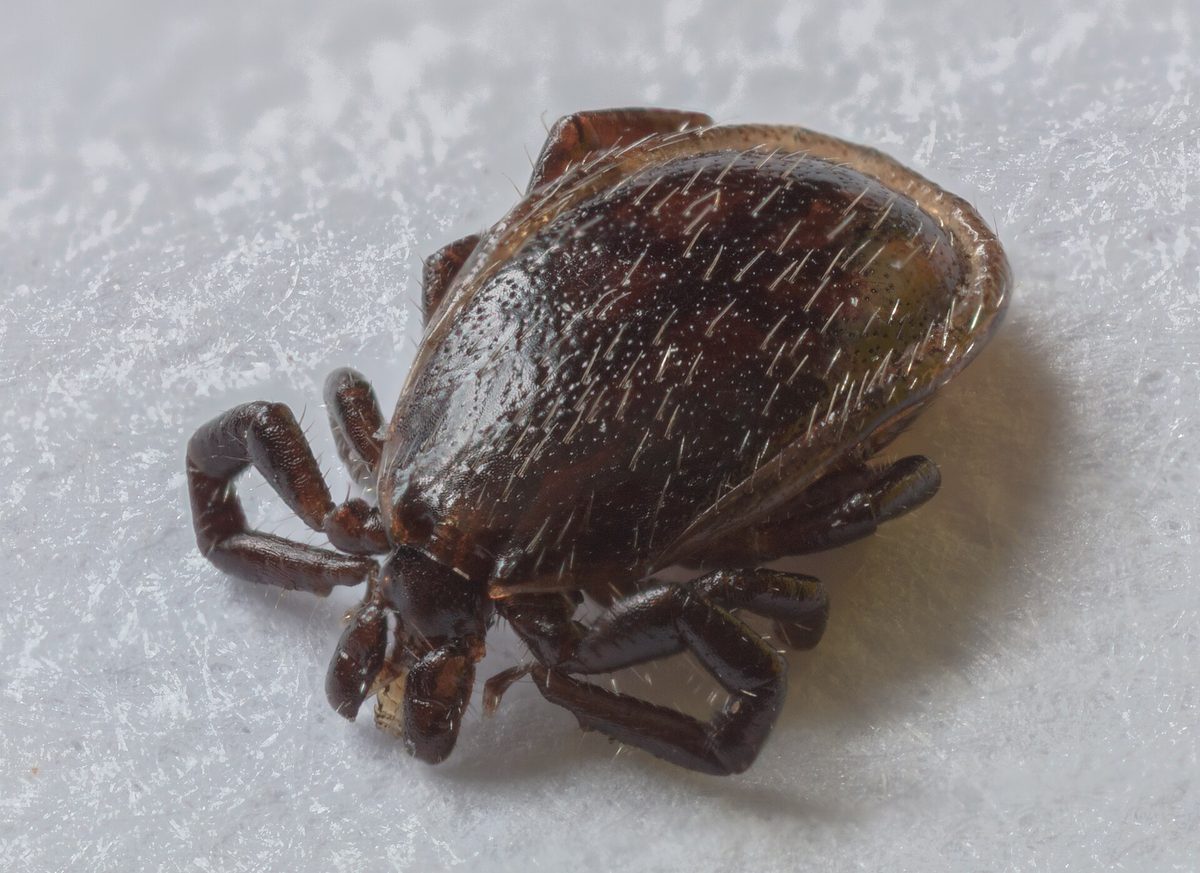
The dog tick is the most common Ixodes tick in Europe, and it is the one most often found on tourists after hiking. In the Carpathians, it lives in moist deciduous and mixed forests, on forest edges, clearings, meadows, and pastures, in thickets of ferns and blueberries, as well as in urban parks and summer cottages.
Ticks live in the soil and grass, not in trees. They do not jump or fall from above: the tick waits at the tips of the grass and clings to clothing when a person or animal passes by, then crawls upward, searching for thin skin — under the knees and elbows, in armpits and groins, behind the ears, along the lines of clothing. The most active ticks are in spring and autumn, when it is humid and warm, but they can occur almost all year round.
The tick can carry borreliosis (Lyme disease) and tick-borne encephalitis. Borreliosis is more common in Ukraine; tick-borne encephalitis occurs rarely, but the Ministry of Health names the Lviv and Volyn regions as endemic for it, and there is a vaccine available. The longer the tick is attached, the higher the risk of infection with borreliosis, so it should be removed as soon as possible.
To protect yourself, wear light-colored clothing with long sleeves, tuck your pants into your socks, wear closed shoes, use tick repellent, and stay in the middle of the path, avoiding tall grass. During breaks and definitely after hiking, check yourself, children, and dogs, and wash your clothes after the walk.
The tick itself is part of the forest ecosystem and food for many birds, so there is no need to fight it in the mountains. It is only necessary to notice it in time and remove it correctly.
Where in the Carpathians

The map shows where naturalists recorded the species (GBIF, CC0 and CC BY records), not every place it lives. The Ukrainian Carpathians are less studied, so a blank area does not mean the species is absent.
- Countries
- Slovakia · Hungary · Romania · Czechia · Poland · Serbia · Ukraine
- Mountain ranges
- Bükk, Slovak Ore Mountains, Strážov Mountains, Zemplén Mountains, Little Carpathians, Buzău Mountains, Javorníky, Börzsöny and Cserhát, Low Tatras, Meseș and Plopiș Mountains
- Altitude belts
- Foothills (below 600 m)
When to see it
| Jan | Feb | Mar | Apr | May | Jun | Jul | Aug | Sep | Oct | Nov | Dec | |
|---|---|---|---|---|---|---|---|---|---|---|---|---|
| Sightings |
From naturalists’ observations in the Carpathians (iNaturalist, research grade): the darker the cell, the more often the species is seen that month.
Safety
If a tick has attached: remove it as soon as possible with a medical tweezers (or fingers through gauze) — grasp it close to the skin and slowly pull it out perpendicular to the skin, without jerking or twisting. Do not smear the tick with oil or alcohol. If a mouthpart remains in the skin, remove it with a sterile needle, like a splinter. Treat the bite area with antiseptic and wash your hands. There is no need to submit the tick for analysis. Consult a doctor if a red circular spot appears at the bite site that does not disappear for several days or increases, as well as if fever, headache, fatigue, muscle or joint pain, or rash appear within a few weeks. Emergency assistance — 103 or 112.
Protection and rules
FAQ
Are there ticks in the Carpathians?
Yes, the most common is the dog tick. It lives in the grass on forest edges, clearings, meadows, and in undergrowth; it is most active in spring and autumn. Check yourself, children, and dogs after every hike.
What to do if bitten by a tick?
Remove it as soon as possible with tweezers, slowly pulling it out perpendicular to the skin without jerking, treat the bite area with antiseptic, and monitor your health. If a red spot appears that increases, fever, or joint pain — consult a doctor.
Are ticks dangerous in the Carpathians?
Ticks can carry borreliosis (Lyme disease) and, less frequently, tick-borne encephalitis. The risk is reduced by wearing closed clothing, using repellent, regular checks, and quick removal of the tick.
Similar species
Where to meet it
Mountain ranges: In other countries: 🇭🇺 Bükk, 🇸🇰 Slovak Ore Mountains, 🇸🇰 Strážov Mountains, 🇭🇺 Zemplén Mountains, 🇸🇰 Little Carpathians, 🇷🇴 Buzău Mountains, 🇸🇰 Javorníky, 🇭🇺 Börzsöny and Cserhát, 🇸🇰 Low Tatras, 🇷🇴 Meseș and Plopiș Mountains, 🇸🇰 Čergov Mountains, 🇷🇴 Trascău and Metaliferi Mountains, 🇷🇴 Semenic Mountains, 🇷🇸 Rtanj
Trails and peaks near which naturalists recorded the species (GBIF, iNaturalist), matched by altitude and habitat. Sightings are not guaranteed.
Sources
- МОЗ України: що робити, якщо вас укусив кліщ
- Вікіпедія: Кліщ собачий
- Wikipedia (en): Ixodes ricinus
- Перелік видів тварин, що заносяться до Червоної книги України (наказ Міндовкілля від 19.01.2021 № 29, зареєстровано в Мін'юсті 01.03.2021 за № 260/35882)
- Міндовкілля: текст переліку видів тварин Червоної книги України (PDF)
- GBIF: таксон і категорія МСОП
GBIF · iNaturalist · Wikidata · Distribution data: GBIF.org (CC0 and CC BY records), iNaturalist; names and identifiers: Wikidata (CC0). Text: Karpaty.rocks, checked 09.11.2026.
