Carpathian snowbell
About
Soldanella carpatica is an endemic of the Western Carpathians, a close relative of Soldanella hungarica, which is known to travelers in Chornohora. In Poland, it is very common in the Tatra Mountains and on Babia Góra, with smaller populations found on Pilsko, Policy, in the Gorgany, and Pieniny; in Slovakia, our data show it in the Tatras, Low Tatras, and Greater and Lesser Fatra. This species is absent in Ukraine: in the Eastern Carpathians, it is replaced by Soldanella hungarica.
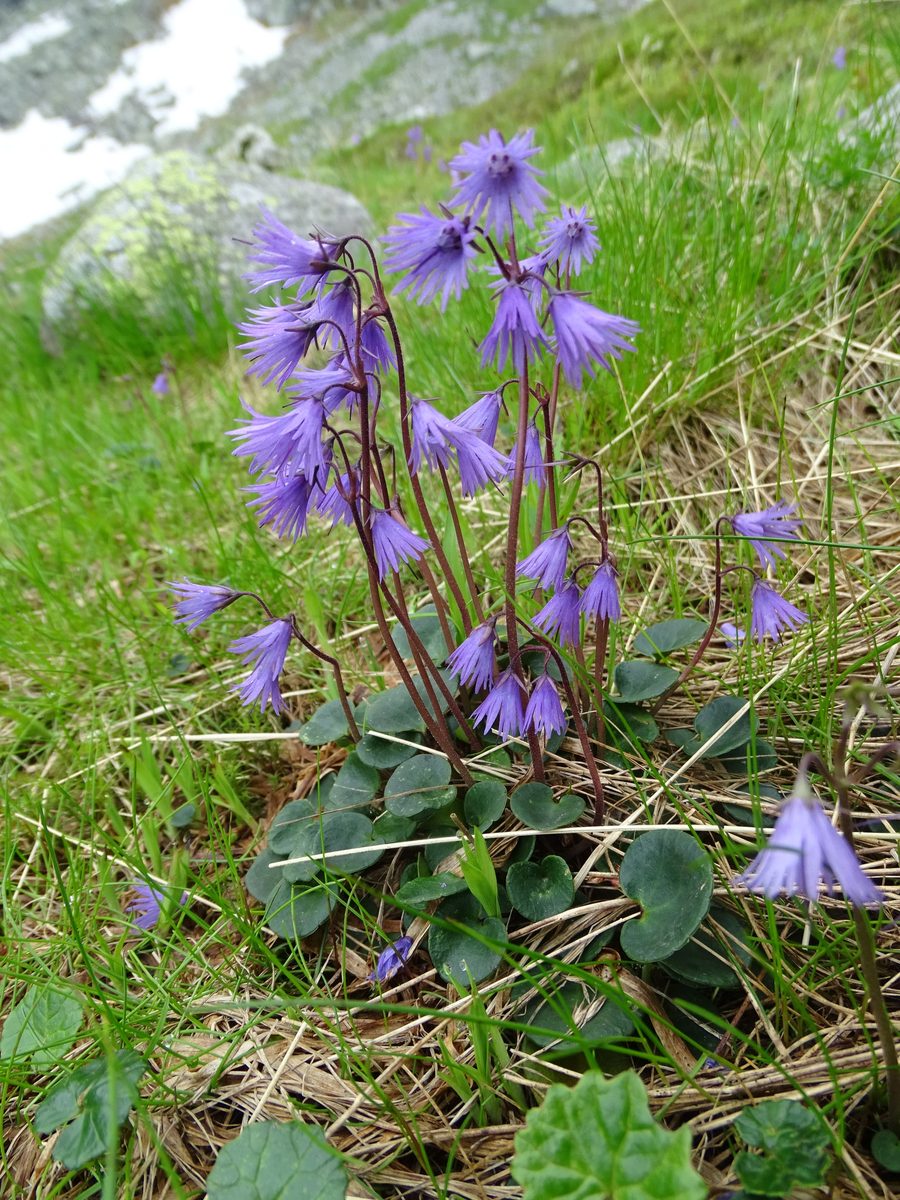
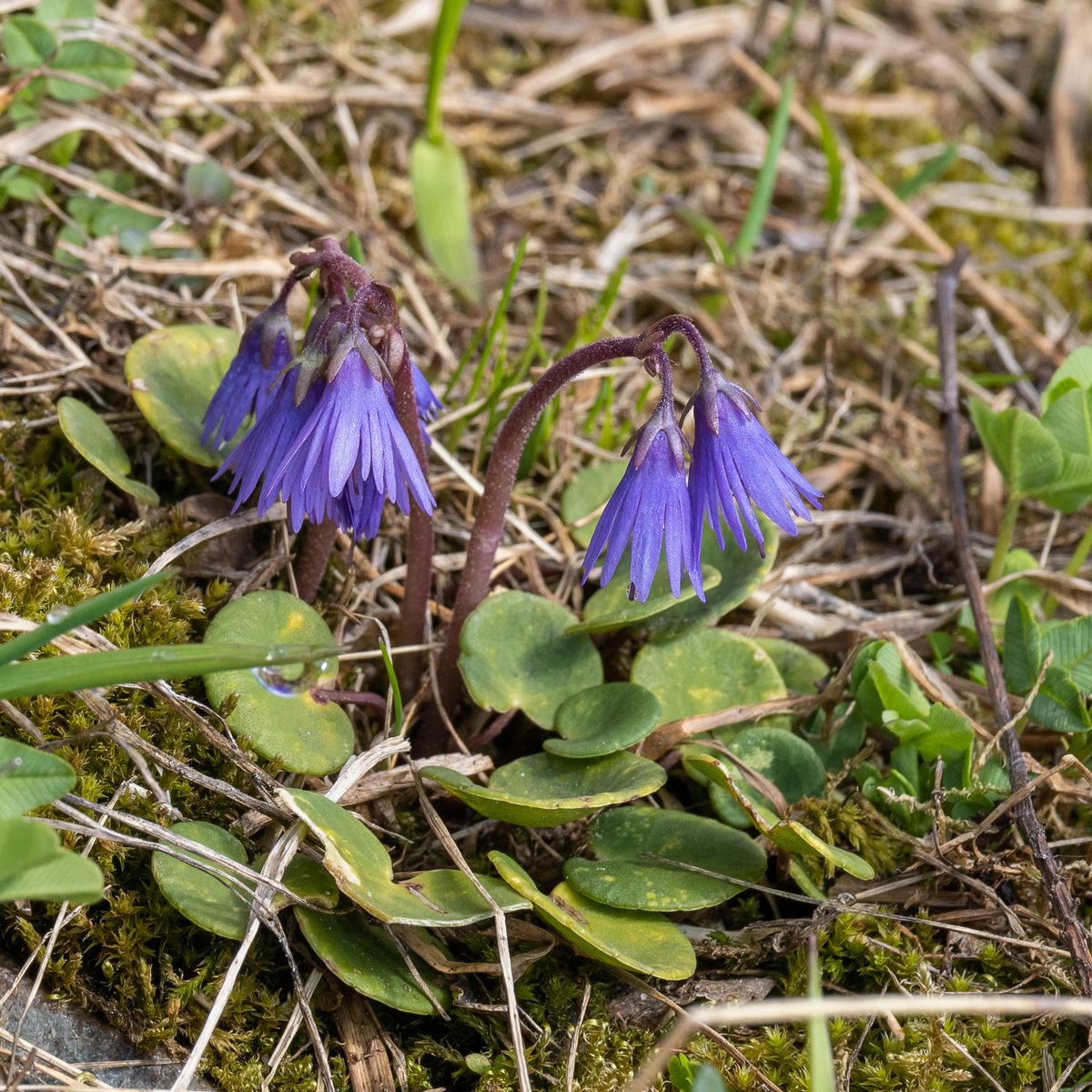
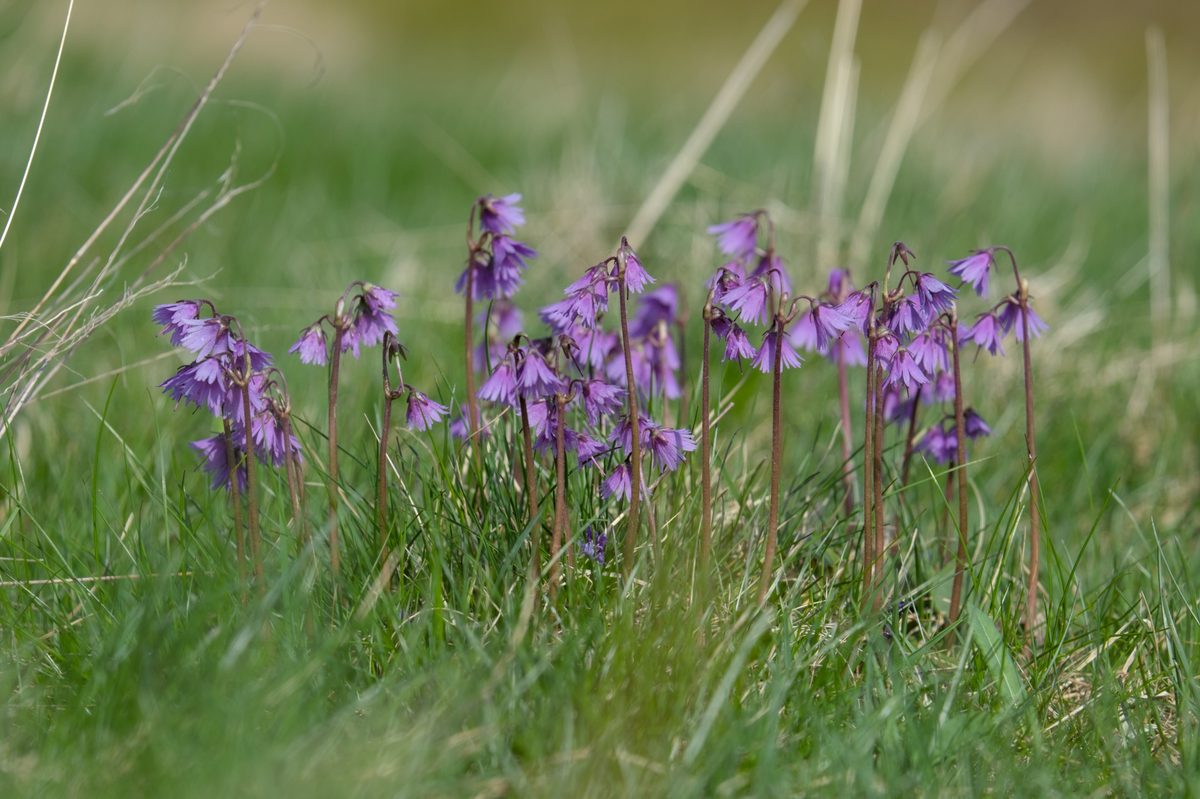
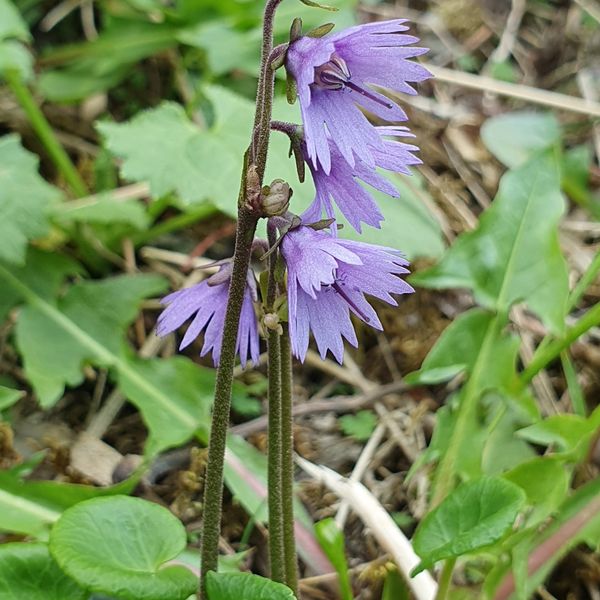
The plant grows 5–20 cm tall. The evergreen leaves are gathered at the base: rounded-heart-shaped, up to 3 cm wide, leathery, dark green on top, often reddish-purple underneath. On a reddish, leafless stem hang one to three flowers. The corolla is funnel-shaped, pale purple, occasionally white, and divided into fringes more than halfway.
It blooms from April to July — the higher the elevation, the later it blooms, usually just after the snow melts. It grows from the foothills to the Tatra peaks: in forests, thickets, on mountain meadows, among rocks, on scree, and near snowfields, on limestone and granite.
On the trails of the Tatras in spring, Soldanella often grows in whole carpets right at your feet. Do not pick them and do not step off the trail for photos: it is prohibited in national parks, and trampling harms the plants the most.
This species does not live in the Ukrainian Carpathians today — you can see it in other Carpathian countries.
Where in the Carpathians

Orange — where naturalists recorded the species (GBIF, CC0/CC BY); a blank area does not mean it is absent.
- Countries
- Slovakia · Poland
- Mountain ranges
- In other countries: 🇸🇰 Western Tatras, 🇸🇰 Low Tatras, 🇸🇰 Greater Fatra, 🇸🇰 High Tatras, 🇸🇰 Lesser Fatra, 🇸🇰 Belianske Tatras, 🇸🇰 Strážov Mountains, 🇸🇰 Slovak Ore Mountains, 🇸🇰 Choč Mountains, 🇵🇱 Żywiec Beskids, 🇵🇱 Babia Góra, 🇸🇰 Volovec Mountains, 🇸🇰 Slovak Paradise, 🇸🇰 Spiš Magura
- Altitude belts
- Beech forests (600–1200 m) · Conifer forests (1200–1600 m) · Subalpine belt (1600–1900 m) · Alpine belt (above 1900 m)
When to see it
| Jan | Feb | Mar | Apr | May | Jun | Jul | Aug | Sep | Oct | Nov | Dec | |
|---|---|---|---|---|---|---|---|---|---|---|---|---|
| Flowering | ||||||||||||
| Fruit |
From naturalists’ observations in the Carpathians (iNaturalist, research grade): the darker the cell, the more often the species is seen that month.
Protection and rules
The species is absent in Ukraine. An endemic of the Western Carpathians; picking plants is prohibited in national parks.
FAQ
How does Soldanella carpatica differ from Soldanella hungarica?
Primarily by location: carpatica grows in the Western Carpathians (Poland, Slovakia), while hungarica grows in the Eastern and Southern Carpathians (Ukraine, Romania). Both are low plants with fringed purple bells.
When does Soldanella bloom in the Tatras?
From April to July, just after the snow melts: the higher the elevation, the later it blooms.
Comments
Travellers’ experience: reports, tips, questions.
No one has written here yet. Be the first — your experience helps others.
Similar species
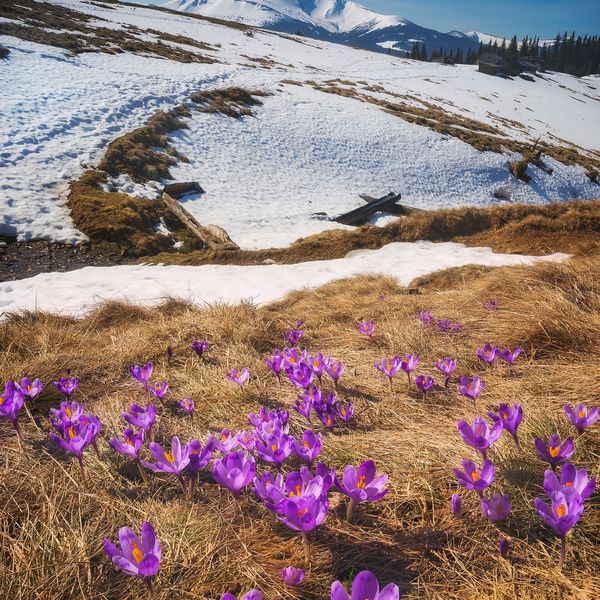
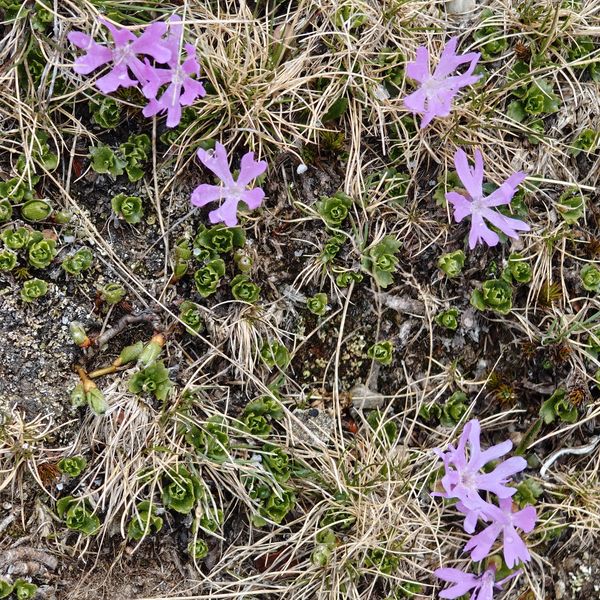
Where to meet it
Mountain ranges: In other countries: 🇸🇰 Western Tatras, 🇸🇰 Low Tatras, 🇸🇰 Greater Fatra, 🇸🇰 High Tatras, 🇸🇰 Lesser Fatra, 🇸🇰 Belianske Tatras, 🇸🇰 Strážov Mountains, 🇸🇰 Slovak Ore Mountains, 🇸🇰 Choč Mountains, 🇵🇱 Żywiec Beskids, 🇵🇱 Babia Góra, 🇸🇰 Volovec Mountains, 🇸🇰 Slovak Paradise, 🇸🇰 Spiš Magura
Trails and peaks near which naturalists recorded the species (GBIF, iNaturalist), matched by altitude and habitat. Sightings are not guaranteed.
Sources
GBIF · iNaturalist · Wikidata · Distribution data: GBIF.org (CC0 and CC BY records), iNaturalist; names and identifiers: Wikidata (CC0). Text: Karpaty.rocks, checked 11.11.2026.
