Church of St. George, Verkhnye Syn'ovydne
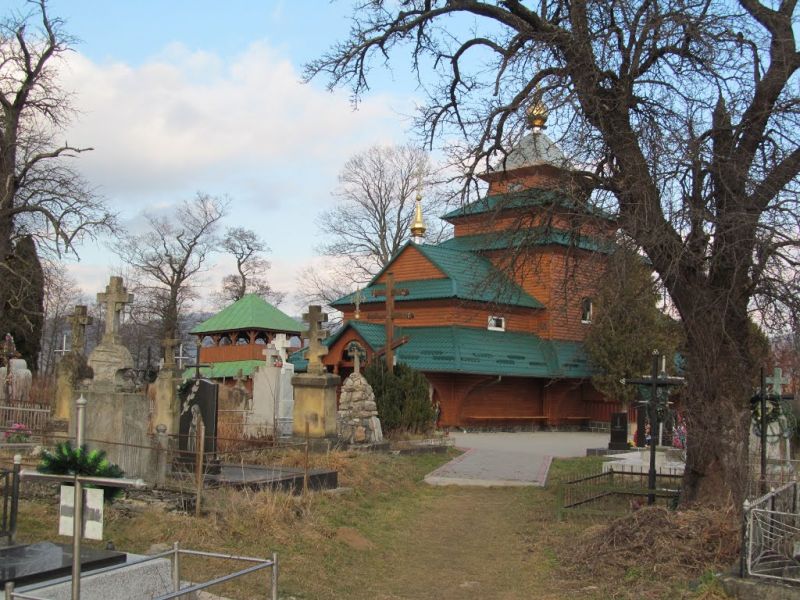
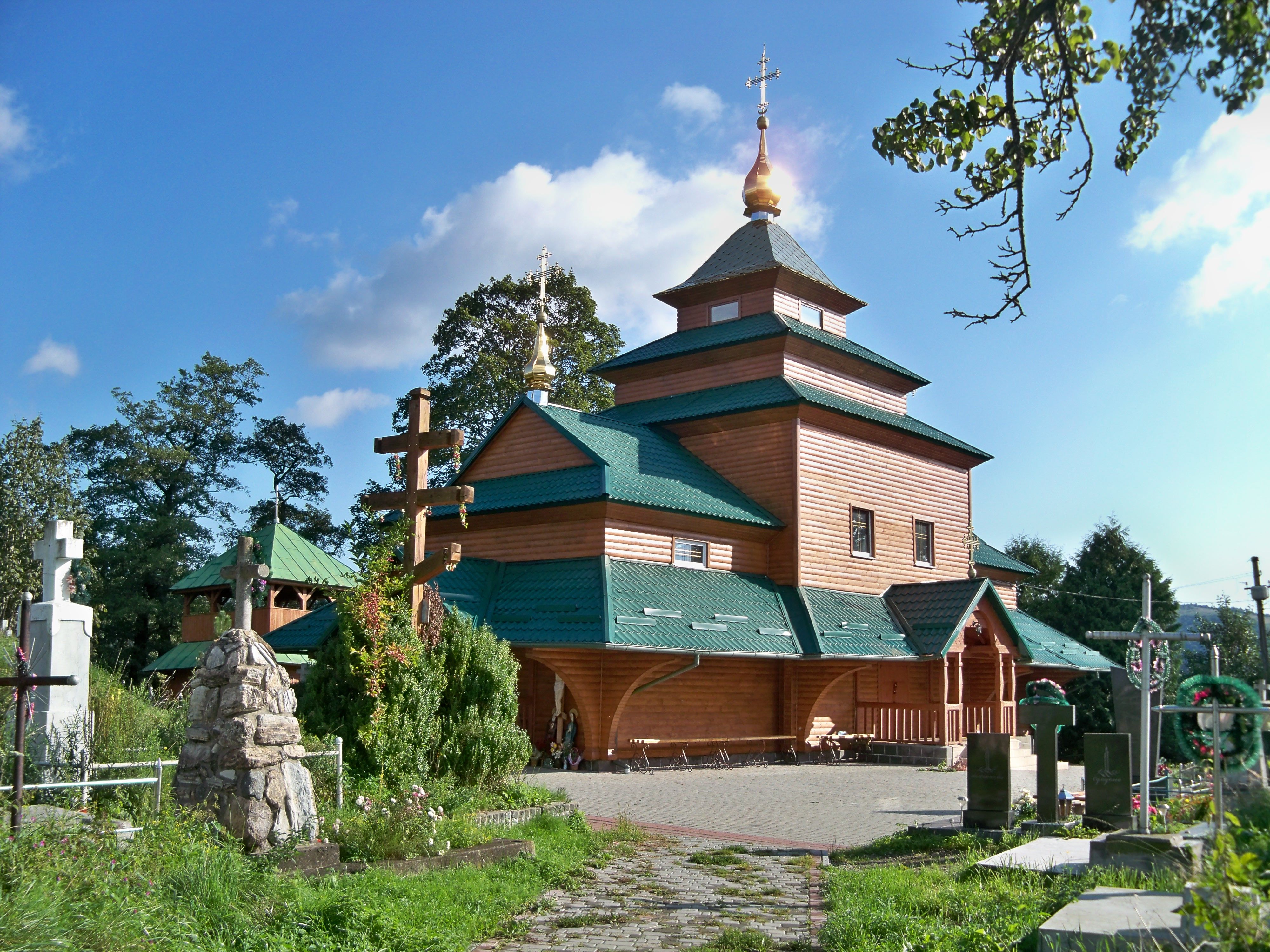
On Zolota Hora stands a wooden church, recognized as a monument of history and architecture. Originally, the mountain served as a signaling watch point. Later, a fortified Syn'ovyd monastery was built on it, where Danylo Halytsky stopped. The Church of St. George, also known as Georgievska, was erected on the site of the Monastery of the Holy Virgin.
The Church of St. George in the village of Verkhnye Syn'ovydne is a unique monument known for its rich history. Historical sources indicate that there once existed a monastery of the Holy Virgin at the site of the Church of St. George. It is likely that this church was ultimately destroyed by a Polish nobleman in 1597. Locals built a church on the site of the monastery and named it after St. George. It was detailed in the monograph "Ukrainian Wooden Churches" by art historian M. Dragan.
According to legend, it was here, in the monks' cells, that the great prince Danylo Halytsky spent the night in 1240. He was traveling to Hungary to negotiate a marriage alliance between his son and Queen Constance. Upon waking up in the morning, he learned that Kyiv had been captured and plundered by the hordes of Khan Batu.
According to scholars, the Church of St. George belongs to the early temples known to us from the times of Ukraine-Rus. It is suggested that this structure resembled the architecture of the famous Church of the Holy Virgin. Due to its emergency condition, the Church of St. George was dismantled in 1938, and a new one was built on the same site, consecrated on July 4, 1943. In terms of architectural design and external appearance, it resembles its predecessor but is not an exact copy. The construction was led by local resident Mykola Barabash under the project of architect Yevhen Nahirny.
The new chapel, intended for funeral rites, was named after the Holy Virgin, the fortress of the Holy Virgin. The bell tower from the 18th century was restored, but in doing so, it lost its original appearance and, consequently, its pristine architecture and beauty. According to the accounts of the locals, there was another old church in the village in the square, which until the 1940s was called "the cemetery." Before the start of World War II, several stone tombstones were preserved. Some relatives occasionally placed wreaths and flowers on the graves. In the 1860s-70s, the church burned down due to a lightning strike. The community decided to build a brick temple in the same place. Bricks and other building materials were brought in, but due to the construction of a new highway starting in 1880, it was decided that the church should stand by the road, so they exchanged land with Tymko Turchyn, and in 1882 began building a new large brick church, the largest in our vicinity. Its consecration took place on January 19, 1886. At first glance, it resembles a Latin church, but in reality, the architecture is borrowed from Transcarpathia.
The building, which began to decline, underwent numerous repairs and restorations. It was completely rebuilt in 1939. However, despite this, the wooden church has preserved its original appearance, making it a vivid example of Galician architecture to this day. It is currently under the protection of the Kyiv Patriarchate.
The church was closed from 1946 (1948) to 1988. The following year, it was reconsecrated in honor of the Holy Virgin. In 2005, an altar was purchased for the church, which stands in the central part of the temple. It is made in the Gothic style.
The sanctuary is located on a ridge, near the cemetery. It is a three-part, single-roof structure in the Boyko style. The main axis has an unusual direction from northeast to southwest. The altar and the babynets are slightly narrower than the nave. The building is surrounded by a wide overhang. The entrances to the church from the west to the babynets and from the south to the nave are covered with gabled roofs on wooden pillars. The walls of the under-roof consist of an open log structure, above the under-roof - vertically boarded with battens (the nave - only with boards). After the last renovation in 2006, all windows were replaced with plastic ones, and the roofs were covered with metal tiles. The nave is topped with a square base with two breaks, covered with a pyramidal top with a finial.
In the crypt of the altar are buried two priests: "o. Yulian LEVYNSKY (1868 - 1944), parish priest of Syn'ovyd from 1918 to 1944. Eternal memory to him. Grateful parishioners."
Another plaque reads: "Here rests the parish priest of the village of Syn'ovydne Verkhnye, o. KLYUFAS Ivan (1894 - 1965)." To the west of the church is a wooden two-tiered bell tower with a tent roof dating back to 1790.
Next to the church is an ancient cemetery. By the way, the ruins of the old monastery and the remains of earthen fortifications, which are so attractive to antiquity lovers, have survived to this day.
Video 2
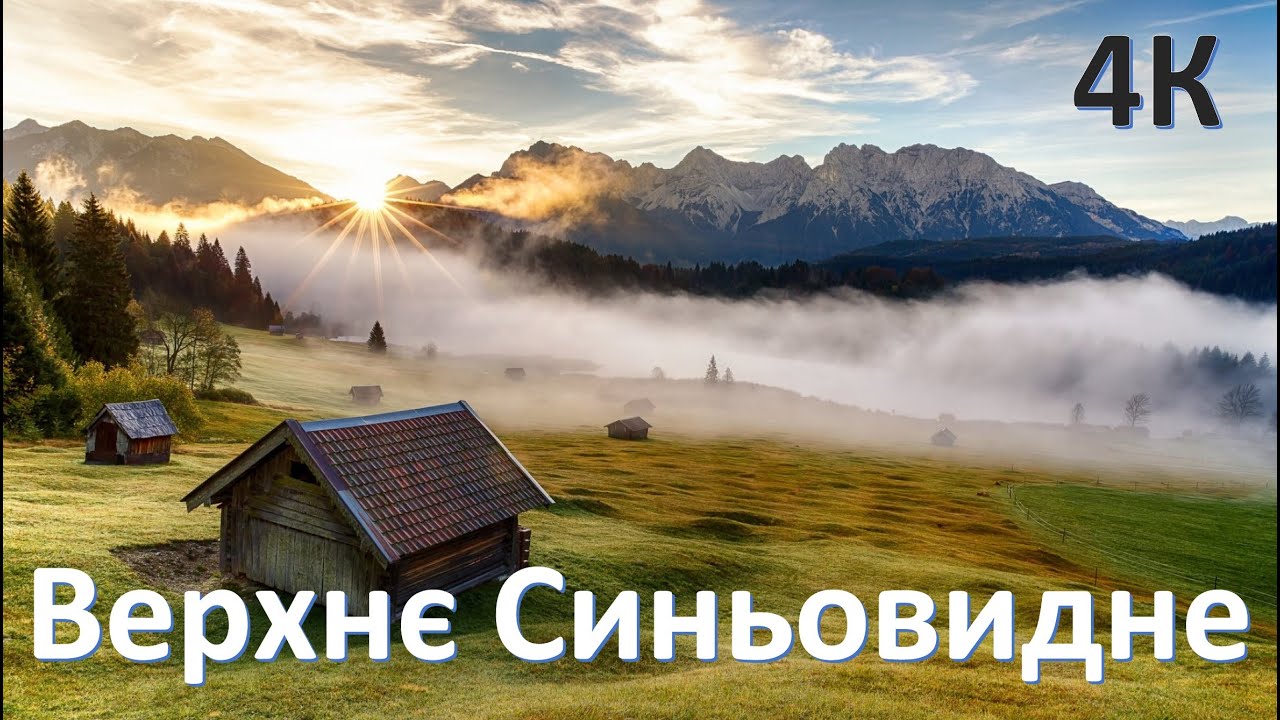 Верхнє Синьовиндне з висоти пташиного польотуIgor Gataylo
Location on the map
Comments
Places to stay nearby
All stays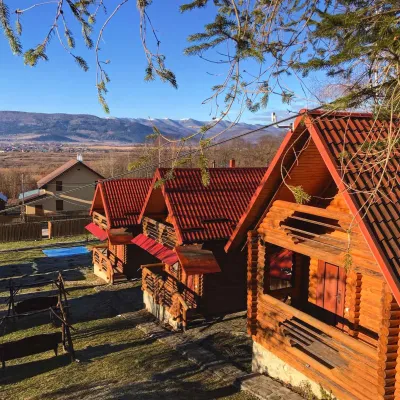 CottageEco-Cottages "Beskydy"Verkhnie Synovydne1.9 km from Church of St. George, Verkhnye Syn'ovydnePoolKitchenPetsNearby: Church of St. George 2.0 kmKamianka waterfall 9.6 km
 HotelMotel "Viking-Carpathians"Nyzhnie Synovydne3 km from Church of St. George, Verkhnye Syn'ovydnePoolSaunaNearby: Church of St. George 3.0 kmKamianka waterfall 9.1 km
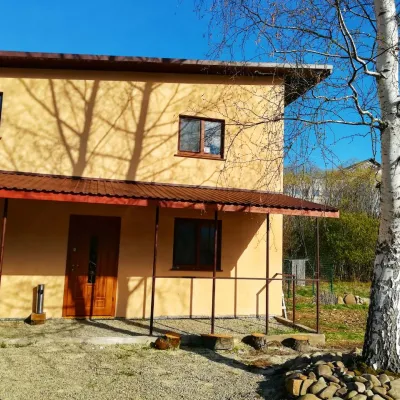 HomesteadGuest House "Pisnya Karpat" DubynaDubyna4.9 km from Church of St. George, Verkhnye Syn'ovydneBBQKitchenParkingNearby: Kamianka waterfall 3.5 kmLake Zhuravlyne 3.5 km25 trails
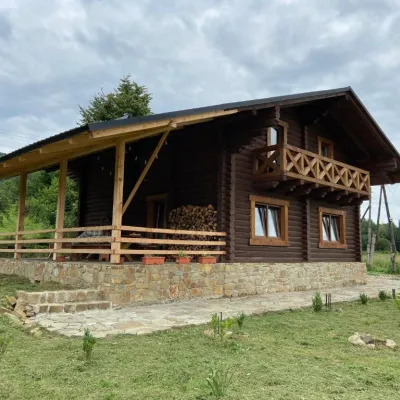 CottageCottage "Ksenija" Ksenija cottageSkole5.3 km from Church of St. George, Verkhnye Syn'ovydneHot tubBBQKitchenNearby: Kamianka waterfall 3.3 kmLake Zhuravlyne 3.4 km27 trails
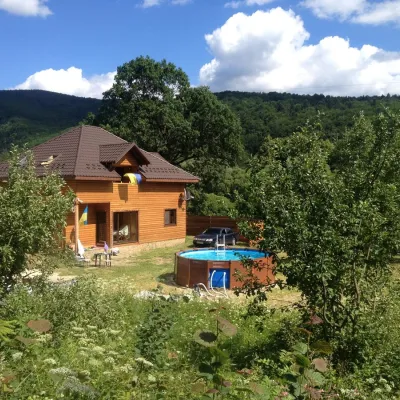 CottageGuest House "Pid Dubom" DubynaDubyna5.9 km from Church of St. George, Verkhnye Syn'ovydnePoolBBQKitchenNearby: Kamianka waterfall 2.9 kmLake Zhuravlyne 3.1 km27 trails
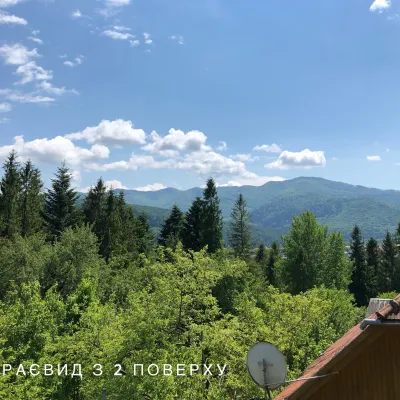 CottageCottage / Rooms in the Forest Area of SkoleSkole7.4 km from Church of St. George, Verkhnye Syn'ovydneBBQKitchenPetsNearby: Kamianka waterfall 3.5 kmLake Zhuravlyne 4.0 km25 trails
Trails nearby
All trails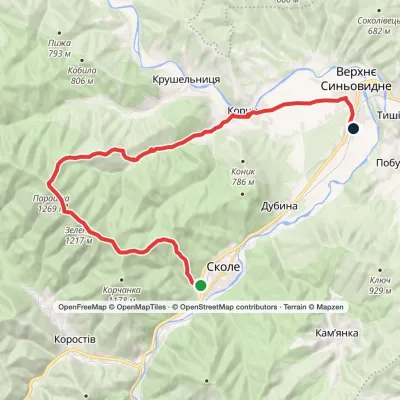 HardMulti-daySkole to Verkhnie Synovydne villagevia Mount Parashka, Hurkalo Waterfall +1Elevation profile387–1 268 m27.7 kmascent 973 m≈ 9 h walkingunder 1 km from Church of St. George, Verkhnye Syn'ovydne
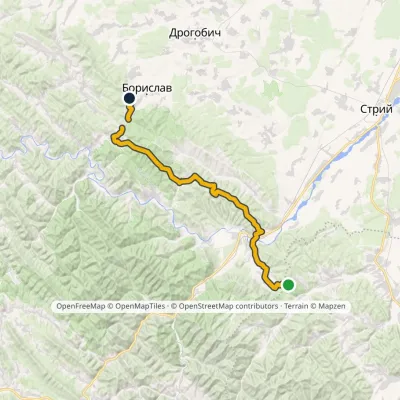 HardMulti-dayMarkedNo. 11 Boryslav Dovbush RocksElevation profile365–852 m48.2 kmascent 1 462 m2.3 km from Church of St. George, Verkhnye Syn'ovydne
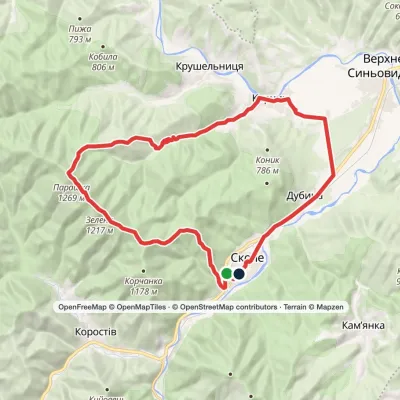 HardMulti-daySkole loopvia Mount Parashka, Hurkalo Waterfall +1Elevation profile396–1 268 m38.1 kmascent 1 100 m≈ 11.5 h walking2.3 km from Church of St. George, Verkhnye Syn'ovydne
Nearby attractions
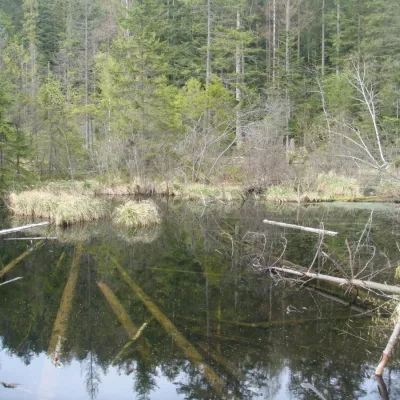 LakeLake Zhuravlyne (Dead Lake)Kamianka7.4 km from Church of St. George, Verkhnye Syn'ovydneThere is one mysterious place in the Skole Beskydy National Nature Park - Zhuravlyne Lake, also called Dead Lake.
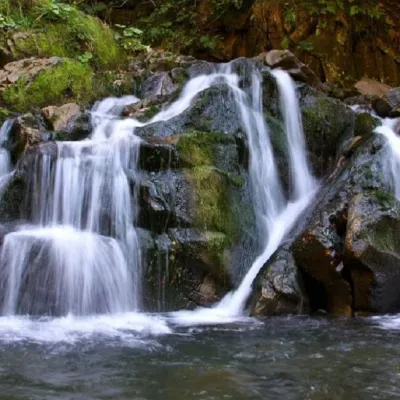 WaterfallKamianka waterfallDubyna7.6 km from Church of St. George, Verkhnye Syn'ovydne"Kamianka Waterfall or Kamianka Waterfall is the most famous waterfall located on the mountain river of the same name near the village of Dubyna, Skole district, Lviv...
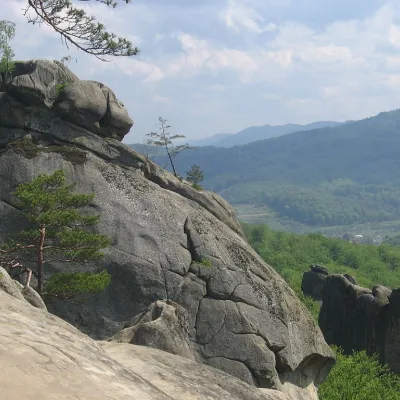 NatureDovbush Rocks in the Village of BubnysheBubnyshche9.4 km from Church of St. George, Verkhnye Syn'ovydneThe complex "Dovbush Rocks" is a natural monument of national significance, a unique monument of history and architecture from the early Middle Ages.
Craft nearby
All craft places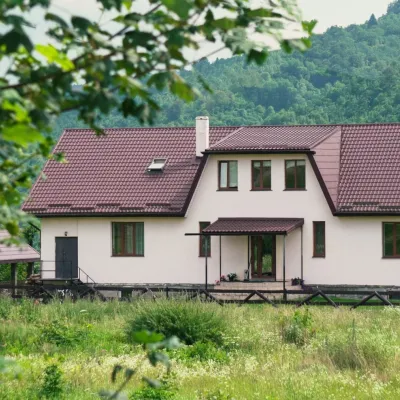 Ethno parks & homesteadsU Dvori Ethno Complex, PidhorodtsiPidhorodtsi13 km from Church of St. George, Verkhnye Syn'ovydneU Dvori ethno complex is a family homestead in the village of Pidhorodtsi near Skole, set on a hill above the Stryi river valley a few kilometres from the Tustan rock...
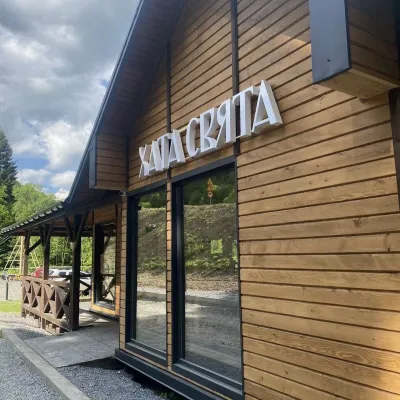 Koliby & Hutsul cuisineKhata Sviata Restaurant, HrebenivHrebeniv15 km from Church of St. George, Verkhnye Syn'ovydneKhata Sviata restaurant is a small timber restaurant in the village of Hrebeniv between Skole and Slavske, serving Boyko cooking in a modern way but with respect for...
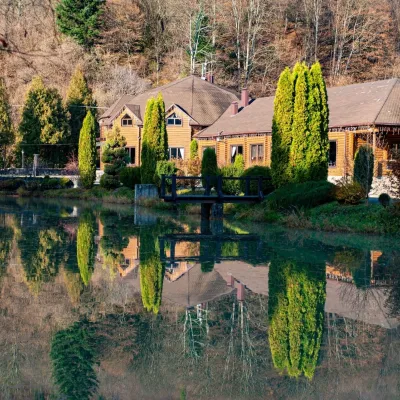 Koliby & Hutsul cuisineZolota Forel restaurant, KorostivKorostiv15 km from Church of St. George, Verkhnye Syn'ovydneZolota Forel (“Golden Trout”) is a restaurant and hotel complex in the village of Korostiv near Skole, right beside the Kyiv–Chop highway.
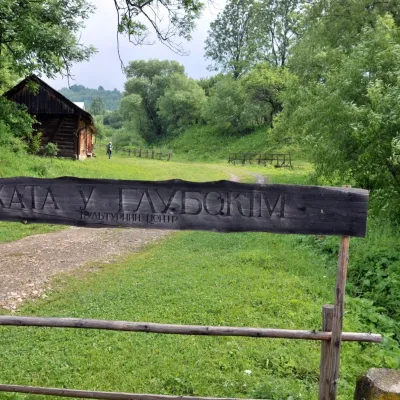 Crafts & workshopsKhata u Hlubokim Local History Centre, UrychUrych16 km from Church of St. George, Verkhnye Syn'ovydneKhata u Hlubokim (“the House in Hlyboke”) is an old Boyko house in Urych that the Tustan State Historical and Cultural Reserve has turned into a local history centre.
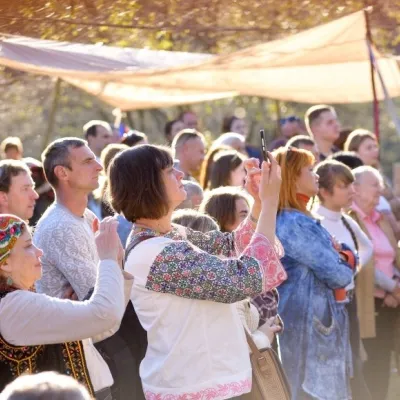 Ethno tours & guidesBoyYe Boyko Culture Festival, UrychUrych16 km from Church of St. George, Verkhnye Syn'ovydneBoyYe is a festival of Boyko culture launched by the Tustan State Historical and Cultural Reserve in the village of Urych.
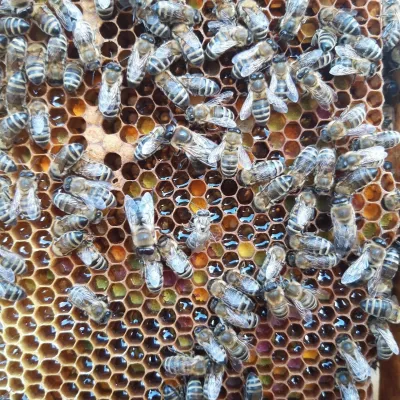 Honey & meaderiesBdzholyna Khata Apiary, DobrohostivStebnyk20 km from Church of St. George, Verkhnye Syn'ovydneBdzholyna Khata (Bee House) apiary is a family apiary in the village of Dobrohostiv, which adjoins Truskavets on the east along the continuation of Stebnytska Street.