Oštiepok
What it is
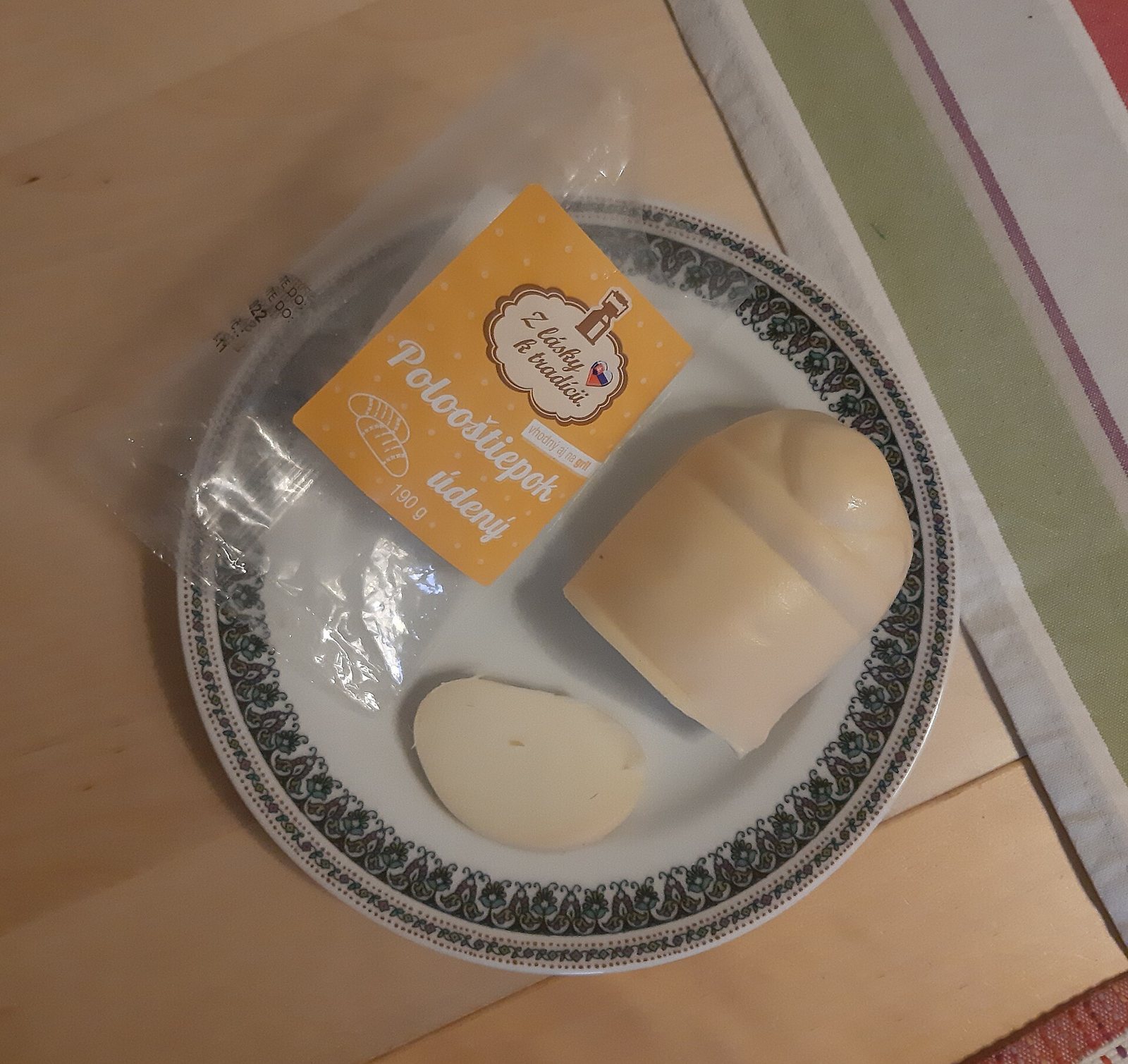
Oštiepok is a semi-hard cheese with a yellowish, slightly crusty rind and a thin ornament on the sides. Its shape is given by a carved wooden mold, which the bača — the senior shepherd — decorates by hand.
The taste is moderately salty, with a smoky flavor if the cheese is smoked. Oštiepok is served on a cheese platter, and it can also be breaded and fried — just like regular hard cheese.
Unlike the Polish oscypek, oštiepok differs in shape — it is rounder — and in composition: it can contain significantly more cow's milk. It is allowed to be made not only by hand on the salaš but also in cheese dairies.
The pattern on the oštiepok is left by the carved wooden mold — the bačas carved and decorated them themselves. The cheese can be purchased at salaš, in cheese dairies, and at fairs in all mountainous regions of Slovakia.
History and name
Oštiepok is a Wallachian heritage shared by the Western Carpathians. The name is associated with the word 'to pinch off': a piece is pinched off from fresh sweet cheese and pressed into a mold.
When Poland registered the name 'Oscypek' in the EU, Slovakia objected. The countries agreed that oštiepok and oscypek are separate products of common origin, and both names were registered in 2008.
In the EU register: protected geographical indication (PGI), registered name «Slovenský oštiepok», registered in 2008. Sources
Ingredients and allergens
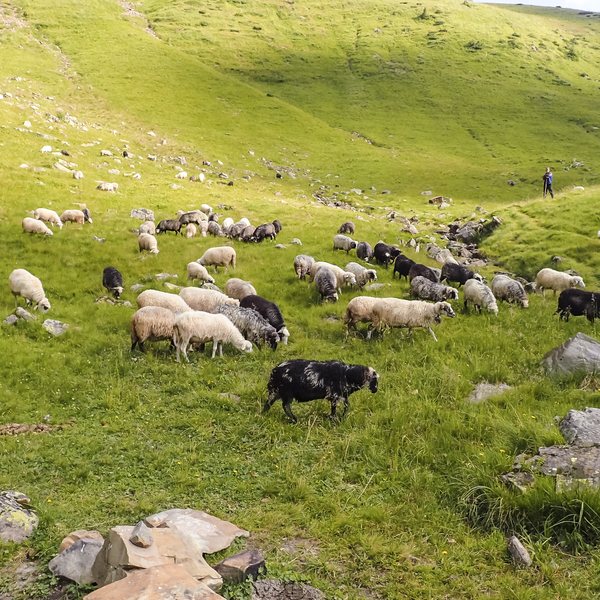
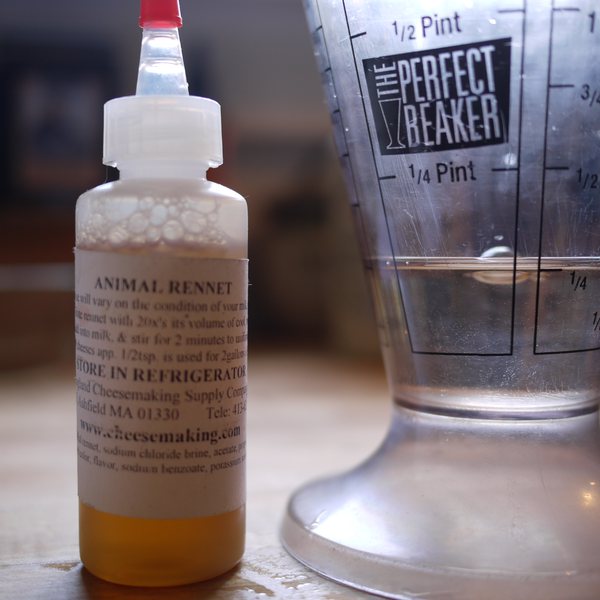
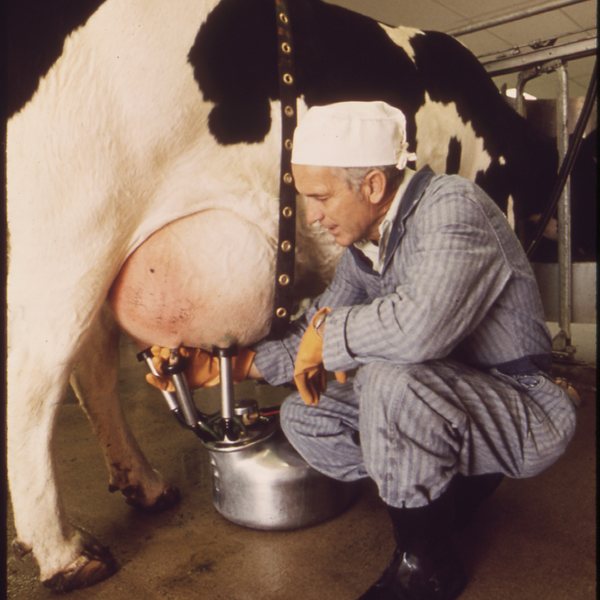
Also: salt (brine)
Contains allergens: milk
Diet: gluten-free · no cooking
Ingredients of the traditional recipe; every cook and every place may do it differently — please ask when ordering. We cannot guarantee the absence of allergens or traces.
How it is made
A piece is pinched off from fresh sweet cheese and pressed into a round wooden mold, where it is left to rest. Then the cheese is removed and placed in warm salty water — until the salt penetrates to the center. The rind hardens and yellows from the brine, and the cheese lasts longer.
The dried oštiepok is smoked; unlike oscypek, this can be done not only in a koliba over an open fire but also in separate smokehouses.
Where it is eaten

The area is approximate and based on the sources below. The dish is cooked outside it too, and ethnographic borders are blurred.
Mountainous and foothill Slovakia: Orava, Liptov, Turiec, Spiš, Pogrón, Kysuce. The map shows entire regions — the area is approximate.
When it is eaten
| Jan | Feb | Mar | Apr | May | Jun | Jul | Aug | Sep | Oct | Nov | Dec |
|---|---|---|---|---|---|---|---|---|---|---|---|
Occasions: Polonyna (May — September) · Everyday food
Safety
Traditionally, the cheese is made from raw, unpasteurized milk. Pregnant women, small children, and people with weak immune systems should choose cheese made from pasteurized milk or eat it in hot dishes.
FAQ
Is oštiepok the same as oscypek?
No. They are related, but oštiepok is rounder, can contain more cow's milk, and can be made not only by hand on the salaš.
How is oštiepok eaten?
In slices, as a snack, or fried in breadcrumbs.
Comments
Travellers’ experience: reports, tips, questions.
No one has written here yet. Be the first — your experience helps others.
Similar dishes and products


Relatives in the Carpathians and nearby
- oscypek · Poland
family cheese; a separate protected designation of origin - oshchypok · Ukraine
only a similar-sounding name: in Hutsul region, it refers to an oat cake, not cheese
Sources
- Реєстр географічних зазначень ЄС (eAmbrosia): Slovenský oštiepok, PGI-SK-0549
- Вікіпедія (словац.): Oštiepok
- Вікіпедія (пол.): Oscypek — про суперечку щодо назви
Written by the Karpaty.rocks editors from the sources above. Checked 11.11.2026.
