Korbáčik
What it is
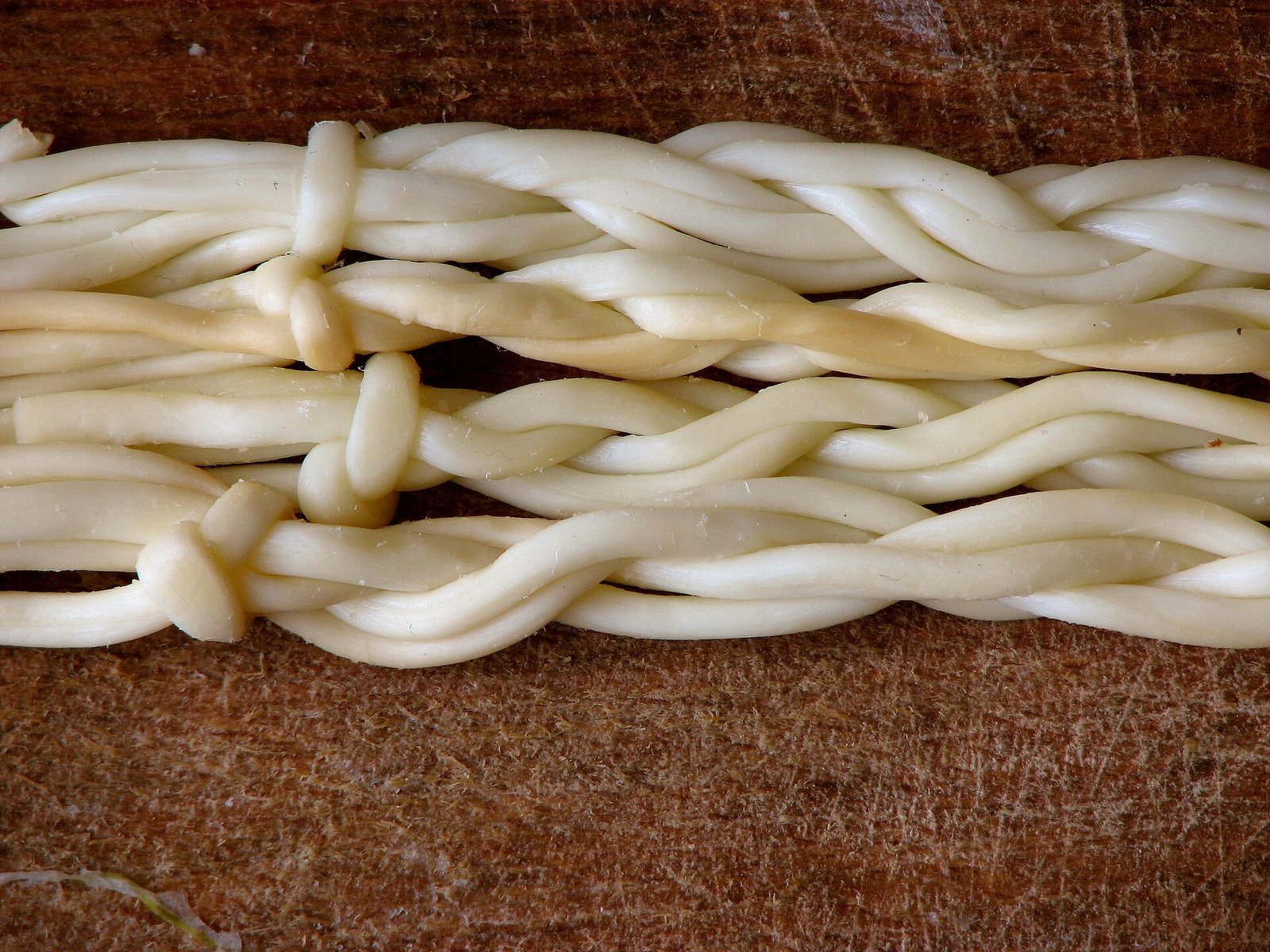
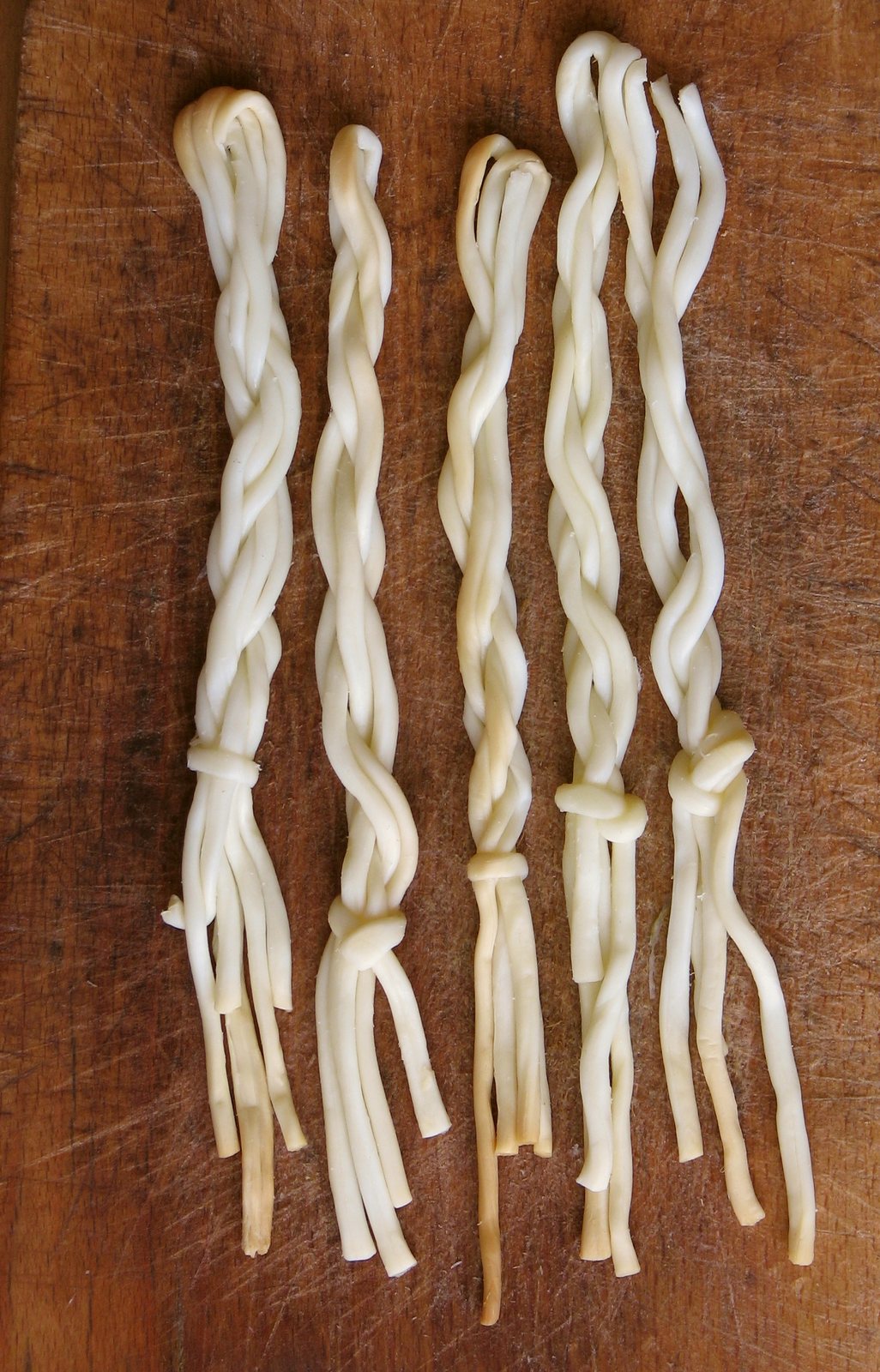
Korbáčik is a cheese made from strands braided into a plait. 'Korbac' in Slovak means whip, and korbáčik is a small whip: it resembles this cheese. The strands are between two and ten millimeters thick, while the braid itself ranges from ten to fifty centimeters in length.
Korbáčik is made from steamed cow's milk cheese. It is distinctly salty, elastic, white or yellowish; smoked versions are golden. It is eaten by tearing off strands, serving as a snack with wine and beer, sold at fairs and along the roads of Orava.
Since 2011, there have been two names in the EU register with the same recipe: 'Oravský korbáčik' can be made throughout Orava, while 'Zázrivský korbáčik' can only be made in the village of Zázrivá.
History and name
The cheese strand is called 'vojka' in the Zázrivá dialect. Stretching the cheese was a home craft in the villages of Orava. The strands themselves have a protected name — 'Zázrivské vojky' (2014).
In the EU register: protected geographical indication (PGI), registered name «Oravský korbáčik», registered in 2011. Sources
Ingredients and allergens
Also: salt (brine)
Contains allergens: milk
Diet: gluten-free · no cooking
Ingredients of the traditional recipe; every cook and every place may do it differently — please ask when ordering. We cannot guarantee the absence of allergens or traces.
How it is made
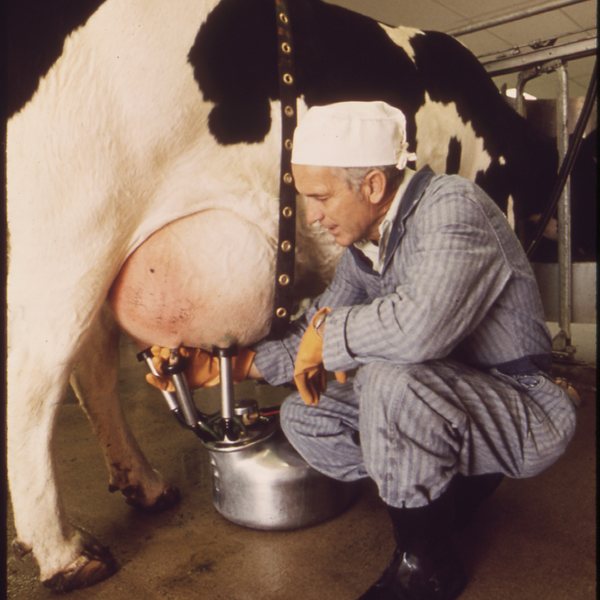
Fresh cow's milk curd cheese is left to sour, then steamed in hot water until it begins to stretch. The softened mass is pulled into long thin strands by hand, cooled in water, and salted in brine.
The strands are gathered into a bundle, bent, braided into a plait, and tied with a string of cheese. Some korbáčiks are smoked.
Where it is eaten

The area is approximate and based on the sources below. The dish is cooked outside it too, and ethnographic borders are blurred.
Orava: districts of Dolný Kubín, Námestovo, and Tvrdošín. Zázrivský korbáčik is made only in the village of Zázrivá.
When it is eaten
| Jan | Feb | Mar | Apr | May | Jun | Jul | Aug | Sep | Oct | Nov | Dec |
|---|---|---|---|---|---|---|---|---|---|---|---|
Occasions: Everyday food · Festivals
FAQ
Why is korbáčik so salty?
The stretched strands are kept in brine: salt preserves the cheese and gives it its characteristic taste.
How does Oravský korbáčik differ from Zázrivský korbáčik?
The recipe is the same; the difference lies only in the territory: all of Orava or just the village of Zázrivá.
Comments
Travellers’ experience: reports, tips, questions.
No one has written here yet. Be the first — your experience helps others.
Similar dishes and products


Relatives in the Carpathians and nearby
- korbac (korbacz) · Poland
the same tradition in Polish Orava and Podhale
Sources
- Реєстр географічних зазначень ЄС (eAmbrosia): Oravský korbáčik, PGI-SK-0774
- Реєстр географічних зазначень ЄС (eAmbrosia): Zázrivský korbáčik, PGI-SK-0656
- Вікіпедія (словац.): Korbáčik
- Вікіпедія: Корбачик
Written by the Karpaty.rocks editors from the sources above. Checked 11.11.2026.
