Budz
What it is
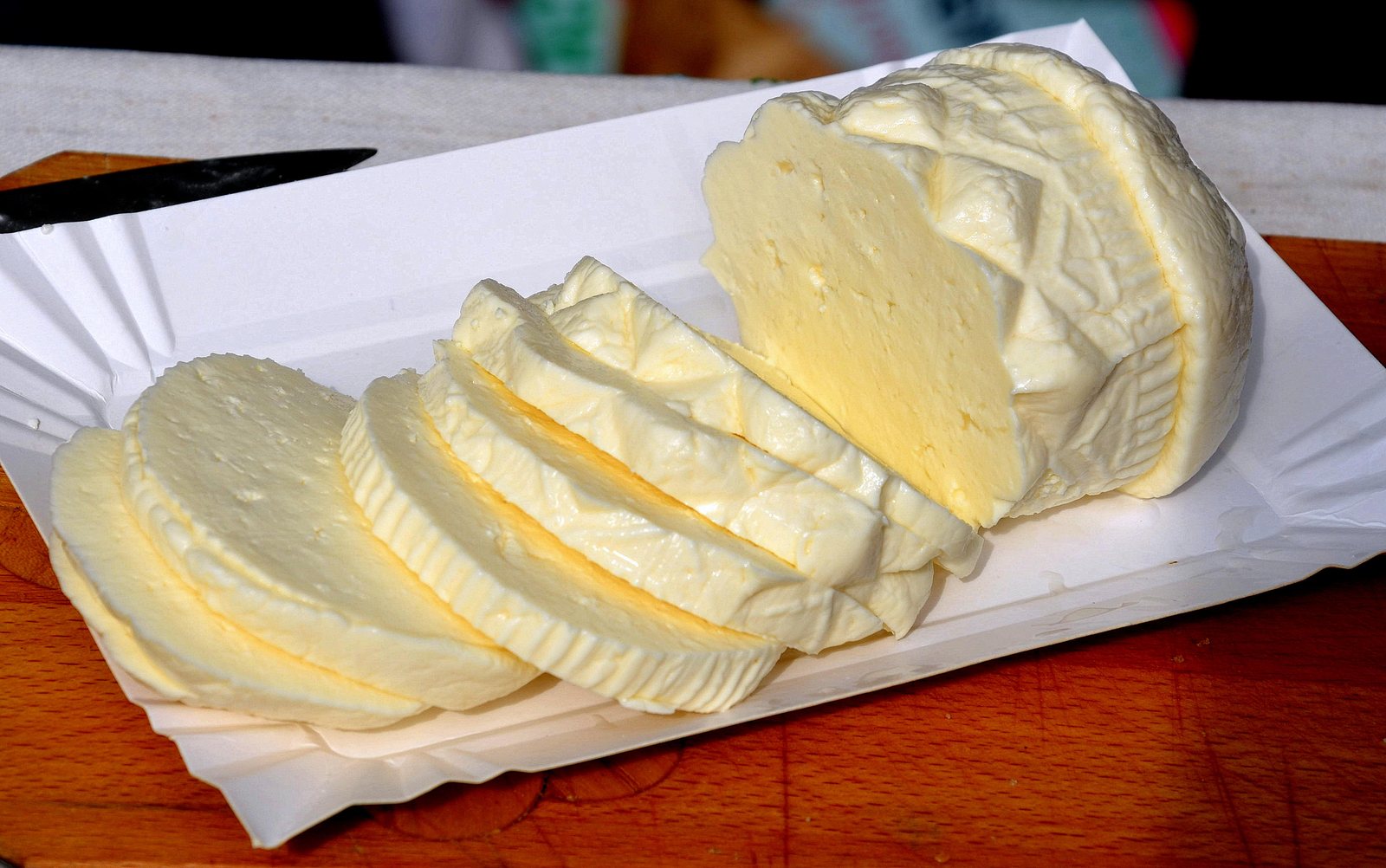
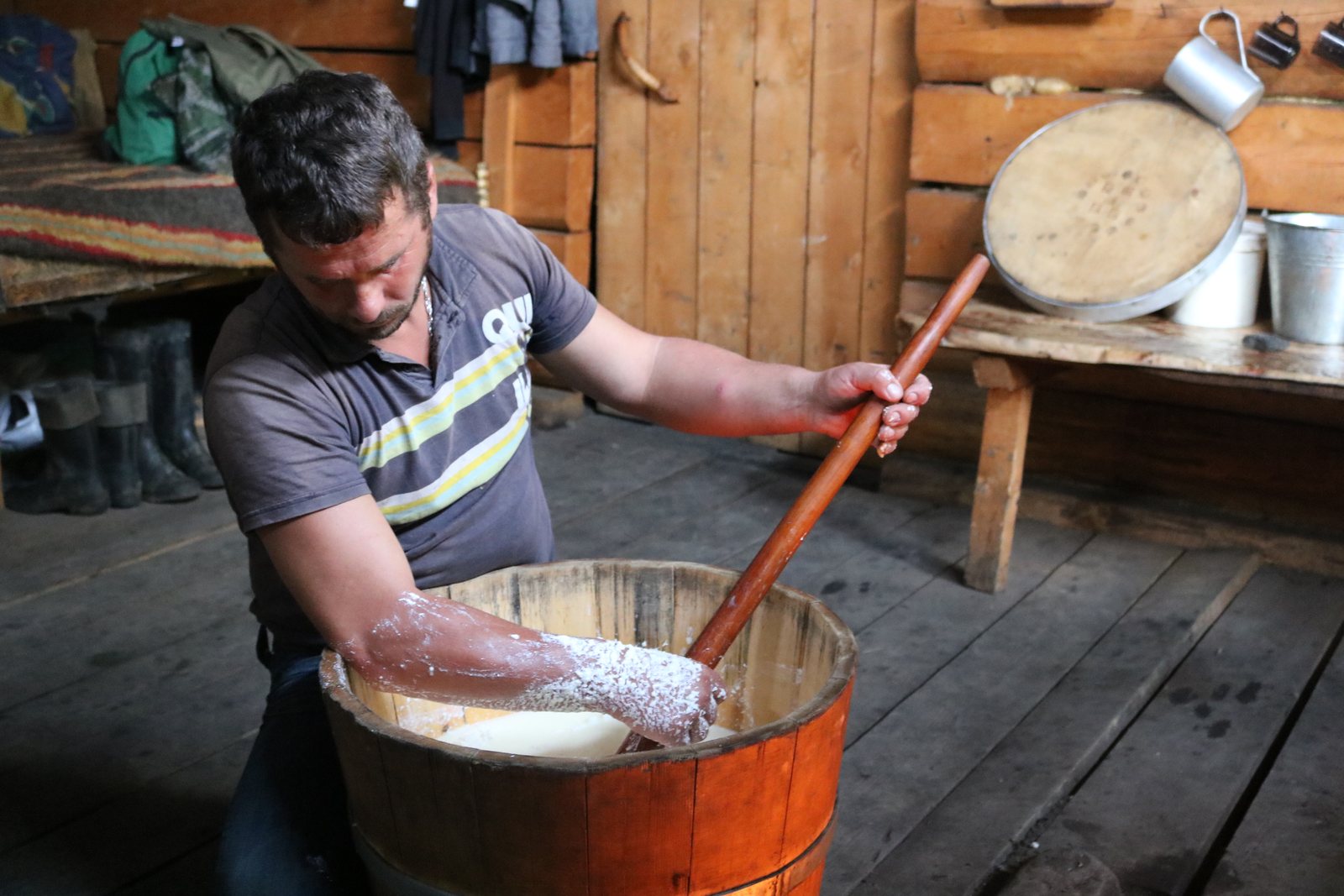
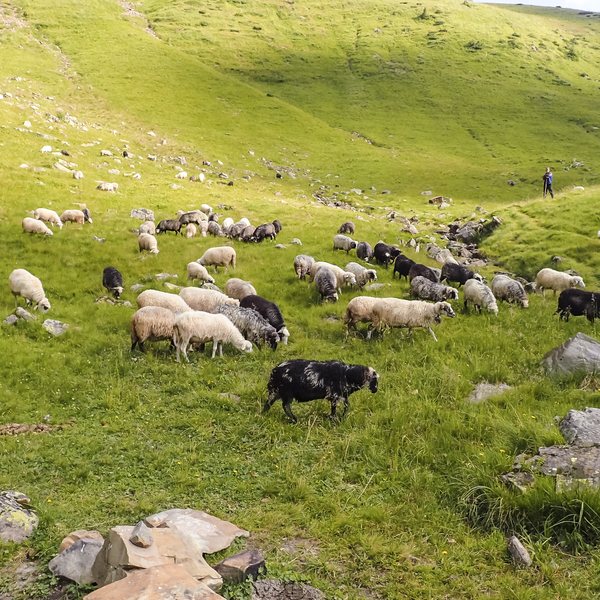
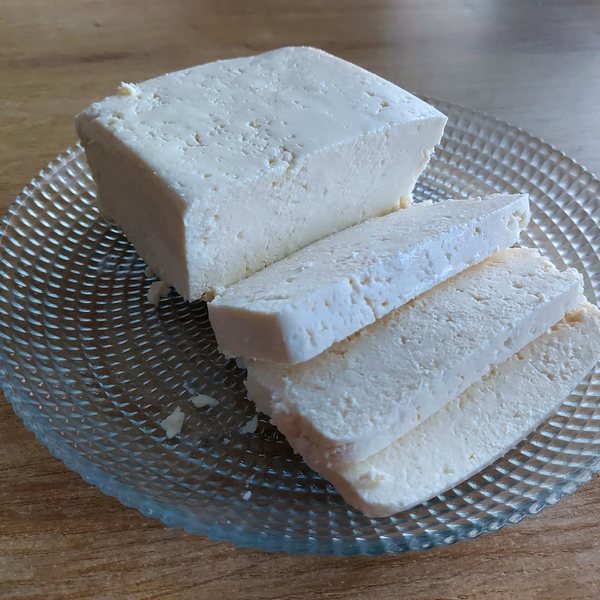
Budz (buć) is the first cheese that shepherds make in the polonyna daily from morning and evening milk. The milk is slightly warmed, rennet (klyah) is added, and they wait for it to curdle in a wooden tub. The curd is gathered into a large lump, wrapped in cloth, and hung to drain.
Fresh Budz is tender, moist, with a mild dairy flavor. Dried by the fire in the koliba, it acquires a light smoky taste and a yellowish rind. Budz spoils quickly, so a significant portion is left to mature and is mixed with salt to make Bryndza.
Traditionally, three cheeses were served on polonyna tables: Budz, Bryndza, and Vurda, which is made from the whey left after Budz. Cheese is also made from cow's milk, and sometimes with herbs.
The closest relative of Budz is the Polish bundz from Podhale. It takes 8–12 liters of milk to produce one kilogram of Budz, so cheese in the polonyna is the result of the daily hard work of shepherds.
History and name
Budz is a product of Carpathian mountain shepherding, known since the 15th century. In Hutsul households, Budz also served as a kind of unit of account: it was used to measure exchanges for grain or iron products. Mykhailo Kotsiubynsky described the preparation of Budz in 'Shadows of Forgotten Ancestors.'
The name is derived from the Romanian bulț — 'lump, clod.'
Ingredients and allergens
Variant: sheep, polonyna
Contains allergens: milk
Diet: gluten-free · no cooking
Variant: cow
cow's milk, rennet (klyag)
Contains allergens: milk
Diet: gluten-free · no cooking
Ingredients of the traditional recipe; every cook and every place may do it differently — please ask when ordering. We cannot guarantee the absence of allergens or traces.
How it is made
Evening milk is warmed and mixed with fresh morning milk so that the mixture reaches body temperature, about 31–38 °C. The milk is strained, poured into a wooden tub (putera), and klyah — rennet from the stomach of a milk lamb or calf — is added. After one to two hours, the milk curdles.
The curd is broken up, gathered by hand into a lump, wrapped in cheesecloth or cloth, and hung to drain for a day. Then Budz is dried and 'awakened' for about a week — often in the koliba by the fire or in the attic, where it acquires a smoky flavor. Fresh Budz does not keep long, about two weeks, while matured Budz is mixed with salt to make Bryndza. The remaining whey — zhenytytsia — is used to make Vurda.
Where it is eaten

The area is approximate and based on the sources below. The dish is cooked outside it too, and ethnographic borders are blurred.
The polonynas of the Ukrainian Carpathians — Hutsulshchyna (Verkhovynska, Kosivska, Rakhivska), mountainous Transcarpathia, and Boykivshchyna. The area is approximate.
When it is eaten
| Jan | Feb | Mar | Apr | May | Jun | Jul | Aug | Sep | Oct | Nov | Dec |
|---|---|---|---|---|---|---|---|---|---|---|---|
Occasions: Polonyna (May — September) · Easter · Everyday food
In tradition
Budz is a daily cheese of the polonyna season, from the time the flocks go to the mountains in spring until their return in autumn. Like butter, it is placed in the Easter basket for blessing.
Safety
Budz is made from raw, unpasteurized milk. It is better for pregnant women, small children, and people with weak immune systems not to eat it or to consume it only in hot dishes.
FAQ
What is the difference between Budz and Bryndza?
Budz is fresh curd cheese in a lump. Bryndza is matured Budz mixed with salt, which keeps for a long time.
How much milk is needed for one kilogram of Budz?
About 8–12 liters of sheep's milk.
What is klyah?
Natural rennet from the stomach of a milk lamb or calf. It causes the milk to curdle into cheese.
Where to try and buy
 Cheese dairies & pasturesShepherding School on Mount Strymba, KolochavaKolochavaThe Kolochava Shepherding School is not a building with classrooms but a summer shepherds' camp (salash) on the...
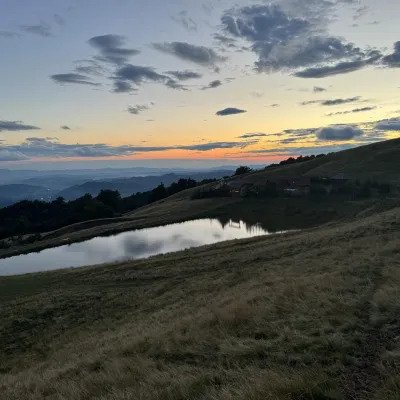 Cheese dairies & pasturesSheep's Cheese Masterclass on the Apetska Polonyna, VodytsiaVodytsiaThe Apetska polonyna is a broad high-mountain pasture on the southern slopes of the Svydovets range, below Mount...
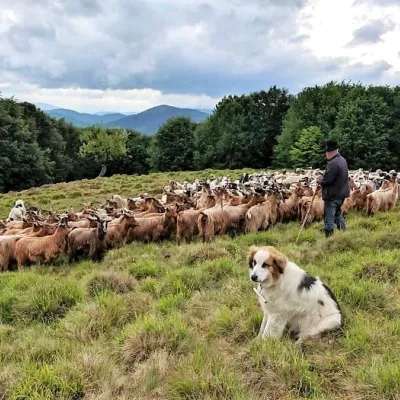 Cheese dairies & pasturesVivcharskyi Khutir Sheep Farm, Synevyrska PolianaSynevyrska Polyana"Vivcharskyi Khutir" ("Shepherd's Homestead") is an ethno-centre and sheep farm in Synevyrska Poliana, near Lake...
Only our checked craft places. Ask on the spot what is on the menu or for sale today.
Similar dishes and products
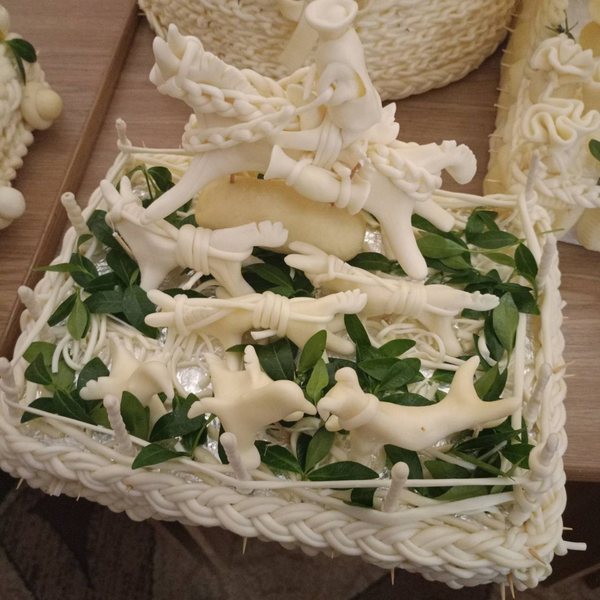
Relatives in the Carpathians and nearby
- bundz · Poland
a close tradition from Podhale; listed among traditional products of Poland - bulz / caș · Romania
a related name
Sources
- Вікіпедія: Будз
- Вікіпедія: Гуцульська овеча бриндзя (технологія)
- НПП «Верховинський»: Що і де поїсти (закваска з молока в шлунку ягняти)
- ZN.UA: Смачна Гуцульщина (свячений кошик за В. Шухевичем)
Written by the Karpaty.rocks editors from the sources above. Checked 10.11.2026.
