Korman
Korman is a village in Ukraine, in Sokyryany district , Chernivtsi region. It is located on the right bank of the Dniester River, 40 km northwest of the district center. It was first mentioned in documents of the XVIII century.
As of 1859, 937 people (459 males and 468 females) lived in the owner's village of Khotyn district of Bessarabia province, there were 158 households, an Orthodox church, a ferry crossing, and a pier. As of 1886, the owner's village of Romankouk parish had a population of 1063 people, 212 households, and an Orthodox church. In 1980, the old location of the village fell into the flood zone of the Dniester hydroelectric power plant. Residents were relocated to houses built on a flat hill surrounded by forest.
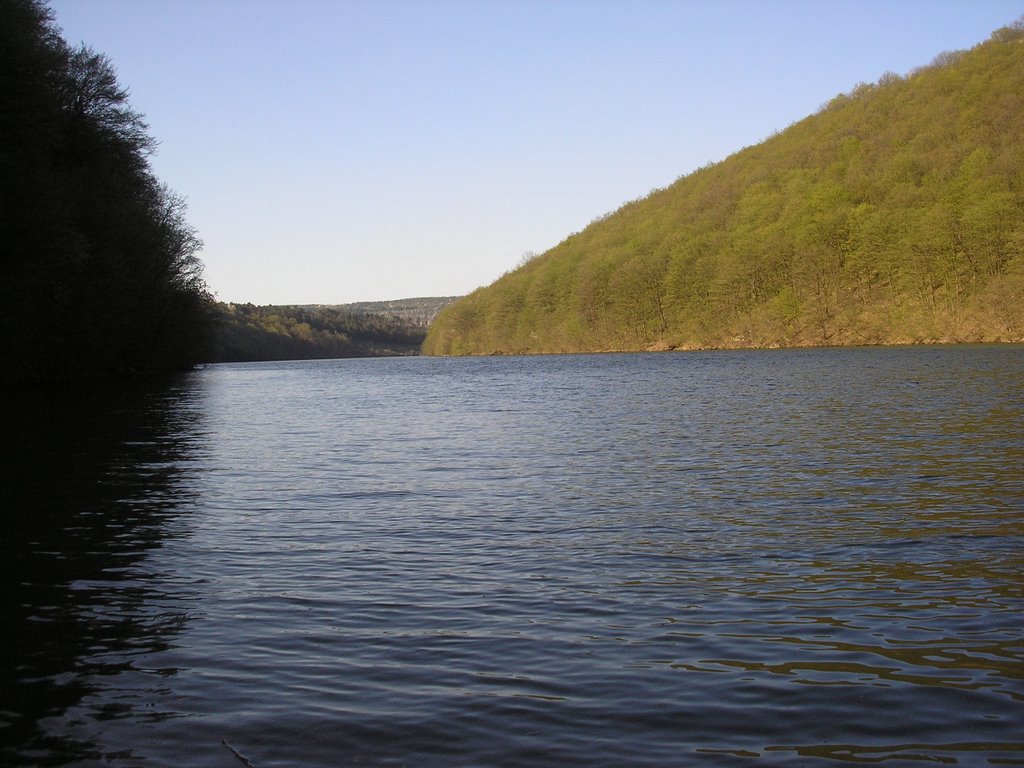
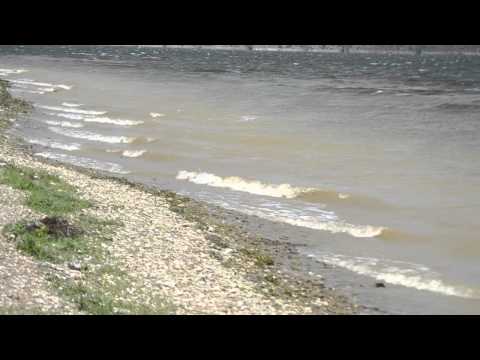
At the bottom of the newly built Kormany, there is a fishing base with a several-kilometer-long reservoir rich in various types of fish: catfish, pike perch, carp, crucian carp, roach, bream, perch, and others. Here, as well as at other reservoirs in Kulishivka, Neporotov, Lomachyntsi, Novodnistrovsk, you can not only fish, but also relax, spend the night in adapted houses or set up a tent on the outskirts of the ancient forest, where mushrooms, raspberries, strawberries, cherries and nuts grow, and where you can quench your thirst with healing water.
Not far from Korman, over a ravine that stretches to the Dniester, you can see the village of Kulishivka, and nearby is Vitryanka. On the territory of these villages, the remains of settlements of the Trypillian and Cherniakhiv cultures, as well as of settlements and towns from the times of Kyivan Rus were discovered. Remains of housing, stone tools, animal bones.
In the second half of the nineteenth century, a number of researchers drew attention to the remains of numerous cave monasteries and hermitages along the banks of the Middle Dniester and its tributaries (A.S. Afanasiev-Chuzhbinsky, 1863; V.B. Antonovych, 1886; E.N. Melnyk, 1886; E. Setzinsky, 1901, and others). However, only one work mentions the caves near the village of Korman. In his general essay on the cave churches of Bessarabia, V. Kurdinovskyi writes that "downstream of the Dniester, one mile from the village of Korman, Khotyn district, in the mountains once covered with dense forest, there are caves where, as can probably be argued, there was once a cave church, since stone icons have been preserved in them in our time."
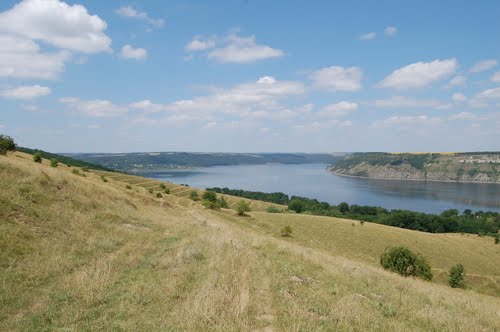
Part of the village of Korman was flooded in the 1980s due to the formation of the Dniester reservoir, and the village was moved to the high terraces of the Dniester. However, the main rocky tracts where the caves could have been located are above the flood line. No cave or rock archaeological sites were known in the vicinity of the village.
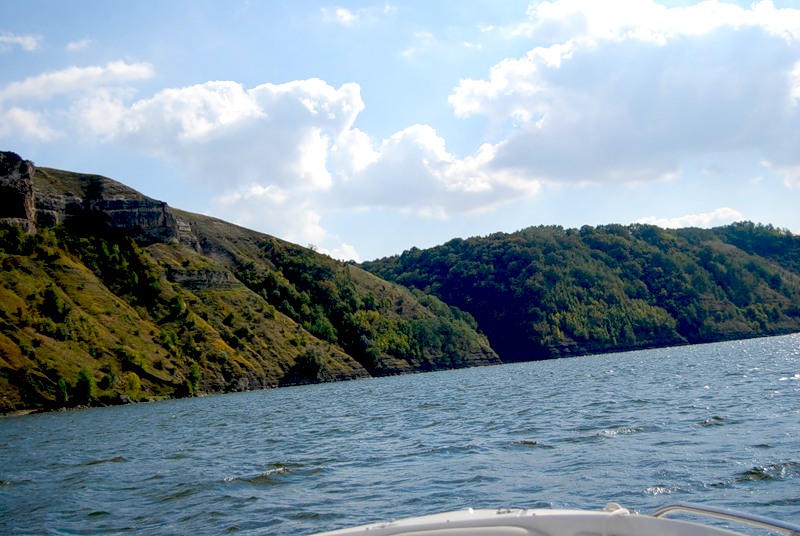
In order to verify the report of almost a century ago, the author conducted an exploration in the vicinity of the village (J. Haidychuk and P. Borysenko participated in the research), L. Andronik, a local history teacher, pointed out the location of some grottoes that could match Kurdinovskyi's description. One of them has the local name Tserkvochka. These grottoes are located in sheer cliffs on the banks of the Dniester, 1.5 km west of the modern village. They were built along the contact between rocks of the Cenomanian and Sarmatian strata. The base, or floor, of the grottoes is a 6-7-meter thick layer of black flint and grayish hornblende, which is resistant to weathering. They are overlain by a thin (0.5-1.0 m) layer of yellowish-white, sandy marl of the same age. Above the marl thickness are Sarmatian shell limestones up to 25.0 36173894m thick. The ridge of rocks where the grottoes are located stretches for almost 600 meters along the right bank of the Dniester. It is located directly opposite the former town of Stara Ushytsia (on the Podil bank), which was also relocated due to flooding.
Caves and grottoes can be found almost along the entire ridge. They were formed by both weathering and karst processes. The group of grottoes, where the Church is located, is located in the middle part of the rock ridge. Access to them is difficult and runs along a narrow rocky ledge above the abyss. The main and largest grotto is stretched along the cliff for 35.0 m in the direction from NNW to SE to SW and has an exposure to the NNW. Its depth from the site edge varies from 2.0 to 7.0 m, average height 2.0-2.5 m, sometimes 5-6 m and more. The edge of the site is cut off by a 6-7 meter high rocky ledge composed of flints and chert, which drops into a steep sodden slope below. Limestone rocks forming the ceiling of the grottoes overhang the edge of the site up to 1-2 meters. A 0.5-1.0 m thick layer of ashy marl is exposed in the lower part of the grotto walls.
In various places on the walls of the grotto, grooves for wooden structures were noted. In some places, in particular in the extreme southern part of the grotto, the rock near these grooves has traces of collapse, which, in our opinion, is the result of a fire. The surface of the limestone walls is cavernous. In some places there are remnants of plastering with a mixture of loess loam (or sandy loam) and floor, sometimes with traces of whitewash with lime. The remains of an earthen floor, fragments of which have been preserved over an area of several square meters, have the same character.
It is likely that there was a small cave temple in the northern part of the grotto. In addition to the place name "Tserkvochka," a number of other signs testify to this. On the eastern wall of the grotto, which is composed of rather soft marl rock, there are several crosses carved, which are identical in nature to the crosses found in other cave temples in Podnistrovia. Unfortunately, these images are heavily damaged by modern inscriptions. In the floor of this part of the grotto, which is also composed of the remains of a marl layer, grooves from a small wooden structure are visible. These grooves can be interpreted as traces of the altar part of the temple. Here, in the caverns of the limestone ceiling, there are outflowing forms of a resinous substance of black and dark brown color, which resemble the mummies of Central Asian caves in consistency. However, this substance does not have the odor and taste characteristic of mumiyo. In our opinion, it could have been formed from volatile wax candle combustion products that condensed and accumulated in the cavities of the limestone ceiling.