Sucevița Monastery: UNESCO painted church and walls
A foundation of the Movilă family
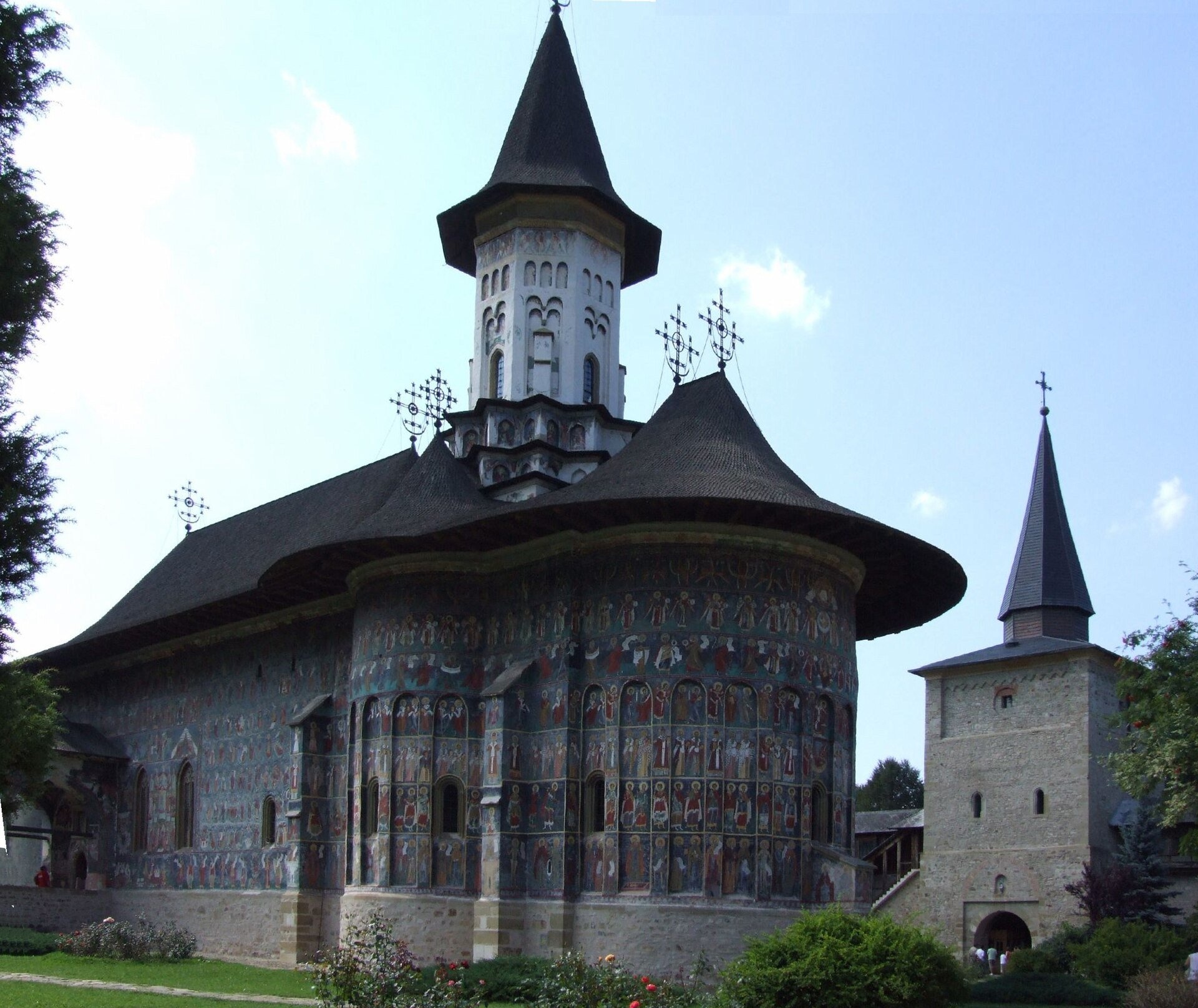
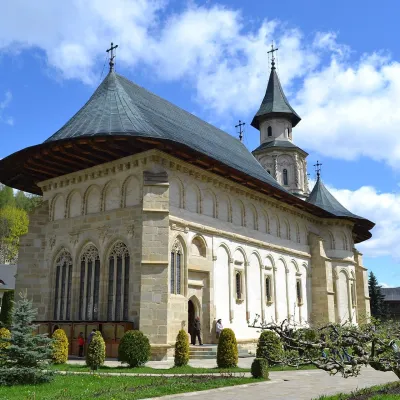
Sucevița Monastery (Mănăstirea Sucevița) stands in the valley of the river of the same name in the village of Sucevița, about 18 km from the town of Rădăuți in Romanian Bukovina. Its Church of the Resurrection is the youngest of the painted churches of Southern Bukovina. In 2010 it was added to the UNESCO World Heritage Site "Churches of Moldavia", inscribed in 1993, and the World Heritage Committee noted that Sucevița completes the series.
Documents first mention the monastery in 1582, and the present church was built in 1583–1586 by the Movilă family — an influential boyar dynasty that produced princes of Moldavia and Wallachia as well as Metropolitan Peter Mohyla. The founders were the brothers Ieremia, Simion and Gheorghe Movilă; Gheorghe was Bishop of Rădăuți and later Metropolitan of Moldavia. The church combines Byzantine and Gothic features with the tradition of Moldavia's wooden churches, while the later open porches on the north and south echo Wallachian architecture. The paintings inside and out are dated to around 1601, making Sucevița one of the last monuments of Moldavian exterior painting. The monastery was both a princely residence and a fortress. Today it is a working convent of nuns of the Archdiocese of Suceava and Rădăuți of the Romanian Orthodox Church.
Why go
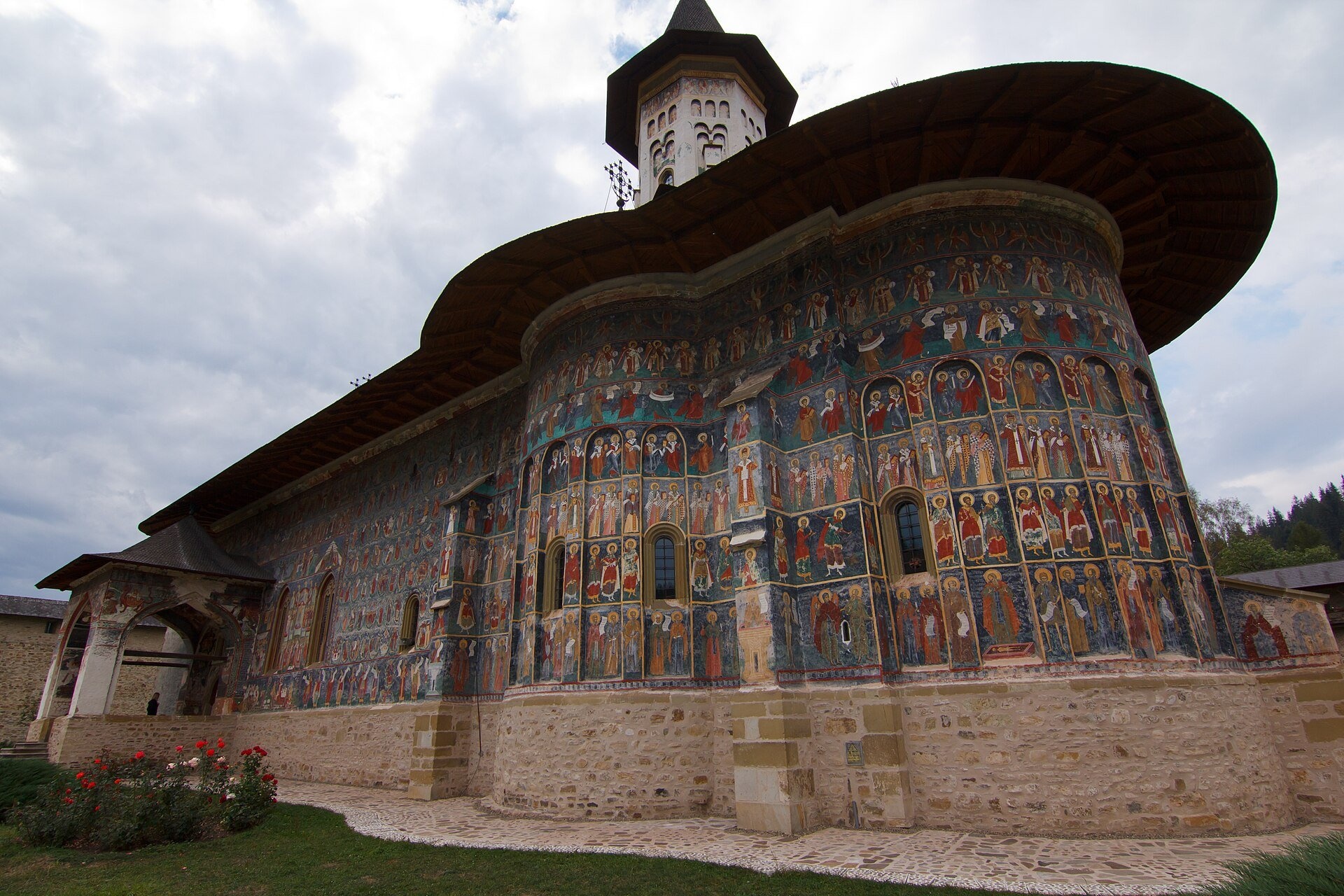
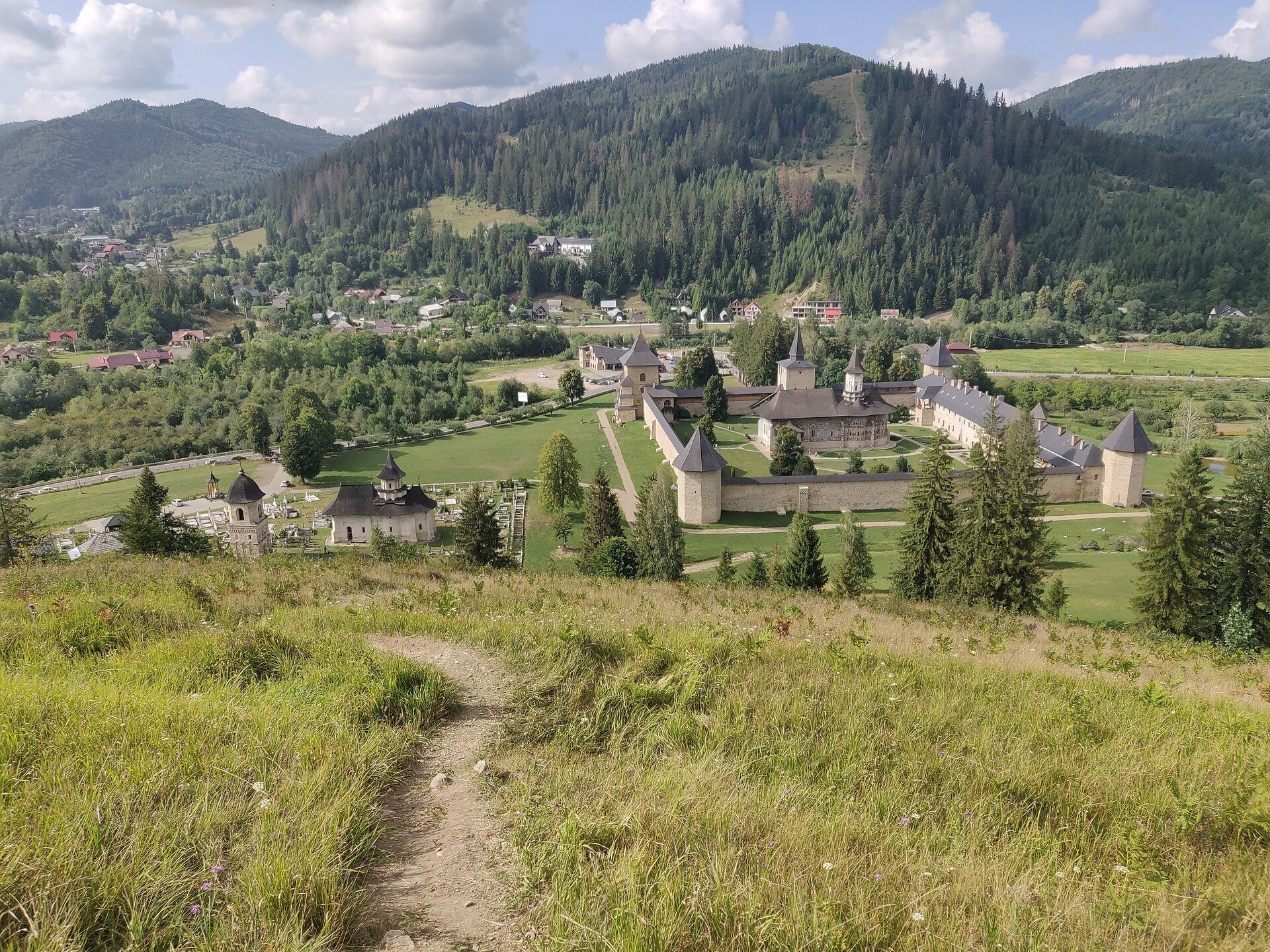
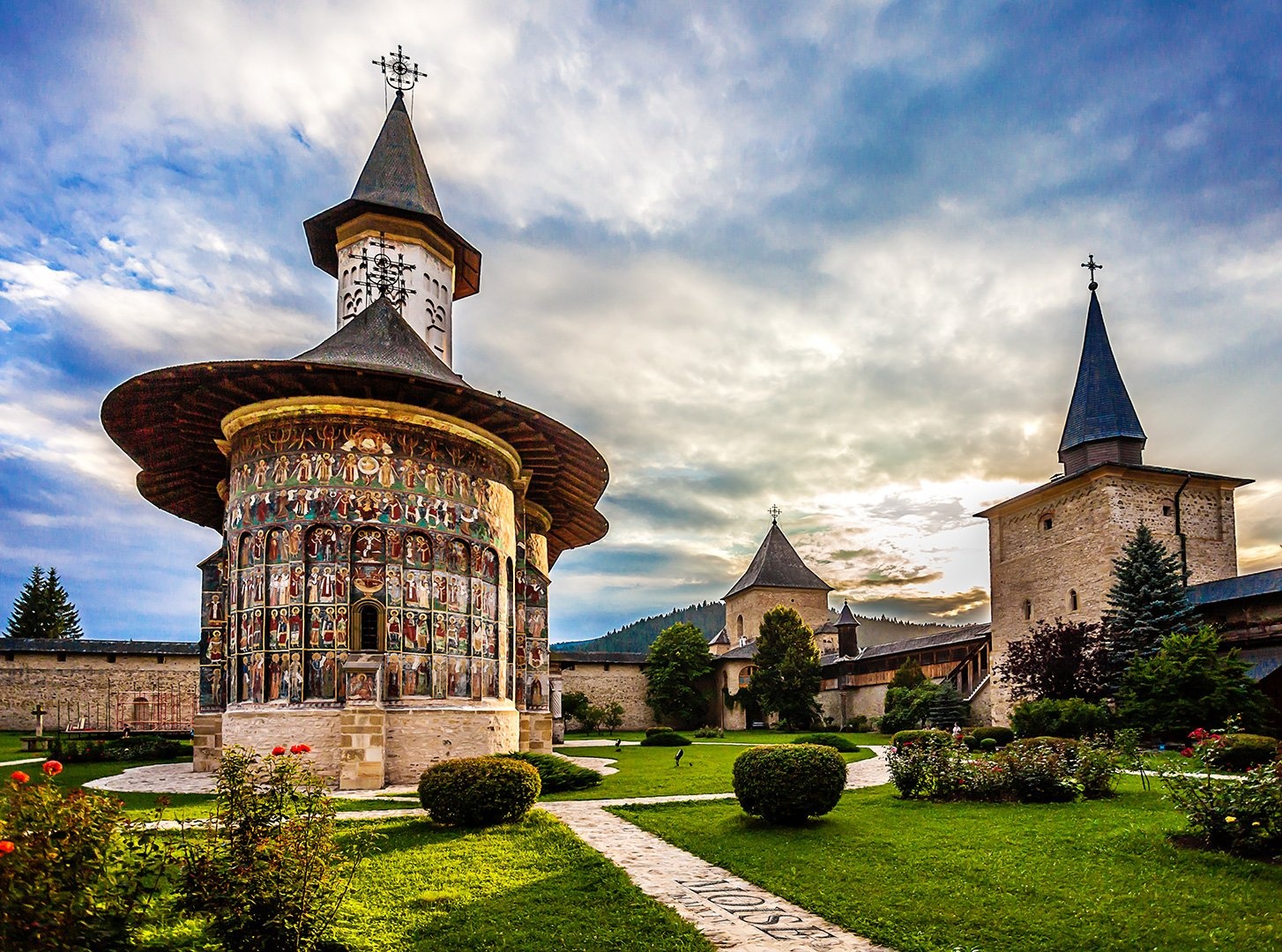
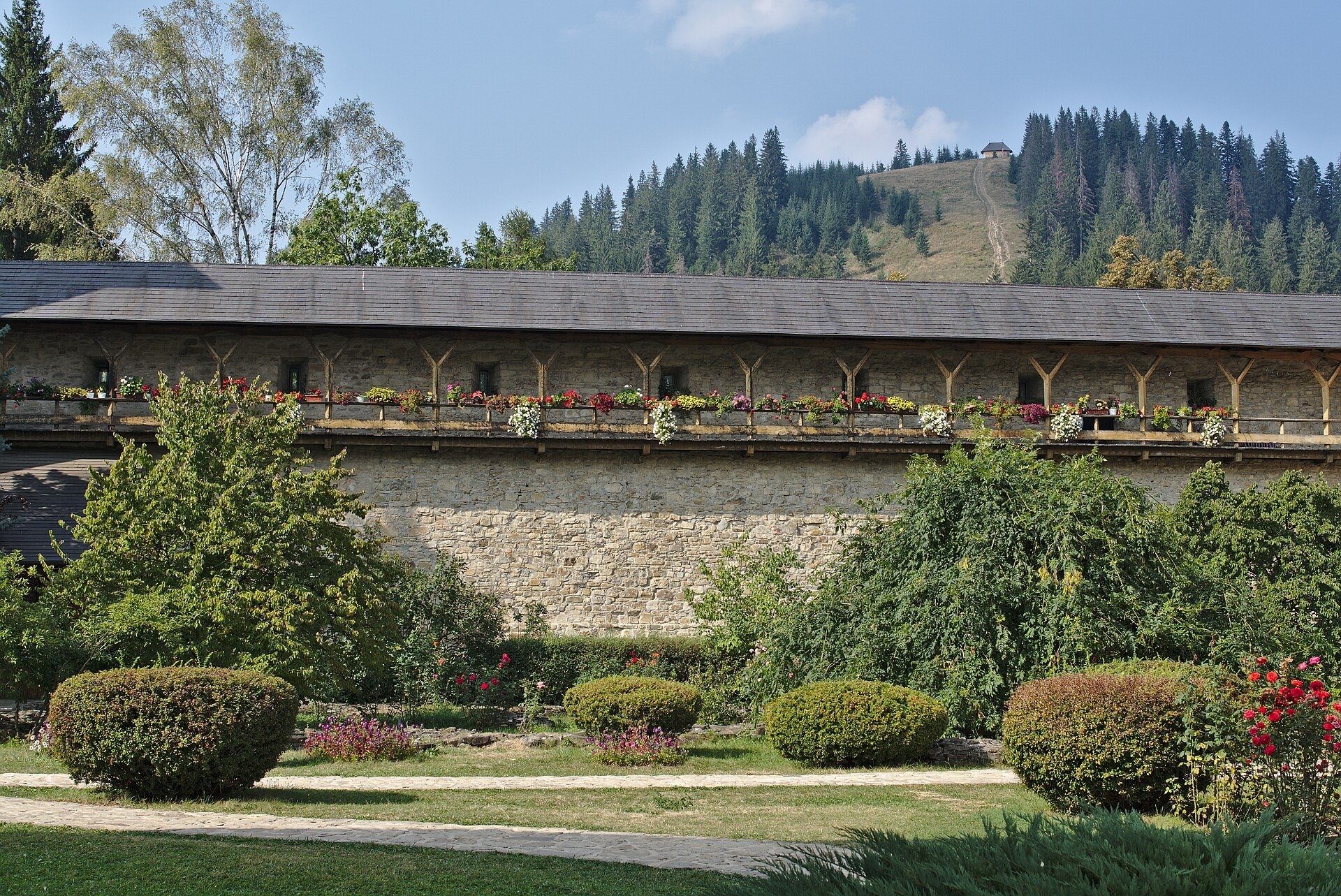
Sucevița impresses with its scale: a large painted church stands in the middle of an almost square courtyard of 100 by 104 metres, enclosed by six-metre walls with towers and surrounded by green hills. It has the largest area of frescoes among the Bukovina monasteries, and its best-known scene is the Ladder of Virtues. Unlike the other churches, the west wall was left unpainted; a local tale says the painter fell from the scaffolding. The monastery museum keeps treasures linked to the Movilă family.
What to see
- The Ladder of Virtues on the north wall — a ladder to paradise that the righteous climb while sinners fall into the jaws of demons.
- The Tree of Jesse and the Akathist Hymn on the south façade, dominated by green and red tones.
- The unpainted west wall, which has its own legend.
- The defensive walls, up to 3 m thick, with a wall walk, four corner towers and a gate tower with a chapel above the passage and the Moldavian coat of arms.
- The monastery museum with the tomb covers of Ieremia and Simion Movilă embroidered in silver thread, church silver, old books and manuscripts.
- The open porches on the north and south and the Gothic stone frames of windows and doors.
Practical information
Address: DN17A 169, village of Sucevița, Suceava County. The monastery stands right by the DN17A road, with parking nearby. It is about 18 km from Rădăuți via the village of Marginea. From Ukraine this is the nearest painted monastery: about 20 km from the Krasnoilsk – Vicovu de Sus border crossing and about 50 km from the Porubne – Siret crossing. Over the Ciumârna pass the road continues to Moldovița Monastery. Opening hours according to the Romania Tourism portal: May to October daily 9:00–20:00, November to April 9:30–17:00. Adult ticket 10 lei. These figures are as of November 2026 and the portal gives no update date, so check before you go. Phone: +40 230 417 110.
In summer 2026 the frescoes on the north façade were being restored, so scaffolding may cover part of the paintings. This is a working convent: clothing should cover shoulders and knees, and a skirt and headscarf are appropriate for women. Do not touch the walls and do not take photos during services. Allow an hour and a half for the church, the walls and the museum.
Nearby
- Marginea — black pottery workshops a few kilometres to the east.
- Moldovița Monastery — over the Ciumârna pass.
- Putna Monastery — the burial place of Stephen the Great.
- Bogdana Monastery in Rădăuți — one of the oldest stone churches in Moldavia.
- The church in Arbore with frescoes by Dragoș Coman.
Photos: Dinu Arateanu, CC BY-SA 3.0 ro, Wikimedia Commons; Strainu, CC BY-SA 4.0, Wikimedia Commons; Alex Moise, CC BY-SA 3.0 ro, Wikimedia Commons; Cosmin Cornea from Timisoara, Romania, CC BY 2.0, Wikimedia Commons; Alexander Klink, CC BY 4.0, Wikimedia Commons; Misa.stefanovic.07, CC BY-SA 4.0, Wikimedia Commons; Joergsam, CC BY-SA 3.0, Wikimedia Commons; Rolly00, CC BY-SA 4.0, Wikimedia Commons.
Getting there from Ukraine
Border crossings
- Porubne – Siret — road and pedestrian, 24/7
- Diakivtsi – Racovăț — road and pedestrian, 24/7 No freight traffic.
- Krasnoilsk – Vicovu de Sus — road and pedestrian, 08:00–20:00 Cars up to 3.5 t and pedestrians only; not 24/7.
- Solotvyno – Sighetu Marmației — road and pedestrian, 24/7 Passenger traffic only: vehicles up to 3.5 t with up to 9 seats, pedestrians.
- Diakove – Halmeu — road, 24/7 No pedestrian crossing.
By car
Chernivtsi – Câmpulung Moldovenesc ≈121 km, ≈2 h 12 min (via Krasnoilsk – Vicovu de Sus); Ivano-Frankivsk – Câmpulung Moldovenesc ≈239 km, ≈4 h 12 min (via Krasnoilsk – Vicovu de Sus); Rakhiv – Câmpulung Moldovenesc ≈217 km, ≈4 h 35 min (via Solotvyno – Sighetu Marmației). Times without border queues, our road routing (GraphHopper, OSM).
Checked 03.11.2026; border crossing hours and timetables change — check before you travel.
Comments
Travellers’ experience: reports, tips, questions.
No one has written here yet. Be the first — your experience helps others.
Video 2
 Valoarea Faptei. Mănăstirea Sucevita, suflare ortodoxă în imagini (07 01 2017)TRINITAS TV

Location on the map
Nearby attractions
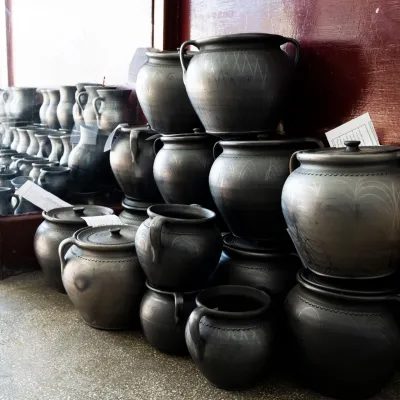 Crafts & workshopsBlack pottery of Marginea: the Magopăț family workshopMarginea6.7 km from Sucevița Monastery: UNESCO painted church and wallsBlack pottery of Marginea: the sixth generation of the Magopăț family Marginea is a large village in the Romanian part of Bukovina, between the town of Rădăuți and...
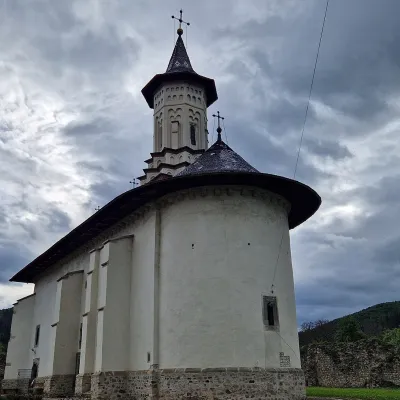 ChurchSolca Monastery: Ștefan Tomșa's church of 1612–1614Solca12 km from Sucevița Monastery: UNESCO painted church and wallsThe Monastery of the Holy Apostles Peter and Paul in Solca (Mănăstirea Solca) is a 17th-century Orthodox monastery in southern Bukovina, in the valley between Rădăuți...
 ChurchPutna Monastery: burial place of Stephen the GreatPutna13 km from Sucevița Monastery: UNESCO painted church and wallsPutna Monastery (Mănăstirea Putna) stands in the valley of the river of the same name in the north-west of historical Bukovina, at the foot of the Obcine ridges of the...