Solca Monastery: Ștefan Tomșa's church of 1612–1614
A monastery restored after 236 years
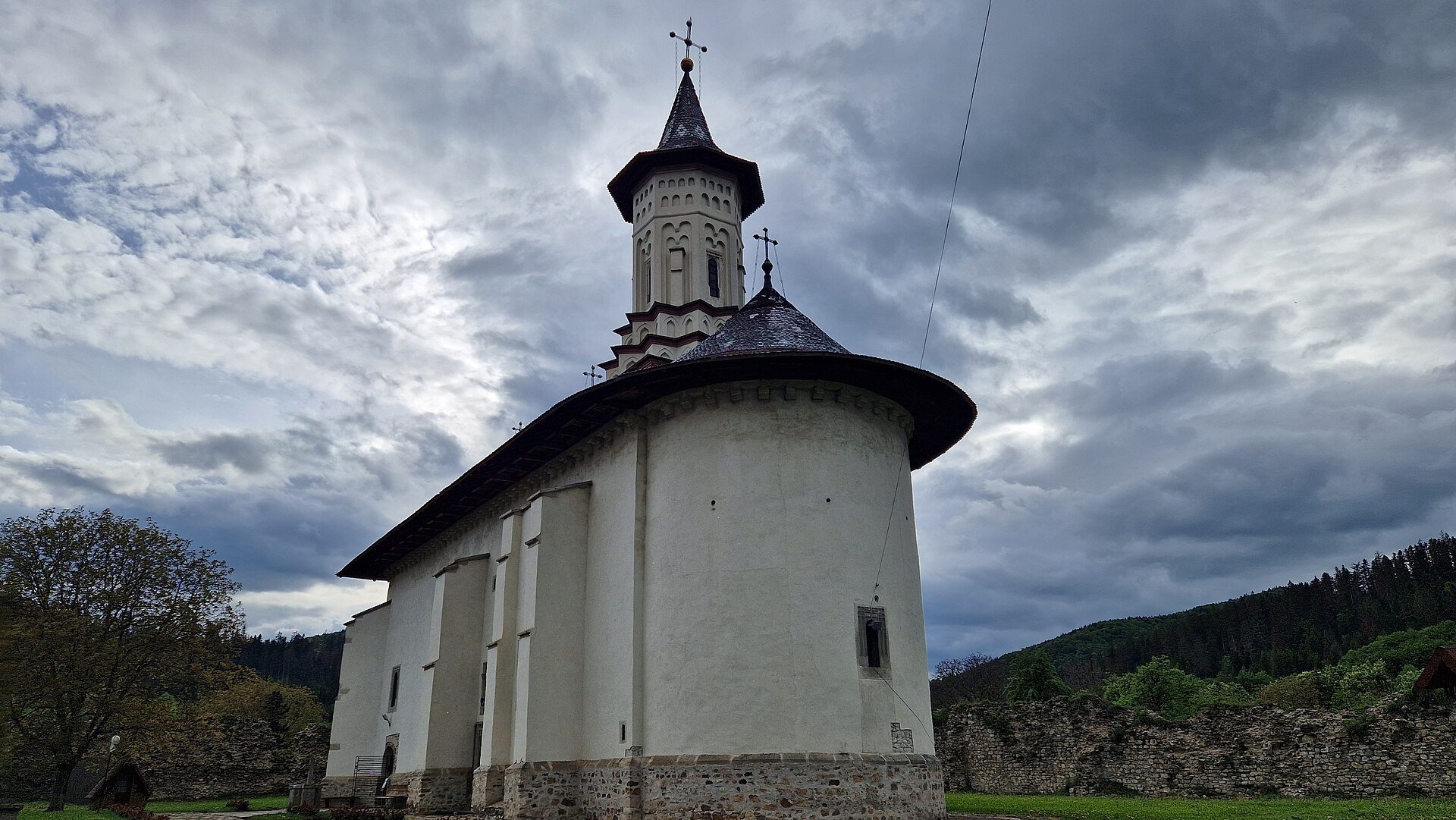
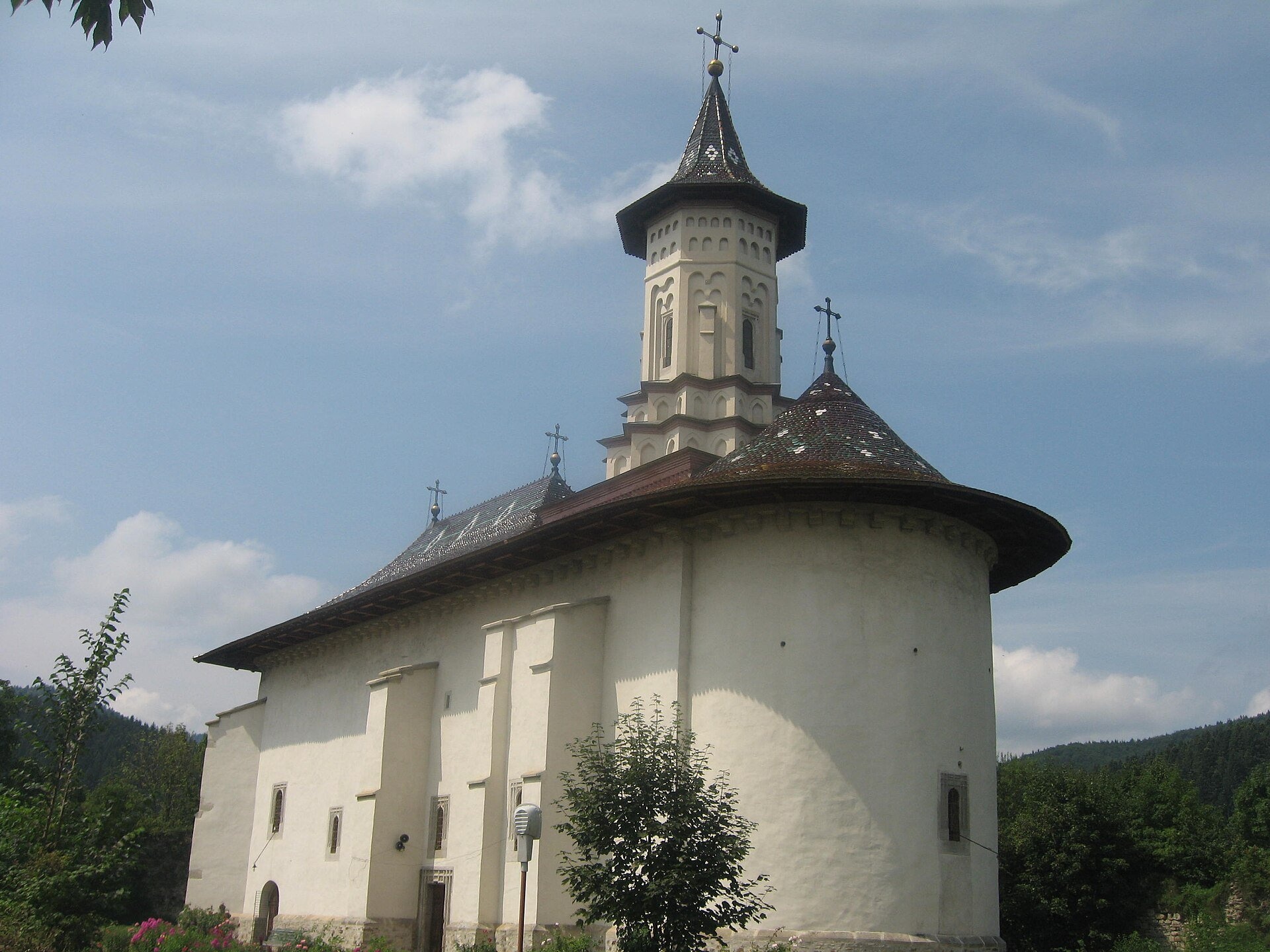
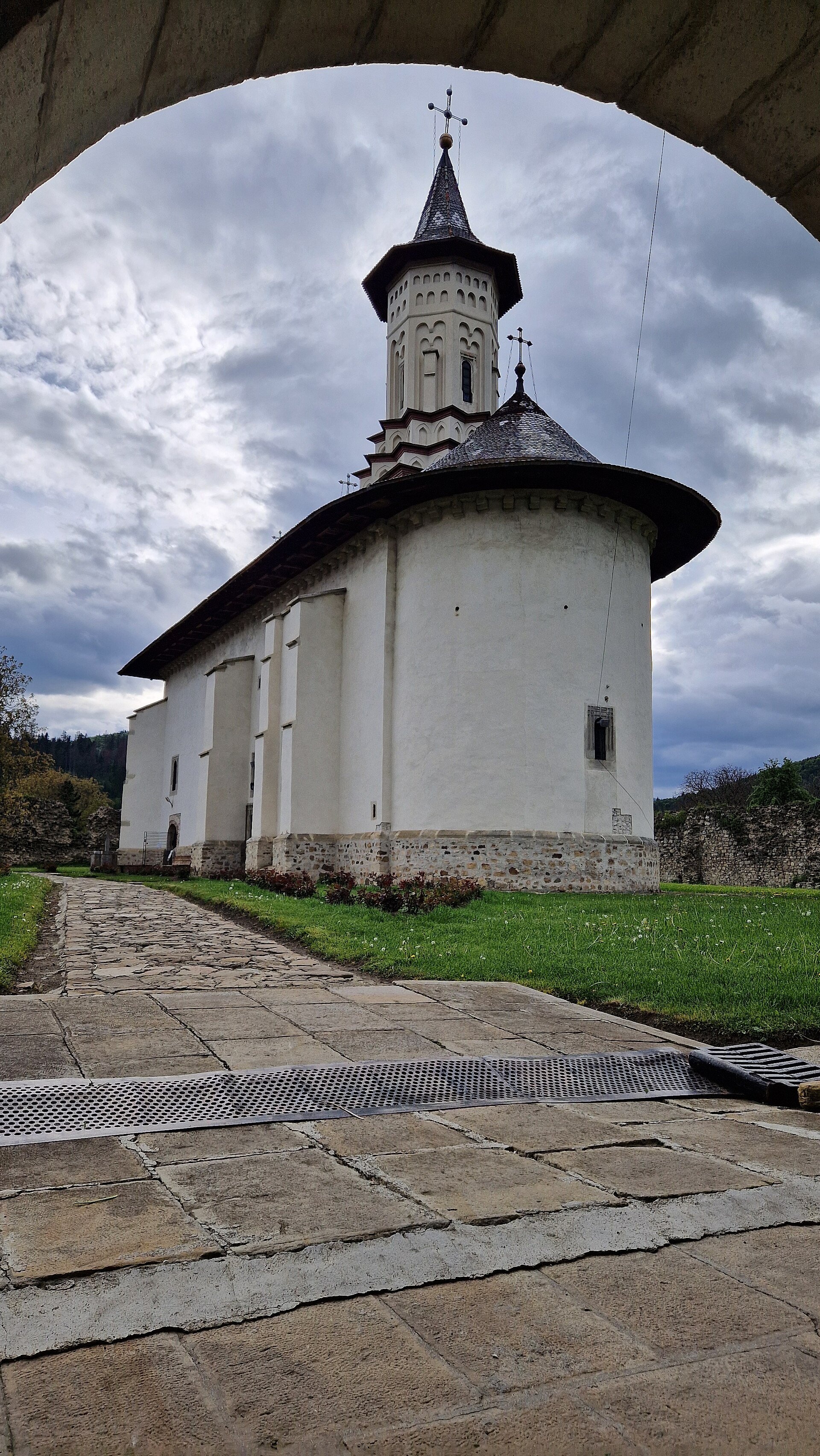
The Monastery of the Holy Apostles Peter and Paul in Solca (Mănăstirea Solca) is a 17th-century Orthodox monastery in southern Bukovina, in the valley between Rădăuți and Gura Humorului. It was founded by Ștefan Tomșa II, Prince of Moldavia: the church was begun in 1612 and consecrated in 1614, while the cells, the abbot's house and the walls with four towers were completed in 1622, during his second reign. The church was consecrated by Metropolitan Anastasie Crimca, the founder of nearby Dragomirna Monastery. Tomșa intended Solca as his family burial place, but in 1623 he lost the throne and died abroad, so he was never buried here. Later the monastery was supported by the princes Miron Barnovschi and Vasile Lupu.
After Bukovina passed to Austria, the monastery was closed on 29 April 1785: the monks were driven out, its belongings were divided among the monasteries of Putna, Sucevița, Dragomirna and St John in Suceava, and the church became a parish church. In 1810 the monastery cellars became storerooms of the Solca brewery; in 1871 a fire destroyed the refectory and the cells. At the initiative of Archbishop Calinic of Suceava and Rădăuți the monastery was re-established: on 7 March 2021, 236 years after its closure, it again received an abbot and a monastic community formed by monks from Putna. The ensemble is a category A historic monument, of national and universal importance.
Why go
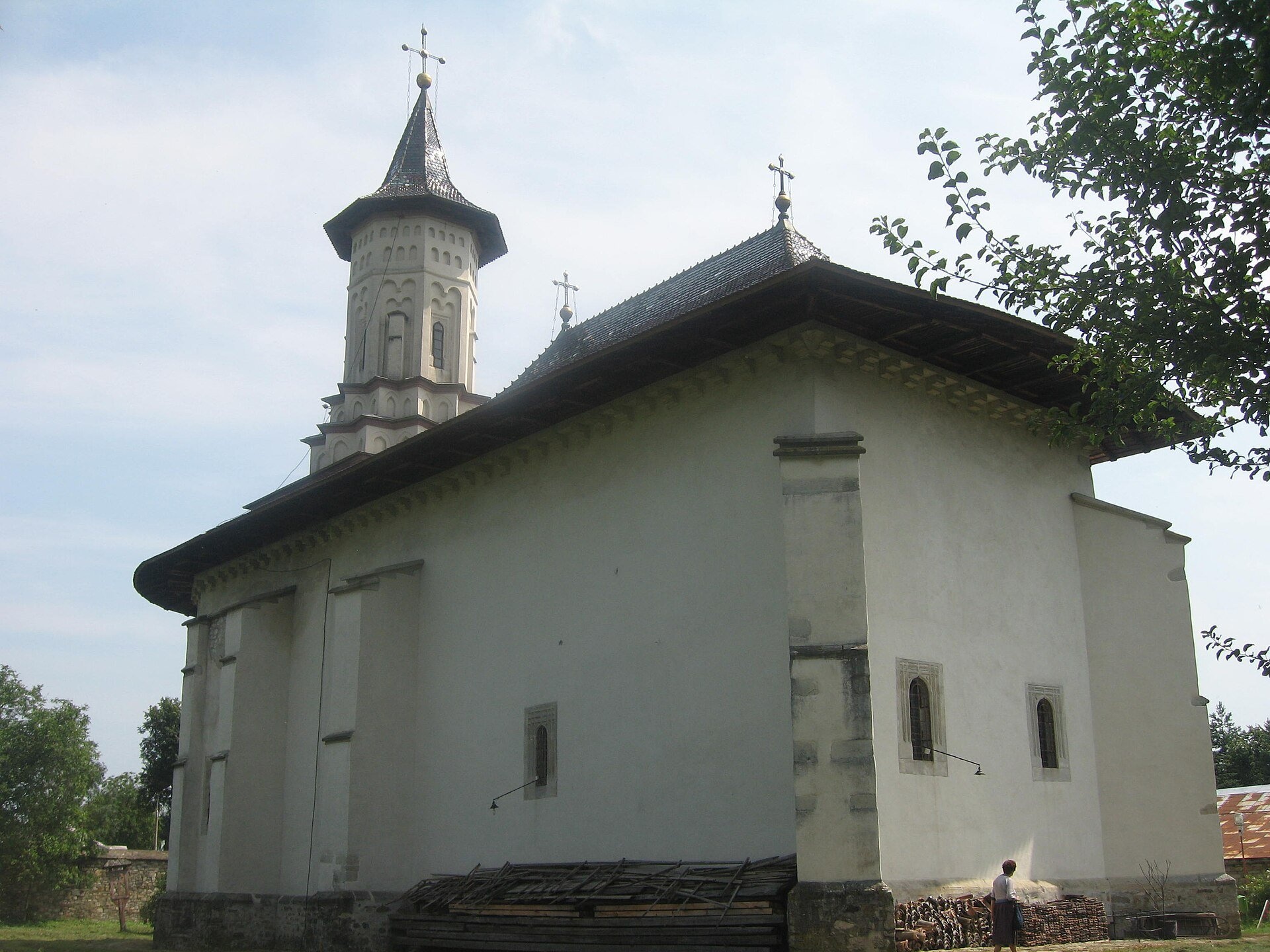
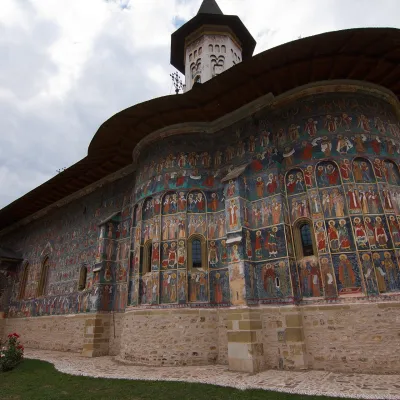
Solca is one of the tallest churches of medieval Moldavia: its tower rises 36 metres, and according to the monastery only Dragomirna (42 metres) is taller. The church has no exterior paintings like Voroneț or Humor, but its slender silhouette, white buttressed walls and stone portals with Gothic details show Moldavian architecture in its pure form. It is a quiet place where the history of a closed and revived monastery is still tangible: walls, cellars and ruins of cells from 1622 survive next to the church. Solca combines easily with the painted church in Arbore and the monasteries of Humor and Voroneț.
What to see
- The Church of the Holy Apostles Peter and Paul of 1612–1614 — trefoil in plan, in the Moldavian style with Gothic and Byzantine elements, with a tall tower over the nave.
- Stone portals and windows with Gothic mouldings, a typical feature of Moldavian architecture.
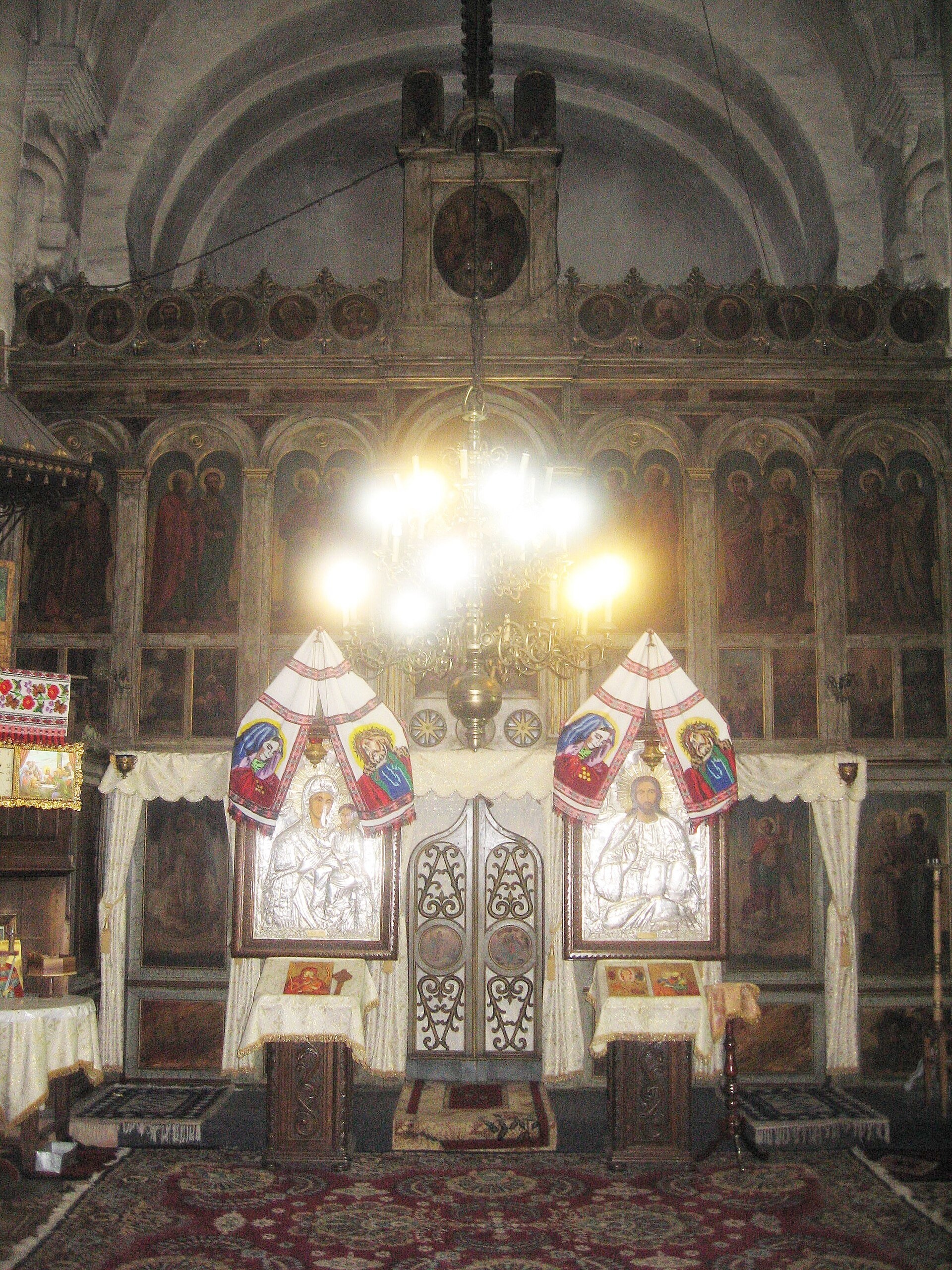
- The iconostasis of 1885, painted by the Bukovinian artist Epaminonda Bucevschi.
- The tombstones of Safta Abaza (1683) and vornic Andrei Abaza (1707), and the great commemoration book of 1664–1665.
- The walls, towers, bell tower, cellars and ruins of cells of 1622; the monastery plans to restore the complex and create a museum to gather Solca's scattered treasures.
Practical information
Address: Strada Tomșa Vodă, Solca, Suceava County. It is about 55 km from the Porubne–Siret border crossing and about 35 km from the Krasnoilsk–Vicovu de Sus crossing; Gura Humorului is about 25 km away. This is a working Romanian Orthodox monastery for monks. According to the schedule on the official website, morning services are held daily at 6:30 and evening services at 17:30; on Sunday the Divine Liturgy is at 8:30. The monastery publishes no separate visiting hours or entrance fee, so check before you go by phone, +40 745 692 398 (information as of November 2026). Keep quiet during services; by Orthodox custom visitors wear modest clothing (shoulders and knees covered), and women cover their heads. Ask on site whether photography inside is allowed. A visit takes 30–45 minutes.
Nearby
- The church in Arbore, a painted UNESCO church about 10 km away.
- Humor Monastery and Voroneț Monastery, near Gura Humorului.
- Putna Monastery, the burial place of Stephen the Great.
- The salt mine in Cacica, about 15 km to the east.
Official website: manastireasolca.ro
Photos: Curcan ionel, CC BY-SA 4.0, Wikimedia Commons; Cezar Suceveanu, CC BY 3.0, Wikimedia Commons.
Getting there from Ukraine
Border crossings
- Porubne – Siret — road and pedestrian, 24/7
- Diakivtsi – Racovăț — road and pedestrian, 24/7 No freight traffic.
- Krasnoilsk – Vicovu de Sus — road and pedestrian, 08:00–20:00 Cars up to 3.5 t and pedestrians only; not 24/7.
- Solotvyno – Sighetu Marmației — road and pedestrian, 24/7 Passenger traffic only: vehicles up to 3.5 t with up to 9 seats, pedestrians.
- Diakove – Halmeu — road, 24/7 No pedestrian crossing.
By car
Chernivtsi – Câmpulung Moldovenesc ≈121 km, ≈2 h 12 min (via Krasnoilsk – Vicovu de Sus); Ivano-Frankivsk – Câmpulung Moldovenesc ≈239 km, ≈4 h 12 min (via Krasnoilsk – Vicovu de Sus); Rakhiv – Câmpulung Moldovenesc ≈217 km, ≈4 h 35 min (via Solotvyno – Sighetu Marmației). Times without border queues, our road routing (GraphHopper, OSM).
Checked 03.11.2026; border crossing hours and timetables change — check before you travel.
Comments
Travellers’ experience: reports, tips, questions.
No one has written here yet. Be the first — your experience helps others.
Video 2
 Redeschiderea Mănăstirii Solca și numirea primului stareț după 236 de aniMănăstirea Solca

Location on the map
Nearby attractions
 Crafts & workshopsBlack pottery of Marginea: the Magopăț family workshopMarginea12 km from Solca Monastery: Ștefan Tomșa's church of 1612–1614Black pottery of Marginea: the sixth generation of the Magopăț family Marginea is a large village in the Romanian part of Bukovina, between the town of Rădăuți and...
 ChurchHumor Monastery: a UNESCO painted church of 1530Mănăstirea Humorului12 km from Solca Monastery: Ștefan Tomșa's church of 1612–1614Humor Monastery (Mănăstirea Humor) stands in the village of Mănăstirea Humorului, about 5 km north of the town of Gura Humorului in Bukovina.
 ChurchSucevița Monastery: UNESCO painted church and wallsSucevița12 km from Solca Monastery: Ștefan Tomșa's church of 1612–1614Sucevița Monastery (Mănăstirea Sucevița) stands in the valley of the river of the same name in the village of Sucevița, about 18 km from the town of Rădăuți in...