Arbore Church: Dragoș Coman's frescoes, UNESCO
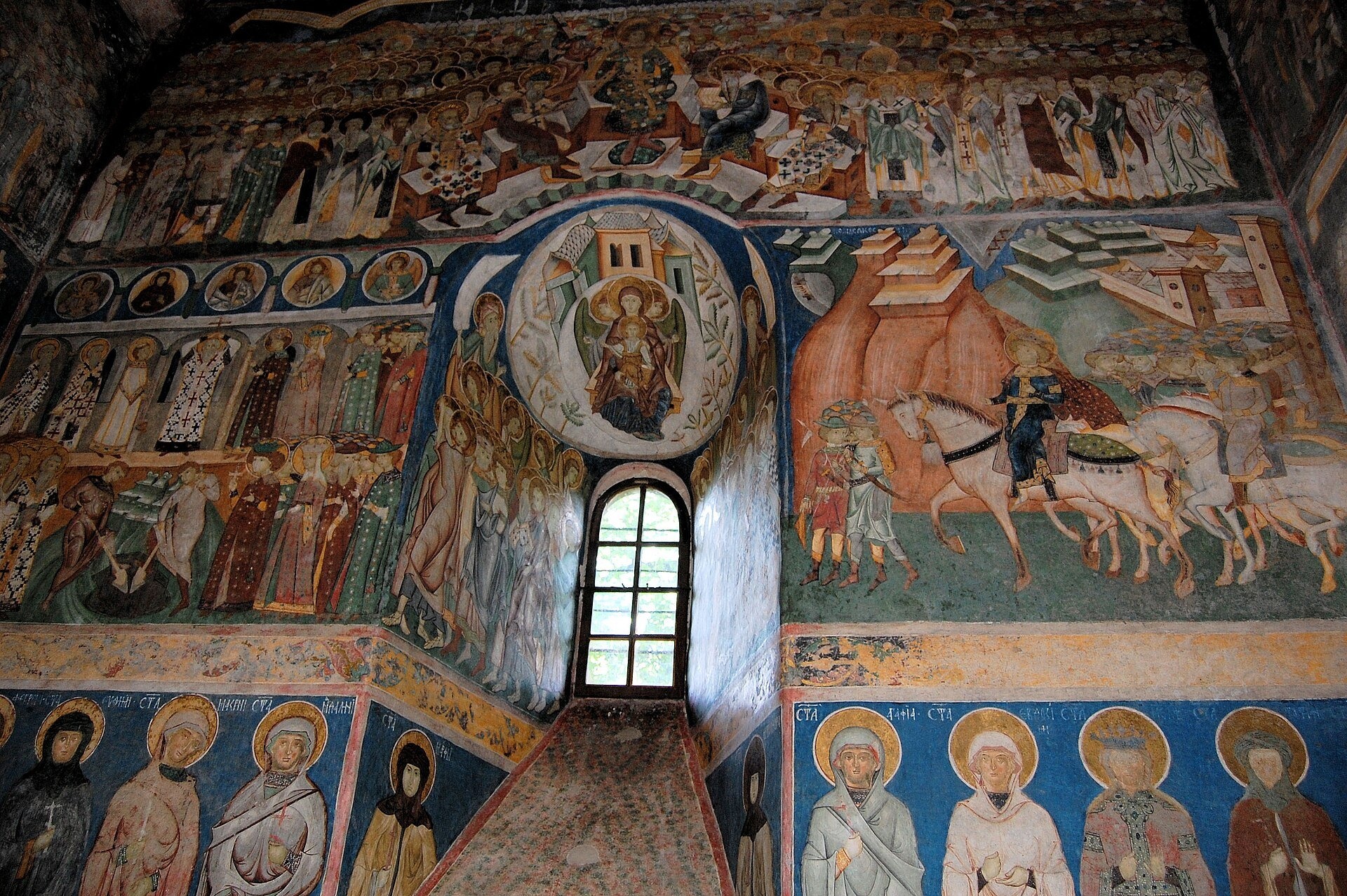
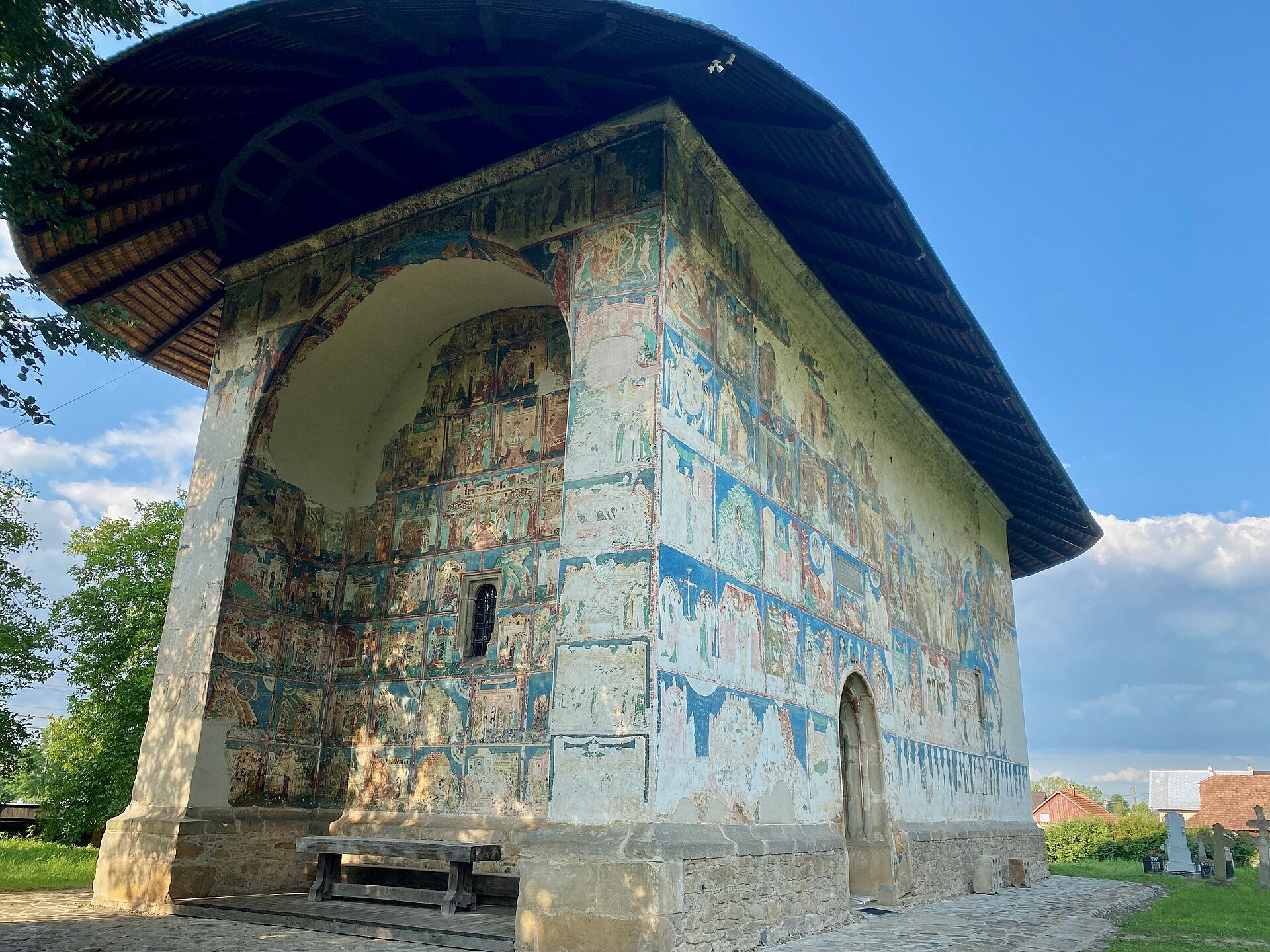
The church of Hetman Luca Arbore
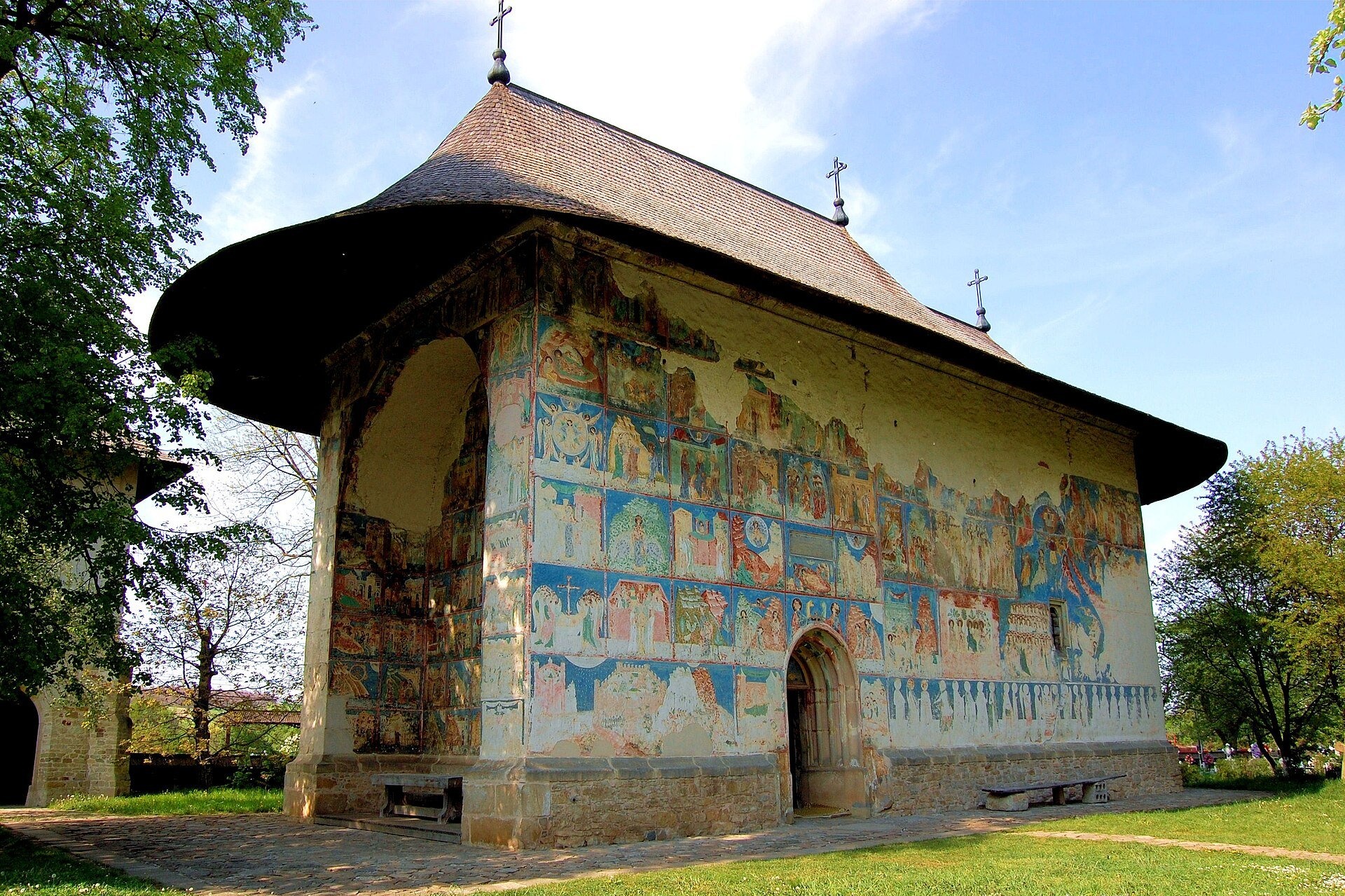
The Church of the Beheading of St John the Baptist in the village of Arbore stands by the DN2K road between the small towns of Milișăuți and Solca in Romanian Bukovina. It is often simply called "the Arbore church". Together with the other painted churches of Southern Bukovina, it is part of the UNESCO World Heritage Site "Churches of Moldavia", inscribed in 1993.
The church was built by Hetman Luca Arbore — one of the great boyars of Stephen the Great, adviser to his successor Bogdan III the One-Eyed and guardian of the young Prince Ștefăniță. The Slavonic inscription above the entrance says that building began on 2 April 1502 and ended the same year on 29 August — the feast of the Beheading of St John the Baptist, to whom the church is dedicated. It was meant to be the family's burial church. The founder's fate was tragic: in April 1523 he was executed without trial at Hârlău on Ștefăniță's orders, and later two of his sons were killed too. In 1541 the hetman's daughter Ana commissioned the painting of the exterior walls and a partial renewal of the interior: an inscription in the nave names the master — Dragosin, son of the priest Coman of Iași, known as Dragoș Coman. In the 17th and 18th centuries the church stood without a roof for a long time, and some of the frescoes were lost. After many years of restoration, completed in 2025, a monastery of the Archdiocese of Suceava and Rădăuți of the Romanian Orthodox Church now operates at the church.
Why go
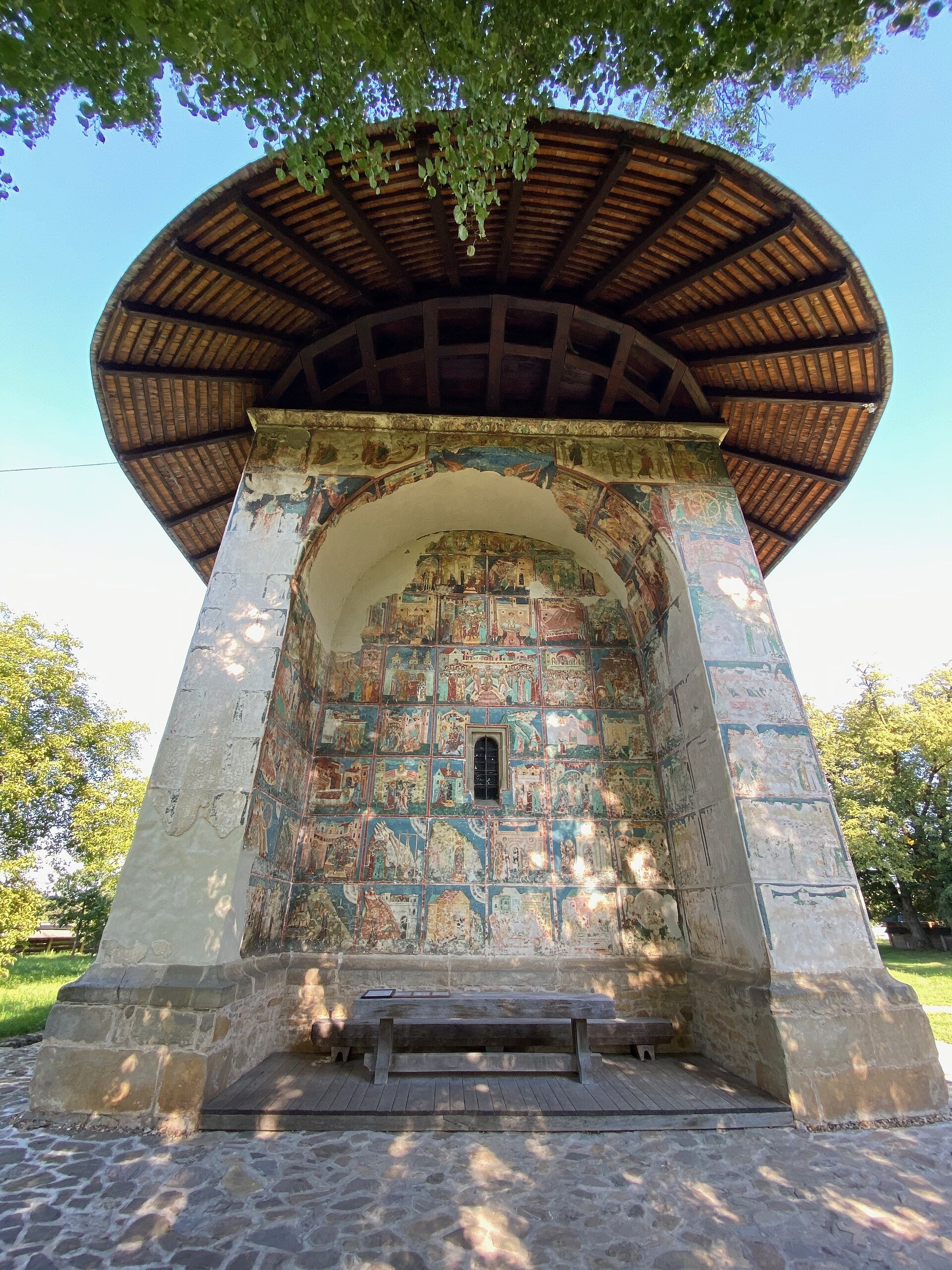
Arbore is the least "monastic" of the painted churches: a small, elongated church with no tower and a four-sided roof, standing right in the village. But Dragoș Coman's painting is special. He was a layman, and it shows: transparent, almost watercolour-like paint, free movement of the figures, scenes from everyday life, and in the background, beside dark green, a familiar "Voroneț blue". The west wall, sheltered by the deep projection of the roof, is a true book of miniatures, regarded as one of the finest in the art of the age of Stephen the Great and Petru Rareș.
What to see
- The west wall under its deep arch — dozens of small scenes: the Creation, Adam ploughing and Eve spinning, the lives of Saints George, Demetrius, Nicetas and Paraskeva.
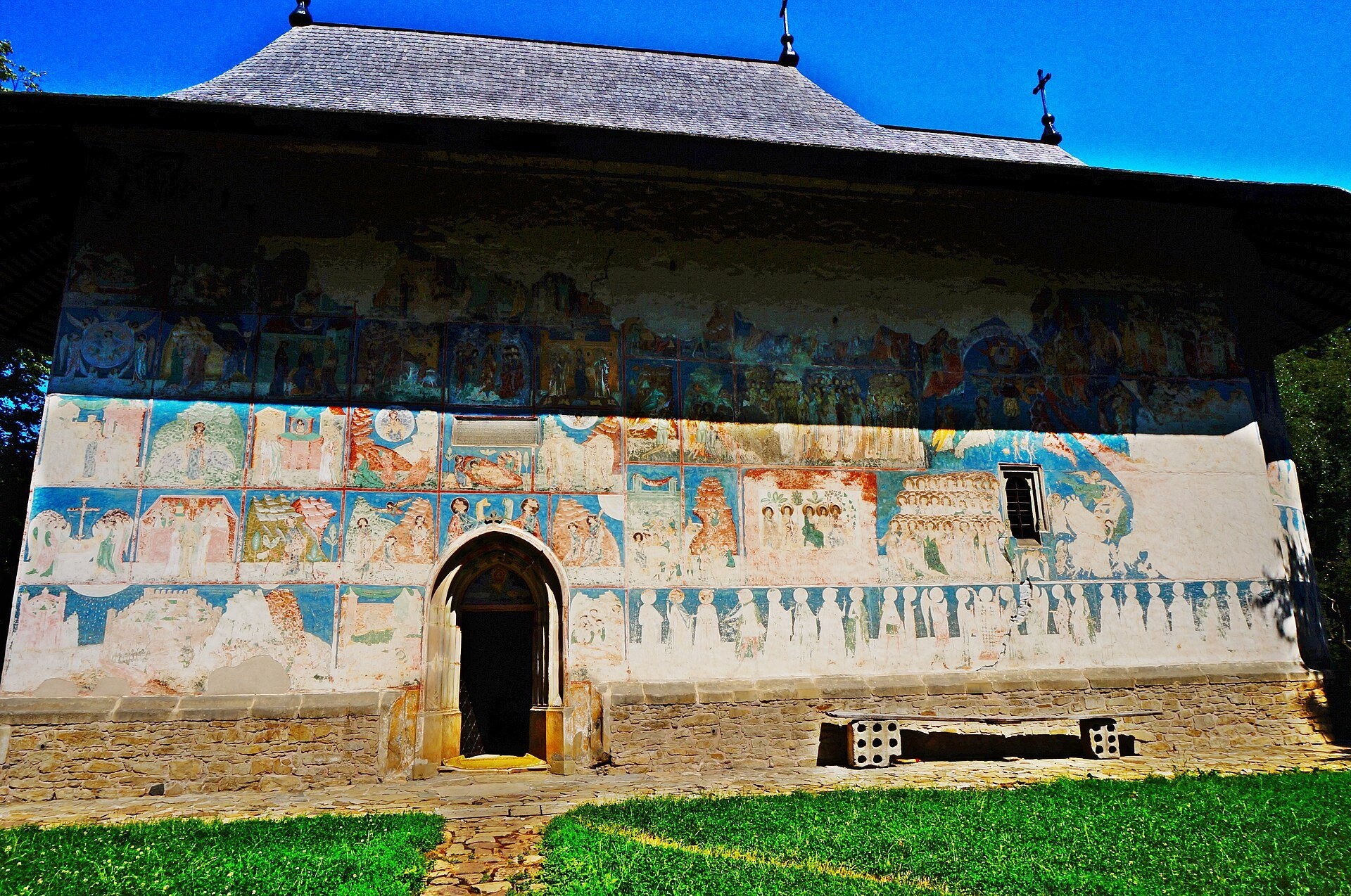
- The south façade with the Akathist Hymn, the Siege of Constantinople below it and the Last Judgment to the right of the entrance.
- St Christopher carrying the Christ Child on his shoulder among the martyrs on the apse — a subject unusual for Moldavia and borrowed from Western art.
- The Gothic portal with a pointed arch on the south wall.
- The interior with votive portraits of Luca Arbore with his wife Iuliana and their children, the Cavalcade of Emperor Constantine in the narthex and the restored arcosolium — the niche over the founder's tomb.
- The stone bell tower of 1867 next to the church.
Practical information
Address: DN2K 732, village of Arbore, Suceava County. The church stands by the village's main road, about 15 km from the town of Rădăuți and 35 km from the city of Suceava. From Ukraine the easiest route is through the Porubne – Siret border crossing and the small town of Milișăuți — about 40 km. Official sources do not publish exact opening hours: the church is usually open to visitors daily during daylight hours. Entry 10 lei (per the Romania Tourism portal as of November 2026). Phone: +40 740 154 213; check before you go.
Dress modestly, with shoulders and knees covered; a skirt and headscarf are appropriate for women. Do not touch the frescoes: they are very delicate, and restorers specifically warn about damage from vibration and touching. When looking at the west wall, watch your step — the road with heavy lorries runs very close to the fence. A visit takes 40–60 minutes.
Nearby
- Sucevița Monastery with its walls and the Ladder of Virtues — about 30 km.
- Marginea — black pottery workshops on the way to Sucevița.
- The church in Pătrăuți — the oldest surviving foundation of Stephen the Great.
- Humor Monastery — via the small town of Solca, about 30 km.
- Bogdana Monastery in Rădăuți.
Photos: KLMircea, CC BY-SA 2.0, Wikimedia Commons; DarthChristianWeber, CC BY-SA 4.0, Wikimedia Commons; Alexnica, CC BY-SA 3.0 ro, Wikimedia Commons; KLMircea from Focsani, Romania, CC BY-SA 2.0, Wikimedia Commons; Josep Renalias Lohen11, CC BY 4.0, Wikimedia Commons; Cezar Suceveanu, CC BY 3.0, Wikimedia Commons; Sshkliaeva, CC BY-SA 4.0, Wikimedia Commons.
Getting there from Ukraine
Border crossings
- Porubne – Siret — road and pedestrian, 24/7
- Diakivtsi – Racovăț — road and pedestrian, 24/7 No freight traffic.
- Krasnoilsk – Vicovu de Sus — road and pedestrian, 08:00–20:00 Cars up to 3.5 t and pedestrians only; not 24/7.
- Solotvyno – Sighetu Marmației — road and pedestrian, 24/7 Passenger traffic only: vehicles up to 3.5 t with up to 9 seats, pedestrians.
- Diakove – Halmeu — road, 24/7 No pedestrian crossing.
By car
Chernivtsi – Câmpulung Moldovenesc ≈121 km, ≈2 h 12 min (via Krasnoilsk – Vicovu de Sus); Ivano-Frankivsk – Câmpulung Moldovenesc ≈239 km, ≈4 h 12 min (via Krasnoilsk – Vicovu de Sus); Rakhiv – Câmpulung Moldovenesc ≈217 km, ≈4 h 35 min (via Solotvyno – Sighetu Marmației). Times without border queues, our road routing (GraphHopper, OSM).
Checked 03.11.2026; border crossing hours and timetables change — check before you travel.
Comments
Travellers’ experience: reports, tips, questions.
No one has written here yet. Be the first — your experience helps others.
Video 2
 Biserica din Arbore - UNESCOarhiva TVR

Location on the map
Nearby attractions
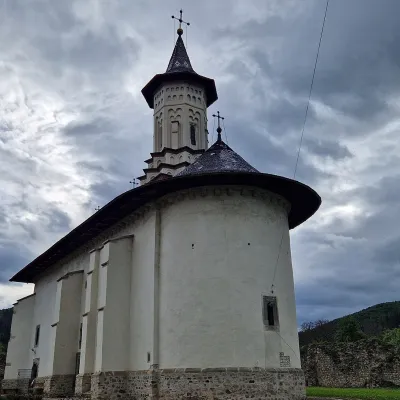 ChurchSolca Monastery: Ștefan Tomșa's church of 1612–1614Solca8.7 km from Arbore Church: Dragoș Coman's frescoes, UNESCOThe Monastery of the Holy Apostles Peter and Paul in Solca (Mănăstirea Solca) is a 17th-century Orthodox monastery in southern Bukovina, in the valley between Rădăuți...
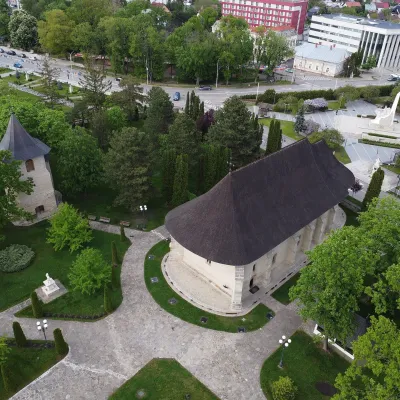 ChurchBogdana Monastery: the oldest stone church in MoldaviaRădăuți12 km from Arbore Church: Dragoș Coman's frescoes, UNESCOThe first burial place of the Moldavian princes Bogdana Monastery (Mănăstirea Bogdana) stands in the centre of the town of Rădăuți in northern Bukovina, on the plain...
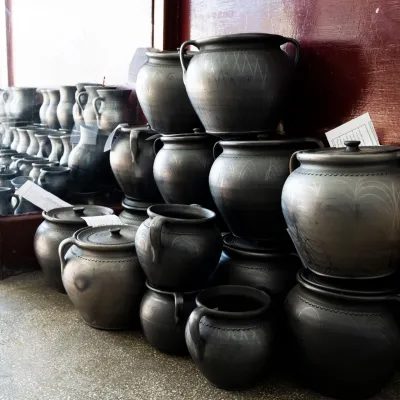 Crafts & workshopsBlack pottery of Marginea: the Magopăț family workshopMarginea13 km from Arbore Church: Dragoș Coman's frescoes, UNESCOBlack pottery of Marginea: the sixth generation of the Magopăț family Marginea is a large village in the Romanian part of Bukovina, between the town of Rădăuți and...