Sanctuary of the Mother of God Queen of Peace, Bilshivtsi
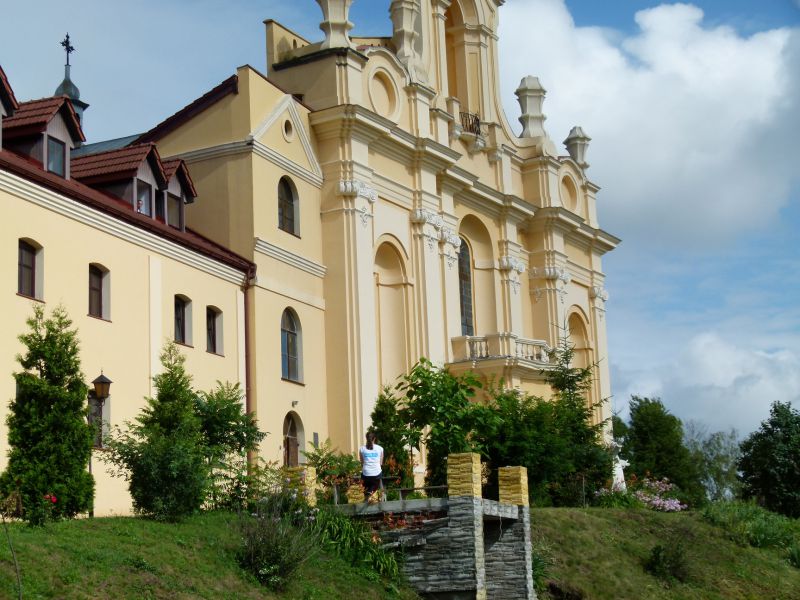
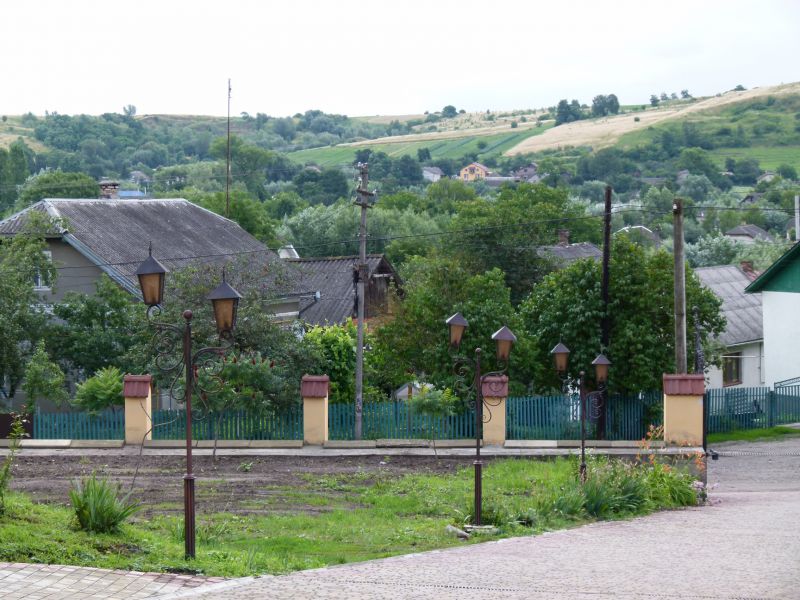
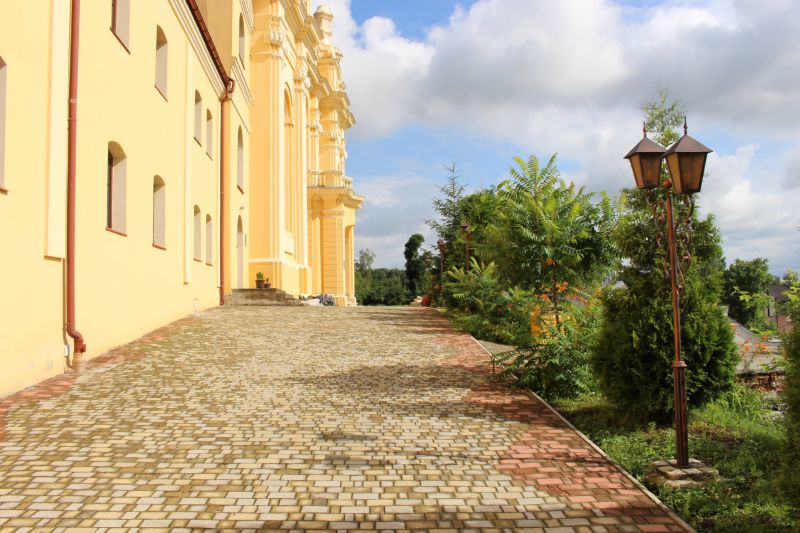
Just a few kilometers from the road connecting Lviv with Ivano-Frankivsk, lies the village of Bilshivtsi, home to the pearl of late Baroque style, the Annunciation Church. The building is so valuable in historical and architectural terms that it has been included among the monuments of the National Reserve "Ancient Halych". The Annunciation Church is surrounded by the buildings of the Carmelite monastery complex. Once, this place was one of the centers of scientific, cultural, and religious life in the region. The monastery complex in Bilshivtsi is one of the best-preserved, and after recent reconstruction, it attracts even more visitors: pilgrims as a spiritual center and tourists as an interesting architectural monument.
Carmelites are representatives of the Catholic monastic order. Its full Latin name is Ordo fratrum Beatae Virginis Mariae de monte Carmel, meaning the Order of the Brothers of the Blessed Virgin Mary of Mount Carmel. It is believed that the order is under the special protection of the Blessed Virgin Mary.
Catholic church construction in Galicia was very common during the period when this region of Ukraine was part of the Polish-Lithuanian Commonwealth. The Carmelite monastery complex was established in the local town center in 1624, after the crown hetman Martin Kazanovsky invited the Carmelite monks to Bilshivtsi.
Due to frequent enemy attacks from Turks, Tatars, and the national liberation war of 1648–1654, the monastery suffered significant destruction. It was restored each time. In the 19th century, the Annunciation Church in Bilshivtsi and the monastery complex of the Barefoot Carmelites were among the largest spiritual centers in Galicia. The most extensive archive of the region was kept here. A shelter for the poor operated at the monastery, and a school functioned.
The Annunciation Church and the monastery suffered significant losses during World War I, as the front line passed through Bilshivtsi. After the war, the building was restored, but with the arrival of Soviet power, the activities of such institutions were banned. The church was turned into a grain storage facility, and later a glass collection point. The monastic cells were dismantled, and by the end of the 20th century, the valuable architectural complex had turned into a useless object.
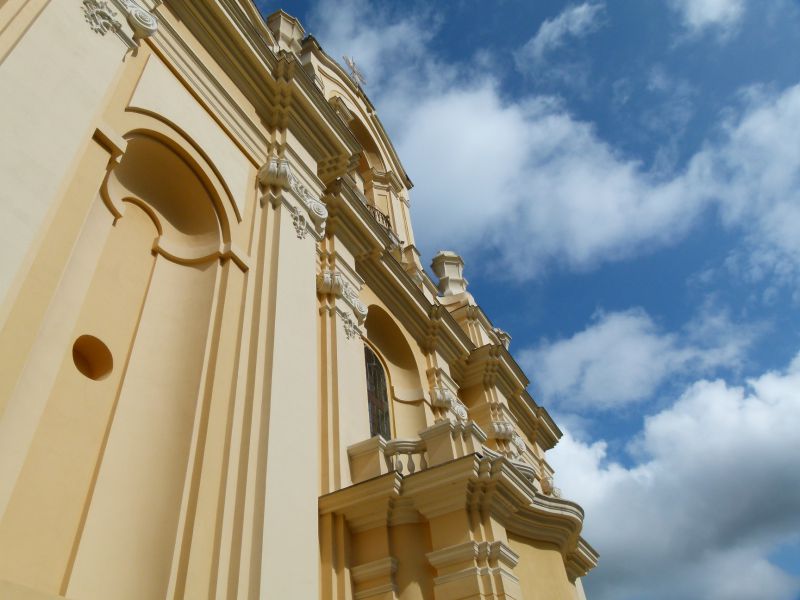
The Annunciation Church is a basilica with three naves, oriented to the west. Unfortunately, the name of the creator who designed the building has not been preserved. The eastern plastic facade dominates the building, crowned with Ionic order capitals. The temple has two tiers, built of brick on a stone foundation. There are two towers on the sides without finishes. This type of sacred building, borrowed from northern Italy, became characteristic of many European buildings of its time. Entrance to the interior of the temple is through an open porch, above which there is a small balcony.
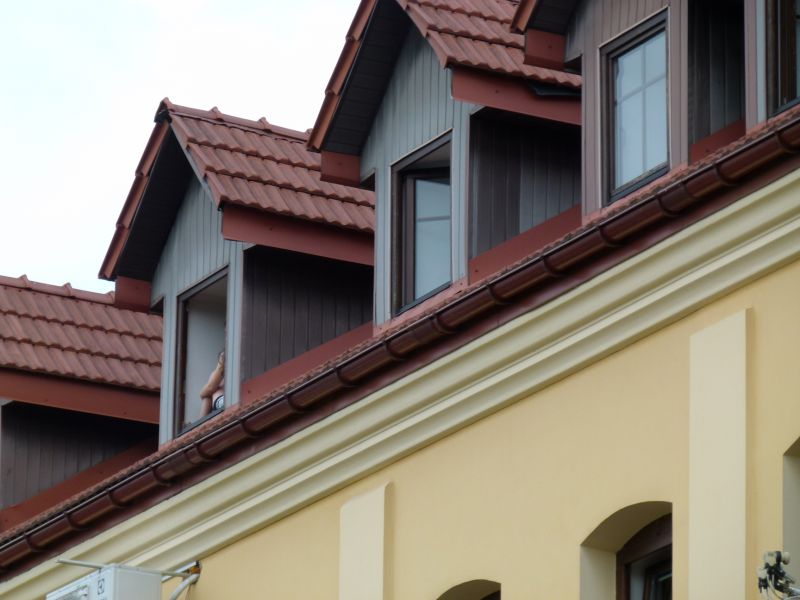
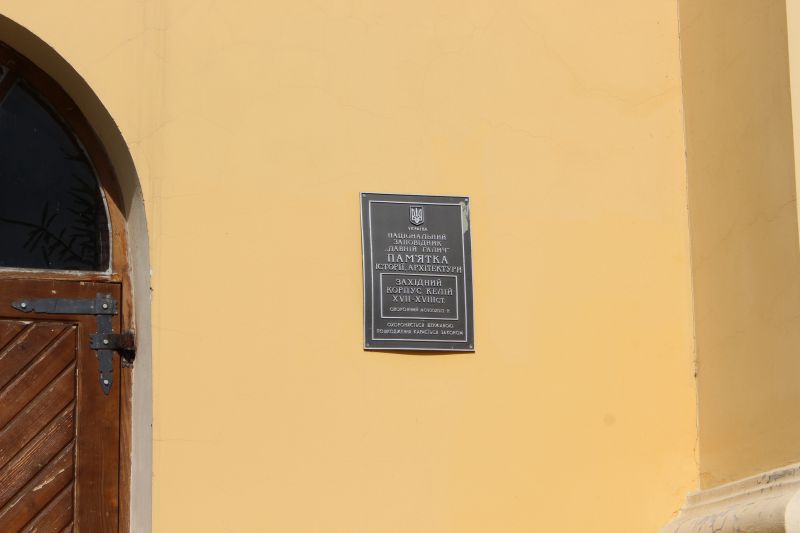
The pediment with a loggia has decorative embellishments typical of the Baroque style. In the niche before the loggia, there used to be a fresco composition "Annunciation". On the southern side of the church were the monastic cells, which formed a rectangular shape with a courtyard inside. The southern and eastern wings of the cells have not survived; they were dismantled, but during the last reconstruction, they were restored. The facades of the western wing, which survived, do not have special decorations, but specialists believe that the western facade of the building corresponds most to the spirit of the Baroque style.
The main and side altars were created in the second half of the 18th century, before the coronation of the miraculous icon of the Mother of God in the church. The main altar is the most impressive part of the interior. Along the southern and northern walls, there are three chapels on each side. The Annunciation Church also had fresco paintings, some of which have survived to this day.
Since the Barefoot Carmelite monastery complex in Bilshivtsi is a significant monument of late Baroque architecture, the general directorate of the "Ancient Halych" reserve, together with specialists, developed a series of restoration programs and began implementing them at the beginning of the 21st century. Soon, colleagues from Poland joined the work. There, the church was included in the program for the restoration of architectural monuments outside the state. The project involves the participation of highly qualified restoration specialists and material assistance.
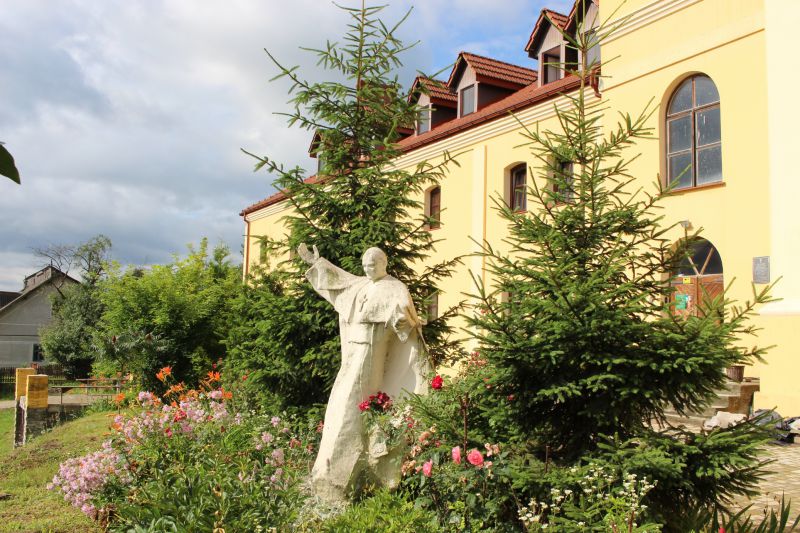
As a result of the joint activities of the General Directorate of the reserve, the Ministry of Culture of Poland, and Franciscan monks, the Annunciation Church has been restored, the interior and part of the fresco painting have been restored, the western wing of the cells has also been repaired, and the lost wings (southern and eastern) have been rebuilt anew. The grand staircase and the eastern wall with the entrance archway have also been recreated.
To ensure the protection of the monument, in 2005, an agreement was signed between the male monastery and the National Reserve "Ancient Halych", and the shrine was returned to its original function. Pilgrimages take place at the Carmelite monastery complex in Bilshivtsi, and a retreat house operates here. Tours are conducted for pilgrims and tourists in Ukrainian, Polish, and Spanish.
Bilshivtsi is located near the N09 highway. If you are driving from the direction of Burshtyn, you need to turn left 6 kilometers before the city of Halych (there is a sign "Bilshivtsi"). The distance from the turnoff from the road to the church itself is approximately 4 kilometers. You can also reach Bilshivtsi by buses heading to (through) Halych (for example, "Lviv (Burshtyn, Rohatyn) – Halych", "Lviv – Ivano-Frankivsk", then walk from the road or take a local minibus.
Video 2
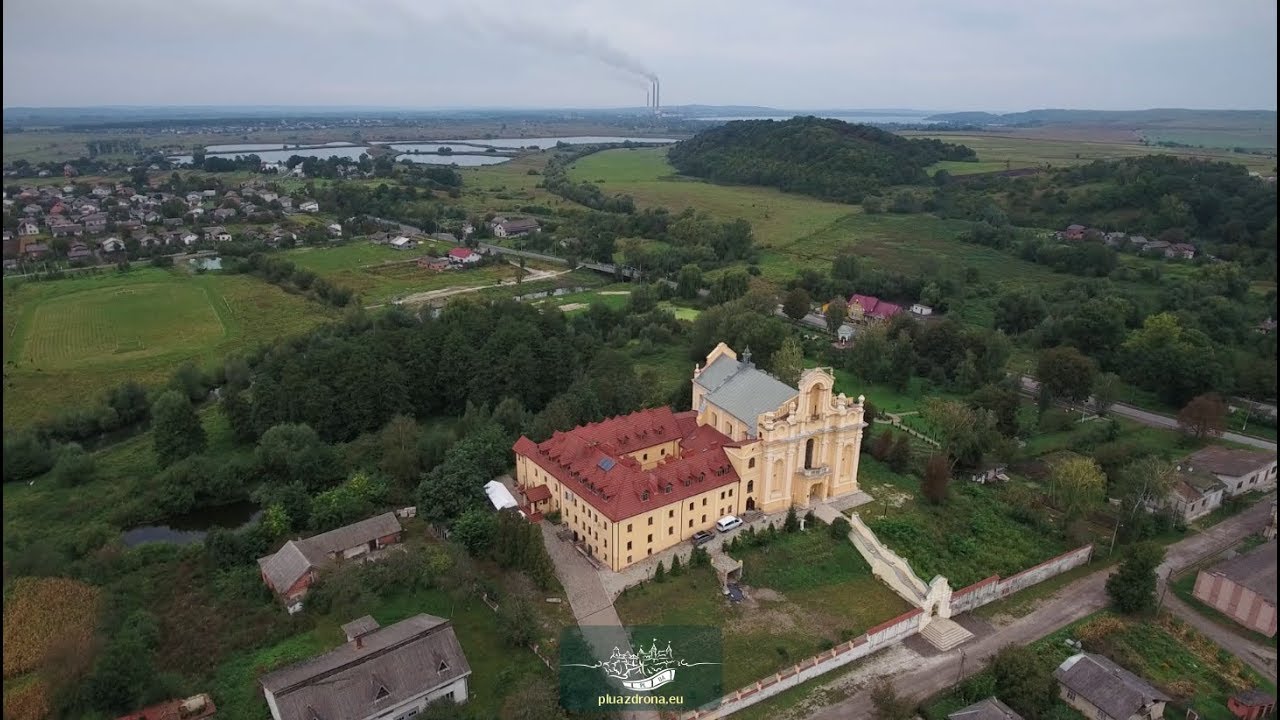 Санктуарій Матері Божої у БільшівцяхPLUA. History by drone
Location on the map
Comments
Nearby attractions
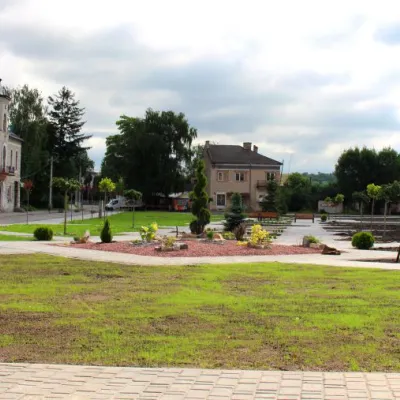 ArchitectureTown Hall, BilshivtsiBilshivtsiunder 1 km from Sanctuary of the Mother of God Queen of Peace, BilshivtsiThe town hall in Bilshivtsi is a testament to the fact that this small Galician village once had the ambitions of a real city.
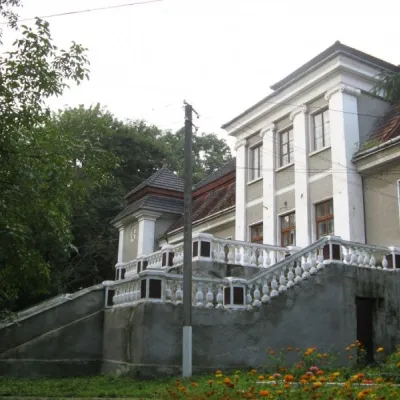 SightKshechunovych Palace, BilshivtsiBilshivtsiunder 1 km from Sanctuary of the Mother of God Queen of Peace, BilshivtsiThey were followed by the wealthy Kshechunovych family. During their rule, trade and various crafts began to develop rapidly in the village.
 NatureKasova Hora, BovshivBovshiv6 km from Sanctuary of the Mother of God Queen of Peace, BilshivtsiFolk tradition has preserved a number of legends and tales about Kasova Hora, shrouded in the mysteries of past centuries.
Craft nearby
All craft places Crafts & workshopsOpillia Pottery Workshop, RohatynRohatyn27 km from Sanctuary of the Mother of God Queen of Peace, BilshivtsiThe Opillia Pottery Workshop (Opilska Honcharnia) is a creative space in Rohatyn where you can sit at a potter’s wheel and shape your own clay pot, bowl or mug.
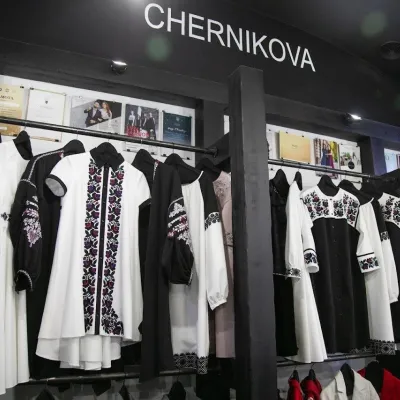 Craft shopsCHERNIKOVA designer ethno-fashion shop, Ivano-FrankivskIvano-Frankivsk29 km from Sanctuary of the Mother of God Queen of Peace, BilshivtsiCHERNIKOVA is the shop of Ukrainian designer clothing by Ivano-Frankivsk designer Liubov (Liubtsia) Chernikova, located in the Bastion fortress gallery in the very...
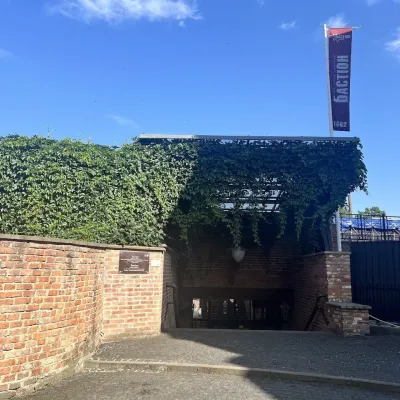 Craft shopsBastion Fortress Gallery – Ukrainian makers’ shops, Ivano-FrankivskIvano-Frankivsk29 km from Sanctuary of the Mother of God Queen of Peace, BilshivtsiThe Bastion Fortress Gallery is one of the most atmospheric places in Ivano-Frankivsk for an unhurried walk and for finding gifts made in Ukraine.
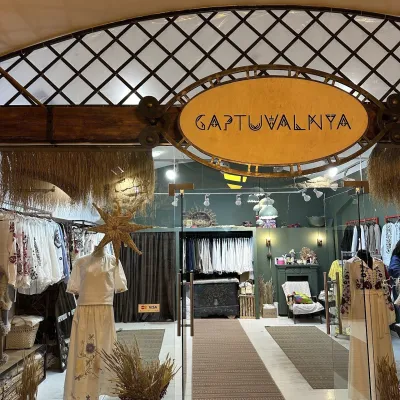 Craft shopsGaptuvalnya embroidered-fashion store, Ivano-FrankivskIvano-Frankivsk29 km from Sanctuary of the Mother of God Queen of Peace, BilshivtsiGaptuvalnya is a Ukrainian brand of embroidered clothing whose flagship store is in the Bastion gallery in Ivano-Frankivsk.
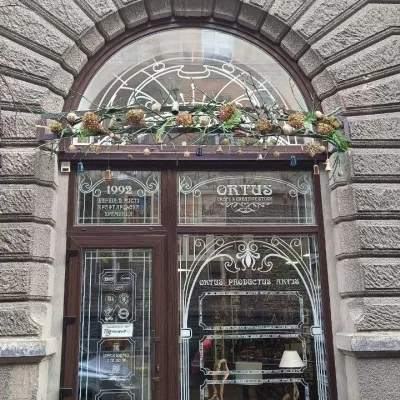 Craft shopsOrtus craft and souvenir shop, Ivano-FrankivskIvano-Frankivsk29 km from Sanctuary of the Mother of God Queen of Peace, BilshivtsiOrtus is a small but densely packed shop of craft products and souvenirs in the very heart of Ivano-Frankivsk, at 9 Mykhaila Hrushevskoho Street.
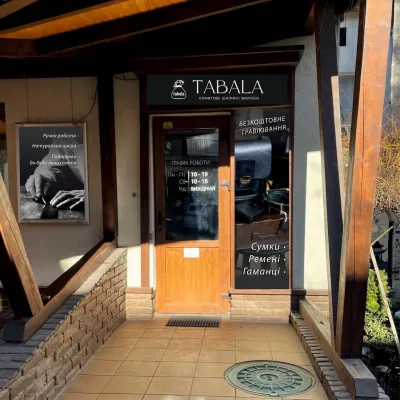 Craft shopsTABALA handmade leather workshop-shop, Ivano-FrankivskIvano-Frankivsk29 km from Sanctuary of the Mother of God Queen of Peace, BilshivtsiTABALA is a tiny workshop-shop of craft leather goods in central Ivano-Frankivsk, at 37 Nezalezhnosti Street.