Râmeț Monastery: 1377 frescoes in the Trascău Mountains
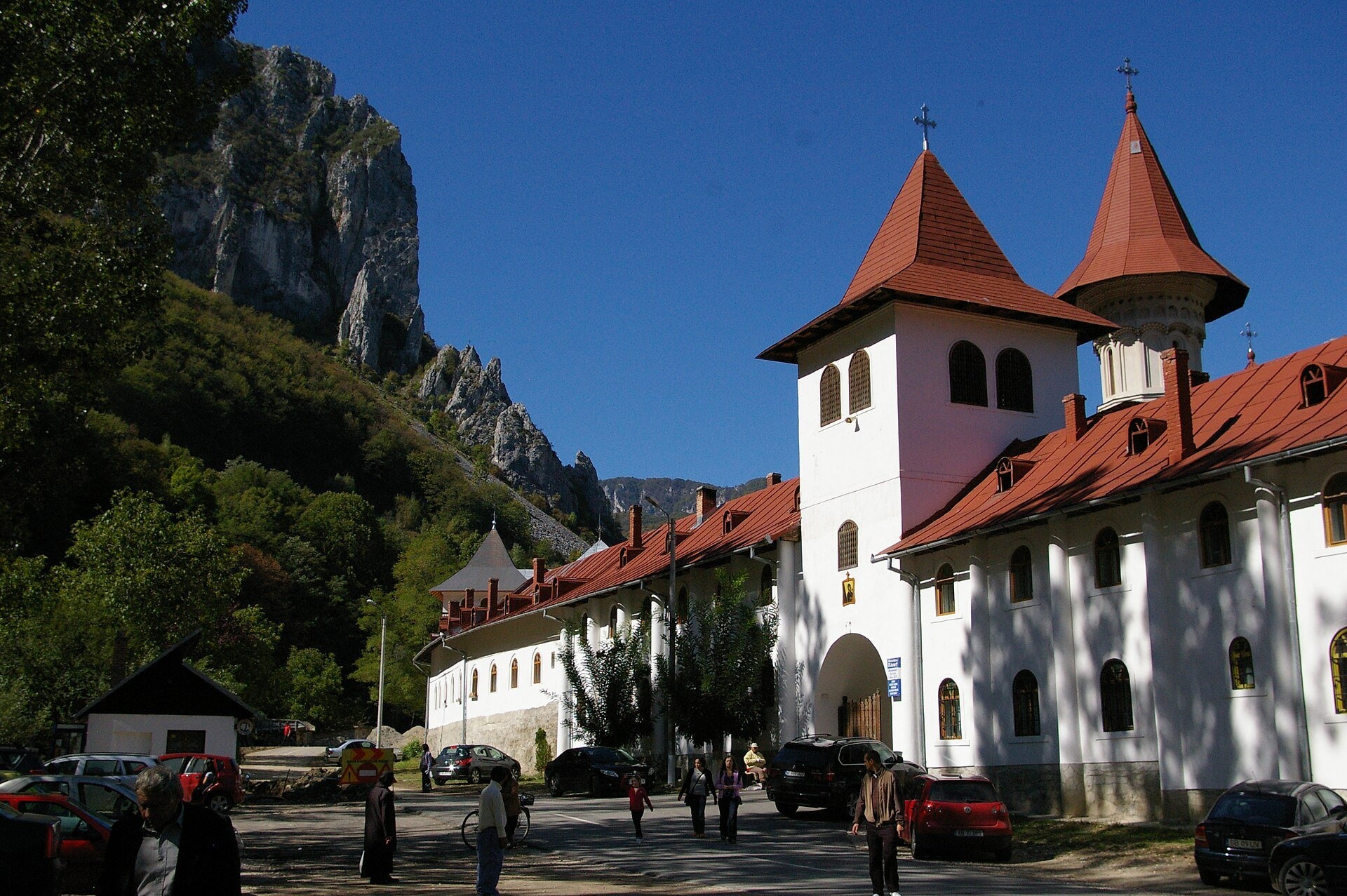
A monastery at the mouth of a gorge
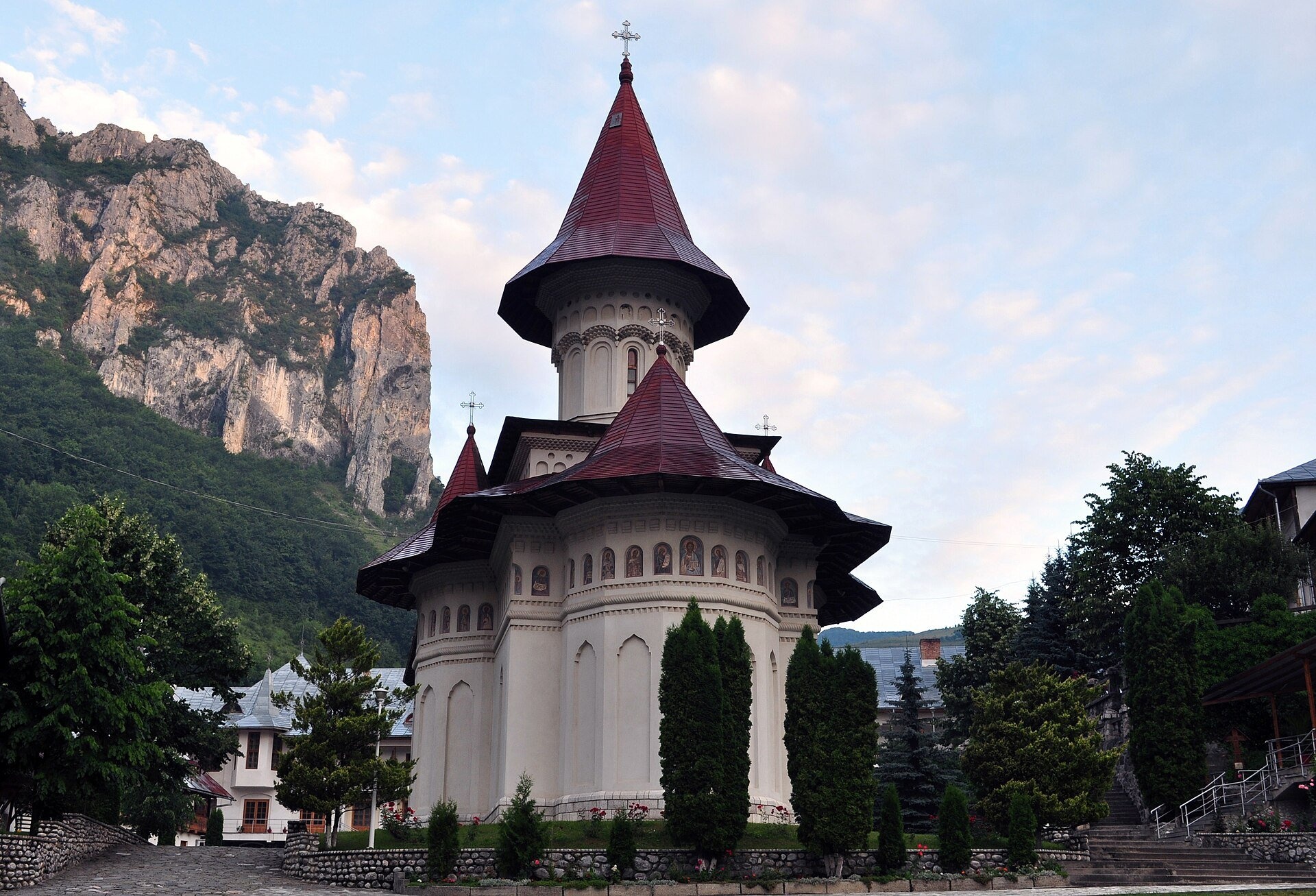
Râmeț Monastery (Mănăstirea Râmeț) is one of the oldest monastic settlements in Transylvania. It stands in the Geoagiu valley, known locally as the «Monastery Valley», at the entrance to the Râmeț gorge in the Trascău Mountains — the eastern spur of the Apuseni — about 34 km from Alba Iulia and 18 km from the town of Teiuș. Sheer limestone cliffs rise above the monastery, and a mountain river rushes past.
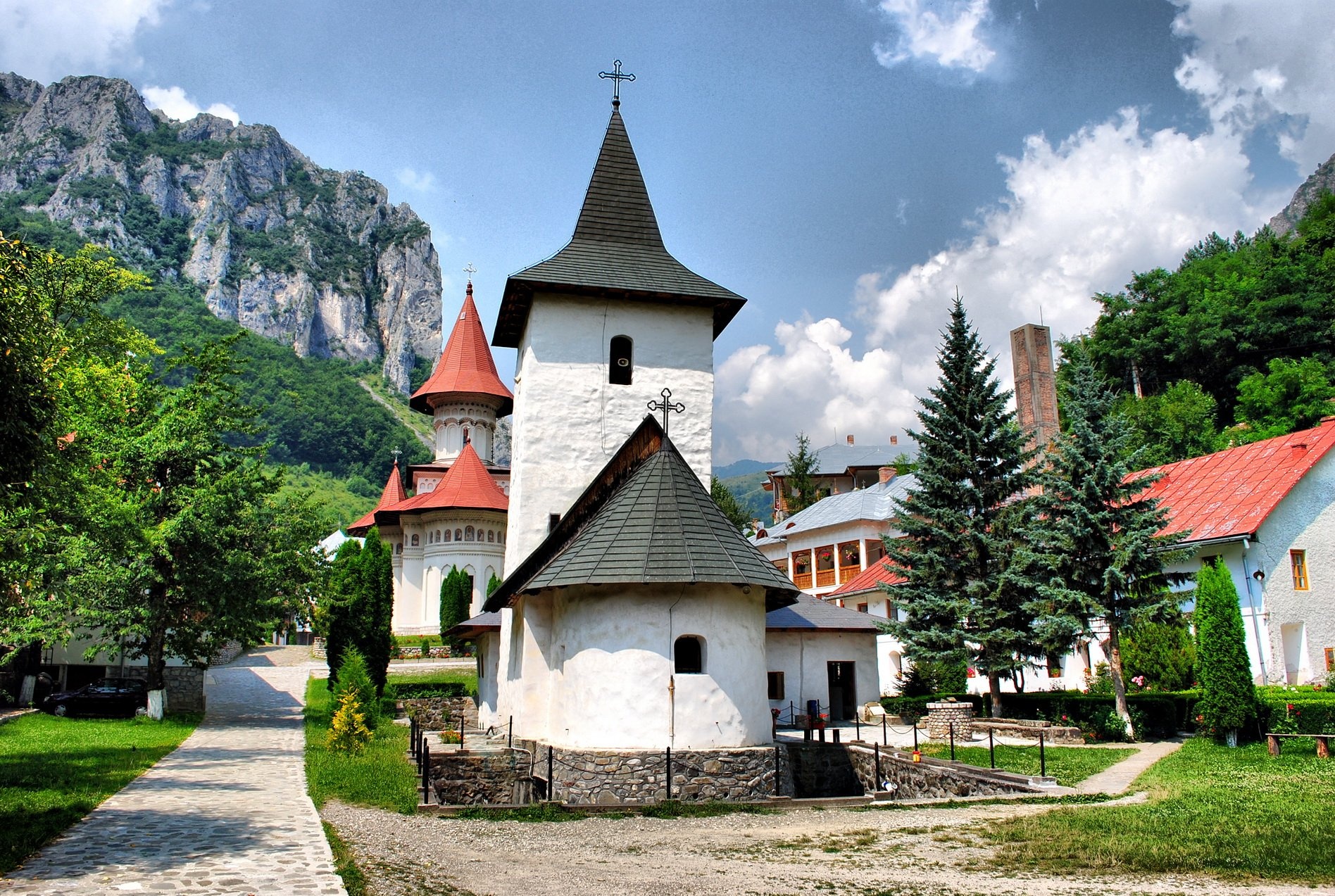
The monastery's founding date is unknown, but its old church is one of the few Romanian stone churches that can be dated. The third layer of frescoes on its walls was painted in 1377 by the painter Mihu de la Crișul Alb, so the building itself is older still. According to tradition, the monastery enjoyed the protection of King Matthias Corvinus of Hungary and of the Wallachian princes Radu the Great and Michael the Brave, who rebuilt it. In the 18th century it was destroyed more than once, notably after the uprising of Horea, Cloșca and Crișan in 1785; the church was restored in 1792. The monastery reopened in 1940 and has been a convent since 1955; in 1959 the communist authorities closed it, but the nuns returned as early as 1962.
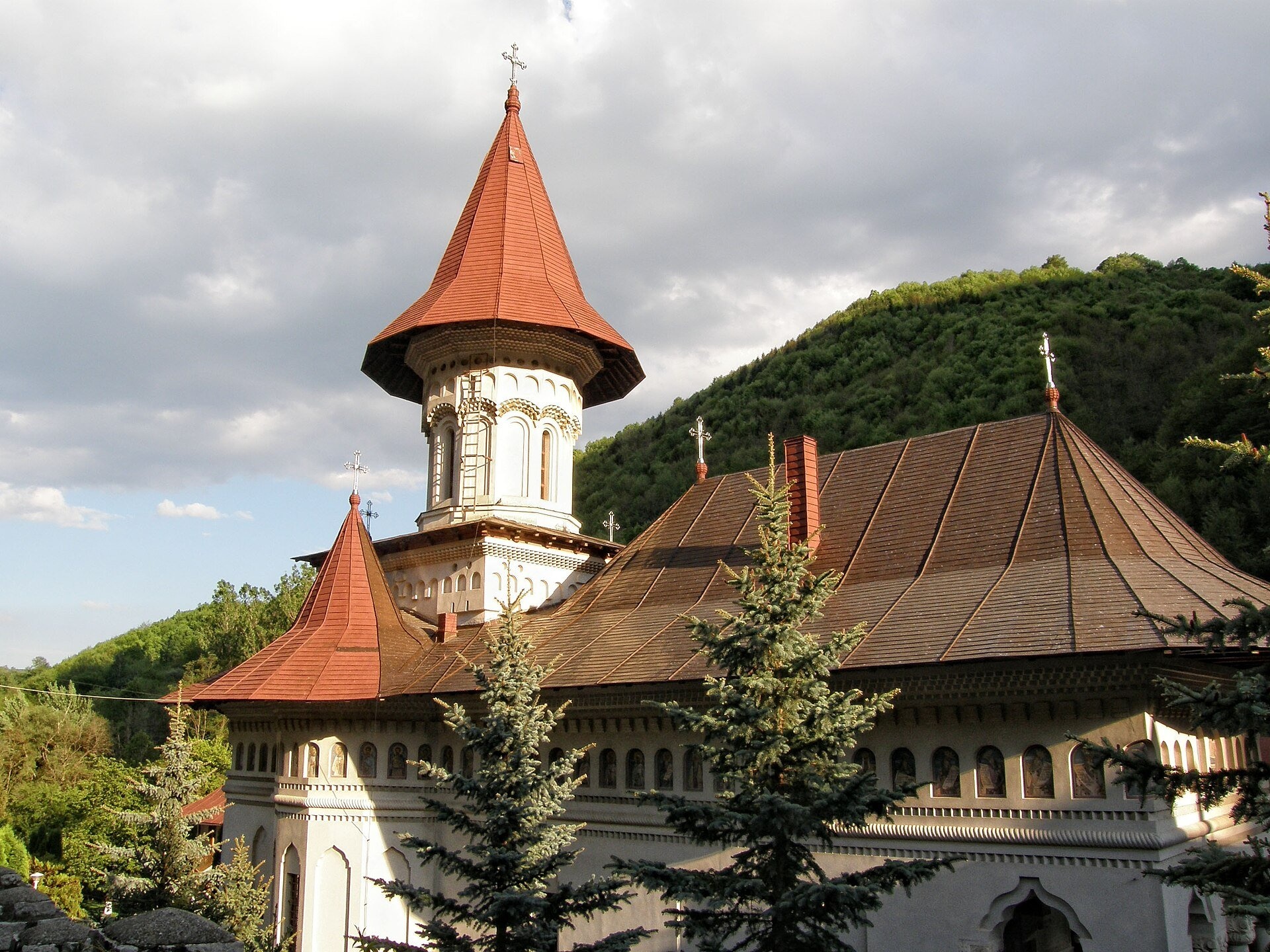
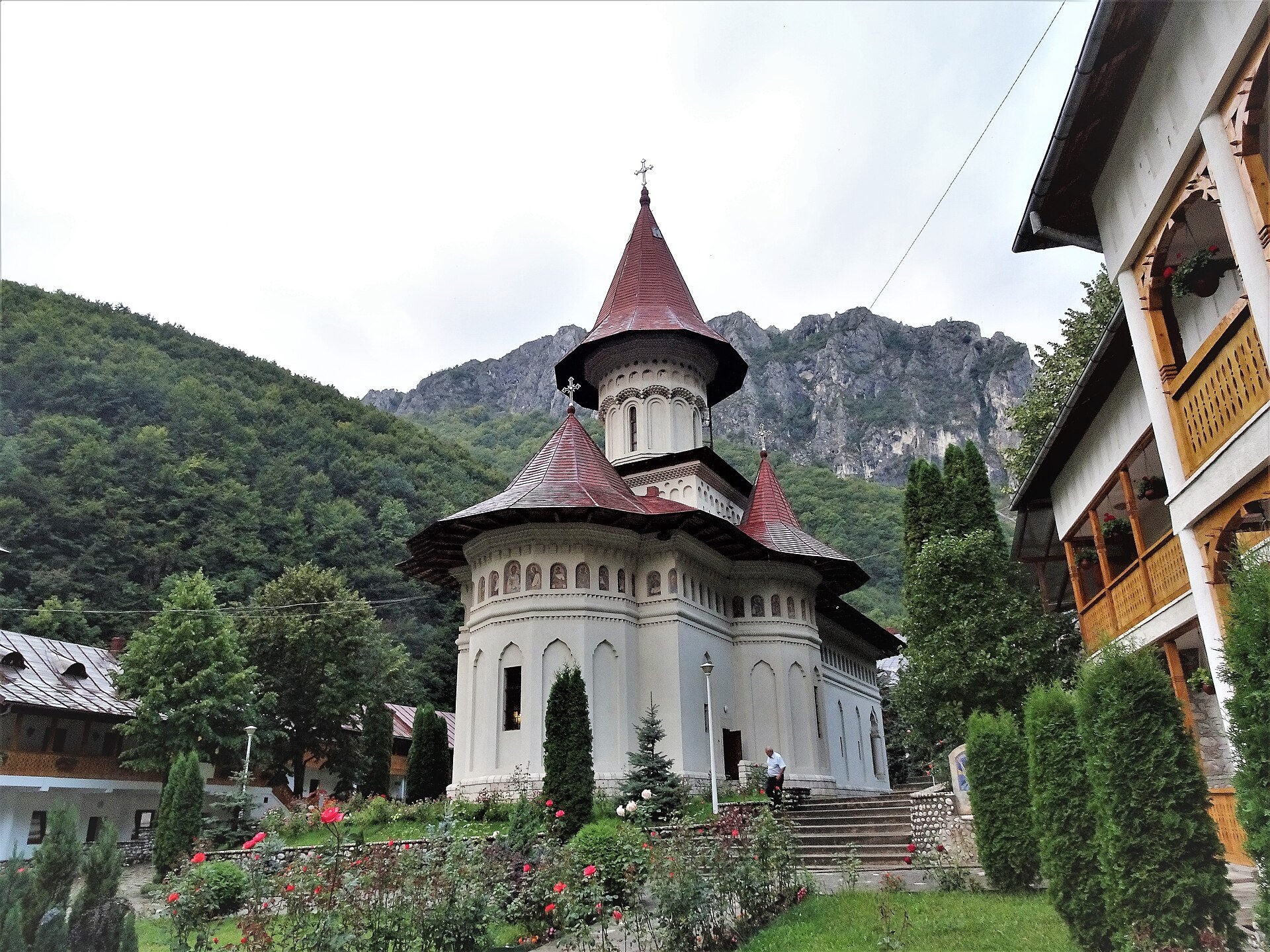
Under Bishop Emilian Birdaș of Alba Iulia (1921–1996) the old church, threatened by floods, was raised by 2.08 metres, and next to it a large new church of the Holy Apostles Peter and Paul was built, called the «Cathedral of the Apuseni Mountains». In July 2019 a fire broke out in the new church. Father Dometie Manolache lived and served here from 1959 to 1975; in 2025 the Romanian Orthodox Church proclaimed him a saint — Saint Dometie the Merciful — and his relics were placed in the monastery's great church. It is an active convent of the Archdiocese of Alba Iulia of the Romanian Orthodox Church.
Why go
Râmeț combines an ancient sanctuary with wild nature: medieval frescoes in a small stone church, a grand new cathedral and, right outside the walls, a path into the gorge between the cliffs. It is a quiet place for pilgrims and a convenient starting point for walks in the Trascău Mountains. And the small museum in the former monastery school shows icons painted on glass — a characteristic folk art of Transylvania.
What to see
- The old church, dedicated to the Nativity of the Mother of God and the Life-Giving Spring — with the fresco of 1377 and paintings from later centuries.
- The murals, which among other things depict the Greek-Catholic bishop Ioan Inocențiu Micu-Klein as protector of the church — a rare iconographic detail.
- The new church of Saints Peter and Paul — the «Cathedral of the Apuseni» with its arcaded porch and the relics of Saint Dometie the Merciful.
- The monastery museum in the former school — icons on wood and on glass, old books, liturgical objects and ethnography.
- The Râmeț gorge — limestone walls right above the monastery.
Practical information
The monastery lies in Râmeț commune (Strada Valea Mănăstirii nr. 15), on county road DJ750C. It is about 34 km from Alba Iulia and 18 km from Teiuș, from where the road climbs up the Geoagiu valley. From Ukraine the most convenient route is via the Solotvyno – Sighetu Marmației crossing and on through Cluj-Napoca and Aiud (about 330 km from the border). There is parking by the monastery.
The monastery is open to pilgrims every day; according to the national museum register (cIMeC), the museum is open Monday to Saturday 9:00–18:00 and Sunday 12:00–20:00, phone +40 258 880 111. This is an active convent: modest dress is expected (shoulders and knees covered; women in a skirt and headscarf), as is silence during services; ask before taking photos in the churches and the museum. Allow an hour for the visit, half a day with a walk into the gorge. The busiest days are the feast of the Life-Giving Spring and the Dormition of the Mother of God on 15 August.
Nearby
- The Râmeț gorge — a marked path along the Geoagiu river starts at the monastery.
- Muntele Mare peak in the northern Apuseni.
- Roșia Montană — Roman gold galleries, a UNESCO site.
- Apuseni narrow-gauge railway — the Câmpeni – Abrud ride.
Photos: Anaoha, CC BY-SA 3.0 ro, Wikimedia Commons; Ela Vaida, CC BY-SA 3.0 ro, Wikimedia Commons; Andrei Dan Suciu, CC BY 3.0, Wikimedia Commons; Ciocan Constantin-Solonț, CC BY-SA 4.0, Wikimedia Commons; Stoiani, CC BY-SA 3.0 ro, Wikimedia Commons; DimiTalen, CC0, Wikimedia Commons; Cristian Bortes from Cluj-Napoca, Romania, CC BY 2.0, Wikimedia Commons.
Getting there from Ukraine
Border crossings
- Porubne – Siret — road and pedestrian, 24/7
- Diakivtsi – Racovăț — road and pedestrian, 24/7 No freight traffic.
- Krasnoilsk – Vicovu de Sus — road and pedestrian, 08:00–20:00 Cars up to 3.5 t and pedestrians only; not 24/7.
- Solotvyno – Sighetu Marmației — road and pedestrian, 24/7 Passenger traffic only: vehicles up to 3.5 t with up to 9 seats, pedestrians.
- Diakove – Halmeu — road, 24/7 No pedestrian crossing.
By car
Rakhiv – Cluj-Napoca ≈219 km, ≈3 h 44 min (via Solotvyno – Sighetu Marmației); Ivano-Frankivsk – Cluj-Napoca ≈353 km, ≈6 h 04 min (via Solotvyno – Sighetu Marmației); Chernivtsi – Cluj-Napoca ≈343 km, ≈6 h 28 min (via Krasnoilsk – Vicovu de Sus). Times without border queues, our road routing (GraphHopper, OSM).
Checked 03.11.2026; border crossing hours and timetables change — check before you travel.
Comments
Travellers’ experience: reports, tips, questions.
No one has written here yet. Be the first — your experience helps others.
Video 2
 Vizită la Mănăstirea Râmeţ din Munţii Trascăului (@Exclusiv în România)TVR

Location on the map
Trails nearby
All trails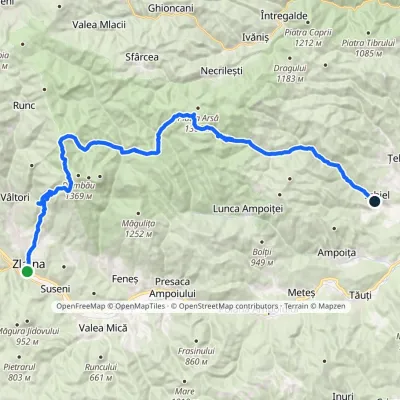 Hard1–2 daysMarkedZlatna IghielElevation profile333–1 323 m35.5 kmascent 1 600 m≈ 11.5 h walking16 km from Râmeț Monastery: 1377 frescoes in the Trascău Mountains
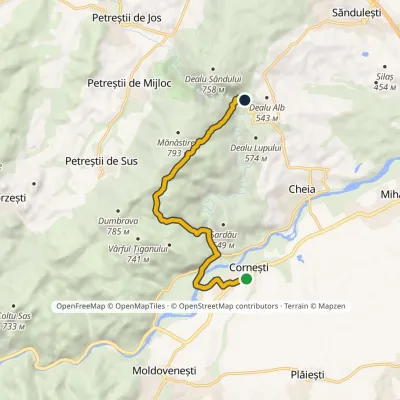 EasyOne-dayMarkedCornești Cheile Turzii HutElevation profile342–726 m9 kmascent 389 m≈ 3 h walking27 km from Râmeț Monastery: 1377 frescoes in the Trascău Mountains
Nearby attractions
 PeakPiatra SecuiuluiRimeteaaltitude 1 129 m17 km from Râmeț Monastery: 1377 frescoes in the Trascău MountainsPiatra Secuiului (Romanian: Piatra Secuiului, Hungarian: Székelykő, also Colții Trascăului) is a bare limestone peak at 1,129 m in the Trascău and Metaliferi Mountains...
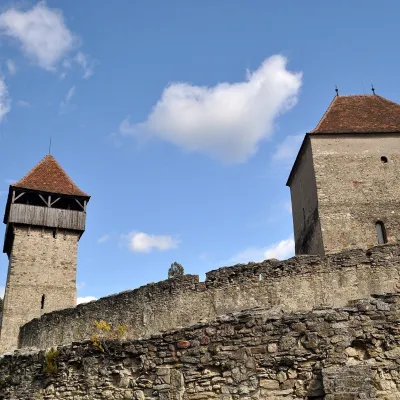 CastleCâlnic Fortress: a count's castle turned peasant strongholdCâlnic47 km from Râmeț Monastery: 1377 frescoes in the Trascău MountainsFrom a count's residence to a village refuge The village of Câlnic (German: Kelling, Hungarian: Kelnek) lies in a hilly valley in the south of Alba County, at the foot...
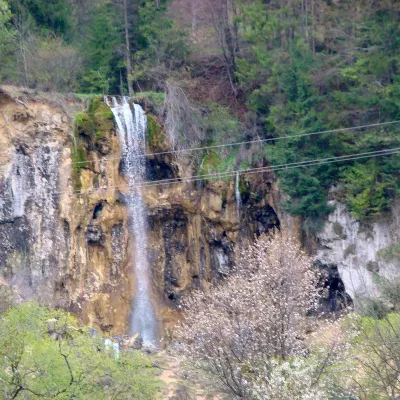 WaterfallPișoaia Waterfall (Cascada Pișoaia)Nemeși · Bihor-Vlădeasa Mountains50 km from Râmeț Monastery: 1377 frescoes in the Trascău Mountainsheight 18 m704 m above sea levelPișoaia Waterfall (Cascada Pișoaia; the name Cascada Miresii is also used) is a landscape reserve in the north-west of Alba County, in the Apuseni Mountains, not far...
Craft nearby
All craft places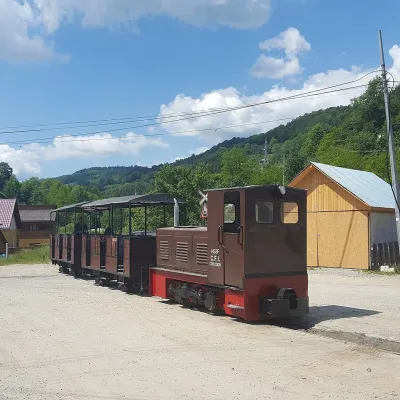 Heritage transportApuseni Narrow-Gauge Train: Câmpeni–Abrud ride in Moți LandVârși35 km from Râmeț Monastery: 1377 frescoes in the Trascău MountainsThe narrow-gauge railway along the Arieș valley was officially opened on 20 June 1912. It linked the town of Turda with mountain Abrud in Țara Moților, the Moți Land —...
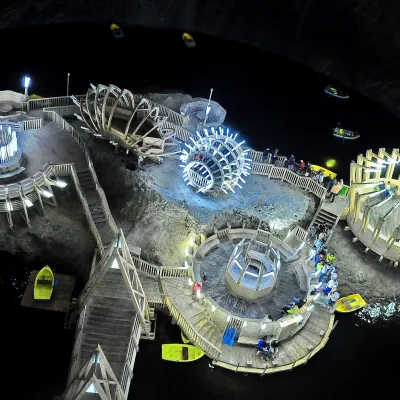 Water parks & thermal poolsSalina Turda: a lake 112 m underground and speleotherapyTurda38 km from Râmeț Monastery: 1377 frescoes in the Trascău MountainsThe Turda Salt Mine (Salina Turda) is one of Romania's best-known underground sights, on the edge of the town of Turda in Cluj County, a few dozen kilometres from Cluj...
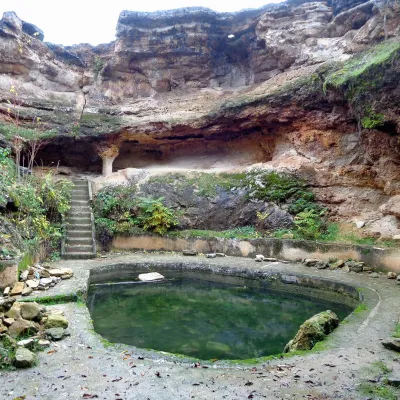 Water parks & thermal poolsGeoagiu-Băi: the Roman Germisara thermae and mesothermal watersGeoagiu-Băi49 km from Râmeț Monastery: 1377 frescoes in the Trascău MountainsGeoagiu-Băi is a small spa of mesothermal waters in Hunedoara County, on the south-eastern slopes of the Metaliferi Mountains — part of the Apuseni (Western Romanian)...
