Podhale Museum in Nowy Targ
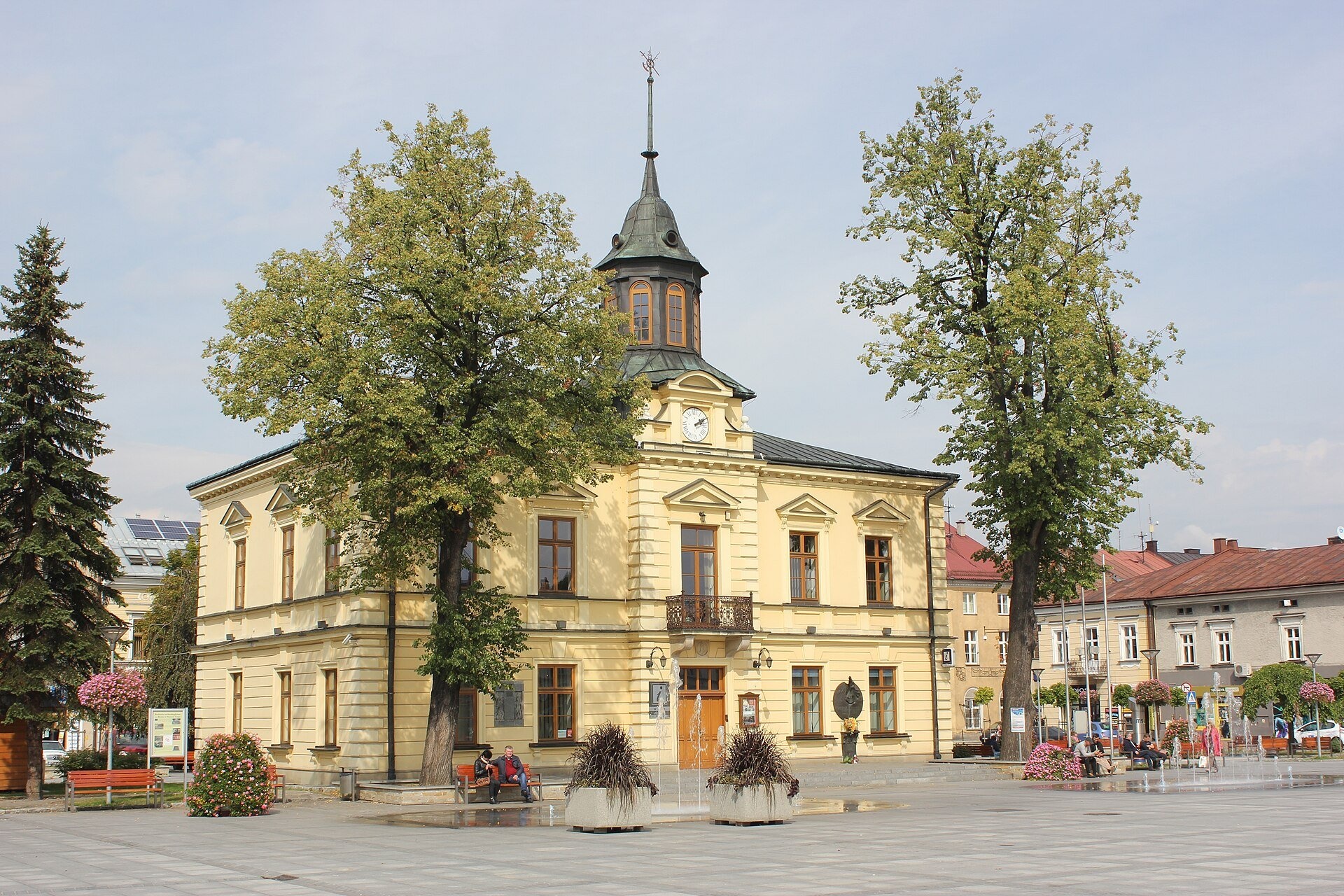
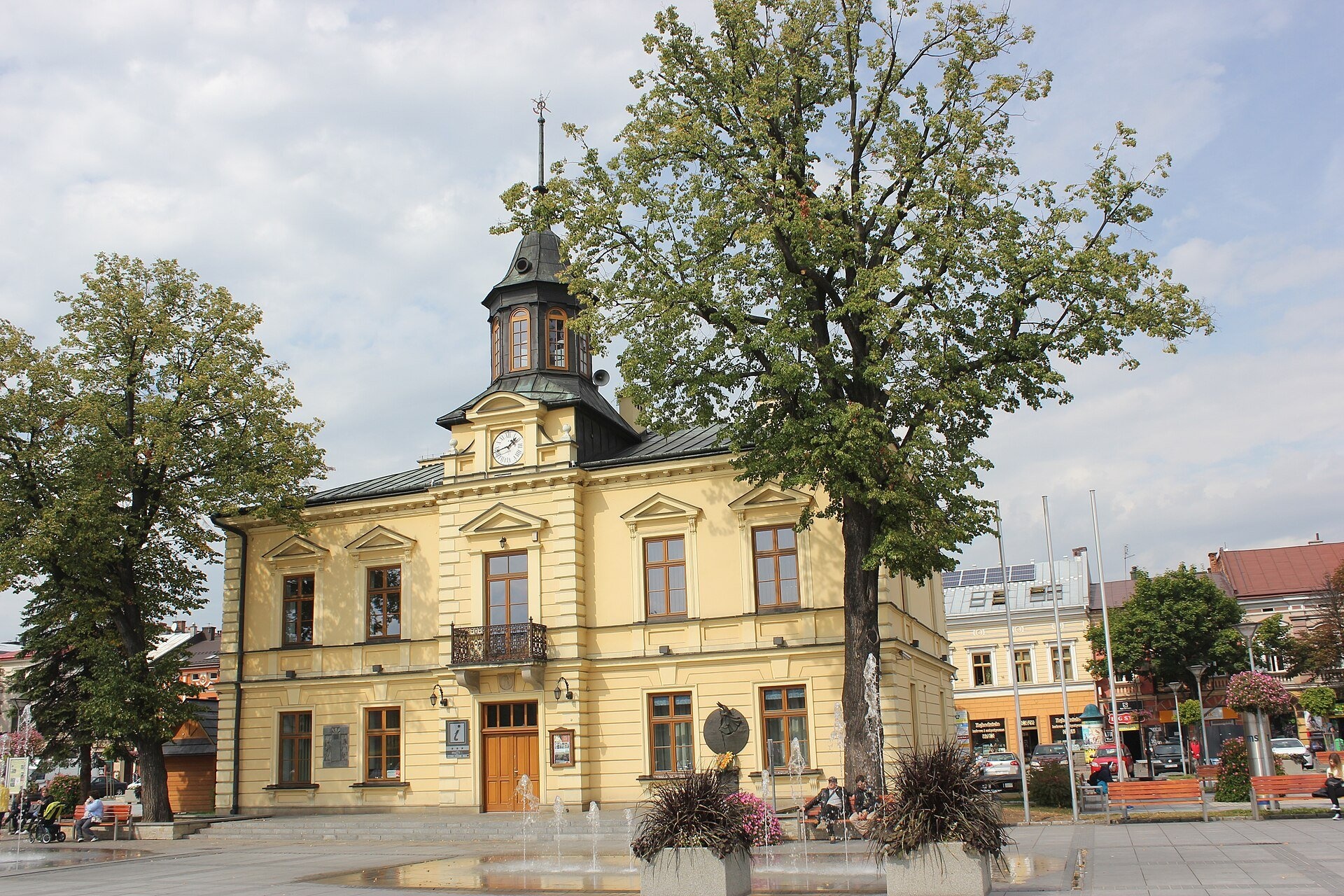
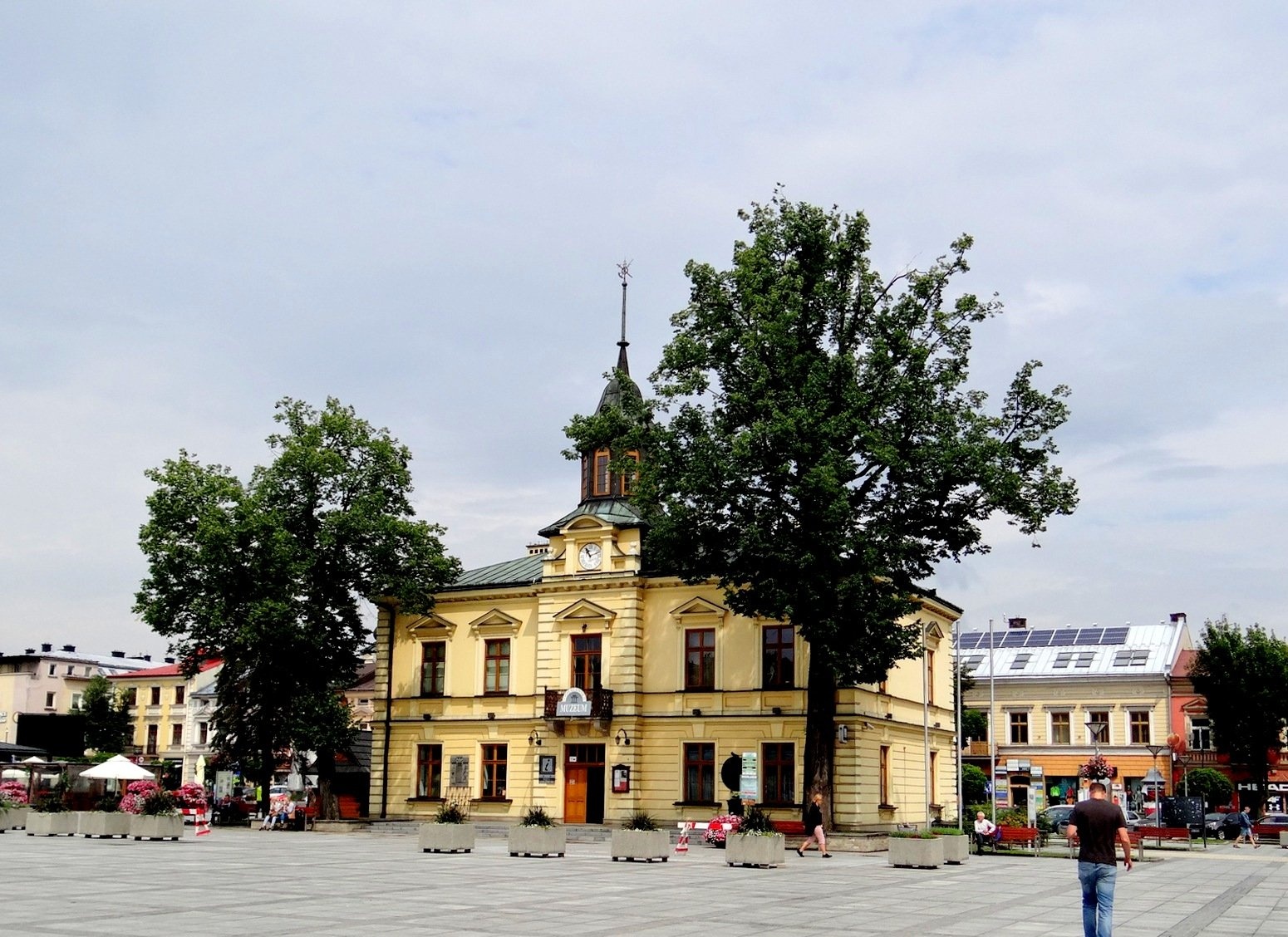
The Czesław Pajerski Podhale Museum (Muzeum Podhalańskie im. Czesława Pajerskiego) is the town museum of Nowy Targ, the "capital" of Podhale between the Tatras and the Gorce. Since 1994 it has occupied the town hall on the market square, one of the town's most prominent buildings. The first museum collection in Nowy Targ was set up before the First World War at the local grammar school, and the idea of a proper museum came from activists of the monument-care committee of the PTTK Gorce branch led by Czesław Pajerski (1931–2000), a long-standing volunteer custodian of historic sites, whose name the museum now bears. When it opened the collection numbered 1,500 items; today it has more than 7,000, mostly gifts from residents of Nowy Targ and the villages of Podhale, Spiš and Orava.
The town hall itself is worth a look. It is first mentioned in the 15th century; the wooden building with an arcade burned down in the great fire of 1601. The town hall took its present form at the turn of the 19th and 20th centuries under Mayor Jakub Podkanowicz: a two-storey neoclassical building facing south — towards the Tatras — with a glazed tower and a historic clock. The spire is topped with a sword, a wheel and a palm branch, the attributes of St Catherine, the town's patron saint. Mayors and distinguished guests, including the writer Władysław Orkan, addressed the townspeople from its wrought-iron balcony. Since 2005 a bugle call has sounded from the tower five times a day — the tune of the song "Idzie Jasiek na zbój", composed by Józef Titz, a music teacher who also taught singing to the young Karol Wojtyła in Wadowice.
What to see
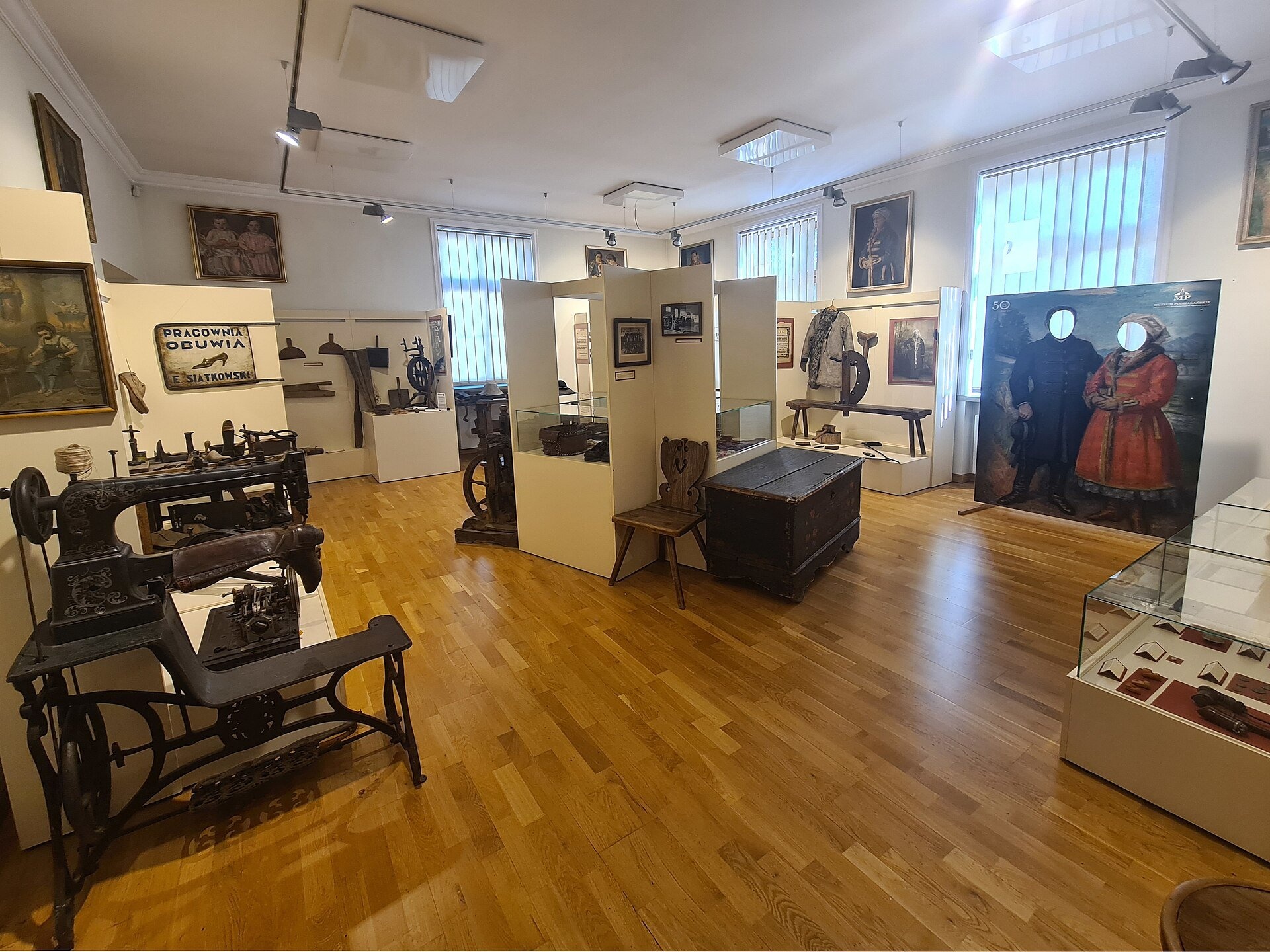
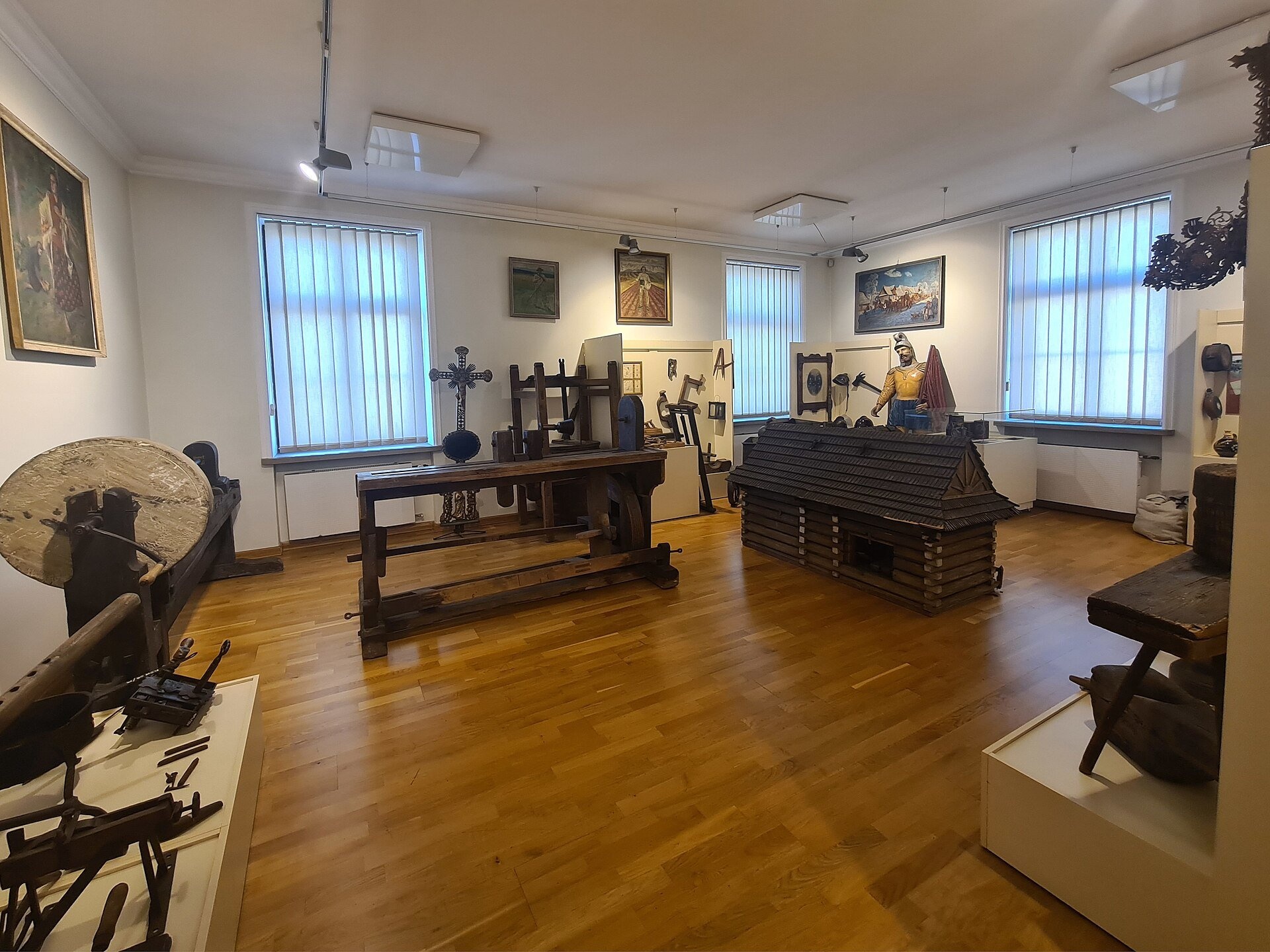
- The permanent exhibition "Nowy Targ at the Turn of the 19th and 20th Centuries — a Town That No Longer Exists" with reconstructed workshops: the shoemaker's (the shoemakers' guild received its privilege as early as 1575), the furrier's (in the 19th century 79 furriers worked in the town), the cooper's and woodcarver's, the weaver's, the carpenter's (the oldest decorated plane dates from 1825), the blacksmith's and the hatter's, with wooden blocks and cast-iron irons for shaping felt.
- Podhale pottery from the late 19th and early 20th centuries: bowls, jugs, twin pots for carrying food to the fields, Easter cake moulds and bottles for Hungarian wine carried through Nowy Targ to Silesia; works by the local ceramicists Zofia Czubernat and Jan Reczkowski.
- 19th-century folk art — sculpture, wayside shrines, paintings on glass and oil paintings by folk artists Piotr Kułach, Andrzej Cesacz and Witalis Nanke.
- The exhibition "John Paul II — the Town of Nowy Targ" (2011) with personal items of the Pope: a chasuble, a mitre, a zucchetto and a pectoral cross.
- Temporary exhibitions, plus paintings by Michał Rekucki and sculptures by Edward Sutor.
Practical information
The town hall stands right in the middle of the market square, so it is easy to drop in while walking round the centre; Zakopane is about 20 km away, and Nowy Targ is a convenient stop on the way to the Tatras or the Pieniny. The simplest option is to leave your car in one of the town car parks near the centre and walk. The museum is small: 45–60 minutes is enough. It is open Monday to Saturday, and in January, February, July and August from Tuesday; admission is free on Tuesdays. The museum regularly runs educational sessions and family workshops for children.
Nearby: trails and peaks
From the Kowaniec district on the edge of town, about 2 km from the square, our trails Nowy Targ Kowaniec – Bukowina Obidowska and Szczebel – Turbacz – Kowaniec head up into the Gorce. Below the range's highest summit lies the picturesque Hala Długa below Turbacz. Four kilometres from town is the Sanctuary of Our Lady of Ludźmierz.
Official website: muzeum.nowytarg.pl
Photos: Andrzej Otrębski, CC BY-SA 4.0, Wikimedia Commons; Happa, CC BY-SA 4.0, Wikimedia Commons; Gorofil, CC BY-SA 4.0, Wikimedia Commons.
Getting there from Ukraine
Border crossings
- Krakovets – Korczowa — road, 24/7
- Shehyni – Medyka — road, 24/7 Pedestrian crossing is not confirmed by the Ukrainian border service — check dpsu.gov.ua before the trip.
- Smilnytsia – Krościenko — road, 24/7
- Hrushiv – Budomierz — road, 24/7
- Mostyska – Przemyśl (rail) — rail, 24/7
By car
Lviv – Zakopane ≈421 km, ≈5 h 10 min without border queues. Route: M-10 Lviv – Krakovets → Krakovets – Korczowa checkpoint → A4 motorway (Rzeszów – Tarnów – Kraków) → Kraków southern bypass → S7/DK7 → DK47 ('Zakopianka') via Nowy Targ → Zakopane. The A4 Katowice – Kraków section (Balice and Mysłowice toll plazas) is tolled, but this route does not use it. In summer and at weekends the DK47 near Zakopane is often congested.
Checked 23.10.2026; border crossing hours and timetables change — check before you travel.
Location on the map
Comments
Trails nearby
All trails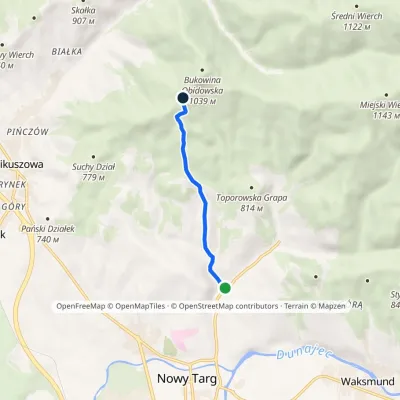 EasyOne-dayMarkedNowy Targ Kowaniec Bukowina ObidowskaElevation profile616–952 m4.1 kmascent 336 m≈ 1.5 h walking2 km from Podhale Museum in Nowy Targ
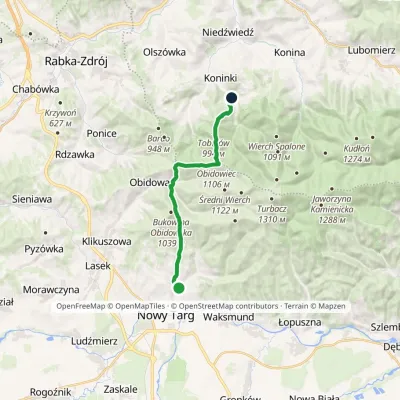 ModerateOne-dayMarkedKoninki Kowaniecvia Stare WierchyElevation profile604–1 107 m14.3 kmascent 721 m≈ 5 h walking2 km from Podhale Museum in Nowy Targ
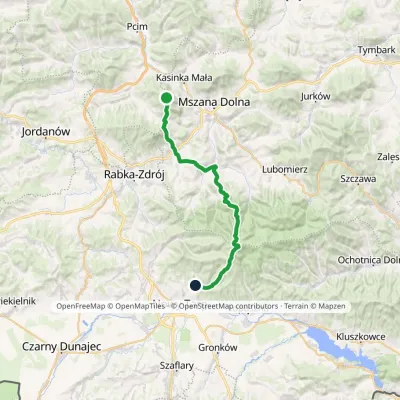 HardMulti-dayMarkedSzczebel Kowaniecvia TurbaczElevation profile424–1 289 m32 kmascent 1 334 m≈ 10.5 h walking3 km from Podhale Museum in Nowy Targ
Nearby attractions
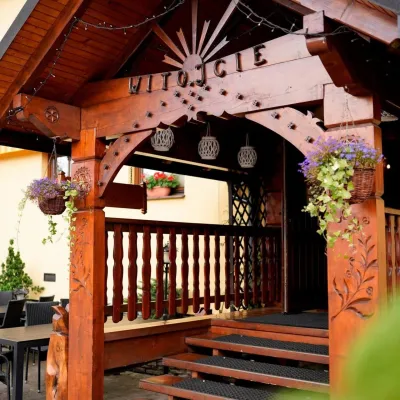 Koliby & Hutsul cuisineKarcma u Borzanka, Nowy Targ: highland food in an 18th-century innunder 1 km from Podhale Museum in Nowy TargKarcma u Borzanka is a highland tavern in the oldest coaching inn of Nowy Targ, the capital of Podhale.
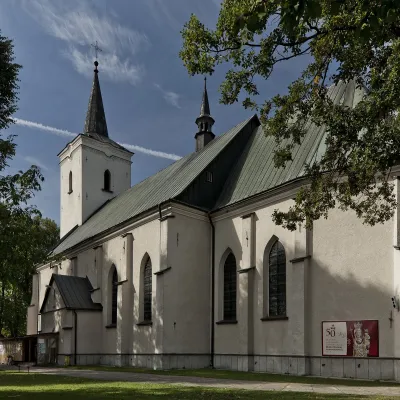 ChurchSanctuary of Our Lady of Ludźmierz3.9 km from Podhale Museum in Nowy TargLudźmierz is a village just outside Nowy Targ and home to the main Marian sanctuary of the Polish highlanders.
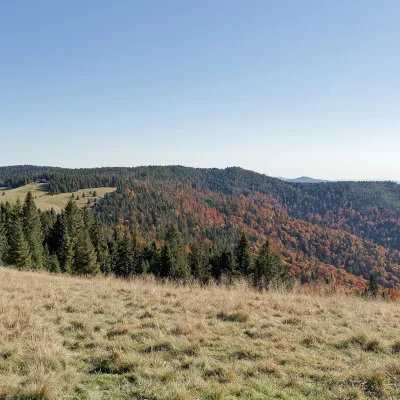 Mountain meadowHala Długa below Turbaczaltitude 1 202 m10 km from Podhale Museum in Nowy TargHala Długa is a large mountain glade on the ridge of Turbacz, the highest peak of the Gorce (1,310 m).
Craft nearby
All craft places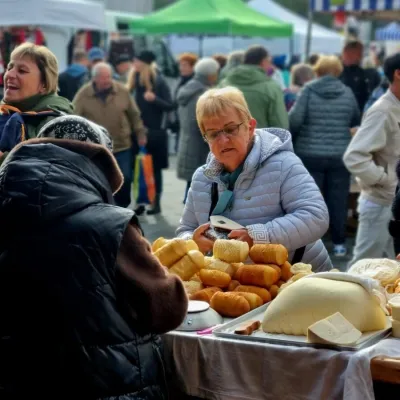 Markets & fairsNowy Targ Fair (Nowa Targowica)1.3 km from Podhale Museum in Nowy TargThe fair in Nowy Targ is the largest and oldest market in Podhale. On Thursdays and Saturdays highlanders from the surrounding villages, Slovaks from across the border...
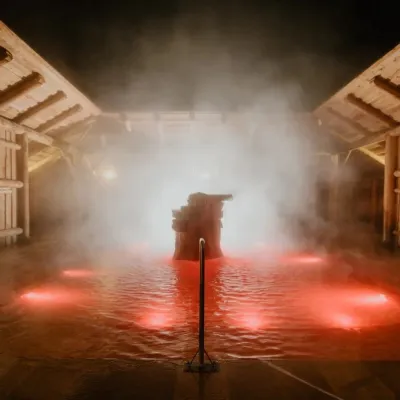 Water parks & thermal poolsTermy Gorący Potok (Szaflary)9.2 km from Podhale Museum in Nowy TargTermy Gorący Potok is a complex of outdoor thermal pools in Szaflary, between Nowy Targ and Zakopane, about 15 km from Zakopane.
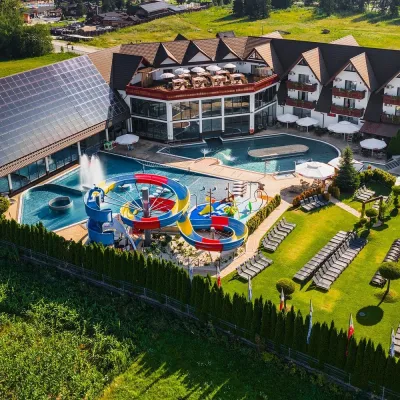 Water parks & thermal poolsTermy Szaflary (Termy Podhalańskie)9.4 km from Podhale Museum in Nowy TargTermy Szaflary is a thermal complex in the village of Szaflary, between Nowy Targ and Zakopane. It used to be known as Termy Podhalańskie, a name still found in older...
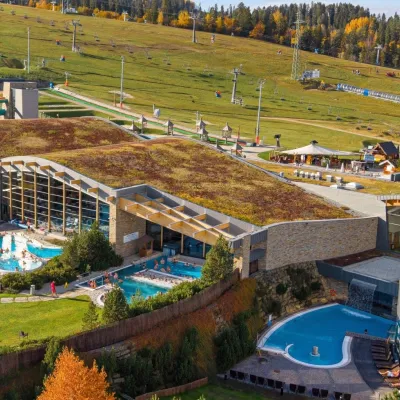 Water parks & thermal poolsTerma Bania12 km from Podhale Museum in Nowy TargTerma Bania is a large thermal water park in the village of Białka Tatrzańska, at the foot of the Kotelnica ski slope.
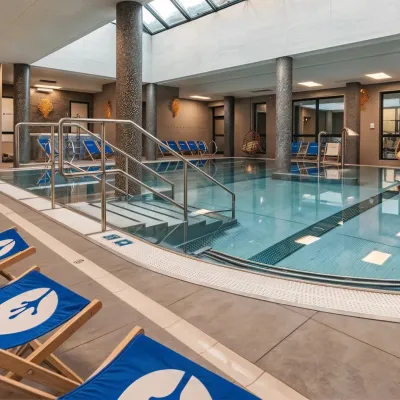 Water parks & thermal poolsTermy Gorce thermal baths15 km from Podhale Museum in Nowy TargTermy Gorce is a small, cosy thermal complex in the village of Poręba Wielka, in the municipality of Niedźwiedź, at the foot of the Gorce Mountains.
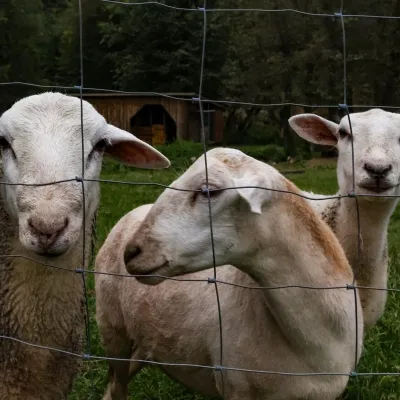 Eco farmsOrawskie Ranczo Educational Farm, Harkabuz: animals and craft workshops15 km from Podhale Museum in Nowy TargOrawskie Ranczo is a small family educational farm (zagroda edukacyjna) in the village of Harkabuz near Raba Wyżna, where Orawa meets Podhale.
