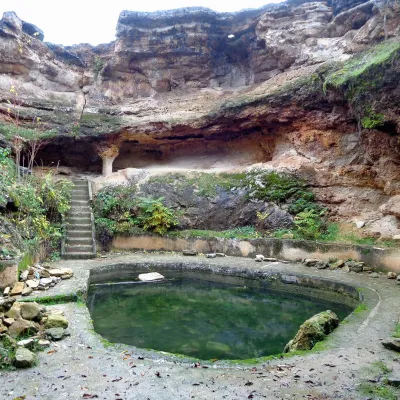
Roșia Montană: Roman gold mines (UNESCO)
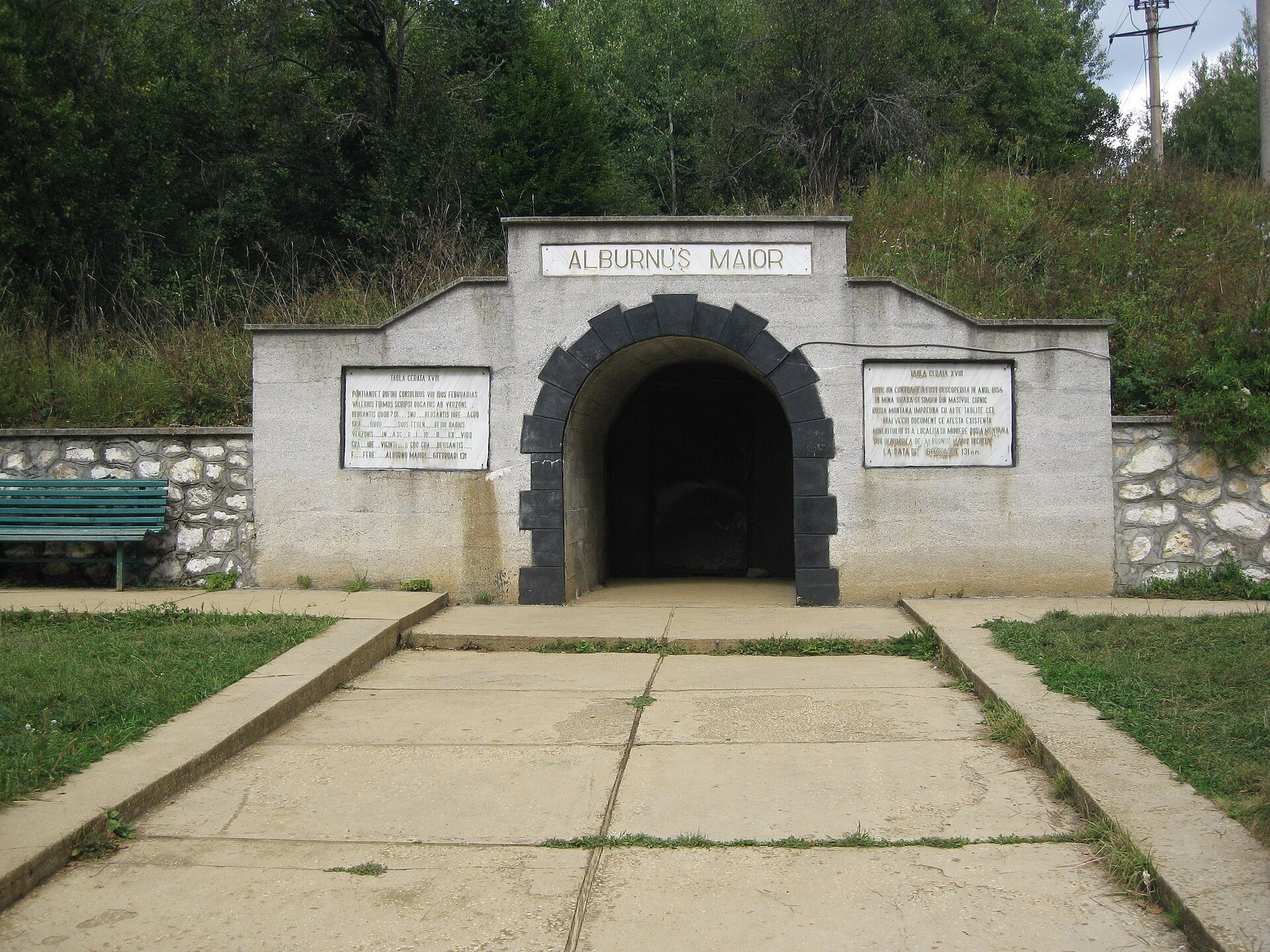
Alburnus Maior — the gold of Roman Dacia
Roșia Montană (Hungarian Verespatak, German Goldbach) is a mining village in the Apuseni Mountains, in Transylvania's so-called «Golden Quadrilateral». The Dacians already mined gold here, and after Emperor Trajan's conquest of Dacia the Romans founded the mine of Alburnus Maior and settled Illyrian miners from Dalmatia. The settlement is first mentioned on a wax tablet dated 6 February 131; in all, archaeologists have found 25 such tablets here — rare documents of everyday life in a Roman province — as well as dwellings, necropolises and inscriptions in Latin and Greek. The Romans left Dacia in 271, but mining resumed in the Middle Ages and continued until the early 21st century: the state mine worked until 2006.
In 1981, for the 1850th anniversary of the first written mention, the Mining Museum (Muzeul Mineritului) opened on the grounds of the state mine, showing Roman galleries preserved in situ. In the early 21st century plans for a huge open-pit mine at Roșia Montană became one of the most debated issues in Romania and sparked mass protests in 2013; the pit was never dug. In 2021 UNESCO inscribed the «Roșia Montană Mining Landscape» on the World Heritage List — at the same time on the List of World Heritage in Danger. The museum is now run by the state company Minvest Deva (RoșiaMin branch).
Why go
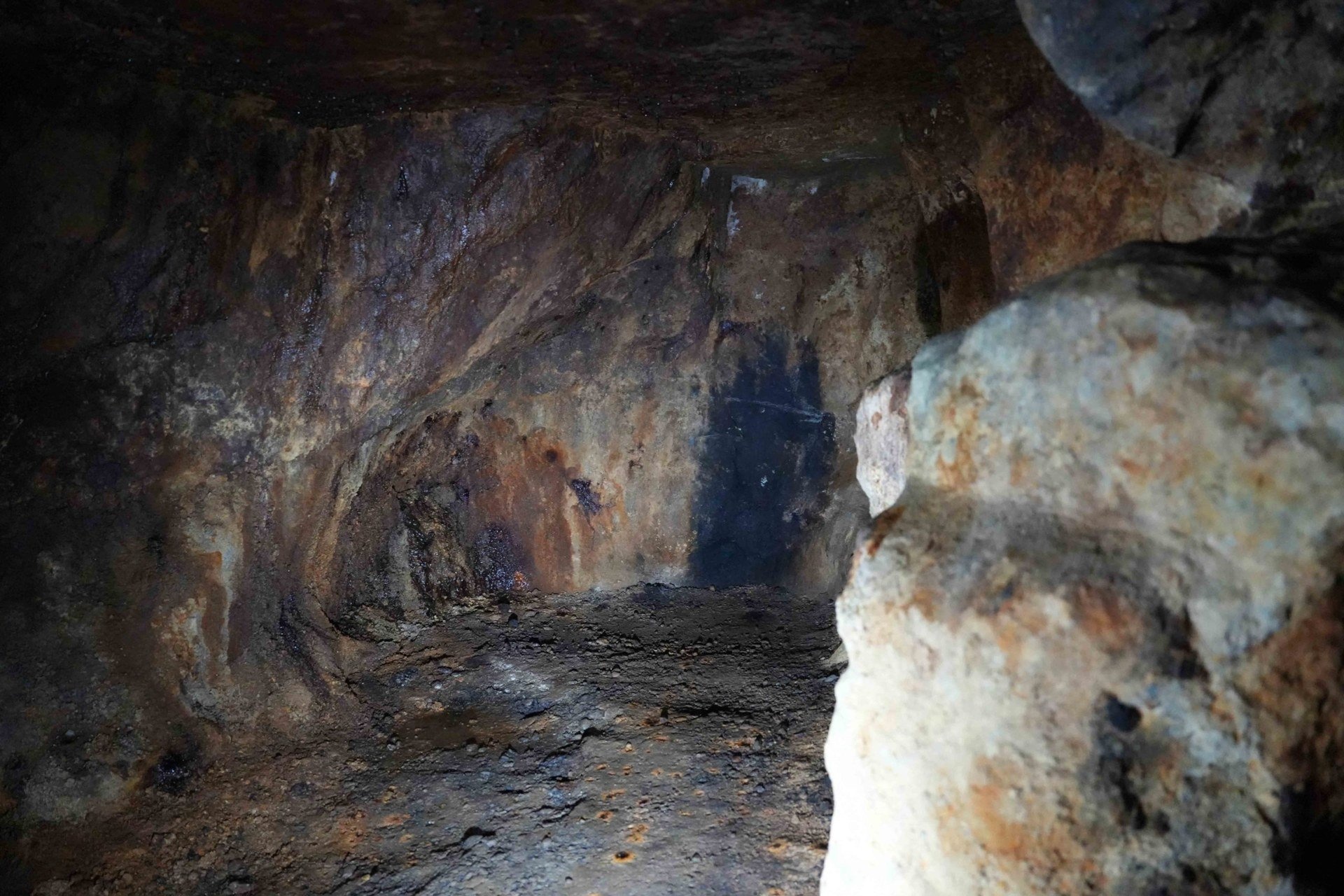
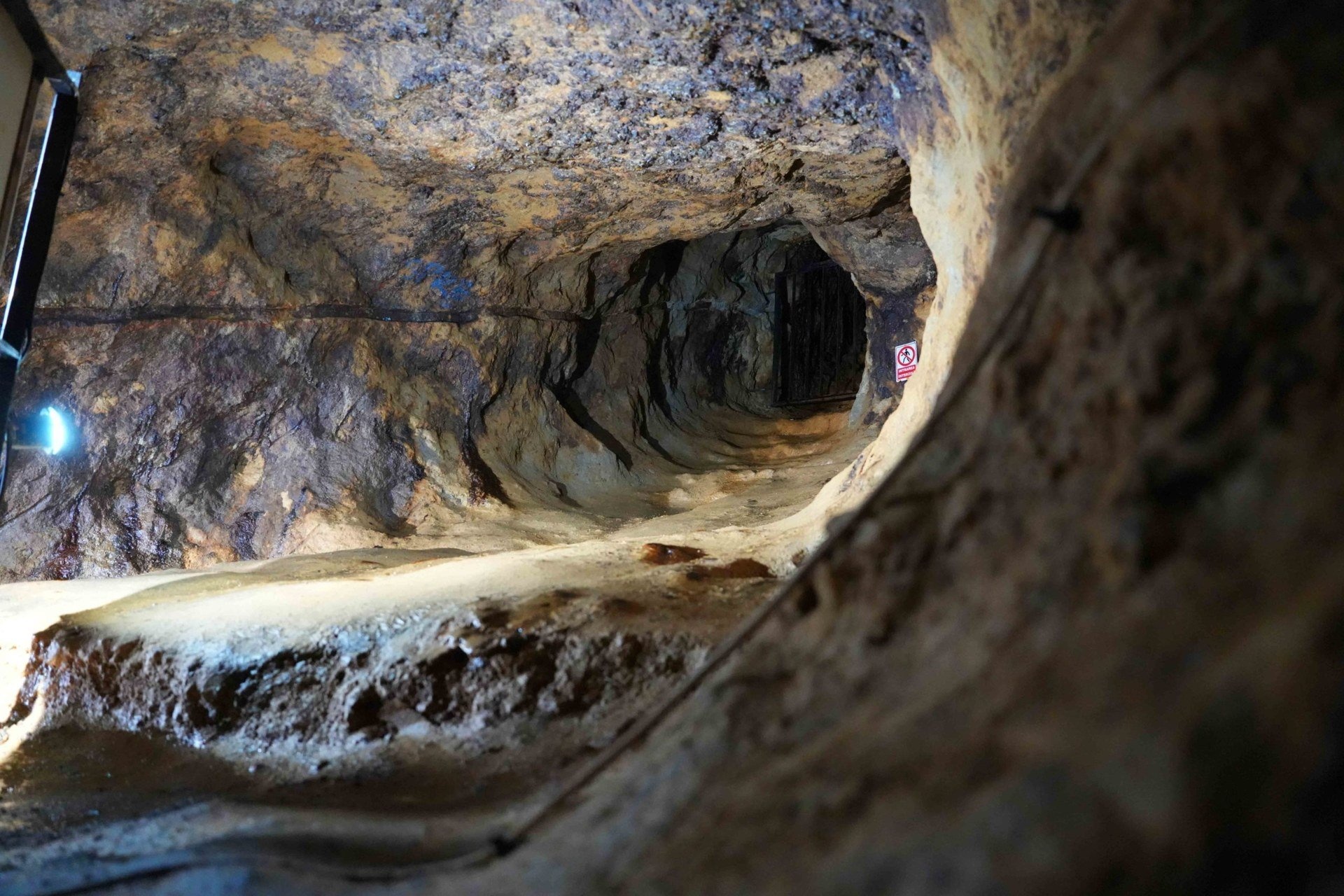
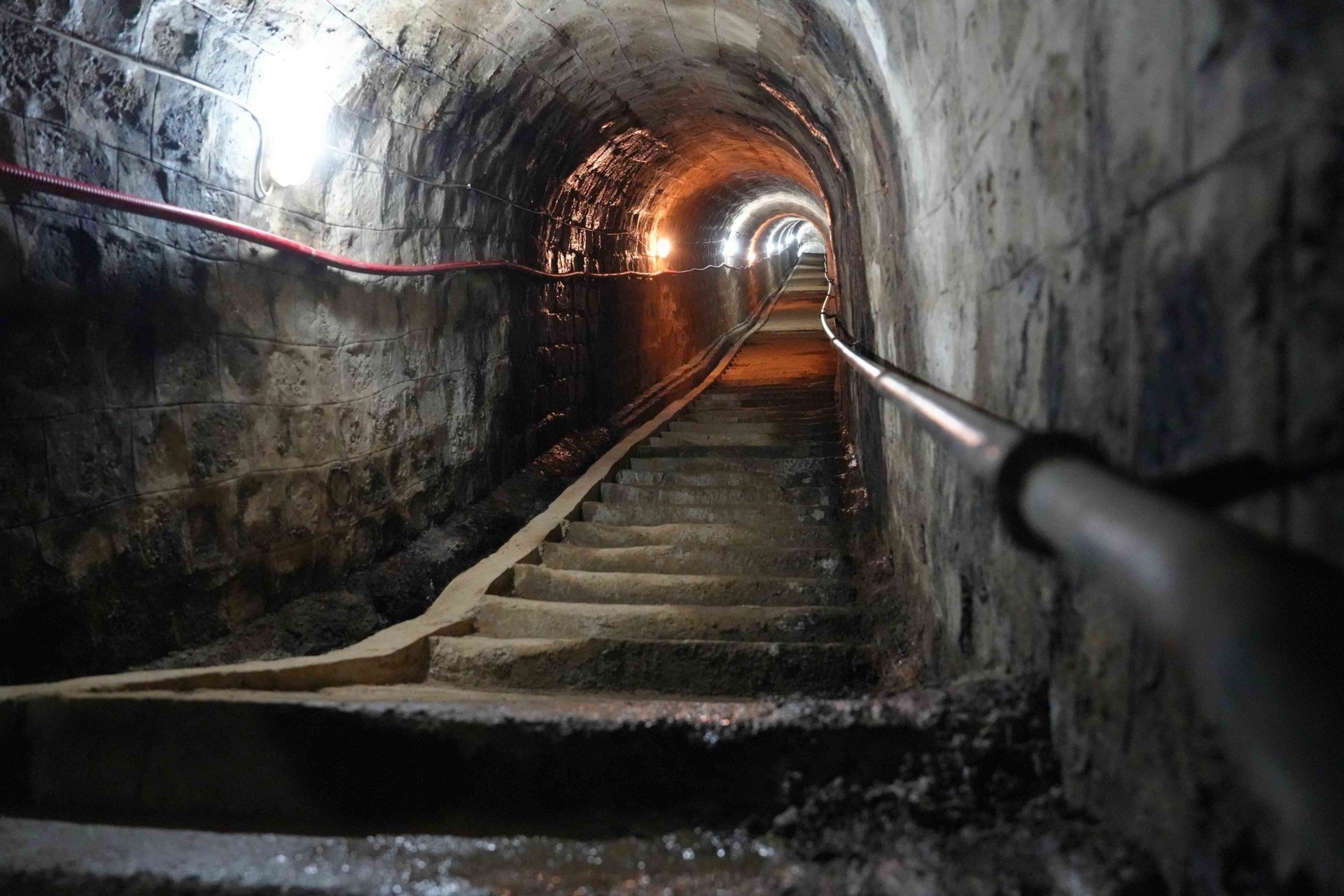
This is a rare chance to descend into a genuine Roman mine, cut by hand almost two thousand years ago. The galleries, trapezoidal in cross-section, with smooth walls, niches for oil lamps and chisel marks, show how the miners of Alburnus Maior worked. On the surface you can see how ore was crushed and washed right up to the 20th century, and the lapidarium of Roman tombstones tells of the people who lived here. All around lie the picturesque mountains of the Moți country and an old mining village of timber and stone houses.
What to see
- The Roman galleries — 170 m of original workings on two levels: about 1.8 m high, 1.7 m wide at the base and only 1 m at the top, lit electrically.
- The descent — a concrete inclined shaft 53 m long with 157 steps and a handrail, down roughly ten storeys.
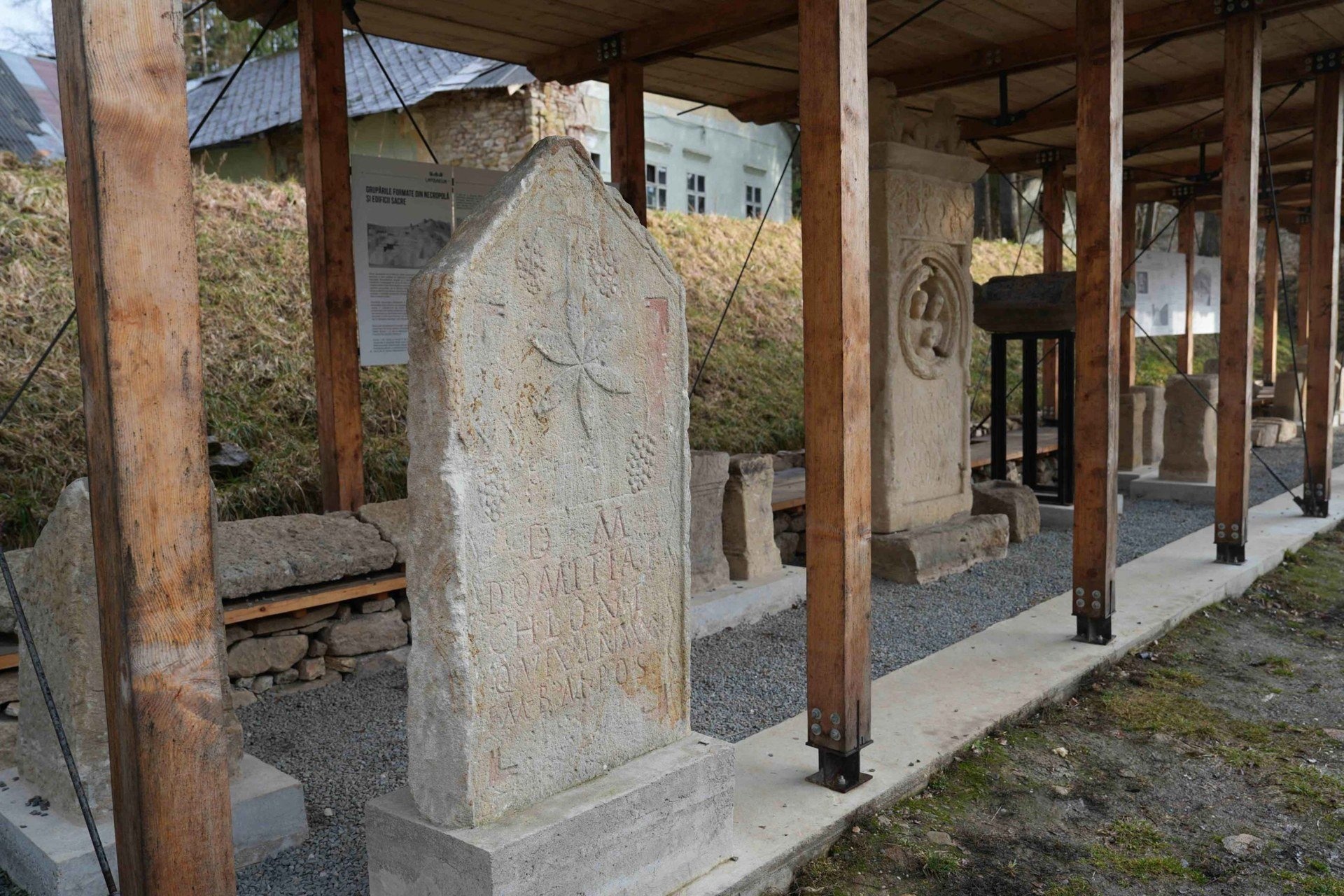
- The lapidarium — original Roman funerary stelae and votive altars found at Roșia Montană.
- Open-air ore mills — timber and iron stamp mills for crushing ore and a flotation plant used in 1960–2006.
- The «Aurarii» photo exhibition — about 150 black-and-white pictures by Iosif Bazil Roman of the region's gold miners (interwar years to 1948).
Practical information
The museum is at Str. Minei nr. 1, Roșia Montană — about 10 km from the town of Abrud, 14 km from Câmpeni, 70 km from Alba Iulia and 135 km from Cluj-Napoca. From Ukraine the easiest route is via the Solotvyno – Sighetu Marmației crossing and on through Cluj-Napoca (about 350 km from the border), or through Hungary and Oradea. The museum is open Tuesday to Sunday, 9:00–16:00 (16:00 is the last descent), closed on Mondays; underground visits are for groups of at least 5 people, so solo travellers should phone ahead: +40 258 783 165. An adult ticket costs 30 lei (as of November 2026).
Underground it is +7…+10 °C all year with humidity above 85 %, so bring a sweater and good shoes. The galleries are low and narrow, and the way down and up is 157 steps, so the visit is not suitable for people with limited mobility, heart conditions or claustrophobia. Allow at least an hour. Amateur photos are allowed for personal use only: the museum explicitly forbids posting interior photos online, including on social media.
Nearby
- Apuseni narrow-gauge railway — the Câmpeni – Abrud ride through the Moți country.
- Gold Museum in Brad — more than a thousand specimens of native gold.
- Avram Iancu Memorial House in the village of Incești.
- Muntele Mare peak — one of the highest summits of the northern Apuseni.
Official website: minvestdeva.ro
Photos: Codrinb, CC BY-SA 3.0 ro, Wikimedia Commons; Muzeul Mineritului Roșia Montană (CNCAF Minvest Deva), official website; AndreDea, CC BY 2.0, Wikimedia Commons.
Getting there from Ukraine
Border crossings
- Porubne – Siret — road and pedestrian, 24/7
- Diakivtsi – Racovăț — road and pedestrian, 24/7 No freight traffic.
- Krasnoilsk – Vicovu de Sus — road and pedestrian, 08:00–20:00 Cars up to 3.5 t and pedestrians only; not 24/7.
- Solotvyno – Sighetu Marmației — road and pedestrian, 24/7 Passenger traffic only: vehicles up to 3.5 t with up to 9 seats, pedestrians.
- Diakove – Halmeu — road, 24/7 No pedestrian crossing.
By car
Rakhiv – Cluj-Napoca ≈219 km, ≈3 h 44 min (via Solotvyno – Sighetu Marmației); Ivano-Frankivsk – Cluj-Napoca ≈353 km, ≈6 h 04 min (via Solotvyno – Sighetu Marmației); Chernivtsi – Cluj-Napoca ≈343 km, ≈6 h 28 min (via Krasnoilsk – Vicovu de Sus). Times without border queues, our road routing (GraphHopper, OSM).
Checked 03.11.2026; border crossing hours and timetables change — check before you travel.
Comments
Travellers’ experience: reports, tips, questions.
No one has written here yet. Be the first — your experience helps others.
Location on the map
Trails nearby
All trails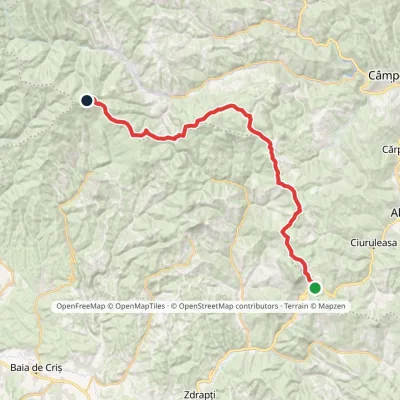 Hard1–2 daysMarkedBuceș-Vulcan Pass Mount GăinaElevation profile746–1 467 m33.1 kmascent 1 428 m≈ 10.5 h walking12 km from Roșia Montană: Roman gold mines (UNESCO)
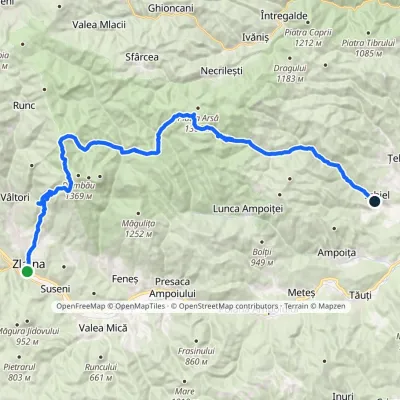 Hard1–2 daysMarkedZlatna IghielElevation profile333–1 323 m35.5 kmascent 1 600 m≈ 11.5 h walking17 km from Roșia Montană: Roman gold mines (UNESCO)
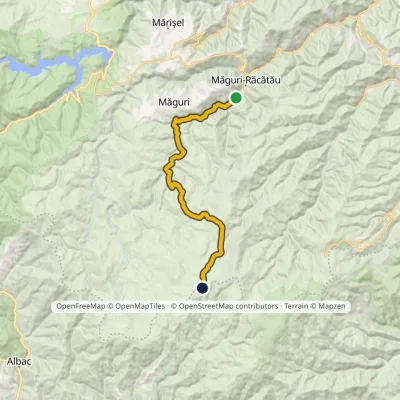 HardOne-dayMarkedMăguri-Răcătău Mount SmideleElevation profile720–1 643 m25.3 kmascent 1 002 m≈ 8 h walking22 km from Roșia Montană: Roman gold mines (UNESCO)
Nearby attractions
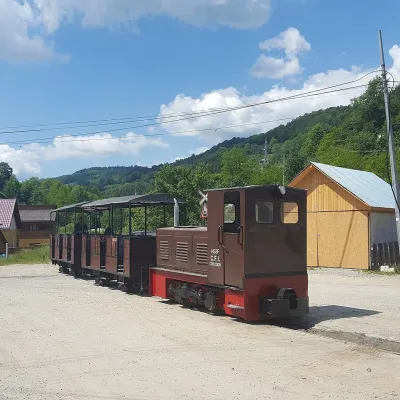 Heritage transportApuseni Narrow-Gauge Train: Câmpeni–Abrud ride in Moți LandVârși6.8 km from Roșia Montană: Roman gold mines (UNESCO)The narrow-gauge railway along the Arieș valley was officially opened on 20 June 1912. It linked the town of Turda with mountain Abrud in Țara Moților, the Moți Land —...
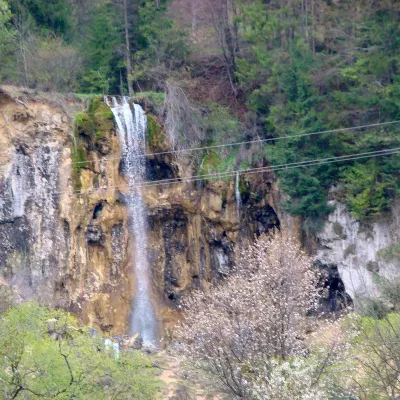 WaterfallPișoaia Waterfall (Cascada Pișoaia)Nemeși · Bihor-Vlădeasa Mountains19 km from Roșia Montană: Roman gold mines (UNESCO)height 18 m704 m above sea levelPișoaia Waterfall (Cascada Pișoaia; the name Cascada Miresii is also used) is a landscape reserve in the north-west of Alba County, in the Apuseni Mountains, not far...
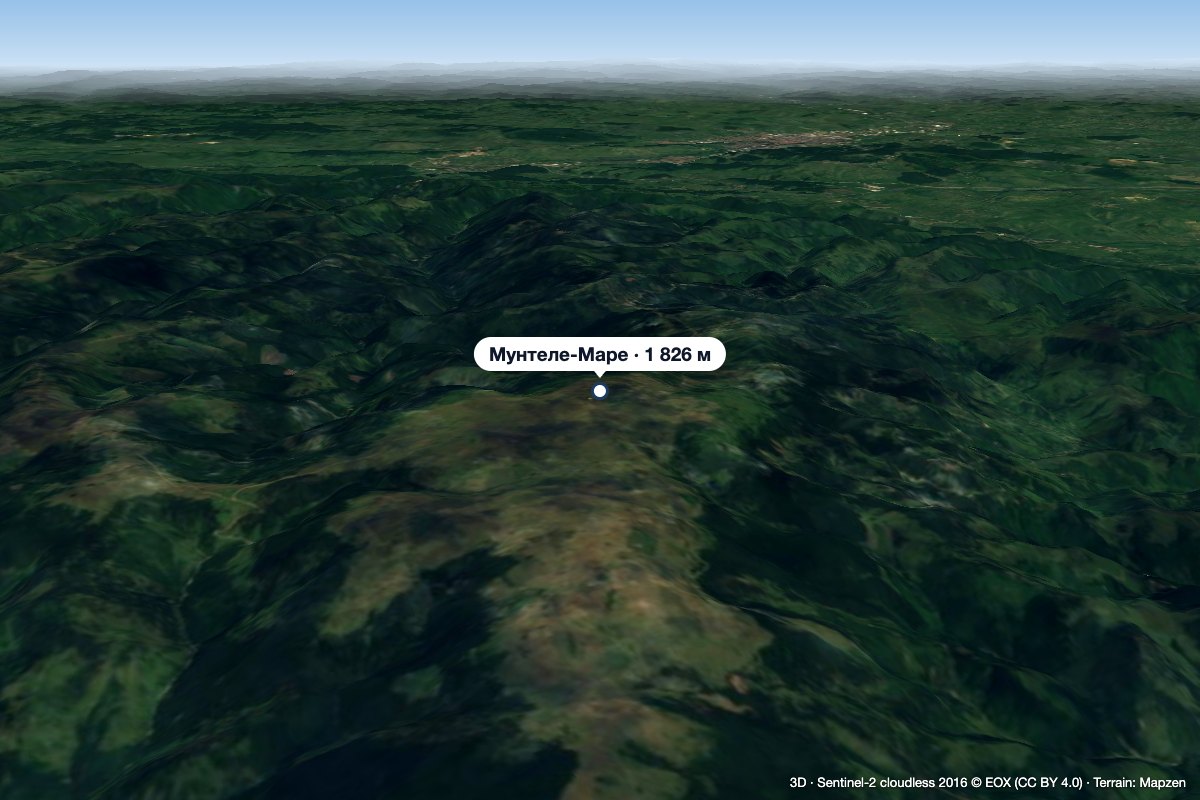 PeakMuntele MareSăgageaaltitude 1 826 m23 km from Roșia Montană: Roman gold mines (UNESCO)Muntele Mare (Romanian Vârful Muntele Mare, Hungarian Öreghavas) is a 1,826 m summit in the eastern part of the Apuseni Mountains (Western Romanian Carpathians).