Gold Museum in Brad: native gold of the Apuseni
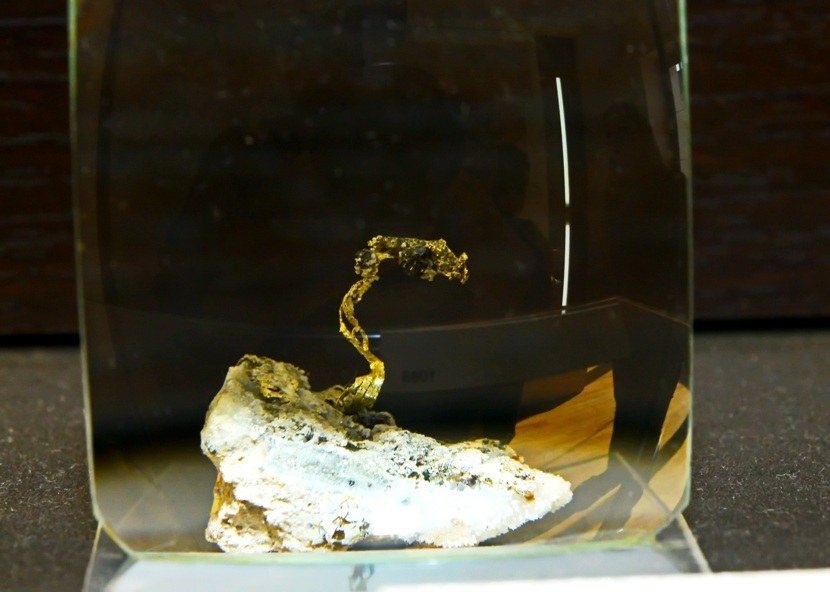
Gold untouched by a jeweller
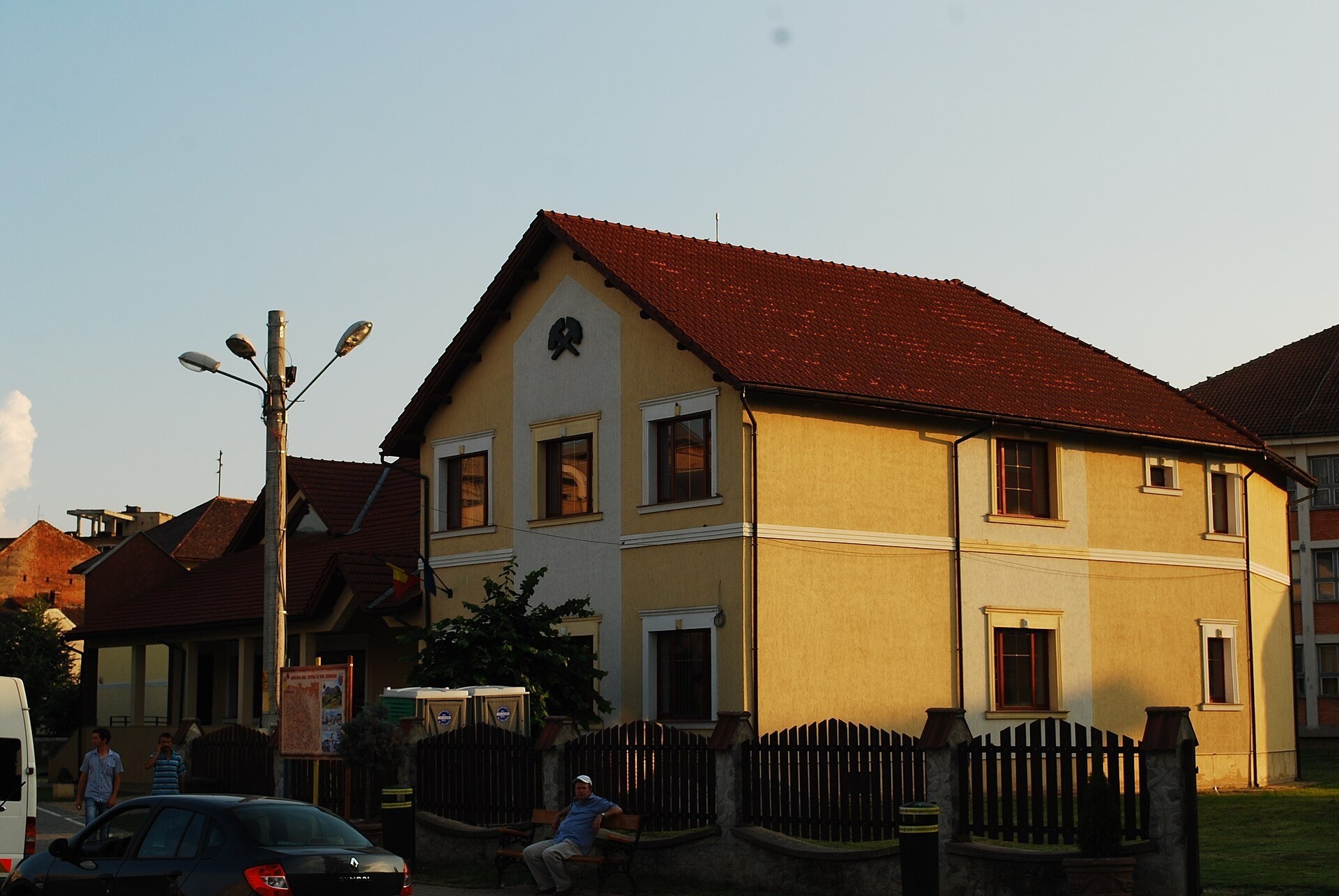
Brad is a small town in Hunedoara County, in the Zarand country (Țara Zarandului) on the southern slopes of the Apuseni Mountains. This part of the Apuseni belongs to the so-called «Golden Quadrilateral», where gold was mined from Dacian and Roman times until the end of the 20th century. Here, in 1896, a German geologist working at the local mines began collecting the most remarkable ore specimens — the beginning of the collection that later became the Gold Museum (Muzeul Aurului).
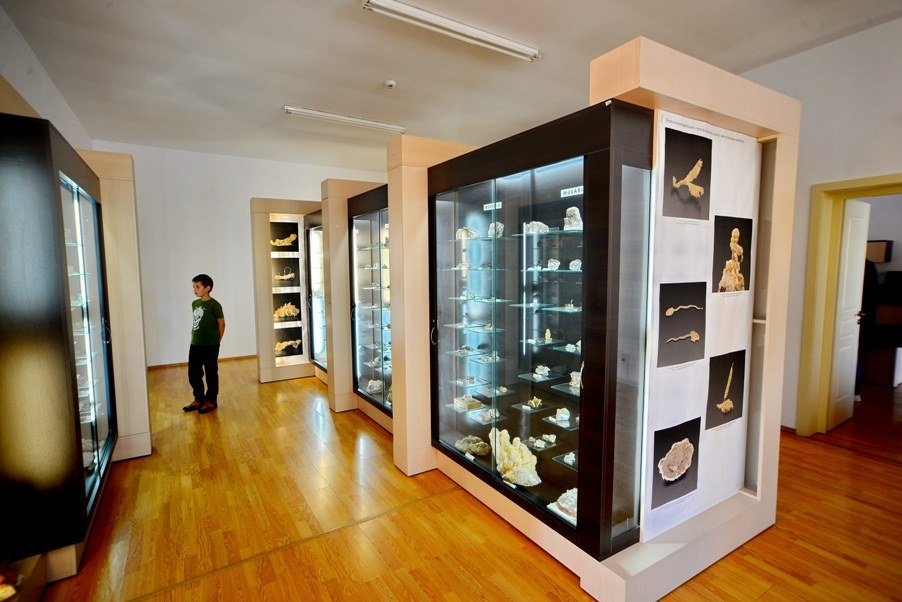
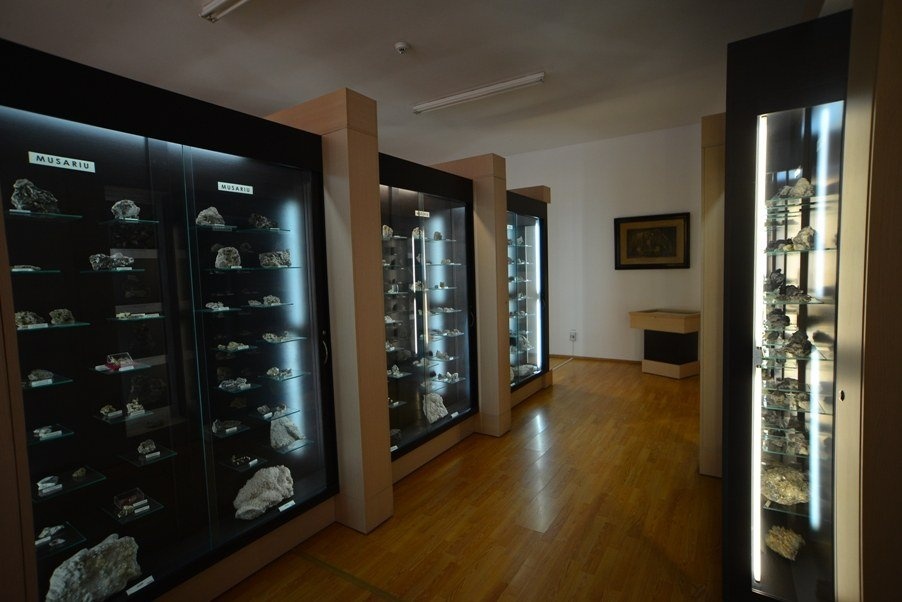
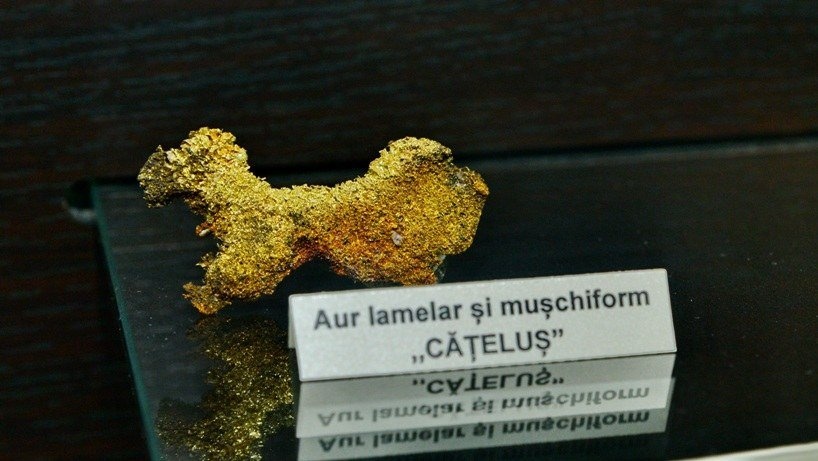
Over more than a century the museum has assembled what Romanian Wikipedia calls the largest collection of native gold in Europe — more than 1,300 exhibits from mines in Romania and around the world. Its key feature: not a single specimen has been worked by a jeweller or goldsmith — every shape was made by nature. The gold appears as thin plates, threads, dendrites, crystals and grains, and some nuggets resemble plants, animals or objects. In 2012, after a five-year reconstruction, the museum reopened to visitors in a renovated building. It is run by the state company Minvest Deva.
Why go
This is a place where gold appears not as an ornament but as a mineral — alive, whimsical and surprising. Nuggets shaped like a lizard, a bear or a quill, and crystalline «ferns» and «fir trees» fascinate adults and children alike. At the same time the museum tells the centuries-long story of mining in the region, from ancient tools to the industrial mines of the 20th century. And if you are heading for the Roman galleries of Roșia Montană, Brad is a logical stop on the same route.
What to see
- Native gold in fantastic shapes — including «Cățeluș» («puppy»), «Ursul polar» («polar bear»), «Pana lui Eminescu» («Eminescu's quill»), «Șopârla» («lizard») and «Feriga» («fern»).
- Gold in ore — finely dispersed, free or intergrown with other minerals, plus rare natural compounds of gold and tellurium: sylvanite and nagyágite were first described in the world from Apuseni deposits.
- A mineral collection — some 800 specimens from many countries, arranged on scientific principles: sulphides, oxides, carbonates, silicates.
- Archaeological finds from around Brad and Crișcior that testify to two thousand years of gold mining.
- Old mining tools and photographs of ore extraction and processing over the last two centuries.
Practical information
The museum is in the town centre on Independenței street (Str. Independenței nr. 9). Deva is about 35 km away, Roșia Montană 37 km and Alba Iulia about 100 km. From Ukraine, convenient routes lead via the Solotvyno – Sighetu Marmației crossing and on through Cluj-Napoca, or through Hungary and Oradea. The museum is open 9:00–17:00; the official site does not list opening days, so phone ahead: +40 254 612 300. Entry is only in organised groups of up to 30 people — individual visitors are usually grouped together on the spot. An adult ticket costs 35 lei (as of November 2026).
Photography and filming are allowed for a fee (15 and 25 lei per device) but for personal use only: the museum explicitly forbids posting pictures of the exhibition online, including on social media. Pets are not allowed. Allow about an hour. The exhibition occupies several rooms in one building; check accessibility for wheelchairs by phone.
Nearby
- Roșia Montană — Roman gold galleries, a UNESCO site.
- Avram Iancu Memorial House in the village of Incești.
- The village of Țebea a few kilometres from Brad — the burial place of Avram Iancu.
- Găina peak — the mountain where the traditional «Girls' Fair» is held every summer.
Official website: minvestdeva.ro
Photos: Andrei Stroe, CC BY-SA 3.0 ro, Wikimedia Commons; Muzeul Aurului Brad (CNCAF Minvest Deva), official website.
Getting there from Ukraine
Border crossings
- Porubne – Siret — road and pedestrian, 24/7
- Diakivtsi – Racovăț — road and pedestrian, 24/7 No freight traffic.
- Krasnoilsk – Vicovu de Sus — road and pedestrian, 08:00–20:00 Cars up to 3.5 t and pedestrians only; not 24/7.
- Solotvyno – Sighetu Marmației — road and pedestrian, 24/7 Passenger traffic only: vehicles up to 3.5 t with up to 9 seats, pedestrians.
- Diakove – Halmeu — road, 24/7 No pedestrian crossing.
By car
Rakhiv – Petroșani ≈450 km, ≈6 h 36 min (via Solotvyno – Sighetu Marmației); Ivano-Frankivsk – Petroșani ≈584 km, ≈8 h 55 min (via Solotvyno – Sighetu Marmației); Chernivtsi – Petroșani ≈539 km, ≈9 h 19 min (via Krasnoilsk – Vicovu de Sus). Times without border queues, our road routing (GraphHopper, OSM).
Checked 03.11.2026; border crossing hours and timetables change — check before you travel.
Comments
Travellers’ experience: reports, tips, questions.
No one has written here yet. Be the first — your experience helps others.
Video 2
 În vizită la Muzeul Aurului din BradTVR INFO

Location on the map
Trails nearby
All trails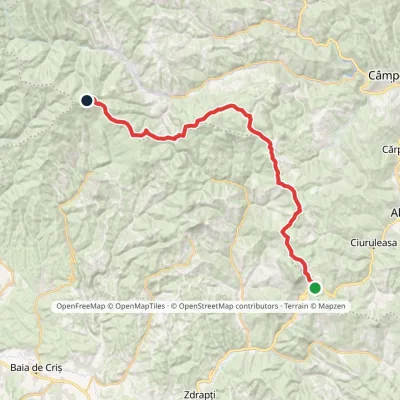 Hard1–2 daysMarkedBuceș-Vulcan Pass Mount GăinaElevation profile746–1 467 m33.1 kmascent 1 428 m≈ 10.5 h walking18 km from Gold Museum in Brad: native gold of the Apuseni
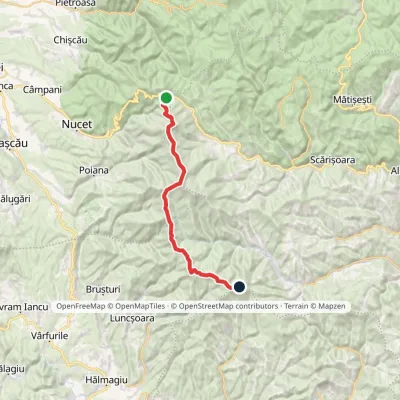 HardOne-dayMarkedVârtop Saddle Mount GăinaElevation profile1 159–1 838 m26.7 kmascent 1 190 m≈ 8.5 h walking25 km from Gold Museum in Brad: native gold of the Apuseni
Nearby attractions
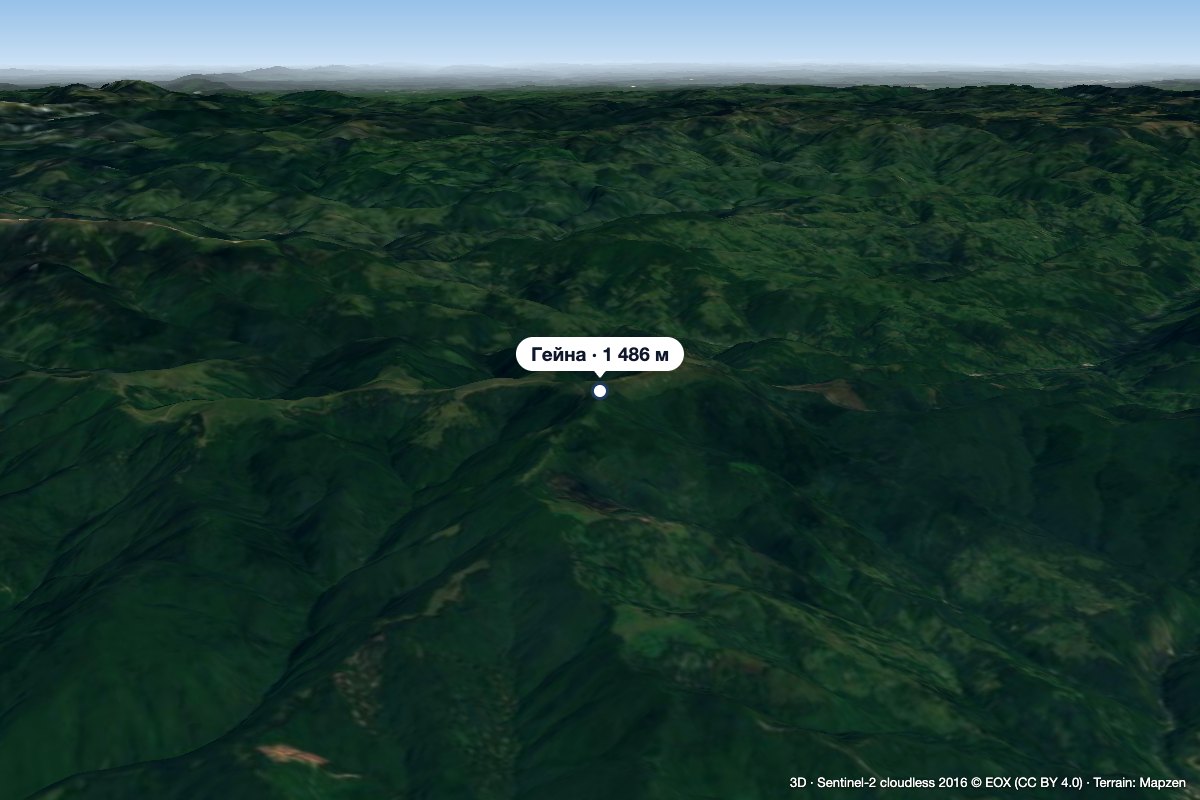 PeakGăinaGiurgeștialtitude 1 486 m24 km from Gold Museum in Brad: native gold of the ApuseniGăina (Romanian Vârful Găina, Muntele Găina) is a 1,486 m summit, the highest point of the massif of the same name in the central Apuseni Mountains (Western Romanian...
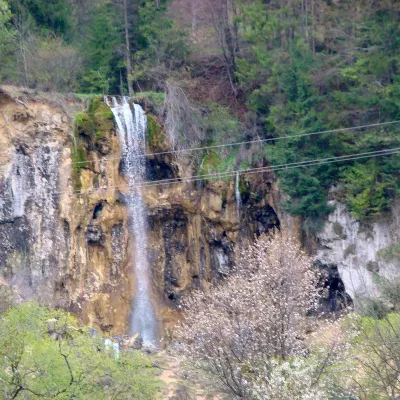 WaterfallPișoaia Waterfall (Cascada Pișoaia)Nemeși · Bihor-Vlădeasa Mountains27 km from Gold Museum in Brad: native gold of the Apuseniheight 18 m704 m above sea levelPișoaia Waterfall (Cascada Pișoaia; the name Cascada Miresii is also used) is a landscape reserve in the north-west of Alba County, in the Apuseni Mountains, not far...
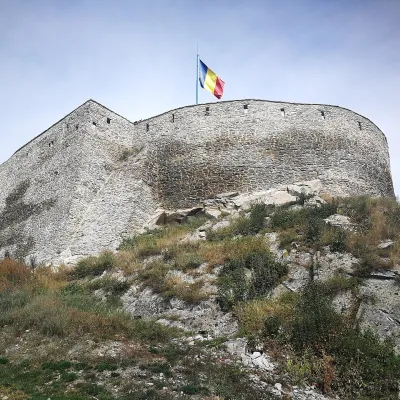 CastleDeva Citadel: medieval fortress on a volcanic hillDeva28 km from Gold Museum in Brad: native gold of the ApuseniThe town of Deva, seat of Hunedoara County, lies where the Mureș valley leaves Transylvania to the west.
Craft nearby
All craft places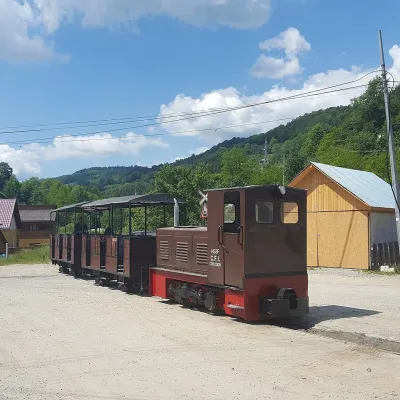 Heritage transportApuseni Narrow-Gauge Train: Câmpeni–Abrud ride in Moți LandVârși34 km from Gold Museum in Brad: native gold of the ApuseniThe narrow-gauge railway along the Arieș valley was officially opened on 20 June 1912. It linked the town of Turda with mountain Abrud in Țara Moților, the Moți Land —...
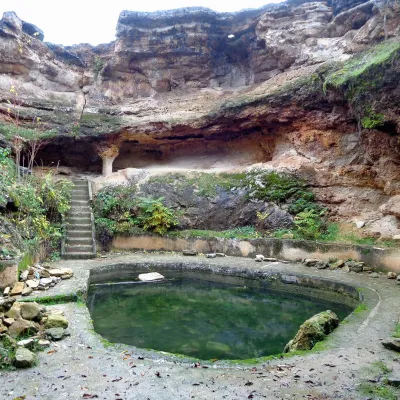 Water parks & thermal poolsGeoagiu-Băi: the Roman Germisara thermae and mesothermal watersGeoagiu-Băi36 km from Gold Museum in Brad: native gold of the ApuseniGeoagiu-Băi is a small spa of mesothermal waters in Hunedoara County, on the south-eastern slopes of the Metaliferi Mountains — part of the Apuseni (Western Romanian)...
