Bogdana Monastery: the oldest stone church in Moldavia
The first burial place of the Moldavian princes
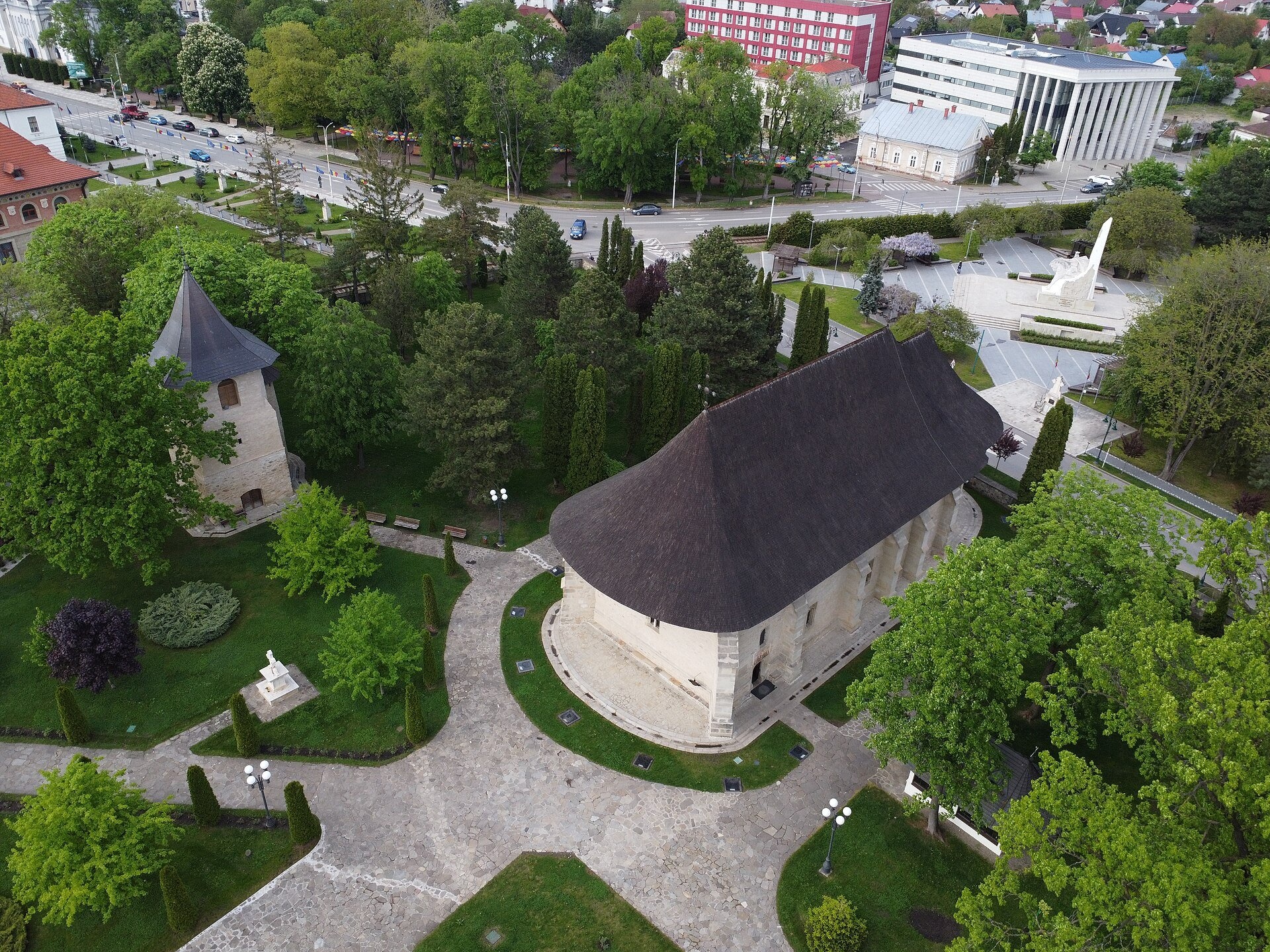
Bogdana Monastery (Mănăstirea Bogdana) stands in the centre of the town of Rădăuți in northern Bukovina, on the plain below the Obcine ridges of the Eastern Carpathians. Its church of St Nicholas was built around 1360 by Bogdan I, founder of the independent Principality of Moldavia. It is regarded as the oldest surviving stone church in Moldavia. Bogdan chose it as the burial place for himself and his descendants, and until the time of Alexander the Good (Alexandru cel Bun) the princes of the Mușat dynasty were buried here. Under Alexander the Good (1400–1432) the monastery became the seat of the Bishopric of Rădăuți.
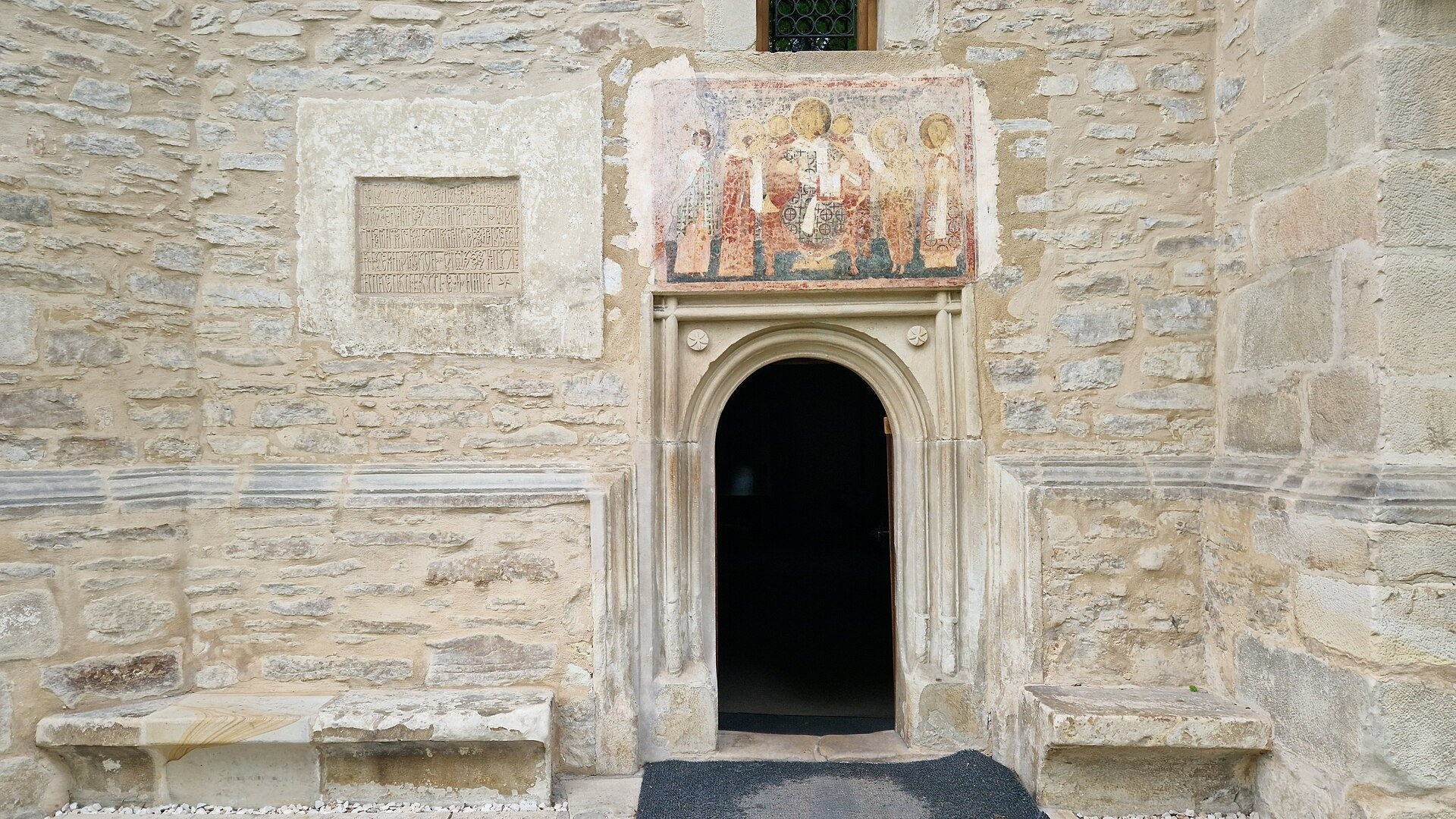
In 1479–1482 Stephen the Great (Ștefan cel Mare) placed carved stone slabs with Slavonic inscriptions on the tombs of his ancestors. In 1559 Prince Alexandru Lăpușneanu added an enclosed porch. In the 18th century the monastery had a printing house, and the bell tower was built in 1781. After 1775 Bukovina passed to the Habsburg Monarchy: in 1782 the bishop's residence moved to Chernivtsi, and in 1783 the monastery was closed and the church became a parish church. Monastic life was restored on 6 December 1992. Today it is an active Orthodox monastery for monks under the Archdiocese of Suceava and Rădăuți. The relics of St Leontius of Rădăuți and St Theodosius of Brazi are venerated here. Since 2015 the ensemble has been on the list of historic monuments of Suceava County.
Why go
Bogdana is the beginning of Moldavia's history in stone. The church has no dome but a high, steep roof, thick walls and buttresses, and looks nothing like the later painted churches of Bukovina. That is why it is worth seeing: it shows where the region's architecture began. The country's first princes lie inside, and monuments to the founders of the state stand nearby. The monastery is right in the centre of Rădăuți, so it is easy to combine with a trip to Sucevița, Putna and the Arbore church.
What to see
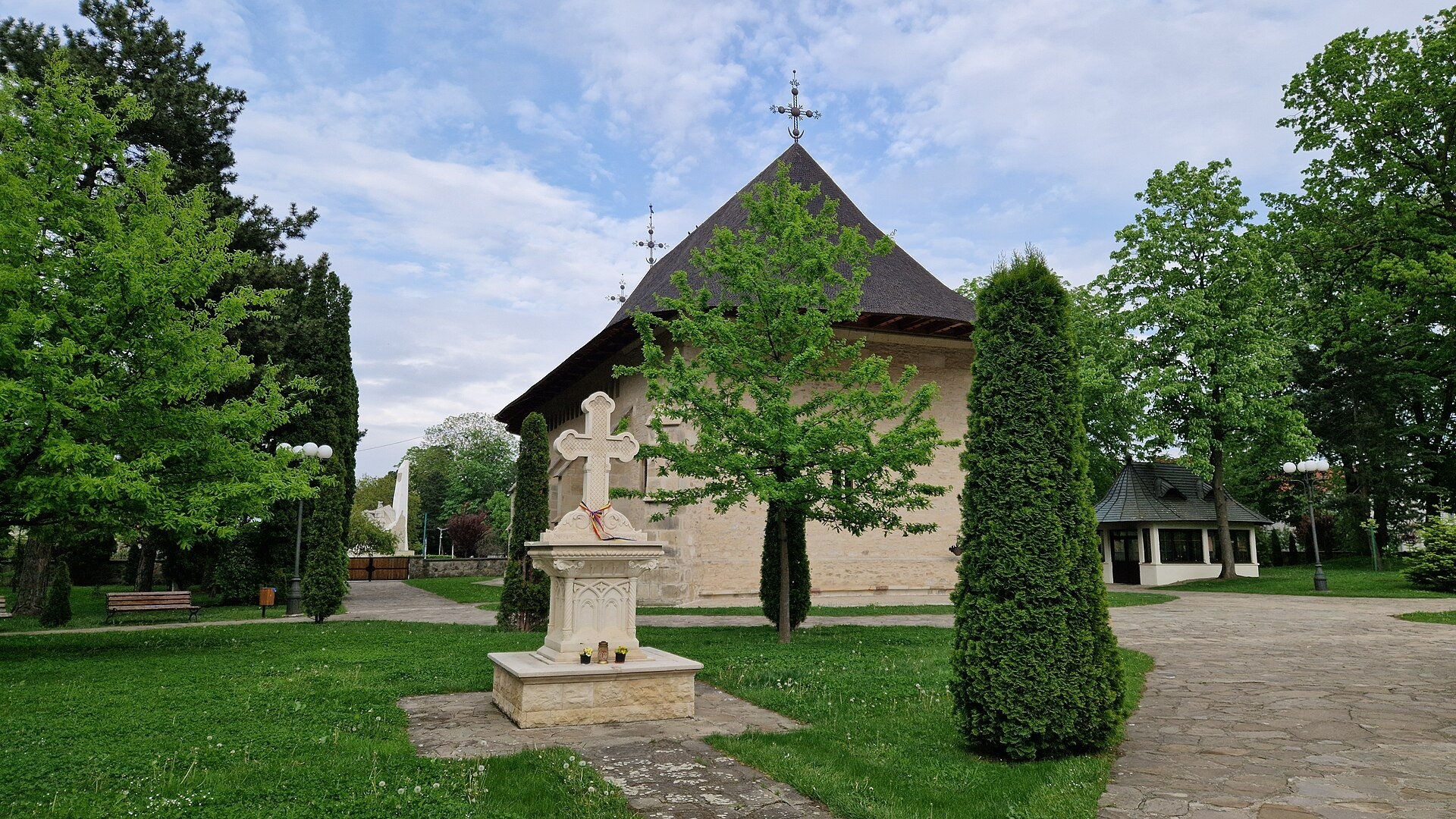
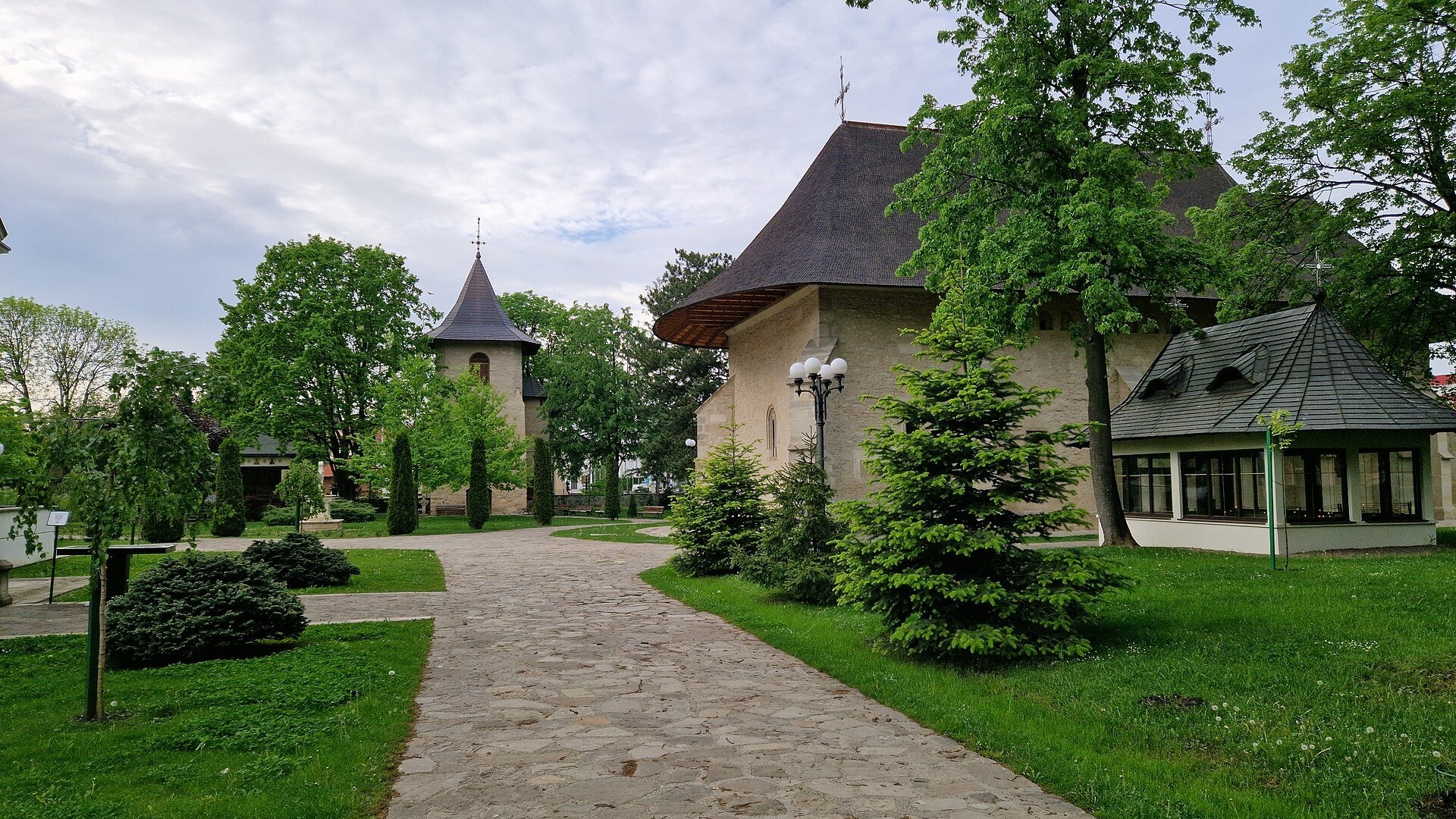
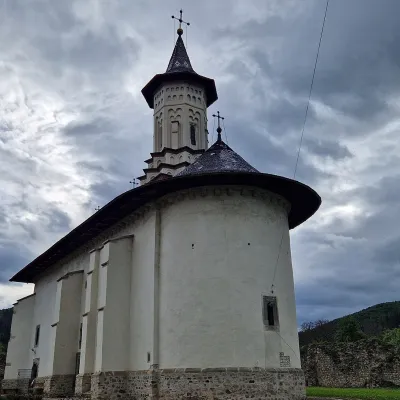
- The Church of St Nicholas: a tall church without a dome, with walls about 1.4 metres thick, buttresses and narrow windows. Inside, Romanesque, Byzantine and Gothic features meet: the central nave is separated from the side aisles by six massive pillars.
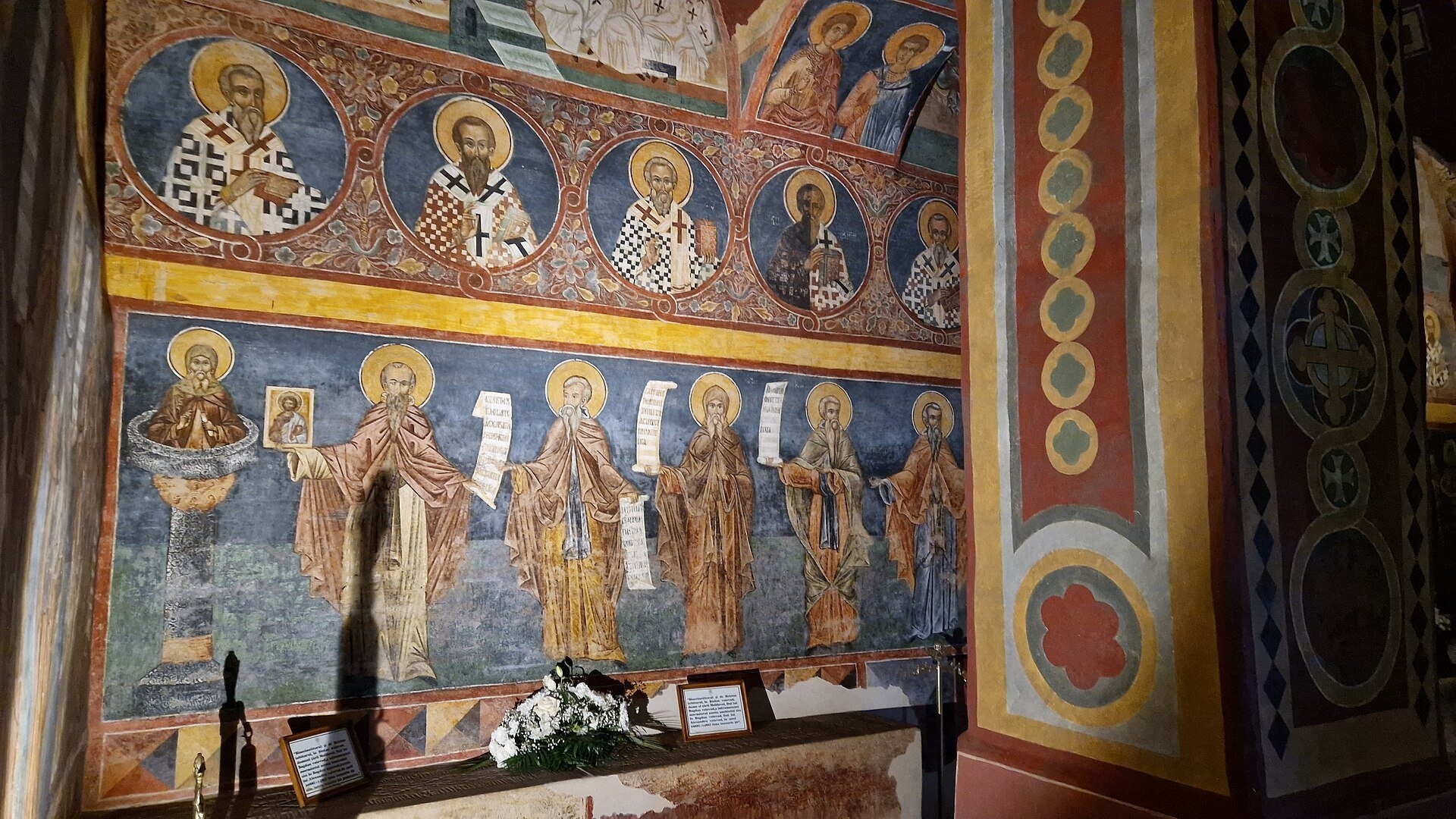
- The princely tombs in the nave: Bogdan I, his son Lațcu, Ștefan I and other members of the Mușat dynasty. They are covered with carved slabs made on the orders of Stephen the Great.
- Murals from different periods: the earliest are mentioned in the time of Alexander the Good, the sanctuary has scenes from the age of Stephen the Great, and most of the interior was painted in tempera by the Bukovinian artist Epaminonda Bucevschi in 1880. A votive (founders') composition with the princes also survives.
- Alexandru Lăpușneanu's porch of 1559 with Gothic window frames and a Slavonic inscription by the south door.
- The bell tower of 1781: one of the bells bears an inscription with the name of Prince Ștefan.
- The monastery courtyard with statues of princes, the new church of St Leontius and the monastery museum, which hosts exhibitions and cultural events of the archdiocese.
Practical information
Address: Strada Bogdan Vodă 4–6, 725400 Rădăuți, Suceava County. The monastery stands in the centre of Rădăuți, close to the main square. From Ukraine the nearest border crossing is Porubne – Siret, about 19 km from Rădăuți; via the Krasnoilsk – Vicovu de Sus crossing it is about 30 km. From the city of Suceava it is about 35 km by road.
The archdiocese does not publish official visiting hours or prices, so check opening times and visiting conditions before you go. This is an active monastery with daily services, and on feast days (including the feast of St Leontius on 1 July) it gets busy. As is customary in Orthodox monasteries, dress modestly (shoulders and knees covered) and keep quiet, especially during services. Ask on site about the rules for taking photos in the church. Allow 30–60 minutes for the church and the courtyard. The courtyard is level, and there is parking in town.
Nearby
- Black pottery in the village of Marginea — a potters' workshop, about 10 km.
- Arbore Church with UNESCO-listed frescoes — about 16 km.
- Sucevița Monastery with UNESCO-listed paintings — about 19 km.
- The church in the village of Pătrăuți — one of Stephen the Great's earliest foundations, UNESCO, about 29 km.
- Putna Monastery — burial place of Stephen the Great, about 32 km.
Photos: Curcan ionel, CC BY-SA 4.0, Wikimedia Commons; Cezar Suceveanu, CC BY 3.0, Wikimedia Commons.
Getting there from Ukraine
Border crossings
- Porubne – Siret — road and pedestrian, 24/7
- Diakivtsi – Racovăț — road and pedestrian, 24/7 No freight traffic.
- Krasnoilsk – Vicovu de Sus — road and pedestrian, 08:00–20:00 Cars up to 3.5 t and pedestrians only; not 24/7.
- Solotvyno – Sighetu Marmației — road and pedestrian, 24/7 Passenger traffic only: vehicles up to 3.5 t with up to 9 seats, pedestrians.
- Diakove – Halmeu — road, 24/7 No pedestrian crossing.
By car
Chernivtsi – Câmpulung Moldovenesc ≈121 km, ≈2 h 12 min (via Krasnoilsk – Vicovu de Sus); Ivano-Frankivsk – Câmpulung Moldovenesc ≈239 km, ≈4 h 12 min (via Krasnoilsk – Vicovu de Sus); Rakhiv – Câmpulung Moldovenesc ≈217 km, ≈4 h 35 min (via Solotvyno – Sighetu Marmației). Times without border queues, our road routing (GraphHopper, OSM).
Checked 03.11.2026; border crossing hours and timetables change — check before you travel.
Comments
Travellers’ experience: reports, tips, questions.
No one has written here yet. Be the first — your experience helps others.
Video 2
 Mănăstirea BOGDANA (Rădăuți, Bucovina, România)Lucian Ionescu

Location on the map
Nearby attractions
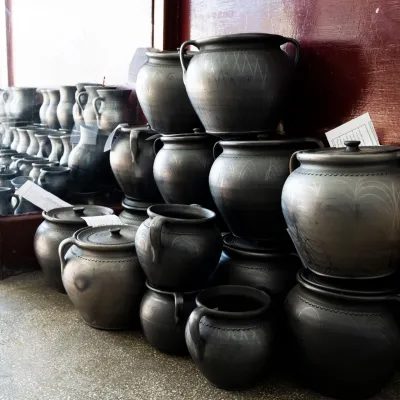 Crafts & workshopsBlack pottery of Marginea: the Magopăț family workshopMarginea10 km from Bogdana Monastery: the oldest stone church in MoldaviaBlack pottery of Marginea: the sixth generation of the Magopăț family Marginea is a large village in the Romanian part of Bukovina, between the town of Rădăuți and...
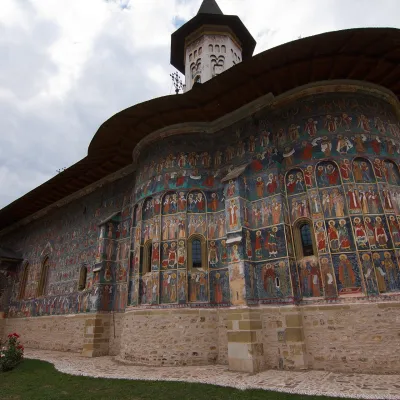 ChurchSucevița Monastery: UNESCO painted church and wallsSucevița17 km from Bogdana Monastery: the oldest stone church in MoldaviaSucevița Monastery (Mănăstirea Sucevița) stands in the valley of the river of the same name in the village of Sucevița, about 18 km from the town of Rădăuți in...
 ChurchSolca Monastery: Ștefan Tomșa's church of 1612–1614Solca17 km from Bogdana Monastery: the oldest stone church in MoldaviaThe Monastery of the Holy Apostles Peter and Paul in Solca (Mănăstirea Solca) is a 17th-century Orthodox monastery in southern Bukovina, in the valley between Rădăuți...