Northern crested newt
About
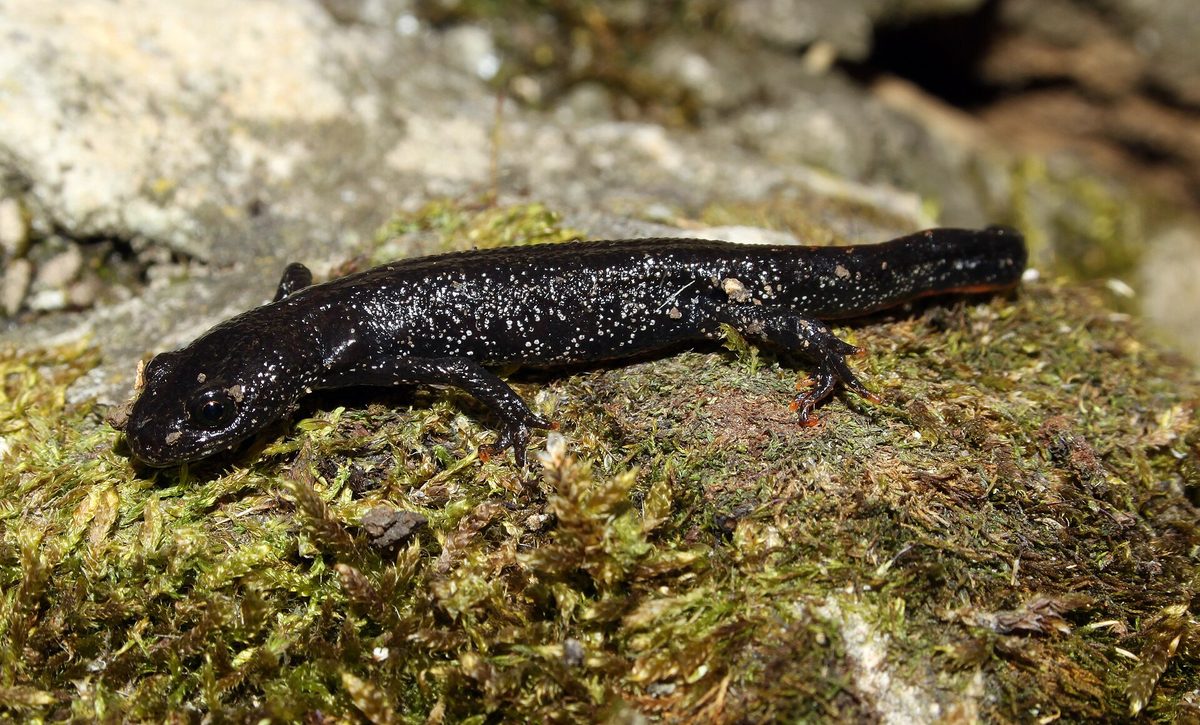
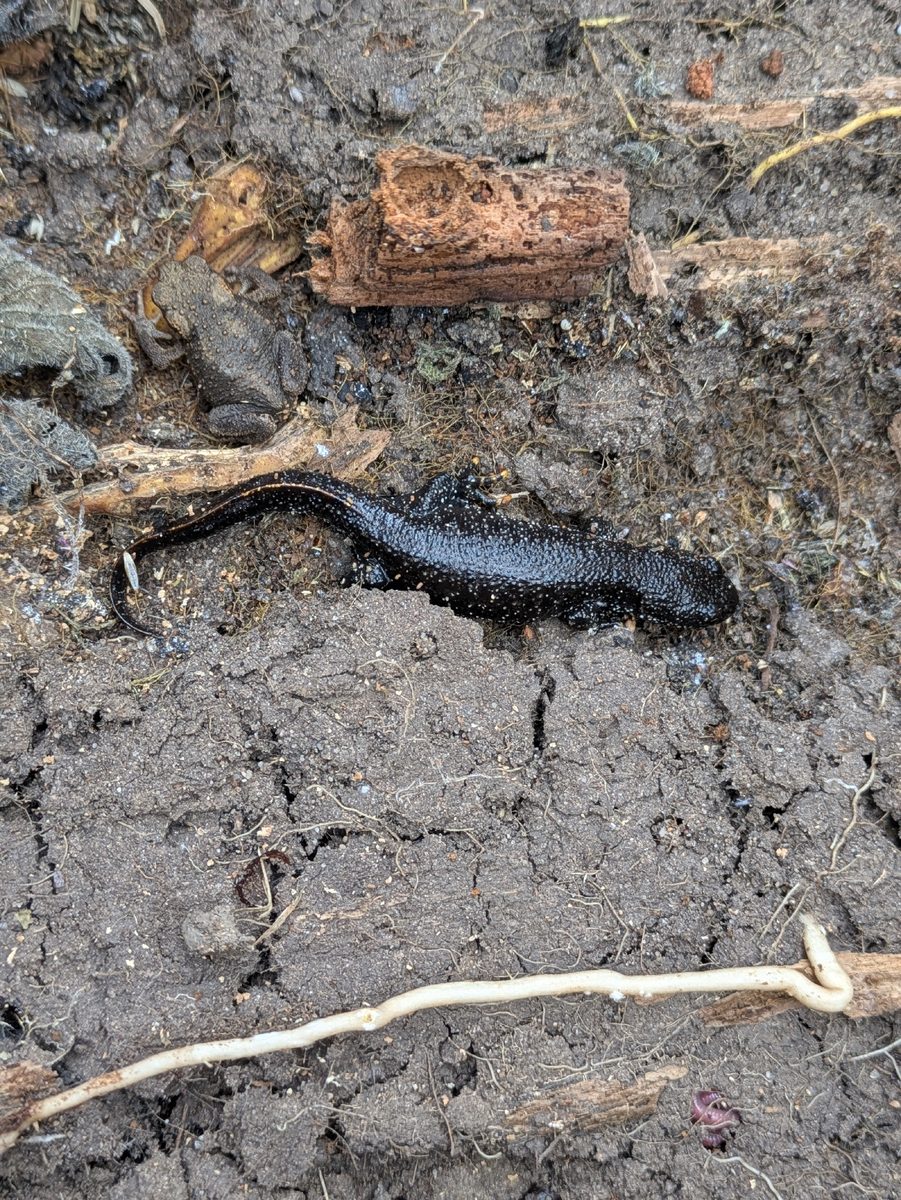
The Northern crested newt is the largest of our newts, measuring 11–16 cm in length, occasionally more. Its skin is rough and granular, almost black or dark brown on top, with small white spots on the sides. The belly is bright—yellow or orange with black spots, each animal has its own pattern.
In spring, during the breeding season, the male undergoes a transformation: a high serrated crest grows along its back, separated by a notch from the crest on the tail, and a silvery-blue stripe appears on the sides of the tail. After breeding, the crest disappears.
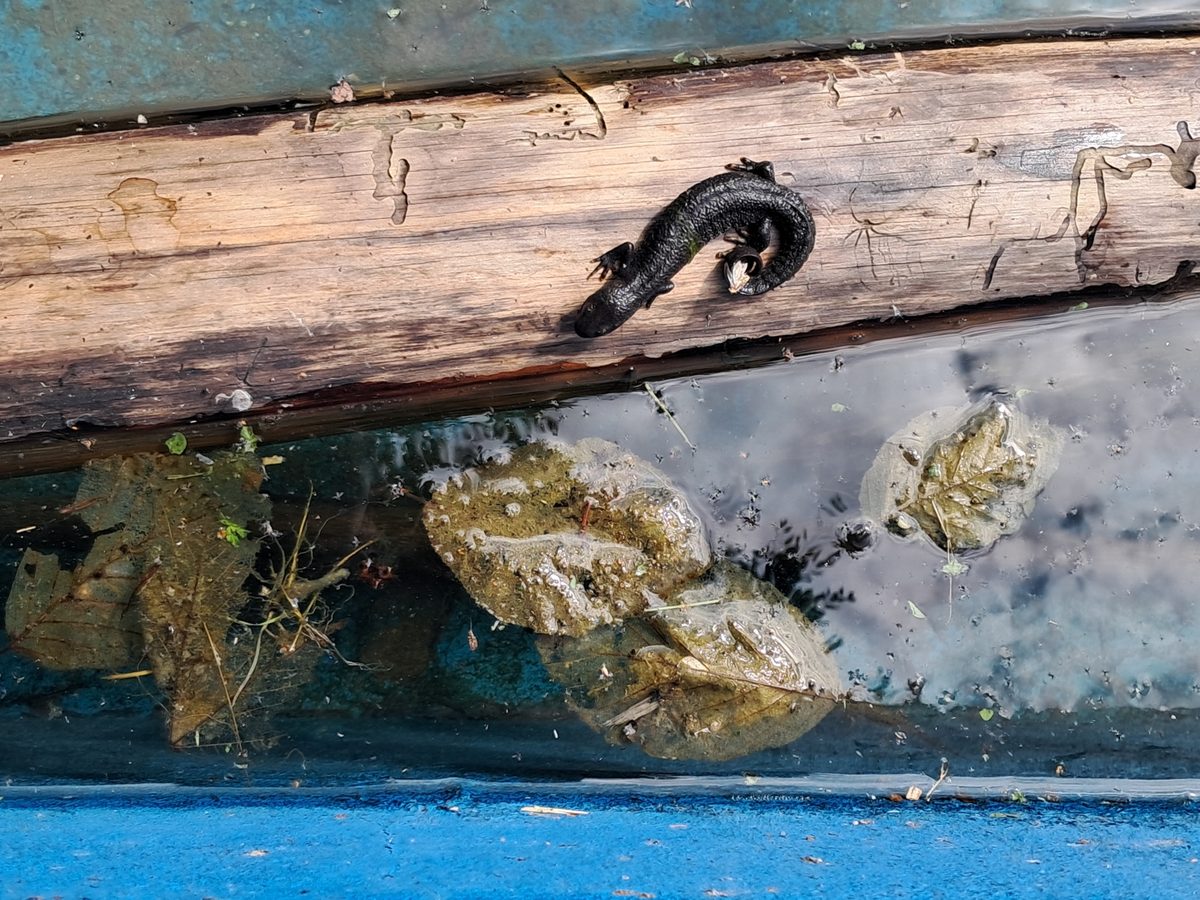
In water, newts live from March to June. They require small standing water bodies without fish—forest ponds, pits, backwaters, flooded quarries. The female lays eggs one by one, wrapping each in a leaf of an aquatic plant. In summer, adults come out onto land, hiding during the day under logs, stones, in burrows, and hunting at night for worms, snails, and insects.
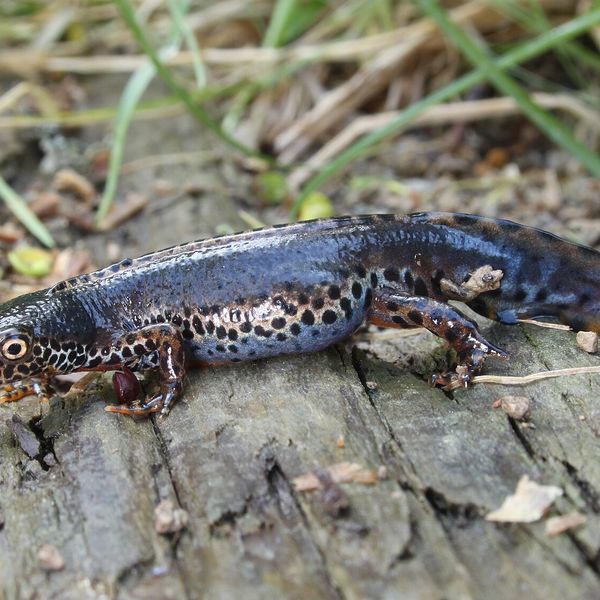
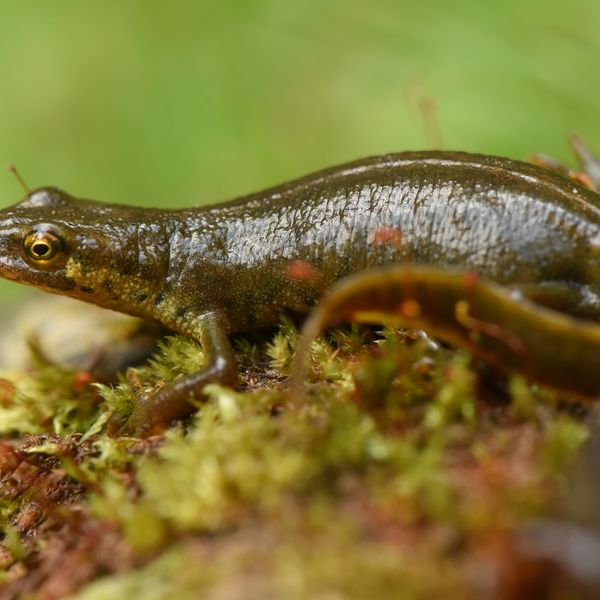
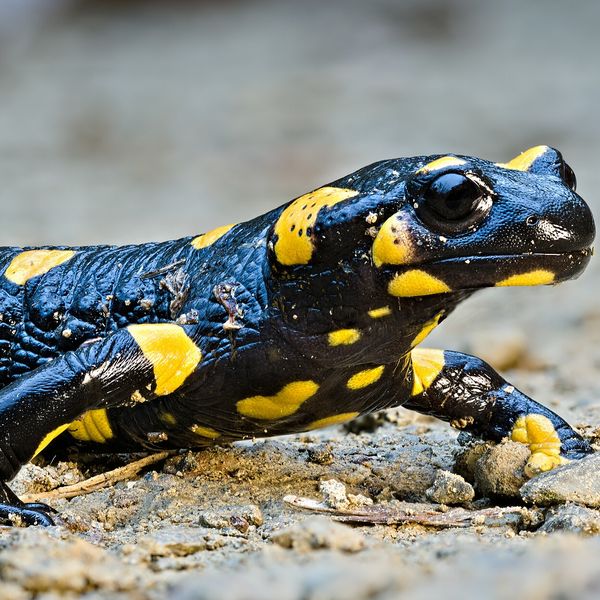
In the Carpathians, the Northern crested newt inhabits the foothills and the lower forest belt. Higher up in the mountains, it is replaced by the Alpine newt and the Carpathian newt. It differs from them by its larger size, dark warty skin, and spotted belly.
The species is listed in the Red Data Book of Ukraine with a status of "vulnerable"; in the EU, it is under strict protection. The greatest threats to it are the filling and pollution of small water bodies and the stocking of ponds. Newts cannot be caught or taken home. Distribution is shown only at the level of massifs on the website.
Where in the Carpathians

Orange — where naturalists recorded the species (GBIF, CC0/CC BY). It occurs only locally, so we draw no approximate range; a blank area does not mean it is absent. For rare and vulnerable species the map is deliberately coarse (hexagons of ~250 km² or more) so that it never points to dens, nests or growing sites.
- Countries
- Ukraine · Romania · Slovakia
- Mountain ranges
- Pokuttia-Bukovina Carpathians, Skole Beskids, Krasna Polonyna
- Altitude belts
- Foothills (below 600 m) · Beech forests (600–1200 m)
When to see it
| Jan | Feb | Mar | Apr | May | Jun | Jul | Aug | Sep | Oct | Nov | Dec | |
|---|---|---|---|---|---|---|---|---|---|---|---|---|
| Sightings |
From naturalists’ observations in the Carpathians (iNaturalist, research grade): the darker the cell, the more often the species is seen that month.
Safety
The skin of the newt secretes an irritating mucus. Do not handle the animal; if you touch it, wash your hands and do not rub your eyes.
Protection and rules
Listed in the Red Data Book of Ukraine (vulnerable). Catching and keeping is prohibited.
FAQ
Is the Northern crested newt found in the Carpathians?
Yes, in the foothills and lower forest belt. Higher up in the mountains live the Alpine newt and the Carpathian newt.
When does the newt develop its crest?
In spring, during the breeding season, and only in males. After breeding, when newts come out onto land, the crest disappears.
Comments
Travellers’ experience: reports, tips, questions.
No one has written here yet. Be the first — your experience helps others.
Similar species
Where to meet it
Ranges where it occurs: Pokuttia-Bukovina Carpathians, Skole Beskids, Krasna Polonyna
Trails and peaks near which naturalists recorded the species (GBIF, iNaturalist), matched by altitude and habitat. Sightings are not guaranteed.
Sources
- Вікіпедія: Тритон гребінчастий
- Wikipedia (en): Northern crested newt
- Наказ Міндовкілля від 19.01.2021 № 29: Перелік видів тварин, що заносяться до Червоної книги України
- Директива Ради 92/43/ЄЕС про збереження природних оселищ (консолідований текст, додатки II, IV, V)
- iNaturalist: Triturus cristatus (спостереження в Карпатах)
GBIF · iNaturalist · Wikidata · Distribution data: GBIF.org (CC0 and CC BY records), iNaturalist; names and identifiers: Wikidata (CC0). Text: Karpaty.rocks, checked 11.11.2026.
