Marsh frog
About
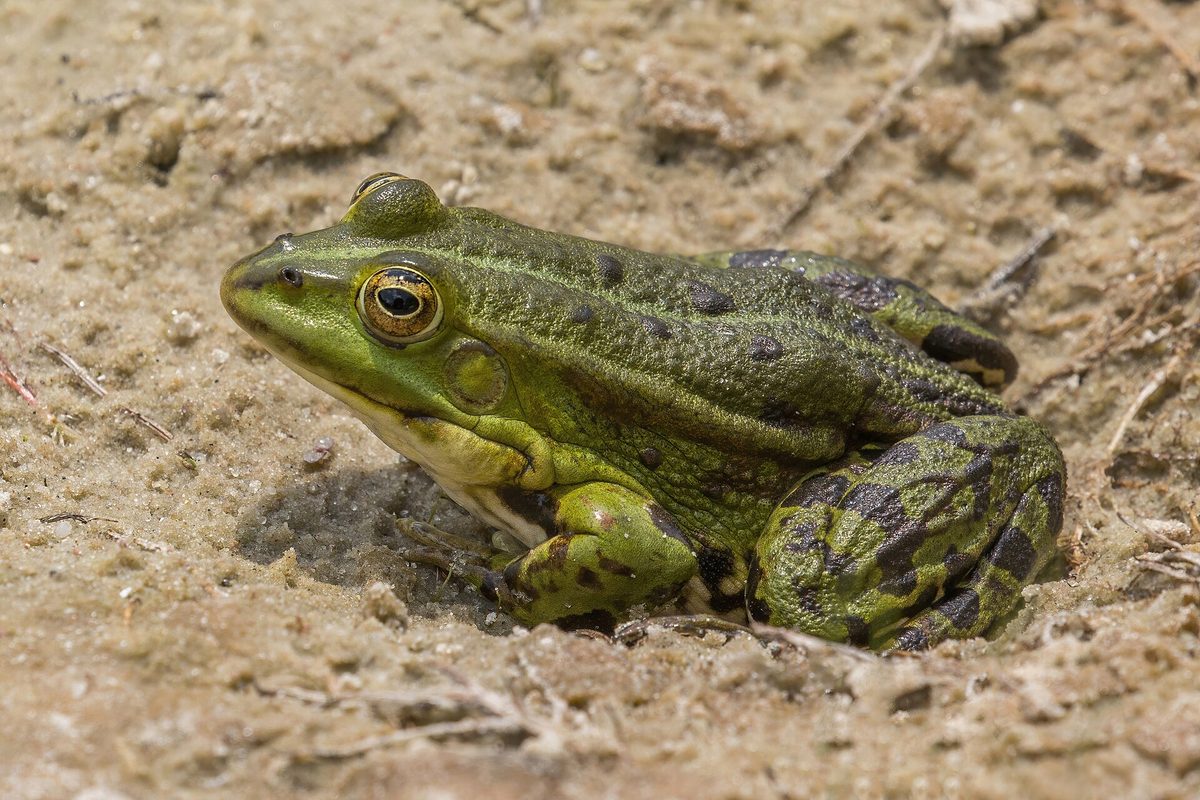
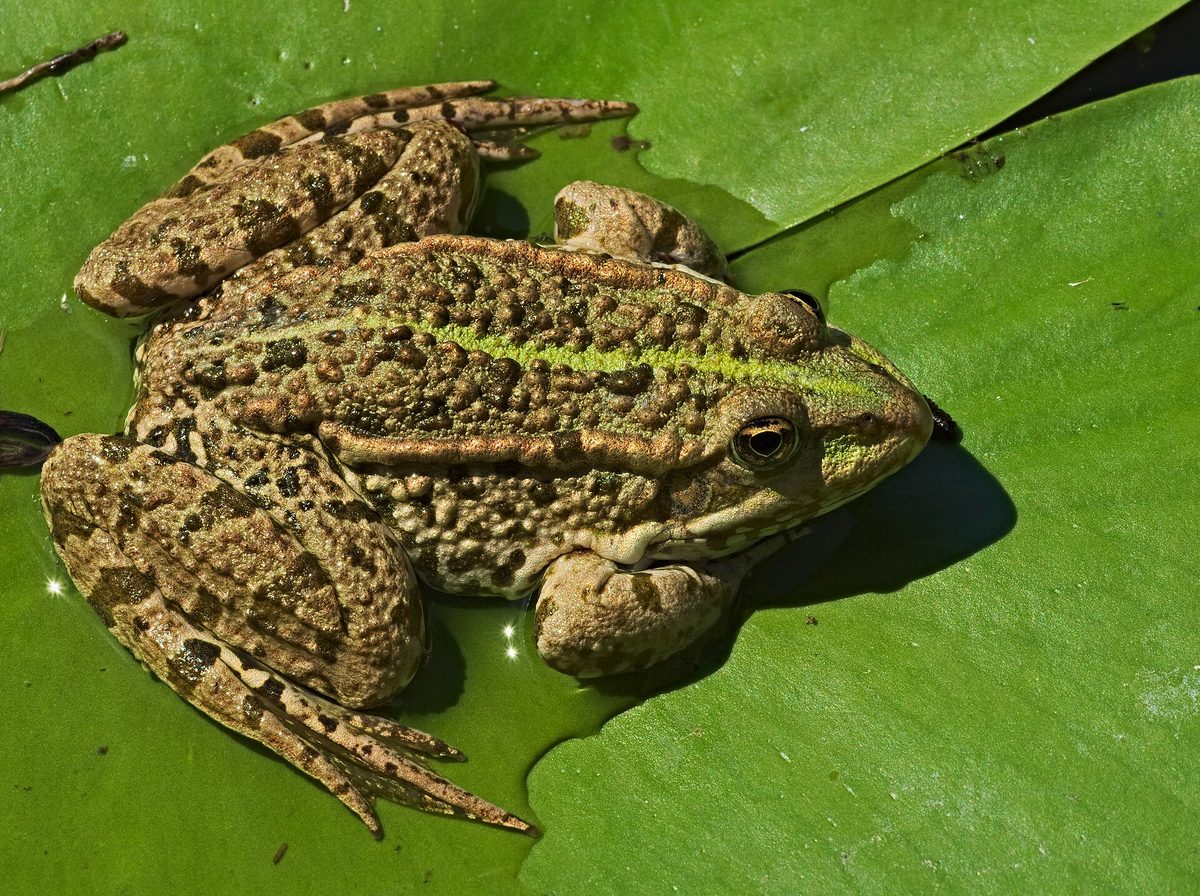
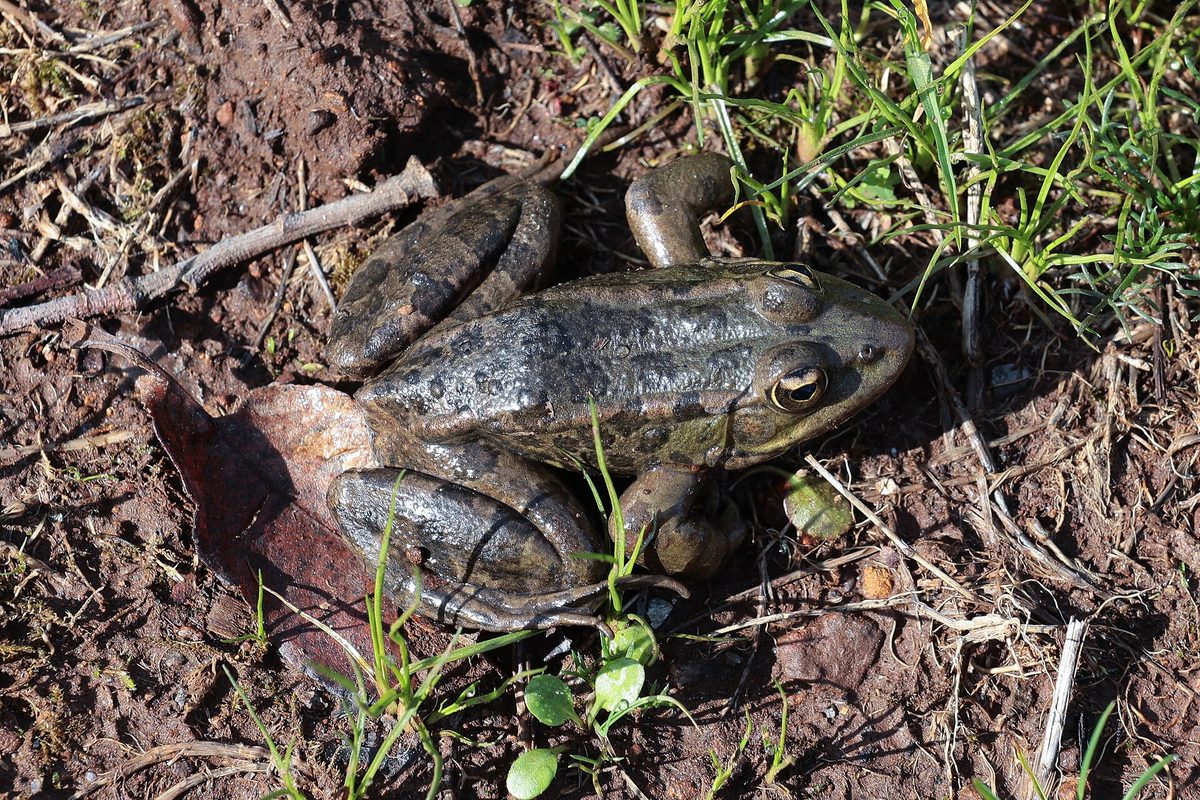
The Marsh frog is the largest of our frogs. In Ukraine, adults usually reach 10–11 cm in length, while the largest females of this species can reach 15–17 cm; males are smaller. The coloration is variable — green, olive, or brown with dark spots, often with a light stripe along the back. The skin is warty. Males have gray resonators in the corners of their mouths that inflate into two balls during singing.
These frogs hold loud 'concerts'. In May and June, during the day and especially on warm evenings, a broken croaking, resembling laughter, echoes over the pond — the Latin name of the species means 'laughing'.
Unlike the brown frogs — the Common frog and the Agile frog — the Marsh frog does not stray far from water. It basks on the shore or on the leaves of aquatic plants and jumps into the water at the slightest danger. In the Carpathian region, it inhabits valleys and foothills: ponds, backwaters, canals, reservoirs, and quiet sections of rivers. It is absent in cold mountain streams and high in the mountains.
It feeds on insects, spiders, mollusks, and large individuals catch fry, tadpoles, and even smaller frogs. It lays eggs later than the brown frogs, in May — June, when the water warms up. It hibernates at the bottom of water bodies.
Often living alongside the Marsh frog are similar green frogs — the Pond frog and the Edible frog, so it is not always possible to confidently identify the species from a photo. The Marsh frog is the largest, and its resonators are gray, not white.
Where in the Carpathians

Orange — where naturalists recorded the species (GBIF, CC0/CC BY); a blank area does not mean it is absent.
- Countries
- Ukraine · Romania · Czechia · Slovakia · Hungary · Austria · Poland
- Mountain ranges
- Krasna Polonyna, Maramureș Mountains, Vihorlat-Gutin Volcanic Ridge. In other countries: 🇷🇴 Almăj and Locva Mountains, 🇷🇸 Đerdap and Miroč, 🇭🇺 Bükk
- Altitude belts
- Foothills (below 600 m)
When to see it
| Jan | Feb | Mar | Apr | May | Jun | Jul | Aug | Sep | Oct | Nov | Dec | |
|---|---|---|---|---|---|---|---|---|---|---|---|---|
| Sightings |
From naturalists’ observations in the Carpathians (iNaturalist, research grade): the darker the cell, the more often the species is seen that month.
Protection and rules
Not listed in the Red Book of Ukraine.
FAQ
Which frog is the largest in Ukraine?
The Marsh frog: in Ukraine, it usually reaches 10–11 cm in length, while the largest females of the species can reach 15–17 cm.
Who croaks so loudly at the ponds in spring?
Males of green frogs, primarily the Marsh frog. In May — June, they sing in chorus, inflating the gray resonators in the corners of their mouths.
Comments
Travellers’ experience: reports, tips, questions.
No one has written here yet. Be the first — your experience helps others.
Similar species
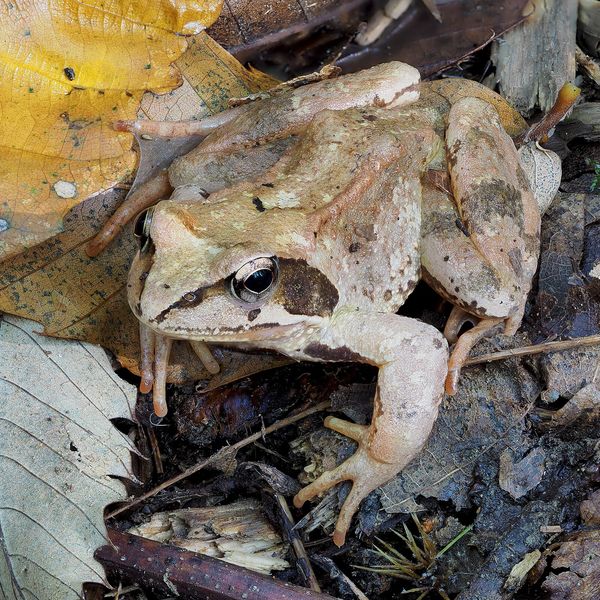
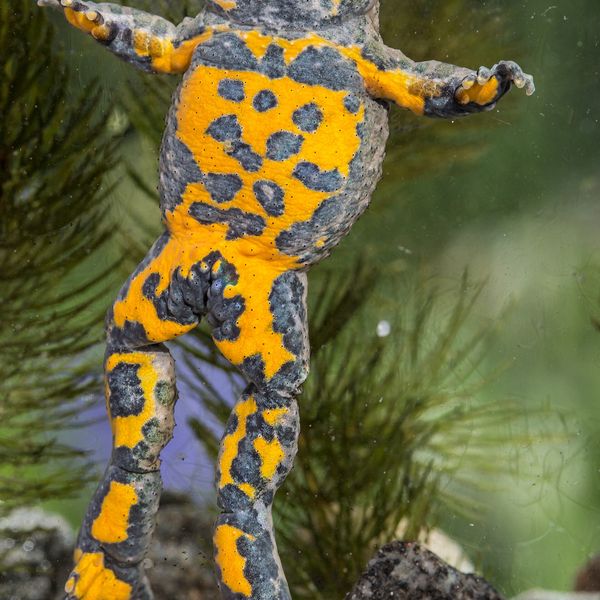
Where to meet it
Trails
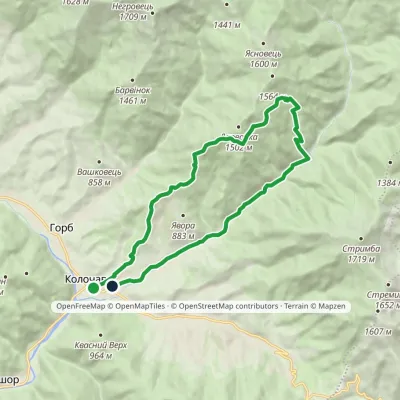 ModerateOne-dayMarkedKolochava village loopvia Mount DarvaikaElevation profile558–1 383 m18.5 kmascent 838 m≈ 6 h walking
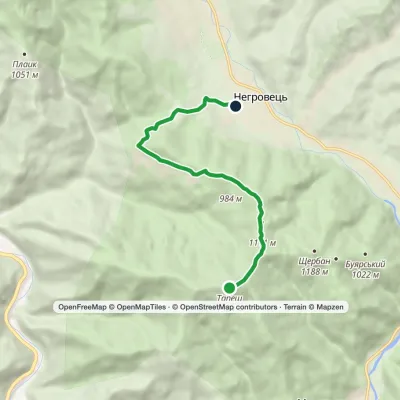 EasyOne-dayMarkedNehrovets Tapeshvia Kosiv VerkhElevation profile598–1 324 m7.6 kmascent 3 m≈ 2 h walking
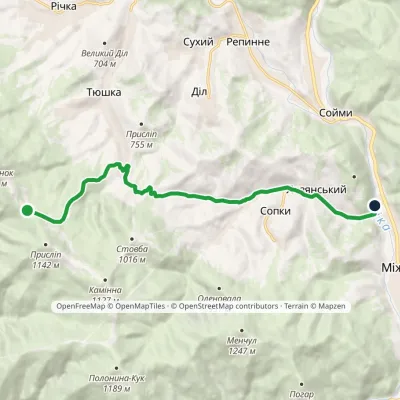 EasyOne-dayMarkedPryslip Pass Mount KlevaElevation profile443–941 m12.3 kmascent 66 m≈ 3 h walking
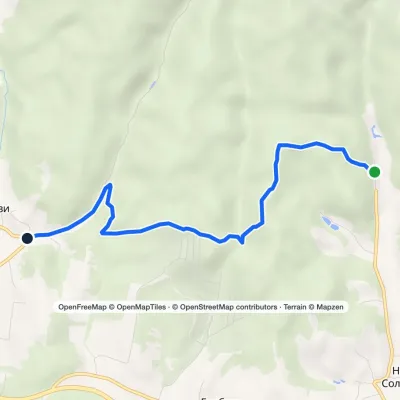 EasyOne-dayMarkedCarpathian Metro hiking routeElevation profile124–248 m5.4 kmascent 173 m≈ 1.5 h walking
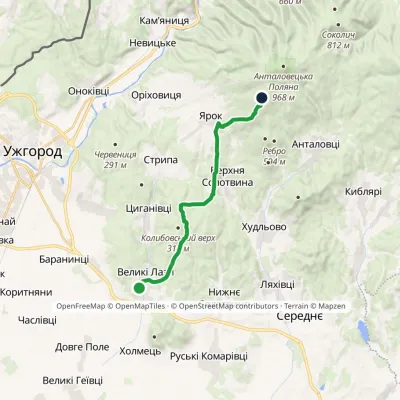 ModerateOne-dayMarkedPlotenia Trail: Velyki Lazy village Mount Dil YarotskyiElevation profile120–796 m16.3 kmascent 748 m≈ 5.5 h walking
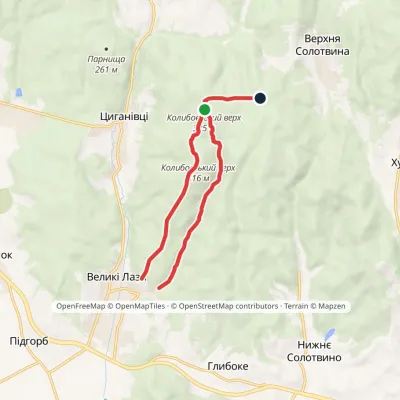 EasyOne-dayMarkedKolybovskyi Verkh loop trailElevation profile136–343 m10.4 kmascent 206 m≈ 3 h walking
Waters and waterfalls
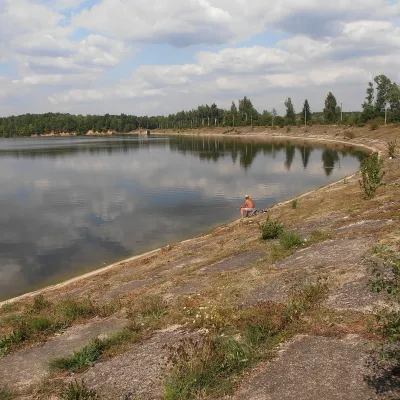 LakeChechva ReservoirRozhniativThe Chechva Reservoir, also called the Rozhniativ Reservoir, lies on the Chechva river near Rozhniativ in Ivano...
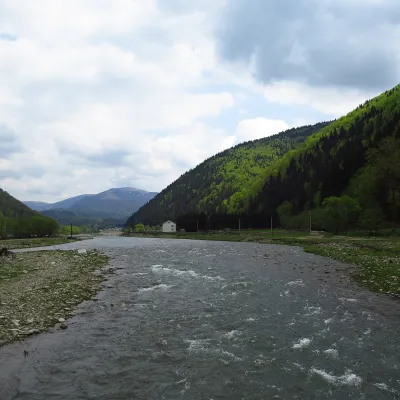 RiverTereblia RiverKolochavaThe Tereblia begins in the Inner Gorgany, where the Roztoka and Sloboda streams meet, and flows through Synevyrska...
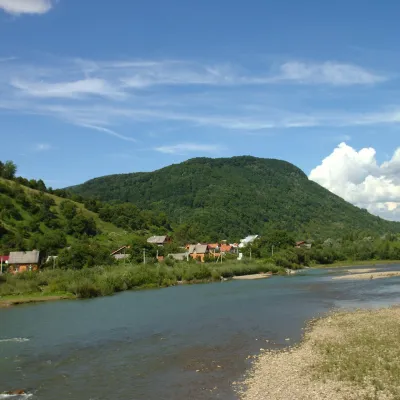 RiverRika RiverMizhhiriaThe Rika rises near the village of Torun on the south-western slopes of the Verkhovyna Range, where the Pryslip and...
Mountain ranges: Krasna Polonyna, Maramureș Mountains, Vihorlat-Gutin Volcanic Ridge. In other countries: 🇷🇴 Almăj and Locva Mountains, 🇷🇸 Đerdap and Miroč, 🇭🇺 Bükk
Trails and peaks near which naturalists recorded the species (GBIF, iNaturalist), matched by altitude and habitat. Sightings are not guaranteed.
Sources
- Вікіпедія: Жаба озерна
- Wikipedia (en): Marsh frog
- Директива Ради 92/43/ЄЕС про збереження природних оселищ (консолідований текст, додатки II, IV, V)
- iNaturalist: Pelophylax ridibundus (спостереження в Карпатах)
GBIF · iNaturalist · Wikidata · Distribution data: GBIF.org (CC0 and CC BY records), iNaturalist; names and identifiers: Wikidata (CC0). Text: Karpaty.rocks, checked 11.11.2026.
