Lesser butterfly-orchid
About
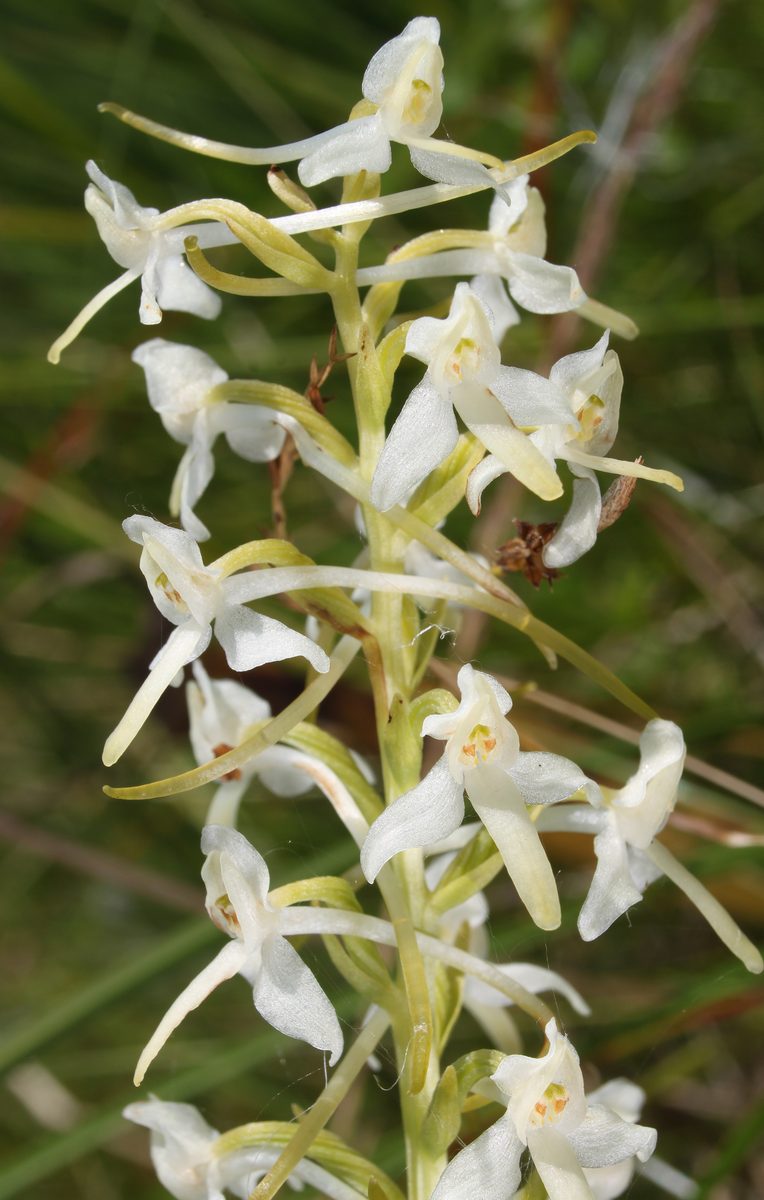
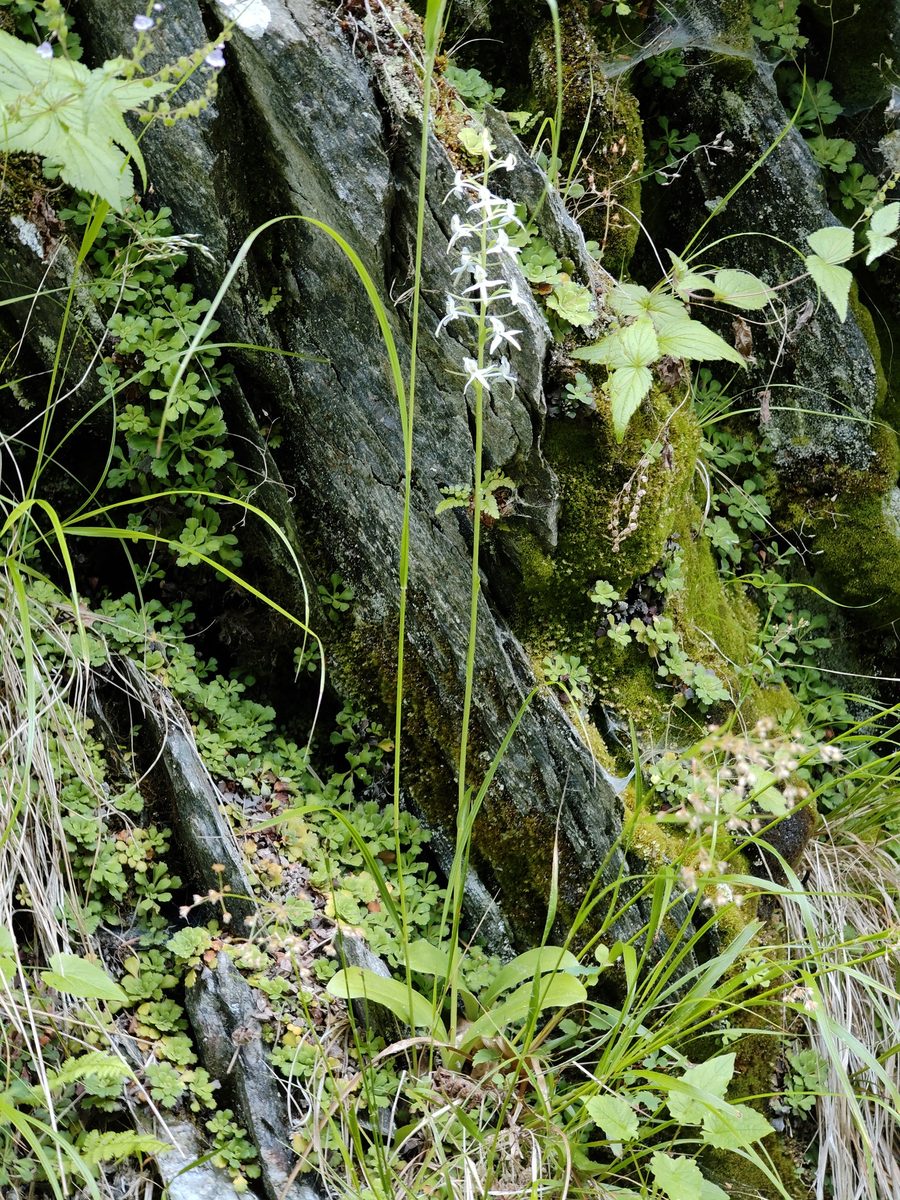
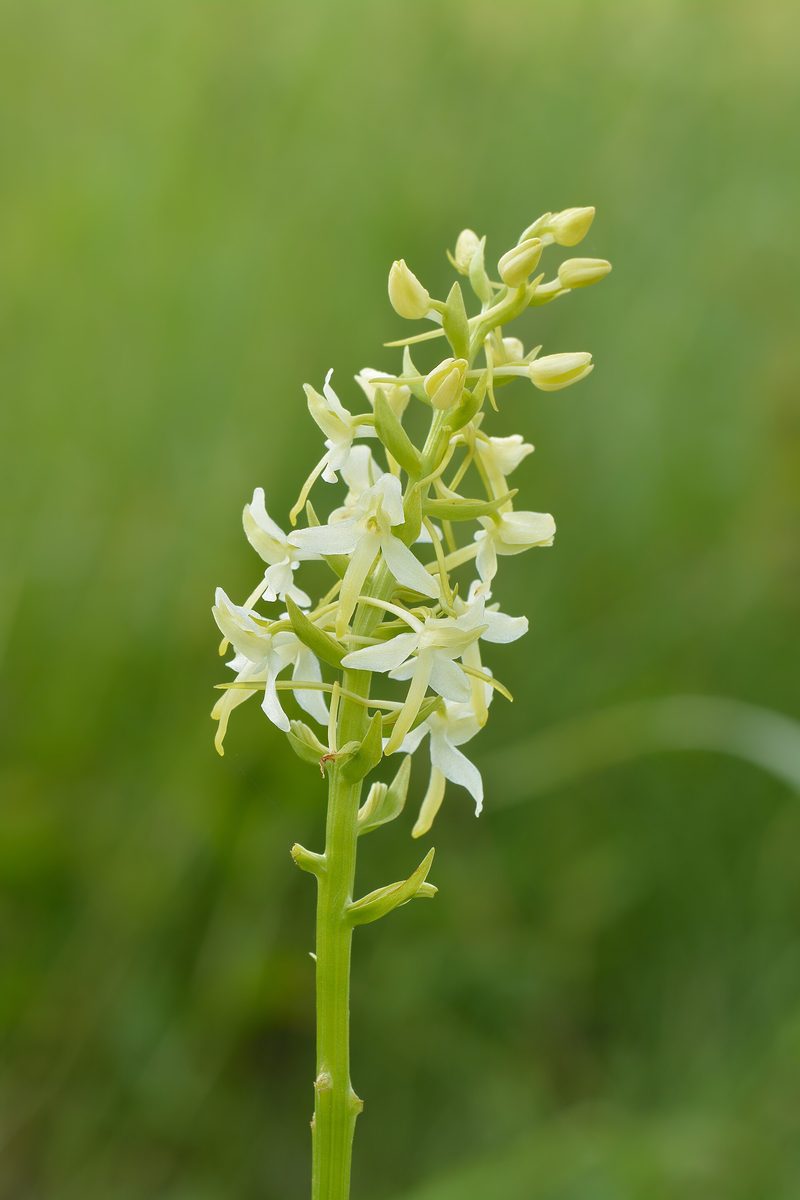
The Lesser butterfly-orchid is one of the most well-known orchids of our forests, commonly referred to as the 'night violet'. The plant grows 20–50 cm tall. At the base of the stem, there are two large oval shiny leaves, positioned almost opposite each other; higher up the stem, there are only a few small scales.
It blooms in June – July. The inflorescence is a loose spike with 10–25 white flowers. Each flower has a narrow tongue-like lip and a long thin spur 2–3 cm long, filled with nectar. During the day, the flowers have little fragrance, but in the evening and at night, they release a strong sweet aroma. This attracts night moths — hawk moths and owlets: only their long proboscis can reach the nectar at the bottom of the spur.
In the Carpathians, the orchid grows in light deciduous and mixed forests, on clearings, forest edges, meadows, and mountain pastures — from the foothills to the subalpine zone. It occurs singly or in small groups.
Like all orchids, it depends on soil fungi. The seeds are tiny, like dust, and do not germinate without the fungus, and it takes many years from germination to the first flowering. When transplanted to a garden, the plant usually dies.
The species is listed in the Red Book of Ukraine with the status of 'not evaluated'. Picking flowers and digging up tubers is prohibited. Due to collection for bouquets, the orchid has disappeared from many places, so we show its distribution only at the level of mountain ranges.
Where in the Carpathians

Orange — where naturalists recorded the species (GBIF, CC0/CC BY). It occurs only locally, so we draw no approximate range; a blank area does not mean it is absent. For rare and vulnerable species the map is deliberately coarse (hexagons of ~250 km² or more) so that it never points to dens, nests or growing sites.
- Countries
- Ukraine · Slovakia · Czechia · Poland · Romania · Hungary
- Mountain ranges
- Bieszczady. In other countries: 🇸🇰 Strážov Mountains, 🇸🇰 Greater Fatra, 🇸🇰 Slovak Ore Mountains, 🇸🇰 Lesser Fatra, 🇸🇰 Low Tatras, 🇨🇿 White Carpathians, 🇸🇰 Spiš Magura, 🇸🇰 Kysuce Beskids, 🇵🇱 Żywiec Beskids, 🇸🇰 Volovec Mountains, 🇵🇱 Low Beskids, 🇨🇿 Moravian-Silesian Beskids, 🇸🇰 Javorníky
- Altitude belts
- Foothills (below 600 m) · Beech forests (600–1200 m)
When to see it
| Jan | Feb | Mar | Apr | May | Jun | Jul | Aug | Sep | Oct | Nov | Dec | |
|---|---|---|---|---|---|---|---|---|---|---|---|---|
| Flowering |
From naturalists’ observations in the Carpathians (iNaturalist, research grade): the darker the cell, the more often the species is seen that month.
Protection and rules
Listed in the Red Book of Ukraine (not evaluated). Picking and digging up is prohibited. All orchids are included in CITES Appendix II.
Admire, don’t pick: plants listed in the Red Data Book of Ukraine — and any plants in nature reserves and strictly protected zones of national parks — must not be collected.
FAQ
Is it allowed to pick the night violet?
No. The Lesser butterfly-orchid is listed in the Red Book of Ukraine: picking flowers and digging up tubers is prohibited.
Why is the orchid called the night violet?
Its white flowers have the strongest fragrance in the evening and at night, attracting night pollinating moths. It is not related to true violets.
Comments
Travellers’ experience: reports, tips, questions.
No one has written here yet. Be the first — your experience helps others.
Similar species
Where to meet it
Ranges where it occurs: Bieszczady. In other countries: 🇸🇰 Strážov Mountains, 🇸🇰 Greater Fatra, 🇸🇰 Slovak Ore Mountains, 🇸🇰 Lesser Fatra, 🇸🇰 Low Tatras, 🇨🇿 White Carpathians, 🇸🇰 Spiš Magura, 🇸🇰 Kysuce Beskids, 🇵🇱 Żywiec Beskids, 🇸🇰 Volovec Mountains, 🇵🇱 Low Beskids, 🇨🇿 Moravian-Silesian Beskids, 🇸🇰 Javorníky
Trails and peaks near which naturalists recorded the species (GBIF, iNaturalist), matched by altitude and habitat. Sightings are not guaranteed.
Sources
- Вікіпедія: Любка дволиста
- Wikipedia (en): Platanthera bifolia
- Наказ Міндовкілля від 15.02.2021 № 111: Перелік видів рослин та грибів, що заносяться до Червоної книги України
- GBIF: список рослин і грибів Червоної книги України за наказом № 111 (з категоріями)
- CITES: додатки I, II і III (усі орхідні — у додатку II)
- iNaturalist: Platanthera bifolia (спостереження в Карпатах)
GBIF · iNaturalist · Wikidata · Distribution data: GBIF.org (CC0 and CC BY records), iNaturalist; names and identifiers: Wikidata (CC0). Text: Karpaty.rocks, checked 11.11.2026.
