European mantis
About
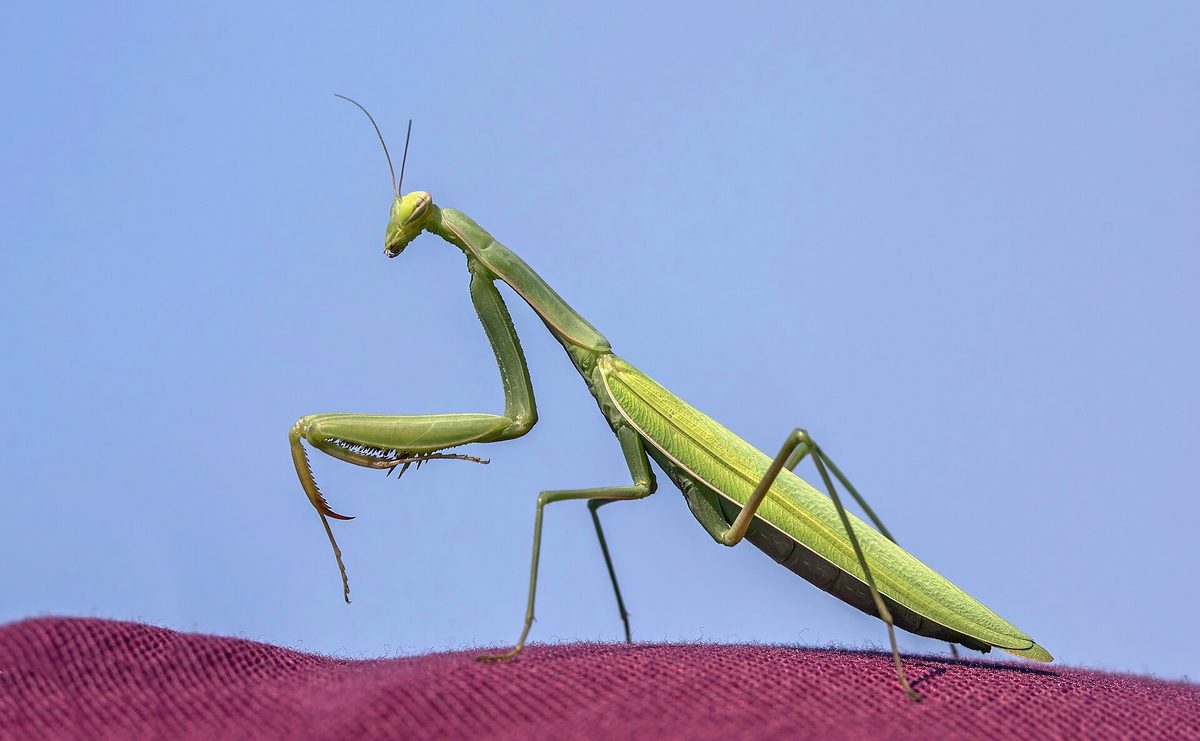
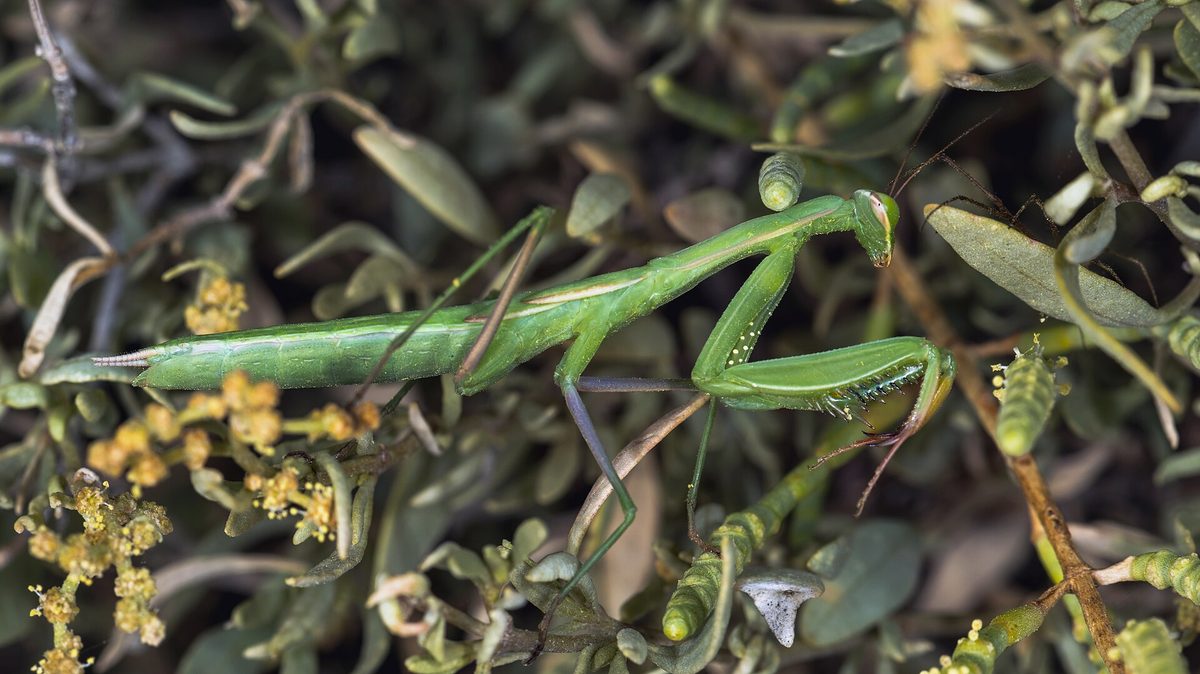
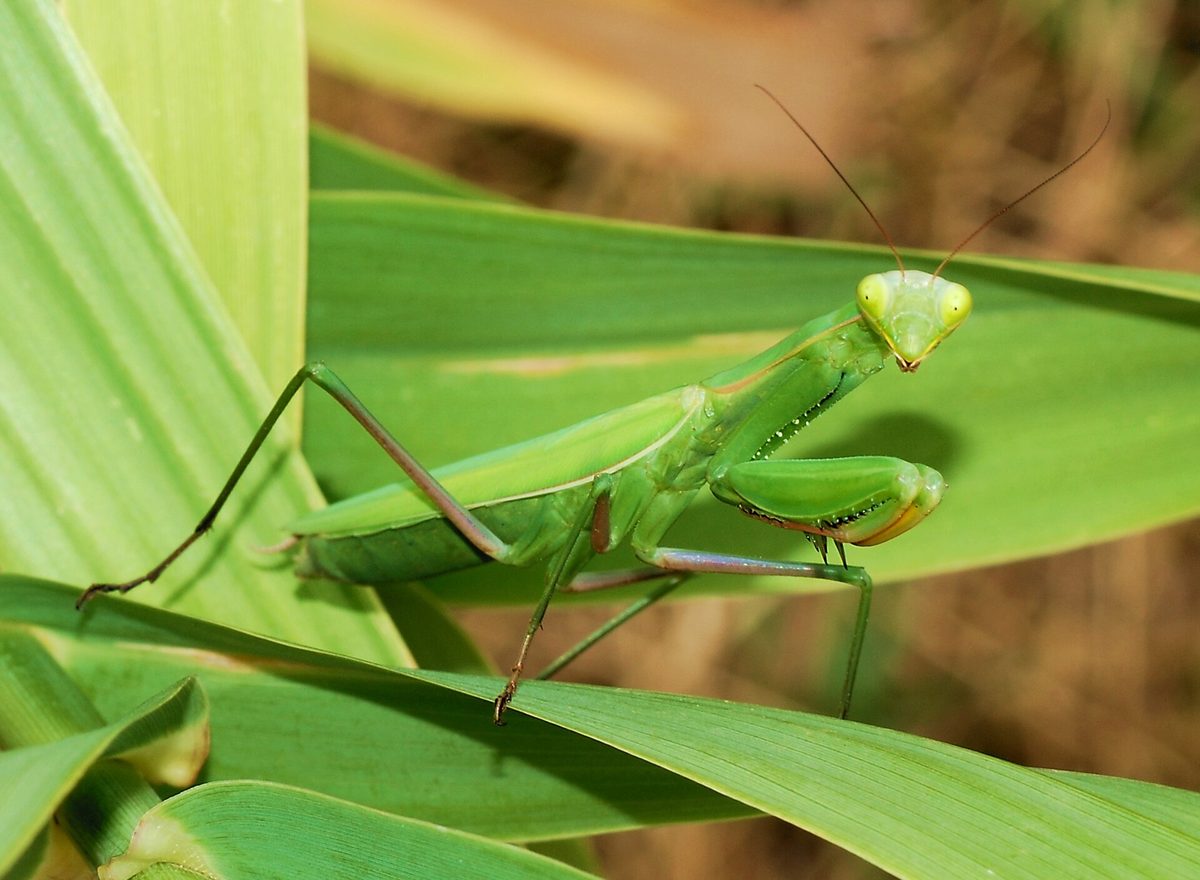
The European mantis is recognized by its posture: it holds its spiked front legs folded in front of itself, as if praying. In fact, these are grasping tools of an ambush predator. Females are large, reaching 8–9 cm in length, while males are smaller and slimmer. The coloration can be green, yellowish, or brown — matching the color of the grass in which the insect lives. A reliable sign of the species is a black spot, often with a white center, on the inner side of the front legs near their base.
The mantis is a thermophilic species. In the Carpathians, it inhabits the foothills, the Transcarpathian lowland, and warm valleys: dry meadows, pastures, slopes with shrubs, gardens, and vineyards. It is absent in high mountains and dense forests. In recent decades, the species has been spreading northward, and it is increasingly observed in new locations.
Adult insects can be seen from late July to October. The mantis waits motionless for hours, only turning its mobile triangular head, and swiftly catches flies, grasshoppers, butterflies, and bees. Sometimes, during or after mating, the female eats the male, but this does not happen always.
In autumn, the female lays eggs in a foamy capsule — an ootheca, which hardens on a stem, stone, or wall. Only the eggs survive the winter; the larvae emerge in May to June.
For humans, the mantis is completely safe: it is not poisonous and does not sting. Observe and photograph it without handling.
Where in the Carpathians

The map shows where naturalists recorded the species (GBIF, CC0 and CC BY records), not every place it lives. The Ukrainian Carpathians are less studied, so a blank area does not mean the species is absent.
- Countries
- Hungary · Slovakia · Romania · Czechia · Ukraine · Austria · Poland · Serbia
- Mountain ranges
- Börzsöny and Cserhát, Low Tatras, Mátra, Bükk, Moravian-Silesian Beskids, Zemplén Mountains, Trascău and Metaliferi Mountains, Harghita and Gurghiu Mountains, White Carpathians, Vihorlat-Gutin Volcanic Ridge
- Altitude belts
- Foothills (below 600 m)
When to see it
| Jan | Feb | Mar | Apr | May | Jun | Jul | Aug | Sep | Oct | Nov | Dec | |
|---|---|---|---|---|---|---|---|---|---|---|---|---|
| Sightings |
From naturalists’ observations in the Carpathians (iNaturalist, research grade): the darker the cell, the more often the species is seen that month.
Protection and rules
Not listed in the Red Data Book of Ukraine.
FAQ
Are there mantises in the Carpathians?
Yes, but in warm places: in the foothills, in the Transcarpathian lowland, in warm valleys. The mantis does not live high in the mountains.
Is the mantis dangerous to humans?
No. It is not poisonous, does not sting, and does not attack people.
Similar species
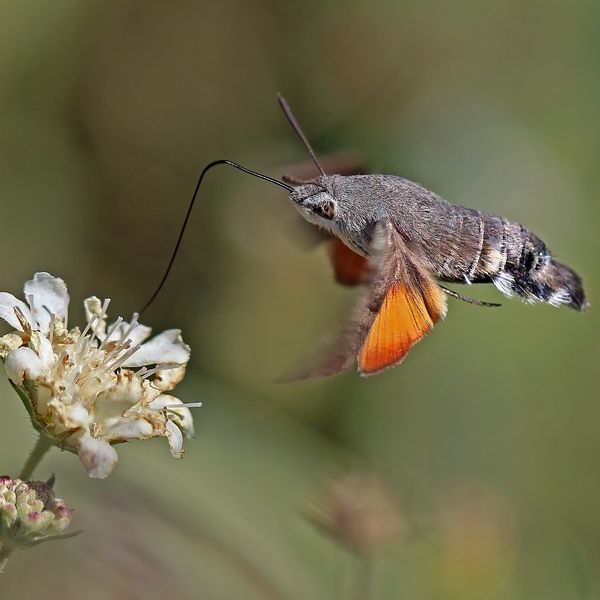
Where to meet it
Trails
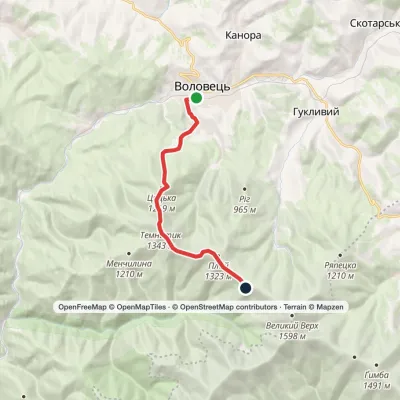 ModerateOne-dayVolovets Mount TemnatykElevation profile492–1 343 m9.8 kmascent 997 m≈ 4 h walking
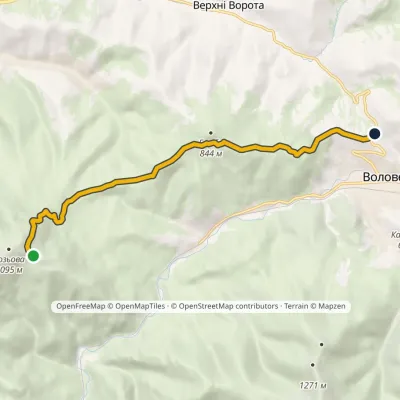 EasyOne-dayMarkedMount Bozova MenchulElevation profile611–1 011 m9 kmascent 207 m≈ 2.5 h walking
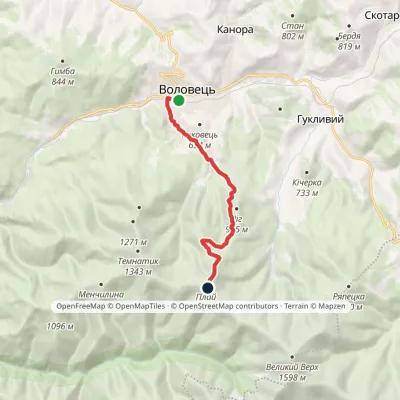 ModerateOne-dayVolovets Mount PlaiElevation profile487–1 332 m8.3 kmascent 839 m≈ 3.5 h walking
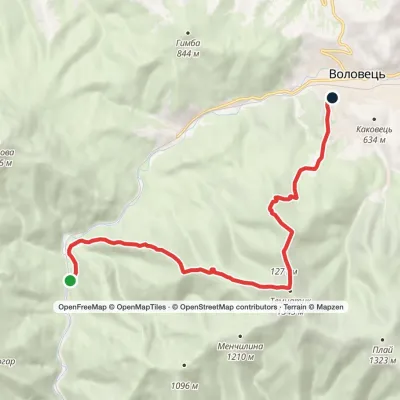 ModerateOne-dayMarkedZanka railway halt to Volovetsvia Mount Temnatyk, Mount TsytskaElevation profile409–1 343 m11.9 kmascent 934 m≈ 4.5 h walking
 ModerateOne-dayVolovets loopvia Mount BozevaElevation profile445–1 083 m17.1 kmascent 683 m≈ 5.5 h walking
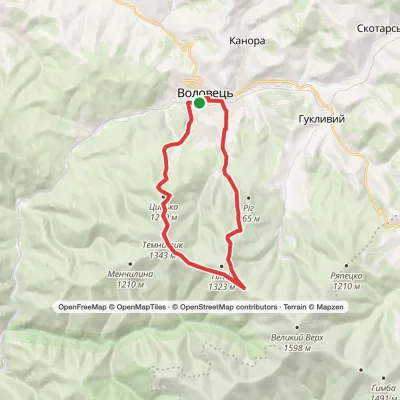 ModerateOne-dayVolovets loopvia Mount Plai, Mount TemnatykElevation profile483–1 343 m17.2 kmascent 1 102 m≈ 6 h walking
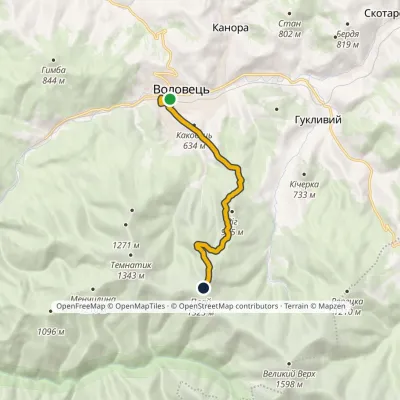 ModerateOne-dayMarkedVolovets Mount PlaiElevation profile487–1 331 m8.4 kmascent 849 m≈ 3.5 h walking
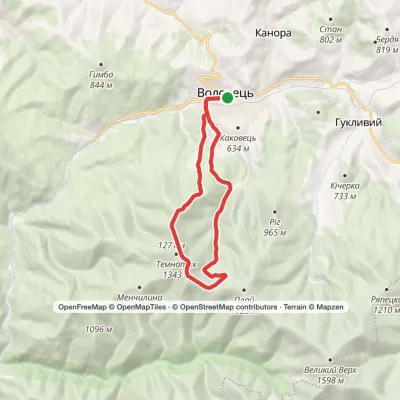 ModerateOne-dayVolovets loopvia Mount TsytskaElevation profile483–1 300 m14.8 kmascent 919 m≈ 5 h walking
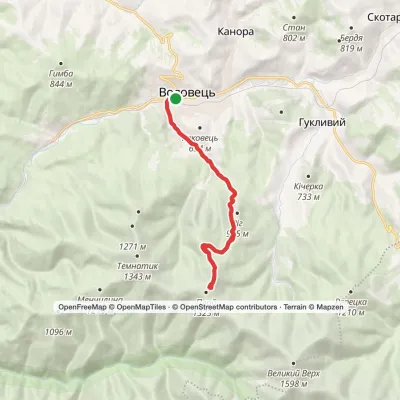 ModerateOne-dayVolovets loopvia Mount PlaiElevation profile484–1 332 m16.4 kmascent 845 m≈ 5.5 h walking
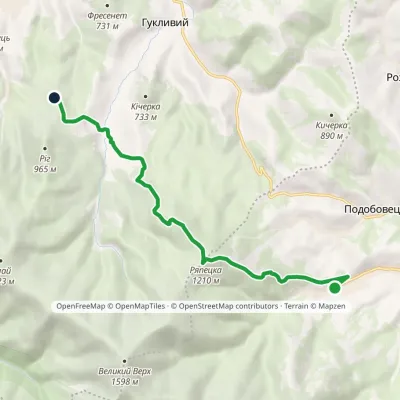 ModerateOne-dayMarkedZelenyi Pylypets VolovetsElevation profile645–1 210 m9.3 kmascent 616 m≈ 3.5 h walking
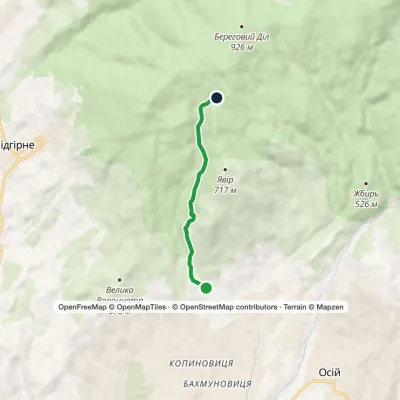 EasyOne-dayMarkedNovoselytsia Smerekovyi StoneElevation profile322–729 m4.3 km≈ 1 h walking
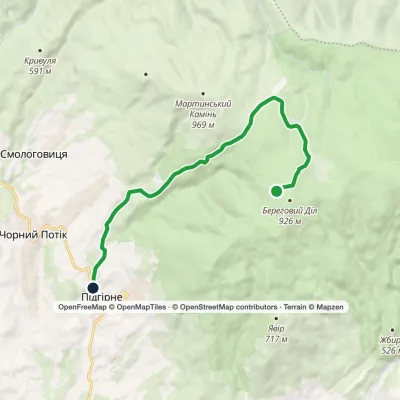 EasyOne-dayMarkedPidhirne Kupinkuvatevia Chorne BahnoElevation profile341–925 m10.8 kmascent 44 m≈ 3 h walking
Mountain ranges: Vihorlat-Gutin Volcanic Ridge. In other countries: 🇭🇺 Börzsöny and Cserhát, 🇸🇰 Low Tatras, 🇭🇺 Mátra, 🇭🇺 Bükk, 🇨🇿 Moravian-Silesian Beskids, 🇭🇺 Zemplén Mountains, 🇷🇴 Trascău and Metaliferi Mountains, 🇷🇴 Harghita and Gurghiu Mountains, 🇨🇿 White Carpathians, 🇸🇰 Slovak Ore Mountains, 🇸🇰 Kremnica Mountains, 🇷🇴 Buzău Mountains
Trails and peaks near which naturalists recorded the species (GBIF, iNaturalist), matched by altitude and habitat. Sightings are not guaranteed.
Sources
- Вікіпедія: Богомол звичайний
- Wikipedia (en): European mantis
- Наказ Міндовкілля від 19.01.2021 № 29: Перелік видів тварин, що заносяться до Червоної книги України
- iNaturalist: Mantis religiosa (спостереження в Карпатах)
GBIF · iNaturalist · Wikidata · Distribution data: GBIF.org (CC0 and CC BY records), iNaturalist; names and identifiers: Wikidata (CC0). Text: Karpaty.rocks, checked 11.11.2026.
