European bison
About
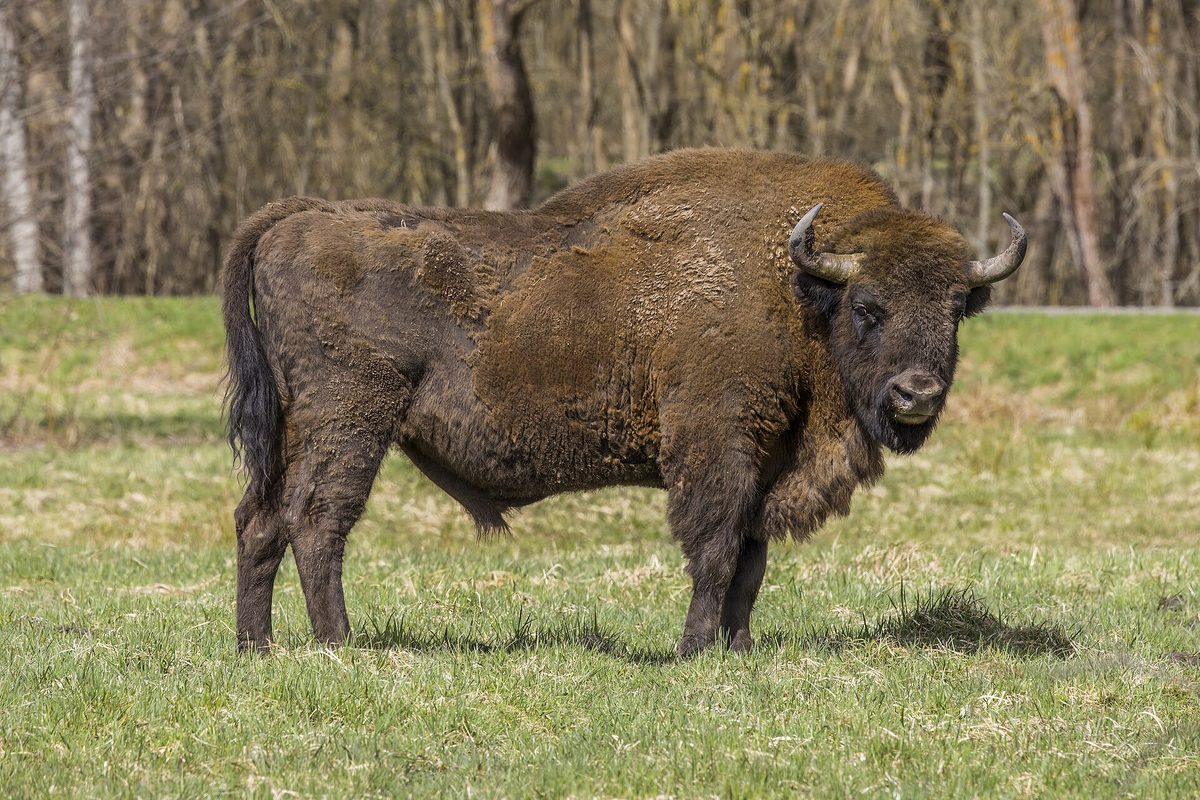
The European bison is the largest land mammal in Europe. At the beginning of the 20th century, it became extinct in the wild, and all modern European bison descend from a small number of animals that survived in zoos and animal parks. They were reintroduced to the Carpathians through breeding and release into the forests, and today, free herds exist in Ukraine, Poland, Slovakia, and Romania.
In Ukraine, the largest Carpathian group lives in the Skole Beskids National Nature Park in Lviv Oblast: in 2024, camera traps recorded about 50 bison there. In winter, the park supplements the herd with beets, corn, and grain. In the Polish Bieszczady, bison were reintroduced in 1963, and now it is one of the largest free herds in the country: according to the spring count in 2026, several hundred animals live there. In Slovakia, bison live freely in the Poloniny National Park, and in Romania — in the Călărași Mountains, in the Vânători-Neamț Natural Park, and on the Făgăraș Mountains.
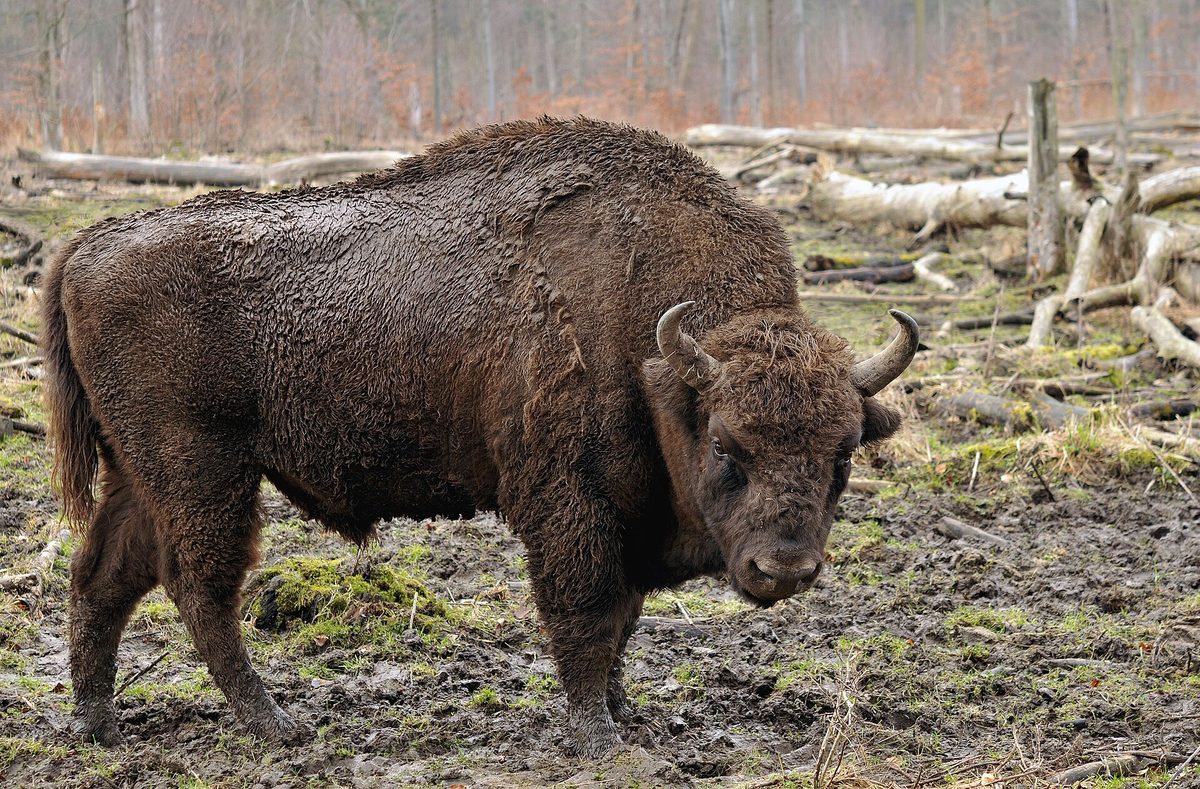
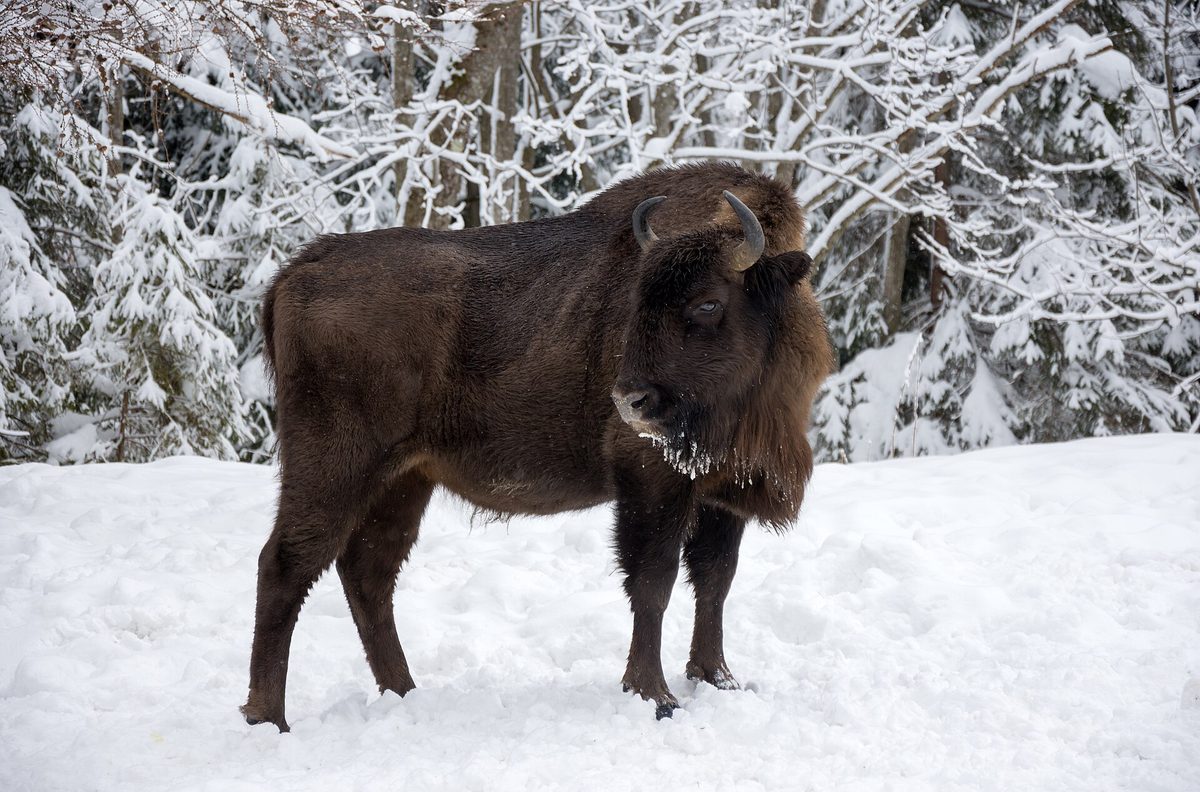
An adult male has a massive hump on its shoulders, a short beard, and small curved horns; females are noticeably smaller. Bison graze in small herds led by experienced females, while older males often keep separate. They feed on grass, leaves, shoots, and bark, and in winter — on branches and supplementary feed. In summer, herds move to forest clearings and meadows, and in bad weather, they take shelter in the forest.
The return of bison is important not only for the species itself. By grazing and browsing bushes, they keep clearings open, where more grasses and flowers grow, and more insects and birds live. Therefore, the bison is called the "engineer" of forest landscapes, and its return is one of the most successful conservation stories in Europe.
The chances of seeing bison in the wild are low: herds roam large forest areas, and the exact places where they graze are not disclosed by the parks to avoid disturbing the animals. It is best to arrange a tour with the national park administration or to see bison in demonstration enclosures. The bison is listed in the Red Book of Ukraine with the status of "extinct in the wild": formally, free herds are considered restored from captivity. Hunting bison is prohibited. In 2020, the IUCN changed the species status from "vulnerable" to "near threatened" (NT) due to population recovery, particularly in Romania.
short': [['size', 'The largest land animal in Europe'], ['belt', 'Beech and mixed forests, clearings'], ['habitat', 'Skole Beskids, Bieszczady, Poloniny, Călărași'], ['life', 'Grazes in small herds']],
safety': 'The bison is calm, but it is a very strong animal. Never approach a herd, especially females with calves, do not feed bison, and keep your dog on a leash. Observe from a distance and move away if the animal becomes alert.',
uses': '',
lookalikes': [],
protection_note': 'Hunting bison is prohibited: the species is listed in the Red Book of Ukraine (category "extinct in the wild"). In the EU — Annex II (priority species) and IV of the Habitats Directive.',
faq': [{'q': 'Where do bison live in the Ukrainian Carpathians?', 'a': 'The largest herd is in the Skole Beskids National Nature Park in Lviv Oblast: in 2024, about 50 animals were recorded there. The exact places where bison graze are not disclosed.'}, {'q': 'Is the bison listed in the Red Book of Ukraine?', 'a': 'Yes, with the status of "extinct in the wild". Hunting bison is prohibited.'}, {'q': 'Where else in the Carpathians are there free bison?', 'a': 'In the Polish Bieszczady, in the Slovak Poloniny National Park, and in Romania — in the Călărași Mountains, Vânători-Neamț Natural Park, and on the Făgăraș Mountains.'}]}
Where in the Carpathians

The map shows where naturalists recorded the species (GBIF, CC0 and CC BY records), not every place it lives. The Ukrainian Carpathians are less studied, so a blank area does not mean the species is absent. For rare and vulnerable species the map is deliberately coarse (hexagons of ~250 km² or more) so that it never points to dens, nests or growing sites.
- Countries
- Ukraine · Poland
- Mountain ranges
- Pokuttia-Bukovina Carpathians, Bieszczady
- Altitude belts
- Foothills (below 600 m) · Beech forests (600–1200 m)
When to see it
| Jan | Feb | Mar | Apr | May | Jun | Jul | Aug | Sep | Oct | Nov | Dec | |
|---|---|---|---|---|---|---|---|---|---|---|---|---|
| Sightings |
From naturalists’ observations in the Carpathians (iNaturalist, research grade): the darker the cell, the more often the species is seen that month.
Protection and rules
Similar species
Where to meet it
Ranges where it occurs: Pokuttia-Bukovina Carpathians, Bieszczady
Trails and peaks near which naturalists recorded the species (GBIF, iNaturalist), matched by altitude and habitat. Sightings are not guaranteed.
Sources
- Вікіпедія: Зубр
- Wikipedia (en): European bison
- Українська правда. Життя: як живе найбільше стадо зубрів у Карпатах (НПП «Сколівські Бескиди»)
- Львівська ОДА: підгодівля зубрів у НПП «Сколівські Бескиди»
- National Geographic Polska: bieszczadzkie żubry — wyniki marcowego spisu
- PAP: 60 lat od powrotu żubra w Bieszczady
- Romania Insider: European bison no longer listed as vulnerable
- Rewilding Europe: free-roaming bison in the Southern Carpathians
- Wikipedia (en): Poloniny National Park
- Перелік видів тварин, що заносяться до Червоної книги України (наказ Міндовкілля від 19.01.2021 № 29, зареєстровано в Мін'юсті 01.03.2021 за № 260/35882)
- Міндовкілля: текст переліку видів тварин Червоної книги України (PDF)
- GBIF: таксон і категорія МСОП
- Директива Ради 92/43/ЄЕС про збереження природних оселищ (консолідована редакція)
GBIF · iNaturalist · Wikidata · Distribution data: GBIF.org (CC0 and CC BY records), iNaturalist; names and identifiers: Wikidata (CC0). Text: Karpaty.rocks, checked 09.11.2026.
