Eurasian eagle-owl
About
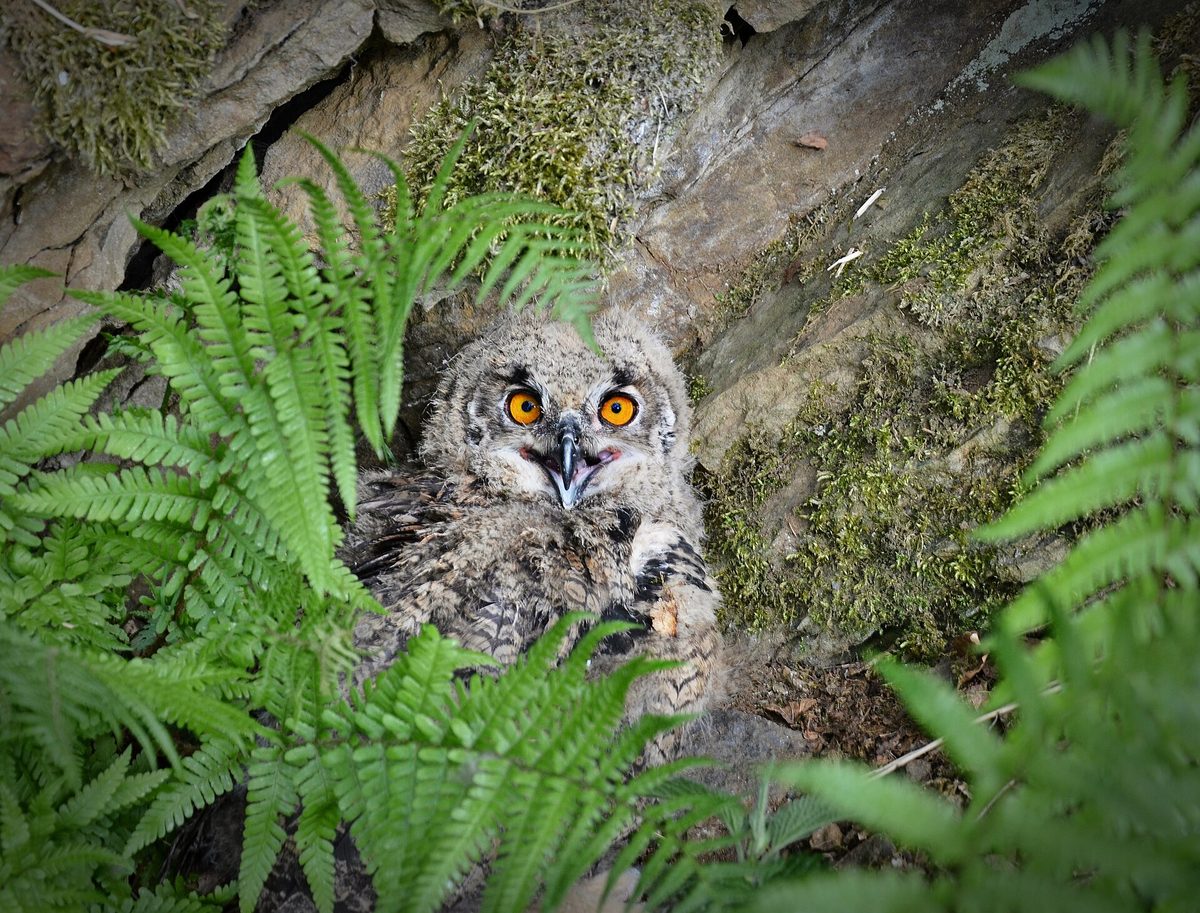
The Eurasian eagle-owl is the largest owl in Europe and one of the most powerful nocturnal predators of the Carpathians. It lives in all Carpathian countries, but is rare everywhere. The Eurasian eagle-owl needs cliffs, steep slopes, rocky quarries, river valley slopes, or old forests where it can hide during the day and build a nest, with open areas nearby for hunting.
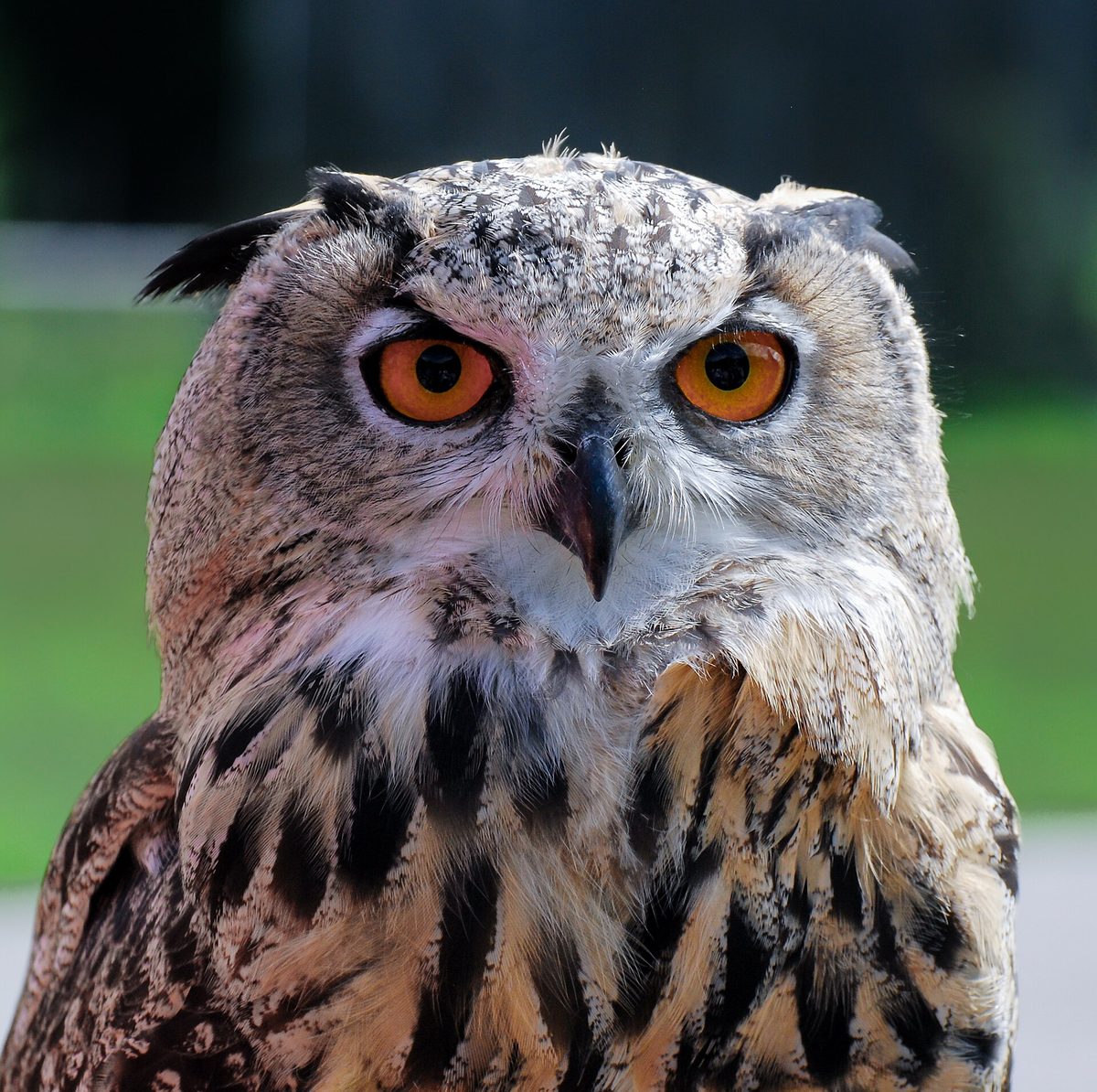
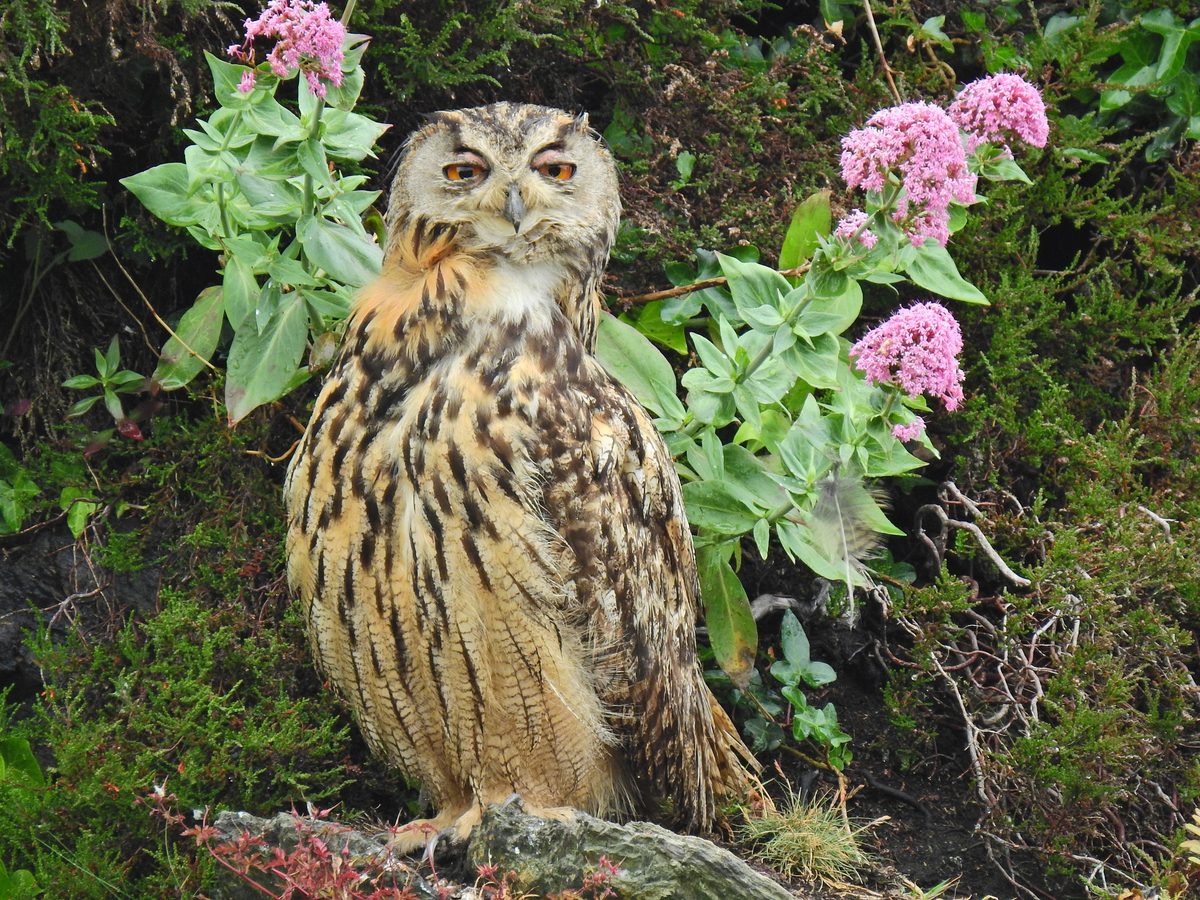
The wingspan of an adult Eurasian eagle-owl can reach up to 1.8 m, with females being larger than males. The plumage is reddish-brown, densely covered with dark streaks, and it has long feathered 'ears' on its head, with large, bright orange eyes. Its call is a deep, low 'hoo-hoo' that can be heard on quiet nights at the end of winter and in spring when the Eurasian eagle-owls form pairs.
The Eurasian eagle-owl nests on a cliff ledge, in a niche, under the roots of a tree on a cliff, or in an old nest of a large bird. The female lays eggs early, from late winter to spring, and incubates them for over a month, while the chicks stay with their parents until autumn.
The Eurasian eagle-owl hunts at dusk and at night for rodents, hedgehogs, hares, birds up to ducks and crows. It occupies the top of the food chain and helps control the population of rodents.
The Eurasian eagle-owl is listed in the Red Data Book of Ukraine as a rare species, and in the EU, it is included in Annex I of the Birds Directive. It is very sensitive to disturbance near the nest, so the cliffs where Eurasian eagle-owls live are not indicated anywhere. Climbers and photographers should avoid cliffs showing signs of nesting—such as droppings and feathers—from February to June.
Where in the Carpathians

The map shows where naturalists recorded the species (GBIF, CC0 and CC BY records), not every place it lives. The Ukrainian Carpathians are less studied, so a blank area does not mean the species is absent. For rare and vulnerable species the map is deliberately coarse (hexagons of ~250 km² or more) so that it never points to dens, nests or growing sites.
- Countries
- Slovakia · Czechia · Hungary · Ukraine · Austria · Romania
- Mountain ranges
- Zemplén Mountains, Volovec Mountains, Gorgany, Strážov Mountains, Little Carpathians, Slovak Ore Mountains, Pokuttia-Bukovina Carpathians, Vihorlat Mountains, Chornohora, Maramureș Mountains
- Altitude belts
- Foothills (below 600 m) · Beech forests (600–1200 m)
When to see it
| Jan | Feb | Mar | Apr | May | Jun | Jul | Aug | Sep | Oct | Nov | Dec | |
|---|---|---|---|---|---|---|---|---|---|---|---|---|
| Sightings |
From naturalists’ observations in the Carpathians (iNaturalist, research grade): the darker the cell, the more often the species is seen that month.
Protection and rules
A species in the Red Data Book of Ukraine. Do not disturb cliffs where Eurasian eagle-owls nest.
FAQ
Do Eurasian eagle-owls live in the Carpathians?
Yes, the Eurasian eagle-owl lives in all Carpathian countries, but is rare. It needs cliffs, steep slopes, or old forests, with open areas nearby for hunting.
What is the largest owl in the Carpathians?
The Eurasian eagle-owl is the largest owl in Europe: wingspan up to 1.8 m. It is a rare species in the Red Data Book of Ukraine.
Similar species
Sources
- Вікіпедія: Пугач
- Wikipedia (en): Eurasian eagle-owl
- Перелік видів тварин, що заносяться до Червоної книги України (наказ Міндовкілля від 19.01.2021 № 29, зареєстровано в Мін'юсті 01.03.2021 за № 260/35882)
- Міндовкілля: текст переліку видів тварин Червоної книги України (PDF)
- GBIF: таксон і категорія МСОП
- Директива 2009/147/ЄС про збереження диких птахів
GBIF · iNaturalist · Wikidata · Distribution data: GBIF.org (CC0 and CC BY records), iNaturalist; names and identifiers: Wikidata (CC0). Text: Karpaty.rocks, checked 09.11.2026.
