Dice snake
About
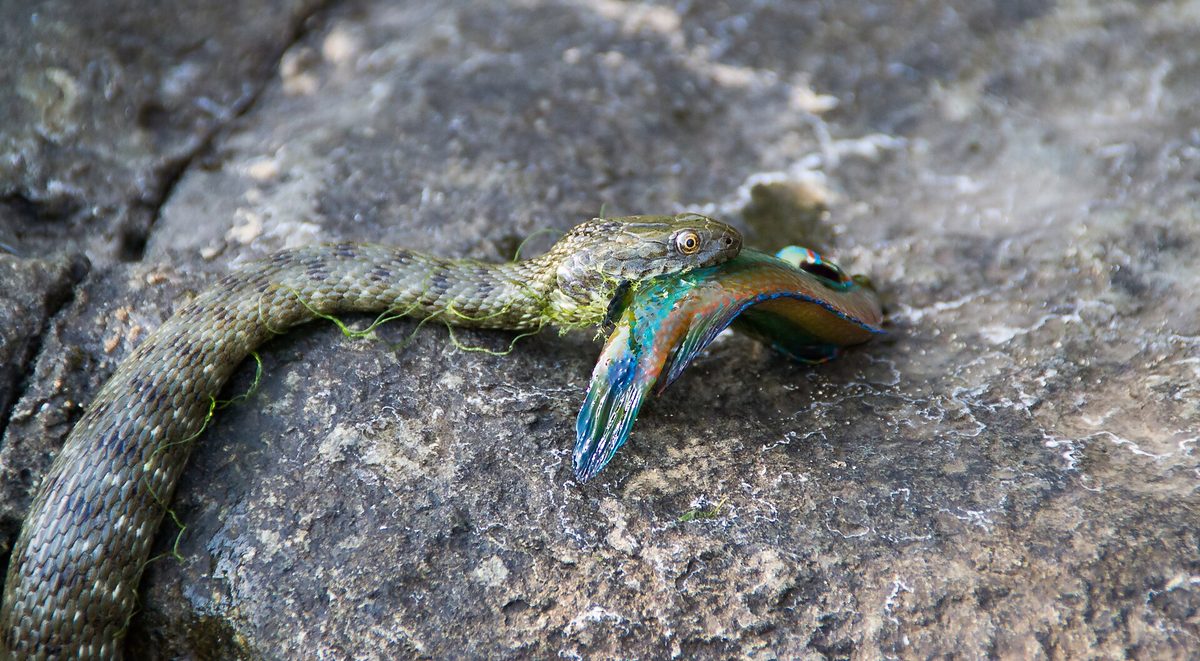
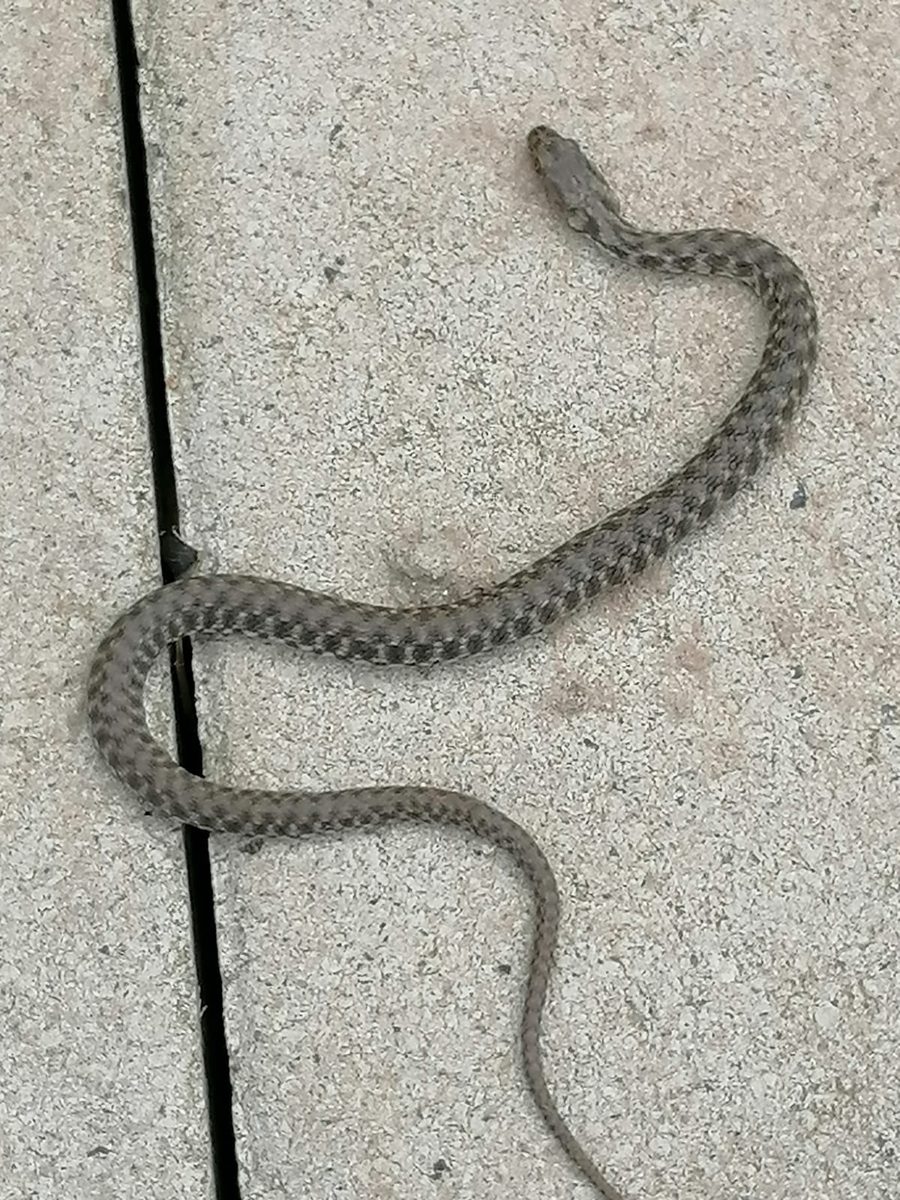
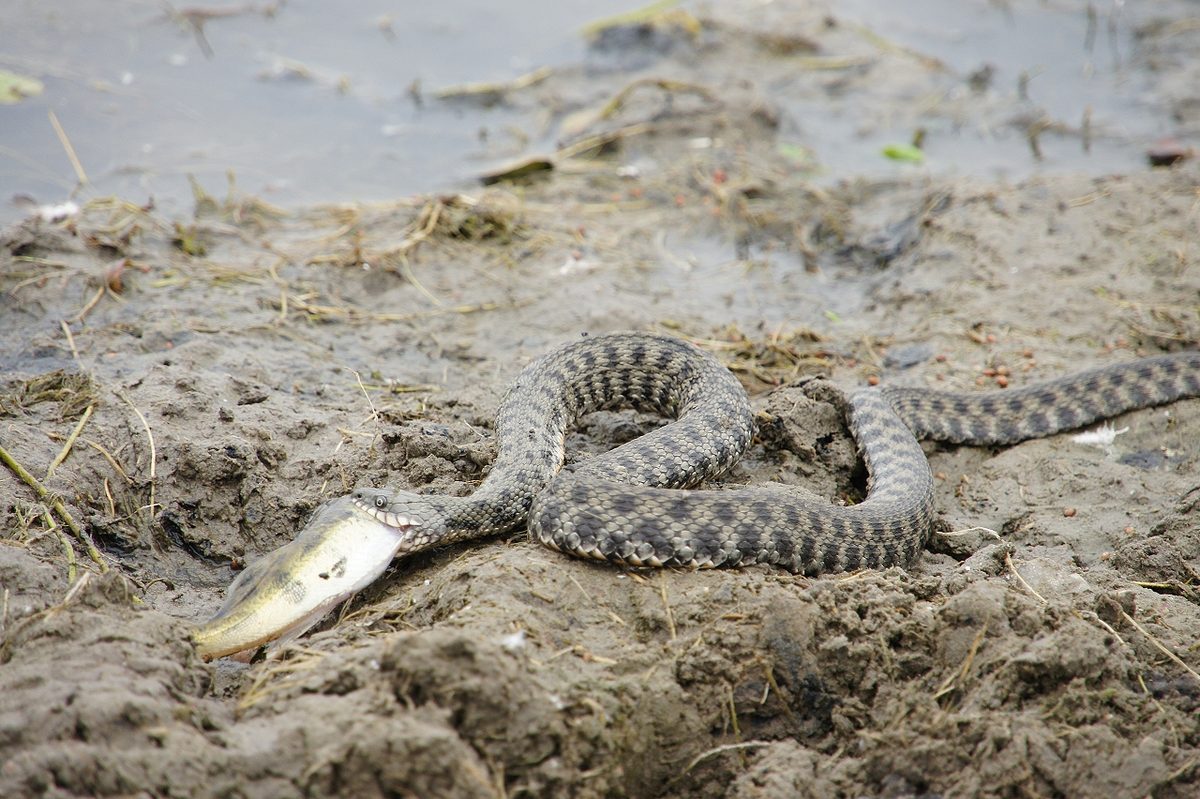
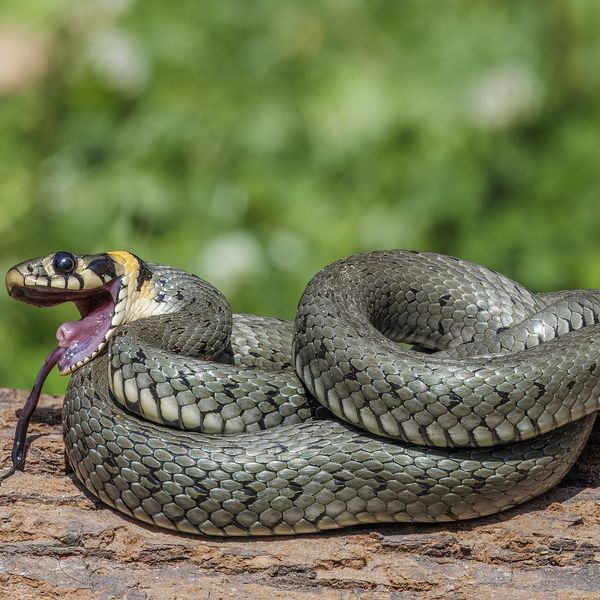
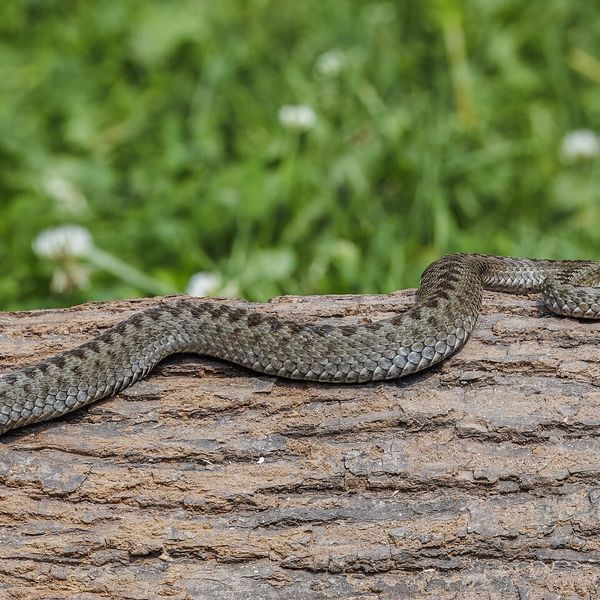
The Dice snake is usually up to one meter long, with females being larger than males. Its coloration is olive, gray-green, or brown with dark spots arranged in a checkered pattern. The belly is yellowish or orange with black rectangular spots. The head is narrow and pointed, with a round pupil. Unlike the common snake, it does not have yellow or orange spots on the sides of its head.
Because of this, the Dice snake is often considered a viper, and the folk term 'checkered viper' mostly refers to it. In reality, the snake is non-venomous and safe for humans. The common viper has a zigzag stripe along its back, a vertical pupil, and a short, thick body, and is not tied to water.
The Dice snake spends almost its entire life near and in water: it swims and dives excellently and primarily feeds on fish, occasionally frogs and tadpoles. It usually carries caught fish to the shore and swallows them there.
In the Carpathian region, this species inhabits warm valleys: it is found along rivers, backwaters, ponds, and reservoirs of the Transcarpathian lowland, foothills, and the Dniester valley. It does not enter cold mountain streams or high altitudes. It basks on coastal stones, dams, and concrete slabs.
When disturbed, the snake escapes into the water. If caught, it hisses, releases a liquid with a sharp smell, sometimes plays dead, but almost never bites. The species is protected in the EU (Annex IV of the Habitats Directive). Killing snakes is prohibited — it is better to simply walk around.
Where in the Carpathians

Orange — where naturalists recorded the species (GBIF, CC0/CC BY). It occurs only locally, so we draw no approximate range; a blank area does not mean it is absent.
- Countries
- Ukraine · Austria · Romania · Slovakia · Hungary
- Mountain ranges
- Krasna Polonyna, Watershed Ridge, Rivna Polonyna, Vihorlat-Gutin Volcanic Ridge. In other countries: 🇷🇴 Almăj and Locva Mountains, 🇷🇸 Đerdap and Miroč, 🇷🇴 Codru-Moma and Zarand, 🇸🇰 Slovak Ore Mountains
- Altitude belts
- Foothills (below 600 m)
When to see it
| Jan | Feb | Mar | Apr | May | Jun | Jul | Aug | Sep | Oct | Nov | Dec | |
|---|---|---|---|---|---|---|---|---|---|---|---|---|
| Sightings |
From naturalists’ observations in the Carpathians (iNaturalist, research grade): the darker the cell, the more often the species is seen that month.
Safety
Non-venomous and safe for humans. If unsure whether it is a snake or a viper, do not touch the snake and walk around it. After a bite from any snake with swelling and pain, call 103 (or 112).
Look-alikes — how to tell them apart
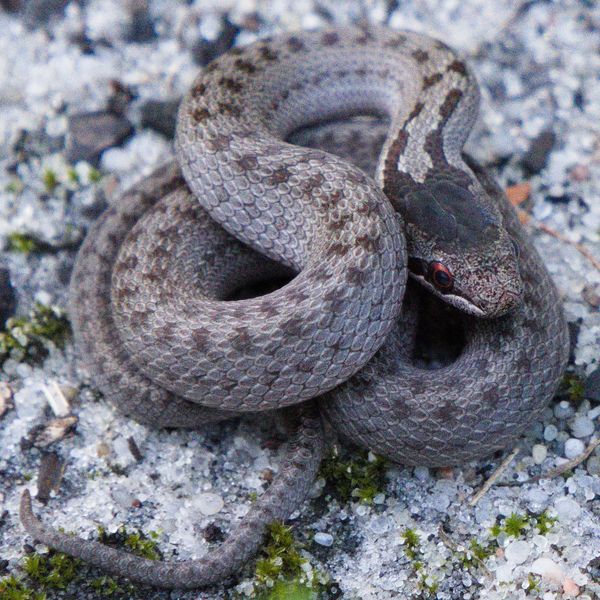
Has a dark zigzag stripe along the back, vertical pupil, short and thick body, short tail; not tied to water, lives in clearings, cuts, and polonynas.
Protection and rules
Not listed in the Red Book of Ukraine. Species of Annex IV of the EU Habitats Directive.
FAQ
Is the Dice snake venomous?
No. The Dice snake is non-venomous and safe for humans, although its dark spotted coloration often leads to it being mistaken for a viper.
How to distinguish the Dice snake from a viper?
The Dice snake has a round pupil, a checkered pattern of spots, and a long slender body; it is found near water. The viper has a zigzag along its back and a vertical pupil.
Is the Dice snake found in the mountains?
It is not found high in the mountains. It lives in warm valleys — in the Transcarpathian lowland, in the foothills, along the Dniester.
Comments
Travellers’ experience: reports, tips, questions.
No one has written here yet. Be the first — your experience helps others.
Similar species
Where to meet it
Mountain ranges: Krasna Polonyna, Watershed Ridge, Rivna Polonyna, Vihorlat-Gutin Volcanic Ridge. In other countries: 🇷🇴 Almăj and Locva Mountains, 🇷🇸 Đerdap and Miroč, 🇷🇴 Codru-Moma and Zarand, 🇸🇰 Slovak Ore Mountains
Trails and peaks near which naturalists recorded the species (GBIF, iNaturalist), matched by altitude and habitat. Sightings are not guaranteed.
Sources
- Вікіпедія: Вуж водяний
- Wikipedia (en): Dice snake
- Директива Ради 92/43/ЄЕС про збереження природних оселищ (консолідований текст, додатки II, IV, V)
- Наказ Міндовкілля від 19.01.2021 № 29: Перелік видів тварин, що заносяться до Червоної книги України
- iNaturalist: Natrix tessellata (спостереження в Карпатах)
GBIF · iNaturalist · Wikidata · Distribution data: GBIF.org (CC0 and CC BY records), iNaturalist; names and identifiers: Wikidata (CC0). Text: Karpaty.rocks, checked 11.11.2026.
