Făgăraș Fortress: princely castle and regional museum
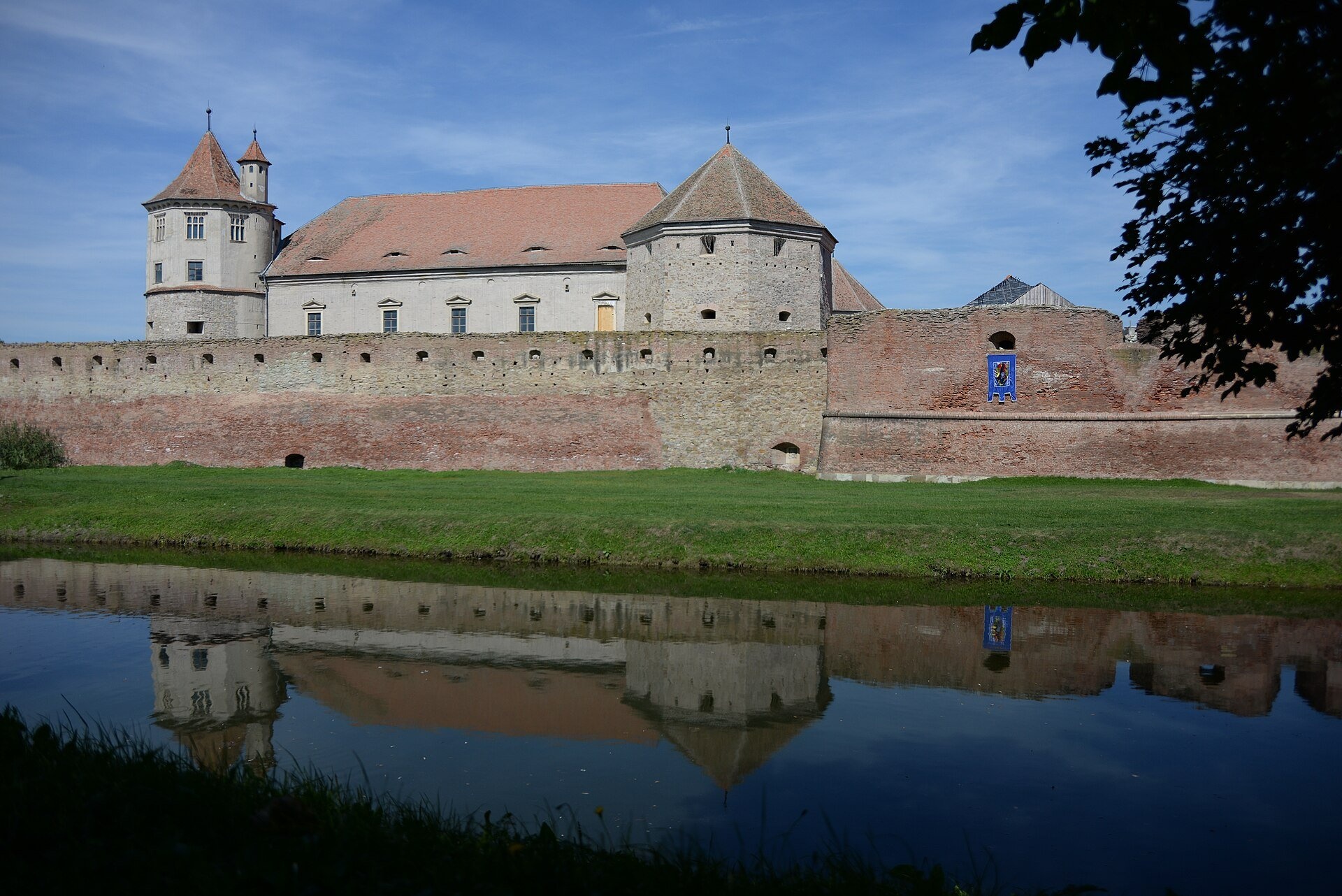
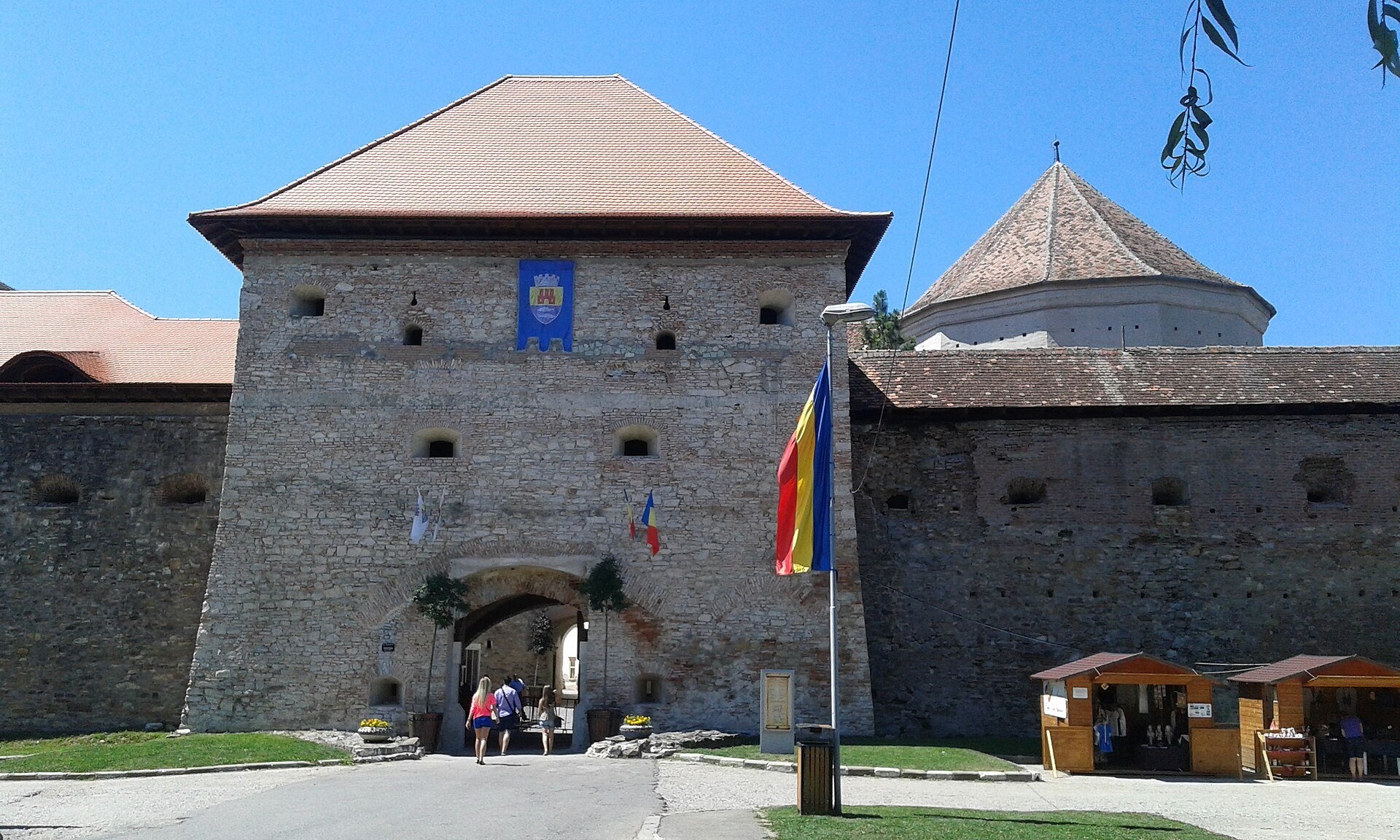
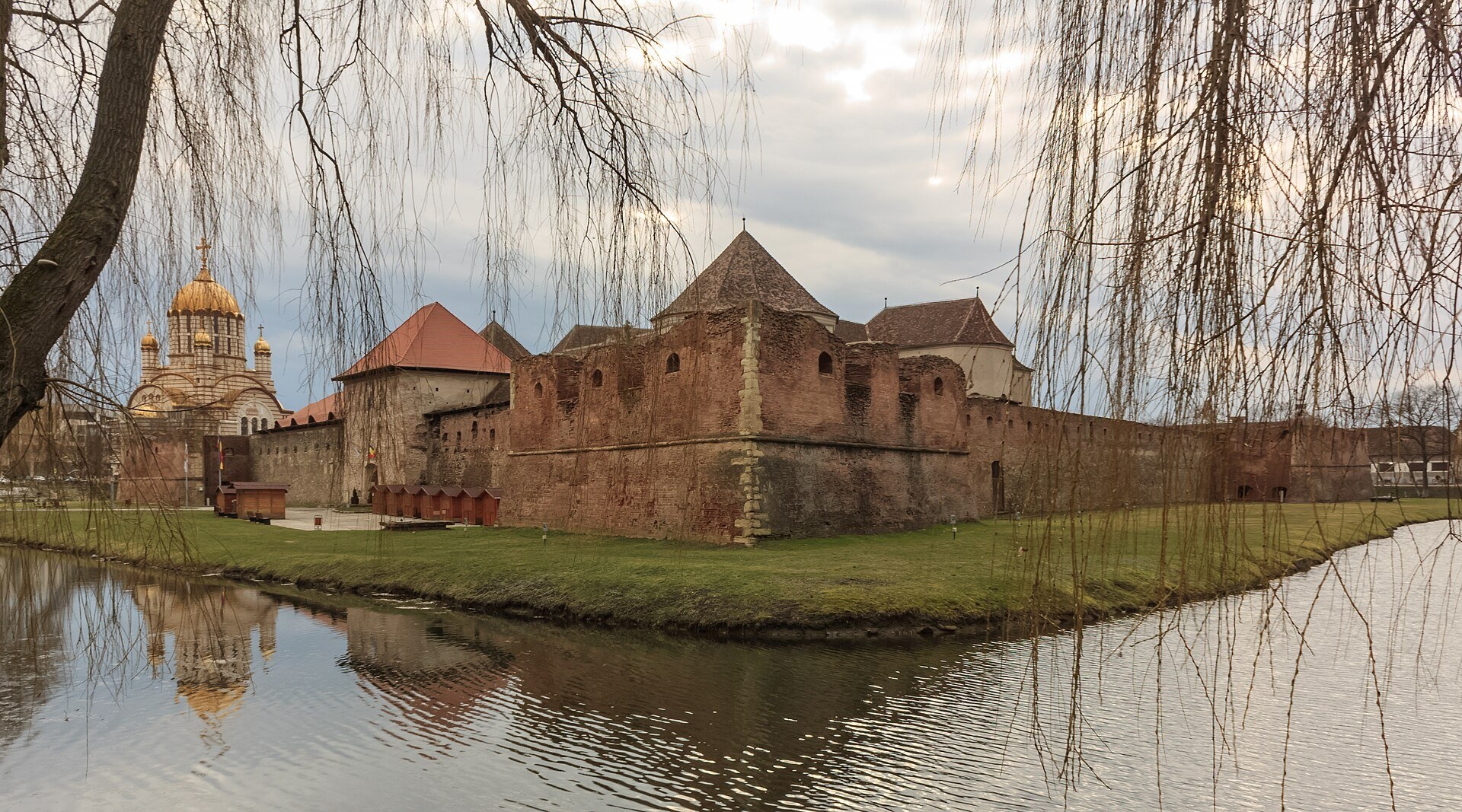
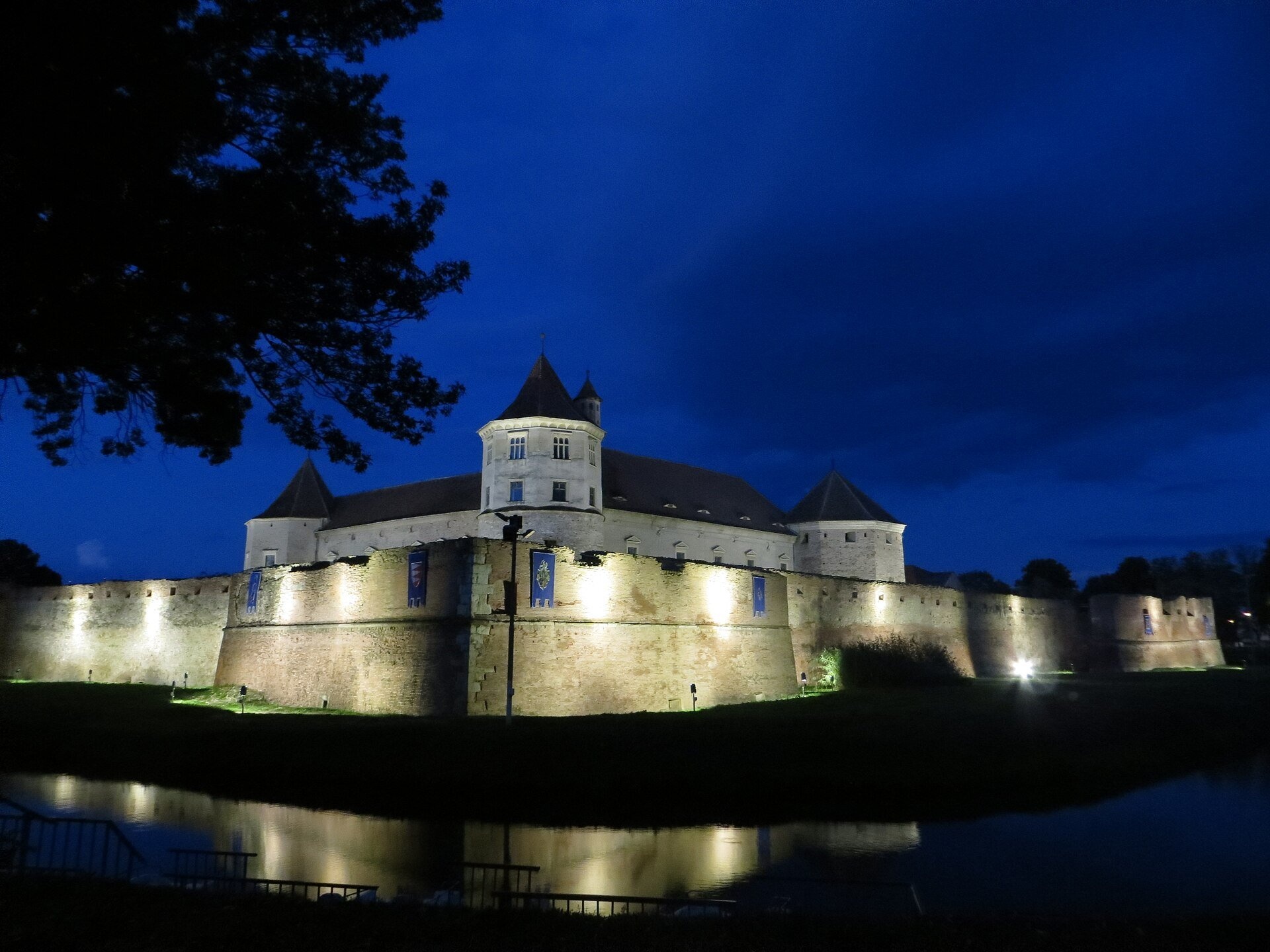
Făgăraș Fortress (Cetatea Făgărașului; German Fogarascher Burg, Hungarian Fogarasi vár) stands in the very centre of the town of Făgăraș, halfway between Brașov and Sibiu. A massive brick castle with corner towers, surrounded by bastions and a wide water-filled moat, it is one of the best-preserved fortresses in Transylvania. Today it houses the Valer Literat Museum of the Făgăraș Land (Muzeul Țării Făgărașului „Valer Literat”).
From frontier stronghold to princely residence
Archaeologists found traces of a wooden fortification with an earth rampart here, destroyed around the middle of the 13th century, probably during the Mongol invasion. The stone fortress is first mentioned in documents in 1455, and the following year John Hunyadi referred to it. The fortress lay on the route between Brașov and Sibiu near the border with Wallachia, which made it strategically important. In the 1530s Voivode Ștefan Mailat separated the noble residence from the military part and added an outer wall; Gáspár Békés (owner 1567–1573) dug the moat. Under the Báthorys work began on the bastions, and in 1623 Prince Gabriel Bethlen drew up a major modernisation plan and adorned the castle with Renaissance loggias.
In the 17th century Făgăraș became a residence of the princes of Transylvania: Michael Apafi kept his court here, and in 1670–1691 eleven Diets (assemblies of the estates) met in the fortress — more than in Alba Iulia. From 1696 the fortress belonged to the Habsburgs and served as a garrison. In the 20th century it housed the Romanian army; in 1939 Polish refugees found shelter here; and in 1948–1960 it was a prison for political detainees. Restoration returned it to its 17th-century appearance. The museum, founded in 1923 by the teacher Valer Literat, has had its halls in the fortress since 1968.
Why go
Făgăraș is a rare Transylvanian fortress that looks almost as it did in the princes' time: a water-filled moat, bastions, a gate with a bridge and an inner castle with a courtyard. It also stands right in town, so it is easy to combine with a trip to the Făgăraș Mountains or with the drive between Brașov and Sibiu.
What to see
- The moat and bastions of the 16th–17th centuries — best seen from the path around the fortress.
- The gate tower and bridge to the main entrance.
- The inner castle with corner towers, a courtyard and the museum halls.
- The museum's permanent exhibition in three sections: the region's history from the Bronze Age to 1918 (archaeology, arms, coins, documents), ethnography (pottery, textiles, folk costume, a peasant interior, icons on glass) and art.
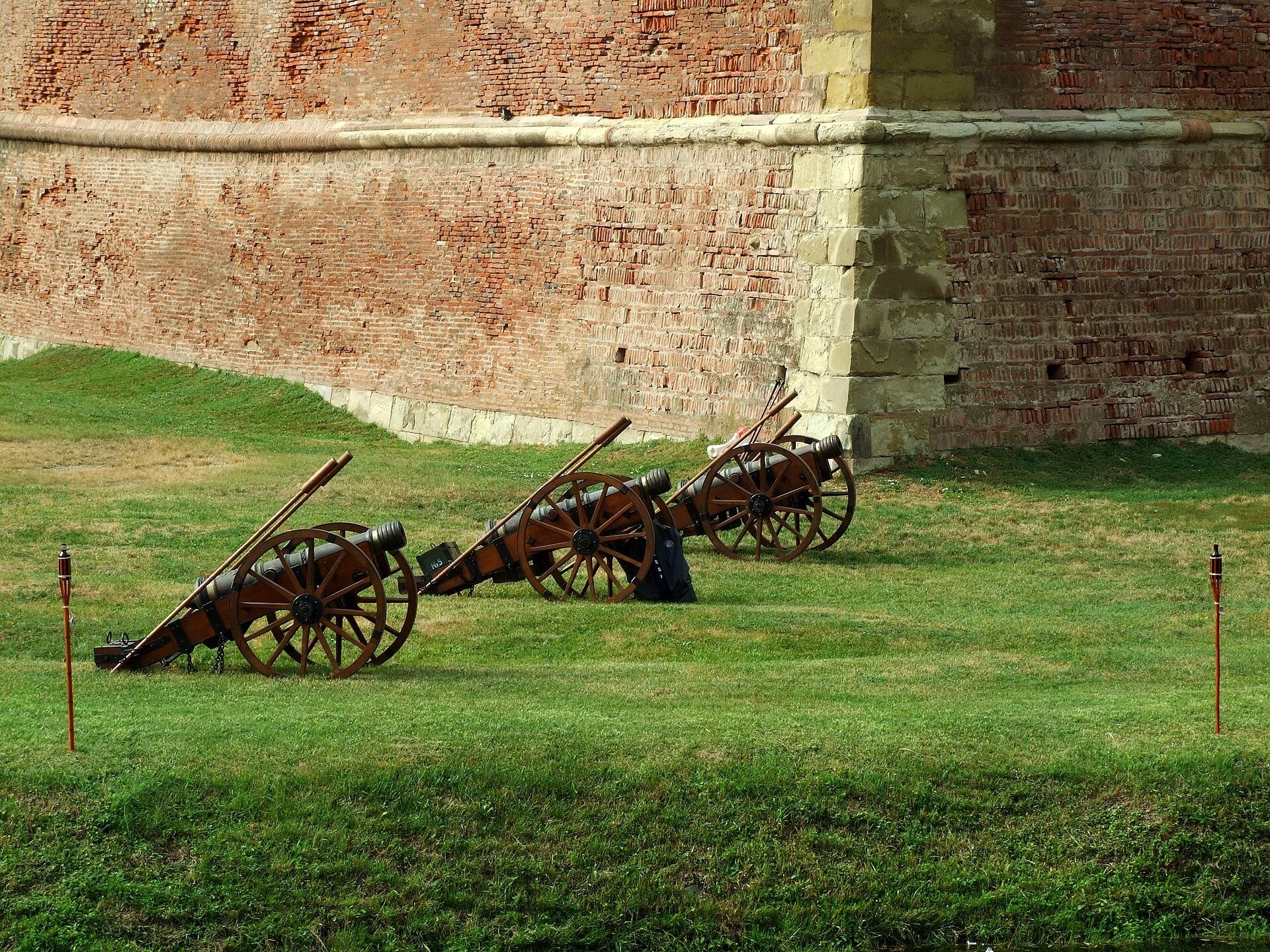
- Cannons in the courtyard and the «Fortress Guard» ceremony (weekends in September at 12:00).
Practical information
The fortress stands at Piața Mihai Viteazul 1 in the centre of Făgăraș. It is about 65 km from Brașov and about 75 km from Sibiu along the DN1; trains and buses run to Făgăraș. From Ukraine the nearest route is via the Porubne — Siret crossing (about 450 km via Brașov). The museum opens Tuesday to Friday 8:00–17:00 and Saturday and Sunday from 9:00, last entry 16:00, closed on Mondays (as of September 2026). An adult ticket costs 30 lei according to the official price list (as of January 2024, check before you go; all prices in the «At a glance» box).
In 2026 the town launched a major restoration project for the fortress (running until 2029); the museum is open, but some parts may be closed because of the works. Allow 1.5–2 hours.
Nearby
- Brâncoveanu Monastery at Sâmbăta de Sus — about 25 km, below the Făgăraș Mountains.
- The ruins of the Cistercian abbey at Cârța — about 40 km to the west.
- Romania's highest peak Moldoveanu and nearby Negoiu in the Făgăraș Mountains.
- Bâlea Waterfall on the Transfăgărășan road.
Official website: cetateafagarasului.com
Photos: Becheru Dogaru Dan, CC BY-SA 3.0 ro, Wikimedia Commons; Bogdan Toma, CC BY-SA 4.0, Wikimedia Commons; Radueduard, CC BY-SA 4.0, Wikimedia Commons; Mihai Solom, CC BY-SA 3.0 ro, Wikimedia Commons; AdeColto, CC BY-SA 4.0, Wikimedia Commons; sailko, CC BY-SA 3.0, Wikimedia Commons.
Getting there from Ukraine
Border crossings
- Porubne – Siret — road and pedestrian, 24/7
- Diakivtsi – Racovăț — road and pedestrian, 24/7 No freight traffic.
- Krasnoilsk – Vicovu de Sus — road and pedestrian, 08:00–20:00 Cars up to 3.5 t and pedestrians only; not 24/7.
- Solotvyno – Sighetu Marmației — road and pedestrian, 24/7 Passenger traffic only: vehicles up to 3.5 t with up to 9 seats, pedestrians.
- Diakove – Halmeu — road, 24/7 No pedestrian crossing.
By car
Chernivtsi – Brașov ≈395 km, ≈7 h 03 min (via Diakivtsi – Racovăț); Rakhiv – Brașov ≈419 km, ≈7 h 24 min (via Solotvyno – Sighetu Marmației); Uzhhorod – Brașov ≈522 km, ≈8 h 39 min (via Diakove – Halmeu). Times without border queues, our road routing (GraphHopper, OSM).
Checked 03.11.2026; border crossing hours and timetables change — check before you travel.
Comments
Travellers’ experience: reports, tips, questions.
No one has written here yet. Be the first — your experience helps others.
Video 2
 Muzeul Țării Făgărașului „Valer Literat” din Cetatea FăgărașuluiVatra MCP

Location on the map
Trails nearby
All trails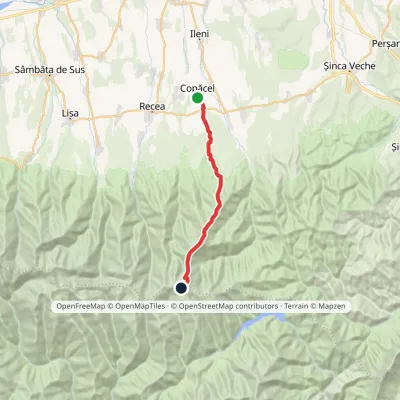 HardOne-dayMarkedCopăcel Făgăraș main ridgevia Berevoescu RefugeElevation profile521–2 286 m20.3 kmascent 1 895 m≈ 8 h walking12 km from Făgăraș Fortress: princely castle and regional museum
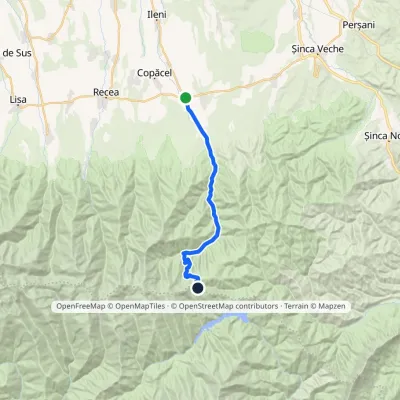 HardOne-dayMarkedSebeș Comisu SaddleElevation profile559–1 751 m21.2 kmascent 1 212 m≈ 7.5 h walking13 km from Făgăraș Fortress: princely castle and regional museum
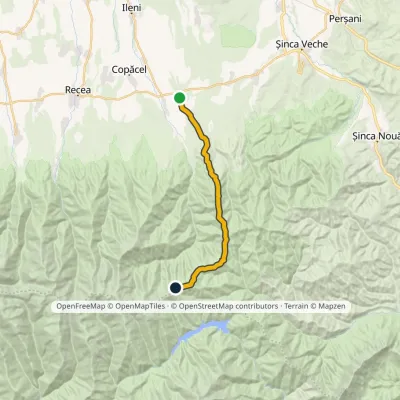 HardOne-dayMarkedMărgineni below Comisu Peakvia Văcarea MareElevation profile568–1 730 m19.5 kmascent 1 372 m≈ 7 h walking14 km from Făgăraș Fortress: princely castle and regional museum
Nearby attractions
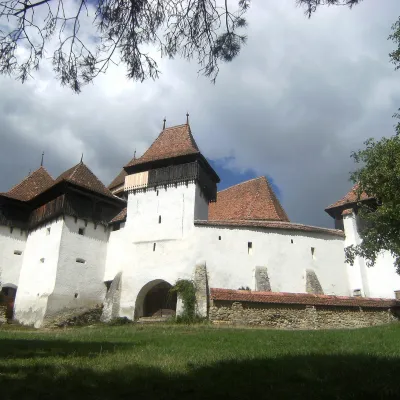 ChurchViscri Fortified Church: a UNESCO Saxon villageViscri25 km from Făgăraș Fortress: princely castle and regional museumThe fortified Evangelical church in the village of Viscri (German Deutsch-Weißkirch, Hungarian Szászfehéregyháza) is perhaps the most photogenic of the Saxon...
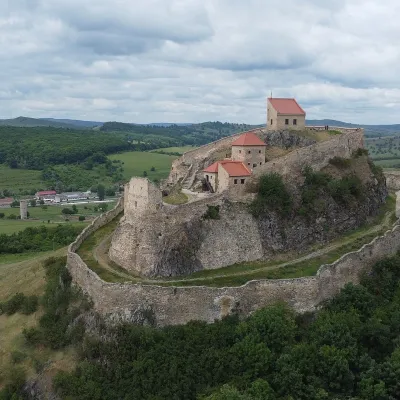 CastleRupea Fortress: a Saxon refuge on a basalt cragRupea28 km from Făgăraș Fortress: princely castle and regional museumRupea Fortress (Cetatea Rupea; German Burg Reps, Hungarian Kőhalmi vár) stands on a basalt hill about 120 metres high on the western edge of the small town of Rupea,...
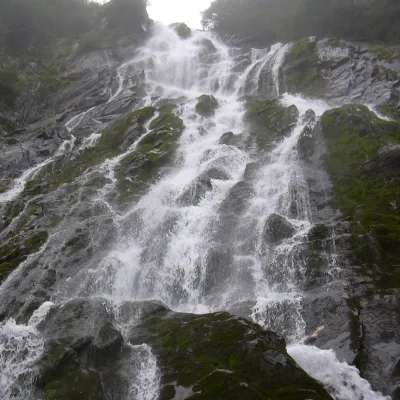 WaterfallBâlea Waterfall (Cascada Bâlea)Făgăraș Mountains37 km from Făgăraș Fortress: princely castle and regional museumheight 60 m1 514 m above sea levelBâlea Waterfall (Cascada Bâlea), also called Urlătoarea Bâlei because of the roar of the water, lies on the northern, Sibiu side of the Făgăraș Mountains, between the...
Craft nearby
All craft places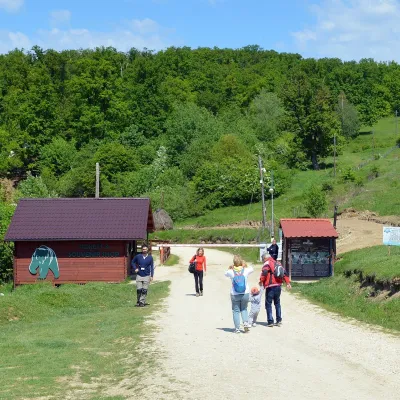 Wildlife parks & animal farmsLibearty Bear Sanctuary in Zărnești: a forest for rescued bearsVulcan43 km from Făgăraș Fortress: princely castle and regional museumThe AMP Libearty Bear Sanctuary lies near the town of Zărnești in Brașov County, at the edge of a forest below the Piatra Craiului massif.
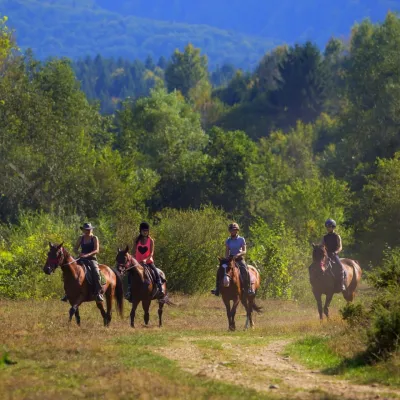 Horse ridingHermannstadt Mountain Horses: horse rides below the FăgărașPorumbacu de Sus45 km from Făgăraș Fortress: princely castle and regional museumHorses in the Avrig Valley below the Făgăraș Hermannstadt Mountain Horses (Hermannstadt is the old German name of Sibiu) is a riding stable in the Avrig Valley (Valea...
