Hutsul smoked meat (buzhenyna)
What it is
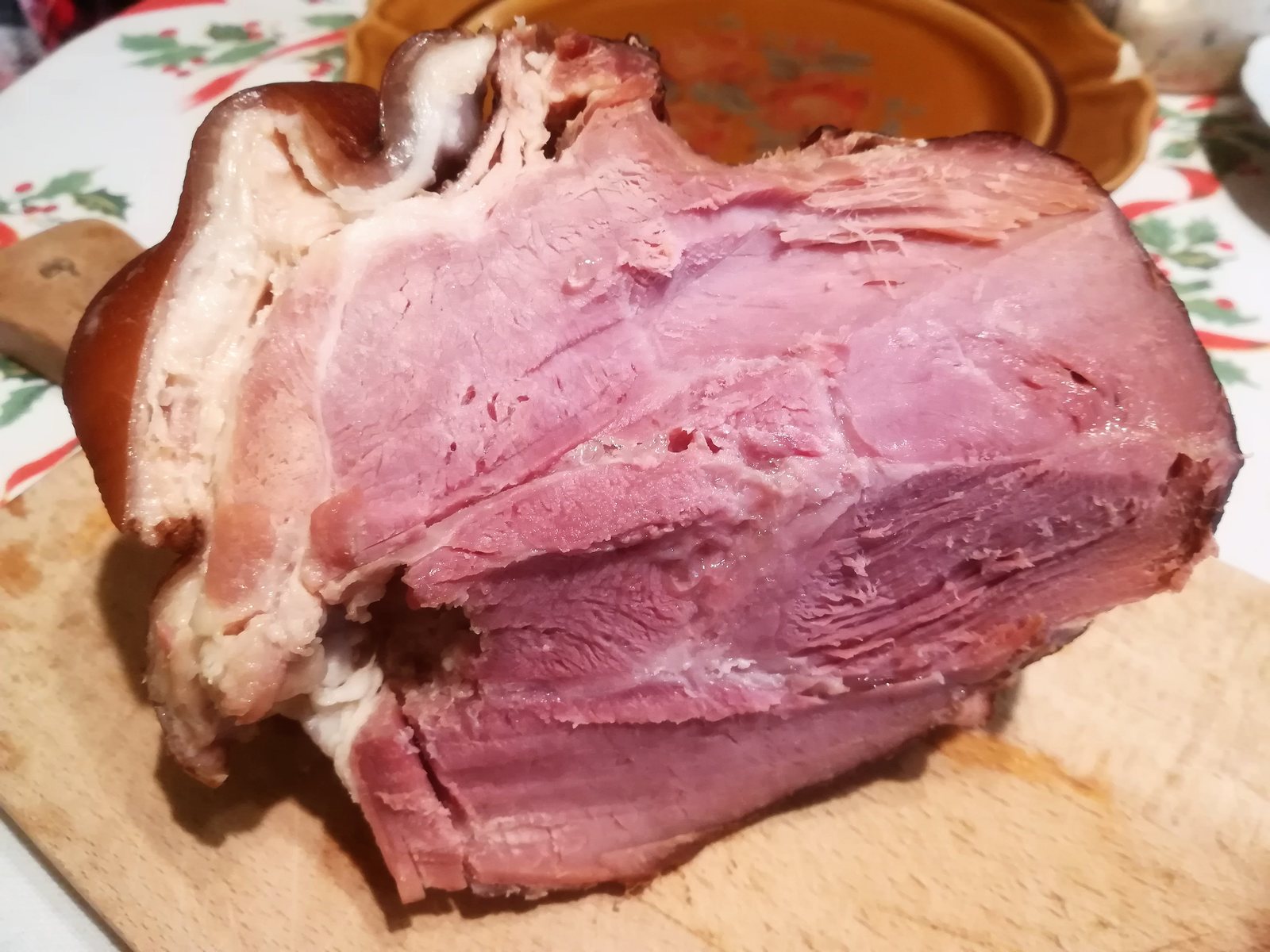
Hutsul smoked meat, or buzhenyna, is meat that is salted and then smoked over wood smoke. Ethnographer Volodymyr Shukhevych explained 'buzhenyna' simply as smoked meat at the end of the 19th century, noting that wealthier Hutsuls primarily ate smoked lamb: the sheep, as Hutsul women said, provided everything: milk, Vurda, Bryndza, sheep wool for coats, and also smoked meat.
Today, in Hutsul villages, buzhenyna most often refers to pork ham: after the fresh meat is prepared, it is salted and smoked in a buzhar (smoker) along with lard, rolls, and sausages. Smoke and salt are an ancient method of preservation without refrigeration: the meat is meant to last until the holidays and beyond.
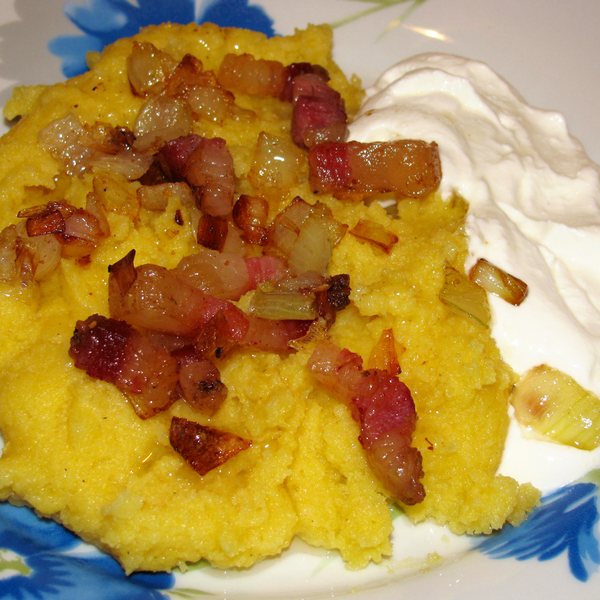
Ready buzhenyna is eaten cold, thinly sliced, while fried pieces are served with Kulesha. Shukhevych recorded that on Great Saturday, Hutsul women cooked borscht with beets, adding salted or smoked meat, and smoked meat was crumbled and fried as a separate dish.
History and name
In an old Hutsul house, smoke from the stove would exit through the hallway under the roof, so the attic, as Shukhevych wrote, became the best place to smoke and store meat, buzhenyna, and salted meat: there they would not spoil. Before Easter, housewives would clean 'in the attic, where sheep meat is smoked — buzhenyna.'
A modern description comes from writer Vasyl Karpyuk from Brushturiv: the pig is slaughtered approximately before St. Nicholas' Day, the two most tender strips of meat along the spine are selected as ham, lard is salted in narrow wooden barrels — byrbynytsia, and on the third day, a buzhar — a metal smoker — is placed near the house, and lard, ham, rolls, and sausages are smoked over wood smoke.
Ingredients and allergens
Variant: pork ham, salted and smoked over wood smoke
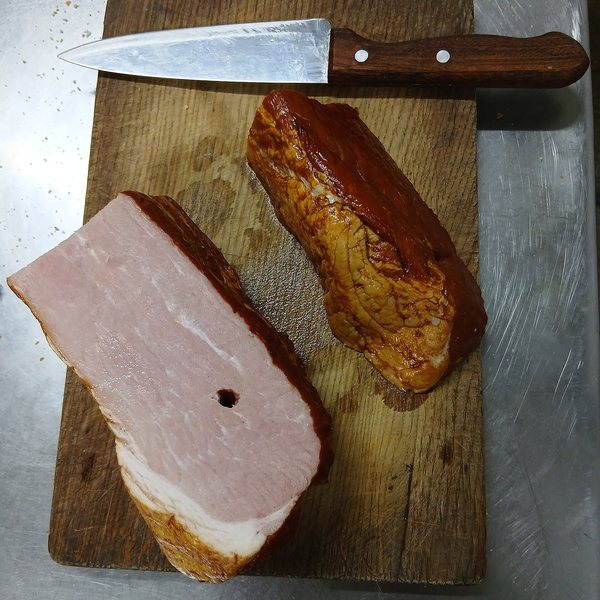
Also: salt (generously, for salting)
Contains allergens: none of the 14 major allergens in the traditional recipe
Diet: gluten-free · no cooking
Variant: ancient: smoked lamb
mutton, salt
Contains allergens: none of the 14 major allergens in the traditional recipe
Diet: gluten-free
Ingredients of the traditional recipe; every cook and every place may do it differently — please ask when ordering. We cannot guarantee the absence of allergens or traces.
How it is made
After slaughter, the ham is separated from the carcass, generously rubbed with salt, and left to salt in a cool place. The salted meat is hung in a buzhar — a small metal smoker near the house — and smoked over light wood smoke until the ham dries and acquires a golden-brown color. Once, lamb was smoked in the same way, simply in the attic, where the smoke from the stove would go.
Ready buzhenyna is stored in a cool place and sliced for the holidays. Detailed Hutsul proportions for salting and smoking duration are not available in accessible sources — each householder does it their own way.
Where it is eaten

The area is approximate and based on the sources below. The dish is cooked outside it too, and ethnographic borders are blurred.
Mountain villages of ethnographic Hutsul region. Shukhevych described Galician Hutsul region (modern Verkhovyna and Kosiv districts), the modern description of buzhar comes from the village of Brushturiv. 'In the Verkhovyna style' is just a name without a separate description.
When it is eaten
| Jan | Feb | Mar | Apr | May | Jun | Jul | Aug | Sep | Oct | Nov | Dec |
|---|---|---|---|---|---|---|---|---|---|---|---|
Occasions: Winter pig slaughter · Christmas
In tradition
Smoked meat is a festive food of the mountains: the pig is slaughtered before St. Nicholas' Day, and just a few days later, ham, lard, and sausages are smoked for Christmas. Shukhevych described that pieces of smoked meat were taken by Hutsuls for Easter blessing, and carolers would share the caroling gift — bread, salted meat, and smoked meat.
Safety
Buy homemade smoked products without laboratory control only from trusted producers; raw or under-smoked pork is dangerous.
FAQ
What is buzhenyna among Hutsuls?
Smoked meat. Ethnographer Shukhevych wrote at the end of the 19th century that Hutsuls primarily smoked lamb; today, buzhenyna most often refers to smoked pork ham.
How do Hutsuls smoke buzhenyna?
After the fresh meat is prepared, the ham is salted, and then smoked over light wood smoke in a buzhar — a metal smoker near the house. Once, meat was smoked simply in the attic, where the smoke from the stove would go.
What do Hutsuls eat buzhenyna with?
Cold, thinly sliced, and fried — with Kulesha. Smoked meat is also added to borscht with beets.
Similar dishes and products
Relatives in the Carpathians and nearby
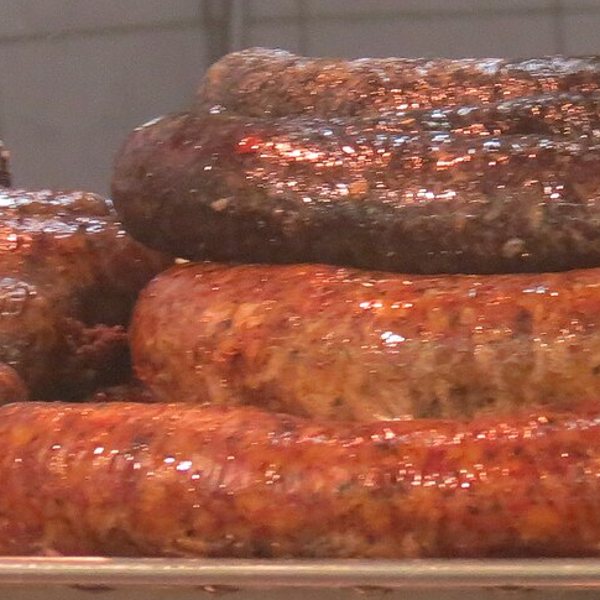
- shovdar · Ukraine
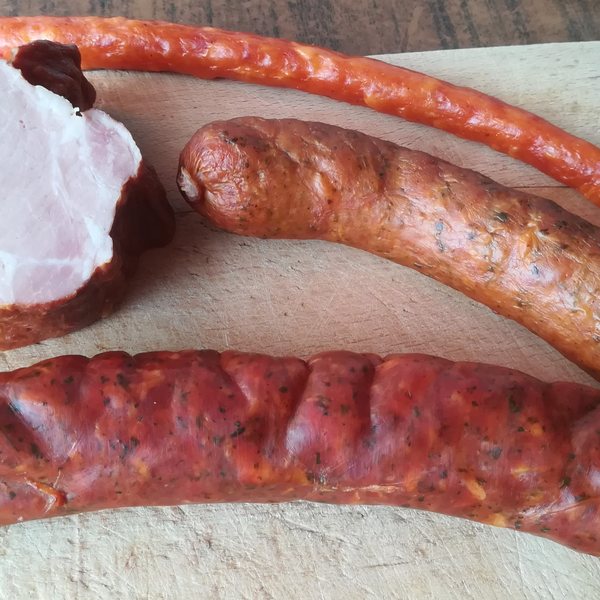
a close tradition: Transcarpathian dried and smoked pork ham - szynka wędzona · Poland
a close tradition of the Polish Carpathians
Sources
- Szuchiewicz W. Huculszczyzna. T. 1 (Lwów: Muzeum im. Dzieduszyckich, 1902) — В. Шухевич, «Гуцульщина», т. 1
- Szuchiewicz W. Huculszczyzna. T. 3 (Lwów: Muzeum im. Dzieduszyckich, 1904) — В. Шухевич, «Гуцульщина», т. 3
- Szuchiewicz W. Huculszczyzna. T. 4 (Lwów: Muzeum im. Dzieduszyckich, 1908): словничок «afyny = czernice», «budżenycia = wędzone mięso»
- Zaxid.net, В. Карп'юк (Брустури): Неперервність гуцульського Різдва (колення, бирбиниці, бужарка)
- ZN.UA: Смачна Гуцульщина (переказ опису В. Шухевича)
- Вікіпедія: Гуцульська кухня («буженина по-верховинськи»)
Written by the Karpaty.rocks editors from the sources above. Checked 10.11.2026.
