Taras Shevchenko Square, Kolomyia
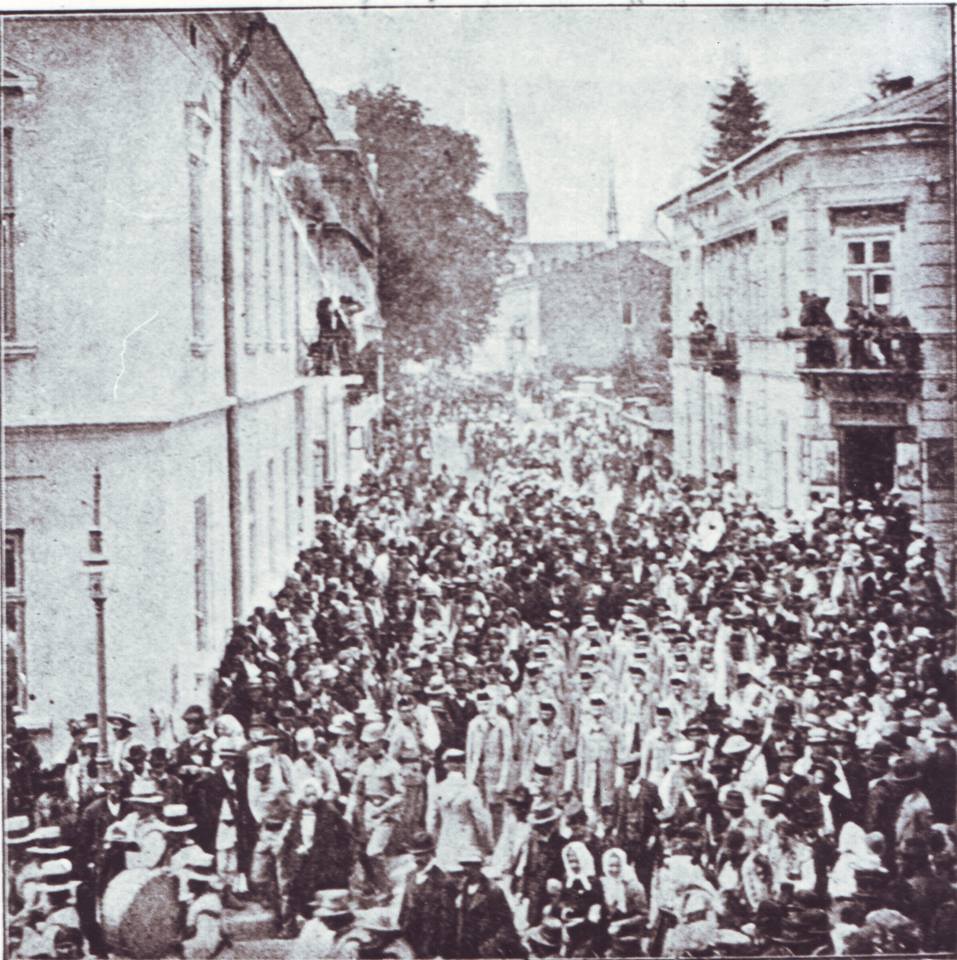
Taras Shevchenko Square is part of the "Rynok" square in Kolomyia. On May 28, 1914, a solemn opening of the monument to Taras Hryhorovych Shevchenko took place in this square. The square was named after him. On this occasion, a concert was held in the Savings Bank Hall (later, during Soviet times - the Officers' House, and now - the People's House), where, among others, the poetry of Shevchenko was recited by the future innovator of Ukrainian theater Les Kurbas. The speech was delivered by the novelist Vasyl Stefanyk. On September 15, 1914, during World War I, Russian troops entered Kolomyia. The Shevchenko monument was deliberately destroyed. After World War II, the square was named "Karl Marx Square".
It took on its modern appearance after reconstruction (around 1970). A beautiful square. At the junction with the then Lenin Square (now the Revival Square), an unnamed monument in the form of a three-meter pile of large stones was erected, which is supposedly a symbolic monument to Oleksa Dovbush. At the opposite end of the square, a central department store was built, and near the central department store, a cascading fountain was installed, which has only worked for the first few weeks of its existence over all the years since.
In 1991, on the occasion of the 750th anniversary of the first written mention of Kolomyia, a memorial sign was installed at the site of the destroyed 1914 Shevchenko monument. Closer to the town hall, a row of yew trees was planted - an interesting, original, rare tree that once grew abundantly in the Carpathians, and now this tree can be seen in this square and also in the Tysovyi Nature Reserve near Kolomyia.
In 2016, a light-musical fountain was opened in the square. This gift was received by the townspeople during the celebration of the 775th anniversary of Kolomyia.
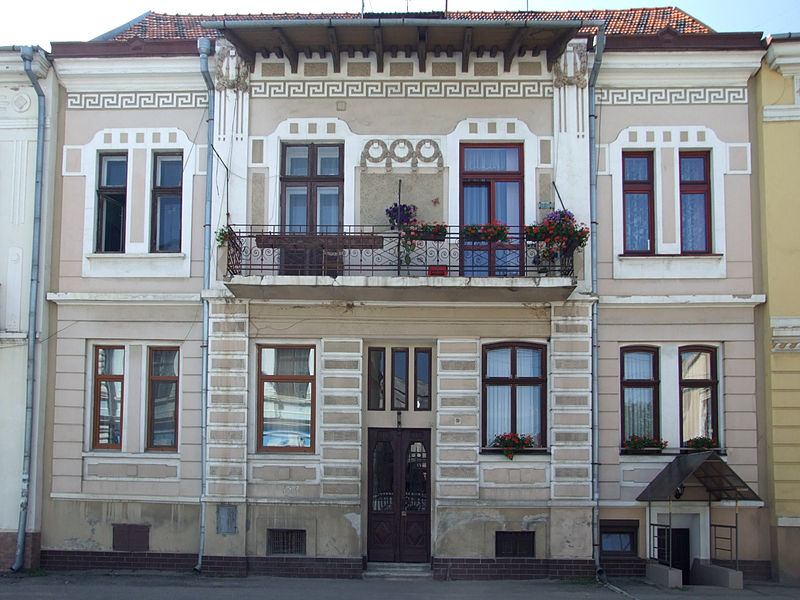
Buildings on Taras Shevchenko Square in Kolomyia
- Building No. 1 In the 1920s - clothing stores of Max Deitsch and spices of Stepan Romanovych. During the USSR - a custom clothing workshop.
- Building No. 10 At the beginning of the 20th century, there was a spice, sugar, and candy store of Joseph Lederfeind and a restaurant. Now - the store "Hutsulchik" AGF "Prut".
- Building No. 11 In the 1900s - a warehouse of knitted and haberdashery goods of Rubinsoff and Heller. Now - LLC "Building Materials".
- Building No. 12 In the 10-20s of the 20th century, there were a bookstore, a paper warehouse, and a frame trading of T. Zimbler, later - a workshop of Osyp Yurchyshyn (repair of printing and sewing machines, bicycles, motorcycles, X-ray devices). A branch in Snyatyn. Now - a gaming hall "Royal".
- Building No. 13 In the first half of the 20th century - a barber shop of Abraham Rosenbaum; on the second floor - a dental office of Dr. Offe. Now - a store of curtains and drapes "Fantasy".
- Building No. 14 In the 1920s, there were a bookstore and a paper warehouse of Mykhal Zhyborsky, a liquor store of Gershon Tau; a pharmacy of M. Feldman (1938). Now - veterinary pharmacy No. 14.
- Building No. 15 In the interwar period - the tin workshops of Shnek and Moses Leib. Now - "Green Pharmacy".
- Building No. 17 In the 1910s, there was a pharmacy "Divine Providence" of Eustakhiy Turyansky. Now - a household chemicals store "Moya", KPM "Tableware".
- Building No. 18 At the beginning of the 20th century - a warehouse of jewelry, gramophones, pianos, and records of Mora Pistiner and a brush workshop of David Vogel (1920s). Now - KPM "Electrical Goods".
- Building No. 19 Initially - a warehouse of iron and tin of Zygmunt Hoffman, a haberdashery store of Chaim Borten (1910s), a watchmaker's workshop of Abraham Holder (1920s), a store of Starev. Now - KPM "Camelia".
- Building No. 20 For a long time, there were a bookstore, a paper warehouse, a binding workshop of Isidor Ginzburg, and later - Berta Ginzburg (1910-20s); a bookstore "Ink Bottle", a paper warehouse and antiques of Simon Sinensib (1910s); a bookstore and paper warehouse of B. Horner (1920s); breakfast rooms of Gersh Krautgamer.
- Building No. 21 In the first half of the 20th century, there was a mechanical workshop of Heinrich Gerstenhaber in the yard.
- Building No. 23 In the 1910s - a metal goods store of Slopkovitser and Singer; later - the largest warehouse of candies, confectionery, coffee, tea, and southern fruits of F. Vaintraub; a fabric store of S. Lyandman and Sons, as well as a shoemaker's workshop of Froim Brunwasser. Now - LLC "Bomis".
- Building No. 25. In the 1920s, the owner was Samuel Feldman, who ran a perfume and paint store "Black Dog". At the same time, liquor stores of Taube Leibman and a Polish cooperative operated here. Now - a photo salon "Smile".
- Building No. 26 For a long time - a pharmacy of Dr. Stefan Stenzl, which offered, among other products, "Carpathian Herb" for cough, lung diseases, awarded a silver medal at the General Exhibition in Lviv in 1904; in the 1910s - a store of children's, women's, and men's clothing of Berta Markus, a warehouse of musical instruments of R. Blecher, a wholesaler of haberdashery goods of Jerzy Helwing; in the 1920-30s: a candy store of Leizor Baumvogel, a warehouse of meat products of V. Nedilsky. Now - KT pharmacy No. 101.
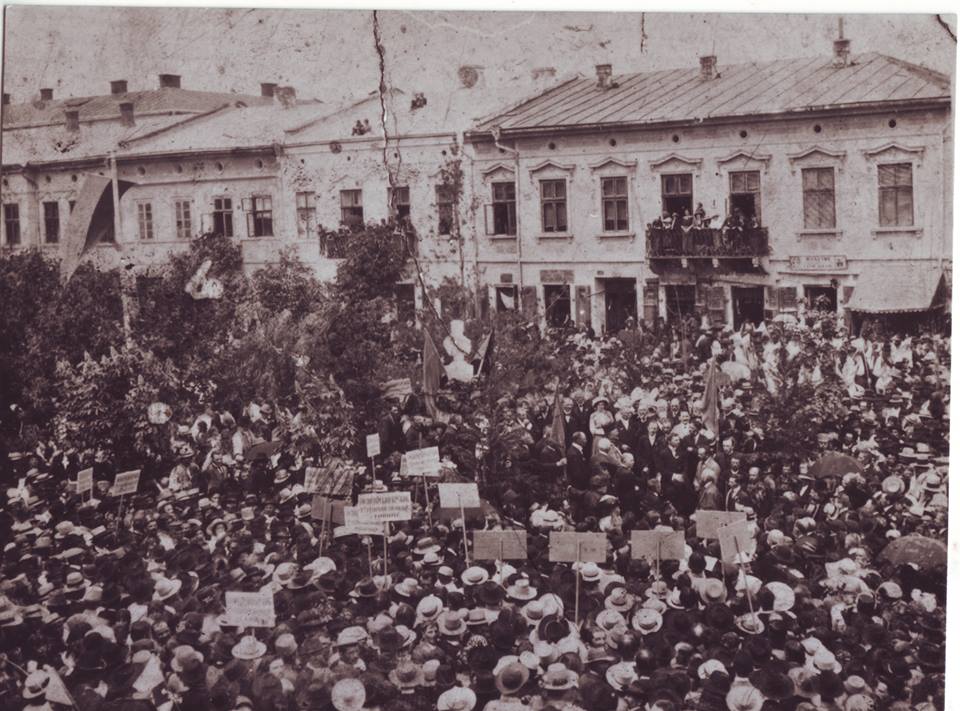
In the photo (the famous Kolomyia writer Mykola Vasylychuk), taken on May 28, 1914, the moment of the opening of the monument to Taras Shevchenko in the city center of Kolomyia is captured (the celebration lasted for two days).
"These were the last peaceful weeks before the start of World War I, which turned people's worldview upside down and reshaped the world. The Kolomyia Ukrainians received permission from the city authorities to erect a bust at the then square near Archduke Rudolf Street (now Taras Shevchenko Square). The committee for the construction of the monument was headed by advisor Romuald Dumyn. The most funds for its construction were provided by lawyer and writer Meletiy Kichura (later shot by the Bolsheviks). In the old photo, with great enlargement, one can recognize the faces of people, read the inscriptions. But what impresses me the most is the sea of hats. But there are no more hats, no people who wore them, and no monument itself. During World War I, Kolomyia found itself under Russian occupation. The modest bust depicting Shevchenko, which delighted the eyes of Ukrainians, stood for just over three months and was toppled from its pedestal. In memory of the monument in Kolomyia, a memorial sign was opened in 1991 (in the city center, near the modern fountain). It indicates the approximate location of the first monument to Shevchenko".
Accommodation around Taras Shevchenko Square, Kolomyia:


Which trails pass by Taras Shevchenko Square, Kolomyia?
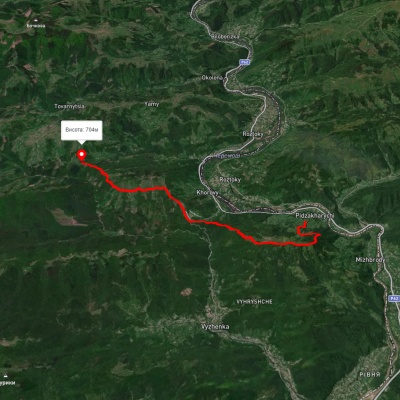
We suggest these hiking trails through or near Taras Shevchenko Square, Kolomyia: Sheshory – Rosokhata, Opryshky Road, Kosmach village, via Mount Rotylo, Mount Hrehit and Mount Bila Kobyla to Bukovets village, Mykulychyn village, via Mount Khorde and Mount Rotylo to Kosmach village, Nimchych Pass – Protiate Kaminnia, Medvezhyi tract – Mount Kuratul
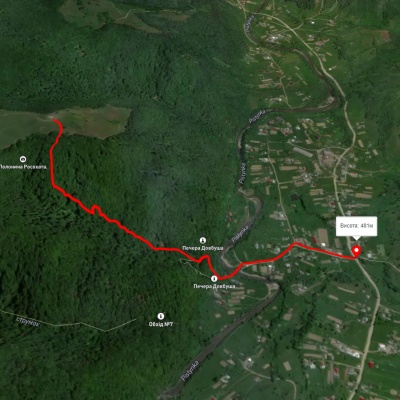
Sheshory – Rosokhata
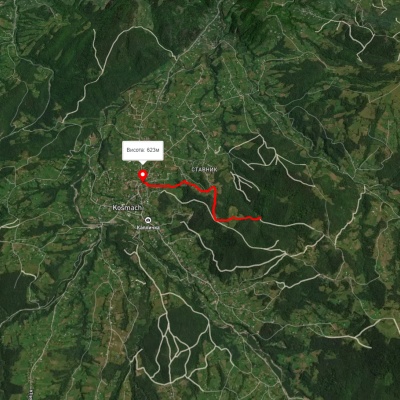
Opryshky Road
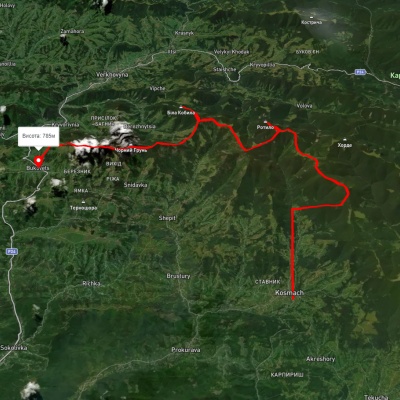
Kosmach village, via Mount Rotylo, Mount Hrehit and Mount Bila Kobyla to Bukovets village
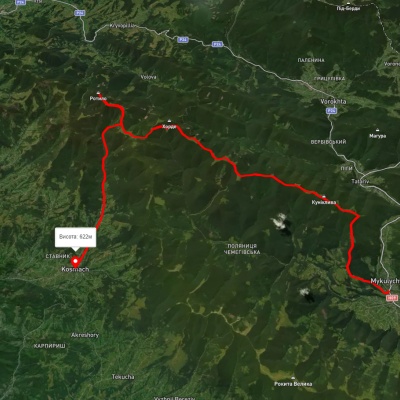
Mykulychyn village, via Mount Khorde and Mount Rotylo to Kosmach village