Polovragi Monastery: a convent by the Oltețu gorge
A monastery below a stone wall
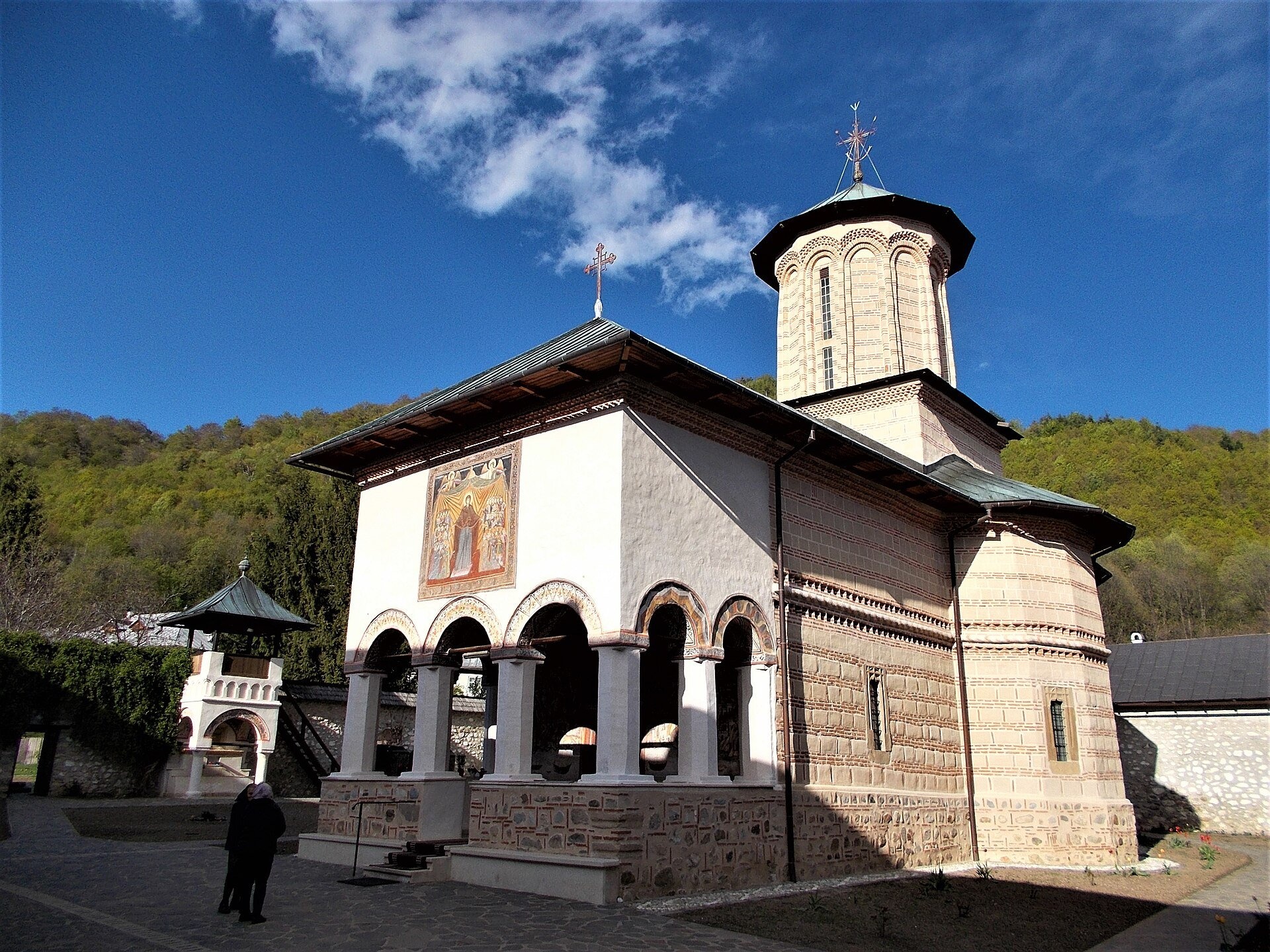
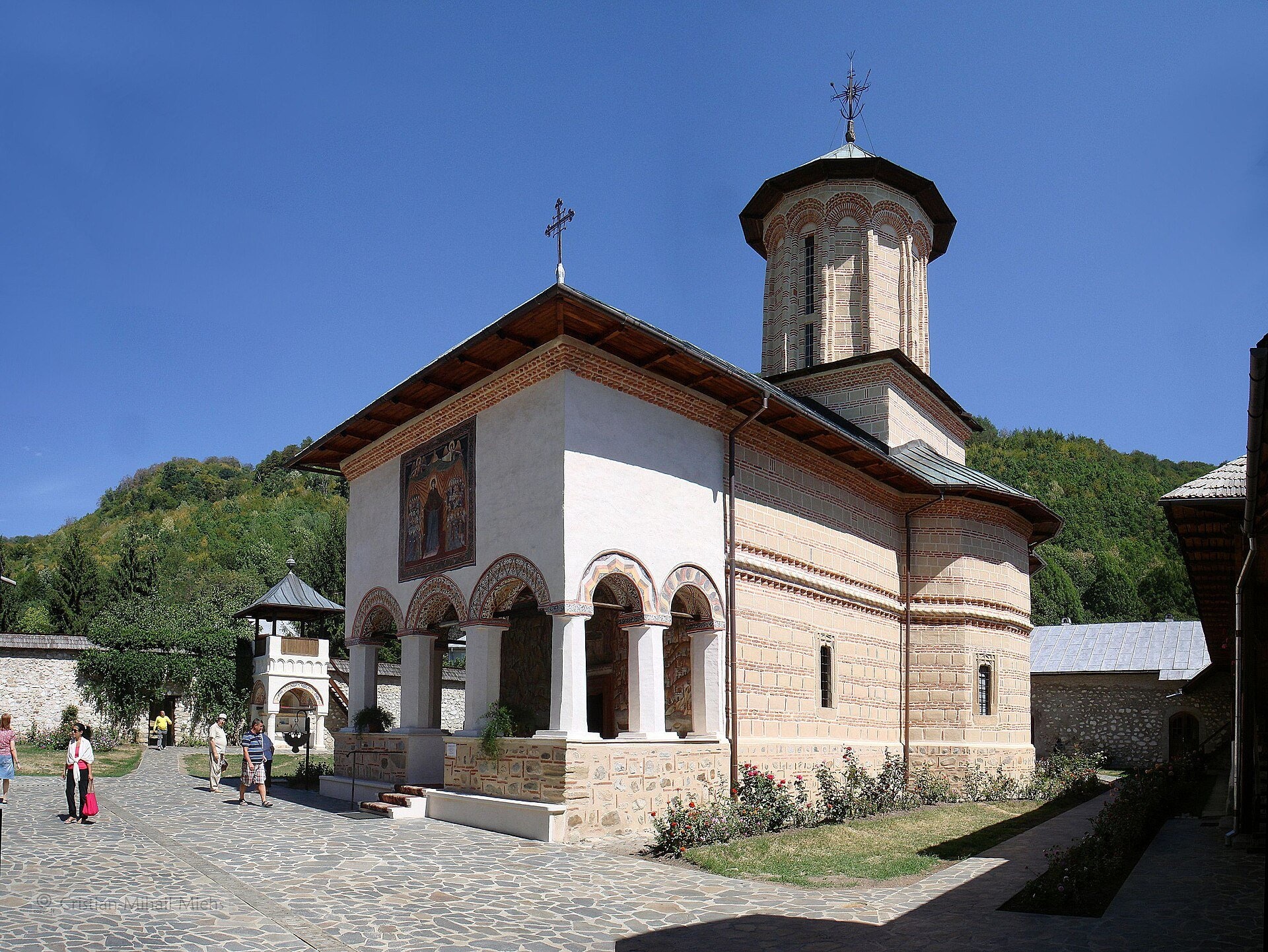
Polovragi Monastery (Mănăstirea Polovragi) stands on the edge of the village of Polovragi in Gorj County, at the foot of the rocky Piatra Polovragilor massif and the entrance to the gorge of the Olteț river (Cheile Oltețului). The first record of the monastery is a charter of Prince Basarab the Younger dated 18 January 1480, which names as its founders Radu and Pătru, sons of Danciul Zamona. The present Church of the Dormition was built on the old foundations by the boyar Danciu Pârâianu in the 1640s: according to the National Heritage Institute, it was completed in 1648.
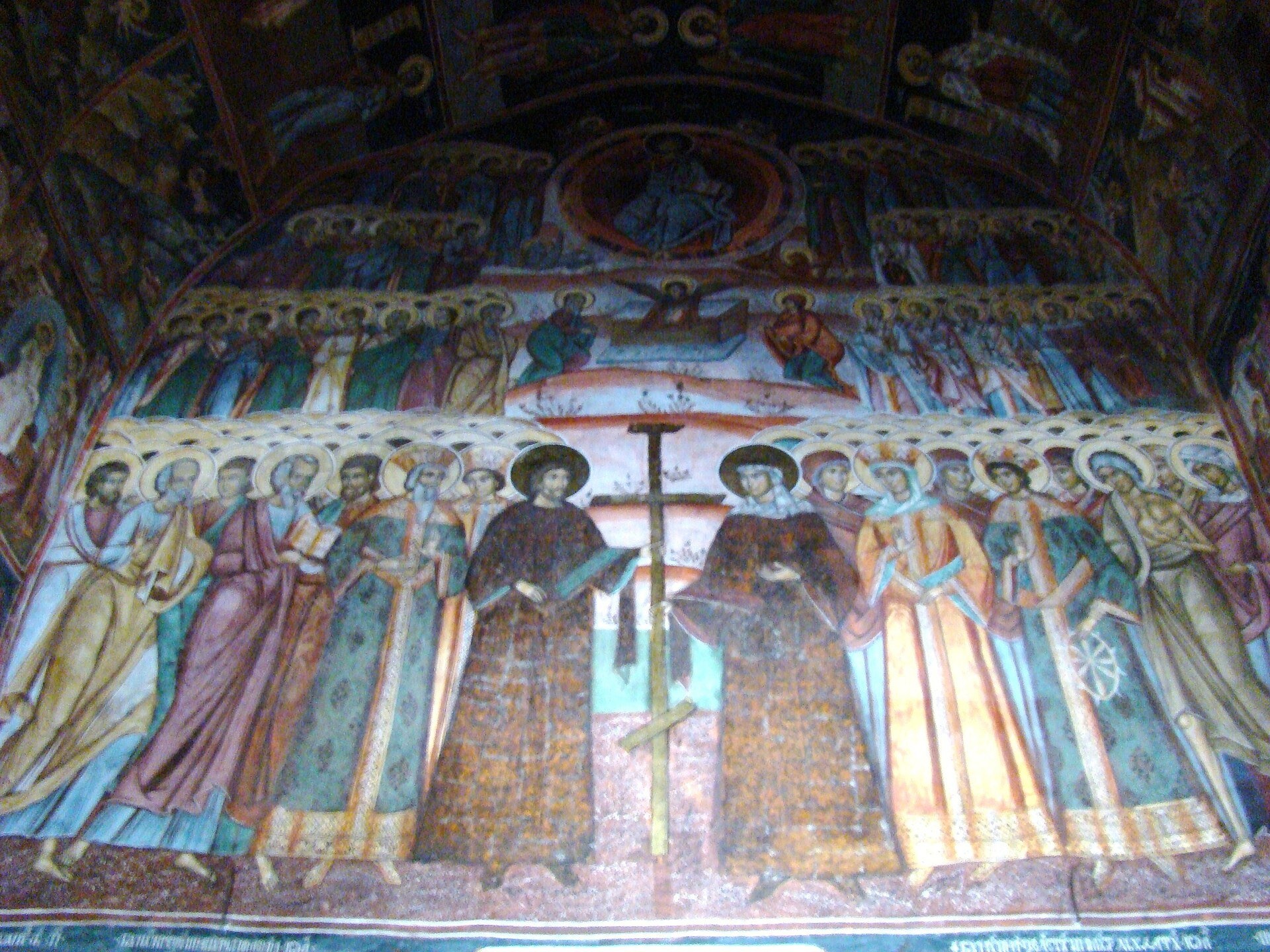
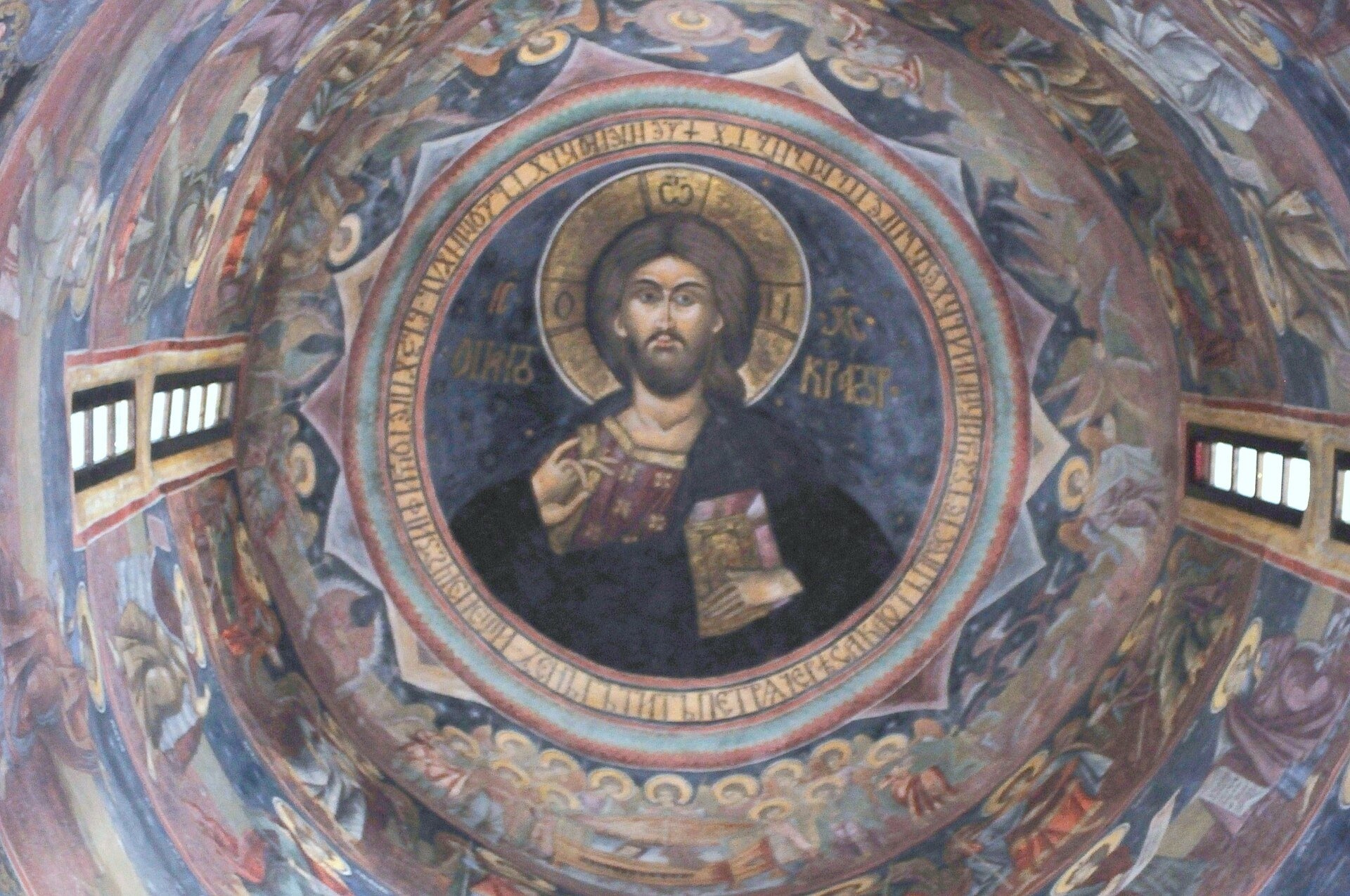
Prince Constantin Brâncoveanu is regarded as the monastery's third founder: in his time it received a porch, a gate with a bell tower and the murals painted in 1713 by the painter Constantin. In 1732 Abbot Lavrentie built the infirmary Church of St Nicholas in the second courtyard, painted in 1738. For centuries the monastery was linked to the nearby Polovragi Cave, which it administered for about three hundred years. Today it is an active convent of nuns of the Metropolis of Oltenia of the Romanian Orthodox Church.
Why go
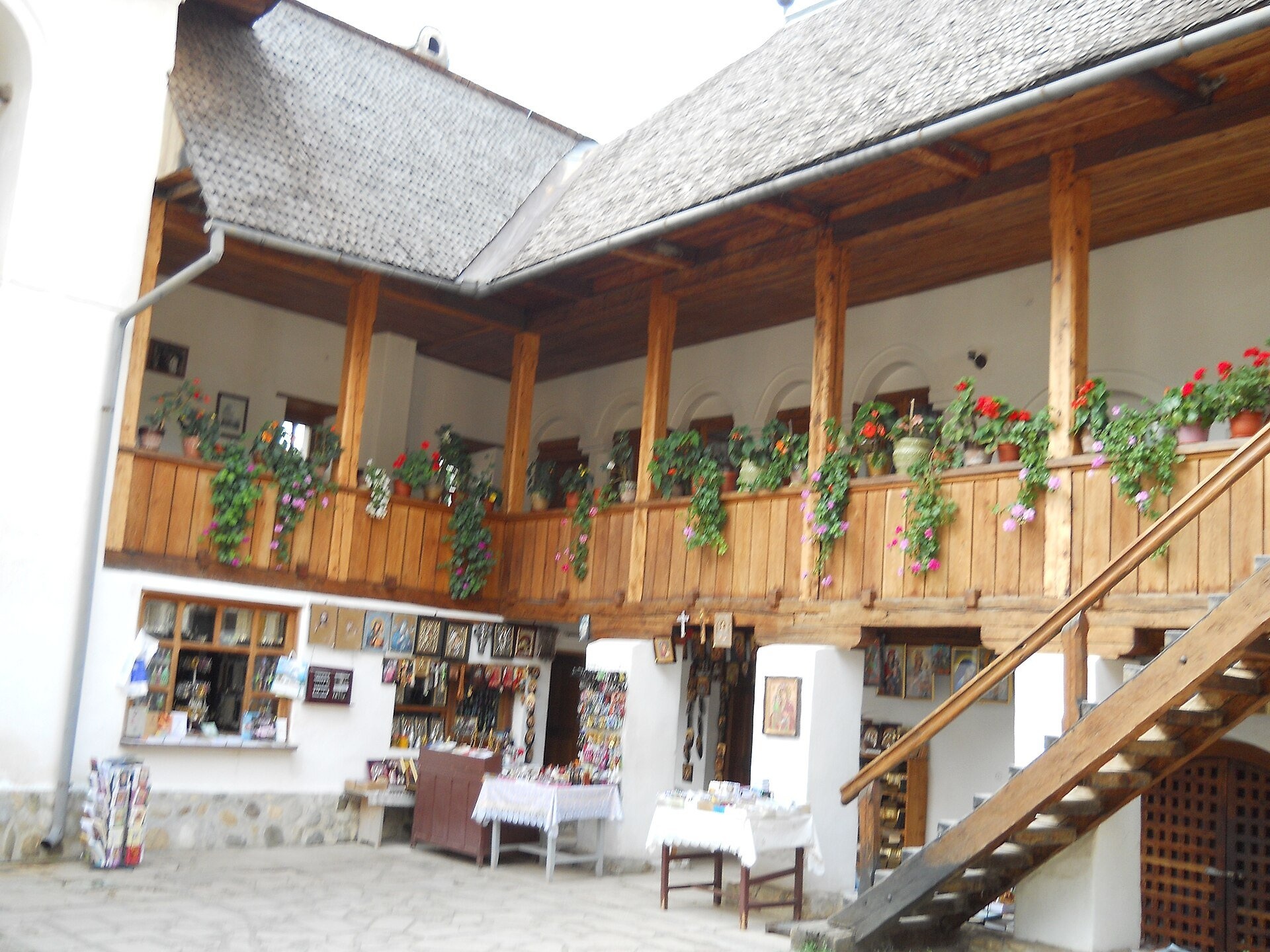
Polovragi is a quiet, intimate monastery that shows well what an Oltenian monastery of the 17th–18th centuries looked like: a church in the middle of the courtyard, cells with wooden galleries and flowers, a sturdy wall and a gate with a bell tower, together forming a real little fortress. Limestone cliffs rise behind it, and a few minutes' drive away begins one of the most beautiful gorges in Oltenia. The monastery combines easily with Polovragi Cave and the drive up the Transalpina from Novaci.
What to see
- The Church of the Dormition with its Brâncovenesc porch on stone columns.
- The murals of 1713 by the painter Constantin, including two depictions, rare in Romania, of Romanian monasteries dedicated to Mount Athos, on either side of the entrance to the porch.
- The 18th-century cell wings with wooden galleries, enclosing the church on three sides.
- The gate with its bell tower from Brâncoveanu's time on the south side of the courtyard.
- The infirmary Church of St Nicholas (1732, painted 1738) in the second courtyard.
- The monastery museum: icons on wood and glass from the 17th–19th centuries, liturgical objects and old books, among them Matei Basarab's Pravila of 1652 and Șerban Cantacuzino's Gospel of 1682.
Practical information
The monastery lies by the DN67 national road at about kilometre 50 from Târgu Jiu towards Râmnicu Vâlcea; Horezu is about 25 km to the east and Novaci about 12 km to the west. From the centre of Polovragi village it is about a kilometre towards the mountains. From Ukraine it is a long trip: via the Porubne – Siret or Diakivtsi – Racovăț crossing and through Transylvania to Sibiu and the Olt valley; in summer you can also take the Transalpina from the Sebeș side.
The monastery is open daily. According to the museum database of the National Heritage Institute (cIMeC), the monastery museum is open 9:00–17:00; phone +40 253 476 196. Official sources do not state an admission fee. Information as of November 2026 — check before you go. This is an active convent: dress modestly (shoulders and knees covered; women may find a headscarf useful), speak quietly and take photographs in the church only with permission. Allow about an hour, or half a day with the cave.
Nearby
- Polovragi Cave — a show cave of the Gorj County Museum in the Oltețu gorge, about a kilometre from the monastery.
- Horezu Monastery — a UNESCO site about 25 km east.
- Arnota Monastery and Bistrița Monastery — in the Bistrița valley, about 30 km east.
- Parângu Mare — the highest peak of the Parâng Mountains above Novaci.
- Tismana Monastery — Wallachia's oldest monastery, further west along the mountains.
Photos: Nicu Farcaș, CC BY-SA 4.0, Wikimedia Commons; Miehs, CC BY-SA 3.0 ro, Wikimedia Commons; Kosson, CC BY-SA 3.0 ro, Wikimedia Commons; Țetcu Mircea Rareș, CC BY-SA 3.0 ro, Wikimedia Commons; Sîmbotin, CC BY-SA 4.0, Wikimedia Commons; Utilizator:Țetcu Mircea Rareș at ro.wikipedia, CC BY-SA 2.5, Wikimedia Commons; ViperDex, CC BY-SA 3.0 ro, Wikimedia Commons.
Getting there from Ukraine
Border crossings
- Porubne – Siret — road and pedestrian, 24/7
- Diakivtsi – Racovăț — road and pedestrian, 24/7 No freight traffic.
- Krasnoilsk – Vicovu de Sus — road and pedestrian, 08:00–20:00 Cars up to 3.5 t and pedestrians only; not 24/7.
- Solotvyno – Sighetu Marmației — road and pedestrian, 24/7 Passenger traffic only: vehicles up to 3.5 t with up to 9 seats, pedestrians.
- Diakove – Halmeu — road, 24/7 No pedestrian crossing.
By car
Rakhiv – Petroșani ≈450 km, ≈6 h 36 min (via Solotvyno – Sighetu Marmației); Ivano-Frankivsk – Petroșani ≈584 km, ≈8 h 55 min (via Solotvyno – Sighetu Marmației); Chernivtsi – Petroșani ≈539 km, ≈9 h 19 min (via Krasnoilsk – Vicovu de Sus). Times without border queues, our road routing (GraphHopper, OSM).
Checked 03.11.2026; border crossing hours and timetables change — check before you travel.
Comments
Travellers’ experience: reports, tips, questions.
No one has written here yet. Be the first — your experience helps others.
Video 2
 MĂNĂSTIREA POLOVRAGI - REPORTAJ - UNIVERSUL CREDINȚEI - TVR 1 - 12 MARTIE 2023Universul Credintei - TVR

Location on the map
Nearby attractions
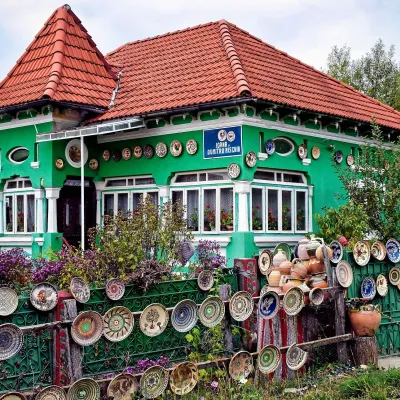 Crafts & workshopsOlari Street, Horezu: the UNESCO potters’ workshopsOlari16 km from Polovragi Monastery: a convent by the Oltețu gorgeThe heart of the craft is Olari Street (Strada Olari) in the part of town of the same name, about 2 km from the centre.
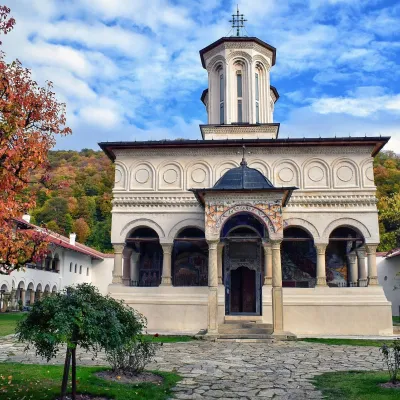 ChurchHorezu Monastery: Brâncovenesc masterpiece, UNESCORomanii de Jos17 km from Polovragi Monastery: a convent by the Oltețu gorgeHorezu Monastery, historically Hurezi (Mănăstirea Hurezi), lies in a quiet valley at the foot of the Căpățânii Mountains, a few kilometres from the town of Horezu in...
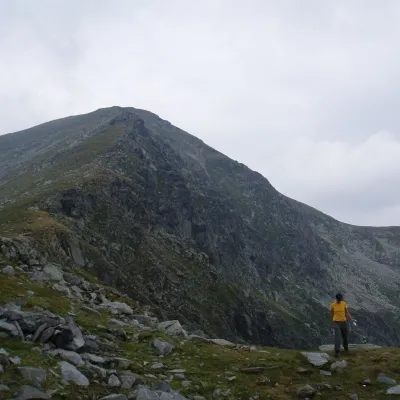 PeakParângul Marealtitude 2 519 m25 km from Polovragi Monastery: a convent by the Oltețu gorgeParângul Mare (Romanian: Vârful Parângul Mare, «Great Parâng»; also Parângu Mare) is the highest summit of the Parâng Mountains in the Southern Carpathians, 2,519 m...
Craft nearby
All craft places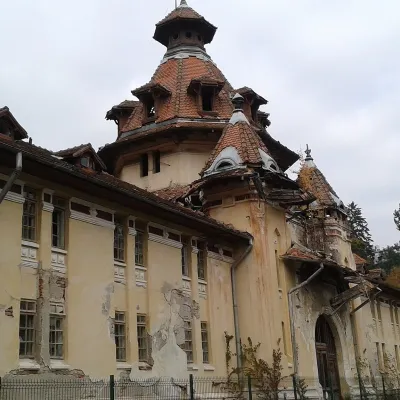 Water parks & thermal poolsBăile Govora: iodine-bromine waters and inhalationsBăile Govora33 km from Polovragi Monastery: a convent by the Oltețu gorgeBăile Govora is a small spa in Vâlcea County, in a sub-Carpathian depression in the valley of the Hința river, at 360–380 m, south-west of the town of Râmnicu Vâlcea.
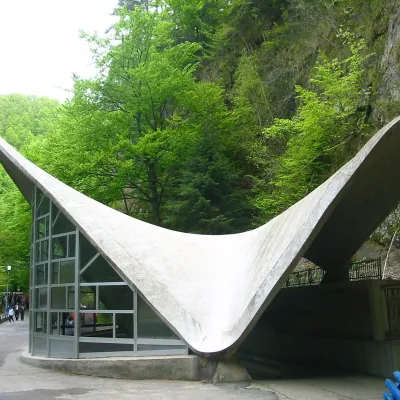 Water parks & thermal poolsBăile Olănești: sulphur and iodine springs of VâlceaBăile Olănești35 km from Polovragi Monastery: a convent by the Oltețu gorgeBăile Olănești is a mineral-water spa in Vâlcea County, in the valley of the Olănești river, at about 450 m and roughly 20 km north-west of the town of Râmnicu Vâlcea.
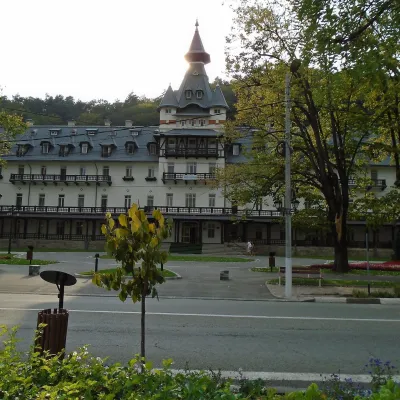 Water parks & thermal poolsCălimănești-Căciulata: thermal pools and springs in the Olt gorgePăușa42 km from Polovragi Monastery: a convent by the Oltețu gorgeCălimănești-Căciulata is one of Romania's best-known spas, stretching along both banks of the Olt where the river enters its gorge between the Cozia massif and the...
