Voroneț Monastery: UNESCO painted church in Bukovina
A church built in a single summer
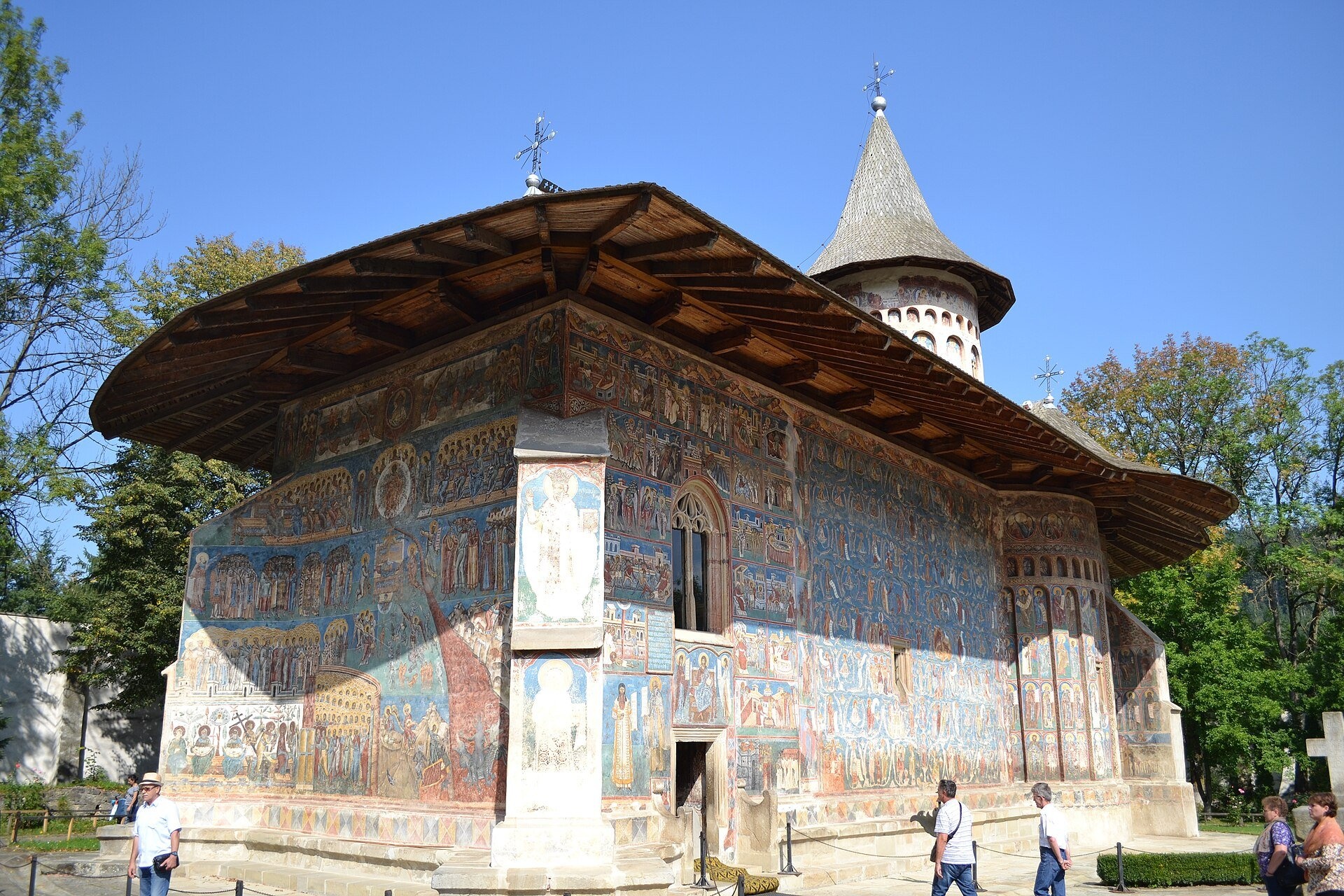
Voroneț Monastery (Mănăstirea Voroneț) stands in the valley of the Voroneț stream on the southern edge of the town of Gura Humorului, in the Romanian part of Bukovina. Its Church of St George is often called the "Sistine Chapel of the East", and the deep blue of its frescoes has its own name in Romania — "Voroneț blue". Together with the other painted churches of Southern Bukovina, it forms part of the UNESCO World Heritage Site "Churches of Moldavia", inscribed in 1993.
The church was built by Stephen the Great (Ștefan cel Mare), Prince of Moldavia. The Slavonic inscription above the original entrance says that work began on 26 May 1488 and was finished in September of the same year — in just three months and three weeks. Legend links the founding to the hermit Daniel (Daniil Sihastrul): at a difficult moment in the war against the Ottomans he advised the prince not to give up, and after the victory to build a monastery dedicated to St George. St Daniel's tomb is still in the church. In 1547 Metropolitan Grigorie Roșca of Moldavia added the open exonarthex on the west side and had all the exterior walls painted. After Bukovina was annexed by the Habsburg monarchy the monastery was closed, and for more than two centuries the church served as a parish church. Monastic life returned in 1991: today it is a convent of nuns of the Archdiocese of Suceava and Rădăuți of the Romanian Orthodox Church.
Why go
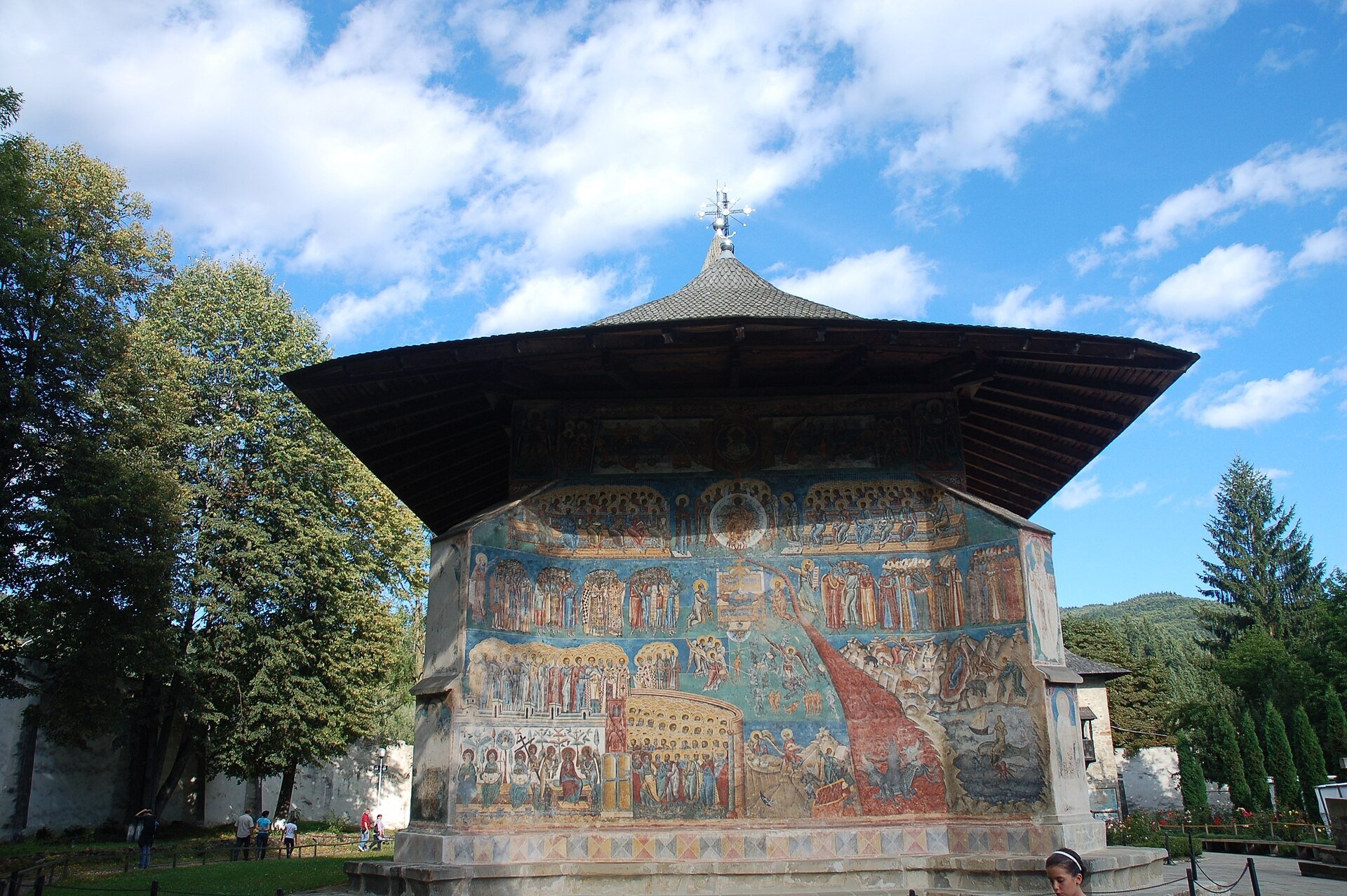
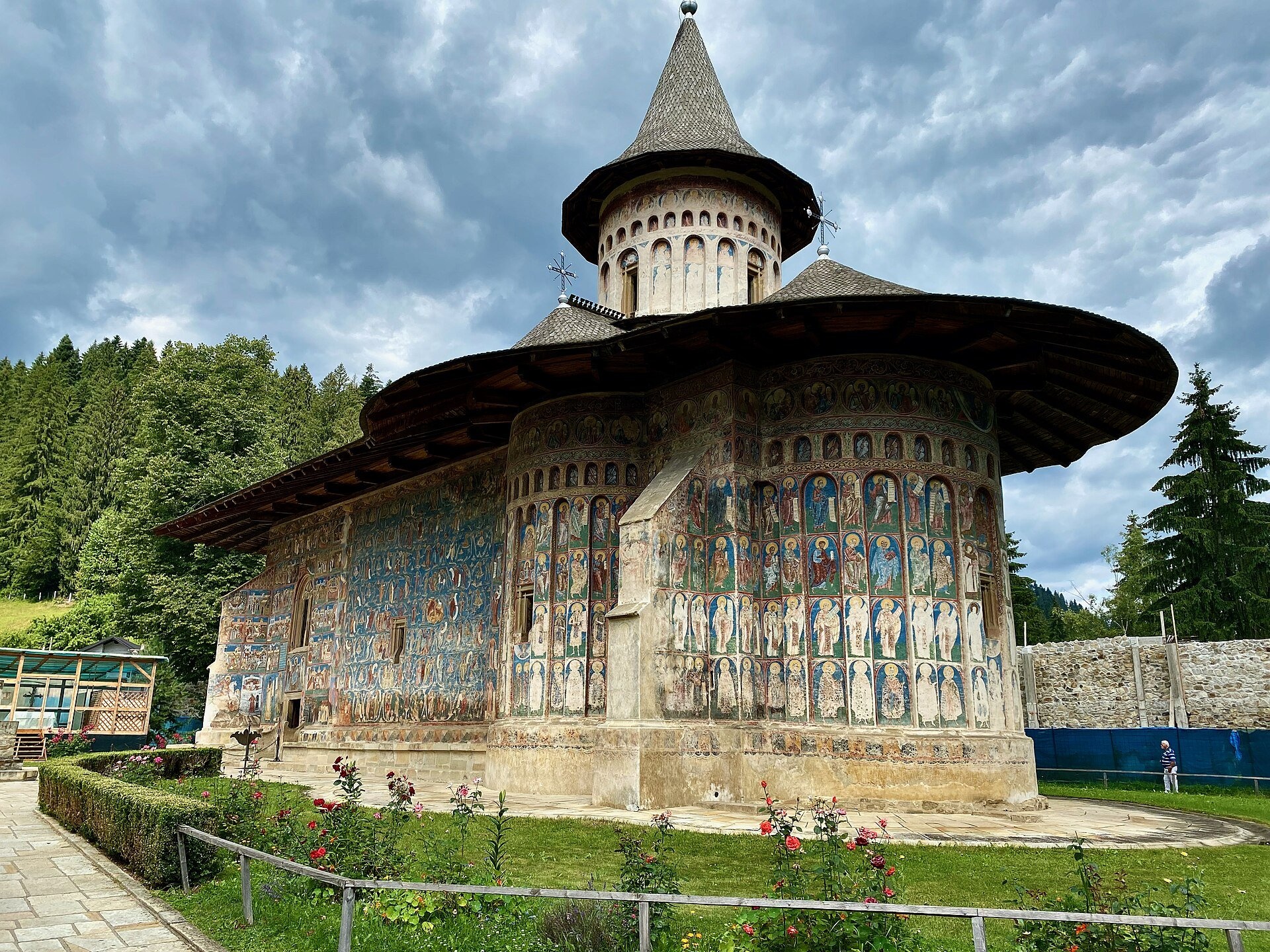
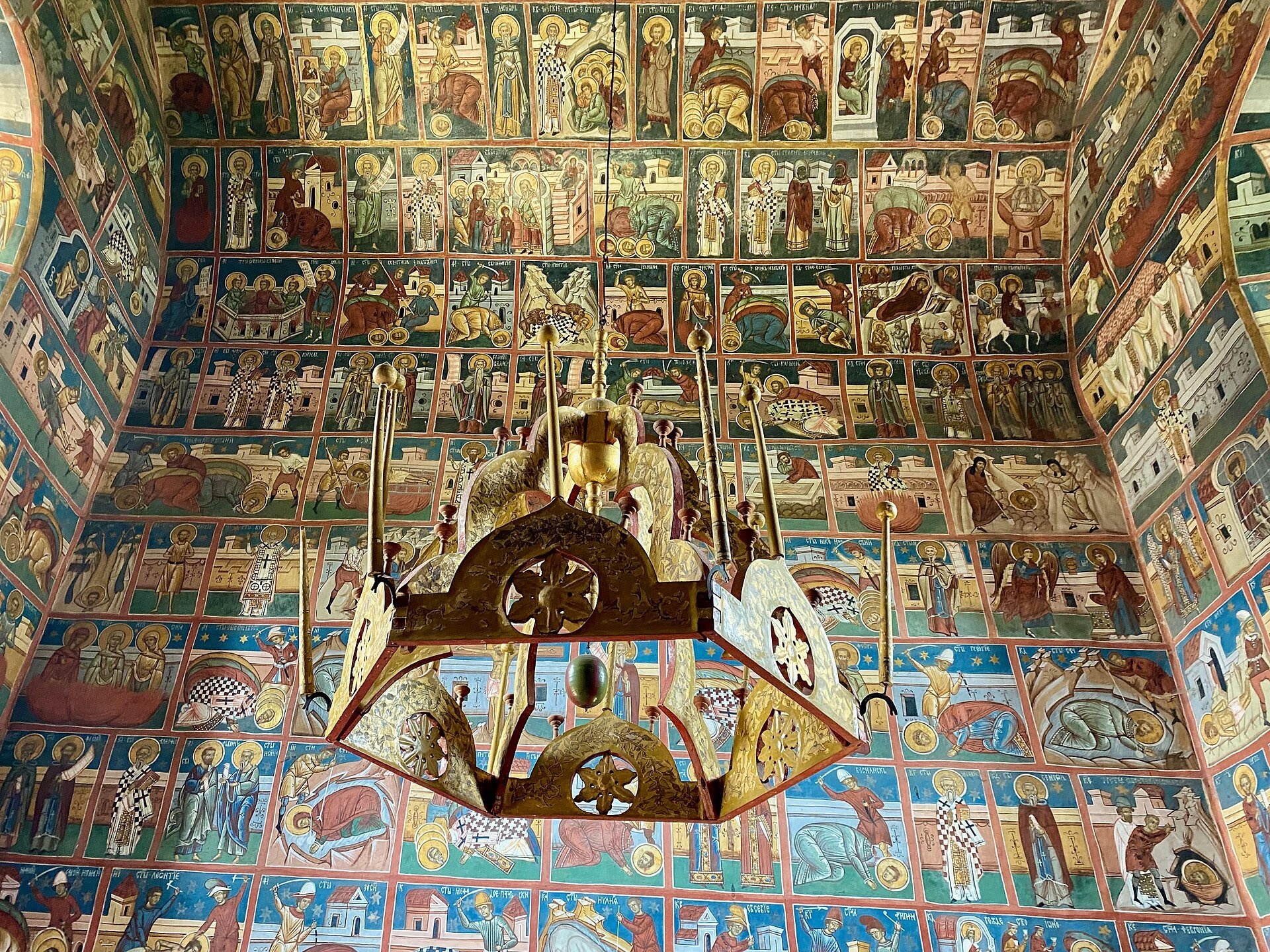
Voroneț is the best known of Bukovina's painted churches and perhaps the best place to understand what makes them unique. Here the frescoes cover the walls not only inside but also outside, from the plinth right up to the roof: a "Bible for the illiterate" read in the open air. The west wall deliberately has no windows at all — from the very start the Metropolitan reserved it for a great Last Judgment. A small, well-kept monastery among green hills, with quiet and flowers around the church, makes the visit peaceful even in the high season, when there are many visitors.
What to see
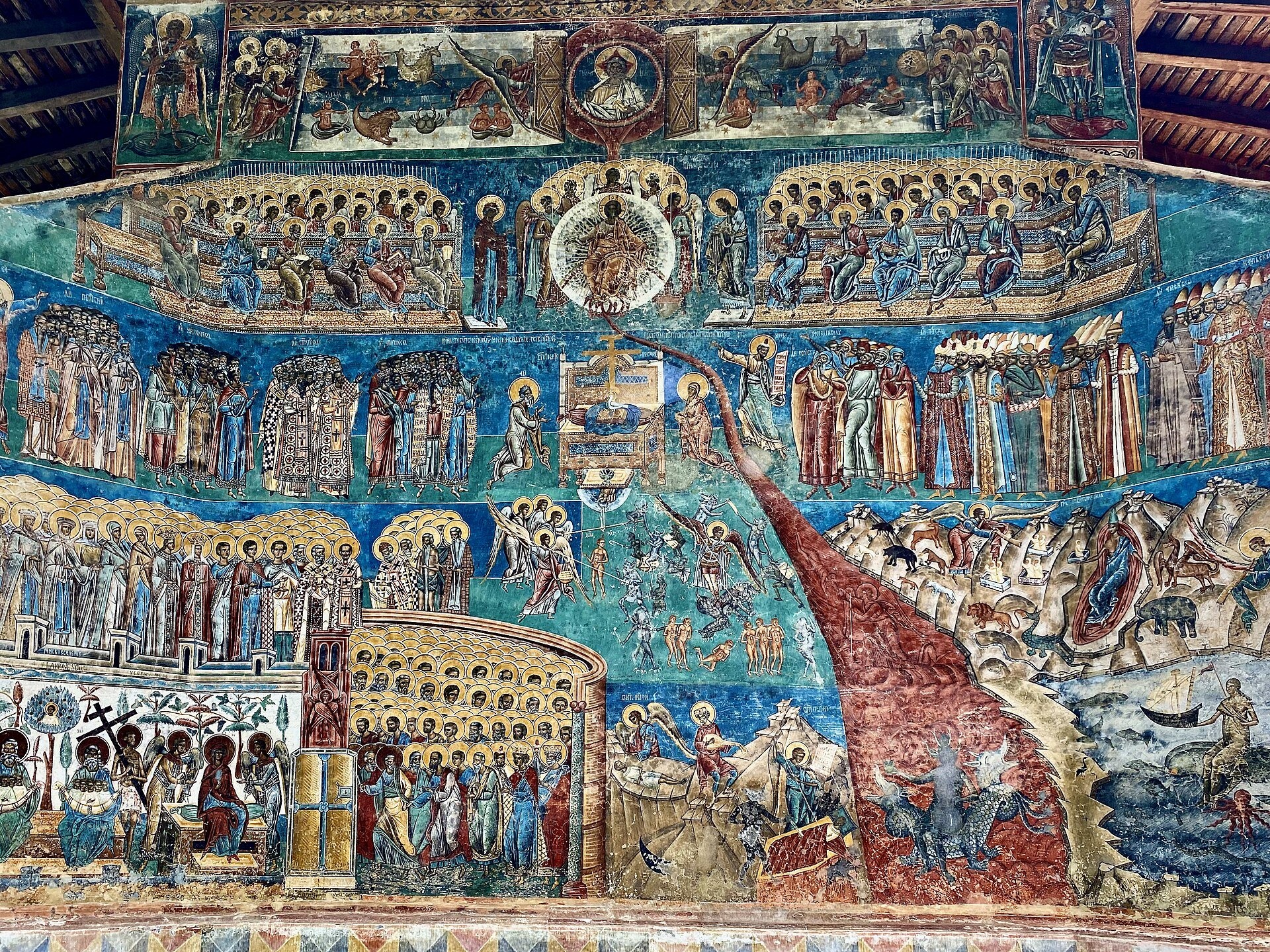
- The Last Judgment on the west wall — a composition covering the full height of the façade in several tiers: the Deesis with the apostles, a river of fire flowing down to hell, angels rolling up the sky and the resurrection of the dead.
- "Voroneț blue" — the deep blue background against which hundreds of figures stand; it shows best in sunny weather on the south and west walls.
- The Tree of Jesse on the south façade — the genealogy of Christ set among the branches of a vine.
- The north wall with scenes from Genesis and the church's original decoration — rows of glazed ceramic discs with Moldavian heraldic motifs: the aurochs and the lion.
- Gothic details — narrow windows, pointed and shouldered arches of the doorways, and a tall window with a flamboyant Gothic arch in the porch.
- The interior, with restored paintings in every room and the tomb of St Daniel the Hermit.
- The bell tower by the monastery entrance and the well-kept courtyard with flower beds.
Practical information
Address: Strada Voroneț 166, Gura Humorului, Suceava County. The monastery lies about 4 km south of the centre of Gura Humorului, reached by a paved road, with parking at the entrance. It is about 40 km from the city of Suceava. From Ukraine the easiest route is through the Porubne – Siret border crossing, then via Suceava to Gura Humorului, about 90 km in total. Opening hours according to the Romania Tourism portal: May to September daily 9:00–19:00, October to April 9:00–17:00. Entry 10 lei, photo permit 20 lei; these figures are as of November 2026 and the portal gives no update date, so check before you go. Phone: +40 744 560 001.
This is a working convent: a sign at the entrance sets out the dress rules — shoulders and knees must be covered, and a skirt and headscarf are appropriate for women. Keep quiet in the church, do not touch the frescoes and do not take photos during services. An hour is usually enough to see the church and the courtyard.
Nearby
- Humor Monastery — another UNESCO painted church, about 9 km to the north.
- Moldovița Monastery with its fortified courtyard — about 35 km to the west.
- Sucevița Monastery — the latest and largest of the painted monasteries.
- Rarău — a mountain with the Pietrele Doamnei rocks above Câmpulung Moldovenesc and a panorama over Bukovina.
- The Wooden Art Museum in Câmpulung Moldovenesc.
Photos: Rolly00, CC BY-SA 4.0, Wikimedia Commons; Romulusmd, CC BY-SA 3.0 ro, Wikimedia Commons; Josep Renalias Lohen11, CC BY 4.0, Wikimedia Commons; Ghișa Ștefania-Maria, CC BY-SA 4.0, Wikimedia Commons; Balakao, CC0, Wikimedia Commons; Mihai Raducanu, CC BY-SA 4.0, Wikimedia Commons.
Getting there from Ukraine
Border crossings
- Porubne – Siret — road and pedestrian, 24/7
- Diakivtsi – Racovăț — road and pedestrian, 24/7 No freight traffic.
- Krasnoilsk – Vicovu de Sus — road and pedestrian, 08:00–20:00 Cars up to 3.5 t and pedestrians only; not 24/7.
- Solotvyno – Sighetu Marmației — road and pedestrian, 24/7 Passenger traffic only: vehicles up to 3.5 t with up to 9 seats, pedestrians.
- Diakove – Halmeu — road, 24/7 No pedestrian crossing.
By car
Chernivtsi – Câmpulung Moldovenesc ≈121 km, ≈2 h 12 min (via Krasnoilsk – Vicovu de Sus); Ivano-Frankivsk – Câmpulung Moldovenesc ≈239 km, ≈4 h 12 min (via Krasnoilsk – Vicovu de Sus); Rakhiv – Câmpulung Moldovenesc ≈217 km, ≈4 h 35 min (via Solotvyno – Sighetu Marmației). Times without border queues, our road routing (GraphHopper, OSM).
Checked 03.11.2026; border crossing hours and timetables change — check before you travel.
Comments
Travellers’ experience: reports, tips, questions.
No one has written here yet. Be the first — your experience helps others.
Video 2
 Academia Română - Prezentul Continuu: Mănăstirea Voroneț (@TVR3)TVR

Location on the map
Nearby attractions
 ChurchHumor Monastery: a UNESCO painted church of 1530Mănăstirea Humorului8.5 km from Voroneț Monastery: UNESCO painted church in BukovinaHumor Monastery (Mănăstirea Humor) stands in the village of Mănăstirea Humorului, about 5 km north of the town of Gura Humorului in Bukovina.
 ChurchSlatina Monastery: the burial place of Prince Alexandru LăpușneanuSlatina12 km from Voroneț Monastery: UNESCO painted church in BukovinaSlatina Monastery (Mănăstirea Slatina) stands in the wooded valley of the Suha Mică stream at the foot of the Stânișoara Mountains, in the village of Slatina in...
 PeakRarăuCâmpulung Moldovenescaltitude 1 651 m23 km from Voroneț Monastery: UNESCO painted church in BukovinaRarău (Romanian: Vârful Rarău) is the highest summit of the massif of the same name in the Eastern Carpathians, 1,651 m above sea level.
Craft nearby
All craft places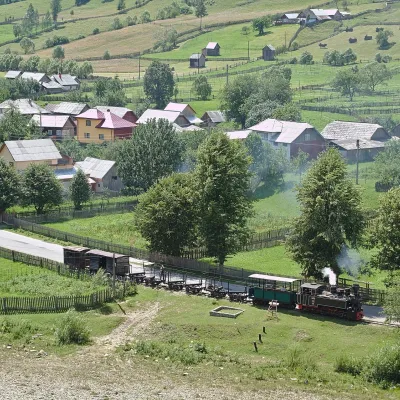 Heritage transportMocănița Huțulca: forest narrow-gauge railway in MoldovițaMoldovița31 km from Voroneț Monastery: UNESCO painted church in BukovinaA forest narrow-gauge railway more than 135 years old Moldovița is a mountain village in the valley of the river of the same name, in the very heart of Romanian...
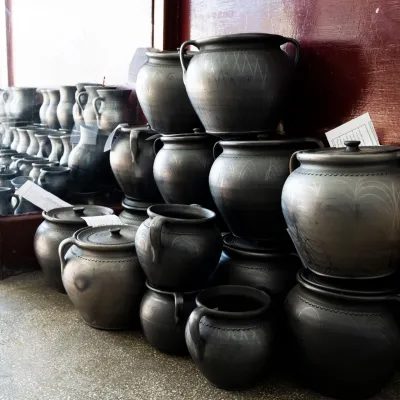 Crafts & workshopsBlack pottery of Marginea: the Magopăț family workshopMarginea32 km from Voroneț Monastery: UNESCO painted church in BukovinaBlack pottery of Marginea: the sixth generation of the Magopăț family Marginea is a large village in the Romanian part of Bukovina, between the town of Rădăuți and...
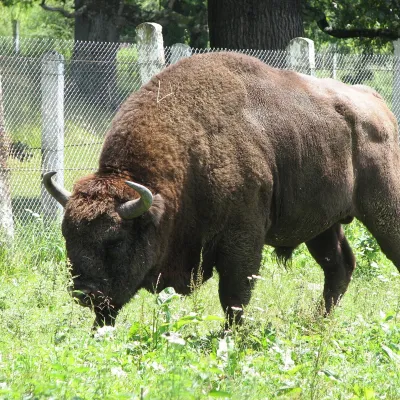 Wildlife parks & animal farmsBison Safari in Vânători-Neamț: a guided walk with a rangerMănăstirea Neamț42 km from Voroneț Monastery: UNESCO painted church in BukovinaThe first place in Romania where the bison came back Vânători-Neamț Natural Park lies on the eastern slopes of the Carpathians near the small town of Târgu Neamț, in a...
