Moldovița Monastery: UNESCO painted church behind walls
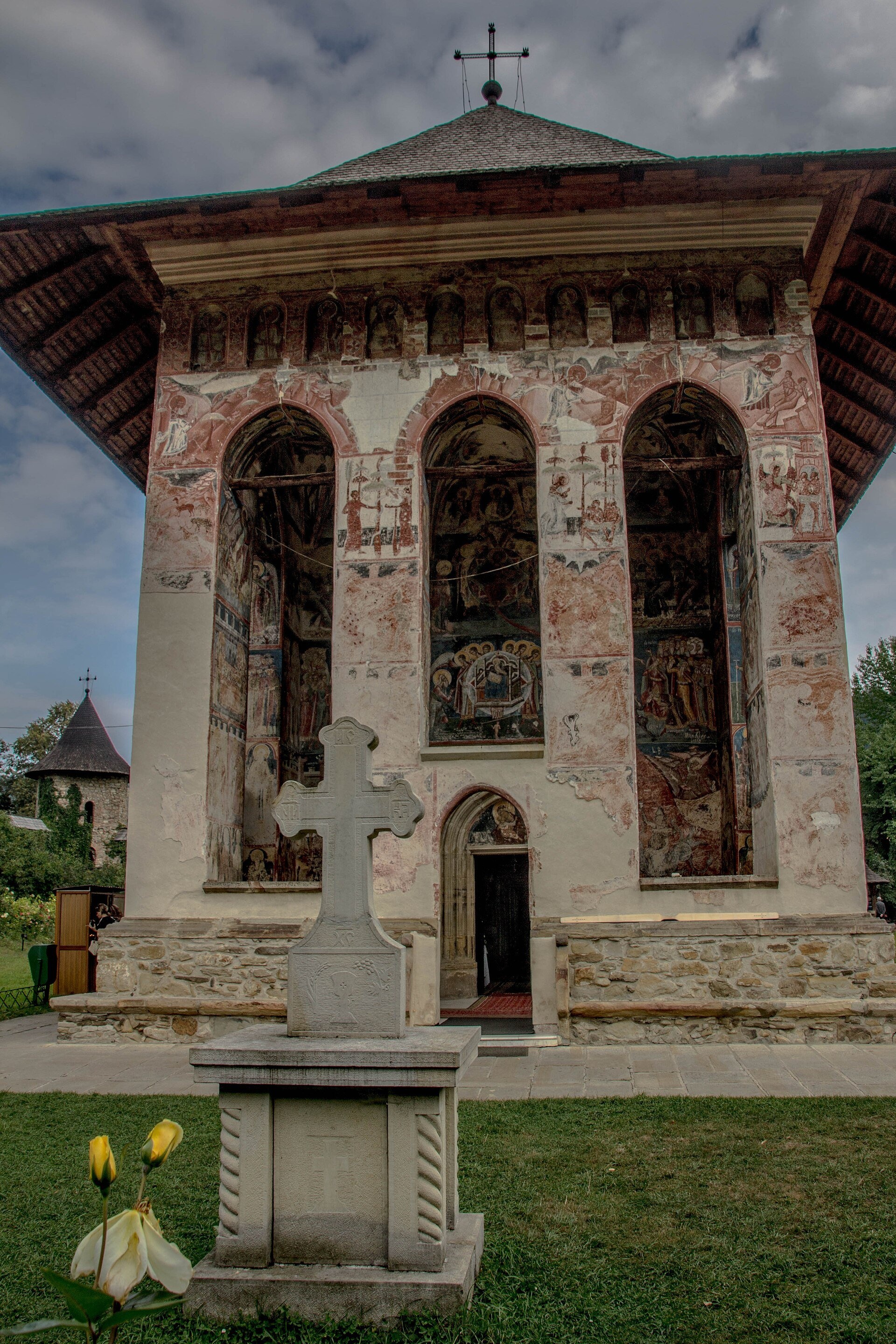
Petru Rareș's fortress monastery
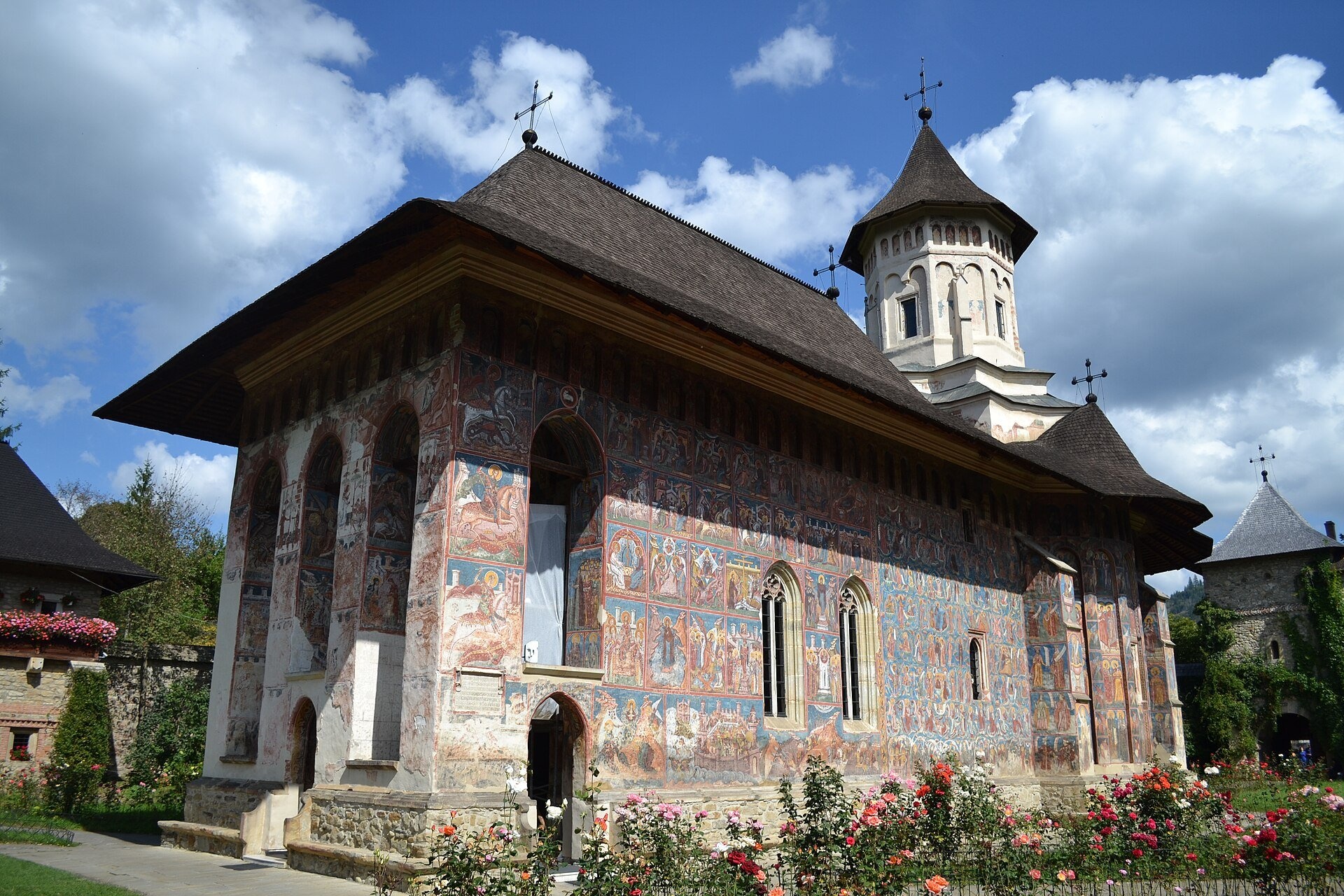
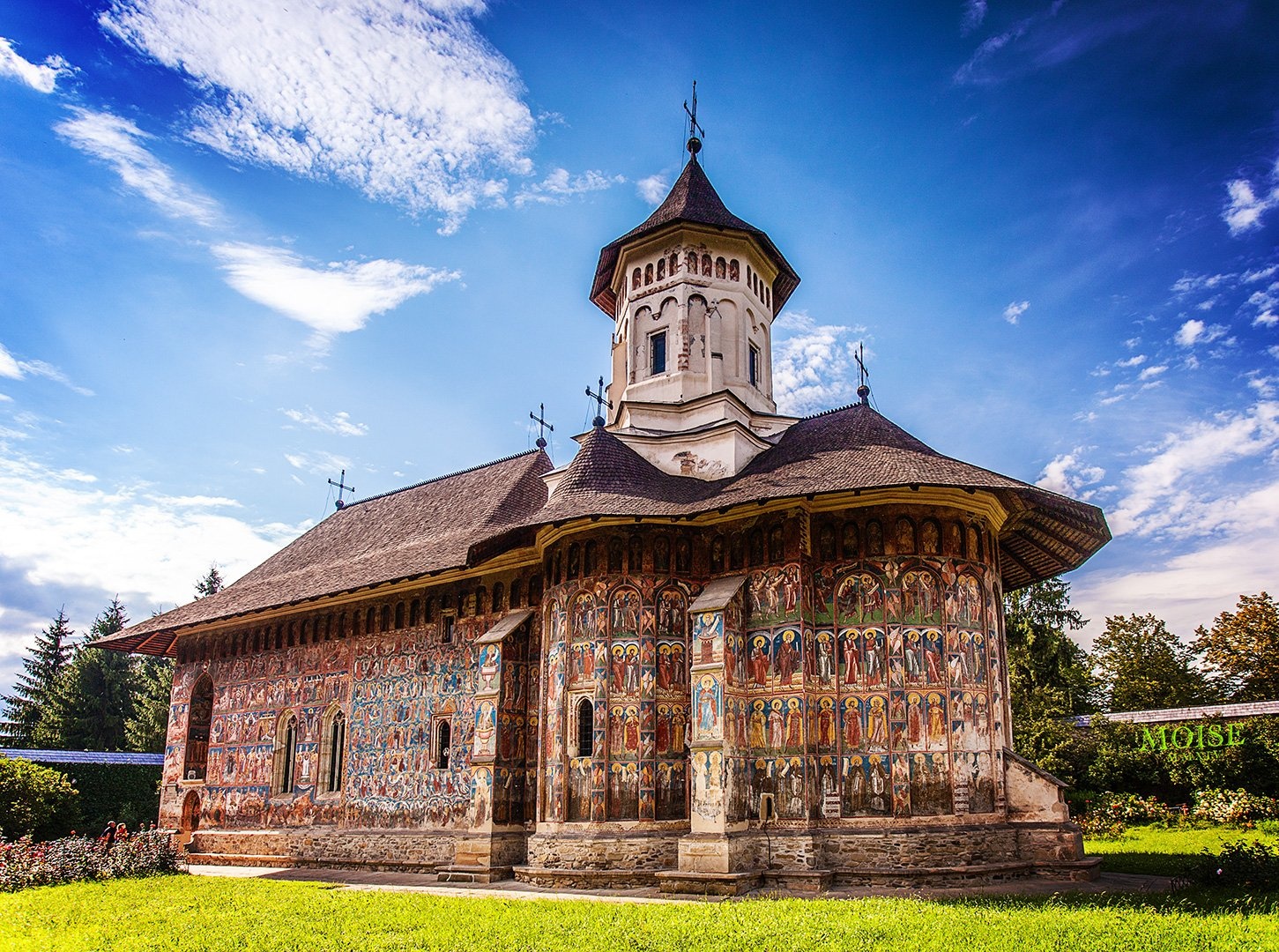
Moldovița Monastery (Mănăstirea Moldovița) lies in the village of Vatra Moldoviței, in a wooded valley in the west of Romanian Bukovina, about 15 km from the village of Vama. Its Church of the Annunciation is one of the eight painted churches that make up the UNESCO World Heritage Site "Churches of Moldavia", inscribed in 1993.
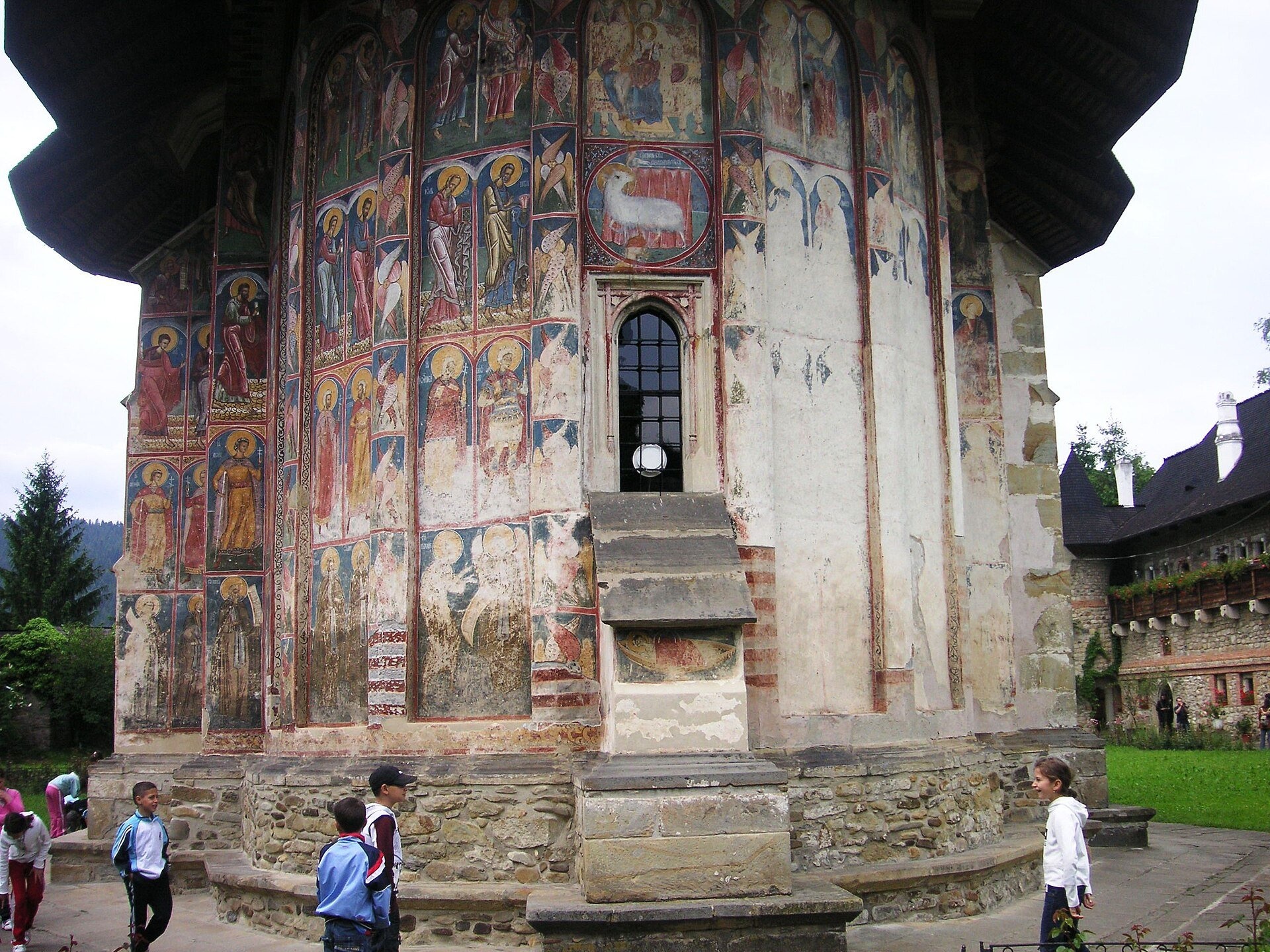
A monastery stood here as early as the reign of Alexander the Good, but at the end of the 15th century the old church was destroyed by a landslide — its remains can be seen about half a kilometre from the present monastery. In 1532 Prince Petru Rareș, son of Stephen the Great, built a new church with the same dedication to the Annunciation and surrounded it with walls and towers, giving the monastery the look of a small fortress. Five years later, in 1537, the walls were painted inside and out; most scholars link the frescoes to the team of the court painter Toma of Suceava. Early in the 17th century (1610–1612) Bishop Efrem of Rădăuți built the clisiarniță in the courtyard — the abbot's house, where church treasures were kept and a school of copyists and miniaturists worked. Today it is a working convent of nuns of the Archdiocese of Suceava and Rădăuți of the Romanian Orthodox Church.
Why go
Moldovița combines two things Bukovina is famous for: an exterior-painted church and a medieval fortified monastery. High stone walls, a gate tower and a corner tower create a sense of an enclosed world, and in the middle of the courtyard, among flower beds, stands the church covered in frescoes in golden yellow and blue. The paintings on the south wall are very well preserved, and the humanity of the faces and the vivid colours make them some of the most expressive in the region. The road here runs through picturesque mountain valleys, so the trip is easy to combine with nature.
What to see
- The Siege of Constantinople on the south wall — a scene from the Akathist Hymn in which the siege of 626 is shown as an Ottoman attack.
- The Tree of Jesse, growing from the figure of Jesse at the foot of the wall, and the procession of saints towards the Virgin and Child above the east window.
- The Last Judgment covering the whole west wall of the open porch, with its river of fire and the sea giving up its dead.
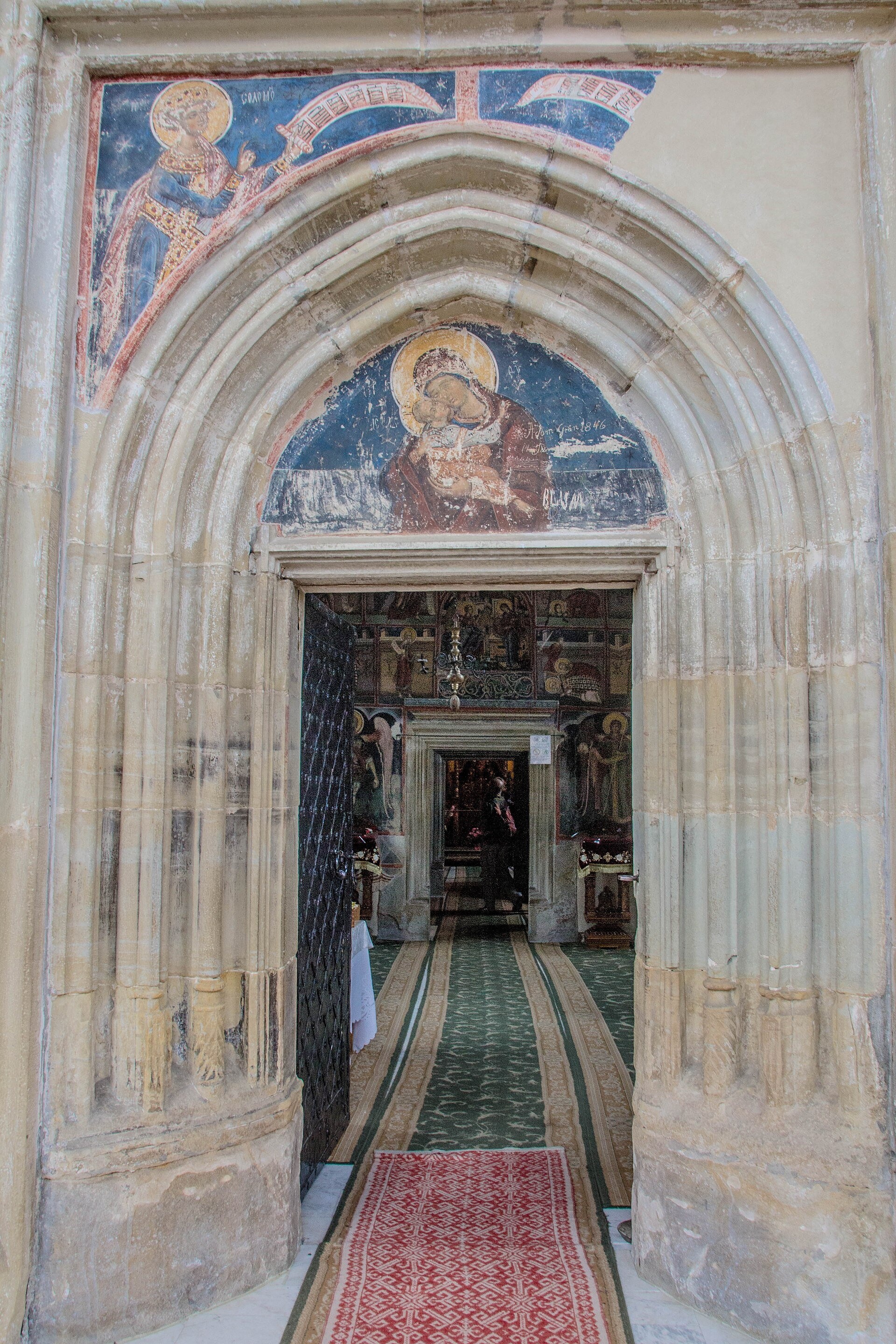
- Gothic windows and portals — together with Humor, this is the last church in Bukovina built with an open porch and a hidden chamber above the burial room.
- The votive painting inside: Petru Rareș and his family offering the church to Christ.
- The clisiarniță of 1610–1612 with its wooden gallery and corner tower.
- The defensive walls and the gate tower through which you enter the monastery.
Practical information
Address: village of Vatra Moldoviței, Suceava County. It is about 35 km from the town of Gura Humorului via the village of Vama, and roughly the same from Sucevița Monastery over the Ciumârna pass. From Ukraine the nearest route is through the Krasnoilsk – Vicovu de Sus border crossing and on through the villages of Marginea and Sucevița — about 55 km. A new car park has been laid out a few metres from the monastery, and the old area in front of the entrance is now pedestrian. Official sources do not publish exact opening hours: the monastery is usually open to visitors daily during daylight hours. Entry 10 lei, photo permit 20 lei (per the Romania Tourism portal as of November 2026). Monastery phone: +40 230 336 348; check before you go.
This is a working convent: dress modestly, with shoulders and knees covered; a skirt and headscarf are appropriate for women. Do not lean on the painted walls or touch the frescoes — restorers specifically ask visitors not to. Do not take photos during services. Allow an hour or a little more.
Nearby
- The Hutulca Mocănița — a forest narrow-gauge railway in the neighbouring village of Moldovița.
- Sucevița Monastery — over the Ciumârna pass.
- Humor Monastery and Voroneț Monastery near Gura Humorului.
- Rarău — a mountain massif with a panorama over Bukovina.
- The Wooden Art Museum in Câmpulung Moldovenesc.
Photos: Rolly00, CC BY-SA 4.0, Wikimedia Commons; Alex Moise, CC BY-SA 3.0 ro, Wikimedia Commons; Nikolai ivanov, CC BY-SA 3.0, Wikimedia Commons; Mihai Raducanu, CC BY-SA 4.0, Wikimedia Commons; Jocelyn Erskine-Kellie from London, UK, CC BY-SA 4.0, Wikimedia Commons; România de vis, CC BY-SA 3.0 ro, Wikimedia Commons.
Getting there from Ukraine
Border crossings
- Porubne – Siret — road and pedestrian, 24/7
- Diakivtsi – Racovăț — road and pedestrian, 24/7 No freight traffic.
- Krasnoilsk – Vicovu de Sus — road and pedestrian, 08:00–20:00 Cars up to 3.5 t and pedestrians only; not 24/7.
- Solotvyno – Sighetu Marmației — road and pedestrian, 24/7 Passenger traffic only: vehicles up to 3.5 t with up to 9 seats, pedestrians.
- Diakove – Halmeu — road, 24/7 No pedestrian crossing.
By car
Chernivtsi – Câmpulung Moldovenesc ≈121 km, ≈2 h 12 min (via Krasnoilsk – Vicovu de Sus); Ivano-Frankivsk – Câmpulung Moldovenesc ≈239 km, ≈4 h 12 min (via Krasnoilsk – Vicovu de Sus); Rakhiv – Câmpulung Moldovenesc ≈217 km, ≈4 h 35 min (via Solotvyno – Sighetu Marmației). Times without border queues, our road routing (GraphHopper, OSM).
Checked 03.11.2026; border crossing hours and timetables change — check before you travel.
Comments
Travellers’ experience: reports, tips, questions.
No one has written here yet. Be the first — your experience helps others.
Video
 Discover Romania: Mănăstirea Moldoviţa (@Arhiva TVR)TVR
Location on the map
Nearby attractions
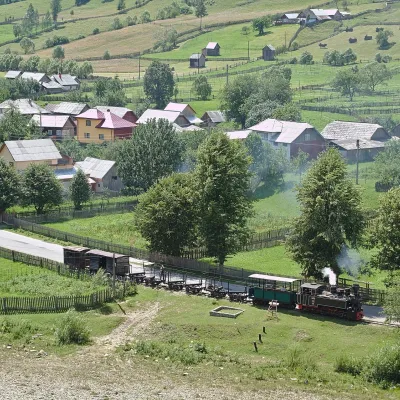 Heritage transportMocănița Huțulca: forest narrow-gauge railway in MoldovițaMoldovița4.4 km from Moldovița Monastery: UNESCO painted church behind wallsA forest narrow-gauge railway more than 135 years old Moldovița is a mountain village in the valley of the river of the same name, in the very heart of Romanian...
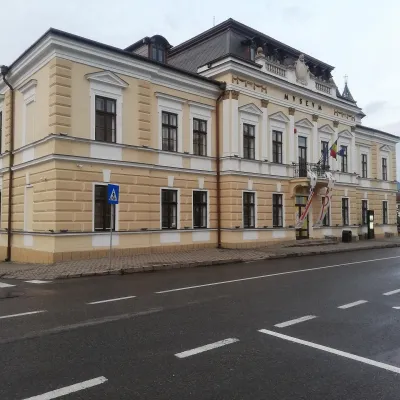 MuseumWood Art Museum in Câmpulung MoldovenescCâmpulung Moldovenesc14 km from Moldovița Monastery: UNESCO painted church behind wallsThe Wood Art Museum (Muzeul Arta Lemnului) in Câmpulung Moldovenesc is, in the museum's own words, the only ethnographic museum in Romania devoted exclusively to the...
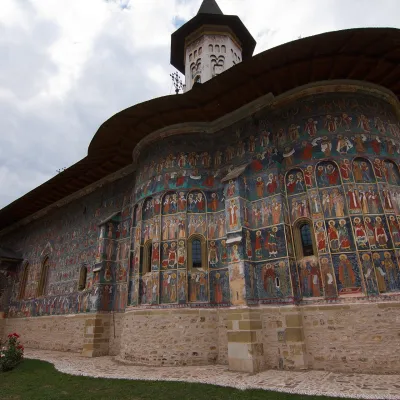 ChurchSucevița Monastery: UNESCO painted church and wallsSucevița17 km from Moldovița Monastery: UNESCO painted church behind wallsSucevița Monastery (Mănăstirea Sucevița) stands in the valley of the river of the same name in the village of Sucevița, about 18 km from the town of Rădăuți in...
Craft nearby
All craft places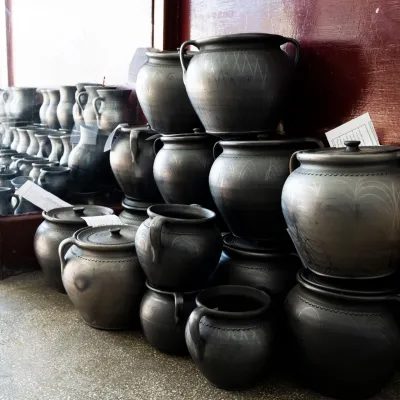 Crafts & workshopsBlack pottery of Marginea: the Magopăț family workshopMarginea23 km from Moldovița Monastery: UNESCO painted church behind wallsBlack pottery of Marginea: the sixth generation of the Magopăț family Marginea is a large village in the Romanian part of Bukovina, between the town of Rădăuți and...
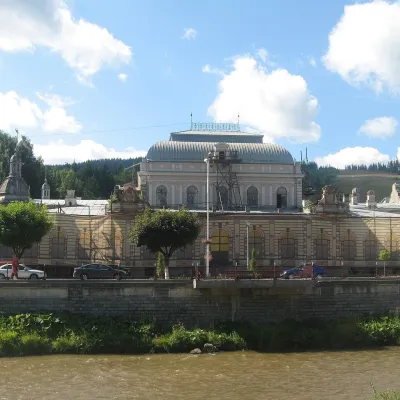 Water parks & thermal poolsVatra Dornei: carbonated baths, mofette and spa parkVatra Dornei39 km from Moldovița Monastery: UNESCO painted church behind wallsVatra Dornei is an old balneoclimatic spa in Romanian Bukovina, lying at about 802 m in the Dorna Depression, where the Dorna River flows into the Bistrița.
