Putna Monastery: burial place of Stephen the Great
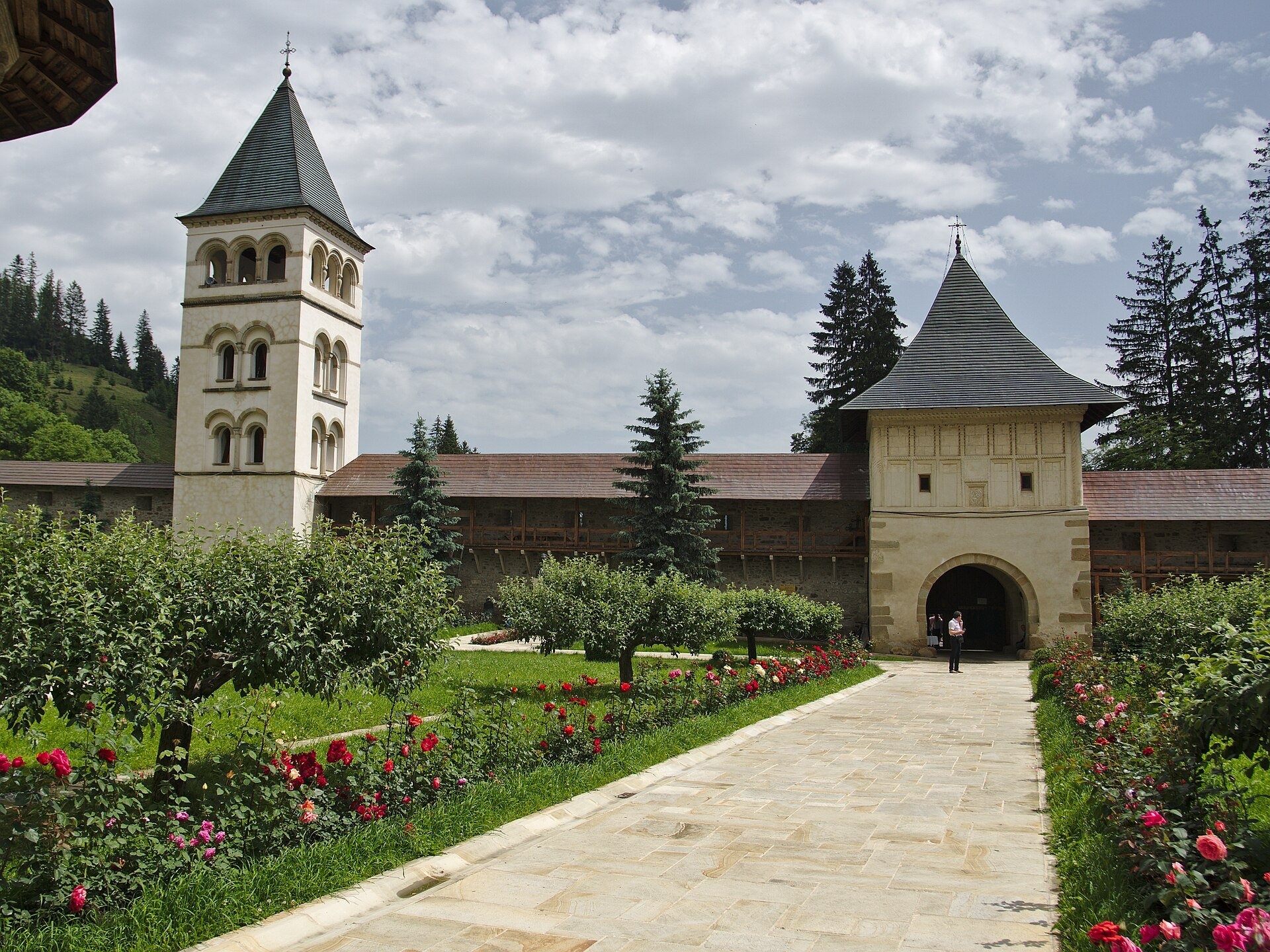
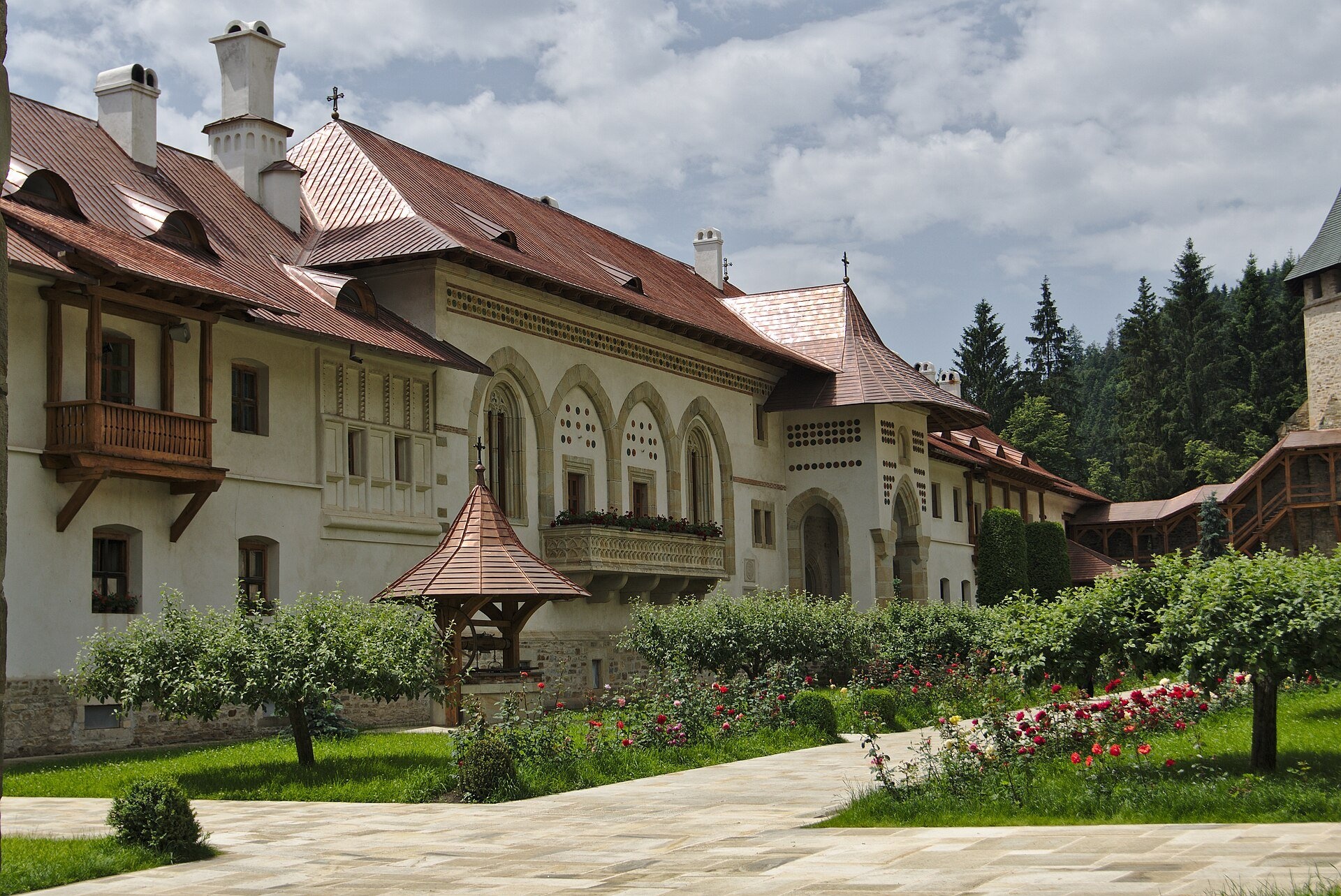
The monastery of Stephen the Great
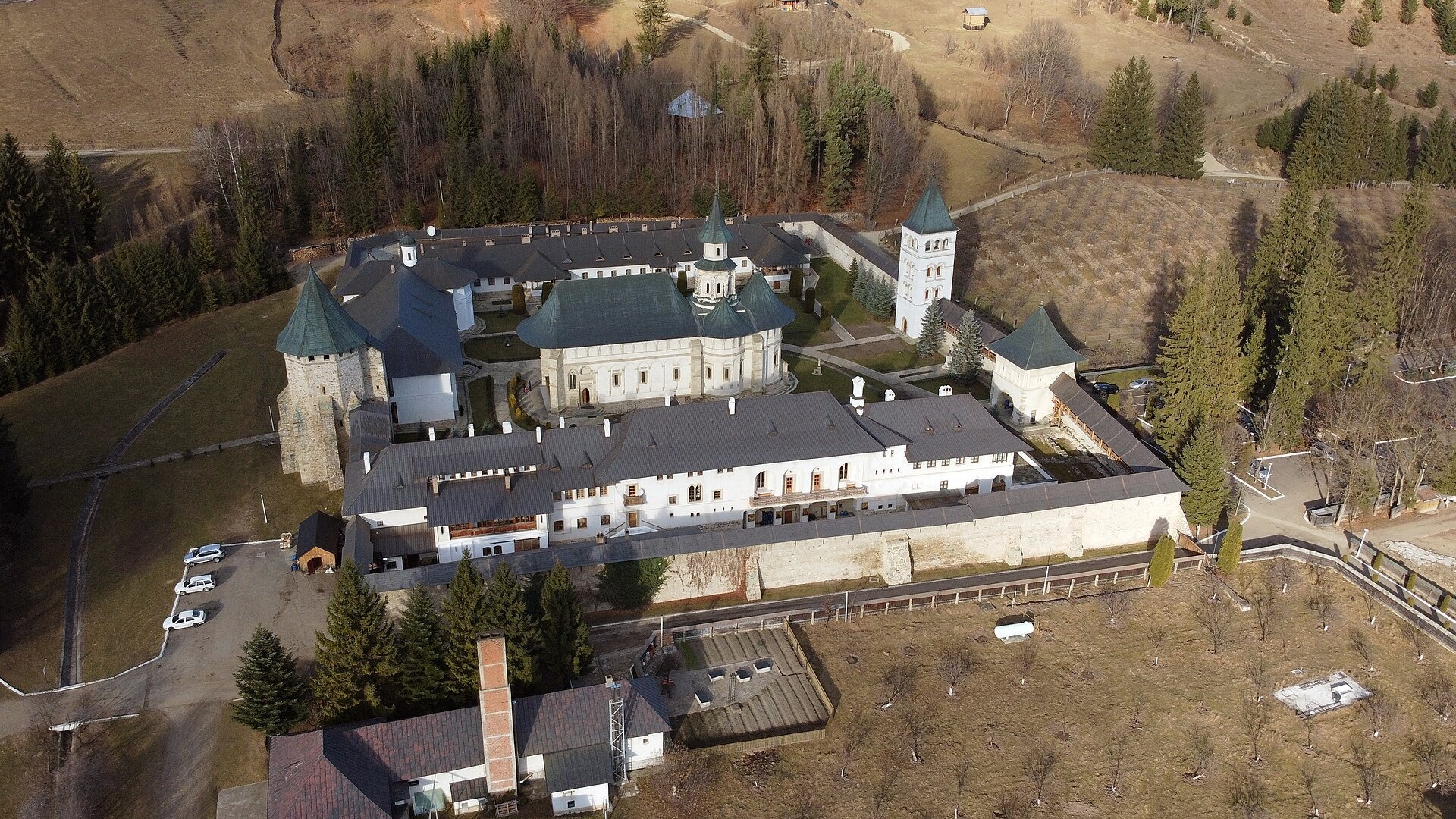
Putna Monastery (Mănăstirea Putna) stands in the valley of the river of the same name in the north-west of historical Bukovina, at the foot of the Obcine ridges of the Eastern Carpathians. It was founded by Stephen the Great (Ștefan cel Mare), Prince of Moldavia: according to the chronicle, building began on 10 July 1466, and on 3 September 1469 the Church of the Dormition was consecrated by Metropolitan Teoctist and Bishop Tarasie in the presence of 64 clergy. The first monks came from Neamț Monastery. Stephen intended Putna from the start as his burial place, endowed it generously with land and privileges, and his contemporaries called it "his beloved monastery", while later generations called it "the head of all the monasteries of Moldavia".
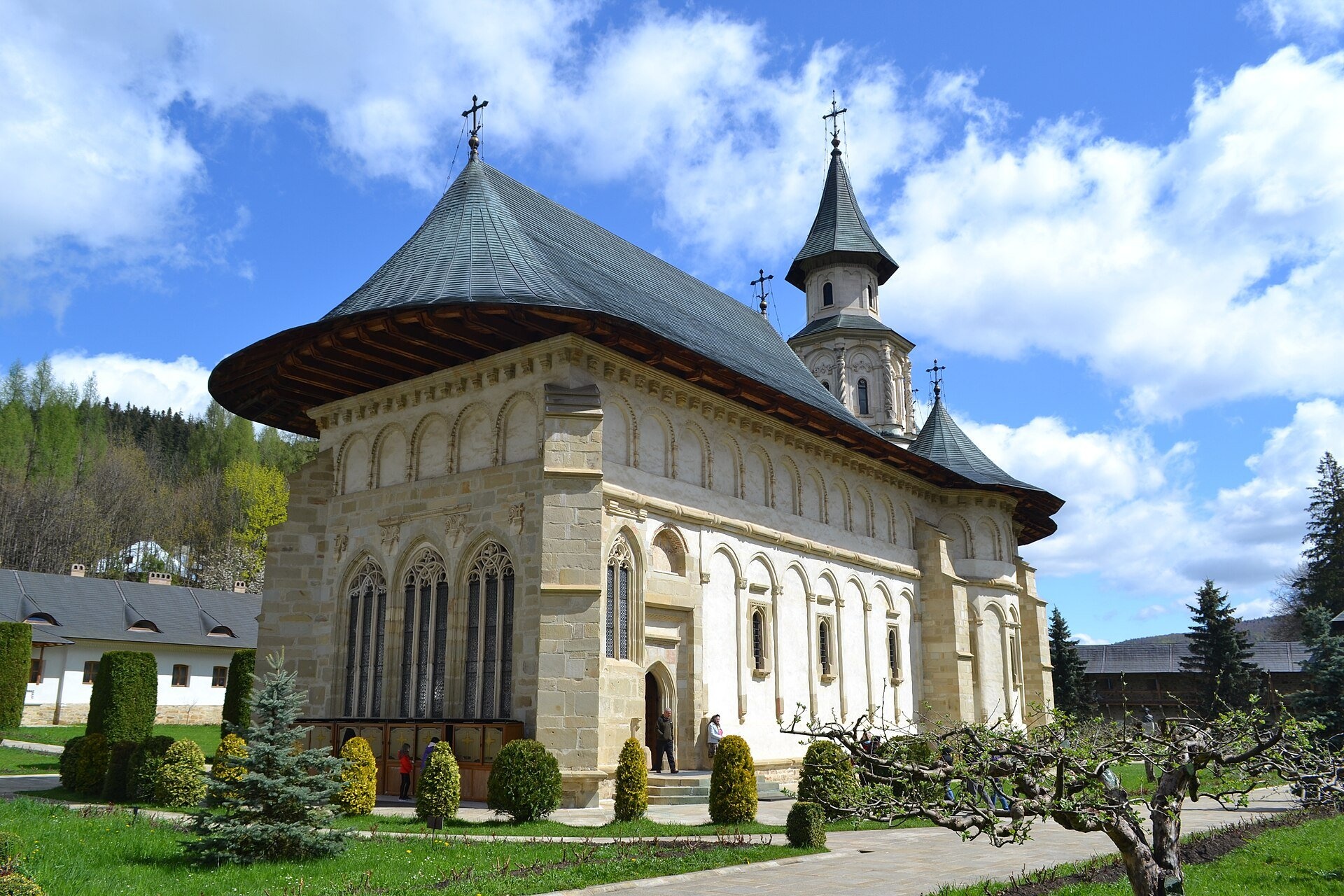
Stephen's first church was painted with gilded frescoes, but in the mid-17th century it had to be taken down because its foundations were failing. The present church was built in 1653–1662 on the same foundations and to the same plan, under Princes Gheorghe Ștefan and Eustratie Dabija. In the 18th century the monastery was renewed by Metropolitan Iacob Putneanul; after 1775, under Austrian rule, some buildings were demolished and rebuilt, and from 1902 an extensive restoration was led by the architect Karl Romstorfer. Major restoration work was also carried out in 1968–1976. After three and a half centuries without murals, the church was painted again in 2001–2010 by Mihail and Gavriil Moroșan and their workshop. Today it is an active Orthodox monastery for monks under the Archdiocese of Suceava and Rădăuți of the Romanian Orthodox Church.
Why go
Putna is the heart of the memory of medieval Moldavia. Stephen the Great is buried here, together with his wife Maria of Mangop (Maria Asanina Paleologhina), Metropolitan Teoctist and the prince's children. For Romanians it is a place of pilgrimage; for travellers it is a chance to see a rare ensemble for the Carpathians: a walled monastery with towers from the 15th–18th centuries, a museum with a renowned collection of medieval embroidery, and a quiet valley among forested hills. Putna is also the starting point of the long-distance Via Transilvanica trail — the monastery museum sells and stamps the hiker's passport.
What to see
- The Church of the Dormition in the Moldavian style, where Gothic windows and buttresses meet a Byzantine plan: porch, pronaos, burial chamber, naos and sanctuary. The interior is covered with modern frescoes from 2001–2010, with Christ Pantocrator in the dome.
- The tomb of Stephen the Great and the tombs of his family in a separate burial chamber of the church.
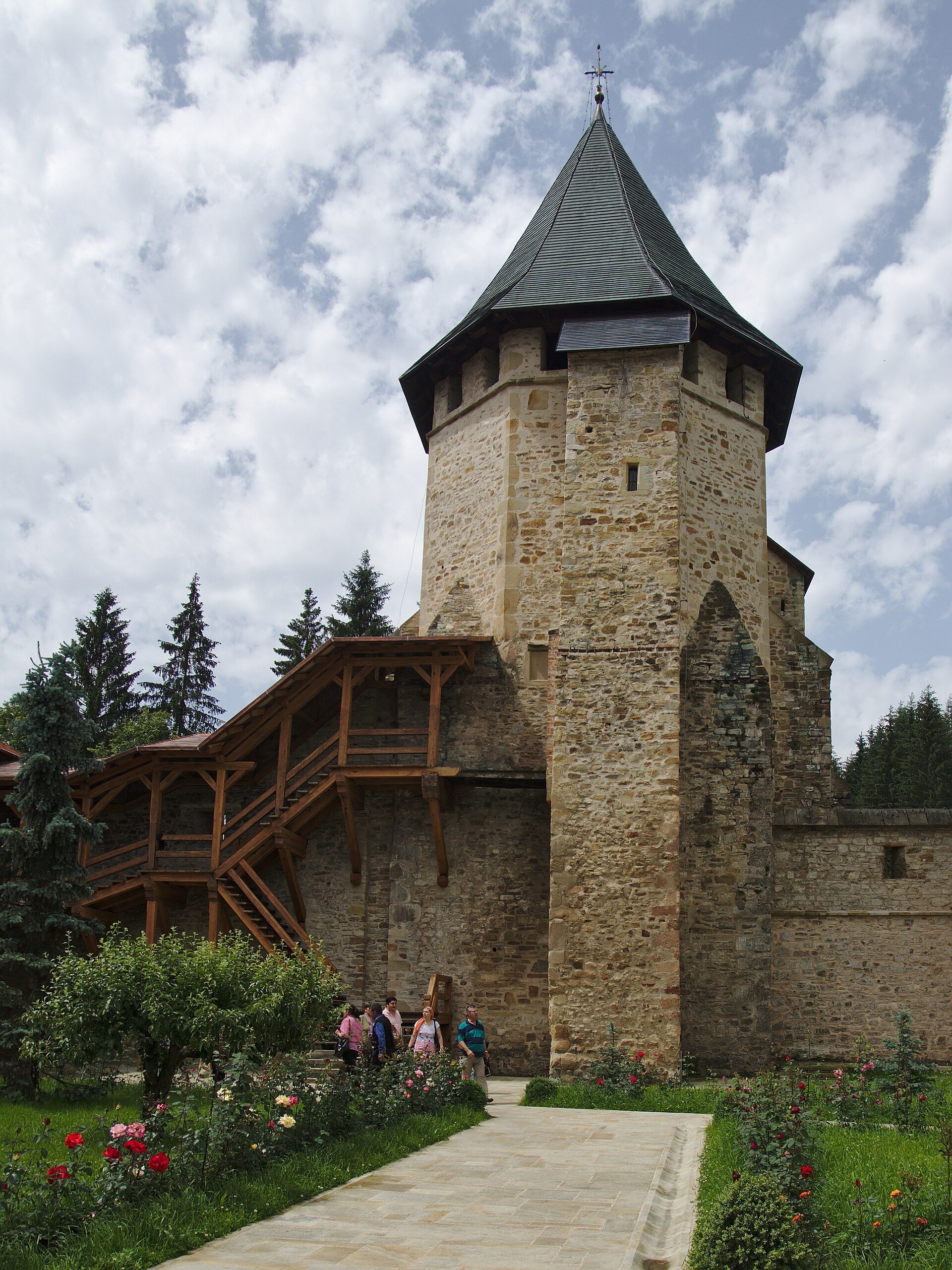
- The Treasury Tower of 1481, the only building preserved in its original form from Stephen's time: about 18 metres high, with four mighty buttresses and walls more than 2 metres thick.
- The Eminescu gate tower, built by Metropolitan Iacob before 1757, with a copy of Stephen's foundation inscription of 1481, and the bell tower, which has held the monastery's new bells since 2016.
- The monastery museum in a building from 1976: one of the world's most important collections of Byzantine embroidery, including the tomb cover of Maria of Mangop, manuscripts, silver and gold church objects, fragments of the original 15th-century frescoes and, according to tradition, a piece of the sycamore struck by Stephen's arrow when he chose the place for the altar.
- The wooden church of Dragoș Vodă in the village cemetery, a few minutes' walk from the monastery. Dendrochronology dates it to before 1400; the monastery calls it the oldest wooden church in Romania.
Practical information
Address: 727455 Putna, Suceava County. The monastery stands at the end of the village of Putna, about 32 km north-west of the town of Rădăuți and about 68 km from the city of Suceava. From Ukraine the nearest border crossing is Krasnoilsk – Vicovu de Sus, about 15 km from Putna; from Chernivtsi it is about 65 km by road in total. You can also travel via the Porubne – Siret crossing and the town of Rădăuți. Trains also run to Putna from Suceava — the monastery website links to the Putna – Suceava timetable.
According to the monastery's website (as of November 2026), the monastery is open to visitors daily from 6:00 to 20:00, and the museum and church shop daily from 9:00 to 19:00. Museum ticket prices are not published on the website — check before you go. Monastery phone: +40 230 414 055, e-mail [email protected]. The schedule of services is published on the monastery's website. Putna is an active monastery for monks: keep quiet, especially during services, and dress modestly as is customary in Orthodox churches (shoulders and knees covered). Ask on site about the rules for taking photos in the church and the museum. Allow 1.5–2 hours for the monastery, the museum and the wooden church. The courtyard is level and well kept, but a narrow spiral staircase leads up the Treasury Tower.
Nearby
- The Sihăstria Putnei hermitage and the rock cell of St Daniel the Hermit (Chilia lui Daniil Sihastrul) — a few kilometres from the monastery, in the forest.
- Sucevița Monastery with its UNESCO-listed paintings — about 37 km.
- Bogdana Monastery in the town of Rădăuți — the oldest stone church in Moldavia, about 32 km.
- Black pottery in the village of Marginea — a potters' workshop on the road to Rădăuți.
- Arbore Church with UNESCO-listed frescoes — beyond Rădăuți.
Official website: putna.ro
Photos: Andreidan71, CC BY-SA 3.0 ro, Wikimedia Commons; AlexanderKlink, CC BY 4.0, Wikimedia Commons; Alexander Klink, CC BY 4.0, Wikimedia Commons; pralea, CC BY 3.0, Wikimedia Commons.
Getting there from Ukraine
Border crossings
- Porubne – Siret — road and pedestrian, 24/7
- Diakivtsi – Racovăț — road and pedestrian, 24/7 No freight traffic.
- Krasnoilsk – Vicovu de Sus — road and pedestrian, 08:00–20:00 Cars up to 3.5 t and pedestrians only; not 24/7.
- Solotvyno – Sighetu Marmației — road and pedestrian, 24/7 Passenger traffic only: vehicles up to 3.5 t with up to 9 seats, pedestrians.
- Diakove – Halmeu — road, 24/7 No pedestrian crossing.
By car
Chernivtsi – Câmpulung Moldovenesc ≈121 km, ≈2 h 12 min (via Krasnoilsk – Vicovu de Sus); Ivano-Frankivsk – Câmpulung Moldovenesc ≈239 km, ≈4 h 12 min (via Krasnoilsk – Vicovu de Sus); Rakhiv – Câmpulung Moldovenesc ≈217 km, ≈4 h 35 min (via Solotvyno – Sighetu Marmației). Times without border queues, our road routing (GraphHopper, OSM).
Checked 03.11.2026; border crossing hours and timetables change — check before you travel.
Comments
Travellers’ experience: reports, tips, questions.
No one has written here yet. Be the first — your experience helps others.
Video 3
 Exclusiv în România: Vizită la Mănăstirea Putna (TVR1)TVR


Location on the map
Nearby attractions
 ChurchSucevița Monastery: UNESCO painted church and wallsSucevița13 km from Putna Monastery: burial place of Stephen the GreatSucevița Monastery (Mănăstirea Sucevița) stands in the valley of the river of the same name in the village of Sucevița, about 18 km from the town of Rădăuți in...
 Crafts & workshopsBlack pottery of Marginea: the Magopăț family workshopMarginea16 km from Putna Monastery: burial place of Stephen the GreatBlack pottery of Marginea: the sixth generation of the Magopăț family Marginea is a large village in the Romanian part of Bukovina, between the town of Rădăuți and...
 ChurchMoldovița Monastery: UNESCO painted church behind wallsVatra Moldoviței23 km from Putna Monastery: burial place of Stephen the GreatMoldovița Monastery (Mănăstirea Moldovița) lies in the village of Vatra Moldoviței, in a wooded valley in the west of Romanian Bukovina, about 15 km from the village...