Mraconia Monastery: a church above the Danube gorge
A monastery that outlived the flood
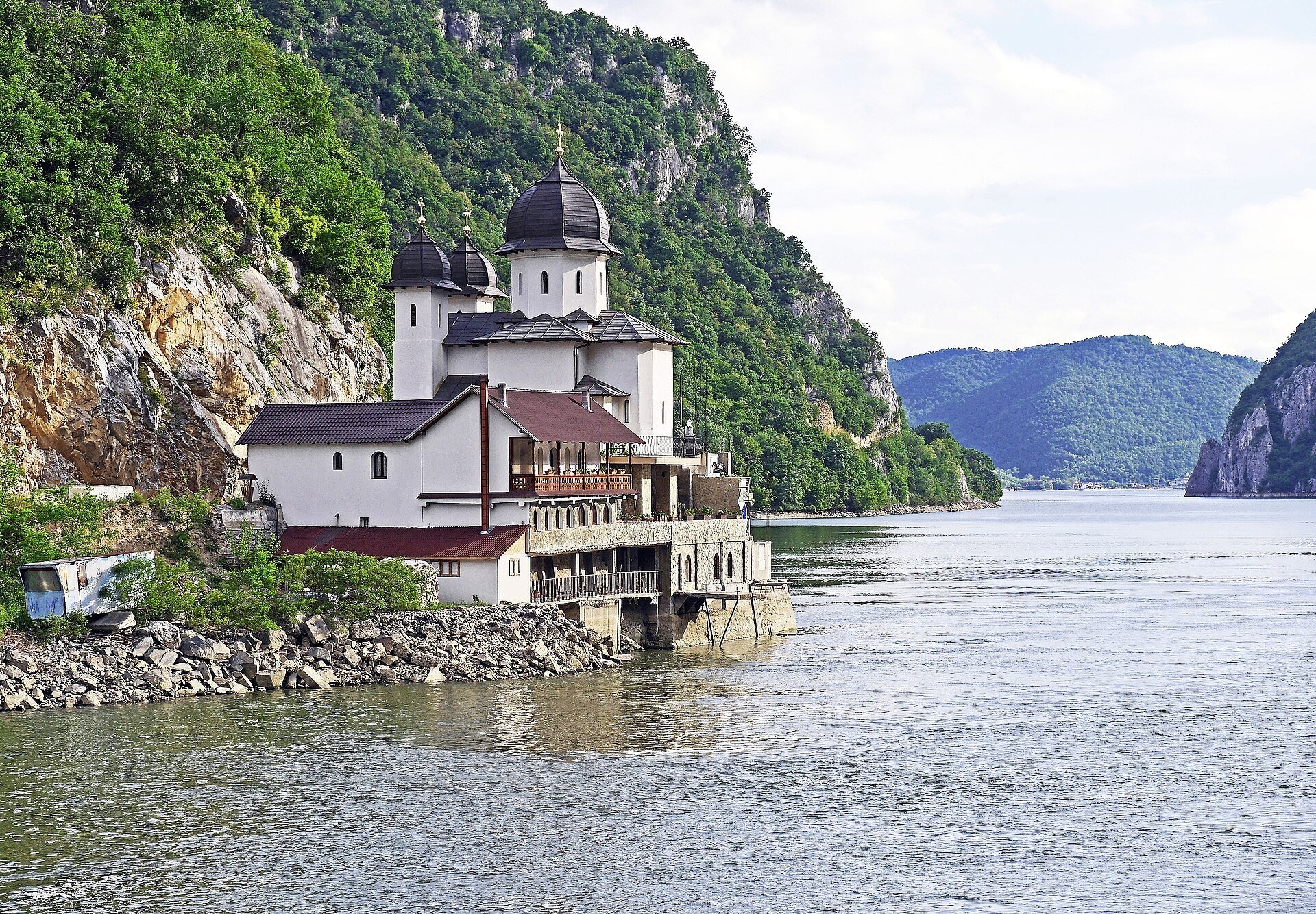
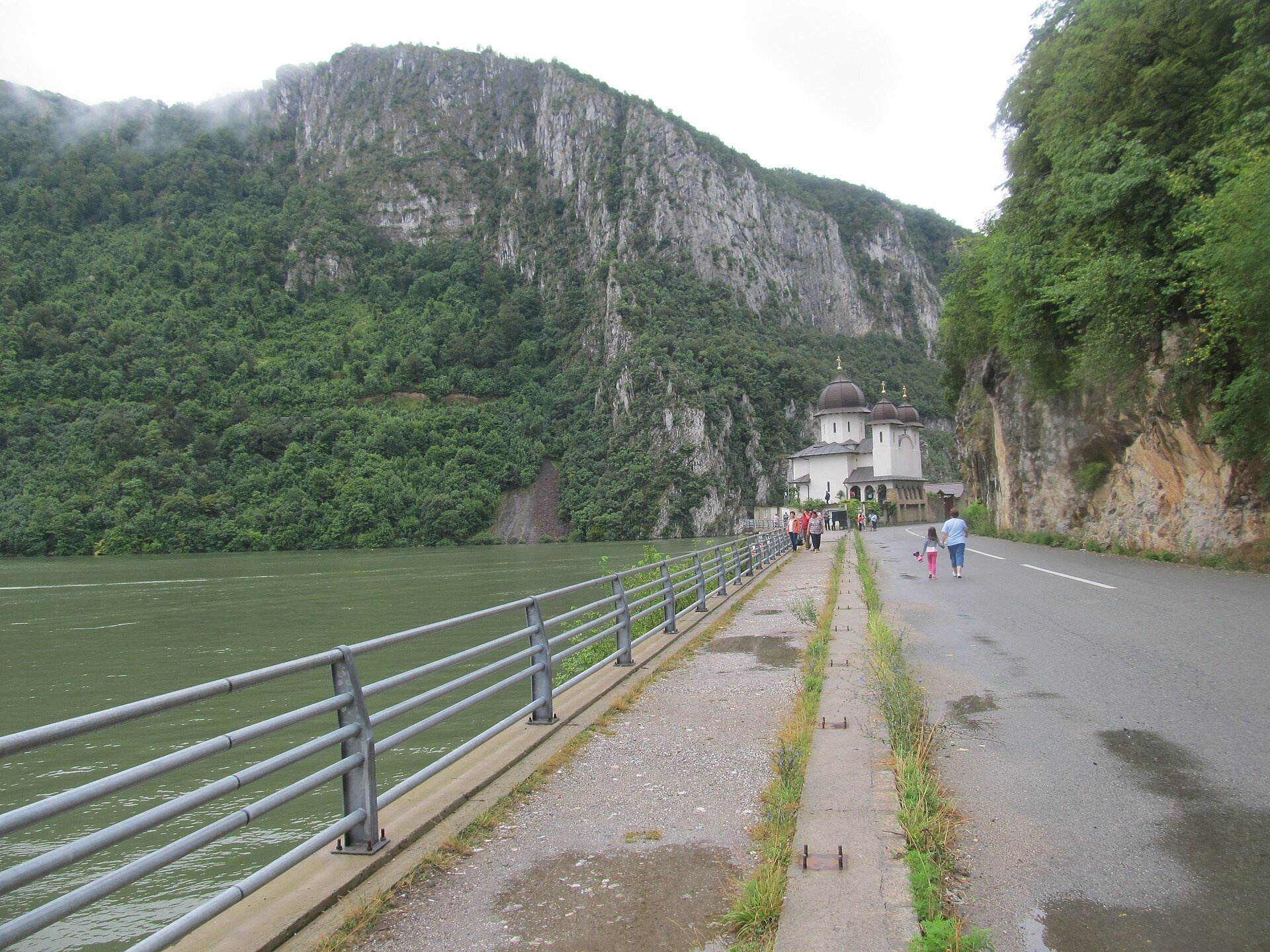
Mraconia Monastery (Mănăstirea Mraconia) stands on the left, Romanian bank of the Danube, in the narrow bay of the Mraconia stream between the villages of Dubova and Eșelnița, about 15 km from the town of Orșova. Here the Danube cuts through the southern spurs of the Carpathians and forms the Great and Small Cauldrons (Cazanele Dunării) — the narrowest and deepest stretch of the whole Iron Gates valley. Across the water lies the Serbian bank and Đerdap National Park.
The first Mraconia monastery existed in the valley of the same name at least from the 15th century. Its church, dedicated to the Prophet Elijah, was built in 1523 by Ban Nicola Gârlișteanu, governor of the border region of Caransebeș and Lugoj. According to the chronicler Nicolae Stoica of Hațeg, the monks of Mraconia were already fleeing Ottoman raids to Orșova in the 15th century. The monastery was destroyed during the Austro-Russian–Turkish war of 1787–1792, rebuilt later, and finally demolished in 1967, when the valley was flooded by the reservoir of the Iron Gates hydropower plant. When the Danube runs very low, the cross-shaped ruins of the old church still emerge from the water; its royal doors and a vigil lamp are kept in the parish museum of Eșelnița.
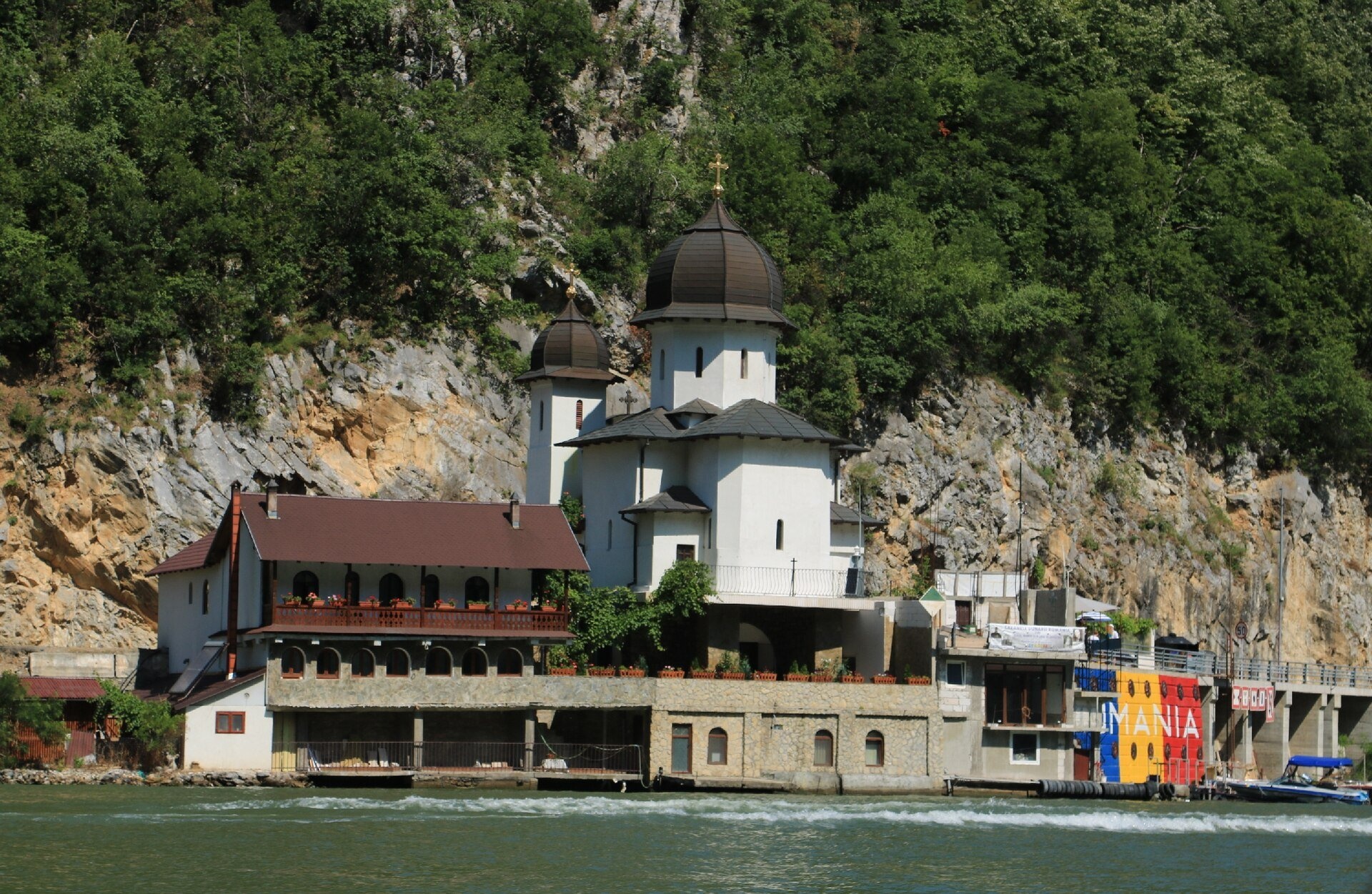
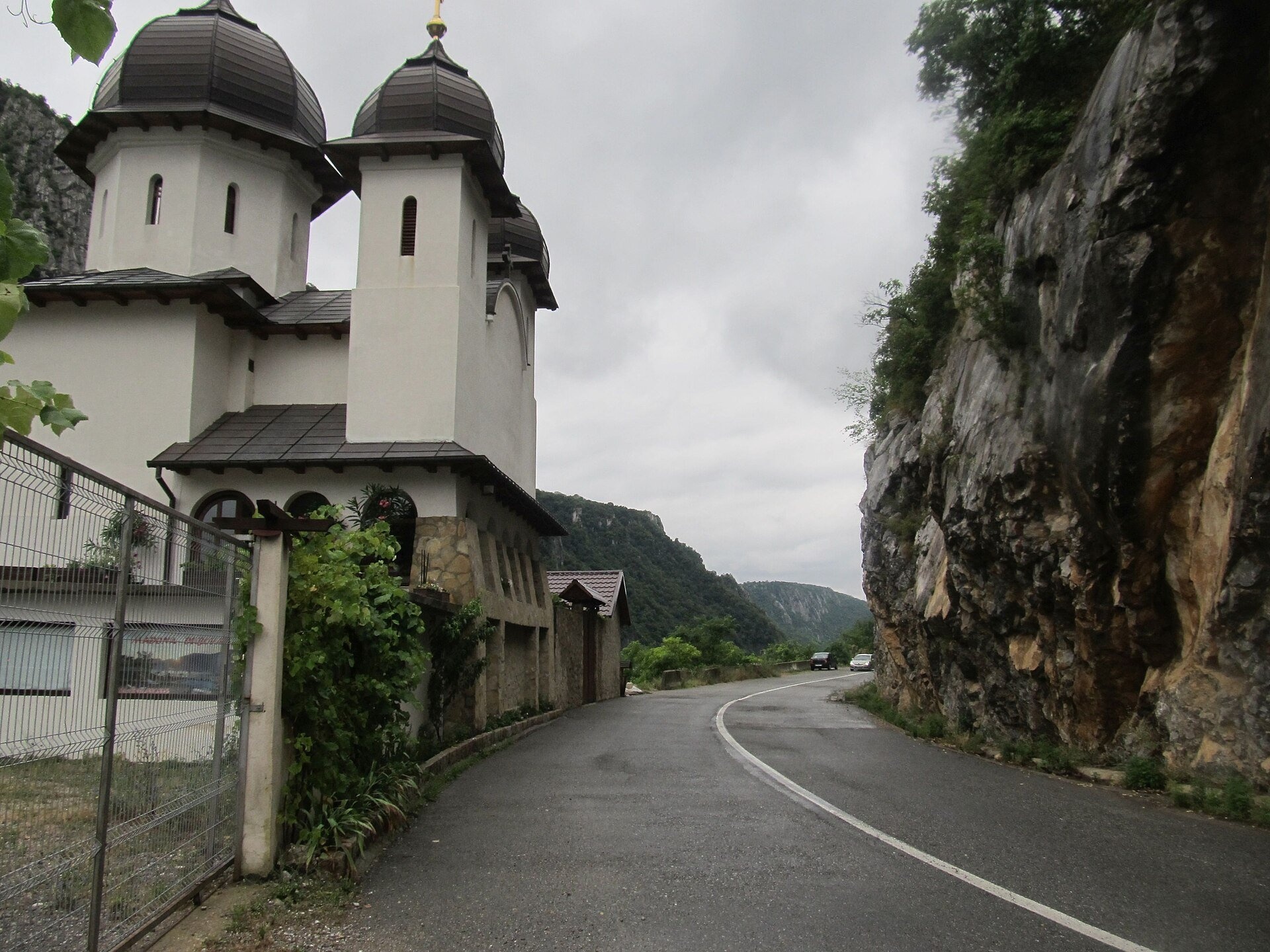
After 1989 the Metropolitan of Oltenia initiated the revival of the monastery. The foundation stone of the new church was laid in 1993 and the building was completed in 1999–2000. Today's brick church is cross-shaped, with sanctuary, nave, narthex and an open porch, and is dedicated to the Holy Archangels Michael and Gabriel and to the Holy Trinity. It is an active monastery of the Romanian Orthodox Church.
Why go
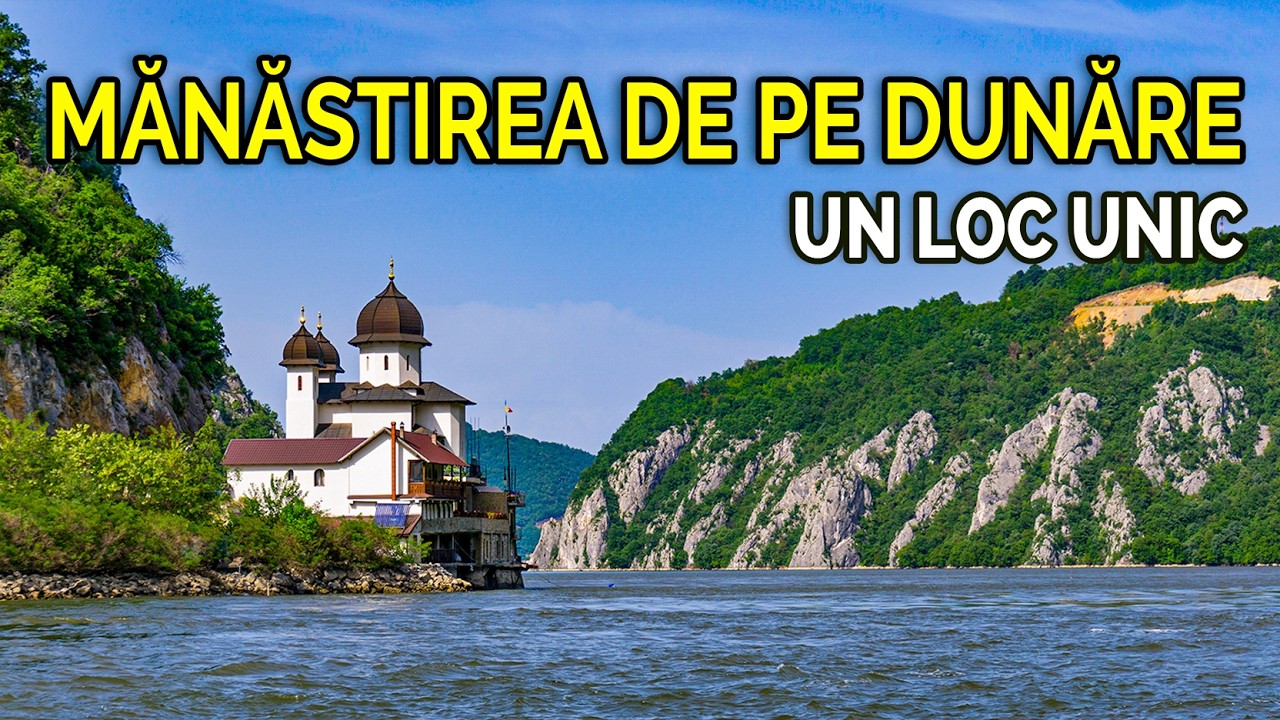
Mraconia is one of the most photogenic churches in the Carpathian region: white walls and dark domes against limestone cliffs, with the widest and deepest section of the Danube right below. The monastery stands directly on the DN57 riverside road, so it is a natural stop on any trip through the Cazane gorge. And only a few hundred metres away, on the other side of the bay, the giant face of the Dacian king Decebalus is carved into the rock — the two sights are easy to combine in one visit.
What to see
- The church above the water — the best view is from the river, aboard a sightseeing boat, or from the road a little east of the monastery.
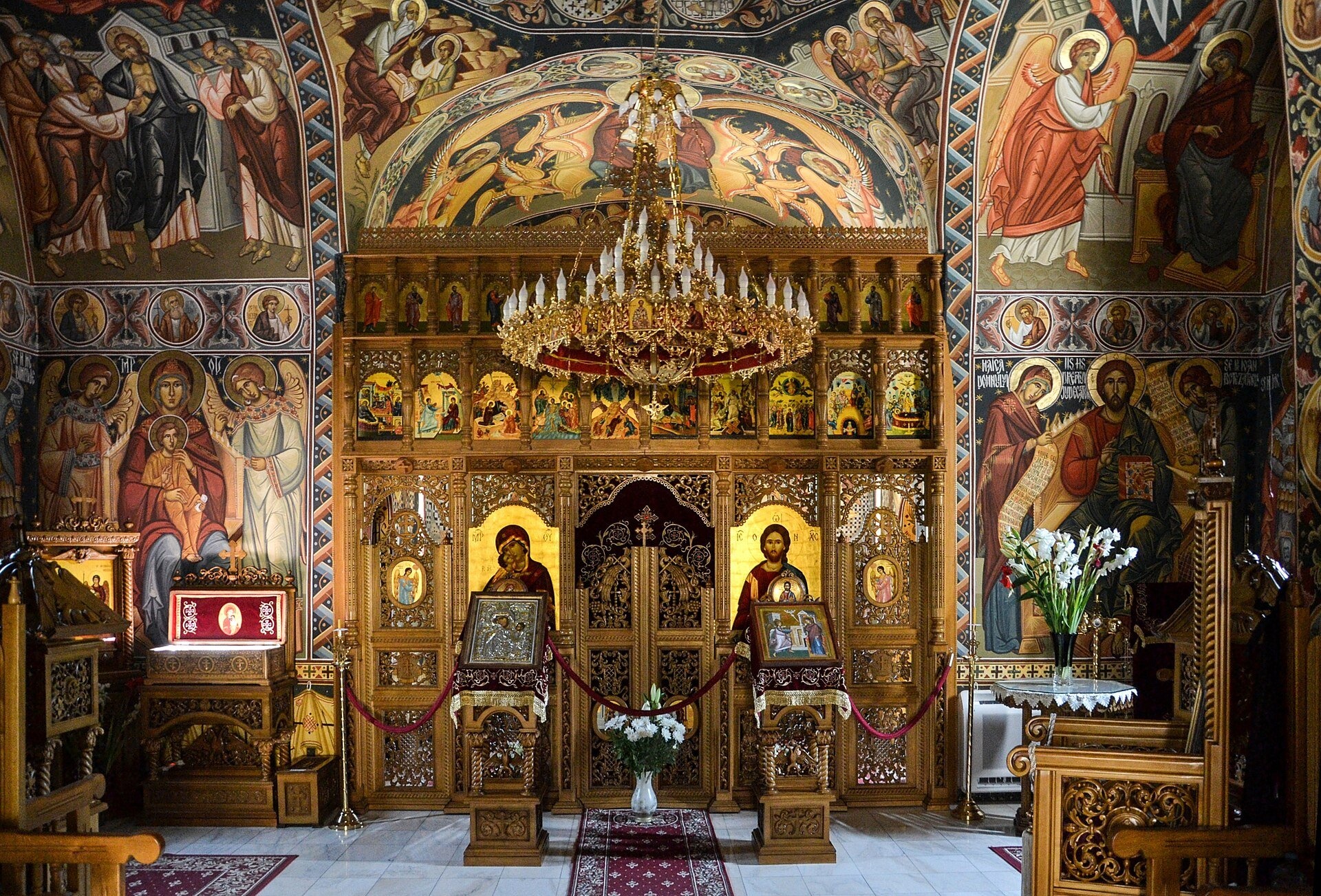
- The church interior with new murals and a carved, gilded iconostasis.
- The view of Mraconia bay and the cliffs of the Small Cauldrons.
- The Serbian bank opposite — the mountains of Đerdap National Park.
- The site of the old monastery under the water: at very low Danube levels the outline of its foundations can be seen.
Practical information
The monastery lies on the DN57 between Orșova (about 15 km) and the village of Dubova; Drobeta-Turnu Severin is roughly 40 km away. Public transport is scarce, so a car is the easiest option; the roadside by the monastery is narrow, so park carefully. From Ukraine the simplest routes lead through Hungary and Timișoara or through the Solotvyno – Sighetu Marmației crossing and on across Transylvania; it is a long journey best combined with other places in the Banat and along the Danube.
The monastery does not publish an official visiting timetable or contact details online; it is usually open to pilgrims every day during daytime. Entry is free. This is an active monastery, so dress modestly: shoulders and knees covered, and women usually cover their heads with a scarf, as is customary in Romanian Orthodox monasteries. Keep quiet during services and ask before taking photos inside the church. 20–30 minutes are enough for the visit; together with the Decebalus face, allow an hour or an hour and a half.
Nearby
- Rock sculpture of Decebalus — a 55-metre rock relief on the other side of Mraconia bay.
- The Great and Small Cauldrons — boats leave from Dubova, Eșelnița and Orșova.
- Rudăria water mills in Eftimie Murgu — more than twenty working mills in the Almăj Mountains.
- Beușnița waterfalls in the Nera gorge — turquoise cascades in Cheile Nerei – Beușnița National Park.
Photos: hpgruesen, CC0, Wikimedia Commons; This image was made by Sadko. Please credit this with: "Sadko, Wikipedia" in..., CC BY-SA 4.0, Wikimedia Commons; Pudelek, CC BY-SA 4.0, Wikimedia Commons; Nenea hartia, CC BY-SA 4.0, Wikimedia Commons.
Getting there from Ukraine
Border crossings
- Porubne – Siret — road and pedestrian, 24/7
- Diakivtsi – Racovăț — road and pedestrian, 24/7 No freight traffic.
- Krasnoilsk – Vicovu de Sus — road and pedestrian, 08:00–20:00 Cars up to 3.5 t and pedestrians only; not 24/7.
- Solotvyno – Sighetu Marmației — road and pedestrian, 24/7 Passenger traffic only: vehicles up to 3.5 t with up to 9 seats, pedestrians.
- Diakove – Halmeu — road, 24/7 No pedestrian crossing.
By car
Rakhiv – Petroșani ≈450 km, ≈6 h 36 min (via Solotvyno – Sighetu Marmației); Ivano-Frankivsk – Petroșani ≈584 km, ≈8 h 55 min (via Solotvyno – Sighetu Marmației); Chernivtsi – Petroșani ≈539 km, ≈9 h 19 min (via Krasnoilsk – Vicovu de Sus). Times without border queues, our road routing (GraphHopper, OSM).
Checked 03.11.2026; border crossing hours and timetables change — check before you travel.
Comments
Travellers’ experience: reports, tips, questions.
No one has written here yet. Be the first — your experience helps others.
Video
 ✝️ MĂNĂSTIREA MRACONIA – NU o Să-ți Vină să Crezi Unde e Construită!😮 Imagini Superbe din DRONĂ 🚁Aventura in Romania
Location on the map
Nearby attractions
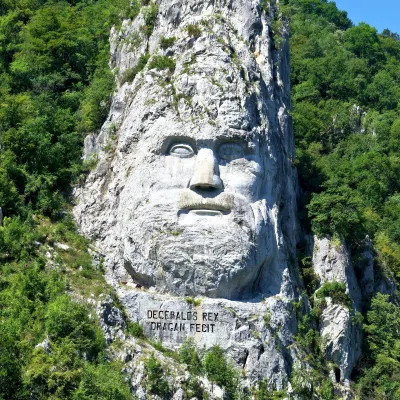 Historic siteRock sculpture of Decebalus above the DanubeEșelnițaunder 1 km from Mraconia Monastery: a church above the Danube gorgeThe king of Dacia in a cliff above the Danube The Rock sculpture of Decebalus (Chipul lui Decebal) is a giant relief carved into a limestone cliff on the left bank of...
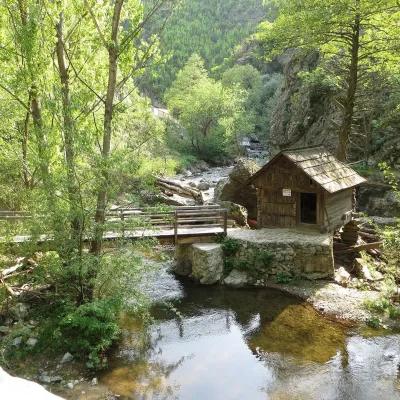 Crafts & workshopsRudăria Watermills: 22 working mills in Eftimie Murgu, BanatEftimie Murgu30 km from Mraconia Monastery: a church above the Danube gorgeThe village of Eftimie Murgu lies in Țara Almăjului, in the south of the Banat, in the mountains of Caraș-Severin County.
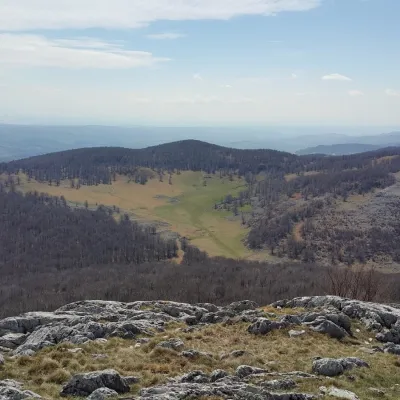 Mountain meadowPoiana BeletinaIsvernaaltitude 1 193 m48 km from Mraconia Monastery: a church above the Danube gorgePoiana Beletina (locals also say Bilitin or Belentina) is a closed karst depression on the crest of the Mehedinți Mountains, in the south-west of the Romanian...