Băile Herculane: sulphur thermal springs of the Cerna valley
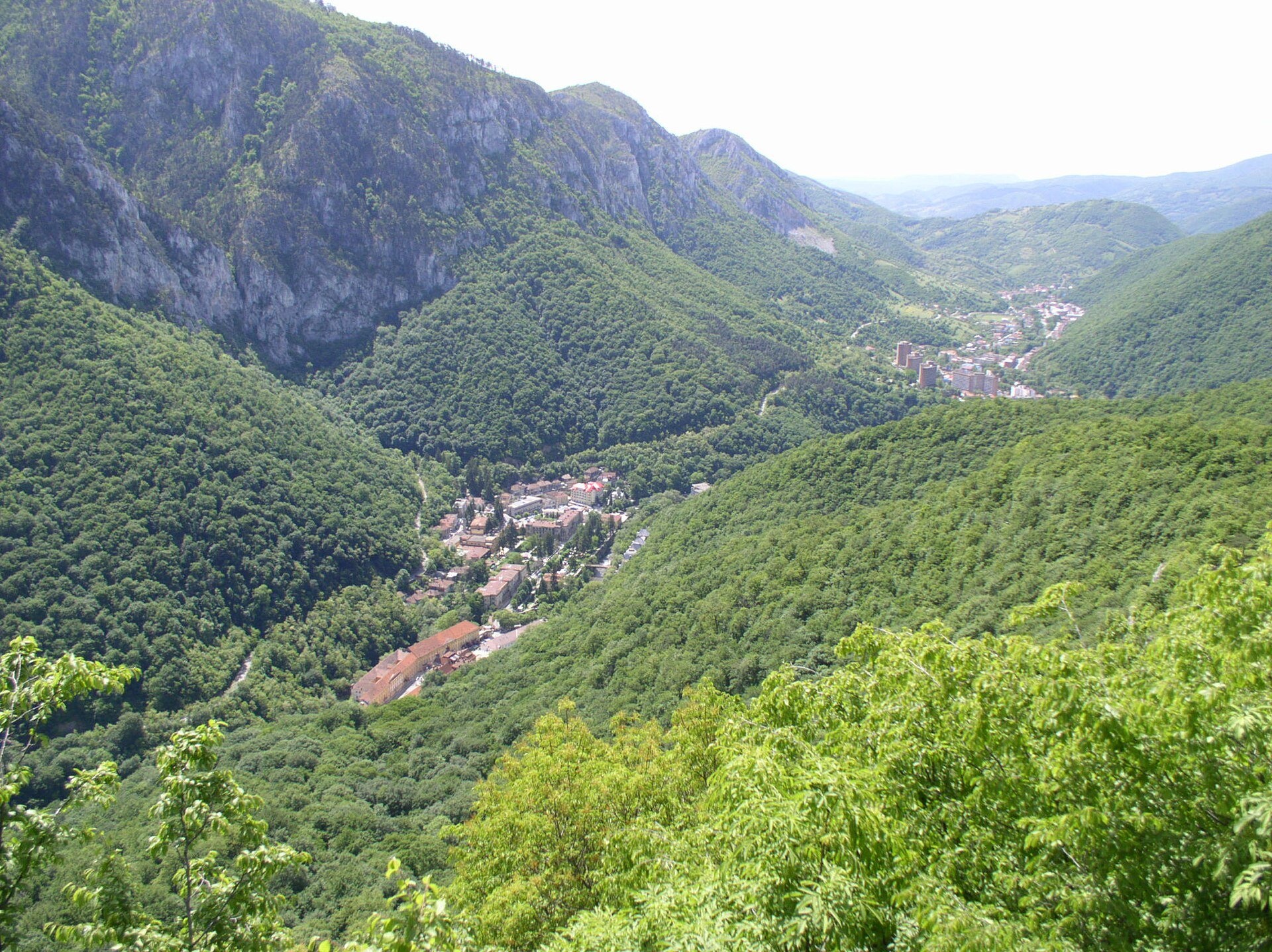
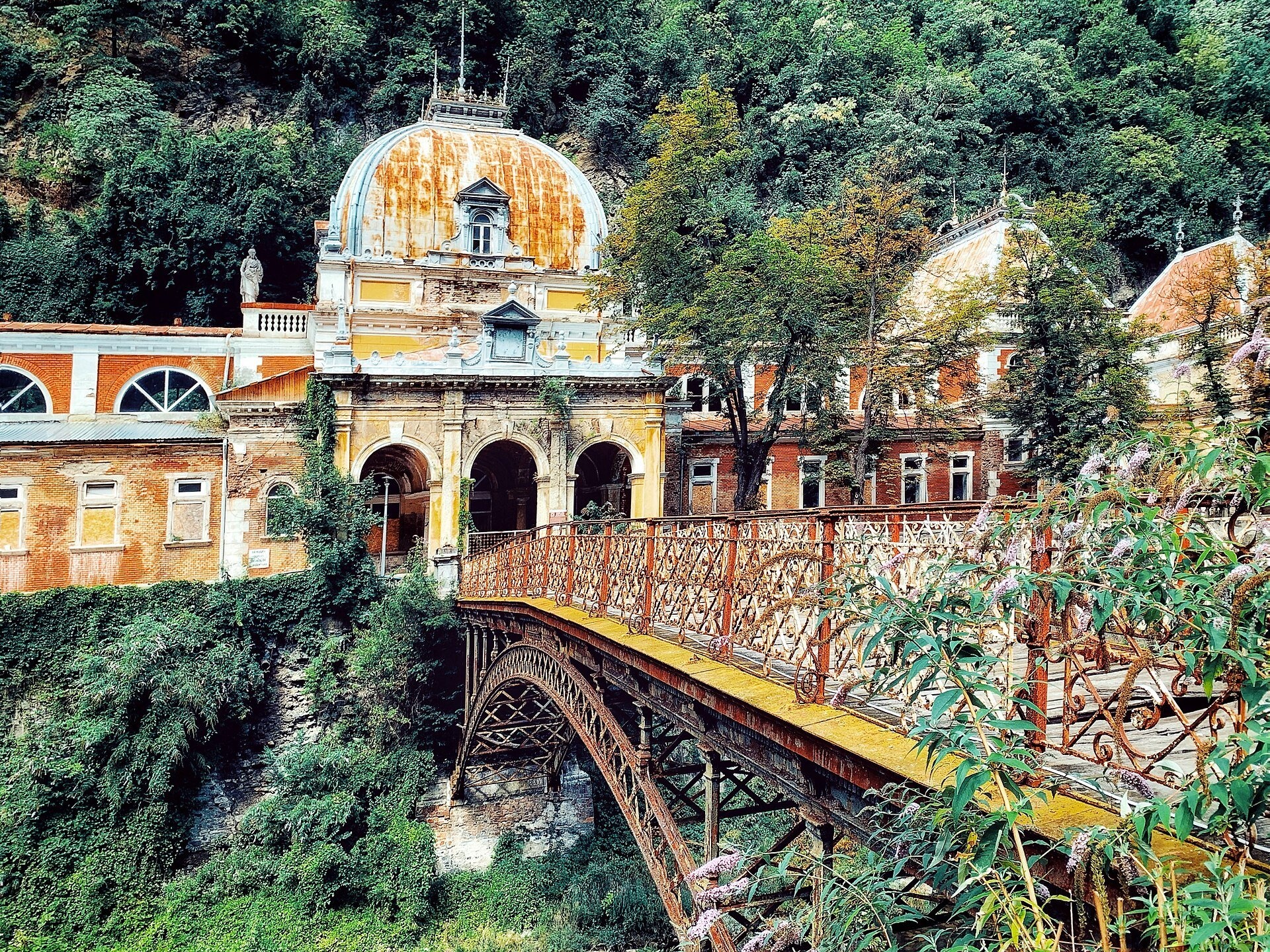
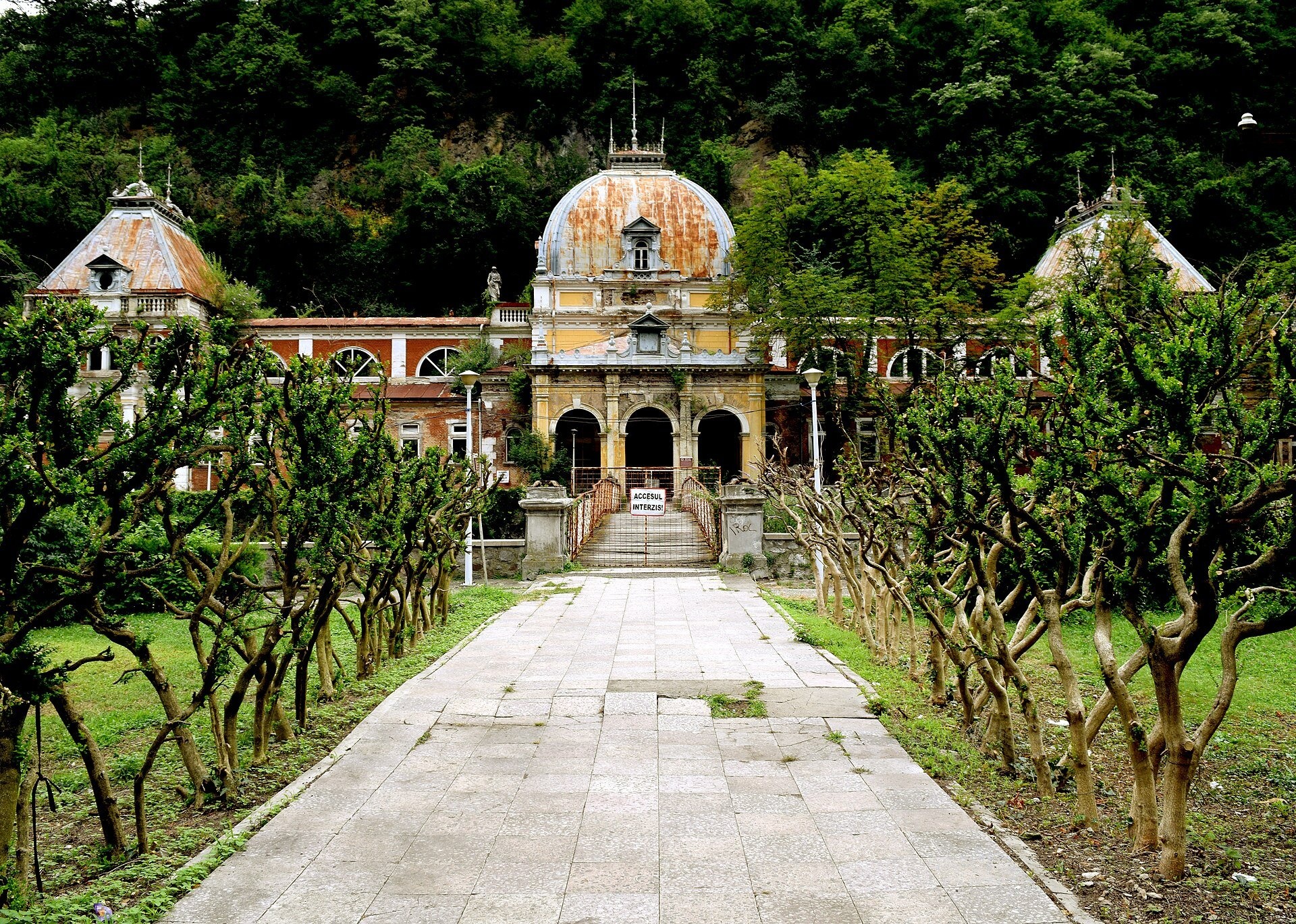
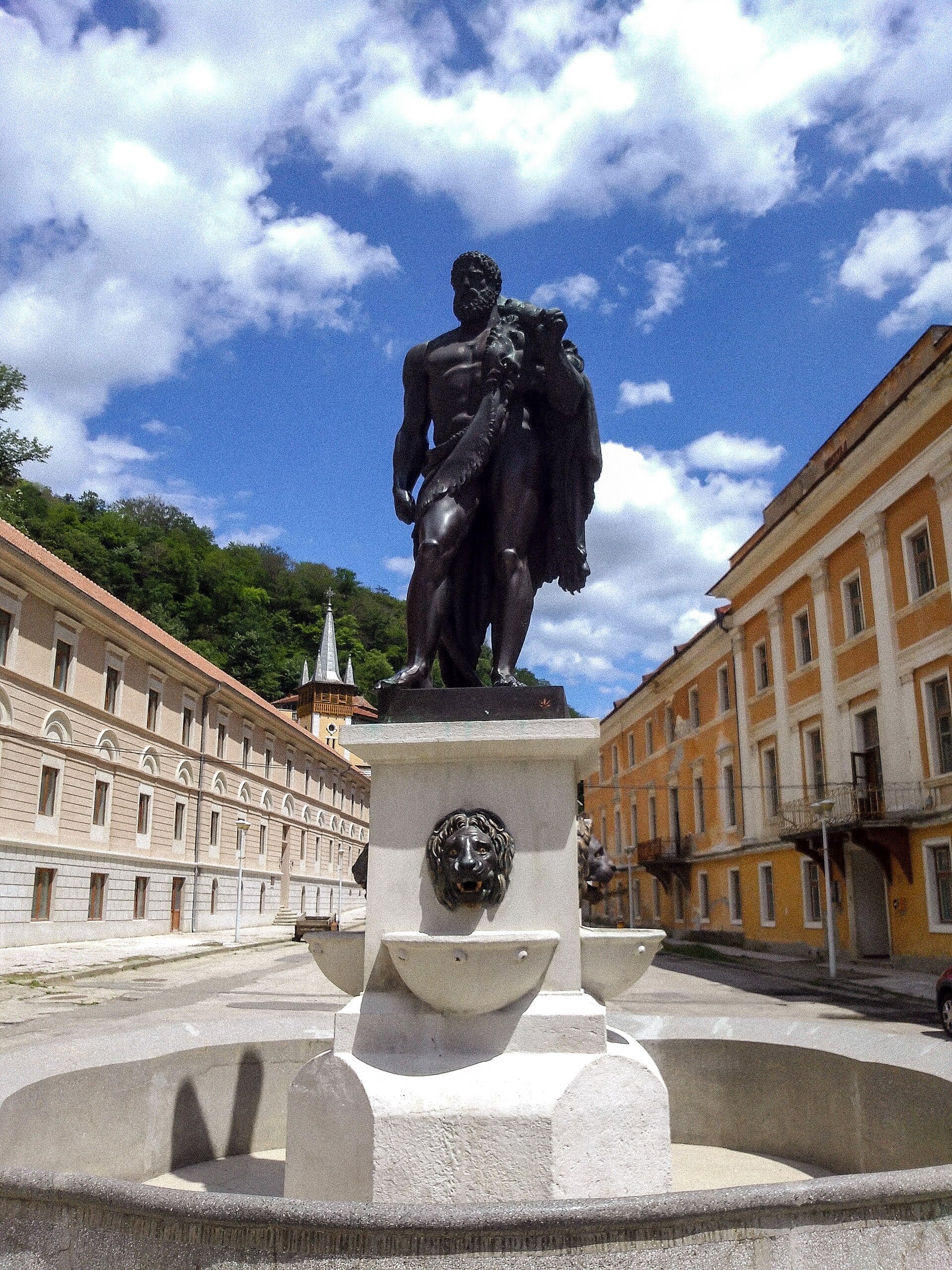
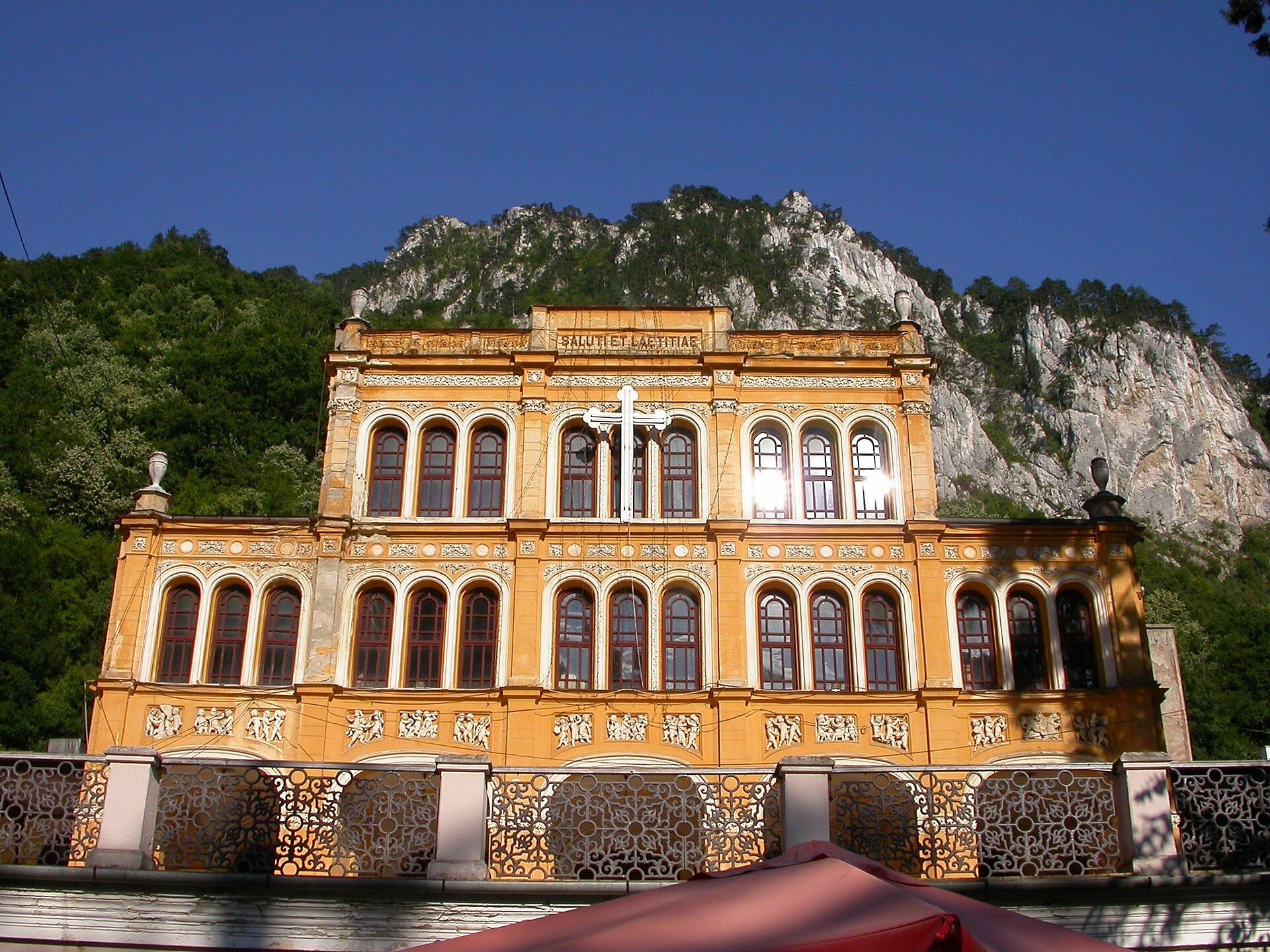
Băile Herculane is Romania's oldest and best-known spa, a small town in the narrow valley of the Cerna river in Caraș-Severin County, at about 168 m, inside the Domogled – Valea Cernei National Park. The Romans knew the hot springs as Ad Aquas Herculi Sacras, the "Sacred Waters of Hercules"; the oldest written record is a votive tablet from AD 153. After 1736, when the area passed to the Habsburgs, the spa was rebuilt, and in the 19th century Emperor Franz Joseph and Empress Elisabeth (Sisi) came here for treatment. Today Băile Herculane is a town of contrasts: grand Austrian pavilions stand next to 1970s concrete hotels, and some of the historic bath houses are derelict.
Natural healing resources
According to the town council, 19 natural springs are known, 9 of them captured and used; altogether 16 thermo-mineral springs line the Cerna over roughly 4 km, and boreholes supply more than 4,000 m³ of water a day. There are three types of water:
- thermal sodium-chloride bicarbonate water, slightly sulphurous, 0.5–2.6 g/l mineralisation, 38.5–53.5 °C;
- thermal sodium-chloride bicarbonate calcium water, 0.6–3.5 g/l, 46–56 °C;
- thermal sodium-chloride water with bromine, iodine and sulphur, up to 62 °C and 3.87–7.93 g/l.
The main feature is a very high hydrogen sulphide content, up to 60 mg/l. The most abundant spring is Hercules, which flows out of the cave of the same name. The historic springs have their own temperatures: Neptun 54 °C, Diana 55 °C, Apollo 46 °C, Hebe 41 °C. The town council also points to the clean valley air, rich in negative ions (2,000–2,500 per cm³).
What is treated
Indications listed by the town council: chronic degenerative rheumatism and osteoarthritis (knee, hip, spondylosis), inflammatory rheumatic diseases (ankylosing spondylitis, rheumatoid polyarthritis), soft-tissue rheumatism, after-effects of injuries to the musculoskeletal system, chronic vascular diseases, respiratory and ENT conditions (chronic bronchitis, asthma in remission, sinusitis), gynaecological inflammations, skin diseases (psoriasis, neurodermatitis), mild diabetes, obesity and gout, and some digestive disorders. Contraindications: tuberculosis, severe liver and kidney disease, decompensated heart disease, blood pressure above 180 mmHg, Parkinson's disease, an ulcer in the acute phase, tumours, mental illness, acute illnesses, pregnancy, epilepsy and bleeding disorders. This information is for reference only and is not medical advice: a doctor prescribes the course and procedures after a consultation.
Procedures and baths
Most of the historic bath houses are out of use today. The famous Neptun Baths (1883–1886) have stood empty since their roof collapsed; according to the press (July 2026), a court handed them over to the state, and the building can only be seen from outside. Pavilion No. 7 and the Diana Baths have been restored. Treatment now takes place in the balneology units of hotels:
- Hotel Roman was built over the Hercules spring; it has a sulphur bath certified by the National Institute of Physical Medicine in Bucharest, an indoor sulphur-water pool, Roman thermae, underwater shower massage, galvanic baths, electrotherapy and sulphur-water aerosols;
- other hotel units offer sulphur baths in pools and individual tubs, herbal baths, kinesiotherapy and physiotherapy.
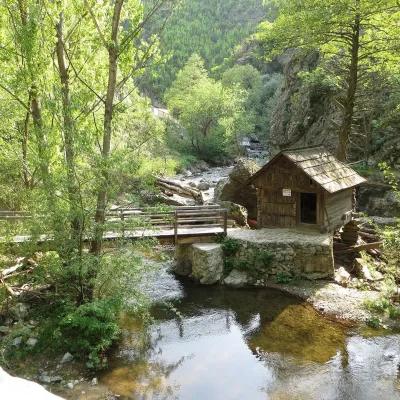
A free open-air alternative is the three sulphur-water tubs on the Via Sissi trail by the Stone Bridge over the Cerna: they are maintained by the Herculane Project association from visitors' donations and are busy in summer. You can also walk up to the Steam Cave (Peștera cu Aburi), where hot vapour escapes from cracks in the rock.
Practical information
The spa is open all year, with the most visitors in summer. Procedures under Romanian health insurance require a referral from a family doctor; single procedures for visitors and their prices should be checked with the chosen treatment unit. The sulphur water smells strongly of hydrogen sulphide and is used only externally and for inhalations. The historic centre — Hercules Square with its statue, the Casino ensemble and the Stone Bridge — is compact and easy to explore on foot. Detailed balneological information is on the town council website.
Getting there from Ukraine
From Chernivtsi it is 637 km, about 10 h 54 min via the Krasnoilsk – Vicovu de Sus checkpoint; from Rakhiv 546 km, about 8 h 13 min via Solotvyno – Sighetu Marmației; from Uzhhorod 608 km, about 8 h 45 min via Diakove – Halmeu; times are without border queues. Romanian roads require the rovinieta e-vignette. Băile Herculane lies 5 km off the DN6 (E70) road and has a railway station on the Timișoara – Bucharest line.
Nearby
The Cerna valley is one of the most beautiful karst areas of the Romanian Carpathians, with caves, gorges and trails up Domogled. Higher in the mountains lies Poiana Beletina with its many karst sinkholes. Other Carpathian spas in Romania include Băile Olănești and Geoagiu-Băi. Mountain rescue: Salvamont 0SALVAMONT — 0725 826 668 or 112.
Photos: Original uploader was Zamolx at ro.wikipedia, CC BY-SA 3.0, Wikimedia Commons; Aiciastat, CC BY-SA 4.0, Wikimedia Commons; Máté, CC BY-SA 4.0, Wikimedia Commons; Kvmgz, CC BY-SA 4.0, Wikimedia Commons; Andrei kokelburg, CC BY-SA 3.0 ro, Wikimedia Commons.
Getting there from Ukraine
Border crossings
- Porubne – Siret — road and pedestrian, 24/7
- Diakivtsi – Racovăț — road and pedestrian, 24/7 No freight traffic.
- Krasnoilsk – Vicovu de Sus — road and pedestrian, 08:00–20:00 Cars up to 3.5 t and pedestrians only; not 24/7.
- Solotvyno – Sighetu Marmației — road and pedestrian, 24/7 Passenger traffic only: vehicles up to 3.5 t with up to 9 seats, pedestrians.
- Diakove – Halmeu — road, 24/7 No pedestrian crossing.
By car
Rakhiv – Petroșani ≈450 km, ≈6 h 36 min (via Solotvyno – Sighetu Marmației); Ivano-Frankivsk – Petroșani ≈584 km, ≈8 h 55 min (via Solotvyno – Sighetu Marmației); Chernivtsi – Petroșani ≈539 km, ≈9 h 19 min (via Krasnoilsk – Vicovu de Sus). Times without border queues, our road routing (GraphHopper, OSM).
Checked 03.11.2026; border crossing hours and timetables change — check before you travel.
Comments
Travellers’ experience: reports, tips, questions.
No one has written here yet. Be the first — your experience helps others.
Location on the map
Nearby attractions
 Mountain meadowPoiana BeletinaIsvernaaltitude 1 193 m18 km from Băile Herculane: sulphur thermal springs of the Cerna valleyPoiana Beletina (locals also say Bilitin or Belentina) is a closed karst depression on the crest of the Mehedinți Mountains, in the south-west of the Romanian...
 ChurchMraconia Monastery: a church above the Danube gorgeDubova31 km from Băile Herculane: sulphur thermal springs of the Cerna valleyMraconia Monastery (Mănăstirea Mraconia) stands on the left, Romanian bank of the Danube, in the narrow bay of the Mraconia stream between the villages of Dubova and...
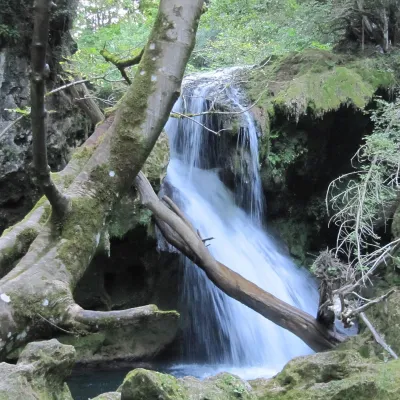 WaterfallBeușnița Waterfalls (Cascadele Beușniței)Socolari · Banat Mountains49 km from Băile Herculane: sulphur thermal springs of the Cerna valleyheight 5–15 m358 m above sea levelThe Beușnița Waterfalls (Cascadele Beușniței) are a chain of cascades on the Beu river, a tributary of the Nera, above Ochiul Beiului lake in the southern Anina...