Poprad River
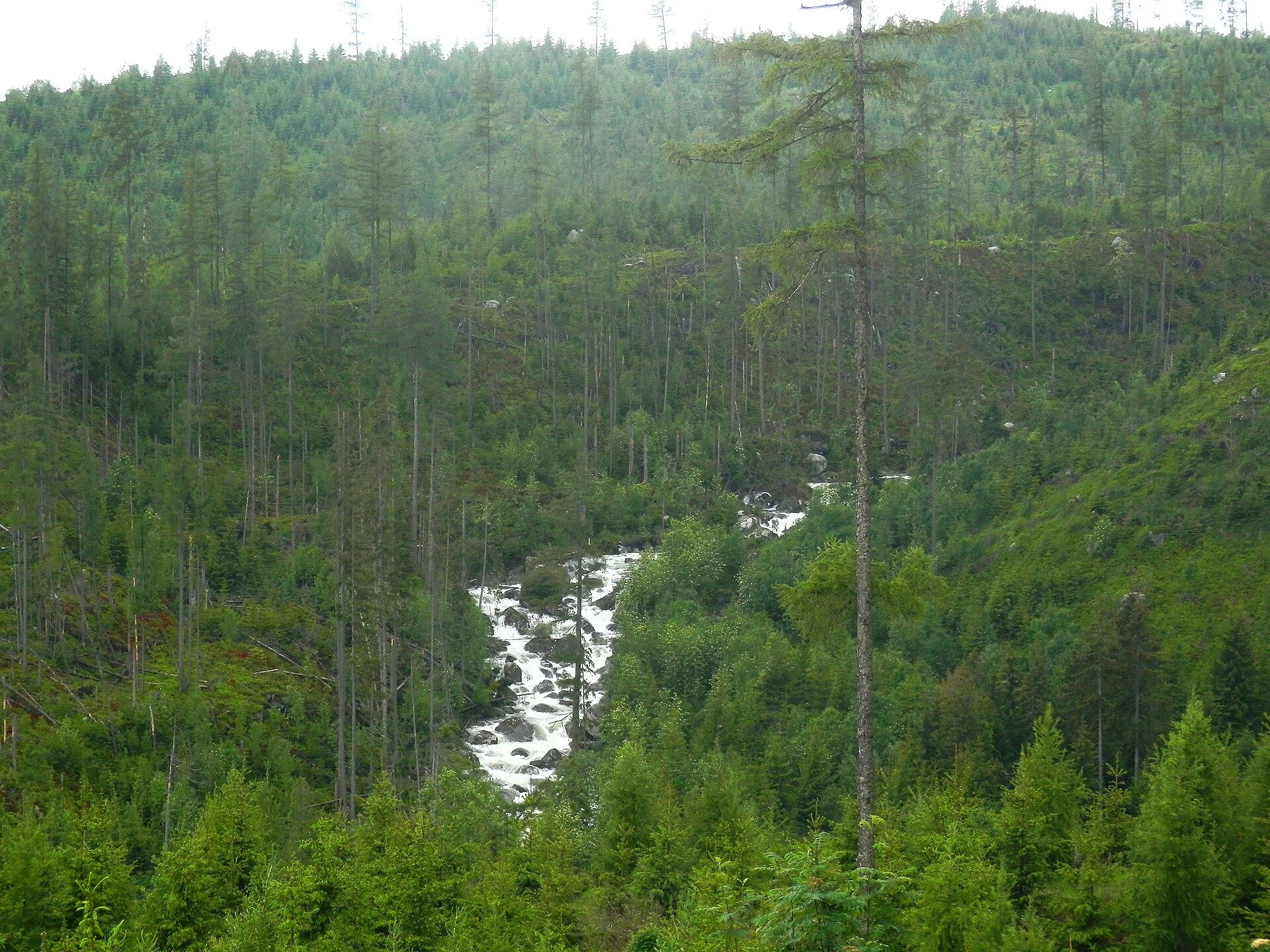
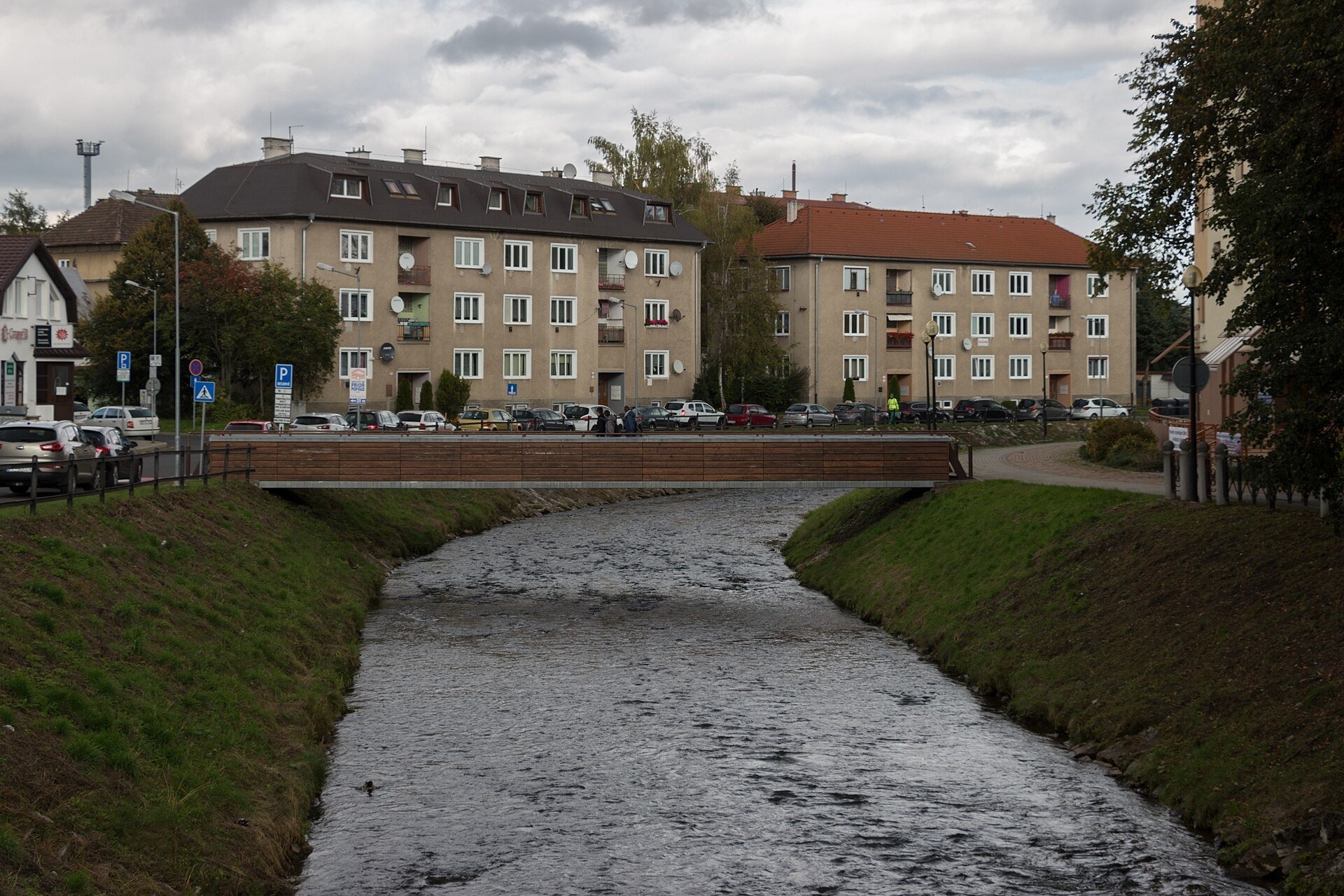
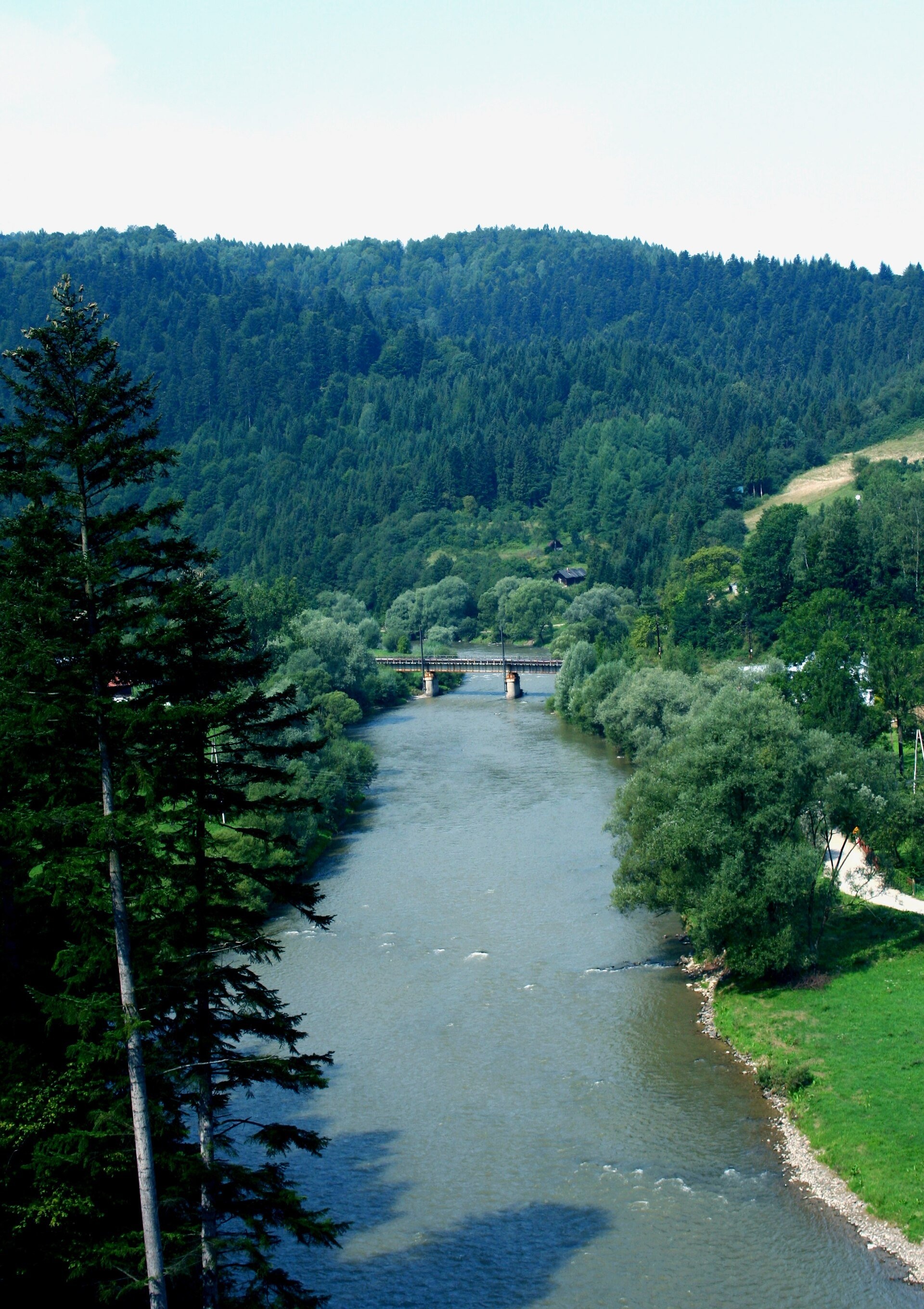
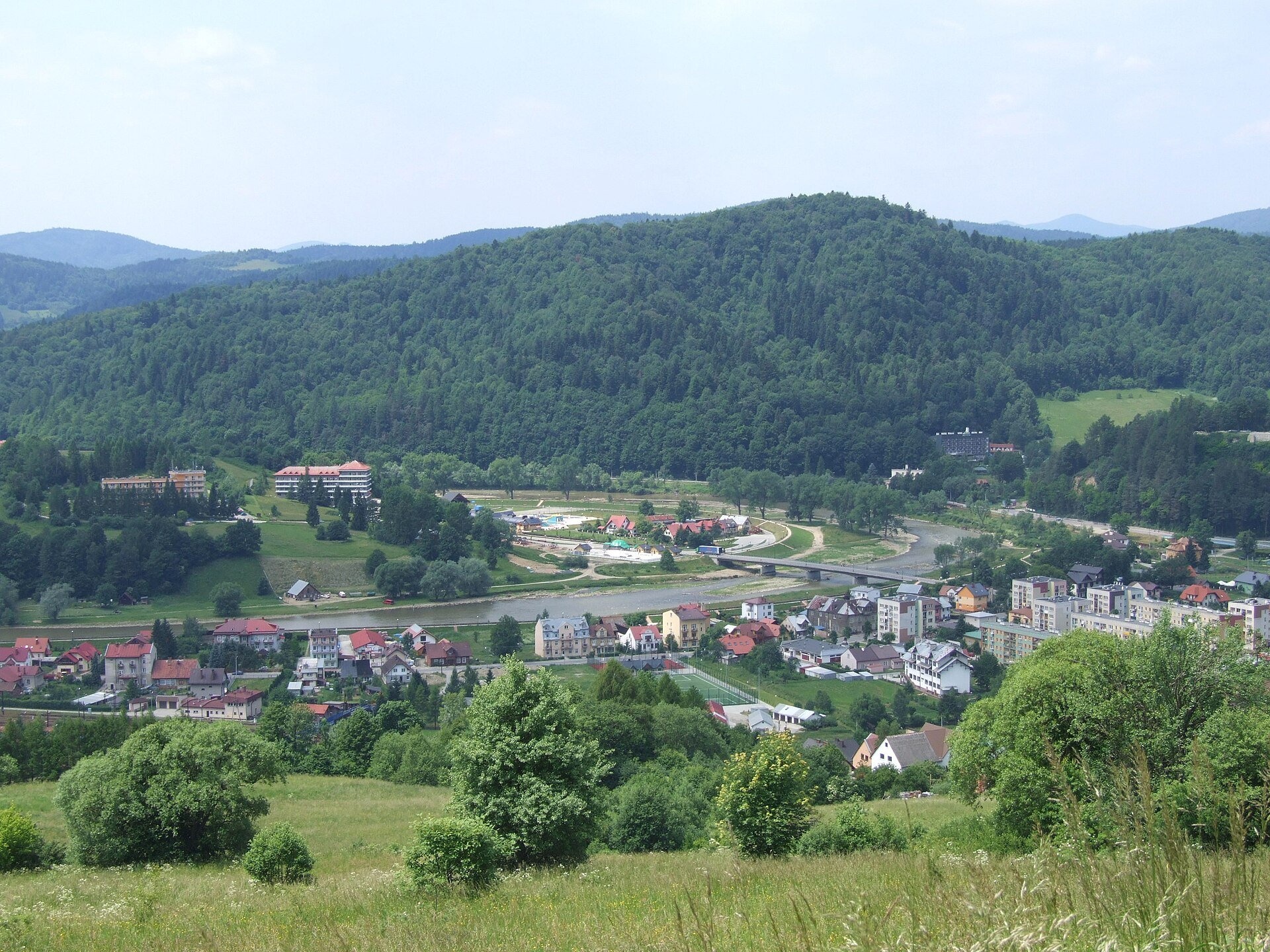
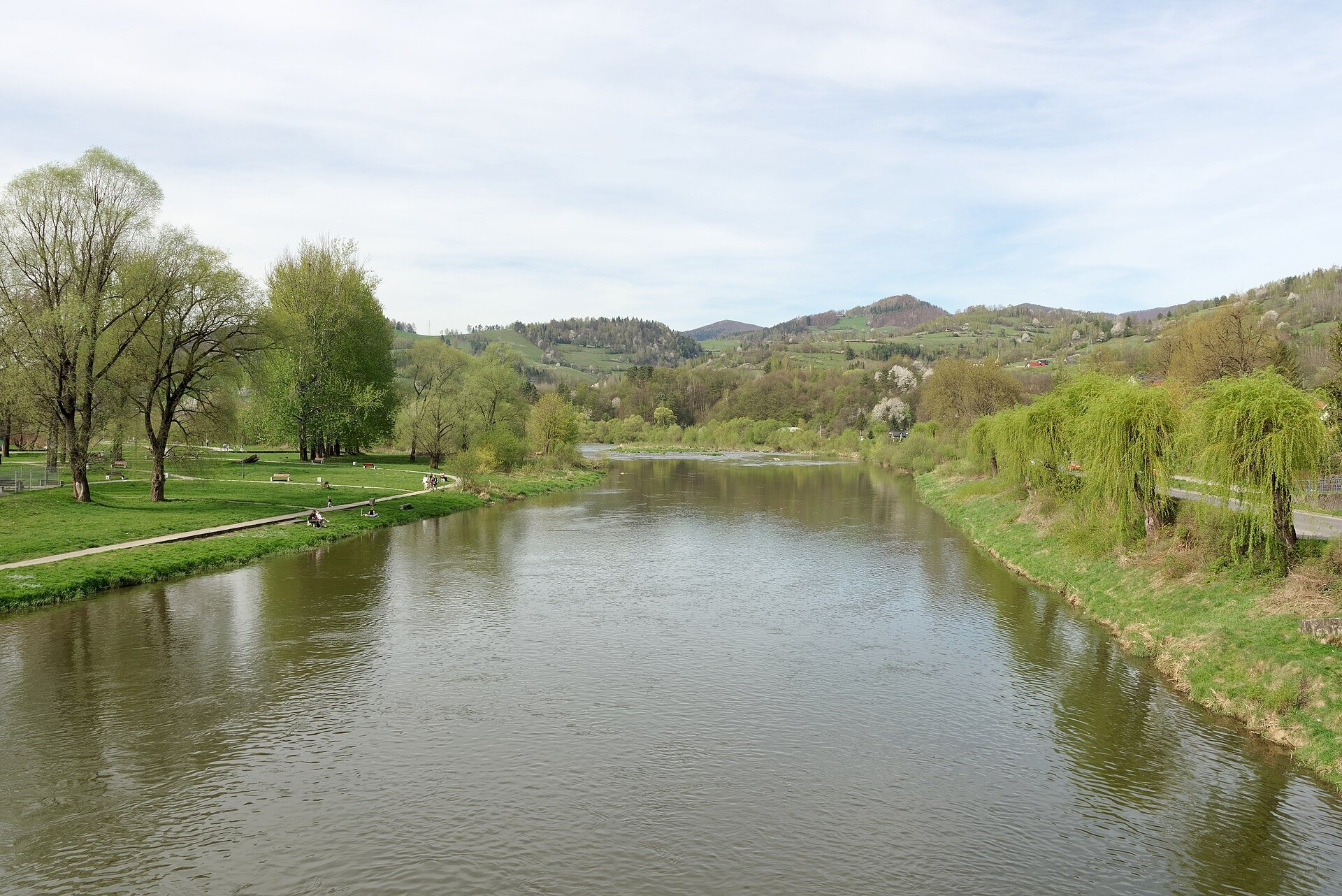
The Poprad is a river of Slovakia and Poland and a right-bank tributary of the Dunajec. It is about 174 km long: 113 km flow through Slovakia, 31 km form the border and the last 31 km lie in Poland. Its basin covers 2,081 km², almost 1,600 km² of them in Slovakia. Through the Dunajec and the Vistula the Poprad carries its water to the Baltic Sea — a rarity for Slovakia, where nearly all rivers belong to the Danube basin. The river's name is one of the oldest in the sub-Tatra region and appears in documents from 1244.
The course: from source to mouth
The Poprad rises in the High Tatras. Its highest source is the Hincov potok, which flows out of Veľké Hincovo pleso at 1,945 m. In the Mengusovská valley, at about 1,302 m, it joins the Krupá stream coming from Popradské pleso, and the Poprad begins. The river skirts the High Tatras from the south, enters the Poprad Basin and flows through Poprad, the largest town on its banks. It then runs north-east through Kežmarok and Spišská Belá, between the Tatras and the Spišská Magura on one side and the Levoča Hills on the other, into the Ľubovňa Basin.
Below Stará Ľubovňa the Poprad turns east, near Plaveč it swings sharply north-east and crosses the border at Čirč. The river then cuts through the Beskid Sądecki, separating the Radziejowa range from the Jaworzyna Krynicka range. It forms the border on two stretches — from Leluchów to Muszyna (5 km) and from Legnava to Piwniczna-Zdrój (26 km). Below Rytro the valley widens, and between Stary Sącz and Nowy Sącz the Poprad joins the Dunajec. It has no large tributaries, only mountain streams: on the Slovak side the Velický, Slavkovský and Studený potok, the Kežmarská Biela voda, Ľubica, Jakubianka and Ľubovnianka; on the Polish side the Muszynka, Wierchomlanka, Łomniczanka and Wielka Roztoka. The mean flow at Mníšek nad Popradom is 22.3 m³/s.
What to see along the river
- Popradské pleso and the Symbolic Cemetery — in the headwaters, above the Krupá valley.
- Kežmarok Castle and the Wooden Articular Church of the Holy Trinity, Kežmarok — a few hundred metres from the river.
- Ľubovňa Castle — on a rock above the Poprad; it guarded the old trade route along the valley.
- Żegiestów-Zdrój spa: the Anna pump room and the Spa House — a spa in the border gorge.
- Stary Sącz: market square and Poor Clares' convent — the town near the mouth.
The river and people
As early as the Middle Ages a trade route from Spiš to Lesser Poland ran along the Poprad valley, guarded by Ľubovňa Castle. The river itself was hardly used for transport: in the mid-19th century Wincenty Pol wrote that rafts could only go down it at high water, that mill weirs below Kežmarok were in the way and that boulders blocked the bed between Ľubovňa and Sącz, especially after the great flood of 1813, so goods from Spiš were more often carried by cart. Today a road to Prešov runs along the Slovak part of the valley, the scenic regional road 971 follows the Polish bank from Muszyna to Piwniczna-Zdrój, and the Nowy Sącz – Leluchów – Plaveč – Poprad railway runs along the whole valley. The valley is rich in mineral and thermal springs, which gave rise to the spas of Muszyna, Żegiestów and Piwniczna-Zdrój.
Nature and safety
The headwaters lie in the Tatra National Park: you may move only on marked trails there, and swimming in the Tatra lakes is forbidden (Slovak Ministry of the Environment, 2026). The Polish part of the valley is protected by the Poprad Landscape Park. The Poprad is a mountain river with fast floods: in June 2010 the water flooded part of Stará Ľubovňa and destroyed the railway bridge near Stary Sącz, rebuilt in 2011. Keep away from steep banks during rain. Emergency numbers: 112, in the Slovak mountains HZS 18 300, in the Polish mountains GOPR 985 or +48 601 100 300.
Nearby: peaks, trails, huts
The trail Tri studničky, old forester's lodge – Popradské Pleso, stop leads to the source lake. From Stará Ľubovňa you can climb the trail Stará Ľubovňa – Orlovská Magura, and from Rytro above the Polish gorge the trail Rytro – Przehyba; the valley is also crossed by the Main Trail of Beskidy.
Photos: Ing.Mgr.Jozef Kotulič, CC BY-SA 4.0, Wikimedia Commons; Michal Klajban, CC BY-SA 4.0, Wikimedia Commons; Color managed in Photoshop by Poeticbent (talk · contribs), based on lower..., CC BY-SA 4.0, Wikimedia Commons; Jerzy Opioła, CC BY-SA 4.0, Wikimedia Commons; Jakub Hałun, CC BY 4.0, Wikimedia Commons.
Getting there from Ukraine
Border crossings
- Uzhhorod – Vyšné Nemecké — road, 24/7
- Malyi Bereznyi – Ubľa — road, 24/7 For cars and buses; pedestrians not confirmed by the Ukrainian border service, lorries up to 3.5 t.
- Mali Selmentsi – Veľké Slemence (pedestrian) — pedestrian, 09:00–21:00 Kyiv time Pedestrians and cyclists only; inconvenient for the Tatras without onward transport.
- Chop – Čierna nad Tisou (rail) — rail, 24/7
By car
From Lviv ≈382 km, ≈5 h 15 min without queues: M-10 → Krakovets – Korczowa → A4 to Brzesko → DK75 to Nowy Sącz → DK87 via Piwniczna-Zdrój to the internal Schengen crossing Piwniczna – Mníšek nad Popradom → I/68 to Stará Ľubovňa (≈304 km, ≈3 h 50 min from the Ukrainian border). From Uzhhorod ≈183 km, ≈3 h: Vyšné Nemecké → I/19 to Košice → D1 to Prešov → I/68 via Sabinov and Lipany to Stará Ľubovňa. Via Uzhok and Ubľa ≈408 km, ≈6 h 55 min. The D1 requires an e-vignette (eznamka.sk).
Checked 23.10.2026; border crossing hours and timetables change — check before you travel.
Location on the map
Comments
Trails nearby
All trails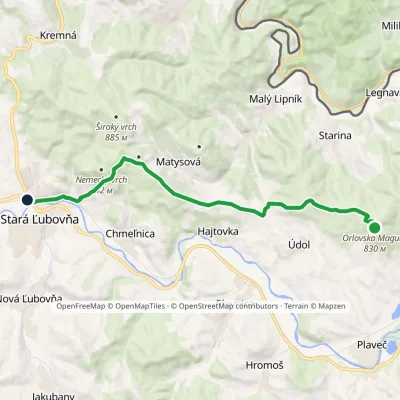 ModerateOne-dayMarkedStará Ľubovňa Orlovská MaguraElevation profile519–830 m14.4 kmascent 221 m≈ 4 h walkingunder 1 km from Poprad River
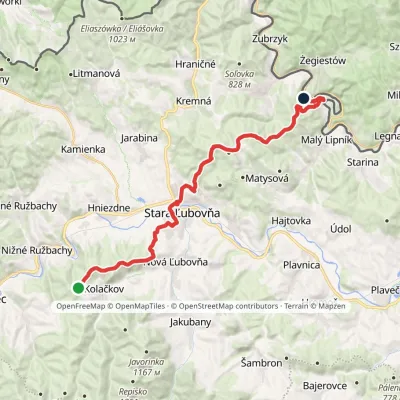 ModerateTwo-dayMarkedKotník, transmitter Sulínka, mineral springElevation profile416–883 m25.3 kmascent 452 m≈ 7 h walkingunder 1 km from Poprad River
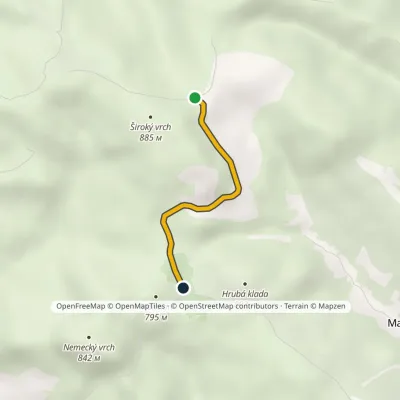 EasyOne-dayMarkedHliniská Sedlo MarmonElevation profile755–824 m2.2 kmascent 18 m≈ 30 min walking2.5 km from Poprad River
Nearby attractions
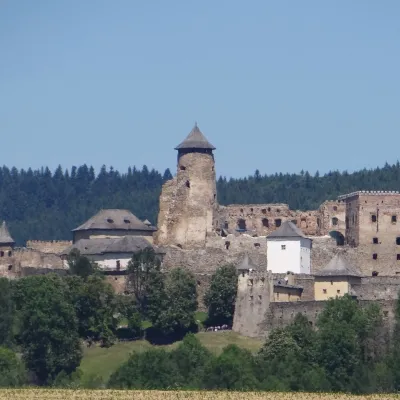 CastleĽubovňa CastleStará Ľubovňaunder 1 km from Poprad RiverĽubovňa Castle (Ľubovniansky hrad) stands on a 548 m limestone hill above the town of Stará Ľubovňa and the left bank of the Poprad.
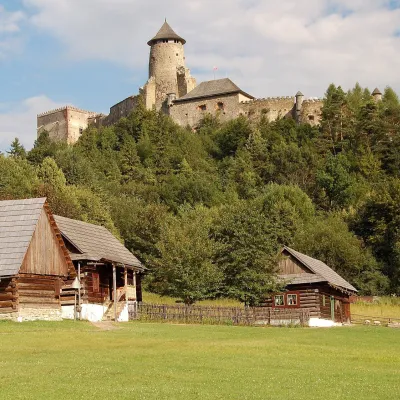 MuseumĽubovňa Open-Air Museum below the castleStará Ľubovňa1.1 km from Poprad RiverThe open-air museum below Ľubovňa Castle (Ľubovniansky skanzen) opened in 1985 on the meadows beneath the castle hill in Stará Ľubovňa.
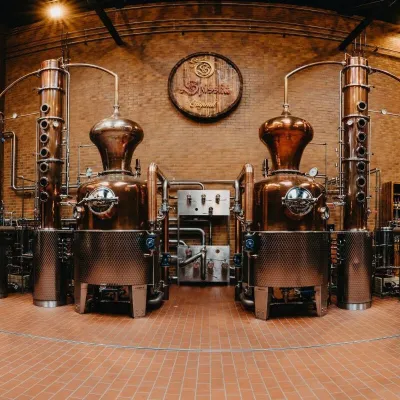 Craft producersSpišská Pálenica, Stará Ľubovňa: distillery tour and Spiš borovičkaStará Ľubovňa1.1 km from Poprad RiverSpiš boasts perhaps the oldest history of distilling in Europe: at the hillfort of Myšia Hôrka near Spišský Štvrtok, part of a distillation vessel from around 1500 BC...
Craft nearby
All craft places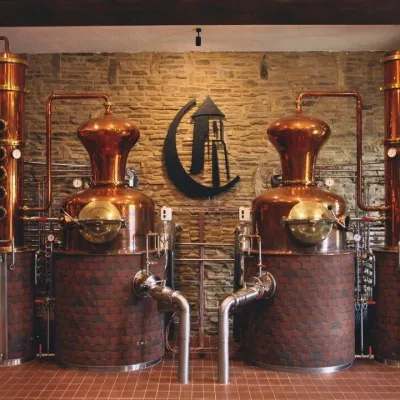 Craft producersCastle Distillery below Ľubovňa Castle: fruit spirits and tastingsStará Ľubovňaunder 1 km from Poprad RiverStará Ľubovňa is a town in northern Spiš, overlooked by Ľubovňa Castle. For more than three and a half centuries Ľubovňa was one of the Spiš towns pledged to the...
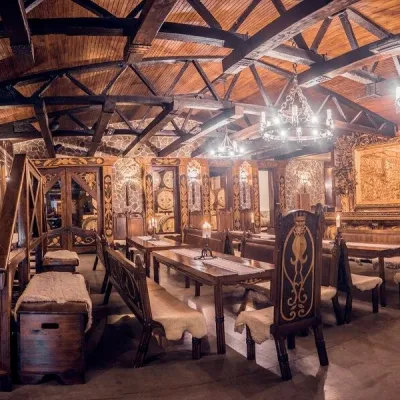 Craft producersNestville Distillery, Hniezdne — Home of the First Slovak WhiskyHniezdne4.4 km from Poprad RiverThis tradition is the basis for BGV, a company founded in 2001, which built the Nestville Distillery here.
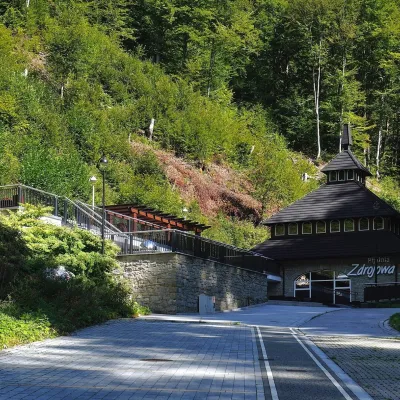 Water parks & thermal poolsŻegiestów-Zdrój spa: the Anna pump room and the Spa HouseŻegiestów10 km from Poprad RiverŻegiestów-Zdrój is a small spa in the narrow Poprad valley in the Beskid Sądecki, a kilometre and a half from the village of Żegiestów and a few kilometres from Muszyna.
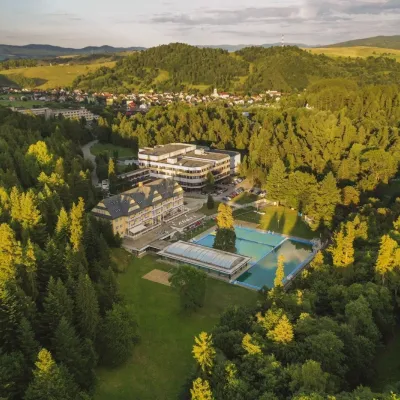 Water parks & thermal poolsVyšné Ružbachy Spa: Izabela Mountain Pools and Indoor Thermal PoolVyšné Ružbachy11 km from Poprad RiverVyšné Ružbachy is one of Slovakia’s oldest spas. It lies on the south-eastern slope of the Spišská Magura at about 617 m, surrounded by coniferous forest that merges...
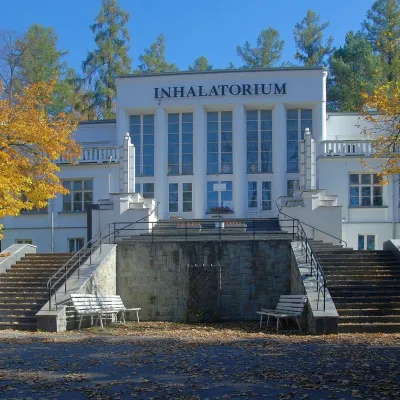 Water parks & thermal poolsSzczawnica spa: pump room, waters and the InhalatoriumSzczawnica20 km from Poprad RiverThe Szczawnica spa (Uzdrowisko Szczawnica) is all about water and air: in the valley of the Grajcarek stream, between the Pieniny and the Beskid Sądecki at 430–500 m,...
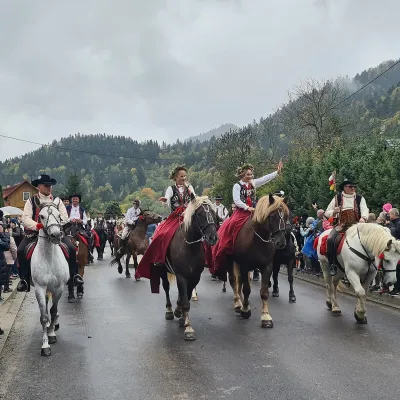 Markets & fairsAutumn Redyk in Szczawnica: sheep drive, oscypek and shepherdsSzczawnica22 km from Poprad RiverRedyk is an old Carpathian shepherding custom: in spring the flocks are driven up to the mountain pastures (hale), and in autumn, after the cheese-making season, they...
