Kościelec
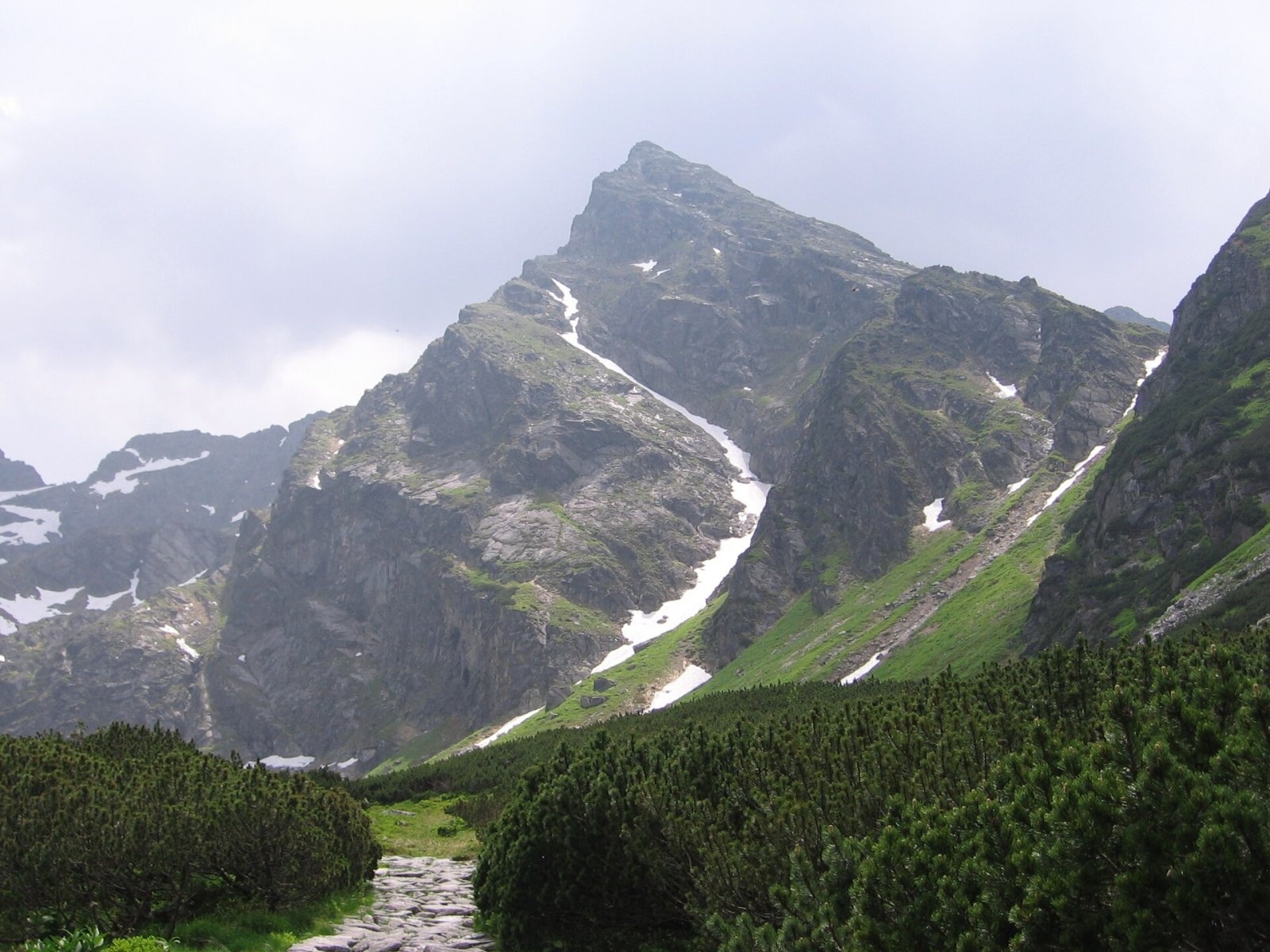
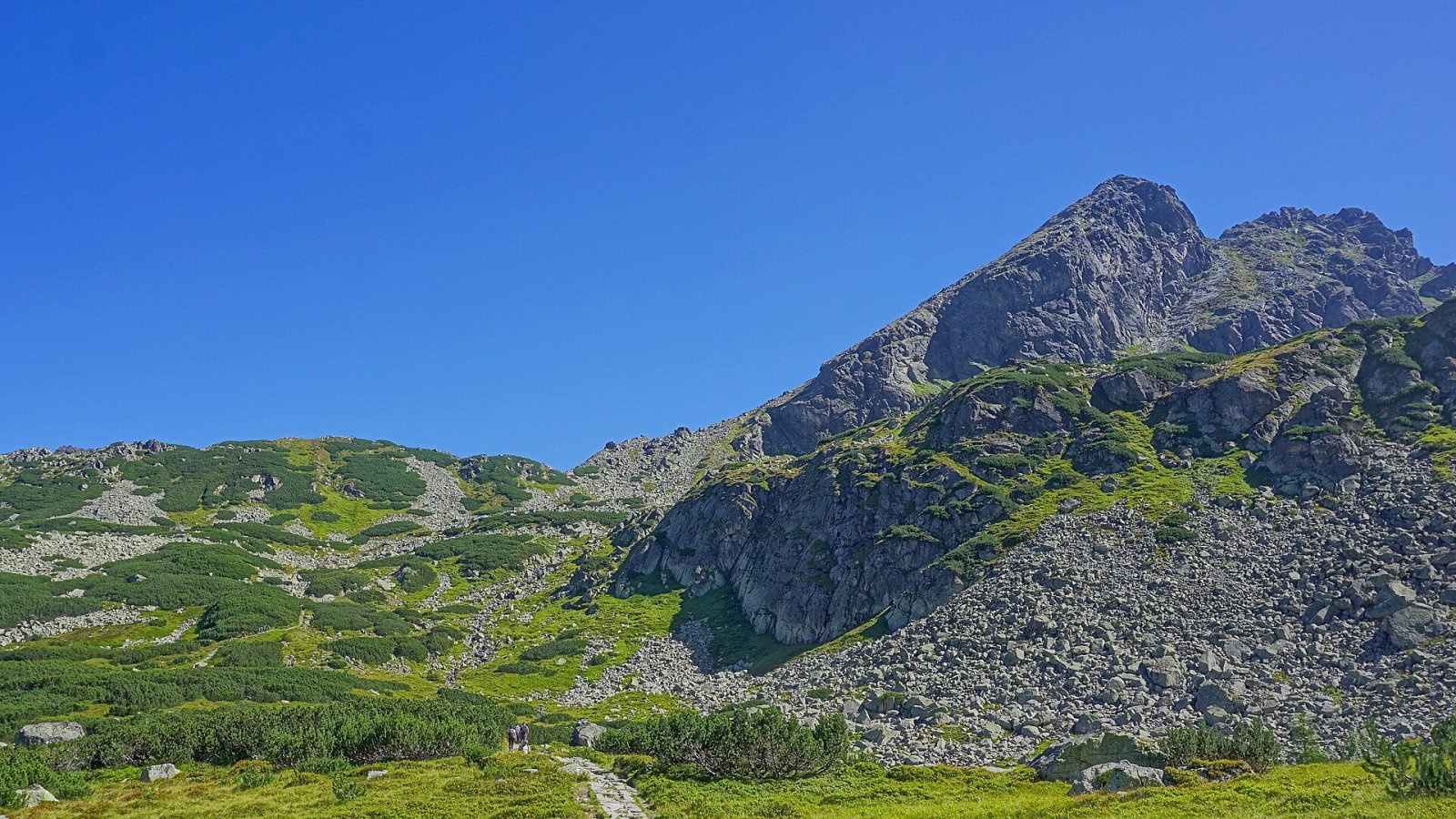
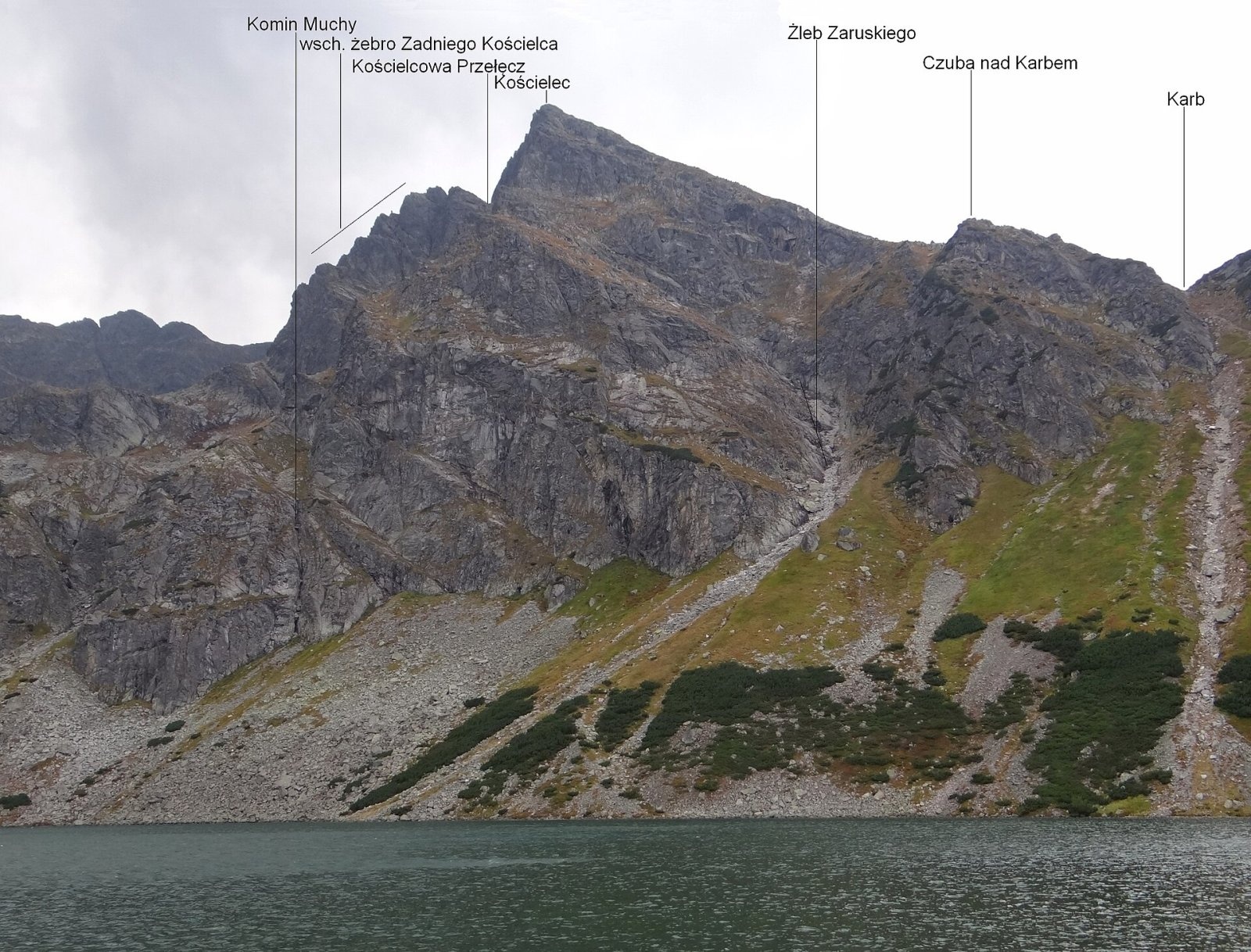
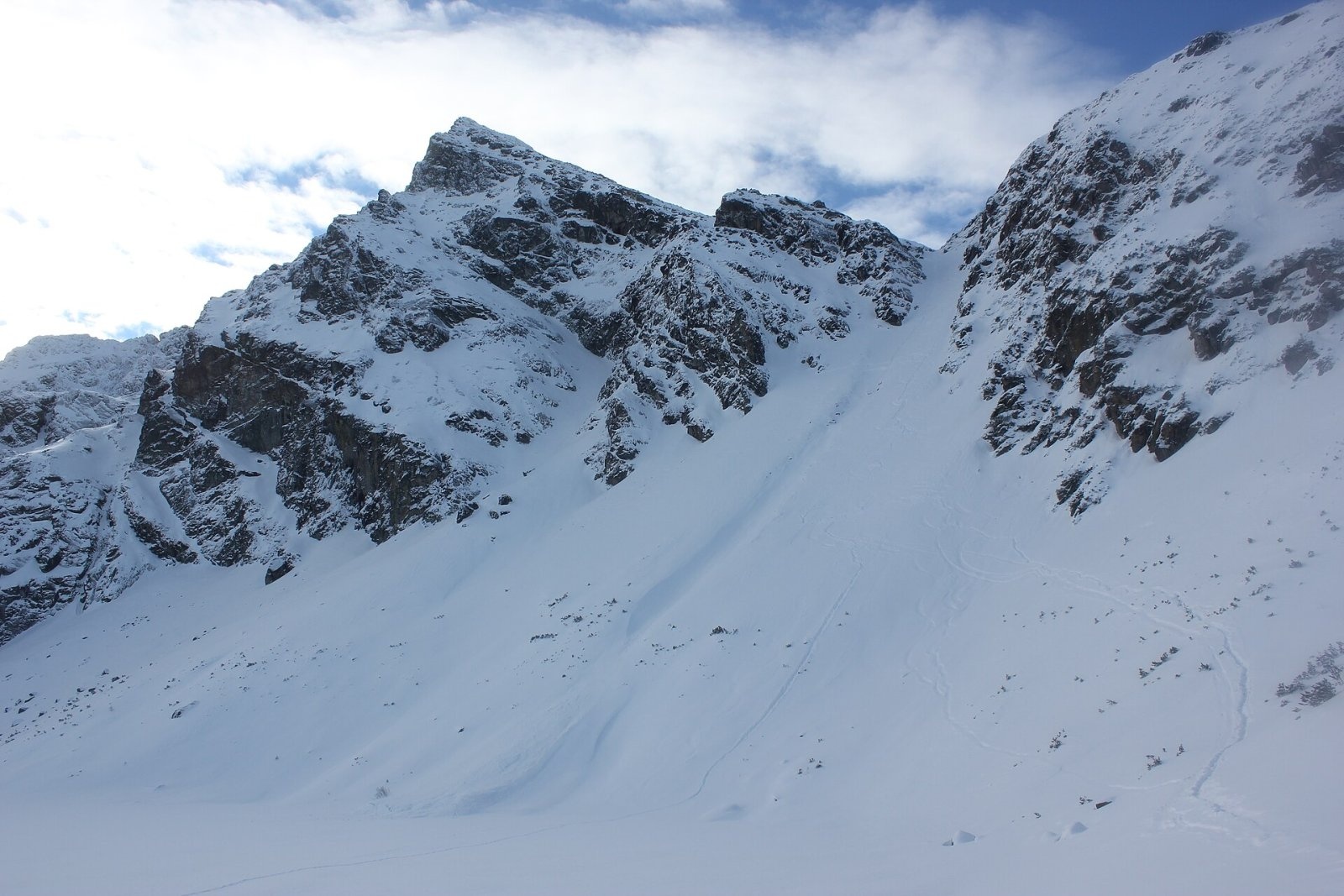
Kościelec is a 2,155 m peak in the High Tatras, in Poland's Dolina Gąsienicowa. It stands on the side ridge of the Kościelce, which runs north from Zawratowa Turnia and divides Dolina Gąsienicowa into its Black and Green branches. Kościelec's steep pyramid is one of the most recognisable features of the view from Hala Gąsienicowa: the summit rises 533 m above the surface of Czarny Staw Gąsienicowy. Kościelcowa Przełęcz separates it from Zadni Kościelec (2,162 m), and the Karb pass (1,853 m) from Mały Kościelec (1,866 m). Kuźnice lies about 5.5 km away in a straight line, central Zakopane about 9.5 km; the nearest hut is Murowaniec on Hala Gąsienicowa.
How to get there / routes
The only marked way up is the black trail from the Karb pass, about 50 minutes up and 40 minutes down. Karb can be reached by two trails from Dolina Gąsienicowa:
- the black trail from Czarny Staw Gąsienicowy over Mały Kościelec;
- the blue trail from Zielony Staw Gąsienicowy (a branch of the route to Świnicka Przełęcz).
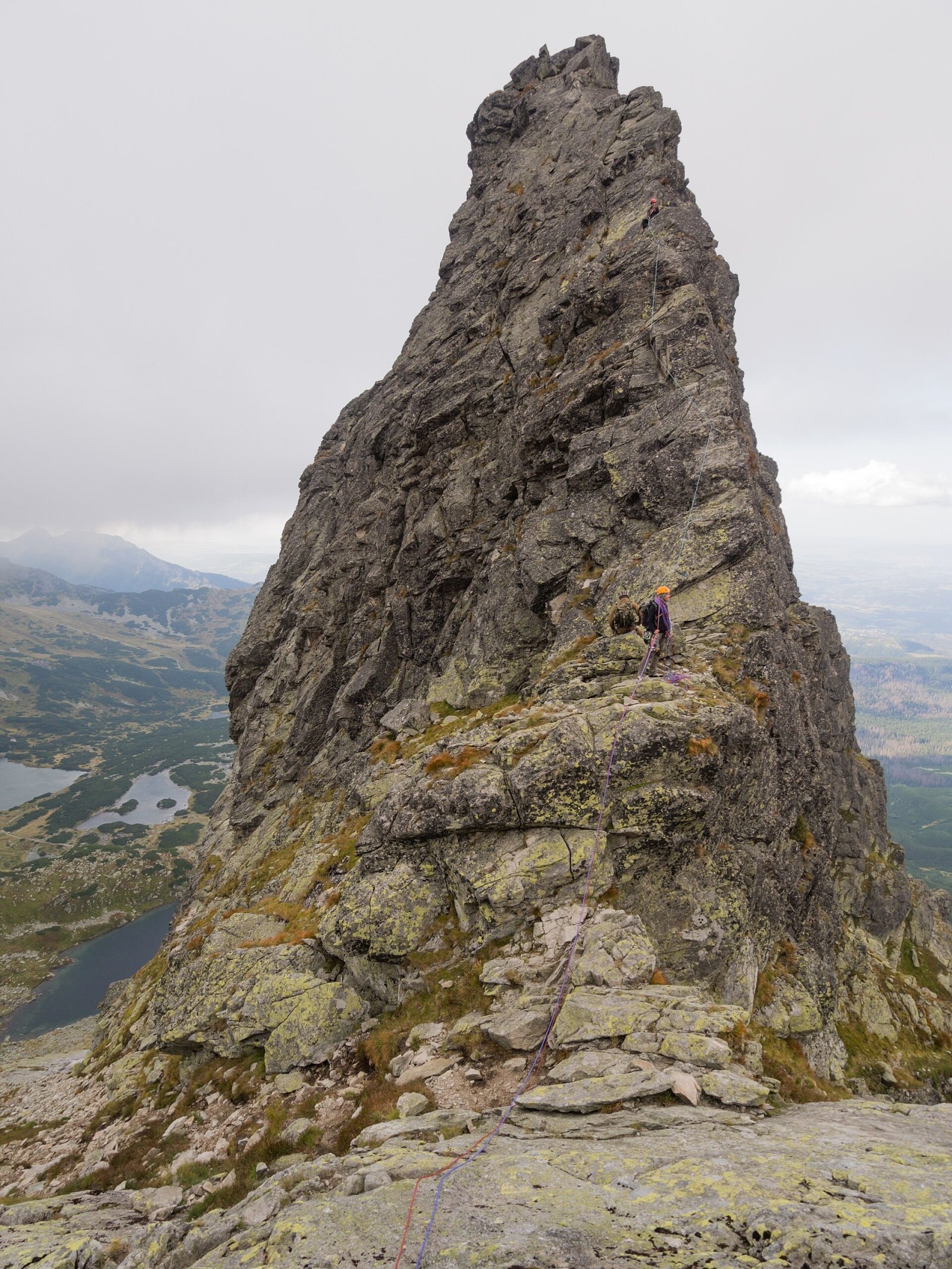
From Karb the path zigzags up the left edge of a slabby slope inclined at about 30° to a vertical rock step some 7 m high. It is climbed without chains or staples — the easiest grade of scrambling (0+ on the Tatra scale) — and smaller steps with ledges and grooves lead on to the top. The trail is officially classed as difficult, as signs at the pass warn: there are no artificial aids, and wet or icy rock becomes very dangerous. Dolina Gąsienicowa is reached from Kuźnice by the blue trail via Boczań and Przełęcz między Kopami (to Murowaniec).
The view from the summit
The summit overlooks the whole of Dolina Gąsienicowa and the peaks followed by the Orla Perć, from Zawrat to the Granaty and Kozi Wierch, with Świnica close by. The view of the central High Tatras is largely blocked by the main ridge. The composer and mountaineer Mieczysław Karłowicz noted that only from Kościelec can every single one of the Gąsienicowe ponds be seen.
Nature and history
The name is linked to the peak's shape, which reminded the shepherds of Hala Gąsienicowa of a church tower or a Gothic church roof (Polish "kościół" means church). The mountain is built of granite slabs almost 100 m thick dipping to the north. A very rare saw-wort, found in Poland only at a few Tatra sites, grows here, and Kościelec's slopes hold the highest stand of tree-form spruce in the Polish Tatras. The west face is one of the most popular with climbers around Hala Gąsienicowa.
The first recorded ascent was made by Antoni Hoborski in 1845. The first winter ascent was by Mieczysław Karłowicz and Roman Kordys on 24 January 1908, and the first on skis by Mariusz Zaruski and Stanisław Zdyb in 1911 — the beginnings of Polish ski mountaineering. On 8 February 1909 Karłowicz was killed by an avalanche below Mały Kościelec; a small obelisk, "Karłowicz's Stone", marks the spot, and in 1976 Wojciech Kilar dedicated his symphonic poem "Kościelec 1909" to the event. The Tatra writer Mieczysław Świerz died on the west face in 1929. In the early 20th century there was even an idea to place the sarcophagus of the poet Juliusz Słowacki in Kościelec's wall, but it was never realised.
Safety, season and rules
Kościelec is a peak for experienced hikers: there are no chains, so after rain, in fog or when icy the smooth granite slabs are dangerous, and the descent is usually harder than the climb. In winter the slopes are avalanche-prone — this is where Karłowicz died — and an ascent requires crampons, an ice axe and mountaineering skills. Do not go up in a thunderstorm.
- Entry to Tatra National Park is paid (since 2025: 11 PLN, reduced 5.50 PLN).
- From 1 March to 30 November all park trails are closed from dusk to dawn; from 1 December to the end of February, from 22:00 to 05:00.
- Stay on marked trails; dogs, drones and camping are not allowed.
- Emergency numbers: TOPR 985 or +48 601 100 300, and 112. Current conditions are in the daily TPN bulletin.
Interesting facts
- In 1933 Karol Zając wrote the climbing poem "Zachodnia ściana Kościelca" (The West Face of Kościelec).
- Kościelec appears in paintings by Walery Eljasz, Stanisław Witkiewicz and Rafał Malczewski.
Photos: Mariusz Golemo, Public domain; Faxe, CC BY-SA 4.0; Jerzy Opioła, CC BY-SA 4.0; Rafał Kozubek, CC BY-SA 4.0; Andrzej Otrębski, CC BY-SA 4.0; Tomekh10, CC BY-SA 4.0 — Wikimedia Commons.
Getting there from Ukraine
Border crossings
- Krakovets – Korczowa — road, 24/7
- Shehyni – Medyka — road, 24/7 Pedestrian crossing is not confirmed by the Ukrainian border service — check dpsu.gov.ua before the trip.
- Smilnytsia – Krościenko — road, 24/7
- Hrushiv – Budomierz — road, 24/7
- Mostyska – Przemyśl (rail) — rail, 24/7
By car
Lviv – Zakopane ≈421 km, ≈5 h 10 min without border queues. Route: M-10 Lviv – Krakovets → Krakovets – Korczowa checkpoint → A4 motorway (Rzeszów – Tarnów – Kraków) → Kraków southern bypass → S7/DK7 → DK47 ('Zakopianka') via Nowy Targ → Zakopane. The A4 Katowice – Kraków section (Balice and Mysłowice toll plazas) is tolled, but this route does not use it. In summer and at weekends the DK47 near Zakopane is often congested.
Checked 23.10.2026; border crossing hours and timetables change — check before you travel.
Location on the map
Comments
Trails nearby
All trails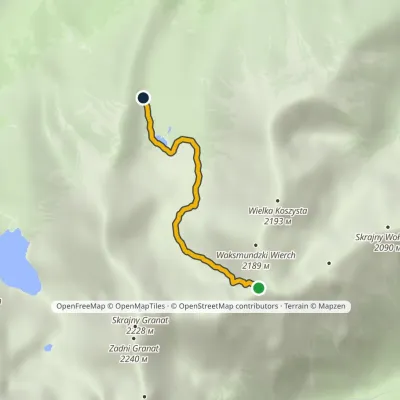 EasyOne-dayMarkedZadni Upłaz KrzyżneElevation profile1 617–2 107 m2.8 km≈ 45 min walking1.9 km from Kościelec
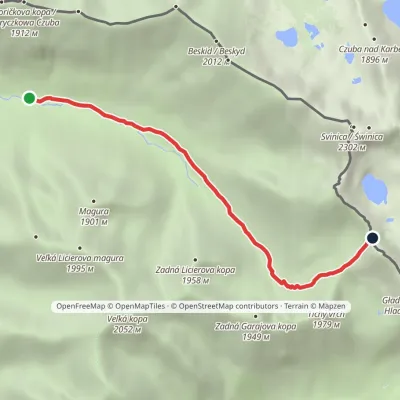 EasyOne-dayMarkedLiptovský košiar Hladké sedloElevation profile1 275–1 988 m5.3 kmascent 694 m≈ 2.5 h walking1.9 km from Kościelec
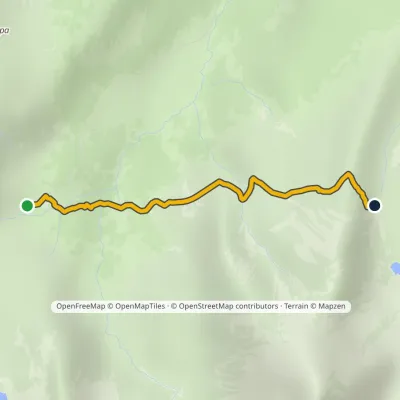 EasyOne-dayMarkedSchronisko PTTK Murowaniec Zadni UpłazElevation profile1 440–1 675 m2.5 kmascent 217 m≈ 1 h walking2 km from Kościelec
Nearby attractions
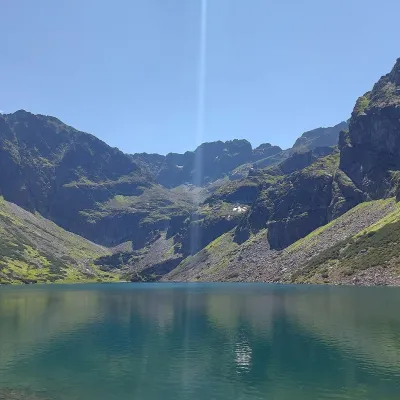 LakeCzarny Staw Gąsienicowyunder 1 km from KościelecCzarny Staw Gąsienicowy lies in the High Tatras, in a glacial cirque in the eastern part of the Gąsienicowa Valley, at 1,624 m.
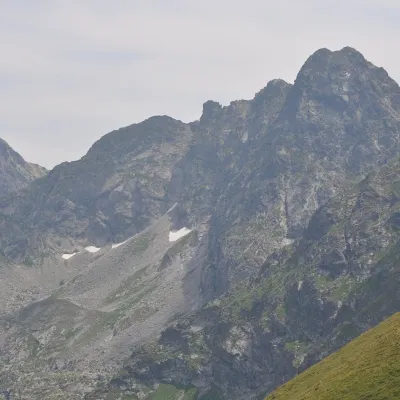 PeakŚwinicaaltitude 2 302 munder 1 km from KościelecŚwinica (Slovak: Svinica) is a 2,302 m summit on the main ridge of the Tatra Mountains, right on the Polish–Slovak border.
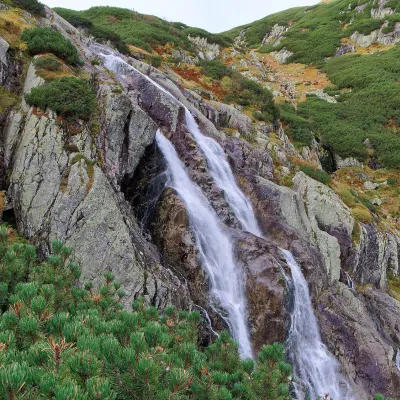 WaterfallWielka Siklawa Waterfall2.5 km from KościelecWielka Siklawa (also simply Siklawa) is Poland's highest waterfall. The Roztoka stream, flowing out of Wielki Staw Polski, drops here over the rock step between the...
Craft nearby
All craft places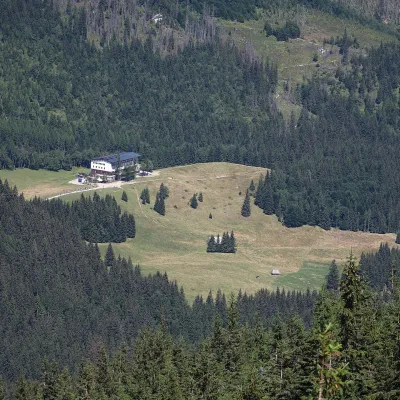 Cheese dairies & pasturesFurtek's Shepherd's Huts, Kuźnice and Kalatówki6 km from KościelecAbove Kuźnice — the southern edge of Zakopane where most hikes into the Western and High Tatras begin — the flocks are tended by baca Andrzej Staszel, nicknamed "Furtek".
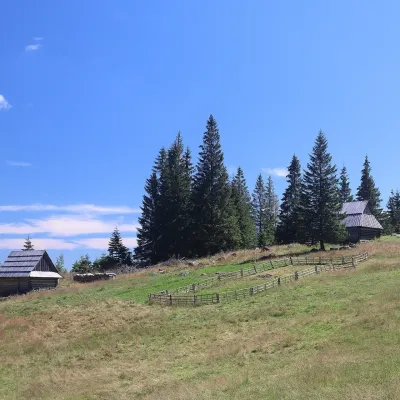 Cheese dairies & pasturesShepherd's Hut on Rusinowa Polana6.9 km from KościelecRusinowa Polana is one of the most beautiful mountain glades in the Polish Tatras, and from May to October it is home to the bacówka (shepherd's hut) of baca Stanisław...
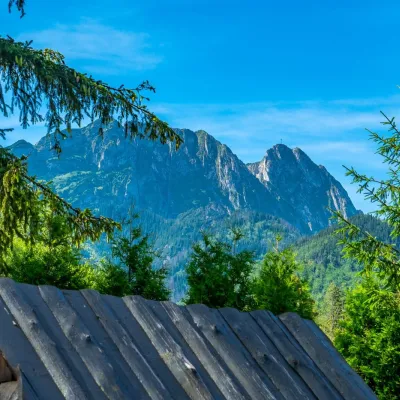 Koliby & Hutsul cuisineBąkowo Zohylina Wyźnio Highland Tavern7.6 km from KościelecBąkowo Zohylina Wyźnio is a regional highland tavern in Zakopane housed in a wooden "szałas" (shepherd-hut-style building) with a view of the Tatras.
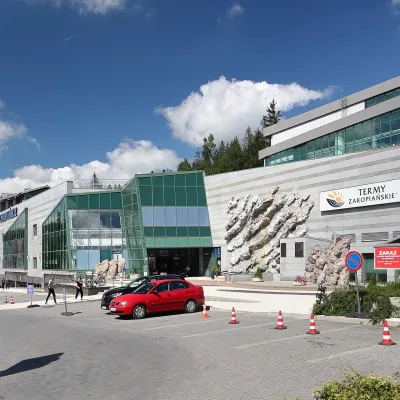 Water parks & thermal poolsTermy Zakopiańskie (Aqua Park Zakopane)8.6 km from KościelecTermy Zakopiańskie is a thermal water park right in Zakopane, on Jagiellońska Street, only a kilometre from Krupówki.
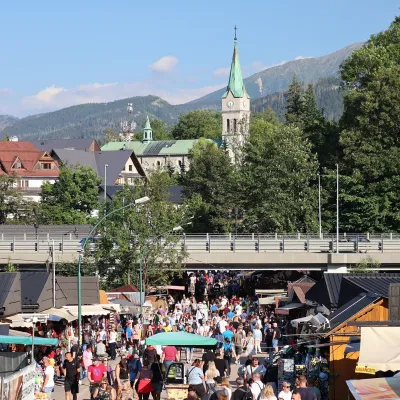 Markets & fairsMarket under Gubałówka9.5 km from KościelecThe market under Gubałówka (Targ pod Gubałówką) is Zakopane's best-known bazaar and probably the most photographed row of stalls in the Polish Tatras.
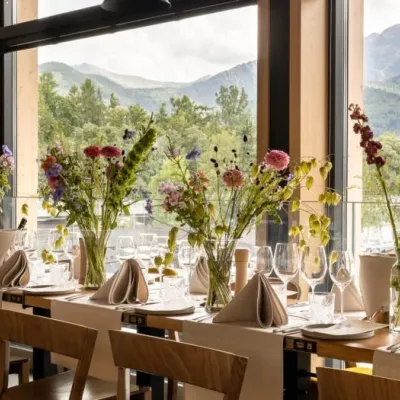 Craft beer & breweriesGwarno Restaurant & Brewery, Zakopane9.6 km from KościelecGwarno is a restaurant with its own small brewery at the foot of Gubałówka in Zakopane. It stands on Na Gubałówkę street right next to the lower station of the...
