Nose-horned viper
About
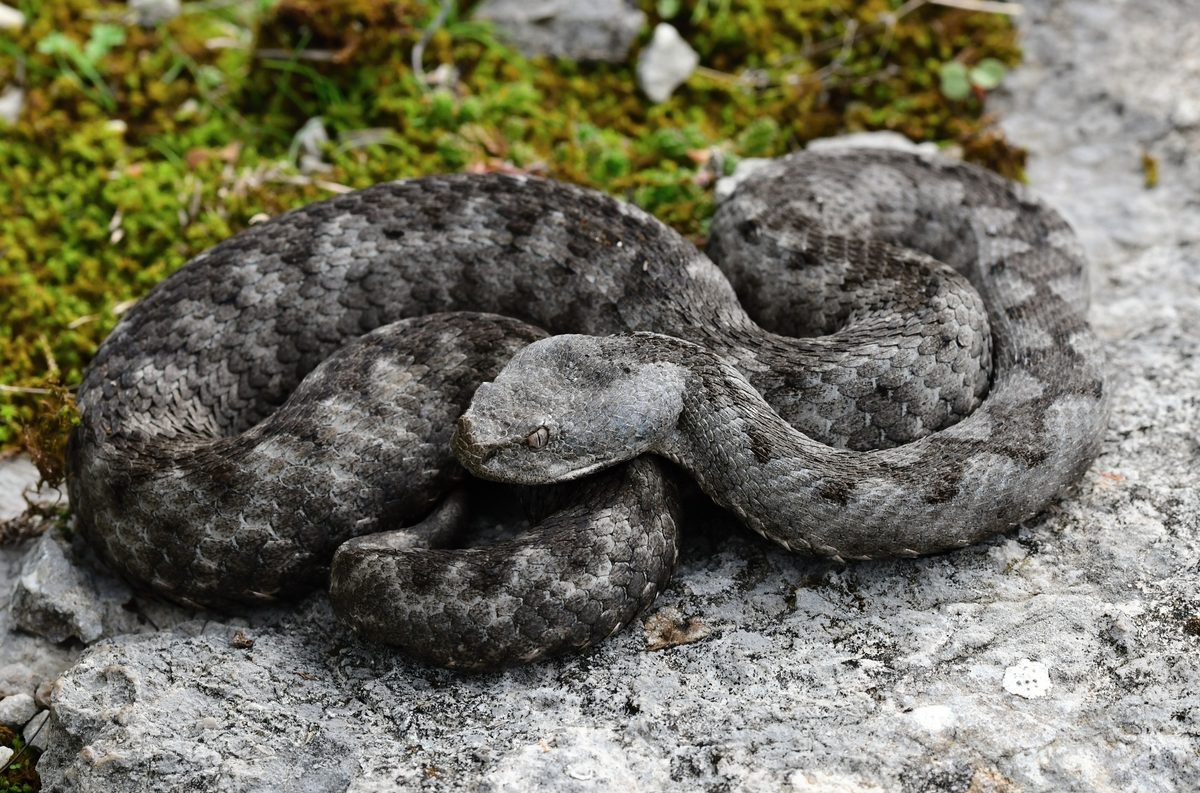
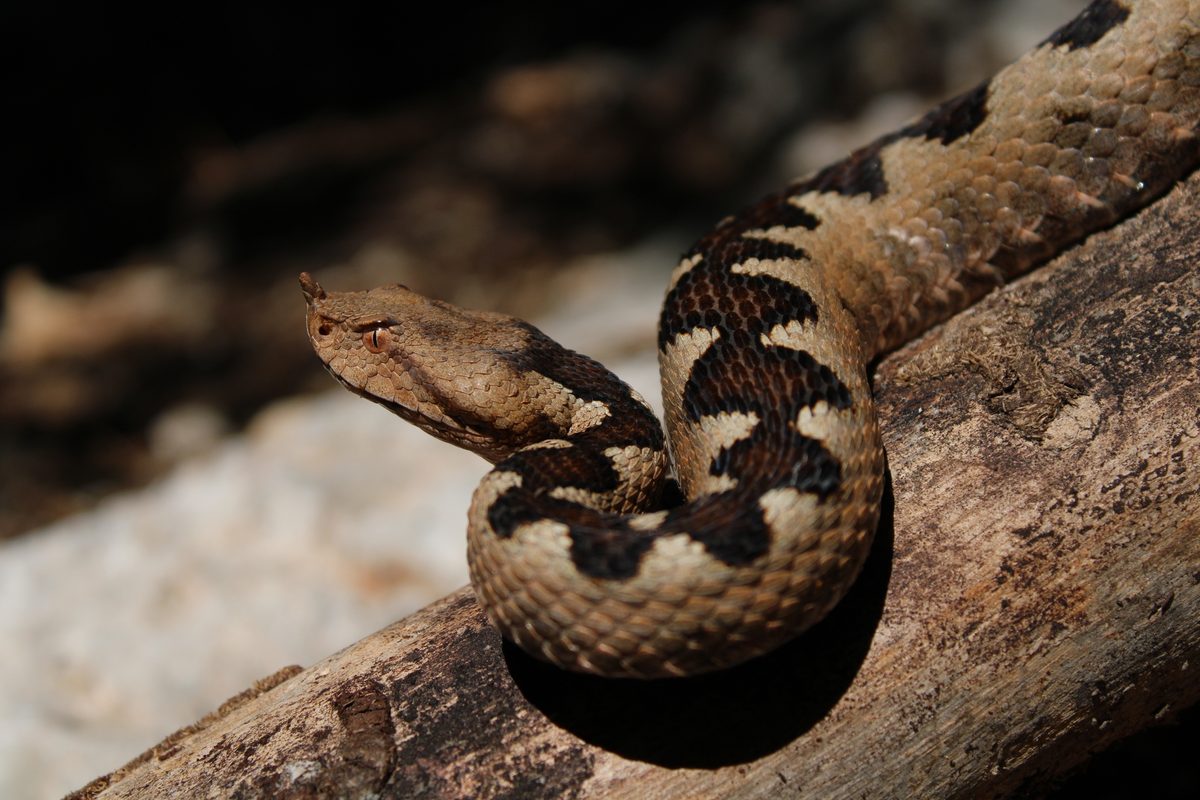
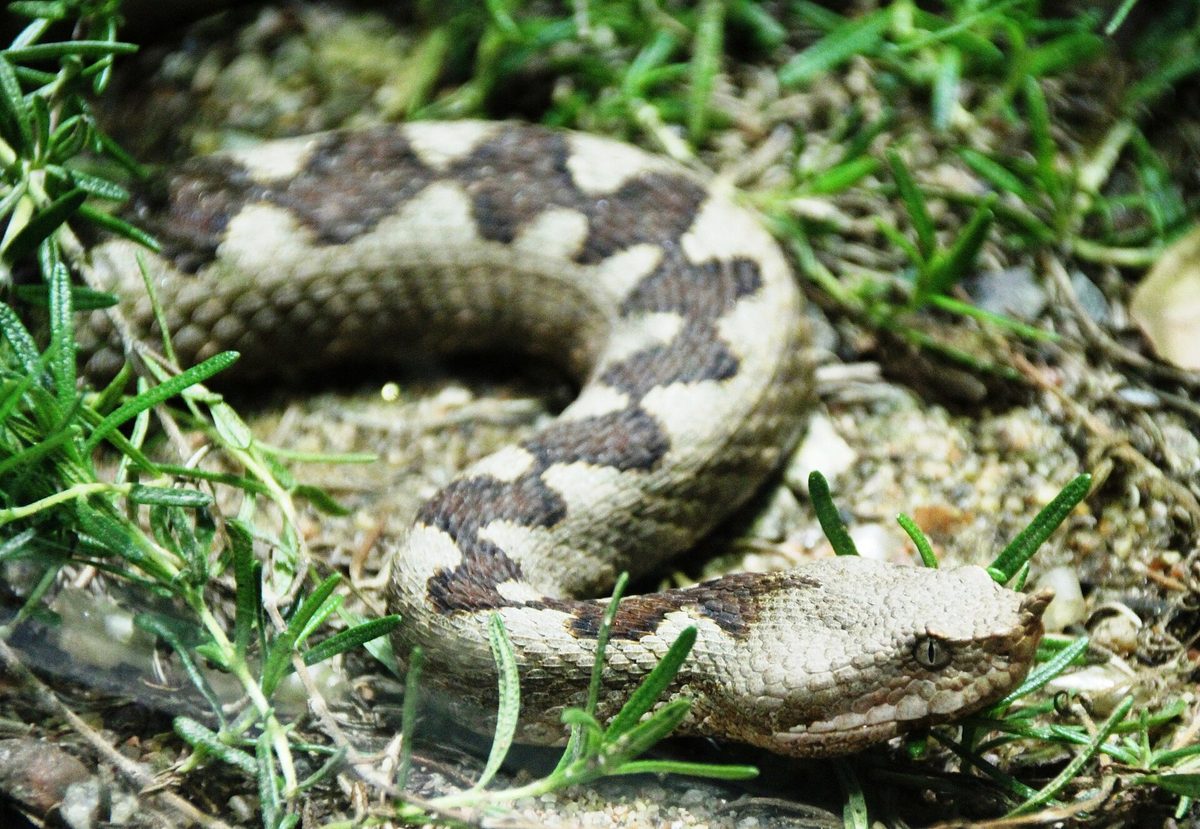
The Nose-horned viper is easily recognized by the soft, scaly growth at the tip of its snout, resembling a small horn about 5 mm long. It is a stocky snake with a short tail, usually up to 75 cm, rarely reaching 85–95 cm. A dark zigzag stripe runs along its back, often broken into separate spots. Males have a dark spot on their head that often merges with the zigzag; females are browner with a bronze tint.
In the Carpathians, this species lives only in the south — in Romania and Serbia. Our data show it in the Almaj and Mehedinți Mountains, in the Iron Gates on the Danube, in the Poiana Ruscă, Hodyan, and Vilcan Mountains, mostly at altitudes up to 350 m. The Nose-horned viper is absent in the Ukrainian Carpathians, Poland, and Slovakia; only the Common viper is found there, without a 'horn.'
The snake prefers dry rocky slopes with sparse bushes, scree, cliffs in river valleys, old quarries, and stone walls. Adults hunt small mammals and birds, while juveniles prey on lizards. In winter, vipers hibernate for two to six months. They mate in April–May, and in August–October, females give birth to one to twenty live young measuring 14–24 cm.
The Nose-horned viper is considered possibly the most dangerous snake in Europe; its venomous fangs can reach 13 mm. At the same time, the snake is sluggish and not aggressive: it bites when stepped on or attempted to be handled. Sources assess the risk differently: English-language Wikipedia states that with hospital treatment, bites are rarely fatal, while the Ukrainian version mentions that fatalities are unknown, but the danger is serious for children. In any case, a doctor is needed.
On the warm rocky paths of southern Romania, wear closed shoes and long pants, watch where you step and place your hands, do not sit on rocks without checking, and do not turn over stones. The species is strictly protected by the Bern Convention (Appendix II) and the EU Habitats Directive (Appendix IV): killing and capturing snakes is prohibited.
This species does not live in the Ukrainian Carpathians today — you can see it in other Carpathian countries.
Where in the Carpathians

Orange — where naturalists recorded the species (GBIF, CC0/CC BY); a blank area does not mean it is absent.
- Countries
- Romania · Serbia
- Mountain ranges
- In other countries: 🇷🇴 Poiana Ruscă Mountains, 🇷🇴 Almăj and Locva Mountains, 🇷🇴 Mehedinți and Cerna Mountains, 🇷🇸 Đerdap and Miroč, 🇷🇴 Godeanu and Țarcu Mountains, 🇷🇴 Vâlcan Mountains
- Altitude belts
- Foothills (below 600 m)
When to see it
| Jan | Feb | Mar | Apr | May | Jun | Jul | Aug | Sep | Oct | Nov | Dec | |
|---|---|---|---|---|---|---|---|---|---|---|---|---|
| Sightings |
From naturalists’ observations in the Carpathians (iNaturalist, research grade): the darker the cell, the more often the species is seen that month.
Safety
After a Nose-horned viper bite: stay calm, move less, keep the bitten hand or foot still, remove rings, bracelets, and tight shoes until swelling begins, and immediately call 112 (the single emergency number in Romania). Do not apply a tourniquet, do not cut or cauterize the wound, do not suck out the venom, do not apply ice, and do not drink alcohol.
Look-alikes — how to tell them apart
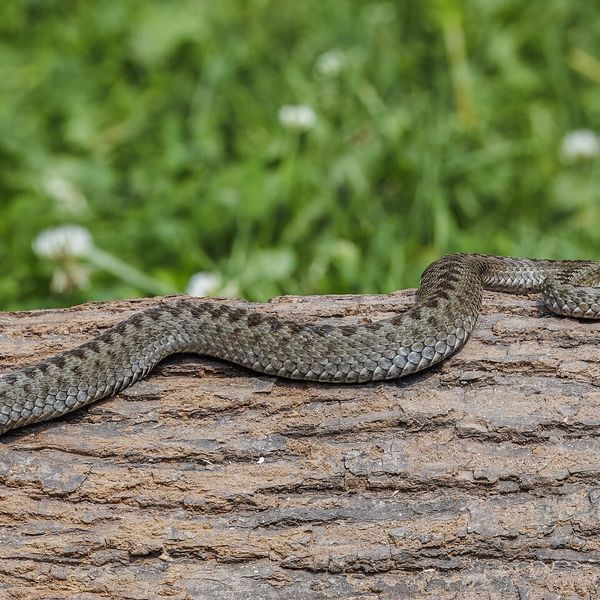
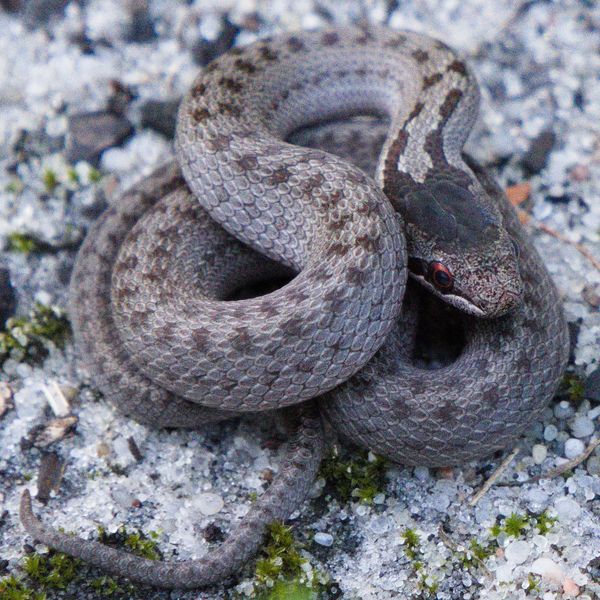
Does not have a 'horn' on its snout; the zigzag on its back is usually continuous. Also venomous.
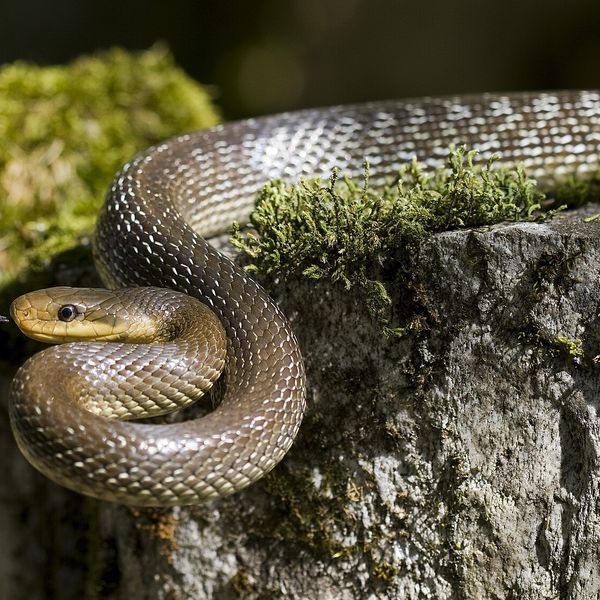
A slender non-venomous snake with round pupils and a dark stripe through the eye; has no 'horn' or zigzag.
Protection and rules
The species is absent in Ukraine. It is strictly protected by the Bern Convention (Appendix II) and the EU Habitats Directive (Appendix IV).
FAQ
Is the Nose-horned viper found in the Ukrainian Carpathians?
No. In the Carpathians, it lives only in the south — in southwestern Romania and Serbia. In Ukraine, Poland, and Slovakia, only the Common viper is found.
What to do if bitten by a Nose-horned viper?
Move less, immobilize the bitten limb, remove rings and tight shoes, and immediately call 112. Do not apply a tourniquet, do not cut the wound, and do not suck out the venom.
Comments
Travellers’ experience: reports, tips, questions.
No one has written here yet. Be the first — your experience helps others.
Similar species
Where to meet it
Mountain ranges: In other countries: 🇷🇴 Poiana Ruscă Mountains, 🇷🇴 Almăj and Locva Mountains, 🇷🇴 Mehedinți and Cerna Mountains, 🇷🇸 Đerdap and Miroč, 🇷🇴 Godeanu and Țarcu Mountains, 🇷🇴 Vâlcan Mountains
Trails and peaks near which naturalists recorded the species (GBIF, iNaturalist), matched by altitude and habitat. Sightings are not guaranteed.
Sources
- Wikipedia (en): Vipera ammodytes
- Вікіпедія: Гадюка носата
- GBIF: Vipera ammodytes
- Директива Ради 92/43/ЄЕС про збереження природних оселищ (консолідована редакція)
GBIF · iNaturalist · Wikidata · Distribution data: GBIF.org (CC0 and CC BY records), iNaturalist; names and identifiers: Wikidata (CC0). Text: Karpaty.rocks, checked 11.11.2026.
