Grayling
About
The European Grayling is a decoration of clean mountain rivers. In Ukraine, it lives only in the Carpathians, in the basins of the Tisza, Prut, and Dniester, and it is the only representative of its genus in our waters. Grayling prefers small to medium mountain rivers with clear, oxygen-rich water and a stony bottom, where fast rapids alternate with pools. Large rivers are also suitable for it, provided the water is sufficiently cold and oxygenated. It keeps away from waterfalls and turbulent rapids. Grayling is very sensitive to water cleanliness, so pollution, gravel extraction from riverbeds, and dams quickly displace it from rivers.
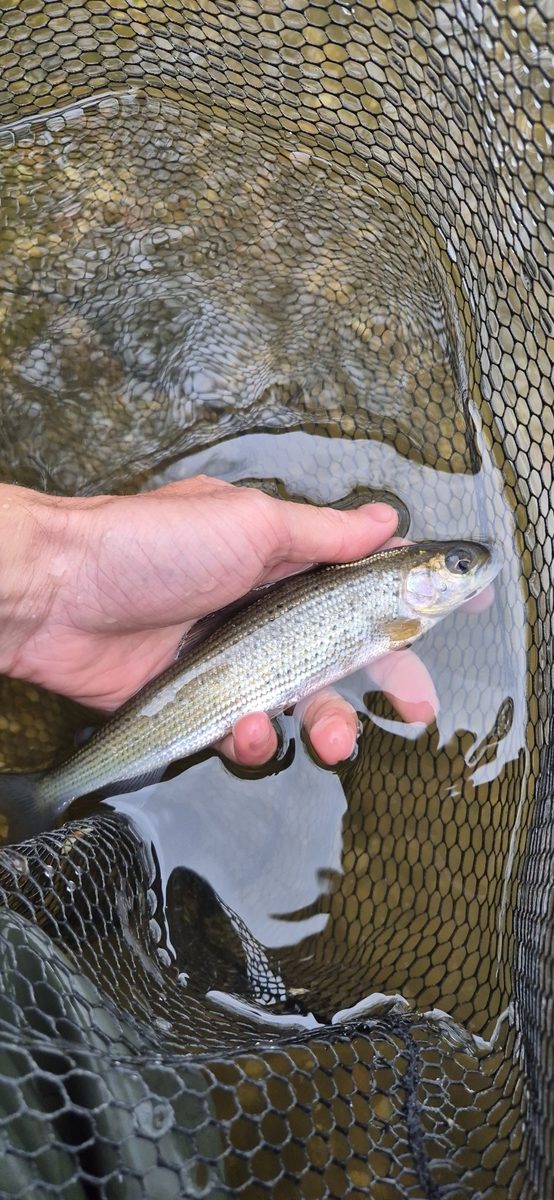
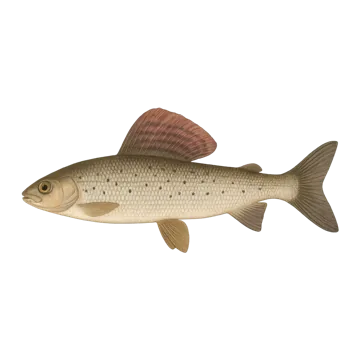
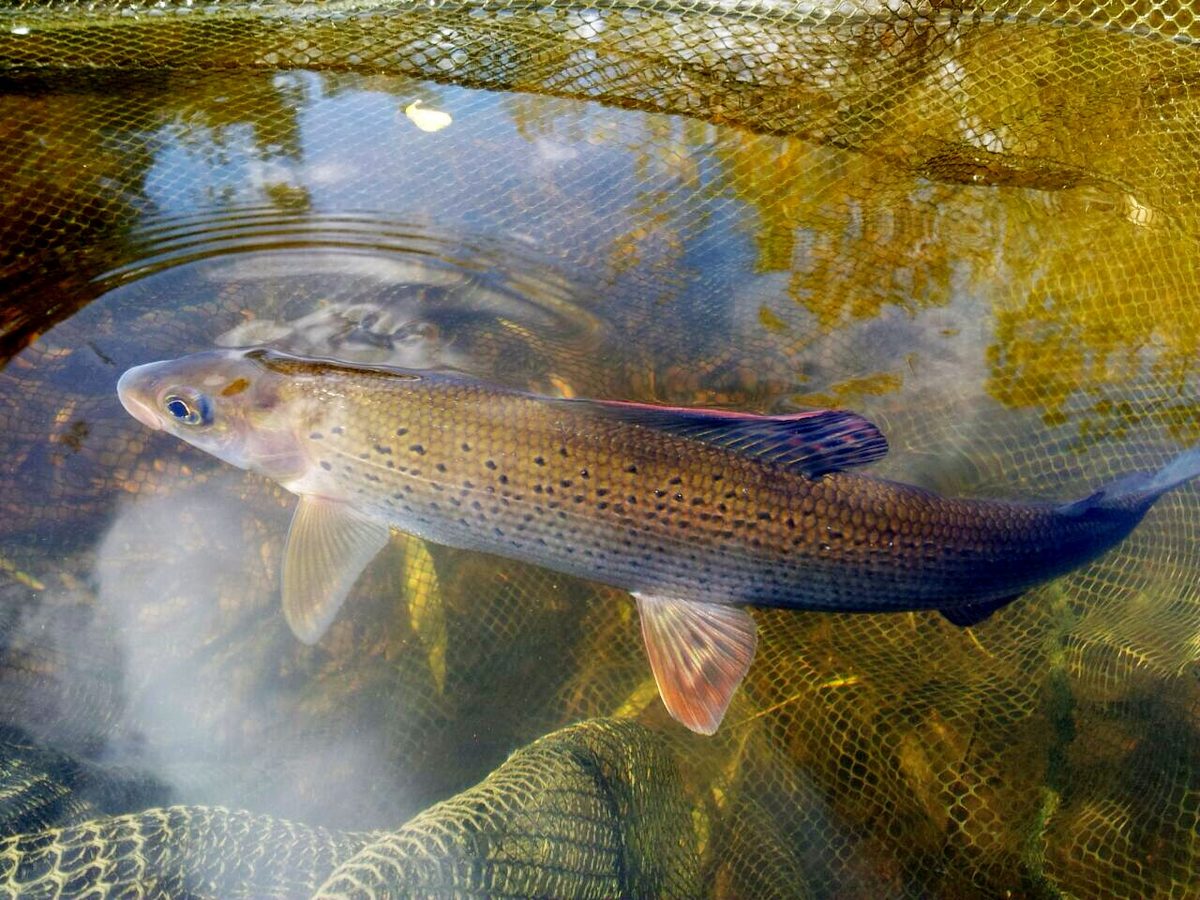
Grayling is easily recognizable by its very high and long dorsal fin, resembling a flag, especially in adult males. It is violet-gray with reddish and bluish spots. The body is silvery-gray with small dark spots, and on the back, there is a small adipose fin, similar to that of a trout. The Latin name Thymallus comes from thyme: it is said that fresh grayling smells of this herb.
In the rivers of Transcarpathia, grayling reaches about 25 cm by its third year of life, about 35 cm by its sixth year; by the seventh year, the fish weighs about 600 g, occasionally up to one kilogram. It feeds on larvae of caddisflies, small crustaceans, and mollusks, and in summer, on insects that fall onto the water.
Spawning begins in late March to early April in the lower reaches and lasts until mid-May in the upper reaches, when the water warms up to 6–10 °C. Grayling are best seen from a bridge or high bank above a clear pool: the fish stand in a group against the current and occasionally rise to the surface for insects. The female lays adhesive eggs on stones; a fish about 34 cm long and weighing 500 g can lay over 5,000 eggs. The larvae hatch after three to three and a half weeks, and grayling reach sexual maturity by their third year.
Grayling is listed in the Red Data Book of Ukraine as a vulnerable species, and in the EU, it is included in Annex V of the Habitats Directive. Fishing for it is prohibited: any accidentally caught fish must be carefully released. A compensation of 14,000 UAH is imposed for each illegally caught individual, and there may also be administrative or criminal liability.
Where in the Carpathians

The map shows where naturalists recorded the species (GBIF, CC0 and CC BY records), not every place it lives. The Ukrainian Carpathians are less studied, so a blank area does not mean the species is absent.
- Countries
- Ukraine · Romania · Czechia · Slovakia · Serbia
- Mountain ranges
- Gorgany, Polonynian Ridge, Maramureș Mountains, Skole Beskids, Moravian-Silesian Beskids, Vihorlat-Gutin Volcanic Ridge, Svydovets, Rodna Mountains, Krasna Polonyna, Rivna Polonyna
- Altitude belts
- Foothills (below 600 m) · Beech forests (600–1200 m)
When to see it
| Jan | Feb | Mar | Apr | May | Jun | Jul | Aug | Sep | Oct | Nov | Dec | |
|---|---|---|---|---|---|---|---|---|---|---|---|---|
| Sightings |
From naturalists’ observations in the Carpathians (iNaturalist, research grade): the darker the cell, the more often the species is seen that month.
Protection and rules
Fishing is prohibited. Compensation for one illegally caught fish is 14,000 UAH, and there may also be administrative or criminal liability.
Where to fish in the Carpathians
The species is in the Red Data Book of Ukraine: fishing for it is prohibited and any fish caught must be released at once.
FAQ
Where is grayling found in Ukraine?
Only in the Carpathians — in mountain rivers of the Tisza, Prut, and Dniester basins with clean cold water and a stony bottom.
Is it allowed to catch grayling?
No. Grayling is listed in the Red Data Book of Ukraine as a vulnerable species; a compensation of 14,000 UAH is imposed for each illegally caught fish.
Similar species
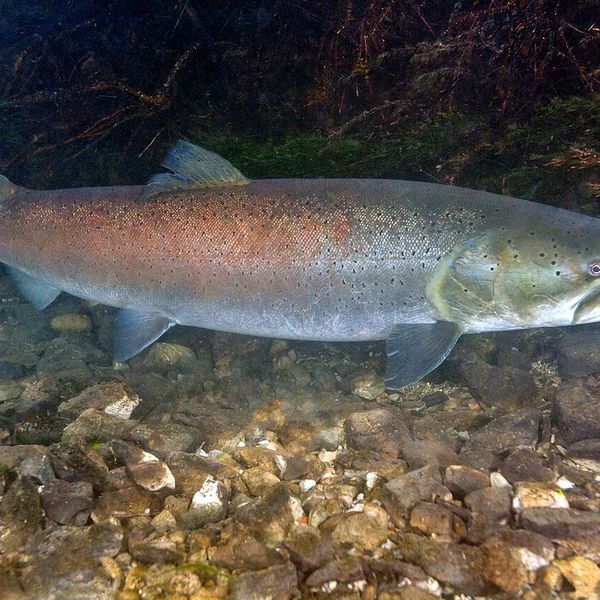
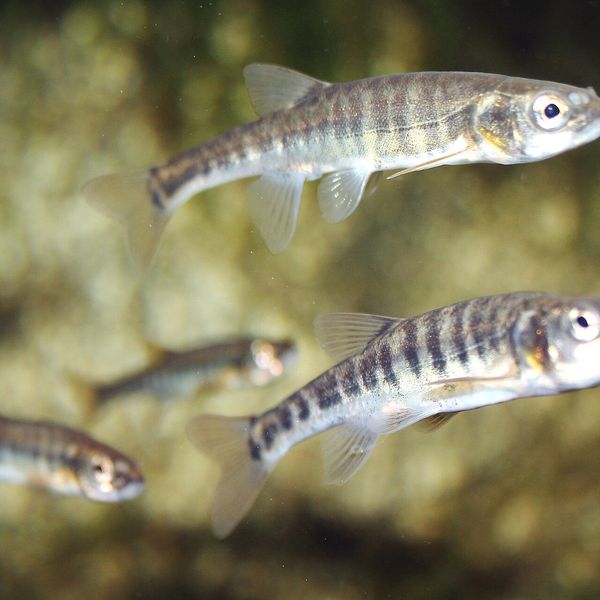
Sources
- Вікіпедія: Харіус європейський
- Wikipedia (en): Grayling (species)
- Wikipedia (en): Thymallus
- Телеграф: харіус європейський, лососі чорноморський і дунайський — по 14 тис. грн компенсації (інфографіка Держрибагентства)
- Правила любительського рибальства (наказ Мінагрополітики від 19.09.2022 № 700, z1412-22)
- Перелік видів тварин, що заносяться до Червоної книги України (наказ Міндовкілля від 19.01.2021 № 29, зареєстровано в Мін'юсті 01.03.2021 за № 260/35882)
- Міндовкілля: текст переліку видів тварин Червоної книги України (PDF)
- GBIF: таксон і категорія МСОП
- Директива Ради 92/43/ЄЕС про збереження природних оселищ (консолідована редакція)
GBIF · iNaturalist · Wikidata · Distribution data: GBIF.org (CC0 and CC BY records), iNaturalist; names and identifiers: Wikidata (CC0). Text: Karpaty.rocks, checked 09.11.2026.
