European ash
About
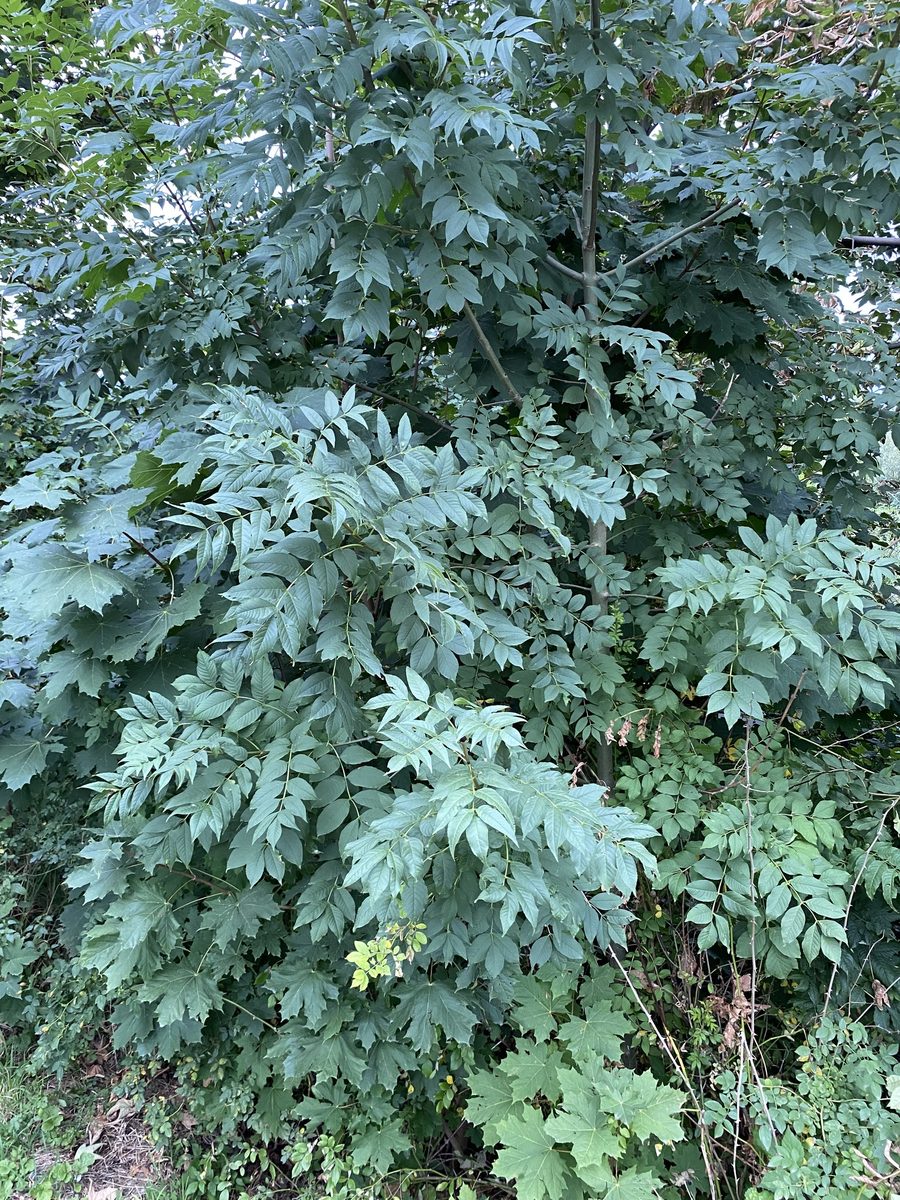
European ash is a tall deciduous tree reaching 20–40 m in height with a slender trunk and a lacy, high crown. In Ukraine, it naturally grows in the Forest-Steppe, less frequently in Polissia and Crimea, and in the Carpathians and Transcarpathia — in valleys and deciduous forests. The ash prefers moist, fertile soils and does not grow high in the mountains. It is a fast-growing, long-lived, and shade-tolerant tree that occupies the first layer of the deciduous forest; overall, ash covers 1.4% of the area of the state forest fund of Ukraine.
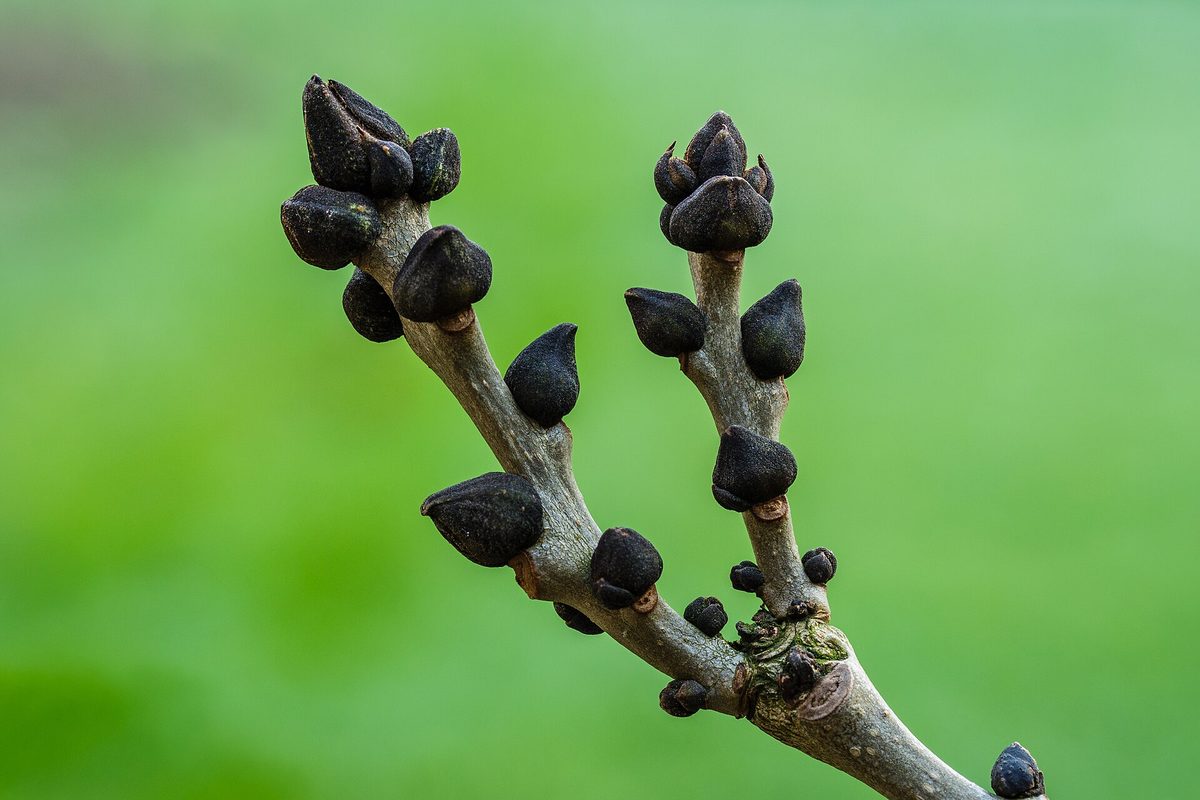
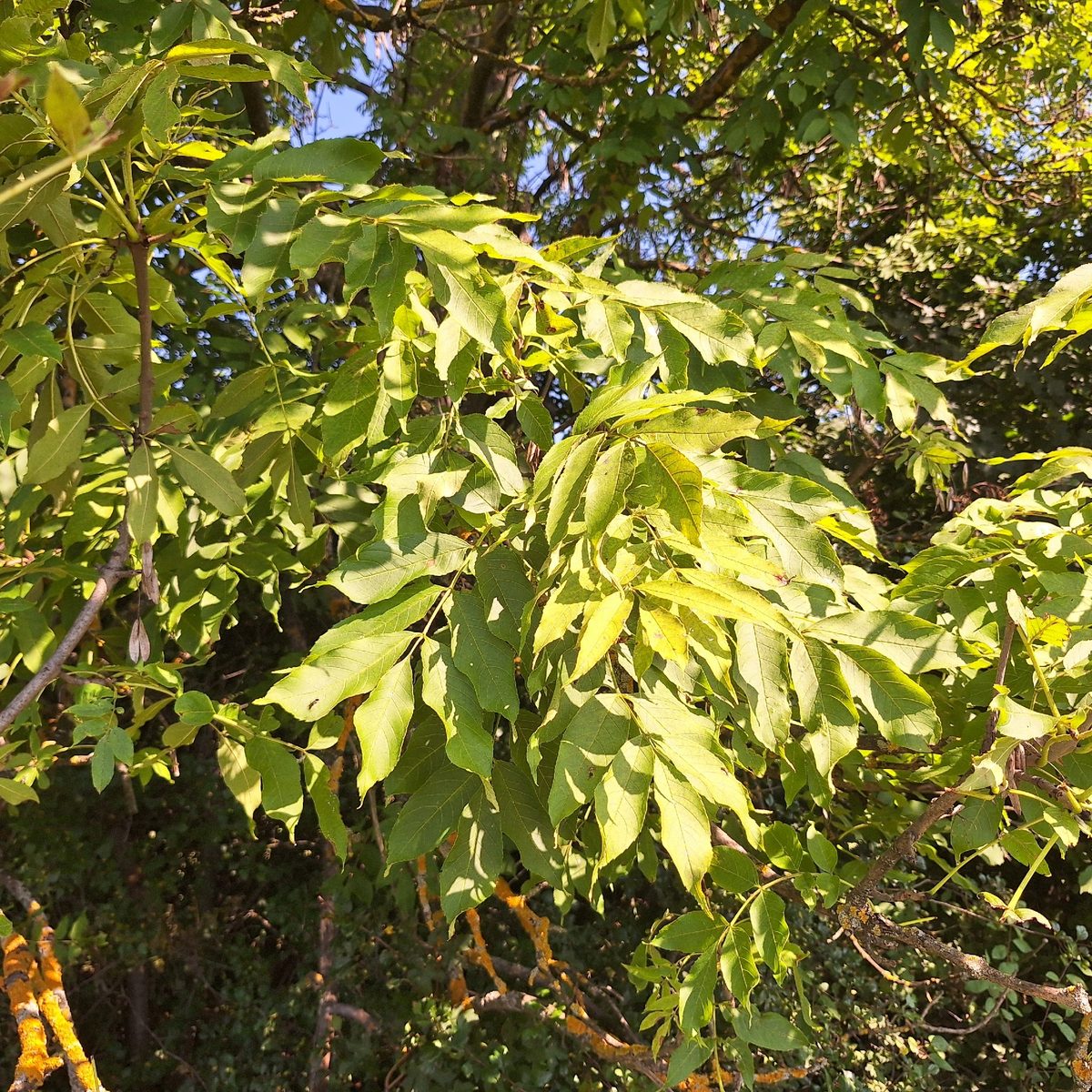
In winter, the ash is easiest to recognize by its large coal-black buds on grayish-green shoots. The leaves are compound, up to 40 cm long, with 3–5 pairs of lanceolate leaflets. The ash flowers in May, before the leaves unfold, with inconspicuous petal-less flowers, and the fruits — narrow samaras 2–2.5 cm long — often hang in clusters on the tree throughout the winter.
In the Carpathians, rare ash forests occur with an undergrowth of relict Carpathian lilac. Some of these communities, particularly those with gray and black alder, are included in the Green Book of Ukraine.
The last decades have been difficult for the ash. A disease called ash dieback, caused by the fungus Hymenoscyphus fraxineus, has spread throughout Europe: branches and tops of trees die back, and many of them perish. As a result, the European ash is listed as 'near threatened' in the IUCN Red List. It is not included in the Red Book of Ukraine.
Where in the Carpathians

The map shows where naturalists recorded the species (GBIF, CC0 and CC BY records), not every place it lives. The Ukrainian Carpathians are less studied, so a blank area does not mean the species is absent.
- Countries
- Slovakia · Czechia · Poland · Ukraine · Austria · Romania · Hungary · Serbia
- Mountain ranges
- Slovak Ore Mountains, Strážov Mountains, White Carpathians, Moravian-Silesian Beskids, Greater Fatra, Little Carpathians, Low Tatras, Považský Inovec, Lesser Fatra, Slovak Central Mountains
- Altitude belts
- Foothills (below 600 m) · Beech forests (600–1200 m)
When to see it
| Jan | Feb | Mar | Apr | May | Jun | Jul | Aug | Sep | Oct | Nov | Dec | |
|---|---|---|---|---|---|---|---|---|---|---|---|---|
| Flowering | ||||||||||||
| Fruit |
From naturalists’ observations in the Carpathians (iNaturalist, research grade): the darker the cell, the more often the species is seen that month.
Protection and rules
It is not included in the Red Book of Ukraine. In the IUCN Red List — 'near threatened' due to ash dieback; rare ash communities are in the Green Book of Ukraine.
FAQ
Why are ashes dying back?
Due to the fungal disease ash dieback, caused by the fungus Hymenoscyphus fraxineus. It has spread throughout Europe and affects the branches and tops of trees.
How to recognize ash in winter?
By its large coal-black buds on grayish-green shoots and clusters of narrow samaras hanging from the branches.
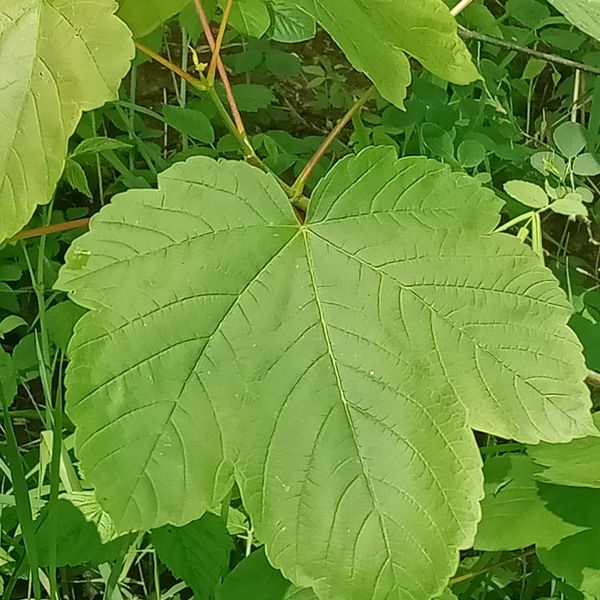
Similar species
Where to meet it
Mountain ranges: In other countries: 🇸🇰 Slovak Ore Mountains, 🇸🇰 Strážov Mountains, 🇨🇿 White Carpathians, 🇨🇿 Moravian-Silesian Beskids, 🇸🇰 Greater Fatra, 🇸🇰 Little Carpathians, 🇸🇰 Low Tatras, 🇸🇰 Považský Inovec, 🇸🇰 Lesser Fatra, 🇸🇰 Slovak Central Mountains, 🇸🇰 Kysuce Beskids, 🇸🇰 Štiavnica Mountains, 🇸🇰 Kremnica Mountains, 🇸🇰 Javorníky
Trails and peaks near which naturalists recorded the species (GBIF, iNaturalist), matched by altitude and habitat. Sightings are not guaranteed.
Sources
- Вікіпедія: Ясен звичайний
- Wikipedia (en): Fraxinus excelsior
- Wikipedia (pl): Jesion wyniosły
- Перелік видів рослин та грибів, що заносяться до Червоної книги України (наказ Міндовкілля від 15.02.2021 № 111, z0370-21)
- GBIF: Червона книга України — рослини й гриби (набір даних)
- GBIF: таксон і категорія МСОП
GBIF · iNaturalist · Wikidata · Distribution data: GBIF.org (CC0 and CC BY records), iNaturalist; names and identifiers: Wikidata (CC0). Text: Karpaty.rocks, checked 09.11.2026.
