Cozia Monastery: Mircea the Elder's burial church on the Olt
Mircea the Elder's foundation
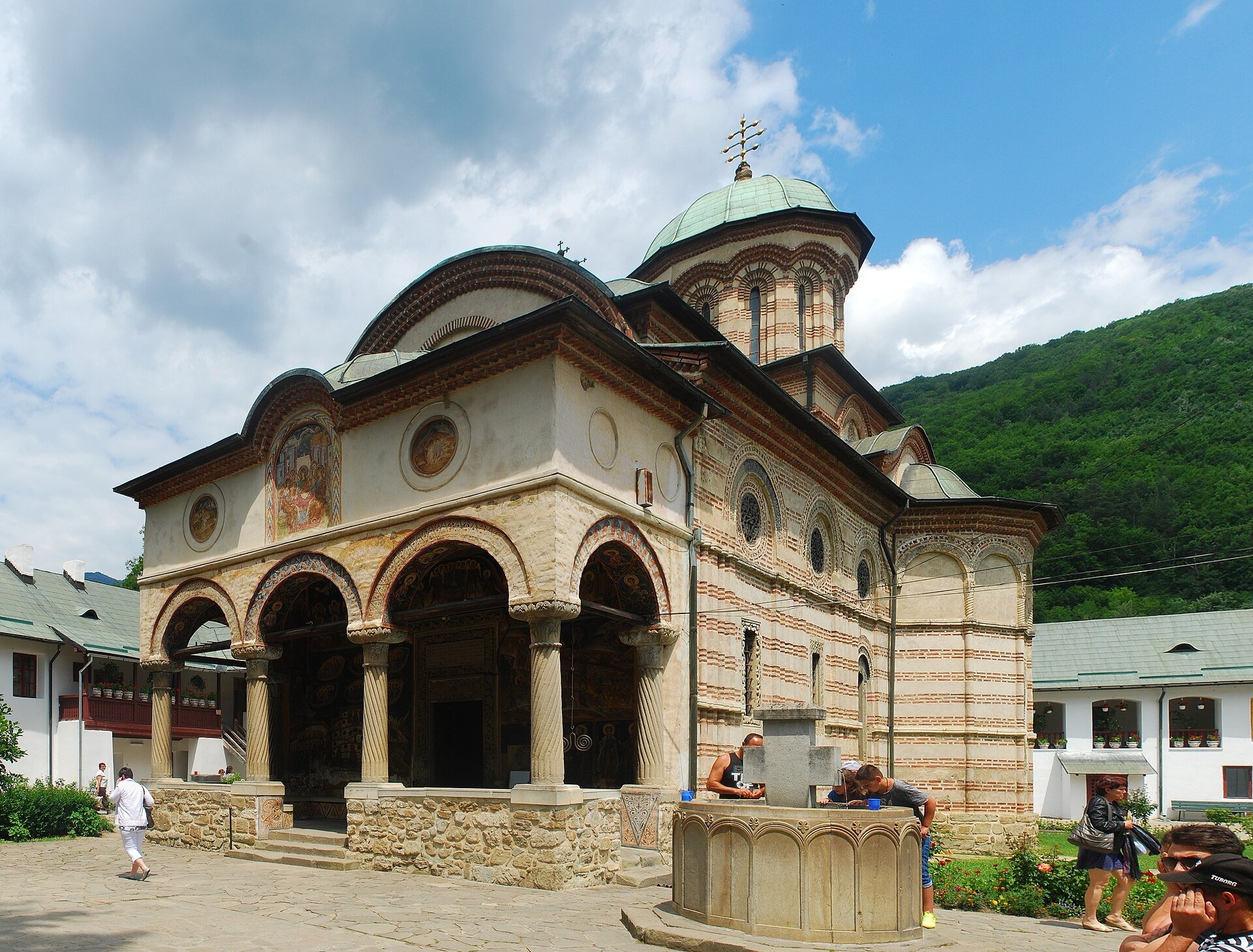
Cozia Monastery (Mănăstirea Cozia) stands on the right bank of the Olt, where the river cuts through the Southern Carpathians, at the northern edge of the spa town of Călimănești, in the Căciulata district. It was founded by the Wallachian ruler Mircea the Elder (Mircea cel Bătrân, reigned 1386–1418): the main Church of the Holy Trinity was built in 1387–1391 and, according to the founder's charter, consecrated on 18 May 1388. At first the monastery was called "Nucet", the walnut grove; later it took its name from Mount Cozia, which rises above the valley.
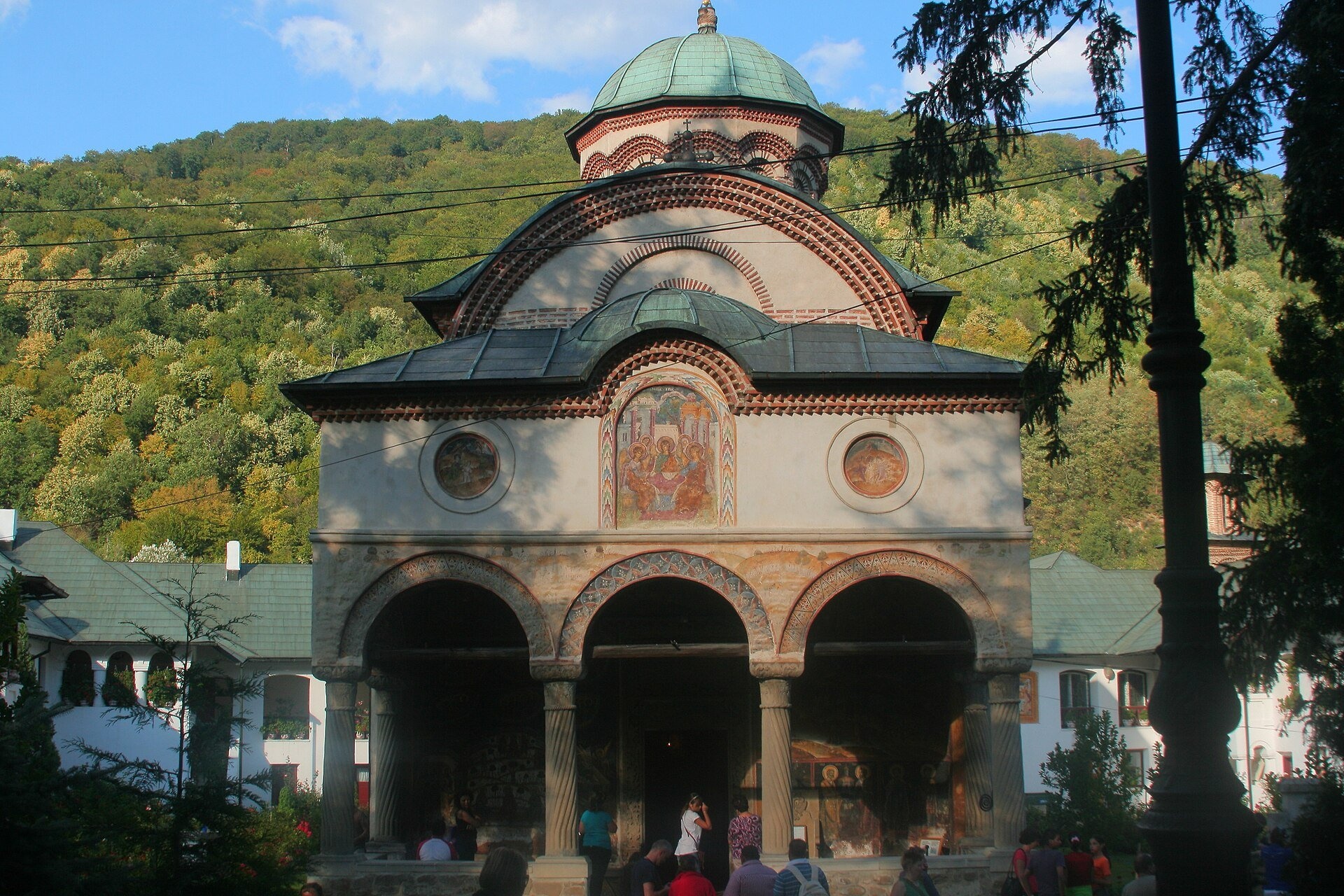
Mircea the Elder chose the monastery as his burial place, and his tomb is still in the church. The monastery was one of the earliest centres of writing in Wallachia: charters from 1415 mention a monastic school here. In the early 16th century, under Prince Neagoe Basarab, the murals were renewed and a stone fountain was built in the courtyard; in 1542–1543 an infirmary church was added; and in 1706–1707 Constantin Brâncoveanu added an open porch in his own style. The monastery later went through 19th-century repairs, the use of the church as a stable during the First World War, and a long restoration in 1958–1980. Today it is an active monastery of monks under the Archdiocese of Râmnic of the Romanian Orthodox Church.
Why go
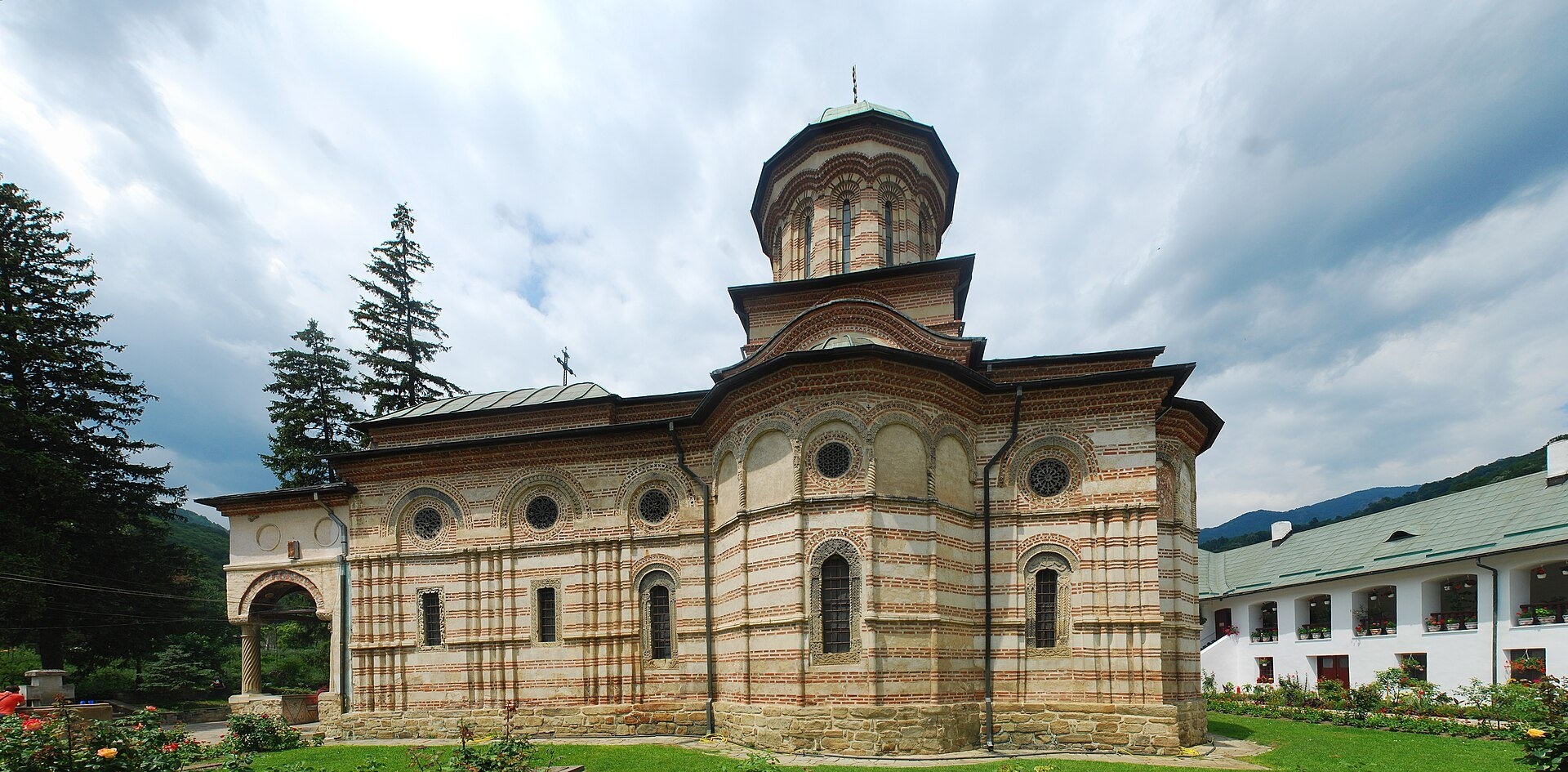
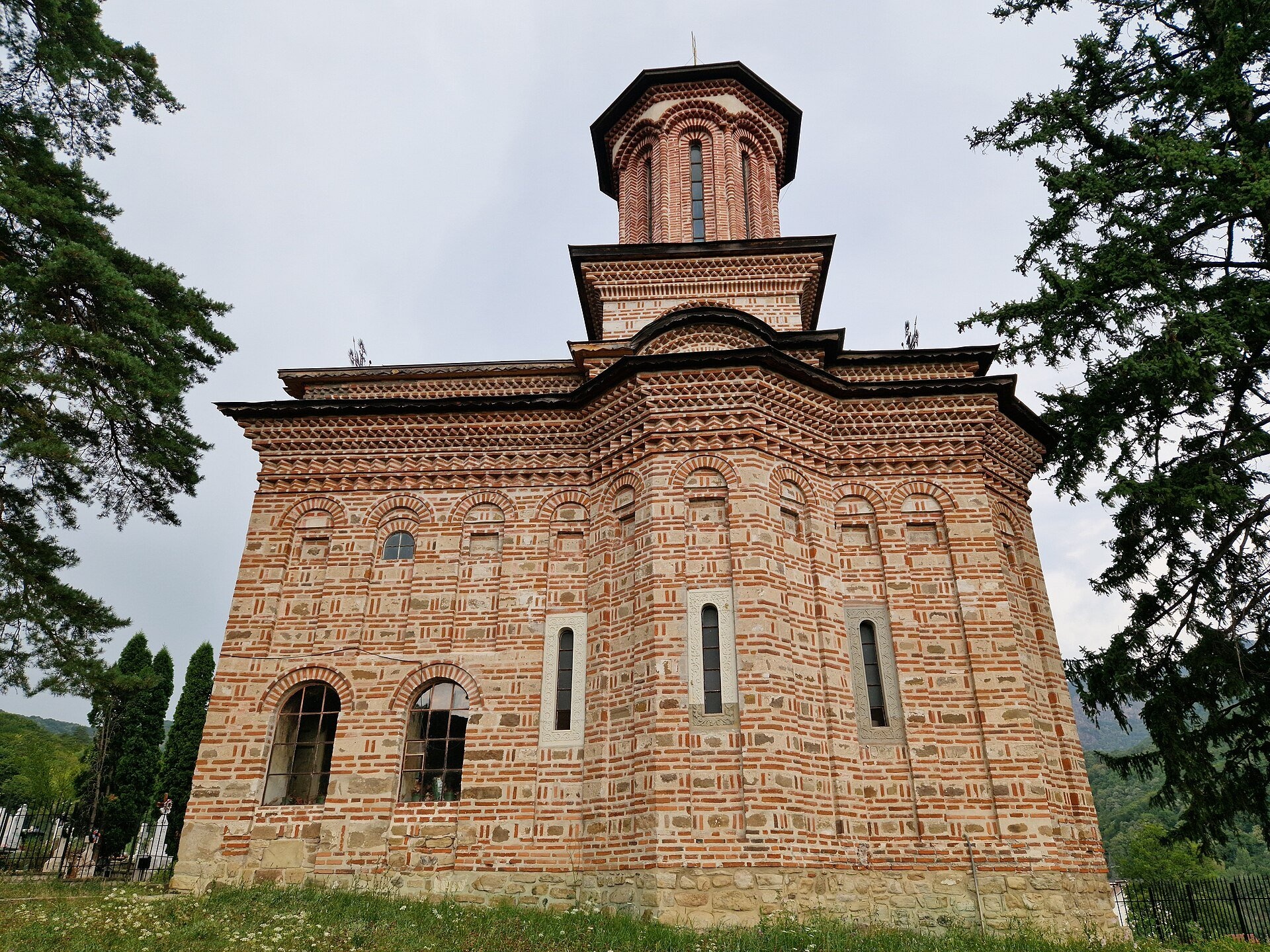
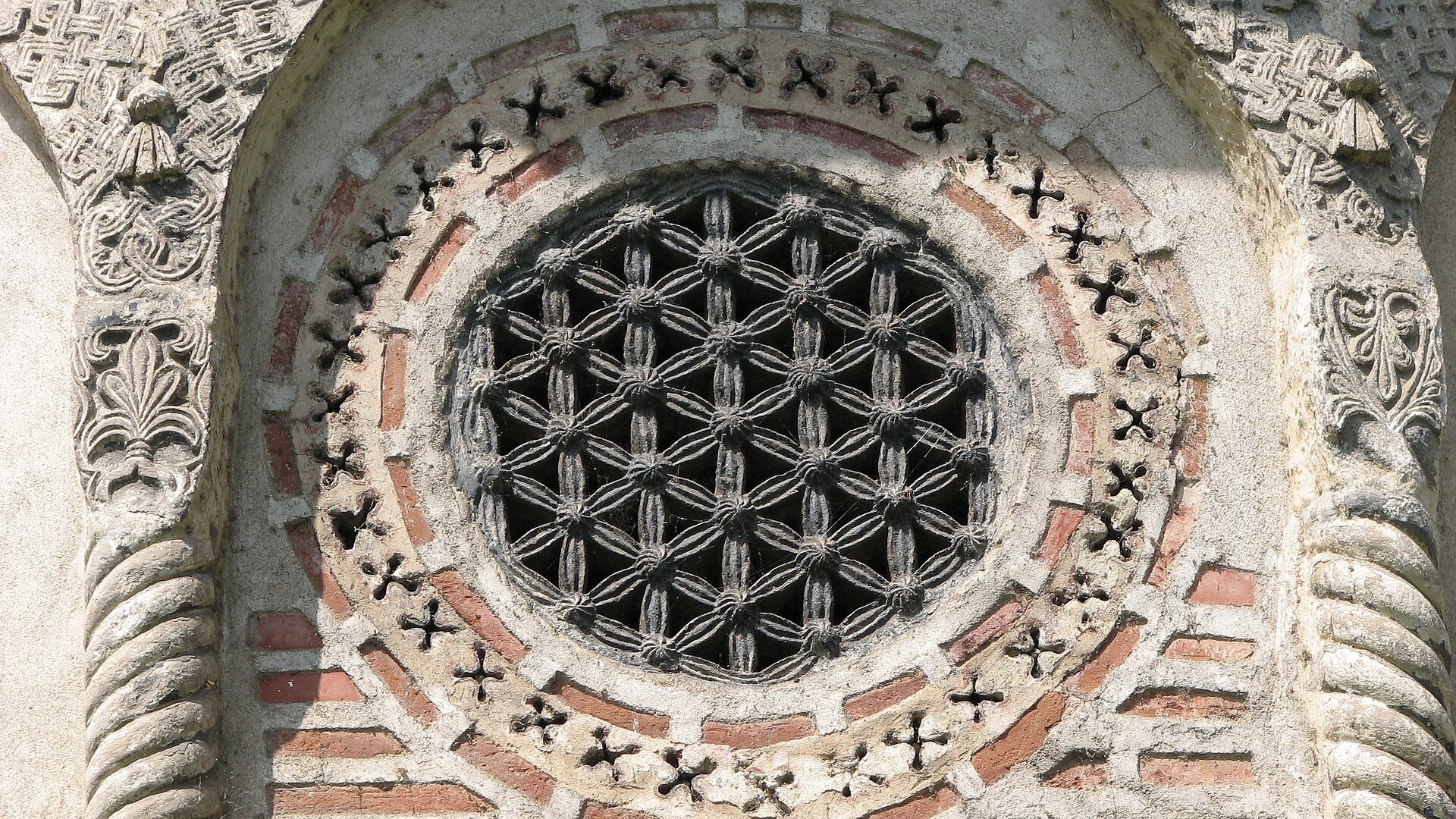
Cozia is a rare chance to see late-14th-century Wallachian architecture almost in its original form. The church façades, built of alternating bands of stone and brick with stone rosettes, follow models of the Serbian Morava school, and scholars believe Serbian craftsmen worked here. The monastery also lies right on the road from Transylvania to Oltenia, so it is an easy stop between Sibiu and Râmnicu Vâlcea, with a mineral spa next door and the trails of Cozia National Park above.
What to see
- The Church of the Holy Trinity, built on a trefoil plan, with alternating stone and brick bands, vertical mouldings and stone rosettes on the façades.
- The tomb of Mircea the Elder inside the church; the prince's remains were reburied on 15 May 1938, and archaeologists examined the tomb again in 2025.
- The frescoes of 1390–1391 in the nave, among the oldest in Wallachia, with later renewals from Neagoe Basarab's time.
- The Brâncovenesc porch of 1706–1707, with arcades, murals and a commemorative inscription.
- The infirmary Church of the Holy Apostles (1542–1543), painted by master David and his son Raduslav, including portraits of the founders.
- The corner chapels on the walls above the Olt, the stone fountain in the courtyard and the monastery's museum collection of 16th–19th-century icons on wood, liturgical silver and old Romanian books.
Practical information
Address: Calea lui Traian nr. 816, Căciulata, Călimănești. The monastery stands right by the DN7 (E81) national road, about 3 km north of the centre of Călimănești, about 20 km from Râmnicu Vâlcea and about 80 km from Sibiu. There is parking by the monastery; buses stop nearby, and the railway along the Olt has stations in the area. From Ukraine the simplest route is via the Porubne – Siret or Diakivtsi – Racovăț crossing and on through Transylvania to Sibiu, from where the road follows the Olt valley south.
According to the museum database of the National Heritage Institute (cIMeC), the monastery welcomes visitors daily from 6:00 to 22:00; phone +40 250 750 852 and +40 744 109 208, e-mail [email protected]. Official sources do not state any admission fee. Information as of November 2026 — check before you go. This is an active monastery of monks: dress modestly (shoulders and knees covered; women may find a headscarf useful), speak quietly, do not disturb services and take photographs inside the church only with permission. Allow about an hour for the visit.
Nearby
- Turnu Monastery with its rock-cut hermit cells — about 2 km upstream along the Olt.
- Cozia (Ciuha Mare) — the summit of the Cozia massif above the monastery, in Cozia National Park.
- The Vâlcea Village Museum in Bujoreni — an open-air museum about 15 km south.
- Horezu Monastery — a UNESCO site about 60 km west.
- The Călimănești–Căciulata spa with its mineral springs, right next to the monastery.
Official website: arhiepiscopiaramnicului.ro
Photos: Andrei Stroe, CC BY-SA 4.0, Wikimedia Commons; Michal Gorski, CC BY-SA 3.0, Wikimedia Commons; MIHAIL, CC BY 4.0, Wikimedia Commons; Cristian Bortes, CC BY 2.0, Wikimedia Commons; Andrei Stroe, CC BY-SA 3.0 ro, Wikimedia Commons; CristianChirita, CC BY-SA 3.0 ro, Wikimedia Commons.
Getting there from Ukraine
Border crossings
- Porubne – Siret — road and pedestrian, 24/7
- Diakivtsi – Racovăț — road and pedestrian, 24/7 No freight traffic.
- Krasnoilsk – Vicovu de Sus — road and pedestrian, 08:00–20:00 Cars up to 3.5 t and pedestrians only; not 24/7.
- Solotvyno – Sighetu Marmației — road and pedestrian, 24/7 Passenger traffic only: vehicles up to 3.5 t with up to 9 seats, pedestrians.
- Diakove – Halmeu — road, 24/7 No pedestrian crossing.
By car
Rakhiv – Sibiu ≈390 km, ≈5 h 33 min (via Solotvyno – Sighetu Marmației); Ivano-Frankivsk – Sibiu ≈524 km, ≈7 h 52 min (via Solotvyno – Sighetu Marmației); Chernivtsi – Sibiu ≈435 km, ≈8 h 00 min (via Diakivtsi – Racovăț). Times without border queues, our road routing (GraphHopper, OSM).
Checked 03.11.2026; border crossing hours and timetables change — check before you travel.
Comments
Travellers’ experience: reports, tips, questions.
No one has written here yet. Be the first — your experience helps others.
Video 2
 Memoria locului - Mănăstirea CoziaTVR Craiova

Location on the map
Trails nearby
All trails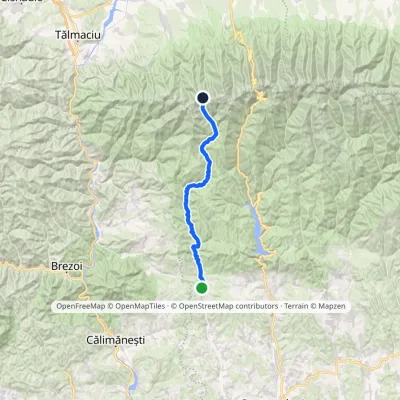 Hard1–2 daysMarkedSălătrucu Scării SaddleElevation profile623–2 147 m39.7 kmascent 1 685 m≈ 12.5 h walking16 km from Cozia Monastery: Mircea the Elder's burial church on the Olt
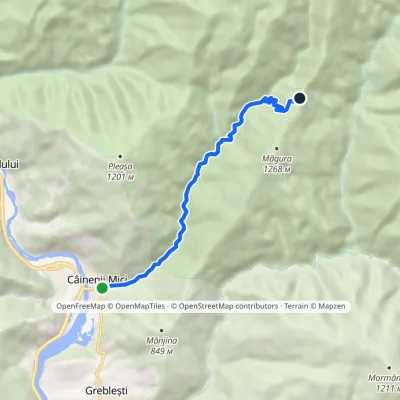 ModerateOne-dayMarkedCâinenii Mici Plaiul GrebleștiElevation profile350–1 076 m7.8 kmascent 726 m≈ 3 h walking25 km from Cozia Monastery: Mircea the Elder's burial church on the Olt
Nearby attractions
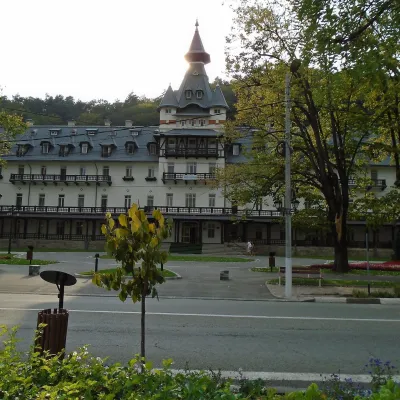 Water parks & thermal poolsCălimănești-Căciulata: thermal pools and springs in the Olt gorgePăușaunder 1 km from Cozia Monastery: Mircea the Elder's burial church on the OltCălimănești-Căciulata is one of Romania's best-known spas, stretching along both banks of the Olt where the river enters its gorge between the Cozia massif and the...
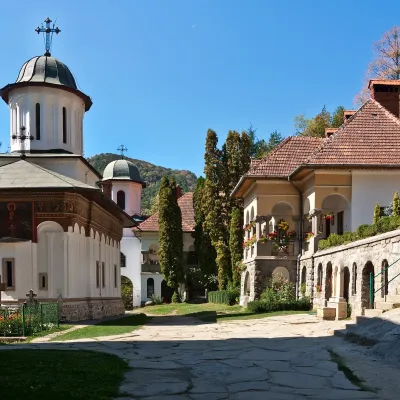 ChurchTurnu Monastery: hermits' rock-cut cells above the OltPăușa1.9 km from Cozia Monastery: Mircea the Elder's burial church on the OltTurnu Monastery (Mănăstirea Turnu) stands on the left bank of the Olt at the foot of the Cozia massif, about 2 km upstream from Cozia Monastery, within the spa town of...
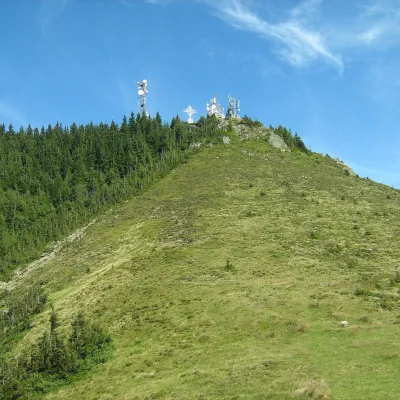 PeakCozia Peak (Ciuha Mare)Drăgăneștialtitude 1 668 m5.8 km from Cozia Monastery: Mircea the Elder's burial church on the OltCozia Peak, also Ciuha Mare (Romanian Vârful Cozia), is the highest summit of the Cozia massif, at 1,668 m, in the central part of the Southern Carpathians in Romania,...
Craft nearby
All craft places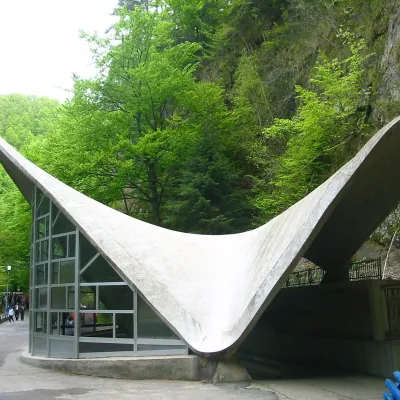 Water parks & thermal poolsBăile Olănești: sulphur and iodine springs of VâlceaBăile Olănești9.7 km from Cozia Monastery: Mircea the Elder's burial church on the OltBăile Olănești is a mineral-water spa in Vâlcea County, in the valley of the Olănești river, at about 450 m and roughly 20 km north-west of the town of Râmnicu Vâlcea.
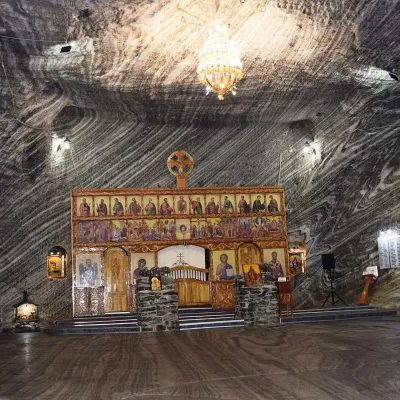 Water parks & thermal poolsOcnele Mari Salt Mine: underground microclimate near VâlceaGura Suhașului21 km from Cozia Monastery: Mircea the Elder's burial church on the OltThe Ocnele Mari Salt Mine is a visitor and wellness area in one of the worked-out levels of an active salt mine in the small town of Ocnele Mari, 8 km from Râmnicu...
 Water parks & thermal poolsBăile Govora: iodine-bromine waters and inhalationsBăile Govora24 km from Cozia Monastery: Mircea the Elder's burial church on the OltBăile Govora is a small spa in Vâlcea County, in a sub-Carpathian depression in the valley of the Hința river, at 360–380 m, south-west of the town of Râmnicu Vâlcea.
