Church of the Nativity of Christ XIII-XV centuries in Halych
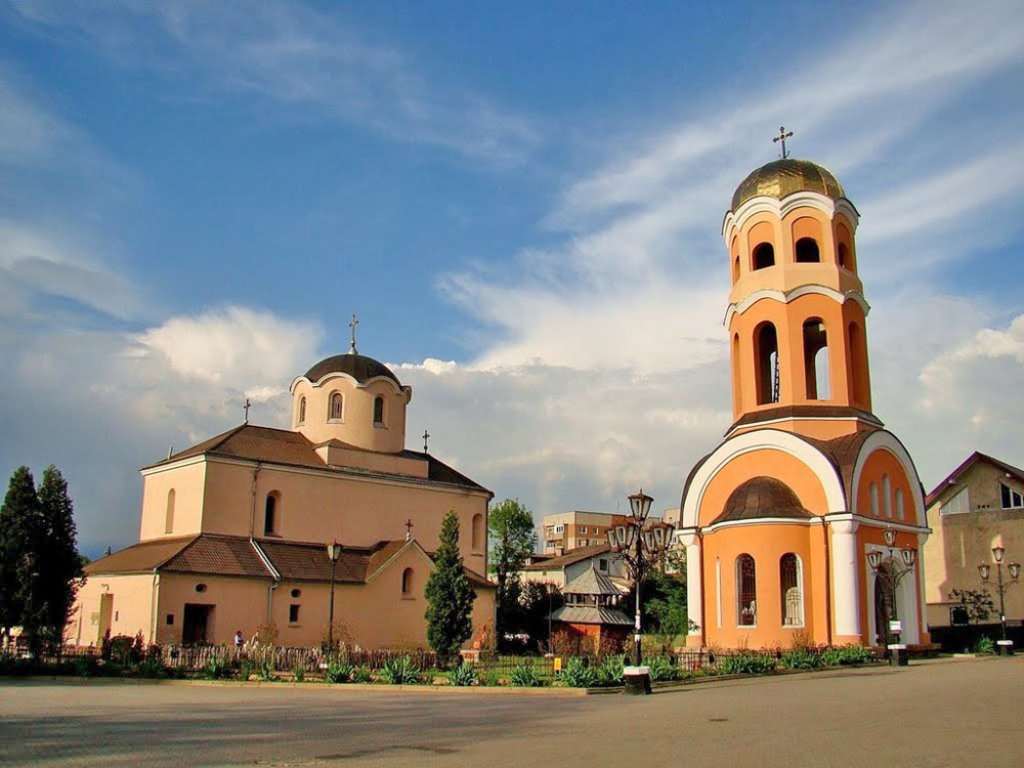
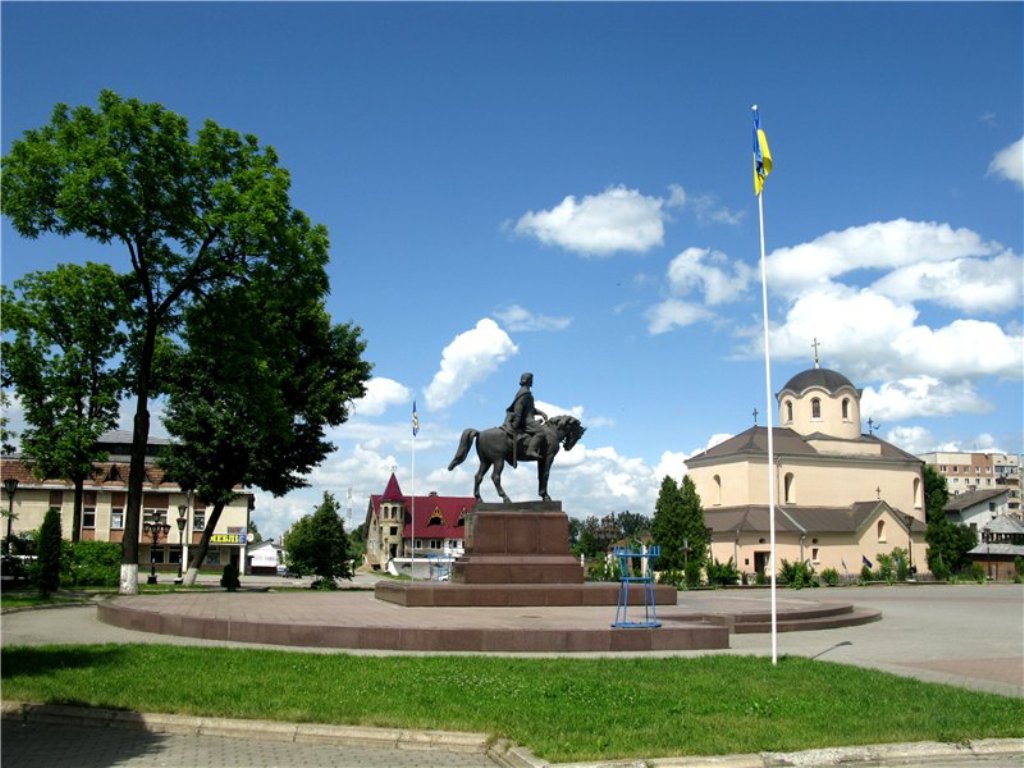
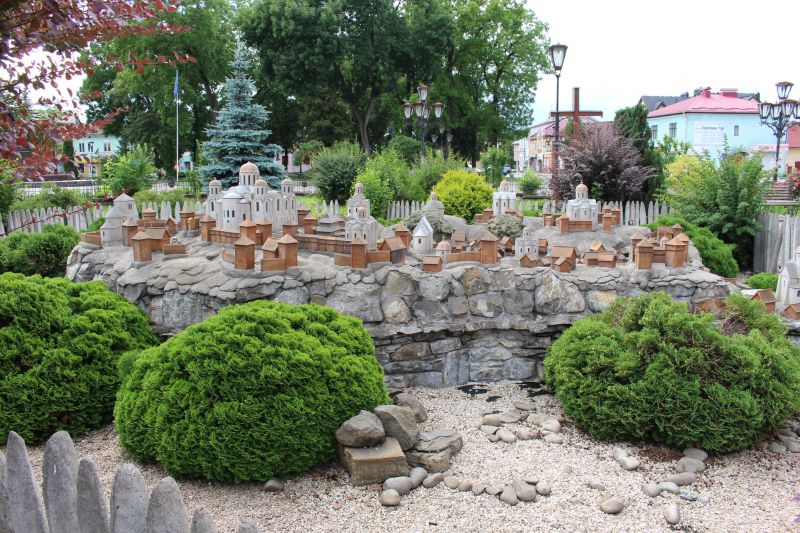
No researcher has yet managed to establish the dates of the church's construction, although scientific searches have been ongoing for over two hundred years. It is most likely that the stone Church of the Nativity of Christ was built in the 14th century. Before the discovery of the foundations of the chronicle's Assumption Cathedral in Krylos by Y. Pasternak in 1936, the church was considered a princely cathedral. The Church of the Nativity of Christ is one of the oldest shrines of the city of Halych, belongs to the Ukrainian Greek Catholic Church, and is part of the "Ancient Halych" reserve. Near the Church of the Nativity of Christ is a model of Ancient Halych.
One of the researchers of Halychian temples, Y. Lukomskiy, claims that the volumetric-spatial composition of the Church of the Nativity of Christ once had a cross-shaped plan, was three-domed with a traditional entrance from the west. Later, the church was expanded from the west, north, and south. The extension was due to the construction of the Church of the Honorable Cross adjacent to it. The proximity to the monastery complicated the ritual circumambulation around the temple, characteristic of the Byzantine rite. As a result of the extension, the western wall became blind, and two doors were made on the northern and southern sides.
In the 16th century, the Church of the Nativity of Christ was mentioned in historical sources as the main cult building of craft associations, guilds. The Polish king Sigismund III approved the statute of the pottery guild in Halych in 1593, according to which the Church of the Nativity of Christ was its property. A year later, the church was taken care of by brotherhoods.
Throughout the 16th–18th centuries, the Church of the Nativity of Christ was destroyed several times by the Tatars and even fell into disrepair, but in the second half of the 18th century, it began to be rebuilt, acquiring its modern appearance. One of the bells for the bell tower was cast in 1785. At that time, a wooden carved gilded one-tier iconostasis was made, and three metal chandeliers were produced.
The church was restored in 1825. The restoration was led by architect Berger. It was then that the buttresses were removed from the northern and southern sides, and the previously absent choir was placed in the narthex.
The further history of the church is associated with the figure of Father Mykola Vynnytsky (1869–1929), who became a collaborator in 1895 and, seven years later, the parish priest of the Halych parish. He helped architect L. Levin'sky restore the temple (1904–1906). After the restoration, the church acquired its modern appearance. By the beginning of the 20th century, it was covered with a gabled roof with a baroque western pediment. A wooden bell tower adjoined the western facade. During the restoration (1904–1906), a new dome was built, and the interior was restored. After the completion of the work, the church was consecrated in 1906 by Metropolitan Andrey Sheptytsky.
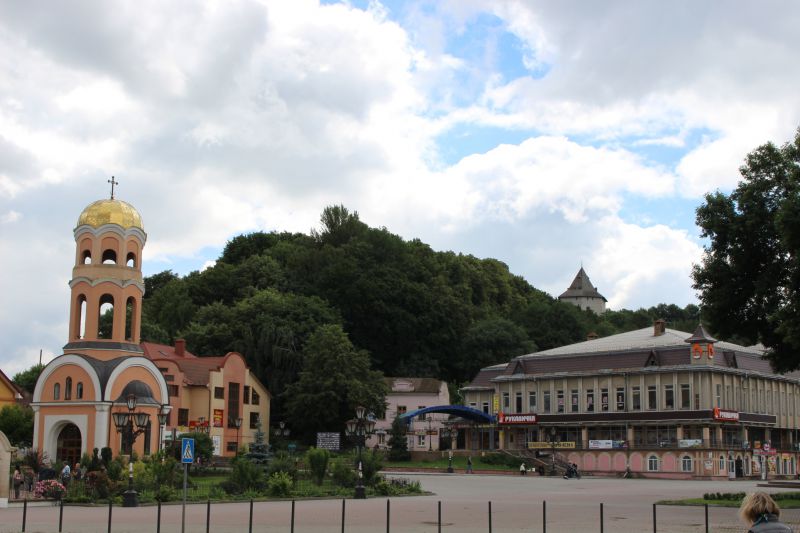
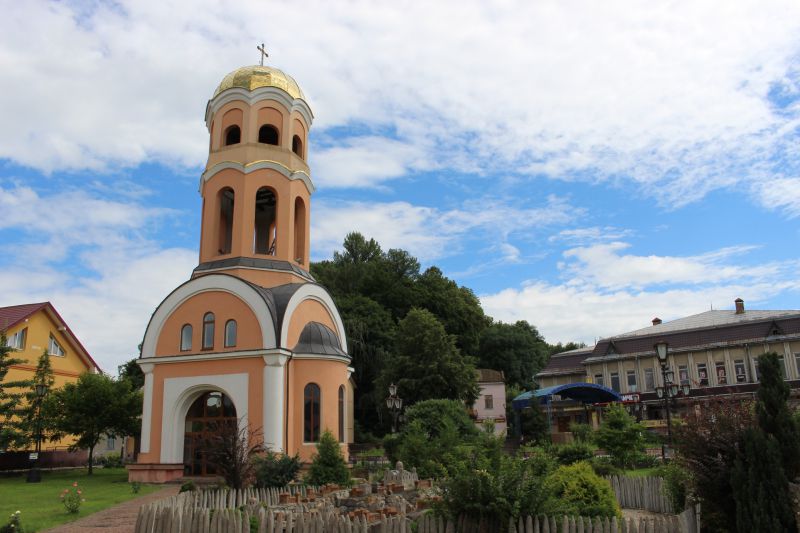
Recently, a unique iconostasis carved from sandstone was installed in the Church of the Nativity in Halych. It is decorated with mosaic icons and has forged Heavenly gates. For the celebration of the 1100th anniversary of Halych, a bell tower was added to the church in the same style as the sanctuary itself.
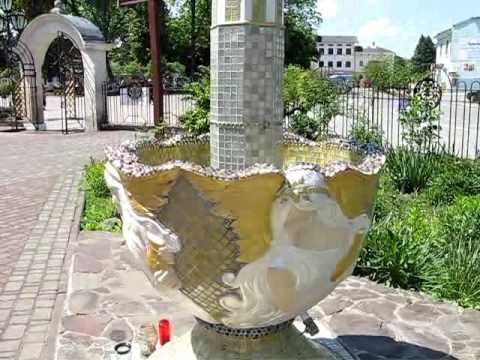
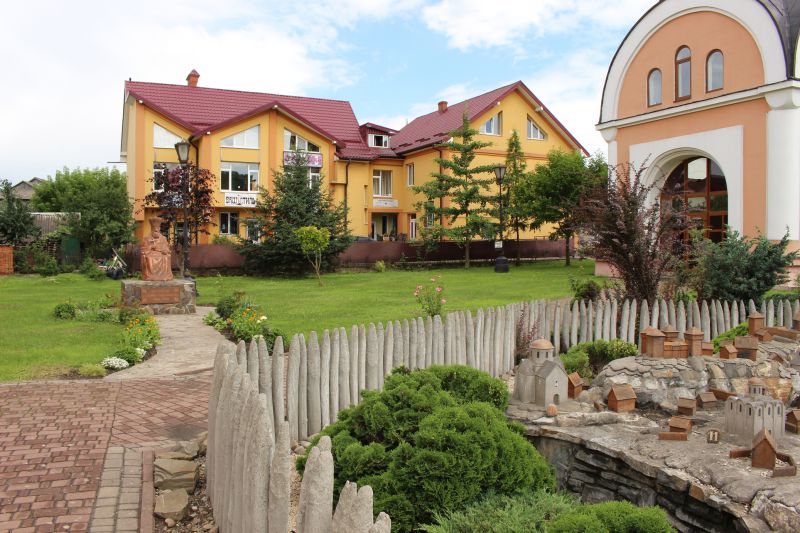
In terms of political views, the rector of the Church of the Nativity, Father Mykola Vynnytsky, was a Moscow supporter. At the beginning of World War I, he collaborated with the organization "Carpathian Ruthenian Liberation Committee," which promoted unification with Russia. The Austrian authorities severely persecuted Moscow supporters. Together with 127 residents of Halych, Father Mykola ended up in the Austrian concentration camp in the city of Thalerhof. After a few years, he was one of the few who managed to return home. At the initiative of the priest and in memory of the victims of the Austrian genocide, a monument was erected near the church in 1929, on which the names of 20 residents of Halych, tortured in Thalerhof, are inscribed.
In 1960, another renovation was carried out in the church, and the interior was thoroughly updated. The oil painting on the Gospel themes was done by brothers Mykhailo and Petro Shchupaky. Unlike the princely white-stone cathedrals, the Church of the Nativity of Christ was built from local soft stone – marl and brick on a lime mortar. It is a valuable monument of late medieval architecture and one of the oldest churches in the Halych deanery.
You can reach the Church of the Nativity of Christ in Halych from Ivano-Frankivsk or Lviv by car via the N09 road, which passes through the central part of the city. Buses connect Halych with all regional centers of Halychyna and surrounding cities. Trains and electric trains also run to the railway station "Halych." It takes about 20 minutes to walk to the city center from here.
Accommodation around Church of the Nativity of Christ XIII-XV centuries in Halych:


Nearby hiking trails near Church of the Nativity of Christ XIII-XV centuries in Halych:
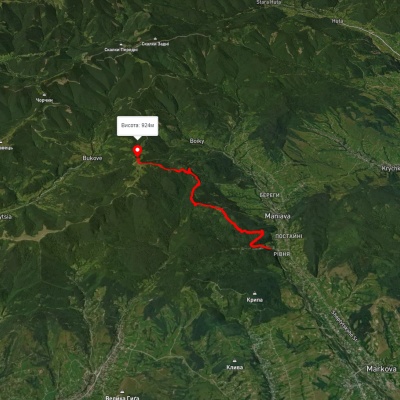
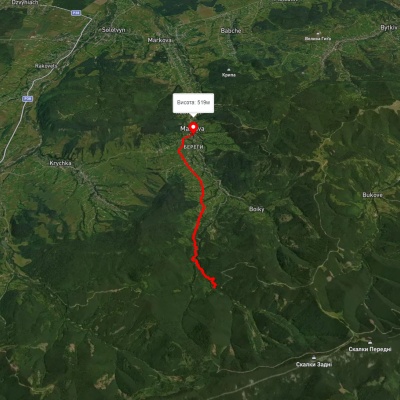
Which trails pass by Church of the Nativity of Christ XIII-XV centuries in Halych?
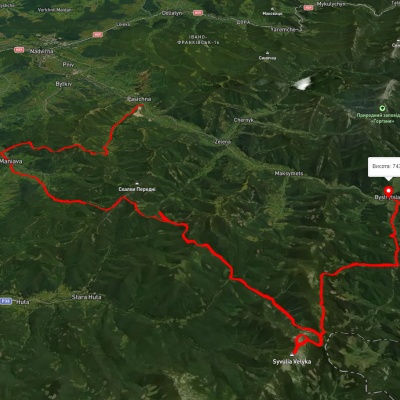
We suggest these hiking trails through or near Church of the Nativity of Christ XIII-XV centuries in Halych: Pasichna village, via Maniava village, Maniava Waterfall and Mount Velyka Syvulia to Bystrytsia village, Maniava village - Monastyretska polonyna, Maniava village – Maniava Waterfall, Huta village – Pasichna village, Dora village, via Mount Syniachka, Pereslip Pass, Turshuhuvata polonyna and the Yavirnyk ridge to Yaremche, Dora village, via Mount Syniachka and Pereslip Pass to Yaremche