Poliana Kvasova (mineral water)
What it is
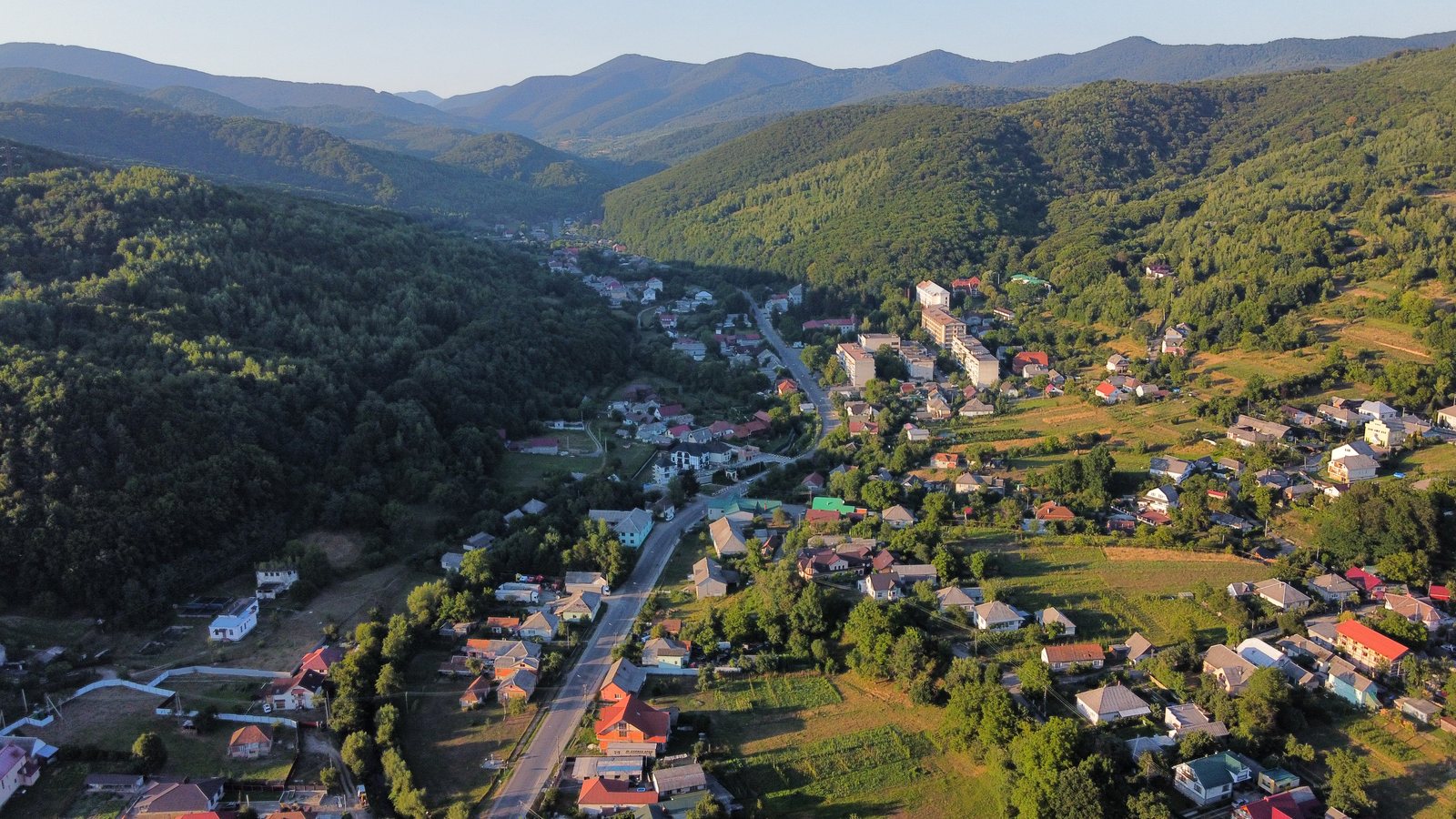
Poliana Kvasova is a natural carbonated sodium bicarbonate mineral water with boron, sourced near the village of Poliana in Transcarpathia, in the valleys of the Small and Large Pinia rivers. It is called 'Kvasova' due to its slightly sour, effervescent taste from natural carbon dioxide.
The Encyclopedia of Modern Ukraine lists Poliana Kvasova among the carbonated waters of Transcarpathia, and the 'Poliana' sanatorium among the well-known health resorts utilizing such waters. Its composition is often compared to Georgian 'Borzhomi.'
Local residents have known these springs for a long time. In the second half of the 19th century, three bottling workshops operated in Poliana, and the springs belonged to the Schönborn family, who rented them out. In 1868, a wooden 'Poliana Bathhouse' with baths was built by the Small Pinia River; it burned down in 1907, and in the 1930s, the rebuilt resort welcomed guests year-round.
This page is about the water itself, the springs, and the location, not about the brand. For information on sanatoriums and treatments at the resorts of the region, see the 'Health' section.
History and name
Ukrainian Wikipedia states that between 1842 and 1911, 'Poliana Kvasova' received awards at international exhibitions 21 times as one of the best mineral waters in Central Europe. During that time, the neighboring 'Luzhanska' was also in high demand in the European market.
Legend: The Poliana water was mentioned in documents by the Hungarian king as early as 1463.
In fact: This date is repeated in popular texts, but we have not found primary sources. The reliably documented history of bottling begins in the 19th century.
Ingredients and allergens
Contains allergens: none of the 14 major allergens in the traditional recipe
Diet: lenten · vegan · gluten-free · no cooking
Ingredients of the traditional recipe; every cook and every place may do it differently — please ask when ordering. We cannot guarantee the absence of allergens or traces.
How it is made
The water is extracted from the Poliana deposit wells and bottled nearby. It belongs to the Svalyava group of bicarbonate waters formed in the Carpathian sandstones of Transcarpathia.
Video
 Своя земля. Жива вода. село ПолянаСуспільне Ужгород
Where it is eaten

The area is approximate and based on the sources below. The dish is cooked outside it too, and ethnographic borders are blurred.
The village of Poliana in the Mukachevo district (formerly Svalyava district until 2020), in the valleys of the Small and Large Pinia.
When it is eaten
| Jan | Feb | Mar | Apr | May | Jun | Jul | Aug | Sep | Oct | Nov | Dec |
|---|---|---|---|---|---|---|---|---|---|---|---|
Occasions: Everyday food
In tradition
Mineral springs are part of everyday life in Svalyava: both locals and guests visit the pump rooms, and the resort in Poliana has been welcoming vacationers for over a century and a half.
Safety
Not a treatment: drink mineral water for therapeutic purposes only on a doctor's advice. Therapeutic-table waters are not intended for unlimited daily consumption; children, pregnant women, and people with chronic illnesses should only consume after consulting a doctor.
FAQ
What kind of water is 'Poliana Kvasova'?
Natural carbonated sodium bicarbonate water with boron from the Svalyava group of waters in Transcarpathia.
Can 'Poliana Kvasova' be consumed daily?
This is a therapeutic-table water. Drink it for therapeutic purposes only on a doctor's advice.
Where are the sources of 'Poliana Kvasova'?
Near the village of Poliana in the Mukachevo district of Transcarpathia, in the valleys of the Small and Large Pinia rivers.
Similar dishes and products
Relatives in the Carpathians and nearby
- Borzhomi
water of the same type: carbonated bicarbonate
Sources
- Енциклопедія сучасної України: Мінеральні води
- Вікіпедія: Поляна (Мукачівський район)
- Енциклопедія сучасної України: Неліпине (свалявська група гідрокарбонатних вод, аналоги «Боржомі»)
Written by the Karpaty.rocks editors from the sources above. Checked 10.11.2026.
