Târgu Ocna Salt Mine: breathing therapy 240 m underground
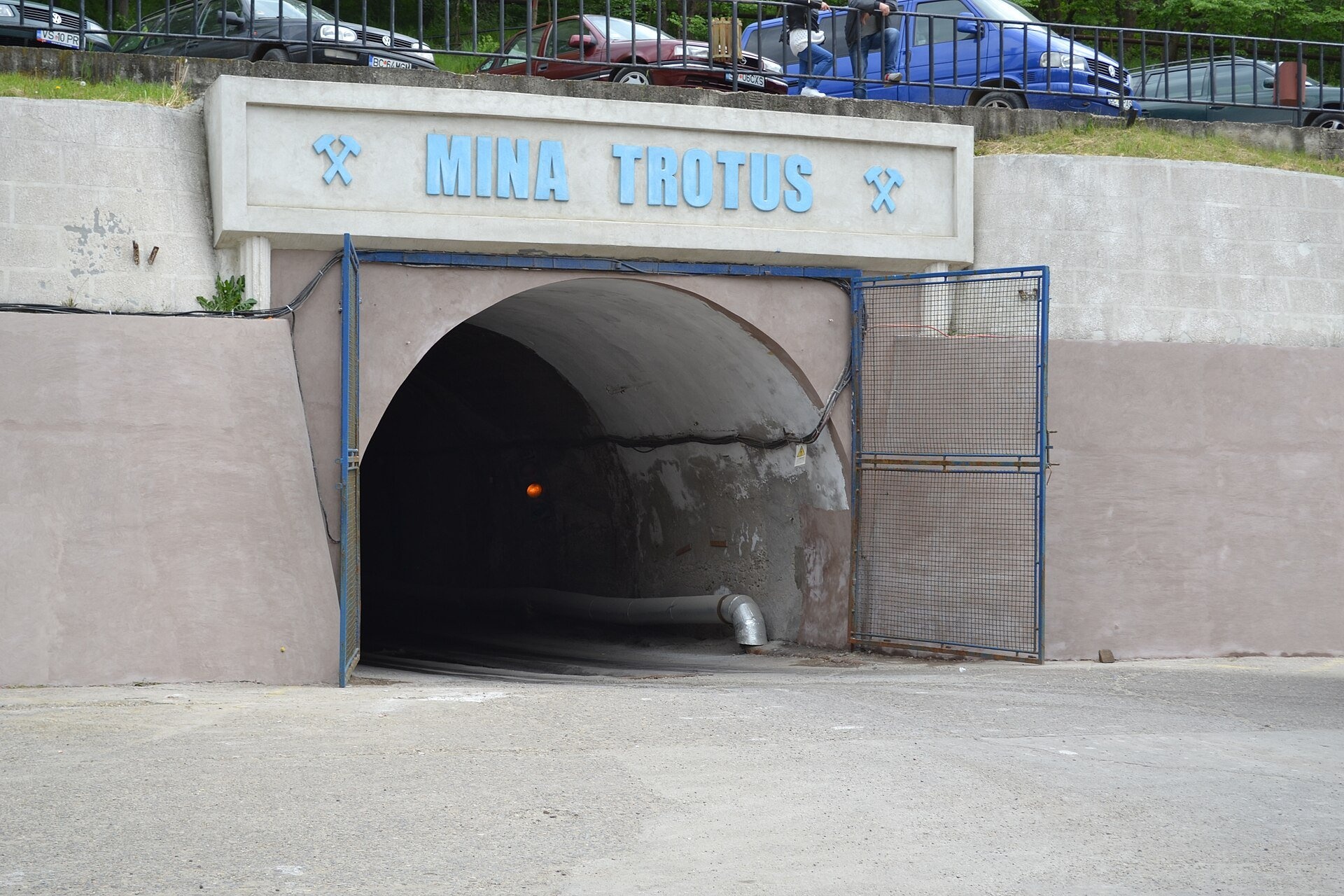
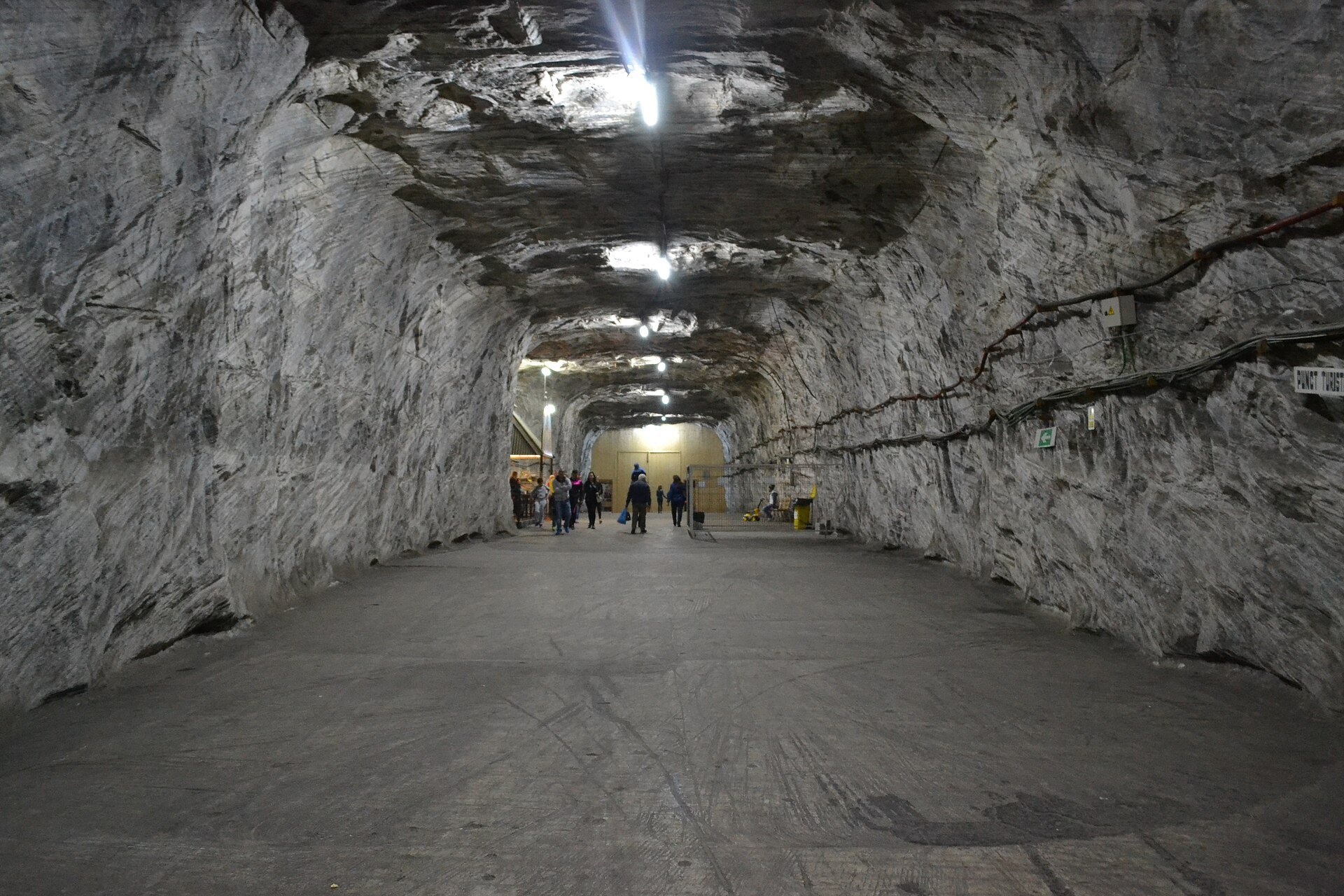
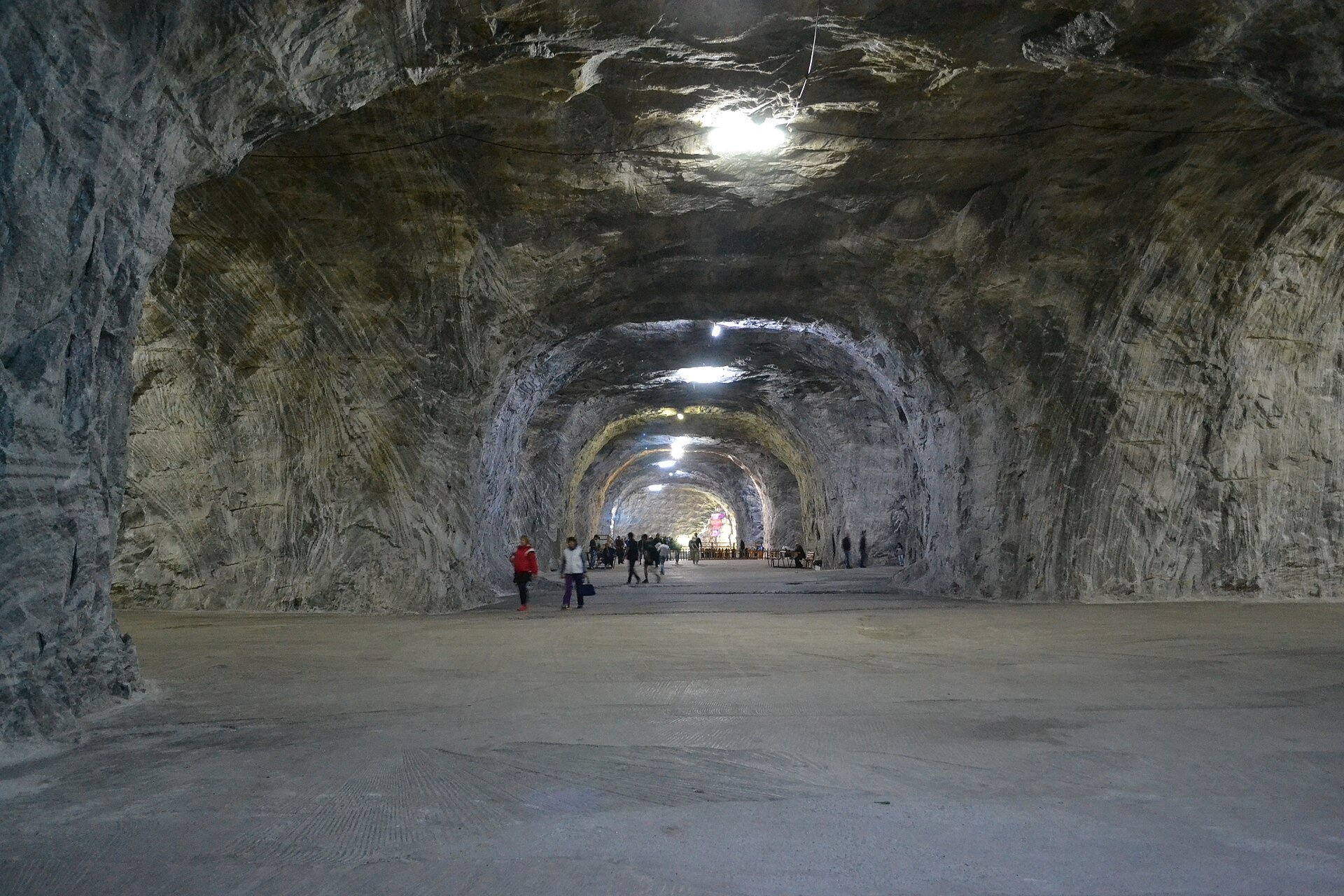
The Târgu Ocna Salt Mine (Salina Târgu Ocna) is one of Romania's oldest and the country's third-largest salt mine. It lies in the town of Târgu Ocna in Bacău County, in the picturesque Trotuș valley at the foot of the eastern slope of the Eastern Carpathians, where the Slănic river joins it. Salt was mined here as early as Dacian-Roman times, and in the Middle Ages the salt mines brought significant revenue to the princes of Moldavia. Today the mine belongs to the state company Salrom: salt is still extracted on the lower levels of the Trotuș mine, while the tourist base has been on level IX since 2005. As early as 1971 an underground sanatorium for people with respiratory diseases opened here.
Natural healing resources
The underground base lies 240 m deep and covers 9,571 m². Visitors are taken down by underground transport. According to Salrom, the mine's microclimate is as follows:
- a constant temperature of about 12 °C and humidity of about 50%;
- no air currents;
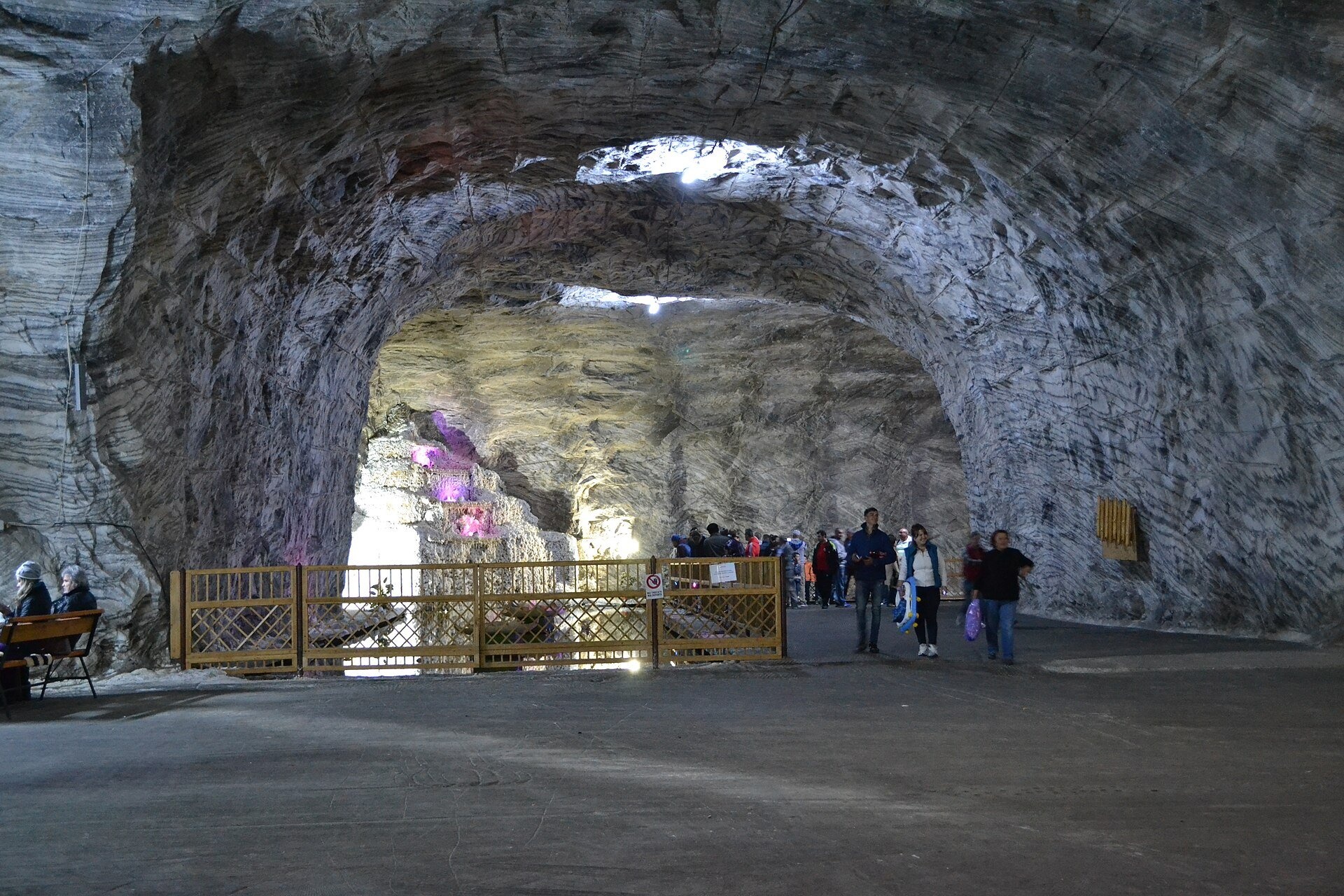
- air rich in salt aerosols in the large halls left by salt extraction.
A 2023 study (in the journal Healthcare) examined the microaerosols in three treatment zones of the mine – by the walls of the old salt halls, in a transition zone and by the waterfall with a small salt lake – together with data from the mine's medical office.
What is treated
The main indication is respiratory disease: the mine has been used for this since the 1970s, and Romanian Wikipedia calls it the largest treatment base of its kind in the country. The authors of the study above note that some zones are also recommended for cardio-respiratory, immune and thyroid, musculoskeletal conditions and psychomotor disorders, and that results were assessed together with the mine's medical office. Salrom does not publish an official list of indications and contraindications on its website, so before a course of underground stays it is worth consulting a doctor – especially for children, older people and anyone with heart disease. Children under 3 go down on a doctor's recommendation or at the accompanying adult's responsibility. This information is for reference only and is not medical advice: a doctor prescribes the course and procedures after a consultation.
Treatments and the salt mine
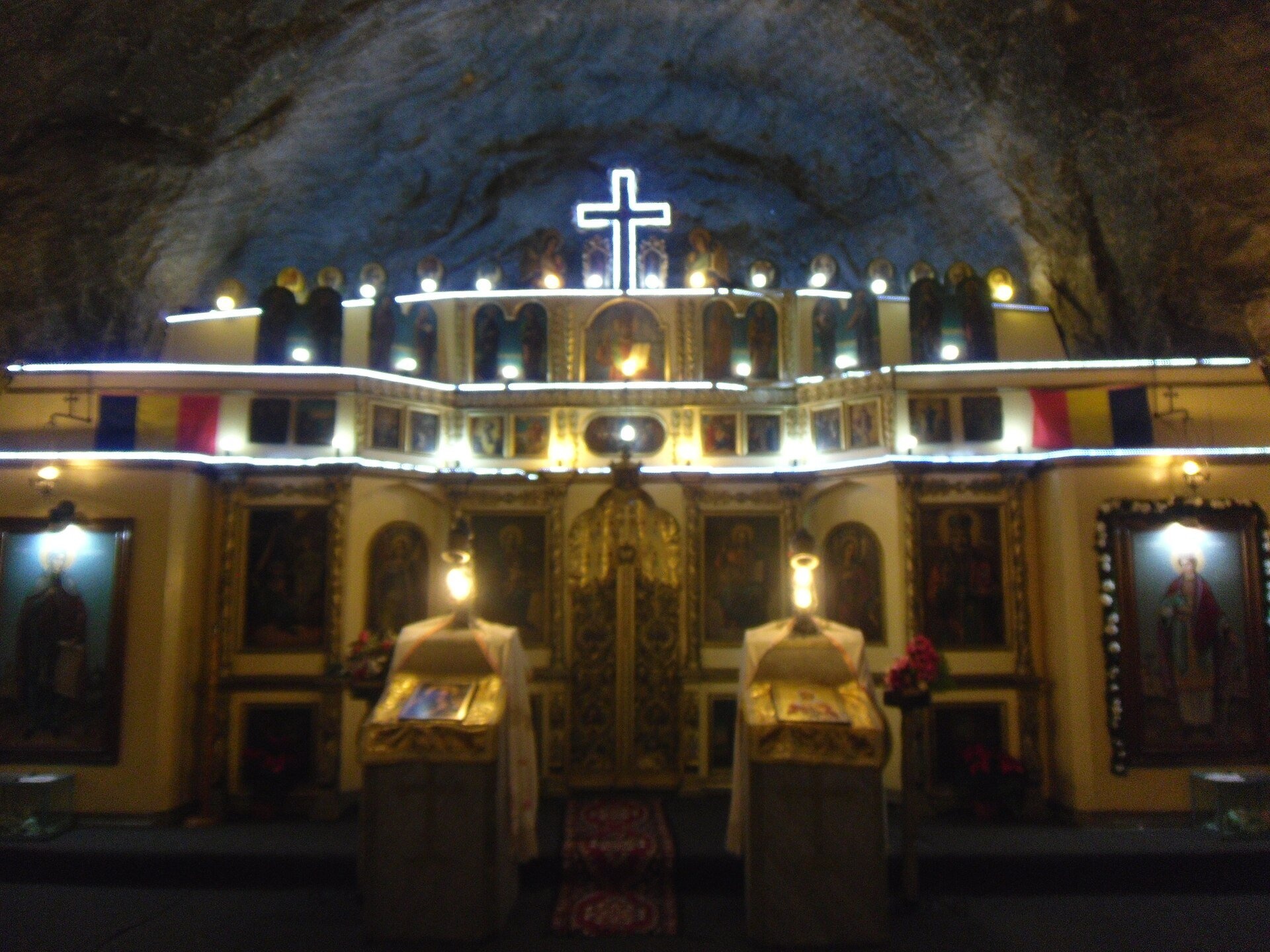
You can spend several hours underground: there is space for exercise and a first-aid point, pitches for five-a-side football, basketball and tennis, children's play areas, billiards, a food kiosk, a terrace and a souvenir shop. A salt lake with a cascade completes the underground scenery. In 1992 Europe's first underground Orthodox church was consecrated in the salt – dedicated to St Barbara, patron saint of miners; its iconostasis of 24 icons was made by the miners themselves. The new Salt Museum tells the story of how salt forms, the history of mining and salt's healing properties.
On the surface, within the mine grounds, a salt-water bathing pool with showers, a medical office, a terrace and sunbeds has operated since 2010. It opens only in the warm season and in good weather; in 2026 it was open until 15 September, 9:00–19:00. Bringing in or using mud in the pool is forbidden.
Practical information
The mine is at Str. Salinei 12, off the DN12A road. As of November 2026 the mine is open daily 8:00–16:00, last descent at 15:00 (in September hours are longer – until 17:00). A day ticket costs 60 lei for adults, 40 lei for children and pupils, 50 lei for students up to 26, 45 lei for people over 65, and is free for children under 3; a 5-visit pass valid for 14 days is cheaper (50 lei per day for adults). Pool: adults 60 lei, 30 lei after 16:00. Tickets are also sold online (Easy2visit). Check the current schedule on the mine's page on the Salrom website. It is cool underground, so bring warm clothes; pets are not allowed.
Getting there from Ukraine
The most convenient border crossing is Porubne – Siret: from Chernivtsi to Târgu Ocna it is about 270 km (around 4 h 54 min), from Rakhiv 437 km (around 7 h 58 min) via the same crossing; times exclude border queues. Romanian roads require the rovinieta e-vignette. The Adjud – Ciceu railway serves the town; the stop nearest the mine is Târgu Ocna – Salina.
Nearby
18 km up the Slănic valley lies the spa of Slănic-Moldova with a dozen mineral springs for digestive treatment – the mine and the springs are often combined in one trip. In Târgu Ocna itself there is the Măgura park with mineral springs and the Măgura Ocnei monastery.
Photos: Andrei Dan Suciu, CC BY 3.0, Wikimedia Commons; Andrei Dan, CC BY-SA 3.0, Wikimedia Commons; DieselEngineRO, CC BY-SA 4.0, Wikimedia Commons.
Getting there from Ukraine
Border crossings
- Porubne – Siret — road and pedestrian, 24/7
- Diakivtsi – Racovăț — road and pedestrian, 24/7 No freight traffic.
- Krasnoilsk – Vicovu de Sus — road and pedestrian, 08:00–20:00 Cars up to 3.5 t and pedestrians only; not 24/7.
- Solotvyno – Sighetu Marmației — road and pedestrian, 24/7 Passenger traffic only: vehicles up to 3.5 t with up to 9 seats, pedestrians.
- Diakove – Halmeu — road, 24/7 No pedestrian crossing.
By car
Chernivtsi – Durău ≈204 km, ≈3 h 54 min (via Diakivtsi – Racovăț); Ivano-Frankivsk – Durău ≈342 km, ≈6 h 11 min (via Diakivtsi – Racovăț); Rakhiv – Durău ≈313 km, ≈6 h 18 min (via Solotvyno – Sighetu Marmației). Times without border queues, our road routing (GraphHopper, OSM).
Checked 03.11.2026; border crossing hours and timetables change — check before you travel.
Comments
Travellers’ experience: reports, tips, questions.
No one has written here yet. Be the first — your experience helps others.
Location on the map
Nearby attractions
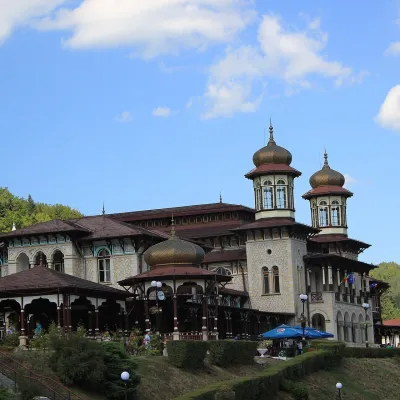 Water parks & thermal poolsSlănic-Moldova: mineral springs of the Pearl of MoldaviaSlănic-Moldova16 km from Târgu Ocna Salt Mine: breathing therapy 240 m undergroundSlănic-Moldova is a mountain balneoclimatic spa in Bacău County, on the eastern slopes of the Eastern Carpathians at the foot of the Nemira Mountains.
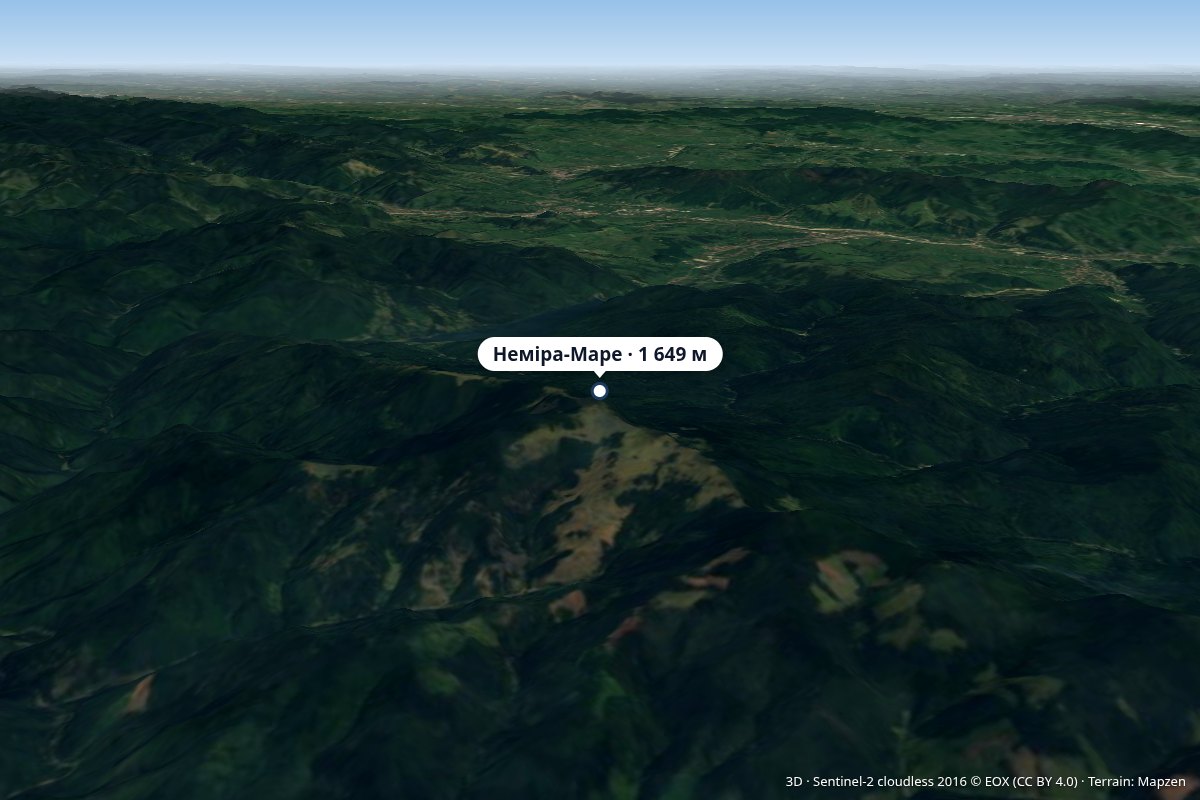 PeakNemira Marealtitude 1 649 m22 km from Târgu Ocna Salt Mine: breathing therapy 240 m undergroundNagy-Nemere) is the highest peak of the Nemira Mountains in the Eastern Carpathians, with an elevation of 1,649 m.
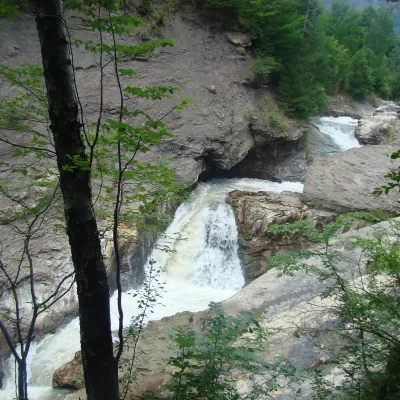 WaterfallPutna Waterfall (Cascada Putnei)Lepșa · Vrancea Mountains40 km from Târgu Ocna Salt Mine: breathing therapy 240 m underground546 m above sea levelPutna Waterfall (Cascada Putnei, also called Săritoarea Putnei) is on the Putna river near the village of Lepșa in Tulnici commune, Vrancea County.
