Sihla Monastery: St Theodora's cave
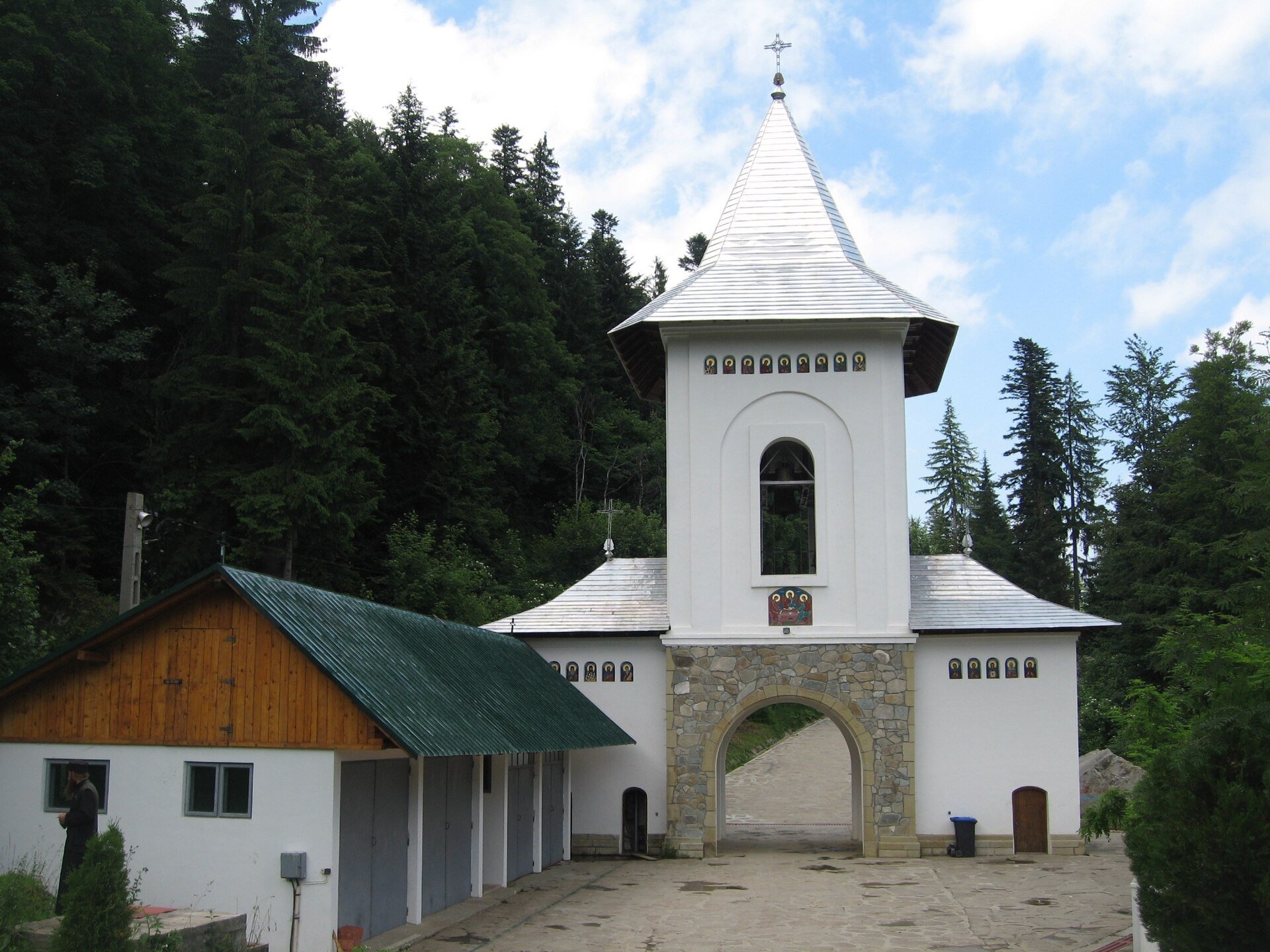
A skete among rocks and firs
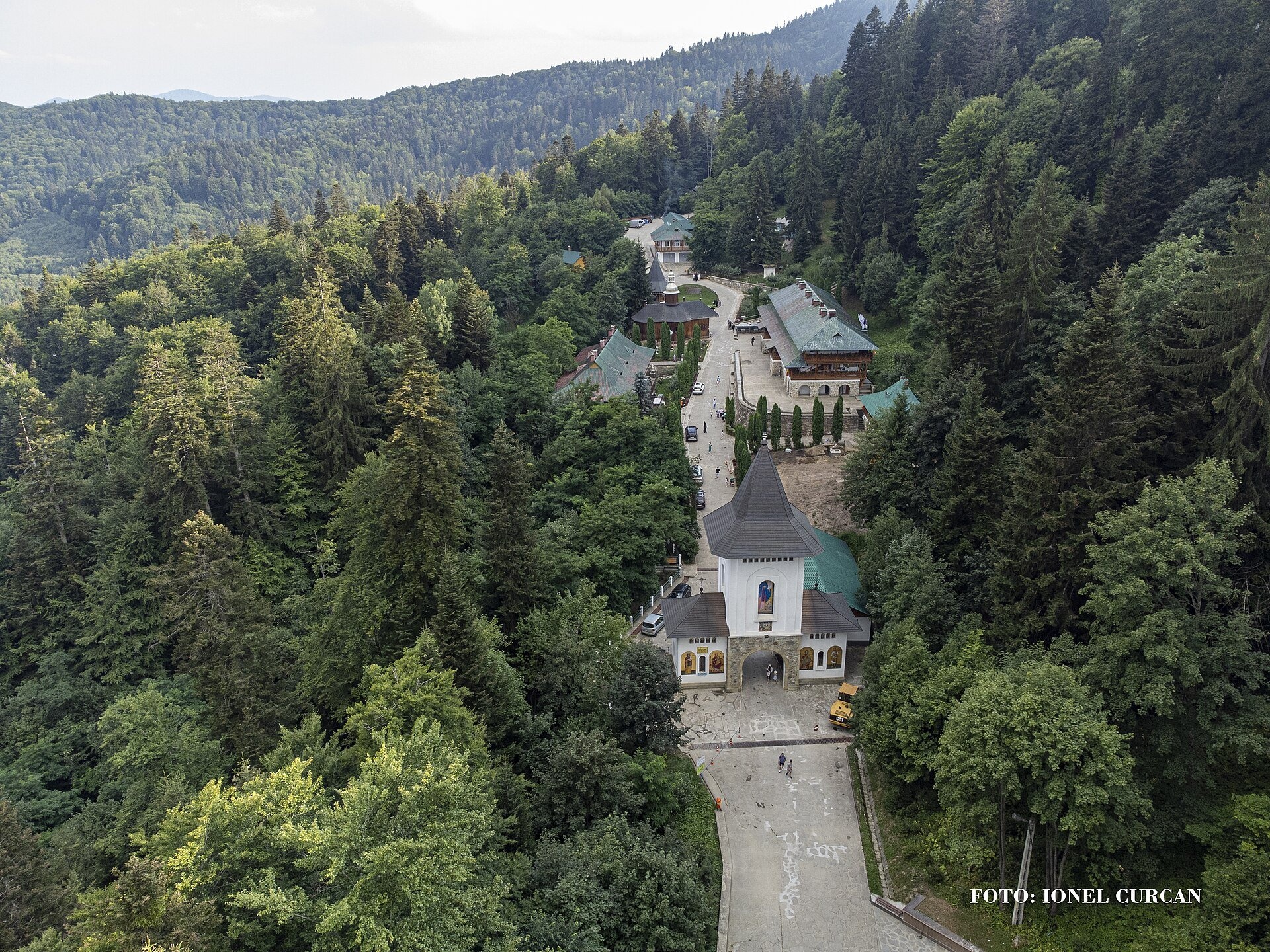
Sihla Monastery (Mănăstirea Sihla), officially the Monastery of the Nativity of St John the Baptist, is a small monastery for men of the Romanian Orthodox Church at an altitude of about 1,000 metres among the rocks of the Obcina Sihlei ridge in the Stânișoara Mountains (Munții Stânișoarei), on the forest road between Agapia village and the Sihăstria and Secu monasteries. According to the monastery, hermits lived among these rocks before 1200; the skete was founded in 1731 and became a monastery in 2011. About 35 monks and novices live here today.
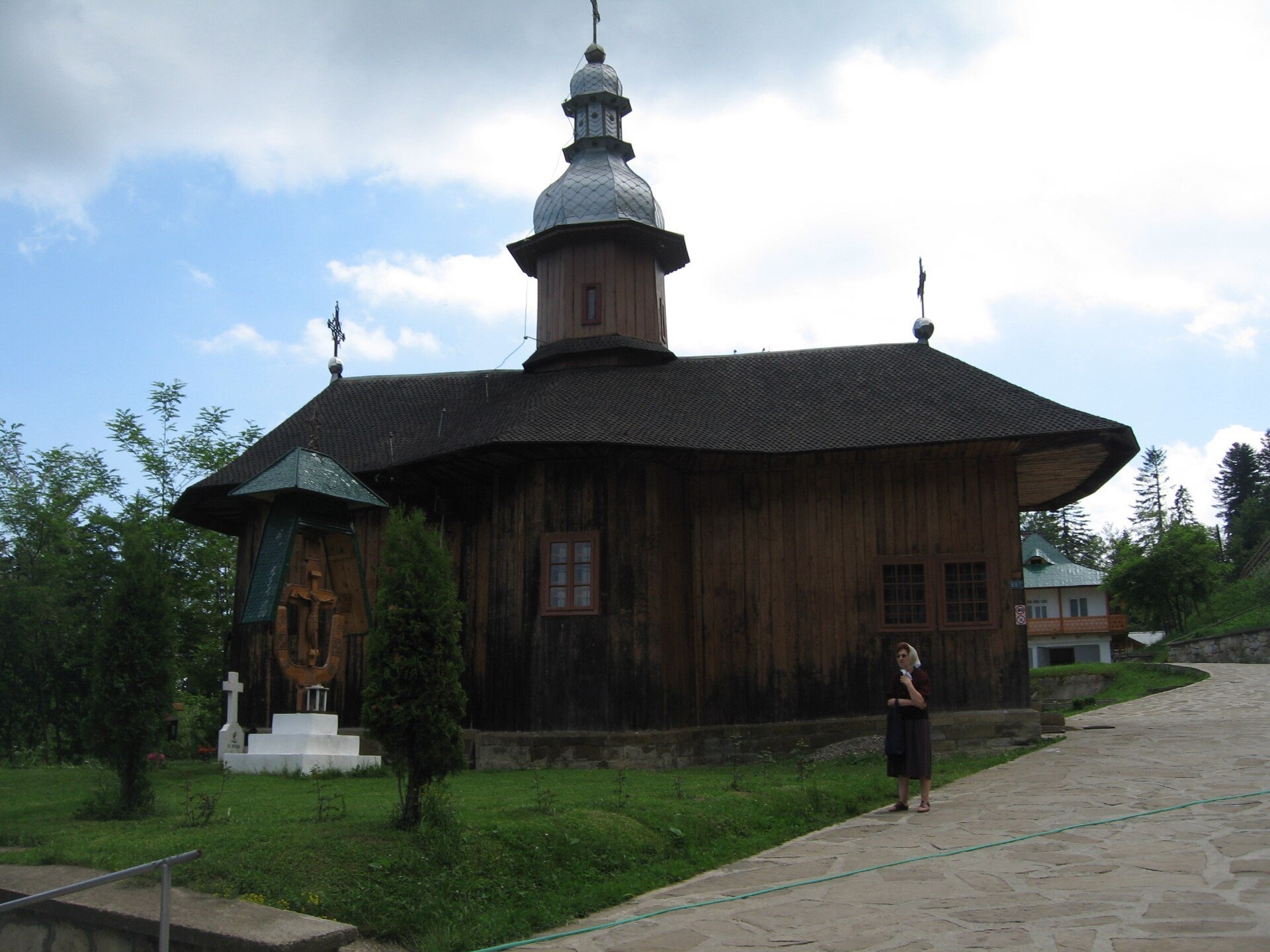
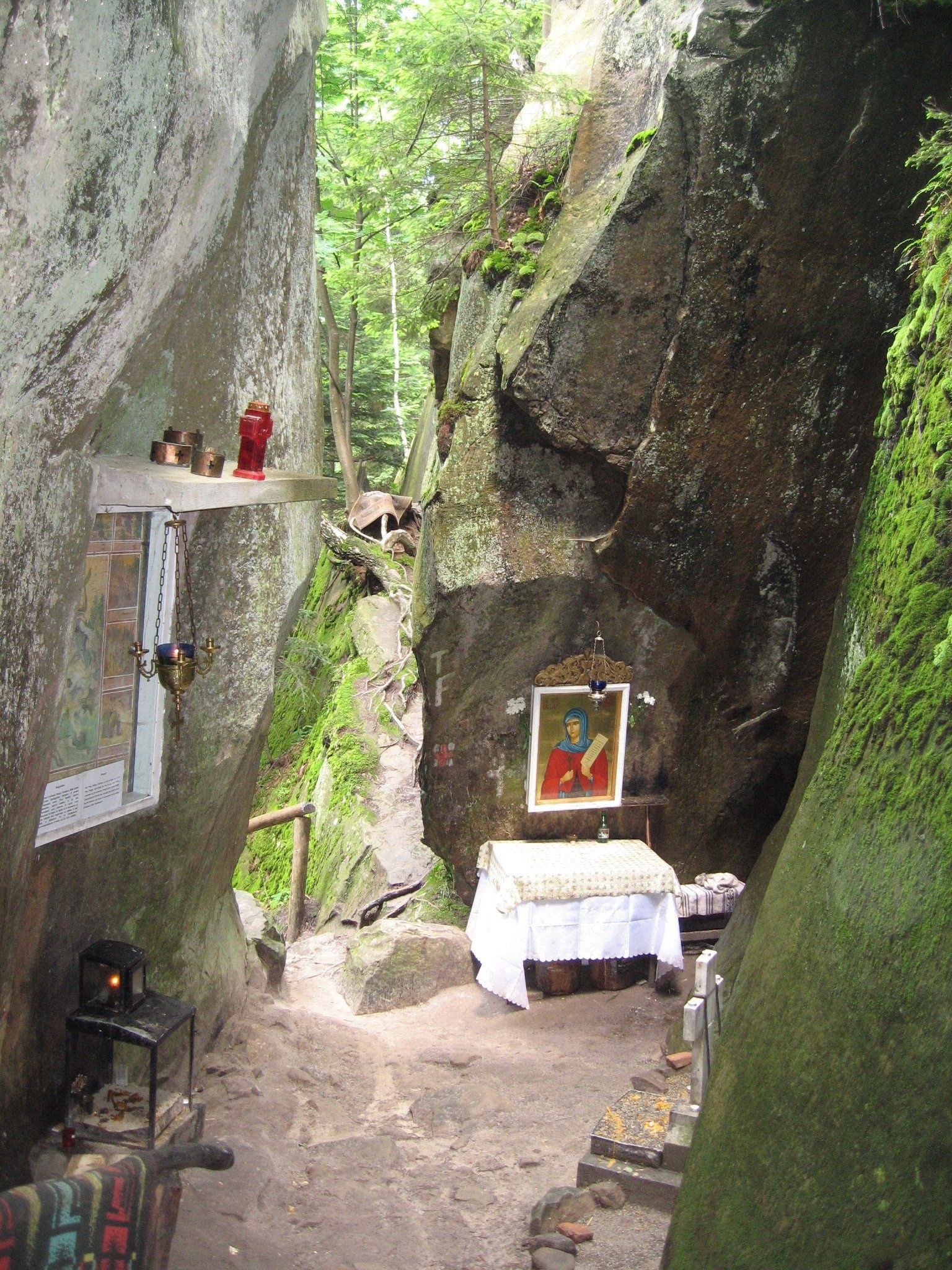
The main wooden church of 1741 was built by the Cantacuzino family; it took its present form in 1813, when Archimandrite Benedict, abbot of the Neamț and Secu monasteries, rebuilt it almost entirely of fir beams on the old foundations. Most people, however, come for the cave of St Theodora of Sihla, a 17th-century Moldavian ascetic who, according to her life, spent many years here in complete solitude. The Romanian Orthodox Church canonised her in 1992; her relics, according to the neighbouring Sihăstria Monastery, are kept in Kyiv. Nearby stands another monument — the "church made from a single fir", built in 1763 by Ionița Cantacuzino Pașcanul in memory of a friend who died while hunting.
Why go
Sihla is one of the most atmospheric places in the Neamț mountains: wooden churches, moss-covered rocks, a narrow passage to the cave where candles are always burning, and the silence of the fir forest. It is a place of pilgrimage but also a good goal for an unhurried walk: a forest path leads here from Sihăstria Monastery, and the road from Agapia crosses the hills. In summer it is cooler than in the valley, and in winter the monastery stands in deep snow.
What to see
- The wooden Church of the Nativity of St John the Baptist (1813, on the site of the 1741 church) — trefoil in plan, with one tower, plank-clad walls and an onion-shaped roof.
- The iconostasis of gilded lime wood with four principal icons painted in 1852 by the monk Iulian of Slatina Monastery; the interior painting dates from 1973–1974.
- A small reliquary, including the head of the monk Ieremia, a disciple of Paisius Velichkovsky.
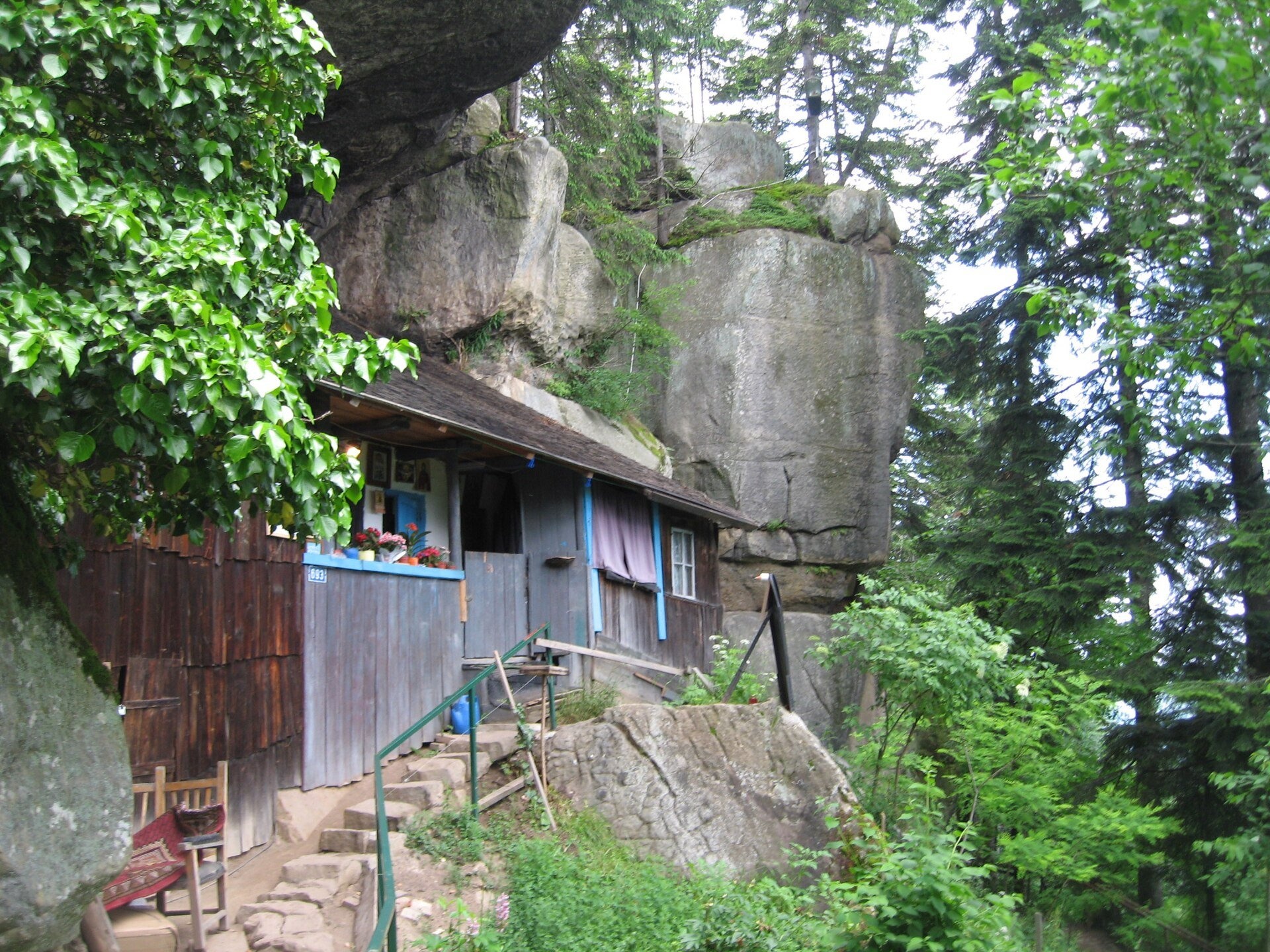
- The "church made from a single fir" of the Transfiguration (1763) and the old cells under the rock wall.
- St Theodora's cave — a narrow passage between two high rocks with an altar, candles and icons.
- The "table" rock next to the cave, climbed by a ladder: according to tradition, birds brought the saint crumbs of bread from Sihăstria Monastery here.
Practical information
Address: Mănăstirea Sihla, comuna Agapia, cod 617010, Neamț County. Phone: +40 744 513 879, e-mail [email protected]. Forest roads lead to the monastery from Agapia village and from Sihăstria Monastery; from Târgu Neamț it is about 25 km. A footpath through the forest links Sihăstria and Sihla. In winter and after heavy rain the forest roads can be difficult for an ordinary car. From Ukraine: via the Porubne – Siret border crossing and Suceava, about 130 km from the border.
The monastery publishes no official visiting hours or prices — check before you go. This is an active monastery for men: modest clothing (shoulders and knees covered, a headscarf and skirt are advisable for women), silence; ask permission before taking photos in the church. Rocky paths and steps lead to the cave, and the passage between the rocks is narrow and slippery — wear good shoes; the route is not accessible for wheelchairs. Feasts: the Nativity of St John the Baptist (24 June), the Transfiguration (6 August) and St Theodora (7 August). Allow 1–1.5 hours for the monastery and the cave.
Nearby
- Sihăstria Monastery — the community of the elders Cleopa and Paisie, lower down through the forest.
- Agapia Monastery with paintings by Nicolae Grigorescu.
- Secu Monastery — a fortified 17th-century monastery.
- Văratec Monastery — Romania's largest convent.
- Bison safari in Vânători-Neamț.
Official website: sihla.mmb.ro
Photos: Cezar Suceveanu. Original uploader was Cezarika1 at ro.wikipedia, CC BY 2.5, Wikimedia Commons; Curcan ionel, CC BY-SA 4.0, Wikimedia Commons; Chira Claudia, CC BY 2.5, Wikimedia Commons.
Getting there from Ukraine
Border crossings
- Porubne – Siret — road and pedestrian, 24/7
- Diakivtsi – Racovăț — road and pedestrian, 24/7 No freight traffic.
- Krasnoilsk – Vicovu de Sus — road and pedestrian, 08:00–20:00 Cars up to 3.5 t and pedestrians only; not 24/7.
- Solotvyno – Sighetu Marmației — road and pedestrian, 24/7 Passenger traffic only: vehicles up to 3.5 t with up to 9 seats, pedestrians.
- Diakove – Halmeu — road, 24/7 No pedestrian crossing.
By car
Chernivtsi – Durău ≈204 km, ≈3 h 54 min (via Diakivtsi – Racovăț); Ivano-Frankivsk – Durău ≈342 km, ≈6 h 11 min (via Diakivtsi – Racovăț); Rakhiv – Durău ≈313 km, ≈6 h 18 min (via Solotvyno – Sighetu Marmației). Times without border queues, our road routing (GraphHopper, OSM).
Checked 03.11.2026; border crossing hours and timetables change — check before you travel.
Comments
Travellers’ experience: reports, tips, questions.
No one has written here yet. Be the first — your experience helps others.
Video 2
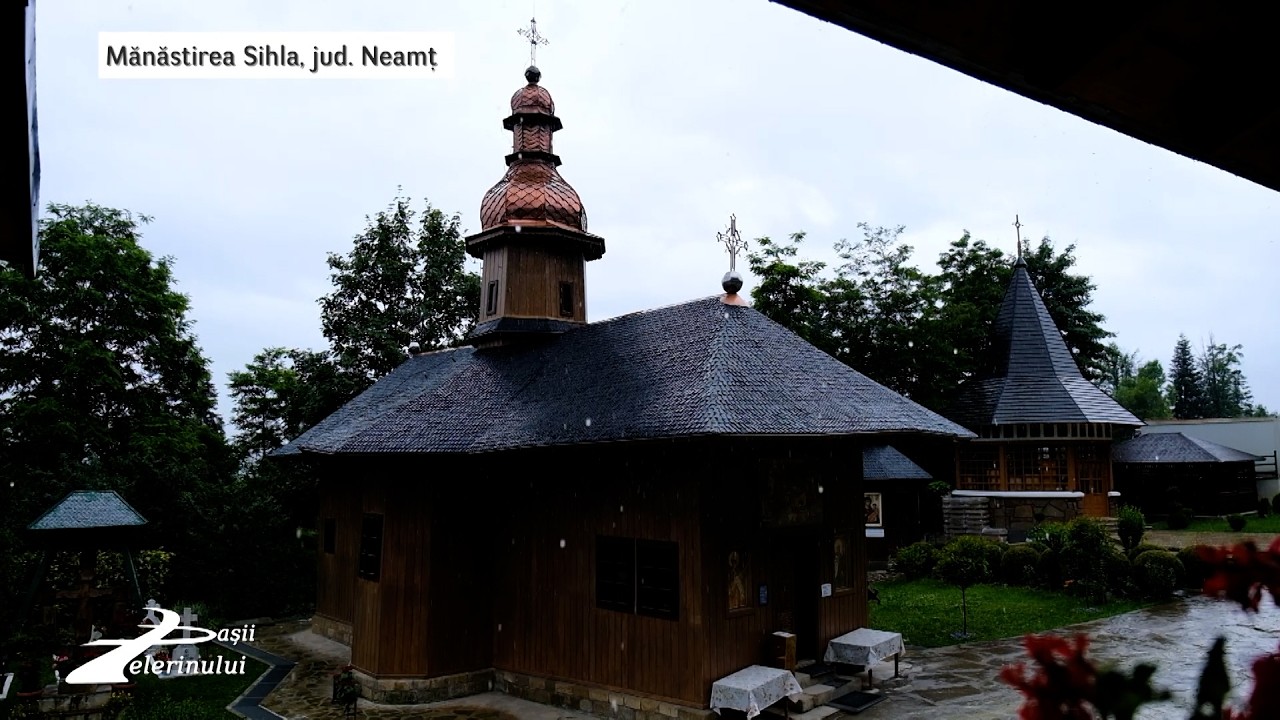 Mănăstirea Sihla din județul Neamț #pasiipelerinuluiTRINITAS TV

Location on the map
Trails nearby
All trails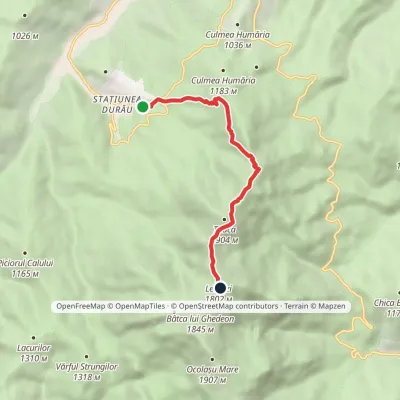 ModerateOne-dayMarkedDurău Dochia HutElevation profile862–1 803 m6.8 kmascent 992 m≈ 3.5 h walking24 km from Sihla Monastery: St Theodora's cave
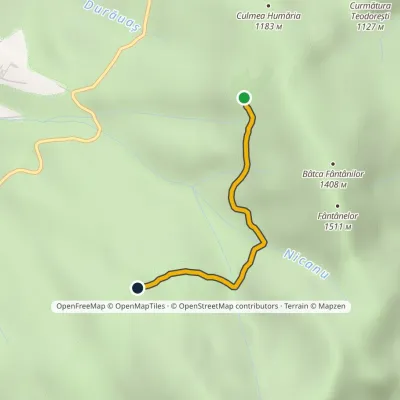 EasyOne-dayMarkedFântânele Hut Poiana VesuriElevation profile1 146–1 237 m2.1 kmascent 57 m≈ 30 min walking24 km from Sihla Monastery: St Theodora's cave
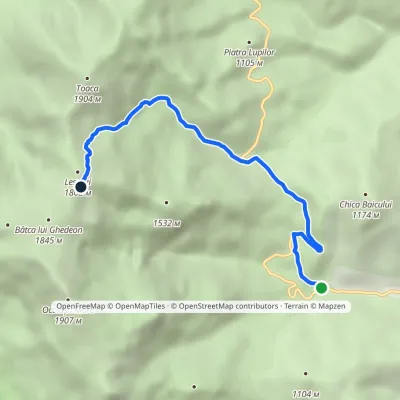 ModerateOne-dayMarkedIzvorul Muntelui Hut Dochia Hutvia Stânca DochieiElevation profile803–1 782 m6.2 kmascent 986 m≈ 3 h walking25 km from Sihla Monastery: St Theodora's cave
Nearby attractions
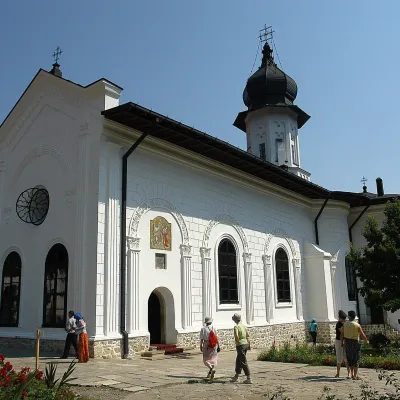 ChurchAgapia Monastery: Nicolae Grigorescu's paintingsFilioara4.8 km from Sihla Monastery: St Theodora's caveA convent with paintings by Nicolae Grigorescu Agapia Monastery (Mănăstirea Agapia), also called New Agapia or Agapia of the Valley, is an active convent of the...
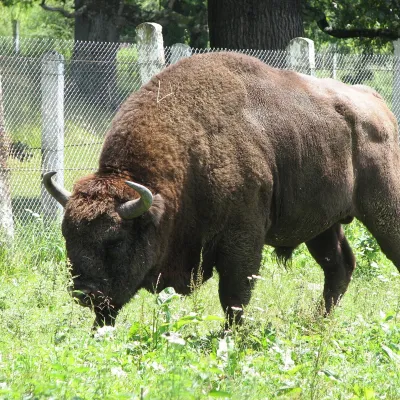 Wildlife parks & animal farmsBison Safari in Vânători-Neamț: a guided walk with a rangerMănăstirea Neamț10 km from Sihla Monastery: St Theodora's caveThe first place in Romania where the bison came back Vânători-Neamț Natural Park lies on the eastern slopes of the Carpathians near the small town of Târgu Neamț, in a...
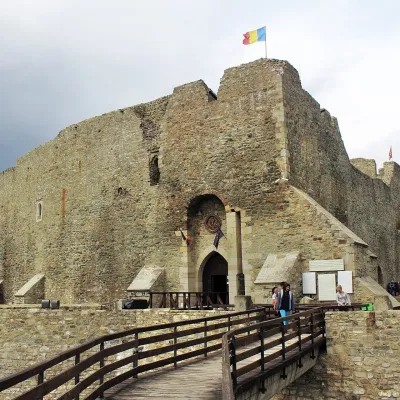 CastleNeamț Citadel: Stephen the Great's fortressTârgu Neamț14 km from Sihla Monastery: St Theodora's caveNeamț Citadel (Cetatea Neamț) is a medieval stone stronghold of the Principality of Moldavia on the north-western edge of the town of Târgu Neamț.
