Sibiu historic centre: squares, Bridge of Lies and walls
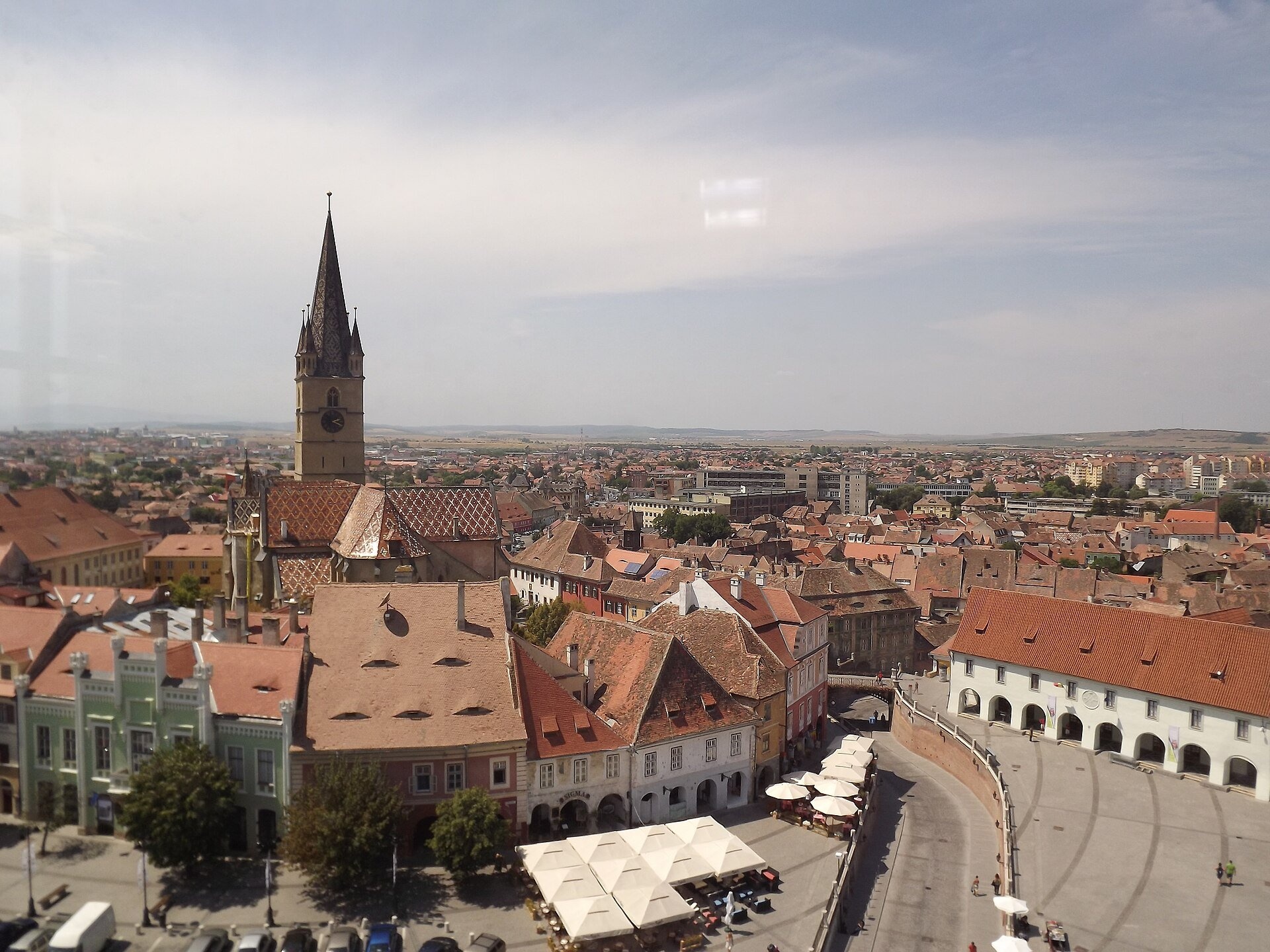
The town of Hermann and the Saxon guilds
Sibiu (German Hermannstadt, Hungarian Nagyszeben) was founded in the 12th century by German settlers invited to southern Transylvania by the kings of Hungary. According to tradition, the settlement was named after its founder, Hermann. Sibiu became the chief town of the Transylvanian Saxons: their representatives met here, dozens of craft guilds worked here, and the town was surrounded by rings of walls with towers that each guild had to defend. Later, in the 18th century, Sibiu was the capital of Habsburg Transylvania, and Baroque palaces appeared on its squares.
Because the town escaped major destruction, its medieval layout has survived almost intact: the Upper Town with its squares on the hill and the Lower Town by the river, linked by narrow lanes, stairs and passages. In 2007 Sibiu was European Capital of Culture, and its centre has been carefully restored ever since. The county tourism association notes that the Michelin guide called Sibiu «Little Vienna».
Why go
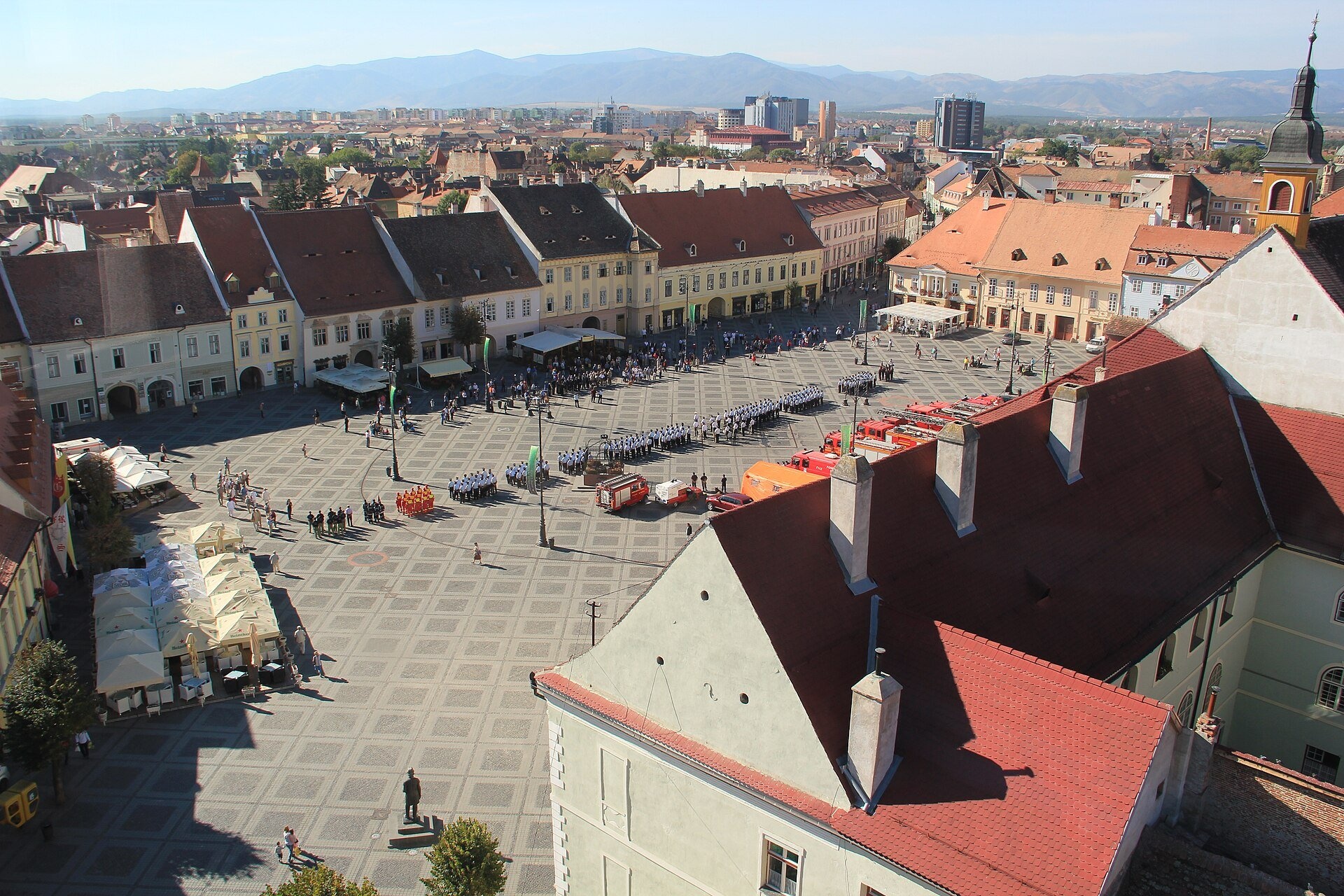
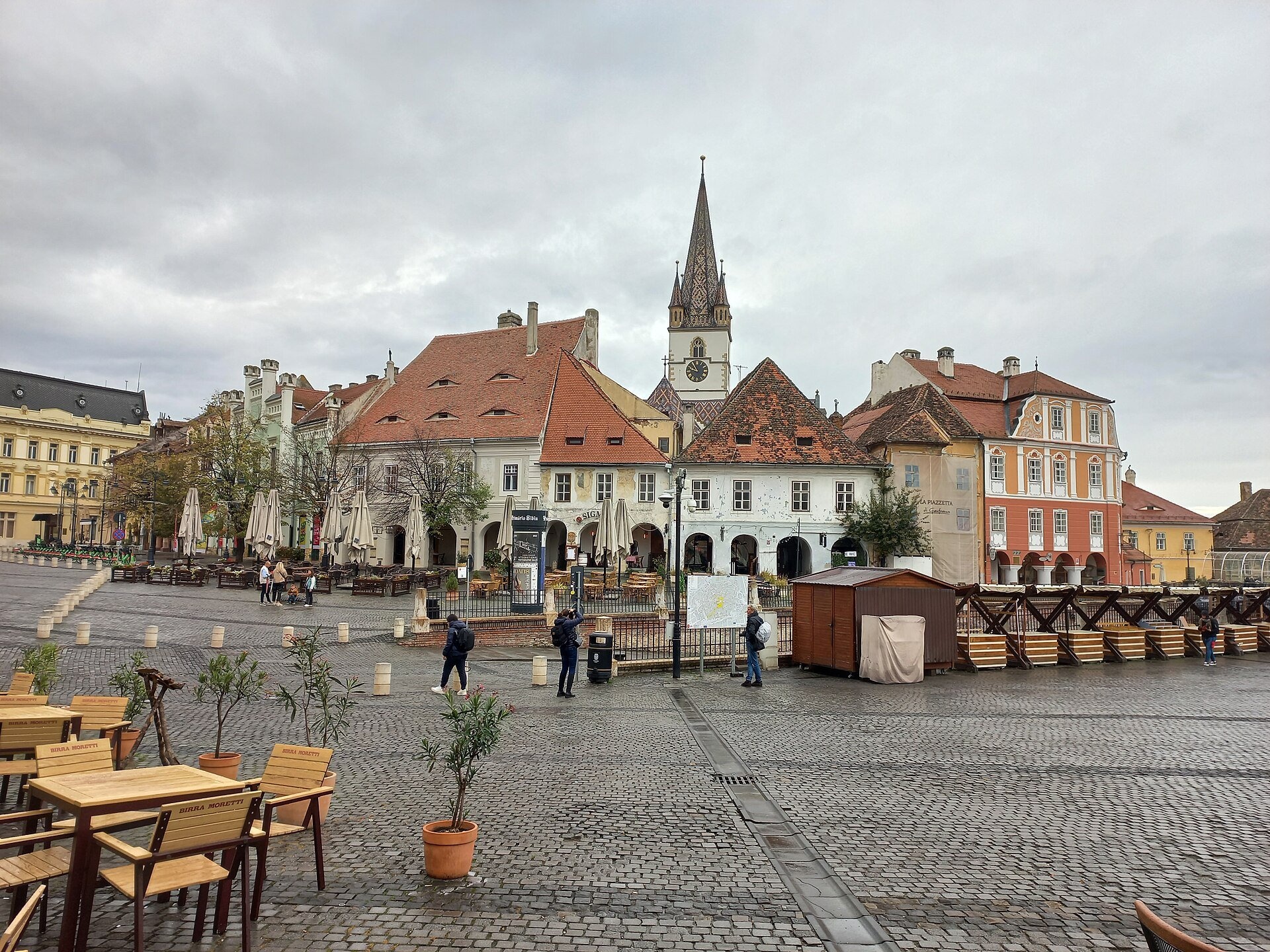
Sibiu's old town is one of the most complete in the whole Carpathians. You can wander for hours: wide squares give way to arched lanes, courtyards open behind gateways, and the famous «eyes» look down at you from the roofs — long, narrow dormers that once ventilated the attics. The town lies at the foot of the Făgăraș and Cindrel Mountains, so on a clear day you can see snowy peaks above the roofs. Sibiu is also a convenient base for trips to Saxon villages with fortified churches and to the mountains.
What to see
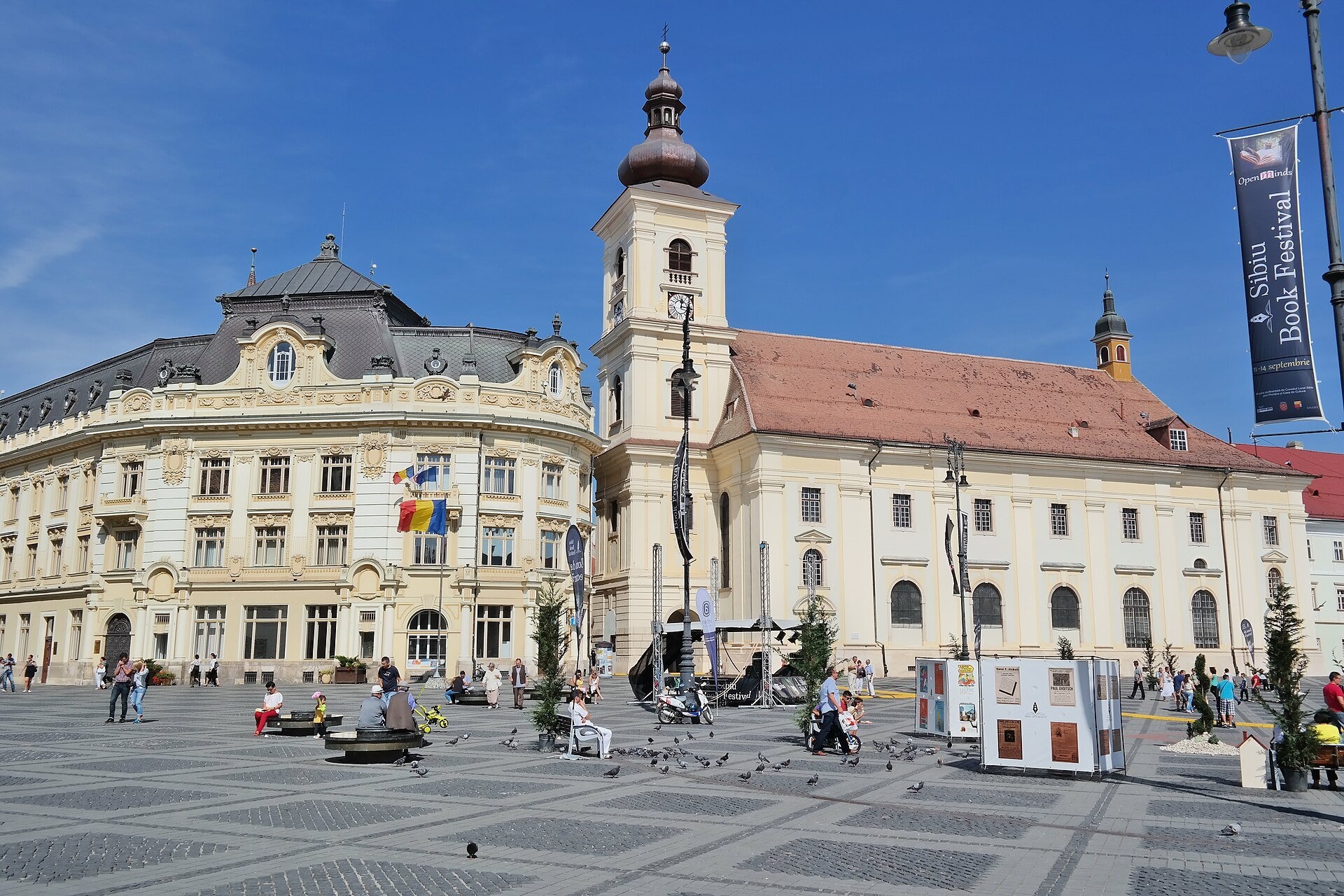
- Piața Mare — the main square with the Brukenthal Palace, the city hall and the Baroque Catholic Holy Trinity Church.
- The Council Tower (Turnul Sfatului) between Piața Mare and Piața Mică — the symbol of the town; it is currently closed for restoration but well worth seeing from outside.
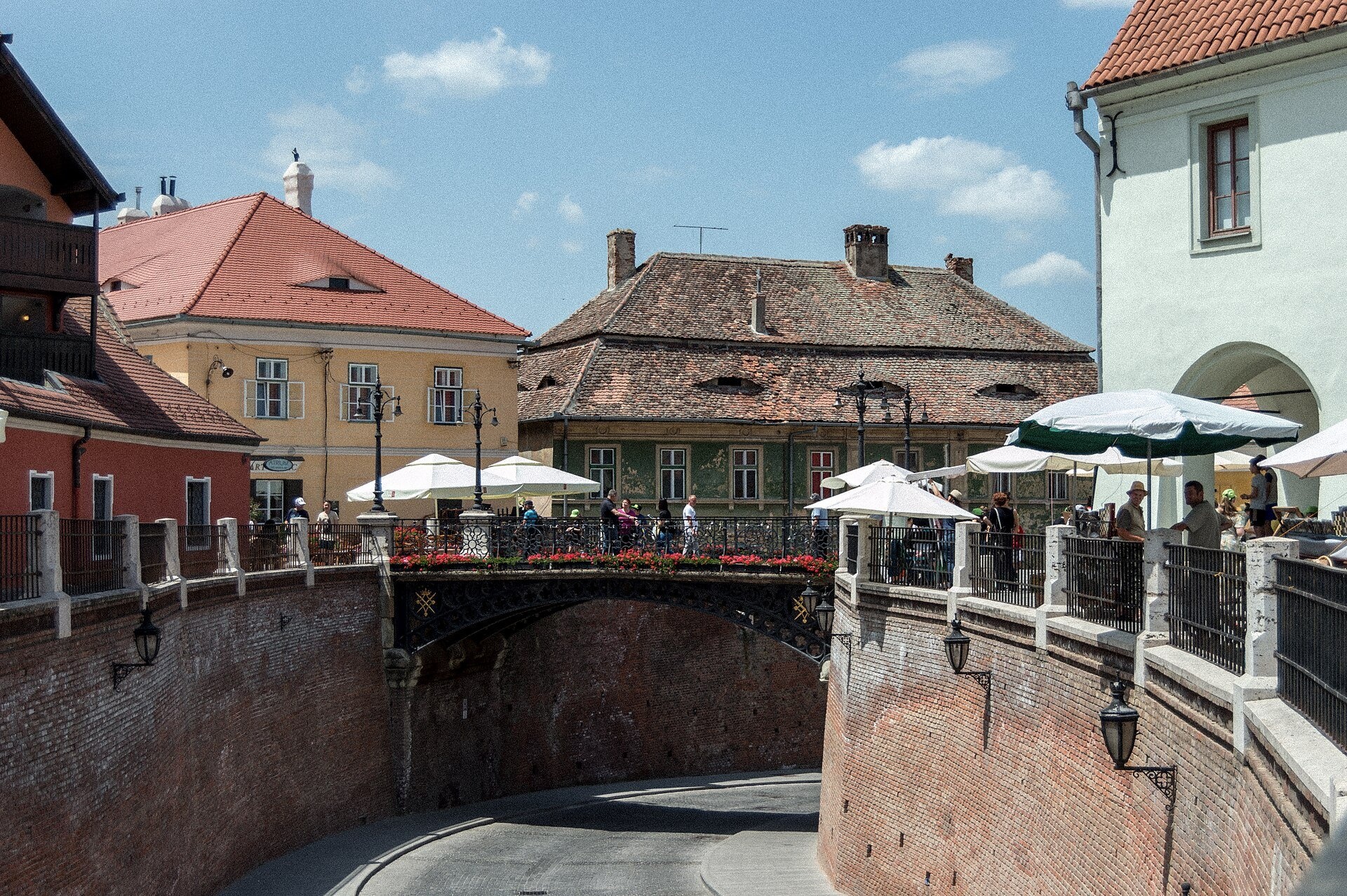
- Piața Mică with arcaded houses and the Bridge of Lies (Podul Minciunilor) over Strada Ocnei — the first cast-iron bridge on the territory of present-day Romania, surrounded by legends.
- St Mary's Lutheran Cathedral on Huet Square: a Gothic church of 1350–1520 with a tower about 74 m high and a great organ of 1914.
- The Passage of Stairs (Pasajul Scărilor) — covered stairs linking the Upper and Lower Town.
- Walls and towers on Strada Cetății: the Potters', Carpenters' and Arquebusiers' towers surviving from the town fortifications.
- The Orthodox Holy Trinity Cathedral on Strada Mitropoliei, built in the early 20th century and inspired by Hagia Sophia in Constantinople.
Practical information
The historic centre is pedestrian; it is easiest to leave your car in paid car parks outside the old town. Sibiu is about 145 km from Brașov and roughly 390 km from the Solotvyno – Sighetu Marmației border crossing via Baia Mare and Cluj-Napoca; there is also Sibiu International Airport. Squares and streets are open around the clock and walking is free. The Council Tower has been closed for restoration since January 2026, with works expected to last until the end of 2027 (Sibiu County tourism association, as of November 2026). The Lutheran cathedral is open to visitors with a ticket, but access is restricted during services, weddings and baptisms — check before you go. Dress modestly and keep quiet in churches. Allow 2–3 hours for an unhurried walk, or a full day with museums. Cobblestones and stairs between the Upper and Lower Town may be difficult for wheelchairs.
Nearby
- Brukenthal National Museum — a Baroque palace with an art gallery right on Piața Mare.
- ASTRA Museum, the open-air museum in Dumbrava forest on the southern edge of the city.
- «Transilvania» peasant market in Sibiu, a Saturday farmers' market.
- St Michael's Basilica in Cisnădioara, a Romanesque fortress church 11 km away.
- Valea Viilor fortified church, a UNESCO site near Mediaș.
Official website: sibiu-turism.ro
Photos: Choinowski, CC BY-SA 4.0, Wikimedia Commons; Antony Stanley from Gloucester, UK, CC BY-SA 2.0, Wikimedia Commons; Asurnipal, CC BY-SA 4.0, Wikimedia Commons; Kvmgz, CC BY-SA 4.0, Wikimedia Commons; Ancuticag, CC BY-SA 4.0, Wikimedia Commons; wuppertaler, CC BY-SA 4.0, Wikimedia Commons; Hermannstadt1191, CC BY-SA 4.0, Wikimedia Commons; Țetcu Mircea Rareș, CC BY-SA 4.0, Wikimedia Commons.
Getting there from Ukraine
Border crossings
- Porubne – Siret — road and pedestrian, 24/7
- Diakivtsi – Racovăț — road and pedestrian, 24/7 No freight traffic.
- Krasnoilsk – Vicovu de Sus — road and pedestrian, 08:00–20:00 Cars up to 3.5 t and pedestrians only; not 24/7.
- Solotvyno – Sighetu Marmației — road and pedestrian, 24/7 Passenger traffic only: vehicles up to 3.5 t with up to 9 seats, pedestrians.
- Diakove – Halmeu — road, 24/7 No pedestrian crossing.
By car
Rakhiv – Sibiu ≈390 km, ≈5 h 33 min (via Solotvyno – Sighetu Marmației); Ivano-Frankivsk – Sibiu ≈524 km, ≈7 h 52 min (via Solotvyno – Sighetu Marmației); Chernivtsi – Sibiu ≈435 km, ≈8 h 00 min (via Diakivtsi – Racovăț). Times without border queues, our road routing (GraphHopper, OSM).
Checked 03.11.2026; border crossing hours and timetables change — check before you travel.
Comments
Travellers’ experience: reports, tips, questions.
No one has written here yet. Be the first — your experience helps others.
Video 2
 Sibiu Old Town, Romania: Walking TourTravel'n'Walk

Location on the map
Trails nearby
All trails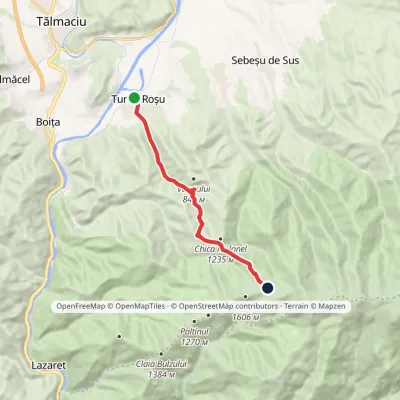 ModerateOne-dayMarkedTurnu Roșu station Corbului SaddleElevation profile369–1 566 m9.5 kmascent 1 197 m≈ 4.5 h walking20 km from Sibiu historic centre: squares, Bridge of Lies and walls
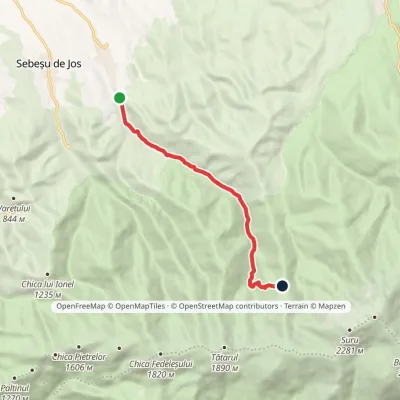 ModerateOne-dayMarkedSebeșu de Sus Suru HutElevation profile494–1 433 m8.2 kmascent 938 m≈ 3.5 h walking23 km from Sibiu historic centre: squares, Bridge of Lies and walls
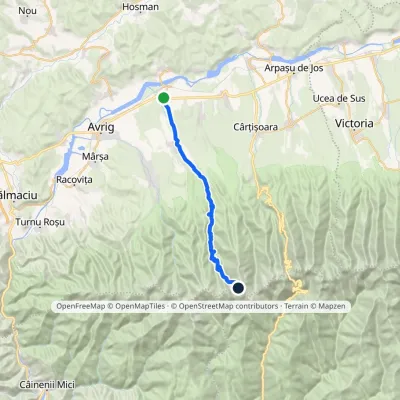 Hard1–2 daysMarkedPorumbacu de Jos Cleopatra SaddleElevation profile398–2 361 m26 kmascent 1 962 m≈ 10 h walking24 km from Sibiu historic centre: squares, Bridge of Lies and walls
Nearby attractions
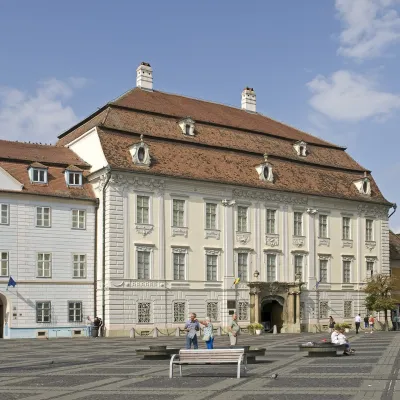 MuseumBrukenthal National Museum, Sibiu: palace and art gallerySibiuunder 1 km from Sibiu historic centre: squares, Bridge of Lies and wallsSibiu (German Hermannstadt) was the chief town of the Transylvanian Saxons, and in the late 18th century it was home to one of the most powerful men in the region —...
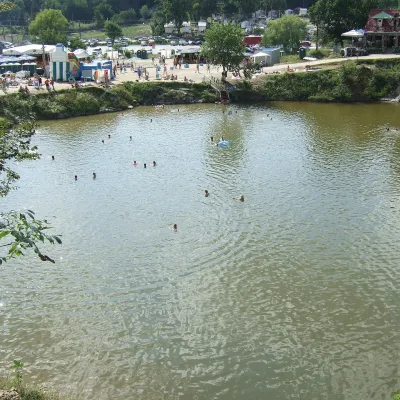 Water parks & thermal poolsOcna Sibiului spa: salt lakes and healing mudOcna Sibiului11 km from Sibiu historic centre: squares, Bridge of Lies and wallsOcna Sibiului is a small spa town in Sibiu County, 15 km north-west of Sibiu, on the southern edge of the Transylvanian hill basin.
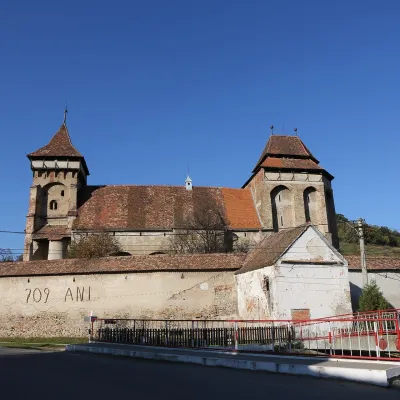 ChurchValea Viilor Fortified Church: UNESCO near MediașValea Viilor33 km from Sibiu historic centre: squares, Bridge of Lies and wallsThe village of Valea Viilor (German: Wurmloch, Hungarian: Nagybaromlaka) lies in a valley of vineyards a few kilometres from the town of Mediaș, in a region settled...
Craft nearby
All craft places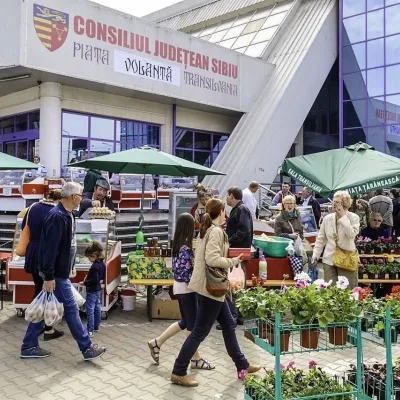 Markets & fairsTransylvania Farmers’ Market in Sibiu: Saturday producers’ marketSibiu1.6 km from Sibiu historic centre: squares, Bridge of Lies and wallsThe Transylvania Farmers’ Market (Piața Țărănească Transilvania) is an open-air Saturday market next to the Transilvania sports hall in Sibiu.
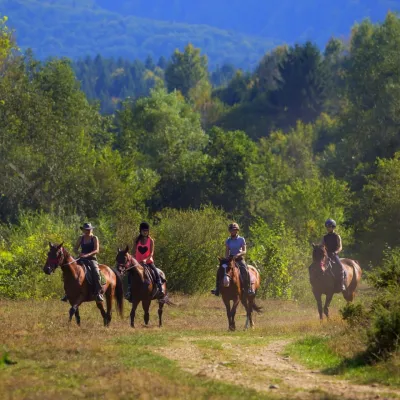 Horse ridingHermannstadt Mountain Horses: horse rides below the FăgărașPorumbacu de Sus27 km from Sibiu historic centre: squares, Bridge of Lies and wallsHorses in the Avrig Valley below the Făgăraș Hermannstadt Mountain Horses (Hermannstadt is the old German name of Sibiu) is a riding stable in the Avrig Valley (Valea...
